LDL matters more as a direct predictor of artery damage, but HDL still provides useful context, and the clearest picture comes from measuring both. This HDL vs LDL comparison explains what each number means, which ranges to aim for, and how to choose the right test.
Big picture
- What it is: LDL is the cholesterol that can build up in artery walls. HDL is the cholesterol that carries excess back to the liver for removal.
- Why it matters: High LDL and low HDL both raise cardiovascular risk, and neither causes symptoms you can feel.
- Who it affects: Adults of any age, especially anyone with a family history, high blood sugar, or a sedentary lifestyle.
- Next step: Order a standard lipid panel to see both numbers at once, then add targeted tests only if the results call for it.
What is the role of cholesterol in the body?
Cholesterol is a waxy substance your body uses to build cell membranes, produce hormones, make vitamin D, and create bile acids for digestion. Your liver makes most of what you need, and the rest comes from food.
Because cholesterol is fat-based, it cannot travel through blood on its own. It rides inside particles called lipoproteins, and the density of those particles gives us the names LDL (low-density lipoprotein) and HDL (high-density lipoprotein). Neither is cholesterol itself. They are delivery vehicles, and what matters is where they take their cargo.
HDL vs LDL: the core differences
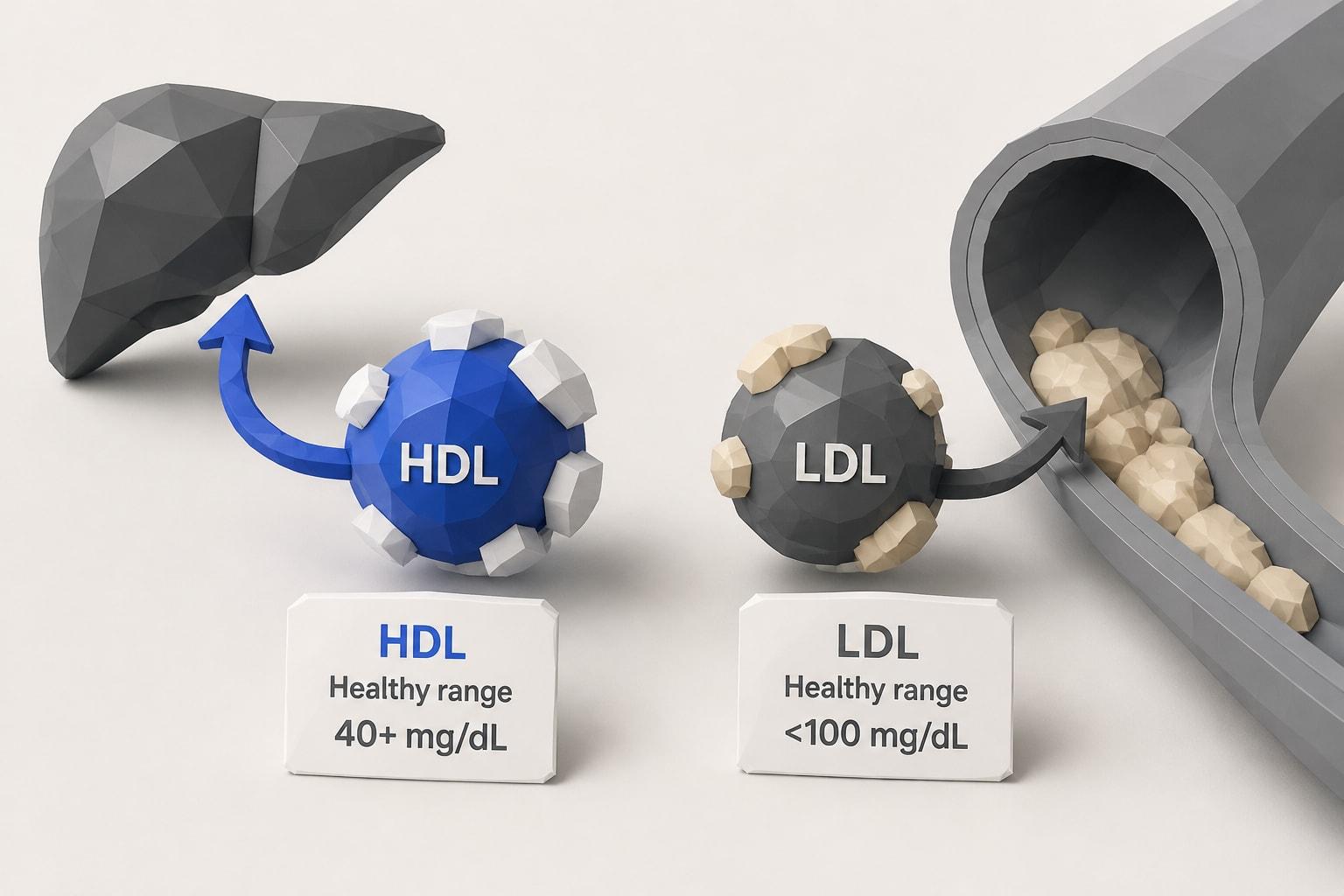
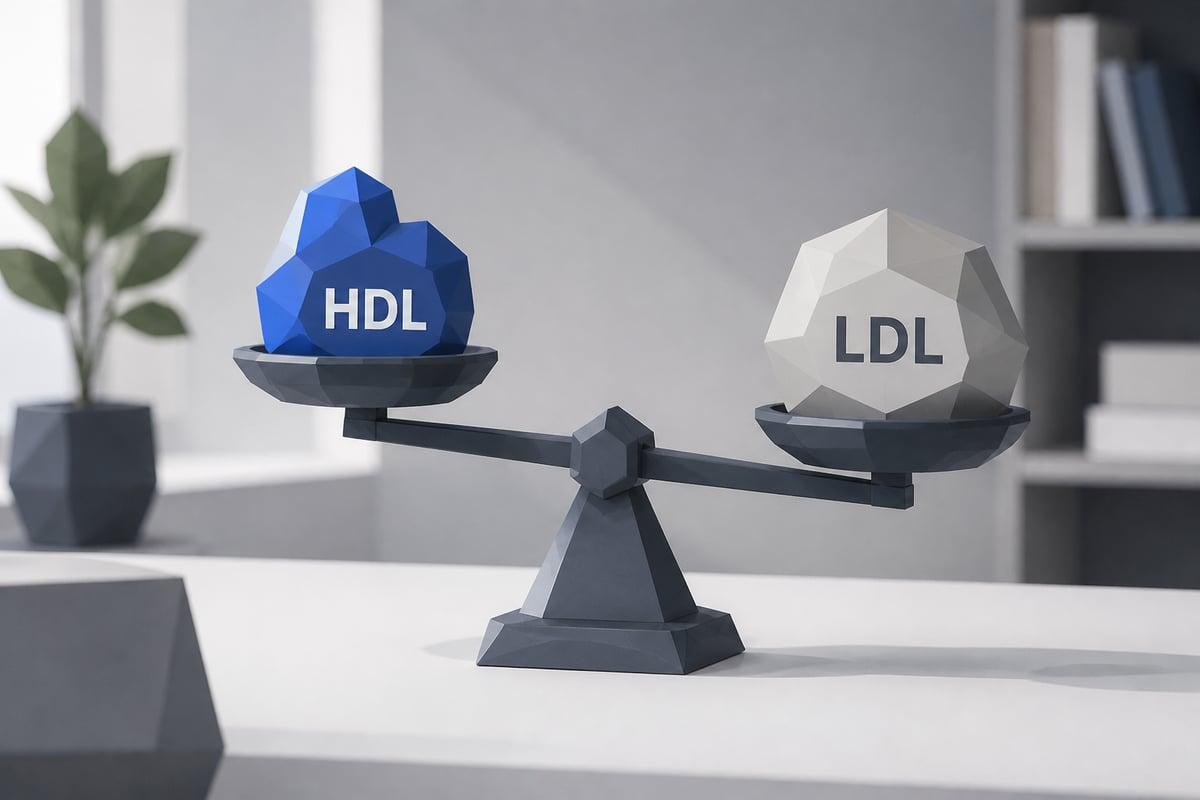
LDL delivers cholesterol to tissues, where excess can accumulate in arteries, while HDL collects excess cholesterol and returns it to the liver. According to Mayo Clinic Health System, LDL can build up in artery walls and contribute to heart attack and stroke risk, whereas HDL carries excess cholesterol back to the liver, where it is broken down and removed.
That difference explains the common shorthand of "bad" and "good" cholesterol. The shorthand is useful but incomplete, as later sections show.
What is bad cholesterol?
Bad cholesterol is LDL, the lipoprotein that deposits cholesterol in artery walls and, over years, contributes to plaque. When plaque narrows or blocks an artery, blood flow to the heart or brain can drop sharply. The Mayo Clinic overview of high blood cholesterol describes how this plaque forms and why screening matters.
What is good cholesterol?
Good cholesterol is HDL. Its main job is reverse transport: pulling cholesterol out of tissues and delivering it to the liver for disposal. Higher HDL is generally associated with lower risk, though raising HDL on its own has not reliably prevented heart attacks.
What is a good LDL level?
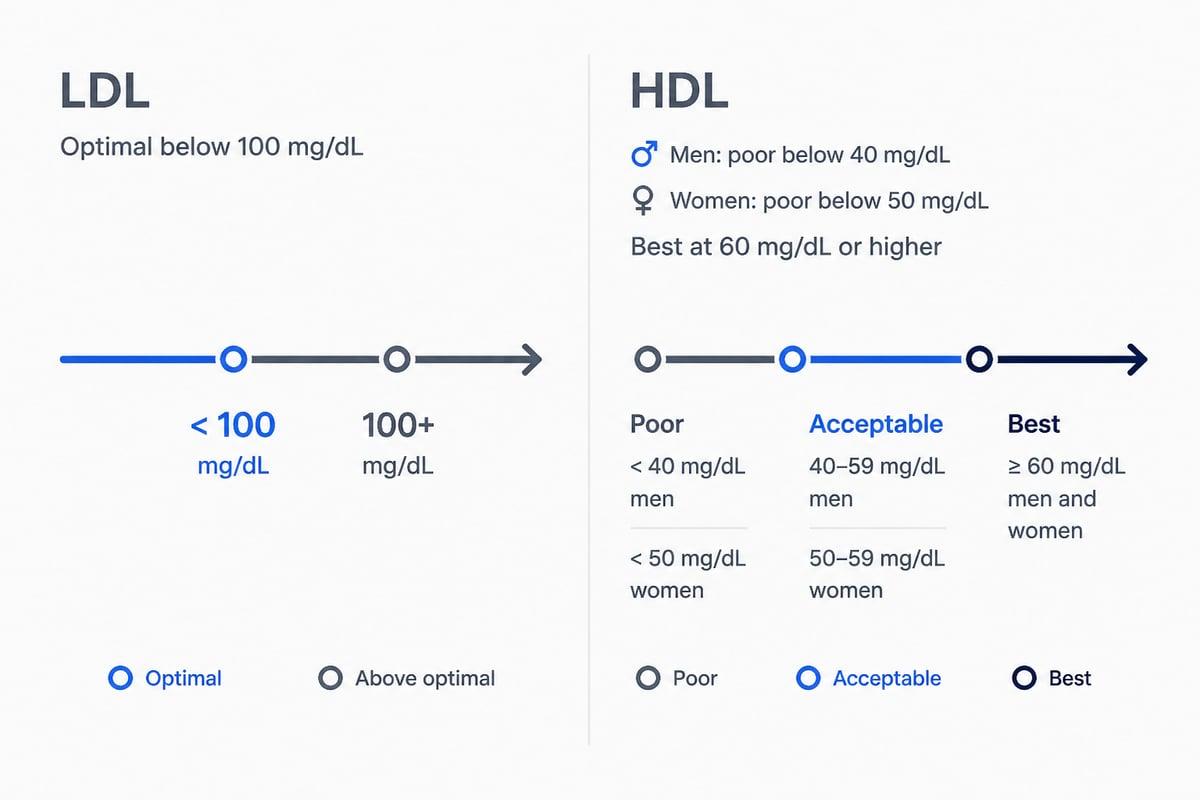
For healthy adults without coronary artery disease, an LDL below 100 mg/dL is considered optimal, according to Mayo Clinic's cholesterol test guide. People with existing heart disease or several risk factors are often given lower targets by their physicians.
For HDL, the same guide classifies below 40 mg/dL for men or below 50 mg/dL for women as poor, and 60 mg/dL or higher as best.
| Marker | Goal | Concerning |
|---|---|---|
| LDL | Below 100 mg/dL (optimal, healthy adults) | Rising above that range |
| HDL | 60 mg/dL or higher (best) | Below 40 mg/dL (men) or below 50 mg/dL (women) |
Which cholesterol matters more?
LDL carries the stronger, more direct link to artery plaque, so it is usually the primary treatment target. HDL is better understood as a supporting indicator than as a number to chase.
Three points sharpen that view:
- LDL is causal. Lowering LDL, through lifestyle changes or medication, has been shown repeatedly to reduce cardiovascular events.
- HDL is contextual. Low HDL often signals other issues, such as insulin resistance, smoking, or inactivity. Fixing those problems helps more than the HDL number itself.
- Particle count can differ from the standard LDL value. Two people with the same LDL can carry very different numbers of LDL particles. This is why a seemingly normal result can still hide risk, a topic covered in why a normal LDL can still be dangerous.
What is direct measure HDL?
A direct measure HDL test measures HDL cholesterol itself in the blood sample rather than inferring it from other values. It is the standard way HDL is reported on a lipid panel and as a standalone test, such as the HDL cholesterol test.
LDL works differently. On many panels it is calculated from total cholesterol, HDL, and triglycerides. A direct LDL test measures it instead of estimating it, which can be useful when triglycerides are high and the calculation becomes less reliable. The direct LDL test is available for that purpose.
Comparing your cholesterol testing options
The right test depends on whether you want a basic snapshot or a broader cardiovascular picture. Here are the options adults commonly consider, from mail-in kits to JustLabs panels.
Everlywell Cholesterol & Lipids Test
This finger-prick kit is collected at home and mailed to a lab. It measures total cholesterol, HDL, calculated LDL, and triglycerides, with results in a few days. It is listed at $49. It suits people who want a basic lipid panel from a mail-in kit.
CURO L7 Professional Grade Lipid Blood Cholesterol Test Kit
This is a rapid finger-prick meter with results in about 3 minutes. It reports total cholesterol, HDL, LDL, triglycerides, the LDL/HDL ratio, and non-HDL. The kit includes a meter, 10 strips, 10 lancets, and 10 capillary tube rods. It fits people who want instant readings for ongoing tracking.
LetsGetChecked Diabetes and Heart Test
A finger-prick sample is collected at home and processed in a lab. It measures total cholesterol, LDL, HDL, HDL as a percentage of total cholesterol, HbA1c, triglycerides, and lipoprotein(a). Results arrive online in approximately 2 to 5 days. The listed price is $99. It suits people who want blood sugar and lipoprotein(a) alongside cholesterol.
Everlywell Heart Health Test
This at-home collection kit measures total cholesterol, HDL, calculated LDL, triglycerides, CRP, and HbA1c, adding inflammation and blood sugar to the standard lipids. It is listed at $99. It fits people seeking a broader heart-health screen.
JustLabs Lipid Panel
The Lipid Panel - Complete Cholesterol Test measures cholesterol and triglyceride levels, the core markers for assessing heart disease and stroke risk. You order online with no insurance or doctor visit, then have your blood drawn at one of more than 2,200 Quest Diagnostics locations. Results are delivered securely online with values and reference ranges, and JustLabs states that results are available in 1-3 days.
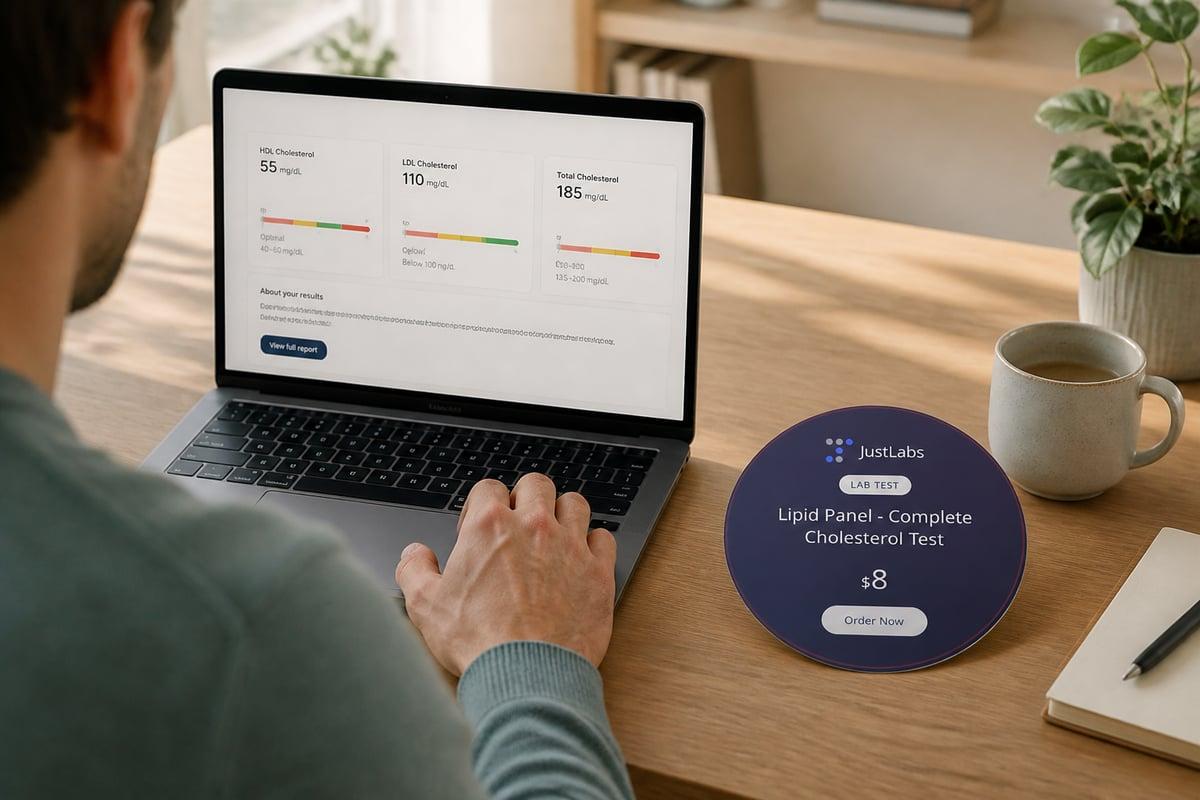
Many people prefer a blood draw at a lab over a finger-prick sample.
JustLabs Advanced Heart Health Panel
The Advanced Heart Health Panel goes beyond basic cholesterol. It includes ApoB, Lp(a), homocysteine, and inflammation markers, which cardiologists use to assess true cardiovascular risk. It suits adults whose standard numbers look acceptable but who want a deeper look.
Recommended Panel
Advanced Heart Health Panel
Save $4Go beyond basic cholesterol testing. This advanced panel includes the markers cardiologists use to assess true cardiovascular risk: ApoB, Lp(a), homocysteine, and inflammation.
Includes 10 biomarkers
$78.30
Which test should I order?
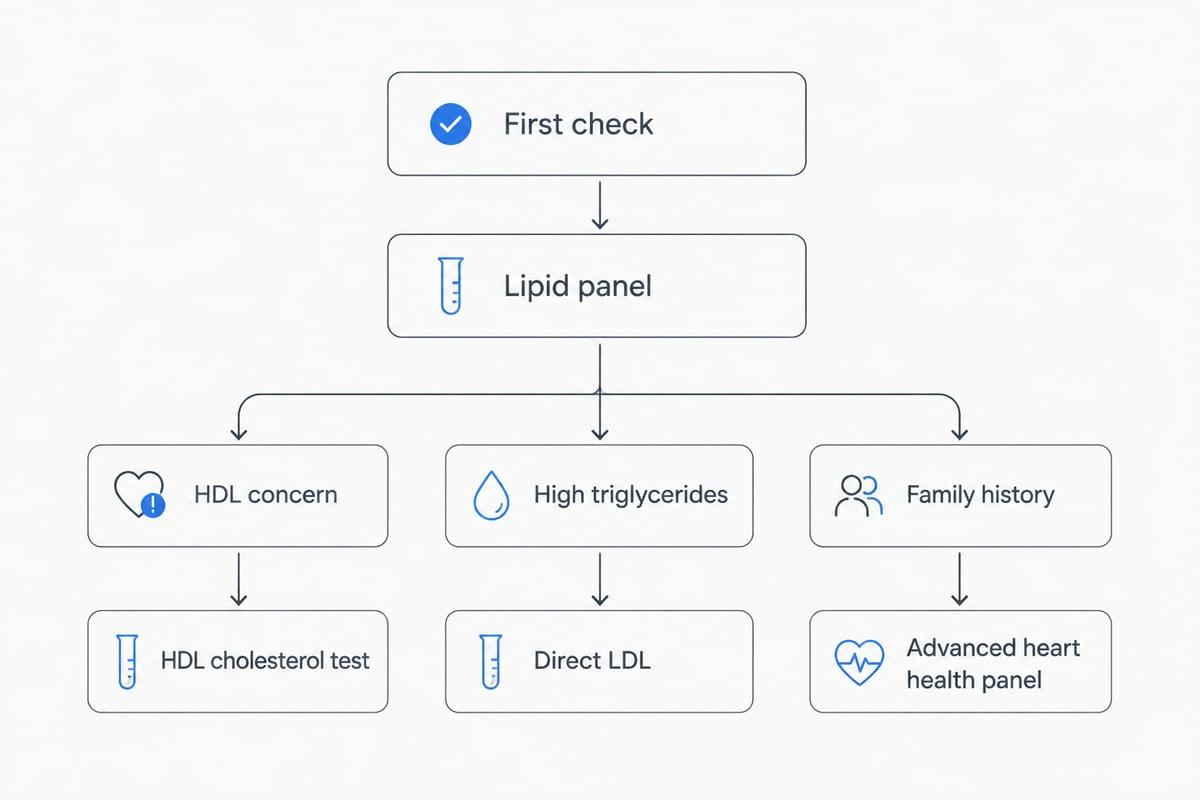
Start with a standard lipid panel unless you already know you need something more specific. It reports total cholesterol, HDL, LDL, and triglycerides together, which answers most first-time questions.
| Test | What it measures | When to order | Fasting |
|---|---|---|---|
| Lipid panel | Total cholesterol, HDL, LDL, triglycerides | First check or annual routine screening | Often not required, but follow the instructions on your order |
| HDL cholesterol | HDL directly | You only need to re-check or track HDL | Typically not required |
| Direct LDL | LDL measured, not calculated | Triglycerides are high or the calculated LDL looks unreliable | Follow the test instructions |
| Advanced heart health panel | ApoB, Lp(a), homocysteine, inflammation | Normal-looking lipids but family history or other risk | Follow the test instructions |
Choose by situation:
- Never tested, or tested more than a year ago: order the lipid panel.
- Your HDL is the concern: order the standalone HDL cholesterol test to track it over time.
- Your LDL is the concern, or triglycerides are elevated: order the direct LDL test.
- Family history of early heart disease: consider the advanced panel for ApoB and Lp(a).
When you need both
You need both HDL and LDL in nearly every case, because the pairing shows the balance between cholesterol being delivered and cholesterol being cleared. The lipid panel gives you both in one draw. Order the individual tests separately only when you are retesting a single marker after a lifestyle change or a medication adjustment.
Recommended Test
Lipid Panel (Standard)
The standard lipid panel measures your cholesterol and triglyceride levels - essential markers for assessing your risk of heart disease and stroke.
Includes 6 biomarkers
$7.90
If you take a statin, you may also want to understand how statins affect liver enzyme results, since those labs are often monitored alongside lipids.
How to improve your HDL and LDL numbers
Lifestyle changes move both numbers, and the most effective ones overlap. Consider this order of impact:
- Cut saturated and trans fats. This is the most reliable way to lower LDL through diet.
- Add soluble fiber. Oats, beans, and fruit help reduce LDL absorption.
- Move regularly. Aerobic exercise tends to raise HDL and lower triglycerides.
- Stop smoking. Quitting is associated with higher HDL.
- Manage weight and blood sugar. Insulin resistance often pairs with low HDL and high triglycerides.
Retesting a few months after making changes lets the results reflect your new habits. Tracking the same markers over time matters more than any single reading, and reading your lab results without a doctor is easier when you can compare values against the reference ranges on each report.
Medication decisions belong to your physician. Self-pay testing gives you the numbers, but it does not replace a treatment plan, and anyone with chest pain or other urgent symptoms should seek emergency care rather than order a test.
Key takeaways
- LDL is the primary driver of plaque buildup, so it is usually the main treatment target; HDL provides supporting context.
- An optimal LDL for healthy adults is below 100 mg/dL, and HDL of 60 mg/dL or higher is considered best.
- A lipid panel reports both values, along with triglycerides, in one draw.
- A direct LDL measurement is useful when triglycerides are high, and an advanced panel adds ApoB and Lp(a) for deeper risk assessment.
- Retest a few months after lifestyle changes to see whether they moved your numbers.
FAQ
Is a higher HDL always better?
Not always. HDL of 60 mg/dL or higher is classified as best, but very high HDL has not consistently translated into extra protection. Treat HDL as one piece of a broader picture that includes LDL, triglycerides, and blood sugar.
Do I need to fast before a cholesterol test?
Requirements vary by test and by the instructions on your order. Many standard lipid panels no longer require fasting, but a direct LDL or a panel that includes other markers may. Check the instructions for your specific test before your draw.
How often should I check my cholesterol?
A yearly check is a reasonable baseline for most adults, and a retest a few months after a major diet, exercise, or medication change if you want to see the effect. If your numbers are borderline or you have risk factors, more frequent tracking helps you spot trends early.
Pick one test from the table above and note your most recent cholesterol values so you have a baseline to compare against. If you want the full picture, the Lipid Panel - Complete Cholesterol Test reports HDL, LDL, and triglycerides together, with results generally delivered online within 1 to 3 business days. You can order without insurance or a doctor visit and have your blood drawn at a nearby Quest Diagnostics location, so Browse Tests on JustLabs to choose the panel that fits your goals.
Related reading
References
Ference BA, Ginsberg HN, Graham I, Ray KK, Packard CJ, Bruckert E, Hegele RA, Krauss RM, Raal FJ, Schunkert H, Watts GF, Borén J, Fazio S, Horton JD, Masana L, Nicholls SJ, Nordestgaard BG, van de Sluis B, Taskinen MR, Tokgözoglu L, Landmesser U, Laufs U, Wiklund O, Stock JK, Chapman MJ, Catapano AL. Low-density lipoproteins cause atherosclerotic cardiovascular disease. 1. Evidence from genetic, epidemiologic, and clinical studies. A consensus statement from the European Atherosclerosis Society Consensus Panel. Eur Heart J. 2017 Aug 21;38(32):2459-2472. doi: 10.1093/eurheartj/ehx144. PMID: 28444290. https://pubmed.ncbi.nlm.nih.gov/28444290/
Voight BF, Peloso GM, Orho-Melander M, Frikke-Schmidt R, Barbalic M, Jensen MK, Hindy G, Hólm H, Ding EL, Johnson T, Schunkert H, Samani NJ, Clarke R, Hopewell JC, Thompson JF, Li M, Thorleifsson G, Newton-Cheh C, Musunuru K, Pirruccello JP, Saleheen D, Chen L, Stewart A, Schillert A, Thorsteinsdottir U, Thorgeirsson G, Anand S, Engert JC, Morgan T, Spertus J, Stoll M, Berger K, Martinelli N, Girelli D, McKeown PP, Patterson CC, Epstein SE, Devaney J, Burnett MS, Mooser V, Ripatti S, Surakka I, Nieminen MS, Sinisalo J, Lokki ML, Perola M, Havulinna A, de Faire U, Gigante B, Ingelsson E, Zeller T, Wild P, de Bakker PI, Klungel OH, Maitland-van der Zee AH, Peters BJ, de Boer A, Grobbee DE, Kamphuisen PW, Deneer VH, Elbers CC, Onland-Moret NC, Hofker MH, Wijmenga C, Verschuren WM, Boer JM, van der Schouw YT, Rasheed A, Frossard P, Demissie S, Willer C, Do R, Ordovas JM, Abecasis GR, Boehnke M, Mohlke KL, Daly MJ, Guiducci C, Burtt NP, Surti A, Gonzalez E, Purcell S, Gabriel S, Marrugat J, Peden J, Erdmann J, Diemert P, Willenborg C, König IR, Fischer M, Hengstenberg C, Ziegler A, Buysschaert I, Lambrechts D, Van de Werf F, Fox KA, El Mokhtari NE, Rubin D, Schrezenmeir J, Schreiber S, Schäfer A, Danesh J, Blankenberg S, Roberts R, McPherson R, Watkins H, Hall AS, Overvad K, Rimm E, Boerwinkle E, Tybjaerg-Hansen A, Cupples LA, Reilly MP, Melander O, Mannucci PM, Ardissino D, Siscovick D, Elosua R, Stefansson K, O'Donnell CJ, Salomaa V, Rader DJ, Peltonen L, Schwartz SM, Altshuler D, Kathiresan S. Plasma HDL cholesterol and risk of myocardial infarction: a mendelian randomisation study. Lancet. 2012 Aug 11;380(9841):572-80. doi: 10.1016/S0140-6736(12)60312-2. PMID: 22607825. https://pubmed.ncbi.nlm.nih.gov/22607825/
Martin SS, Blaha MJ, Elshazly MB, Toth PP, Kwiterovich PO, Blumenthal RS, Jones SR. Comparison of a novel method vs the Friedewald equation for estimating low-density lipoprotein cholesterol levels from the standard lipid profile. JAMA. 2013 Nov 20;310(19):2061-8. doi: 10.1001/jama.2013.280532. PMID: 24240933. https://pubmed.ncbi.nlm.nih.gov/24240933/
Nordestgaard BG. A Test in Context: Lipid Profile, Fasting Versus Nonfasting. J Am Coll Cardiol. 2017 Sep 26;70(13):1637-1646. doi: 10.1016/j.jacc.2017.08.006. PMID: 28935041. https://pubmed.ncbi.nlm.nih.gov/28935041/