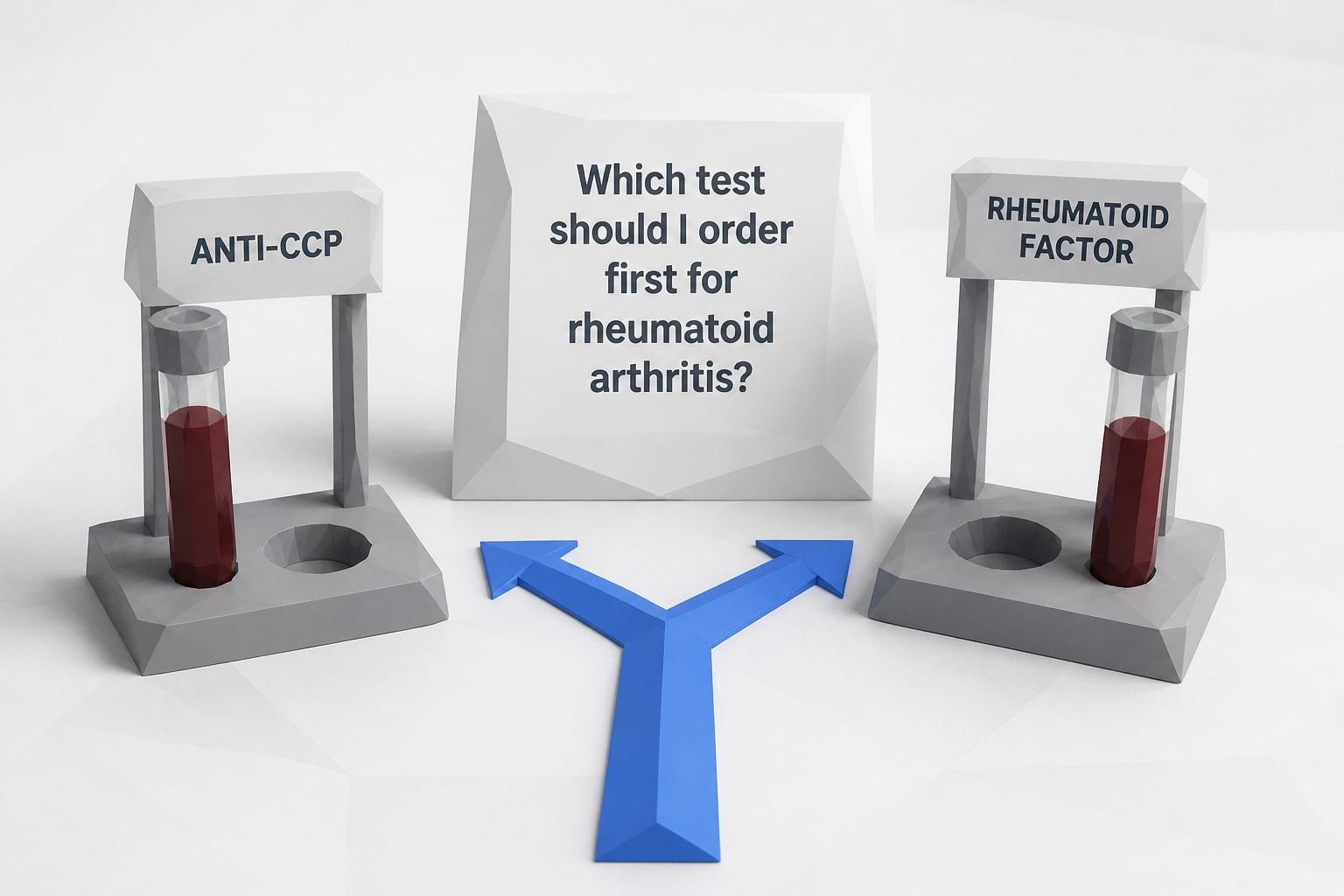
When comparing anti-CCP vs rheumatoid factor and which comes first, the answer is that neither test is required to go first: anti-CCP is more specific for rheumatoid arthritis (RA), while rheumatoid factor (RF) is the older, more widely available screen. Most clinicians order them together, and if you must choose one, anti-CCP gives a more reliable signal when RA is suspected.
Big picture
- What they are: RF and anti-CCP are blood antibodies that doctors use to support a diagnosis of rheumatoid arthritis. Neither one confirms or rules out RA alone.
- Why it matters: RA damages joints over time, and early recognition allows earlier treatment. Antibody results also help predict how aggressive the disease may become.
- Who it affects: Adults with persistent joint pain, morning stiffness, or swelling in the hands, wrists, or feet, particularly when symptoms last more than a few weeks.
- Timing: Antibodies can appear in the blood years before symptoms start, so a positive result without symptoms is still worth discussing with a clinician.
- Next step: Order both tests in one blood draw if cost allows, then bring the results to a rheumatologist or primary care provider.
What do anti-CCP and rheumatoid factor actually measure?
Both tests detect autoantibodies, which are immune proteins that mistakenly target the body's own tissue, but they target different things. Rheumatoid factor is an antibody that binds to other antibodies (IgG). Anti-CCP antibodies bind to citrullinated proteins, which are proteins chemically altered during joint inflammation.
That difference explains their performance. RF shows up in many conditions beyond RA, and it can also appear in some healthy people. Anti-CCP is produced in a narrower set of circumstances, which makes it more specific to RA.
For a deeper look at the RF side, see this overview of the rheumatoid factor blood test.
Anti-CCP vs rheumatoid factor: which comes first in the body and in the lab?
In the body, either antibody can appear first, and both can show up before joint symptoms. There is no fixed sequence that applies to every person.
In the lab, the order depends on your goal. Anti-CCP is the better first choice if you want the most informative single result. RF is the traditional first choice because it has been used for decades and is inexpensive. In practice, ordering both at once avoids a second blood draw and a second round of waiting.
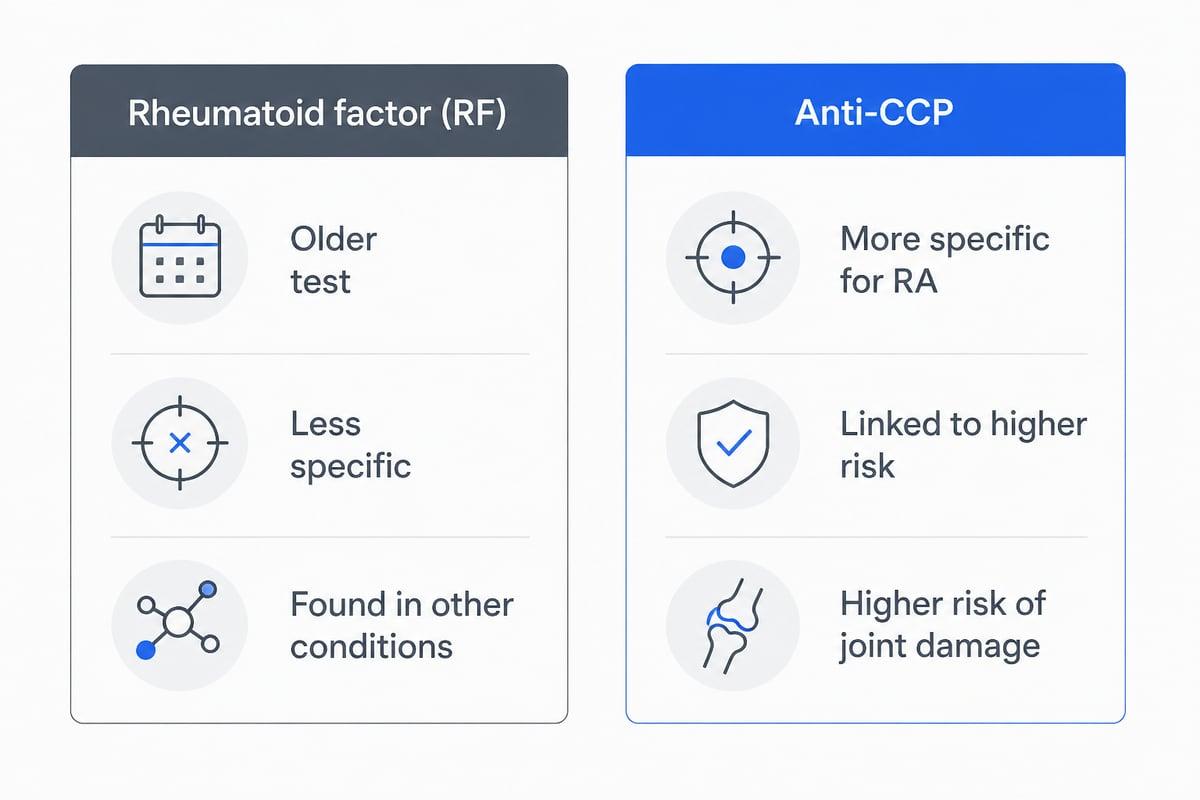
Here is how the two compare on the points that matter most:
- RF: Less specific, and often elevated in other conditions.
- Anti-CCP: Highly specific for RA, and is associated with a higher risk of joint damage.
How accurate is each test for rheumatoid arthritis?
Anti-CCP is the more specific marker, while RF is the more commonly positive one, and neither catches every case. The NHS reports that more than half of people with RA have elevated RF when the disease starts, while about 1 in 20 people without RA also test positive. That false-positive rate is the main reason RF alone cannot settle the question.
For anti-CCP, the same NHS source notes that a positive result makes RA very likely, but some people with RA do not have anti-CCP antibodies. Anti-CCP is also used to help predict how the disease may progress.
Two terms help you read these numbers:
- Sensitivity: how often the test is positive in people who have the disease.
- Specificity: how often the test is negative in people who do not.
RF is less specific than anti-CCP. Together they can cover each other's gaps.
Quick comparison of the two tests
Both are simple blood draws. This table summarizes what each measures and when to order it.
| Rheumatoid factor (RF) | Anti-CCP | |
|---|---|---|
| What it measures | Antibodies that bind other antibodies (IgG) | Antibodies against citrullinated proteins |
| Specificity for RA | Moderate; positive in other conditions | High |
| When to order | First-line screen for joint pain and stiffness; also useful if you want a broad, low-cost marker | When you want a more RA-specific result, or RF is negative but symptoms persist |
| Fasting needed | No | No |
| Test page | Rheumatoid factor | CCP antibody |
If a specific preparation instruction applies to your draw, the order page for each test lists it.
Which one should I order?
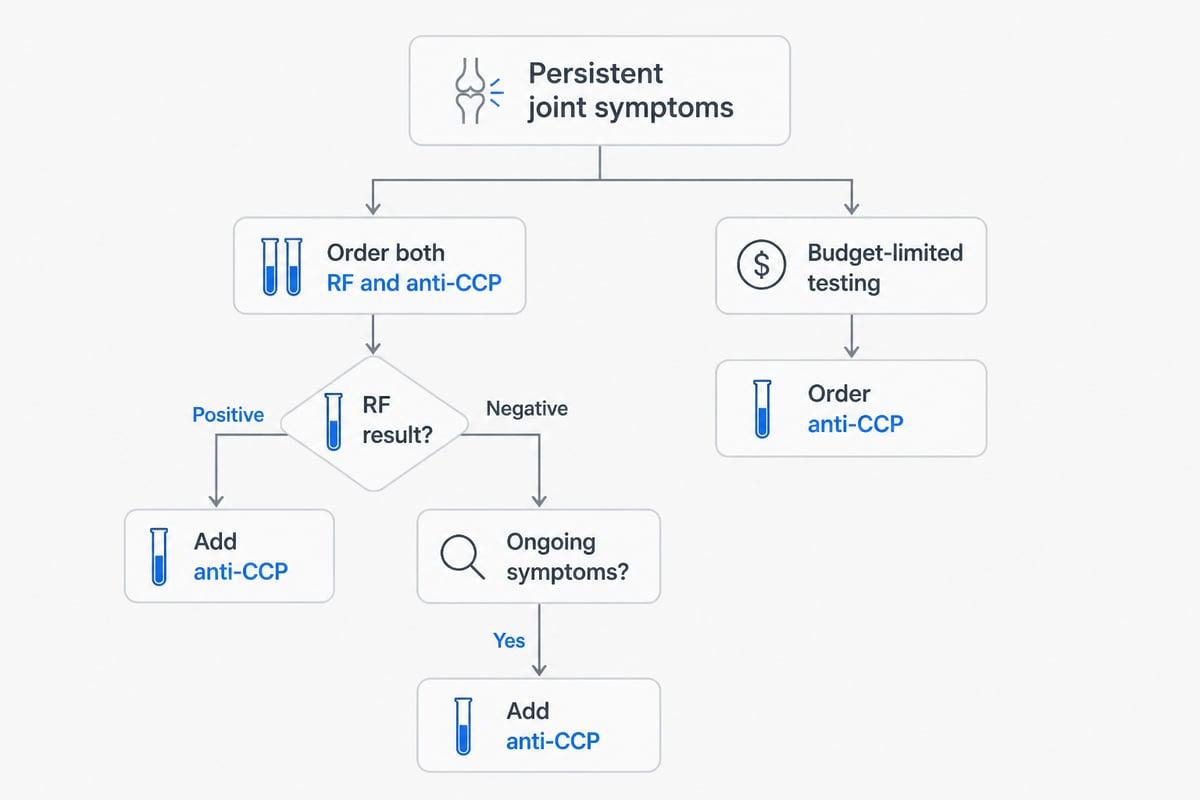
Anti-CCP is a reasonable choice if you can only afford one test, and ordering both is useful when joint symptoms persist. The answer shifts a little depending on your situation:
- You have persistent joint pain, swelling, or morning stiffness lasting several weeks: Order both. Together they give the most complete picture from a single draw.
- You want one test and are trying to keep costs down: Choose anti-CCP, since a positive result is the stronger indicator of RA. You can compare current pricing on the CCP antibody test page.
- You have a family history of RA but no symptoms: Either can be informative, but a positive result without symptoms should be interpreted by a clinician. RF alone is easy to over-read in this case.
- You already have a positive RF and want to firm up the picture: Add anti-CCP, because it is less likely to be positive for unrelated reasons.
- You have a negative RF but symptoms continue: Add anti-CCP. Some people with RA are RF-negative ("seronegative") but anti-CCP positive.
If you are deciding whether to test at all, this guide on RF vs CCP walks through the same choice in more detail.
When do you need both tests?
You need both tests when symptoms point toward RA, because the combination is more informative than either result alone. A person who is positive for both, one, or neither falls into a different risk group.
The NHS notes that people positive for both RF and anti-CCP may be more likely to have severe RA requiring higher levels of treatment. That is a practical reason to test for both rather than stopping at the first positive.
Testing both also helps in the less obvious cases:
- Positive RF only: Could reflect RA, but could also reflect another autoimmune or infectious condition, or no disease at all.
- Positive anti-CCP only: Strongly suggests RA risk even when RF is normal.
- Both negative: Makes RA less likely but does not exclude it, especially early in the disease.
If your symptoms are the main concern, this explanation of rheumatoid factor and joint pain covers what the pattern of joint involvement can suggest.
Can a high rheumatoid factor mean nothing?
Yes, a high rheumatoid factor can mean nothing, because RF is found in some healthy people and becomes more common with age. As noted above, about 1 in 20 people without RA test positive according to the NHS. Chronic infections and other autoimmune conditions can also raise RF.
This is why a positive RF alone should not trigger alarm, and why a clinician looks at your symptoms, joint exam, and other markers together. Adding anti-CCP helps sort out whether an elevated RF points toward RA or is a nonspecific finding.
Why a normal result does not rule out RA
A negative result on one or both tests does not exclude rheumatoid arthritis, and it should not delay a medical evaluation if symptoms persist. Some people with RA stay antibody-negative throughout the course of their illness, and others turn positive only later.
A University Hospitals Birmingham pathology guide states that if RA is clinically suspected, rheumatology referral should be made regardless of serology results. In other words, the blood tests support the diagnosis but do not make it on their own.
Blood tests are used alongside clinical assessment, not in place of it.

Which other tests help alongside RF and anti-CCP?
Inflammation markers and a broader autoimmune screen add context that RF and anti-CCP cannot provide alone. Common additions include C-reactive protein (CRP), erythrocyte sedimentation rate (ESR), and a complete blood count, which can show anemia of chronic inflammation. An antinuclear antibody (ANA) test is sometimes added when lupus or another connective tissue disease is on the list.
A broader screening panel can bundle several of these into one order.
Recommended Panel
Autoimmune Screening Panel
Save $4Our most thorough initial autoimmune workup covers systemic autoimmune markers (ANA, Rheumatoid Factor), thyroid autoimmunity (TPO & TG Antibodies), inflammation (hs-CRP), and blood cell analysis (CBC) — 5 tests in one panel.
Includes 21 biomarkers
$60.70
Because these markers shift with active inflammation, they are also useful for tracking change over time once a clinician has made a diagnosis.
How early can antibodies appear before symptoms?
Antibodies can show up before the first swollen joint, which is why a positive result without symptoms deserves attention rather than panic. A positive anti-CCP in someone with no symptoms indicates elevated risk, not a diagnosis. Not everyone who tests positive goes on to develop RA.
If you have a positive result and no symptoms, the practical steps are measured:
- Share the result with a primary care provider or rheumatologist.
- Note any new joint pain, swelling, or morning stiffness lasting more than an hour.
- Avoid assuming that a single result predicts your outcome.
Because antibody levels can rise and fall, one result is a snapshot, not a verdict.
What do the signs of rheumatoid arthritis look like?
The most common signs of rheumatoid arthritis are persistent joint pain, swelling, warmth, morning stiffness, fatigue, symmetrical joint involvement, and low-grade fever. Symptoms typically affect the small joints of the hands and feet first and appear on both sides of the body.
- Joint pain and tenderness that lasts for weeks
- Swelling in the knuckles, wrists, or toes
- Morning stiffness lasting 30 minutes or longer
- Symmetry, with the same joints affected on both sides
- Fatigue that is out of proportion to activity
- Warmth or redness over affected joints
- Low-grade fever or general malaise during flares
If several of these describe you, testing and a clinical visit are both reasonable next steps.
How to order the tests and read your results
You can order both antibody tests online and have your blood drawn without a doctor's visit, then review your values against the reference ranges shown in your results. Self-pay testing suits adults without insurance or with a high-deductible plan who want a clear, upfront cost before deciding what to do next.
JustLabs offers the rheumatoid factor test and the CCP antibody test as separate orders, with blood draws at Quest Diagnostics locations and results delivered online in 1-3 days. For current pricing and any ordering details, check each test page directly.
Recommended Test
Cyclic Citrullinated Peptide (CCP) Antibody, IgG
Anti-CCP antibodies are found in most people with rheumatoid arthritis and rarely in people without it. Paired with rheumatoid factor, this test helps a clinician evaluate joint pain and stiffness that might be RA.
Includes 1 biomarkers
$29
Recommended Test
Rheumatoid Factor
Rheumatoid Factor is an autoantibody commonly elevated in rheumatoid arthritis. This test helps diagnose RA and assess disease severity, though RF can also be elevated in other conditions.
Includes 1 biomarkers
$7.50
A few reading tips apply to both tests:
- Compare your value with the reference range printed on the report, since ranges vary by lab and method.
- A result marked "positive" or "elevated" is a reason to talk to a clinician, not a diagnosis.
- Keep a copy of the report to share at your appointment.
JustLabs is not a substitute for medical care. If you have severe pain, sudden joint swelling with fever, or you need a prescription or treatment decision, contact a doctor or urgent care directly.
Key takeaways
- Neither test has to come first. Anti-CCP is more specific for RA, and RF is the older, broader screen.
- Ordering both in a single draw gives the most informative picture and avoids repeat visits.
- A positive RF alone can mean nothing, while a positive anti-CCP makes RA much more likely.
- Being positive for both is linked to a higher chance of more severe disease.
- Negative results do not rule out RA. Persistent symptoms warrant a clinical evaluation either way.
- Use blood tests as one input, alongside symptoms, a physical exam, and inflammation markers.
FAQ
What is the most highly specific indicator for rheumatoid arthritis?
Anti-CCP is generally considered the most specific blood marker for rheumatoid arthritis. A positive result makes RA very likely, although a negative result does not exclude it.
What is the full form of the ACCP test?
ACCP stands for anti-cyclic citrullinated peptide, and the test is also called the anti-CCP or CCP antibody test. It detects antibodies against proteins altered during joint inflammation.
Do I need to fast before an anti-CCP or RF test?
No, neither test generally requires fasting, and both use a standard blood draw. Check the instructions on the order page for any lab-specific guidance.
Your next step is to write down when your joint symptoms started and how long the morning stiffness lasts, since that timeline will make your results far easier to interpret. When you are ready to test, JustLabs lets you order RF and anti-CCP online at upfront cash prices and get your blood drawn at a nearby Quest location, so you can browse tests and pick the ones that match your situation. Bring the results to a clinician who can put them in context with an exam.
Related reading



References
Nishimura K, Sugiyama D, Kogata Y, Tsuji G, Nakazawa T, Kawano S, Saigo K, Morinobu A, Koshiba M, Kuntz KM, Kamae I, Kumagai S. Meta-analysis: diagnostic accuracy of anti-cyclic citrullinated peptide antibody and rheumatoid factor for rheumatoid arthritis. Ann Intern Med. 2007 Jun 5;146(11):797-808. doi: 10.7326/0003-4819-146-11-200706050-00008. PMID: 17548411. https://pubmed.ncbi.nlm.nih.gov/17548411/
Sun J, Zhang Y, Liu L, Liu G. Diagnostic accuracy of combined tests of anti cyclic citrullinated peptide antibody and rheumatoid factor for rheumatoid arthritis: a meta-analysis. Clin Exp Rheumatol. 2014 Jan-Feb;32(1):11-21. PMID: 24050751. https://pubmed.ncbi.nlm.nih.gov/24050751/
Motta F, Bizzaro N, Giavarina D, Franceschini F, Infantino M, Palterer B, Sebastiani GD, Selmi C. Rheumatoid factor isotypes in rheumatoid arthritis diagnosis and prognosis: a systematic review and meta-analysis. RMD Open. 2023 Aug;9(3). doi: 10.1136/rmdopen-2022-002817. PMID: 37541740. https://pubmed.ncbi.nlm.nih.gov/37541740/
Deane KD, Holers VM. Rheumatoid Arthritis Pathogenesis, Prediction, and Prevention: An Emerging Paradigm Shift. Arthritis Rheumatol. 2021 Feb;73(2):181-193. doi: 10.1002/art.41417. PMID: 32602263. https://pubmed.ncbi.nlm.nih.gov/32602263/
De Stefano L, D'Onofrio B, Gandolfo S, Bozzalla Cassione E, Mauro D, Manzo A, Ciccia F, Bugatti S. Seronegative rheumatoid arthritis: one year in review 2023. Clin Exp Rheumatol. 2023 Mar;41(3):554-564. doi: 10.55563/clinexprheumatol/go7g26. PMID: 36971084. https://pubmed.ncbi.nlm.nih.gov/36971084/