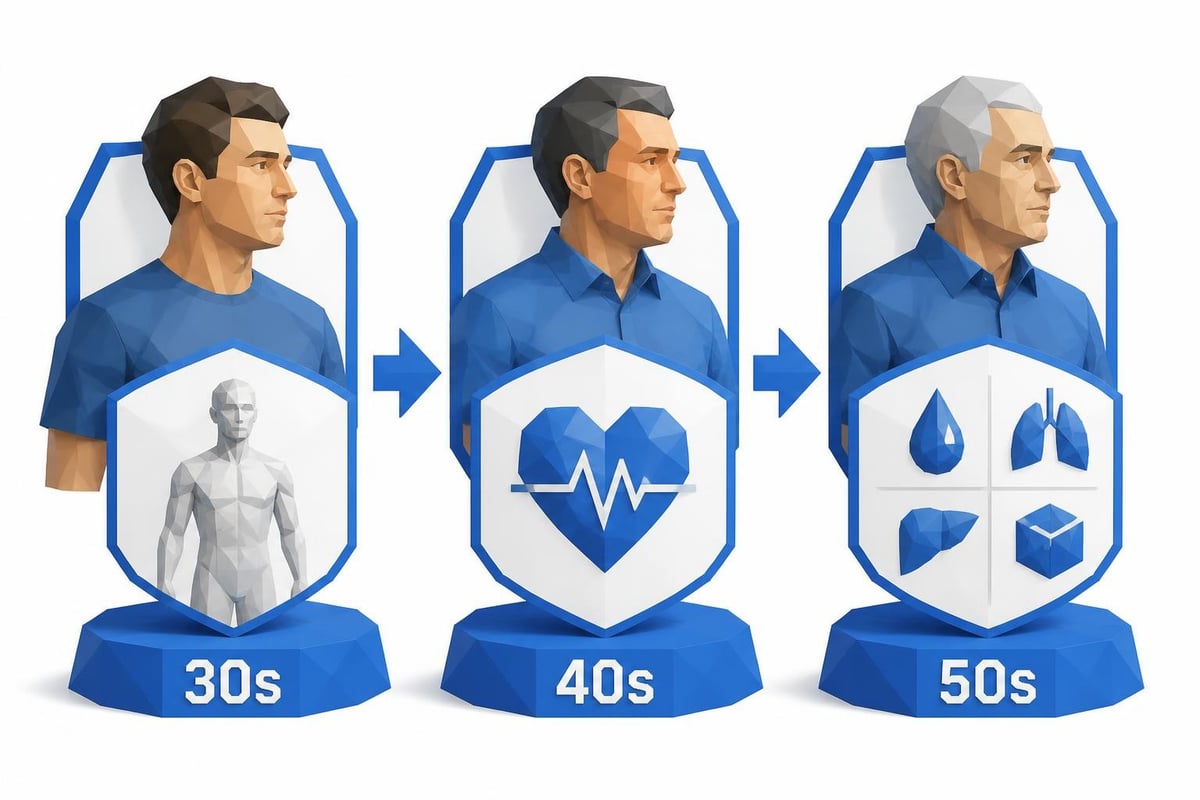
Your body changes dramatically as you move through your 30s, 40s, and 50s, and your preventive health strategy should evolve accordingly. While age provides a useful framework for thinking about health priorities, the most effective approach to blood work in your 30s 40s 50s focuses on personal risk factors, family history, and emerging health patterns rather than arbitrary age cutoffs. Understanding which biomarkers matter most during each decade helps you detect potential problems early, when interventions are most effective and least invasive.
Essential Blood Work in Your 30s: Building Your Health Baseline
Your 30s represent a critical window for establishing baseline health metrics that will serve as comparison points for decades to come. This decade often brings career advancement, possible family expansion, and the first subtle signs that your metabolism isn't quite what it was in your 20s.
Metabolic and Blood Sugar Monitoring
Even if you feel perfectly healthy, your 30s are the ideal time to screen for insulin resistance and metabolic dysfunction. A comprehensive metabolic panel should include:
- Fasting glucose levels
- Hemoglobin A1C for three-month glucose average
- Fasting insulin to detect early insulin resistance
- Complete lipid panel with LDL particle size
The prevalence of prediabetes and type 2 diabetes continues rising in younger adults, making early detection increasingly important. Many people in their 30s develop insulin resistance years before glucose levels become clinically abnormal, so tracking fasting insulin provides an early warning system.
Thyroid function deserves particular attention during this decade, especially for women. Thyroid disorders can develop silently, causing symptoms easily dismissed as stress or busy lifestyle factors. A complete thyroid panel including TSH, Free T3, Free T4, and thyroid antibodies provides comprehensive assessment.
Hormone and Fertility Considerations
For women considering pregnancy or tracking reproductive health, hormone testing becomes particularly relevant. Key markers include:
| Hormone Test | Purpose | Timing Considerations |
|---|---|---|
| FSH and LH | Ovarian reserve assessment | Day 3 of menstrual cycle |
| Estradiol | Baseline hormone levels | Early follicular phase |
| AMH | Egg quantity indicator | Any time during cycle |
| Progesterone | Ovulation confirmation | Day 21 of cycle |
For men, testosterone levels begin their gradual decline during the 30s, though significant drops typically occur later. Baseline testosterone testing in your early 30s provides valuable comparison data for future decades.
According to preventive screening recommendations, establishing these baselines early allows for better trend analysis as you age. The ability to order labs without a doctor makes it easier to track these markers consistently.
Nutrient Status and Inflammation Markers
Many adults in their 30s develop subclinical nutrient deficiencies that impact energy, cognitive function, and long-term health. Priority nutrients to assess include:
- Vitamin D (25-hydroxy)
- Vitamin B12 and folate
- Iron panel with ferritin
- Magnesium (RBC magnesium preferred)
Inflammation markers like high-sensitivity C-reactive protein (hs-CRP) provide insight into systemic inflammation levels, which correlate with numerous chronic disease risks.
Recommended Panel
Comprehensive Wellness Panel
Save $4.5Our most thorough health screening covers blood cells, organ function, cholesterol, thyroid, blood sugar, vitamin D, inflammation, and iron - everything you need for a complete health picture.
Includes 44 biomarkers
$94
Fasting required
Blood Work in Your 40s: Cardiovascular and Chronic Disease Screening
The 40s mark a transition point where preventive screening becomes increasingly focused on cardiovascular risk and early detection of chronic conditions. This decade often brings the first concrete signs of aging: slower recovery, weight management challenges, and potentially the first prescription medications.
Advanced Cardiovascular Assessment
Heart disease remains the leading cause of death in America, and maintaining heart health requires vigilant monitoring starting in your 40s. Beyond basic lipid panels, comprehensive cardiovascular assessment should include:
- Apolipoprotein B (ApoB) for accurate cardiovascular risk
- Lipoprotein(a) to identify genetic cardiovascular risk
- Homocysteine levels
- Advanced lipid particle testing
Standard cholesterol testing measures cholesterol content, but ApoB counts the actual number of atherogenic particles in your blood, providing superior risk prediction. This matters because two people with identical LDL cholesterol numbers can have vastly different particle counts and therefore different risk levels — which is why cardiologists increasingly order ApoB alongside a standard lipid panel.
| Traditional Lipid Panel | Advanced Cardiac Markers |
|---|---|
| Total cholesterol | ApoB |
| LDL cholesterol | Lipoprotein(a) |
| HDL cholesterol | LDL particle number |
| Triglycerides | Small dense LDL |
Recommended Panel
Advanced Heart Health Panel
Save $6Go beyond basic cholesterol testing. This advanced panel includes the markers cardiologists use to assess true cardiovascular risk: ApoB, Lp(a), homocysteine, and inflammation.
Includes 10 biomarkers
$86
Fasting required
Metabolic Health Intensification
For many people, metabolic changes accelerate during the 40s. Blood work in your 30s 40s 50s should reflect this increasing risk, with more frequent monitoring for those with concerning trends.
A comprehensive metabolic panel should now be performed annually, or every six months if you have prediabetes, elevated liver enzymes, or other risk factors. Pay particular attention to:
- Fasting insulin and glucose together (calculate HOMA-IR)
- Liver function tests (ALT, AST, GGT)
- Kidney function markers (creatinine, eGFR)
- Uric acid levels
Non-alcoholic fatty liver disease (NAFLD) affects up to 25% of adults and often develops silently during the 40s. Elevated liver enzymes combined with metabolic markers can indicate this condition long before imaging studies would detect it.

Hormone Transitions and Testing
Both women and men experience significant hormonal shifts during their 40s. For women approaching perimenopause, hormone fluctuations can begin years before menstruation stops. Relevant testing includes:
- Estradiol and progesterone
- FSH and LH
- DHEA-S
- Sex hormone binding globulin (SHBG)
Men often experience more pronounced testosterone decline during this decade. A complete male hormone panel should assess total testosterone, free testosterone, SHBG, and estradiol to understand the full hormonal picture — one piece of the full set of annual labs men should run after 40.
Resources like the preventive health checks guide emphasize that hormone testing in your 40s helps distinguish normal aging from treatable imbalances.
Cancer Screening Markers
While many cancer screenings involve imaging rather than blood work, certain tumor markers and inflammatory markers can provide additional risk assessment:
- CA 19-9 for pancreatic cancer risk (especially with family history)
- CEA for colorectal cancer monitoring
- PSA for men (typically starting at 45-50)
These markers work best in combination with other screening methods rather than as standalone tests. Understanding lab test pricing helps you budget for comprehensive screening without insurance-related constraints.
Blood Work in Your 50s: Comprehensive Monitoring and Disease Management
By your 50s, the focus shifts toward comprehensive monitoring, early intervention for detected issues, and managing emerging chronic conditions. This is when blood work in your 30s 40s 50s truly pays dividends, as you can compare current results against decades of baseline data.
Intensified Cardiovascular Monitoring
Cardiovascular risk increases substantially during the 50s, making this decade critical for aggressive screening and intervention. Annual health screenings become non-negotiable for maintaining heart health.
Beyond the markers discussed for your 40s, consider adding:
- NT-proBNP for heart failure screening
- Troponin for baseline cardiac stress
- Omega-3 index for cardiac protection assessment
- Myeloperoxidase (MPO) for plaque instability risk
Frequency matters as much as comprehensiveness. Annual cardiovascular panels should be the minimum, with semi-annual testing for those with established risk factors or concerning trends.
Bone Health and Mineral Metabolism
Bone density decreases accelerate during the 50s, particularly for women post-menopause. Blood work supporting bone health includes:
- Vitamin D (maintain levels above 40 ng/mL)
- Parathyroid hormone (PTH)
- Calcium and phosphorus
- Bone-specific alkaline phosphatase
These markers help distinguish osteoporosis causes and guide supplementation strategies. The combination of vitamin D, calcium, and PTH reveals whether bone loss results from nutritional deficiency, hormonal changes, or parathyroid dysfunction.
Cancer Surveillance Intensification
The 50s bring increased cancer screening recommendations across multiple organ systems. Blood-based markers complement imaging and procedural screening:
- Annual PSA for men
- CA 125 for women with ovarian cancer risk
- CEA if colorectal polyps detected
- Alpha-fetoprotein for liver cancer risk
Remember that most tumor markers have limited value as screening tools in asymptomatic people but become useful for monitoring known conditions or high-risk individuals.
Chronic Disease Management Panels
By your 50s, many people manage one or more chronic conditions requiring regular monitoring. Common management panels include:
Diabetes Management:
- HbA1C every 3-6 months
- Fasting glucose and insulin
- Microalbumin for kidney protection
- Lipid panel quarterly to semi-annually
Thyroid Management:
- TSH every 6-12 months for diagnosed conditions
- Free T3 and Free T4 when adjusting medication
- Thyroid antibodies to track autoimmune progression
Inflammatory Conditions:
- hs-CRP for systemic inflammation
- Erythrocyte sedimentation rate (ESR)
- Rheumatoid factor and ANA if autoimmune suspected
The comprehensive test catalog allows you to select appropriate panels based on your specific health profile rather than one-size-fits-all age recommendations.
Recommended Panel
Longevity & Aging Panel
Save $16.5This advanced panel targets the biomarkers that matter most for healthy aging: hormones that decline with age, metabolic health, inflammation, and cardiovascular risk factors.
Includes 46 biomarkers
$149
Fasting required
Personalizing Your Testing Strategy Beyond Age
While the framework of blood work in your 30s 40s 50s provides useful guidance, personal risk factors ultimately matter more than chronological age. Several key factors should influence your testing frequency and comprehensiveness.
Family History Adjustments
Strong family history of specific conditions warrants earlier and more frequent testing:
- Heart disease in first-degree relatives: Start advanced lipid testing in your 20s
- Type 2 diabetes family history: Annual metabolic panels starting in your 20s
- Cancer syndromes: Genetic testing and specialized tumor markers as recommended
Early onset conditions in family members should prompt screening 10 years earlier than the youngest affected relative's diagnosis age.
Lifestyle and Occupational Factors
Your daily habits and work environment significantly impact which biomarkers deserve attention:
- High-stress careers: Cortisol testing, inflammatory markers
- Sedentary work: Enhanced metabolic and cardiovascular screening
- Shift work: Comprehensive hormone panels, metabolic assessment
- Toxin exposure: Liver function, heavy metal testing
According to women's health screening recommendations, lifestyle factors often outweigh age in determining optimal testing frequency.
Symptom-Driven Testing
Never ignore persistent symptoms while waiting for age-appropriate screening. Fatigue, weight changes, mood alterations, or cognitive changes warrant immediate investigation regardless of age.
Common symptom-driven panels include:
- Unexplained fatigue: Complete thyroid panel, iron studies, vitamin D, B12
- Weight gain: Metabolic panel, thyroid, cortisol, sex hormones
- Brain fog: Thyroid, B vitamins, inflammatory markers, homocysteine
- Mood changes: Thyroid, sex hormones, vitamin D, inflammatory markers
The advantage of services that allow you to order labs without a doctor is the ability to investigate symptoms promptly without waiting for appointments.
Interpreting Results and Taking Action
Obtaining blood work represents only the first step. Understanding lab results empowers you to make informed decisions about your health trajectory.
Optimal vs. Normal Ranges
Laboratory reference ranges reflect statistical normalcy within tested populations rather than optimal health. Many functional medicine practitioners use tighter ranges:
- Fasting glucose: Optimal under 90 mg/dL (normal range allows up to 99 mg/dL)
- TSH: Optimal 1.0-2.0 mIU/L (normal range 0.4-4.5 mIU/L)
- Vitamin D: Optimal 40-60 ng/mL (normal range 30-100 ng/mL)
- hs-CRP: Optimal under 1.0 mg/L (normal range under 3.0 mg/L)
Being in the normal range doesn't guarantee you're at your personal best, and the distinction between normal versus optimal lab ranges is where many early trends hide. Trending toward optimal ranges often yields noticeable improvements in energy, cognition, and overall wellbeing.
Trend Analysis Over Single Results
Single test results provide limited information compared to trending data over months and years. This is why establishing baselines in your 30s proves so valuable when reviewing results in your 40s and 50s.
A fasting glucose of 95 mg/dL might seem unremarkable until you realize it was 82 mg/dL five years ago. That upward trend signals developing insulin resistance even though current values remain technically normal.
When to Seek Medical Consultation
While direct-access lab testing empowers personal health management, certain results require immediate medical attention:
- Significantly abnormal kidney or liver function
- Severely elevated cardiac markers
- Extreme thyroid dysfunction
- Critical high or low electrolytes
- Tumor markers substantially above normal
Work with healthcare providers who respect your proactive approach and can help interpret complex results within your complete health context. Comprehensive lab work provides them with detailed information to guide treatment decisions.
The Economics of Preventive Testing
Cost concerns prevent many people from obtaining recommended blood work, particularly those with high-deductible insurance plans or no coverage. Understanding the financial landscape helps you prioritize testing within your budget.
Traditional medical system testing often involves:
- Doctor visit copays ($30-75)
- Separate lab fees through insurance
- Unpredictable costs until after testing
- Potential denial of coverage for "unnecessary" preventive tests
The self-pay model offers several advantages:
- Transparent upfront pricing
- No doctor visit required for most tests
- Often lower total cost than insurance-based testing
- Complete control over which tests you order
Comparing Quest self-pay prices against insurance-based costs often reveals surprising savings, particularly for comprehensive panels.
Prioritizing Tests on a Budget
If cost constraints limit testing frequency, prioritize based on personal risk:
Highest priority (annual):
- Complete metabolic panel
- Lipid panel
- HbA1C
- Thyroid screening (TSH at minimum)
Medium priority (every 1-2 years):
- Complete blood count
- Vitamin D
- Iron studies
- Sex hormones if symptomatic
Lower priority (every 2-3 years or when symptomatic):
- Advanced cardiac markers
- Comprehensive nutrient panels
- Inflammatory markers
- Specialty hormones
This prioritization shifts based on personal health status, family history, and emerging symptoms. Resources discussing preventive screenings for adults can help refine your strategy.
Proactive blood work in your 30s 40s 50s represents one of the most powerful tools for maintaining health and preventing chronic disease. While age-based guidelines provide useful frameworks, personalizing your testing strategy based on family history, lifestyle factors, and symptom patterns yields the most meaningful results. Justlabs makes comprehensive preventive testing accessible and affordable with transparent pricing, convenient online ordering, and rapid results delivery, empowering you to take control of your health trajectory at every decade of life.
Related Reading

References
Glavinovic T, Thanassoulis G, de Graaf J, Couture P, Hegele RA, Sniderman AD. Physiological Bases for the Superiority of Apolipoprotein B Over Low-Density Lipoprotein Cholesterol and Non-High-Density Lipoprotein Cholesterol as a Marker of Cardiovascular Risk. J Am Heart Assoc. 2022 Oct 18;11(20):e025858. doi: 10.1161/JAHA.122.025858. PMID: 36216435. https://pubmed.ncbi.nlm.nih.gov/36216435/
Reyes-Soffer G, Ginsberg HN, Berglund L, Duell PB, Heffron SP, Kamstrup PR, Lloyd-Jones DM, Marcovina SM, Yeang C, Koschinsky ML, American Heart Association Council on Arteriosclerosis, Thrombosis and Vascular Biology; Council on Cardiovascular Radiology and Intervention; and Council on Peripheral Vascular Disease. Lipoprotein(a): A Genetically Determined, Causal, and Prevalent Risk Factor for Atherosclerotic Cardiovascular Disease: A Scientific Statement From the American Heart Association. Arterioscler Thromb Vasc Biol. 2022 Jan;42(1):e48-e60. doi: 10.1161/ATV.0000000000000147. PMID: 34647487. https://pubmed.ncbi.nlm.nih.gov/34647487/
Younossi ZM, Koenig AB, Abdelatif D, Fazel Y, Henry L, Wymer M. Global epidemiology of nonalcoholic fatty liver disease-Meta-analytic assessment of prevalence, incidence, and outcomes. Hepatology. 2016 Jul;64(1):73-84. doi: 10.1002/hep.28431. PMID: 26707365. https://pubmed.ncbi.nlm.nih.gov/26707365/
Bergman M, Abdul-Ghani M, DeFronzo RA, Manco M, Sesti G, Fiorentino TV, Ceriello A, Rhee M, Phillips LS, Chung S, Cravalho C, Jagannathan R, Monnier L, Colette C, Owens D, Bianchi C, Del Prato S, Monteiro MP, Neves JS, Medina JL, Macedo MP, Ribeiro RT, Filipe Raposo J, Dorcely B, Ibrahim N, Buysschaert M. Review of methods for detecting glycemic disorders. Diabetes Res Clin Pract. 2020 Jul;165:108233. doi: 10.1016/j.diabres.2020.108233. PMID: 32497744. https://pubmed.ncbi.nlm.nih.gov/32497744/
Morin SN, Leslie WD, Schousboe JT. Osteoporosis: A Review. JAMA. 2025 Sep 9;334(10):894-907. doi: 10.1001/jama.2025.6003. PMID: 40587168. https://pubmed.ncbi.nlm.nih.gov/40587168/