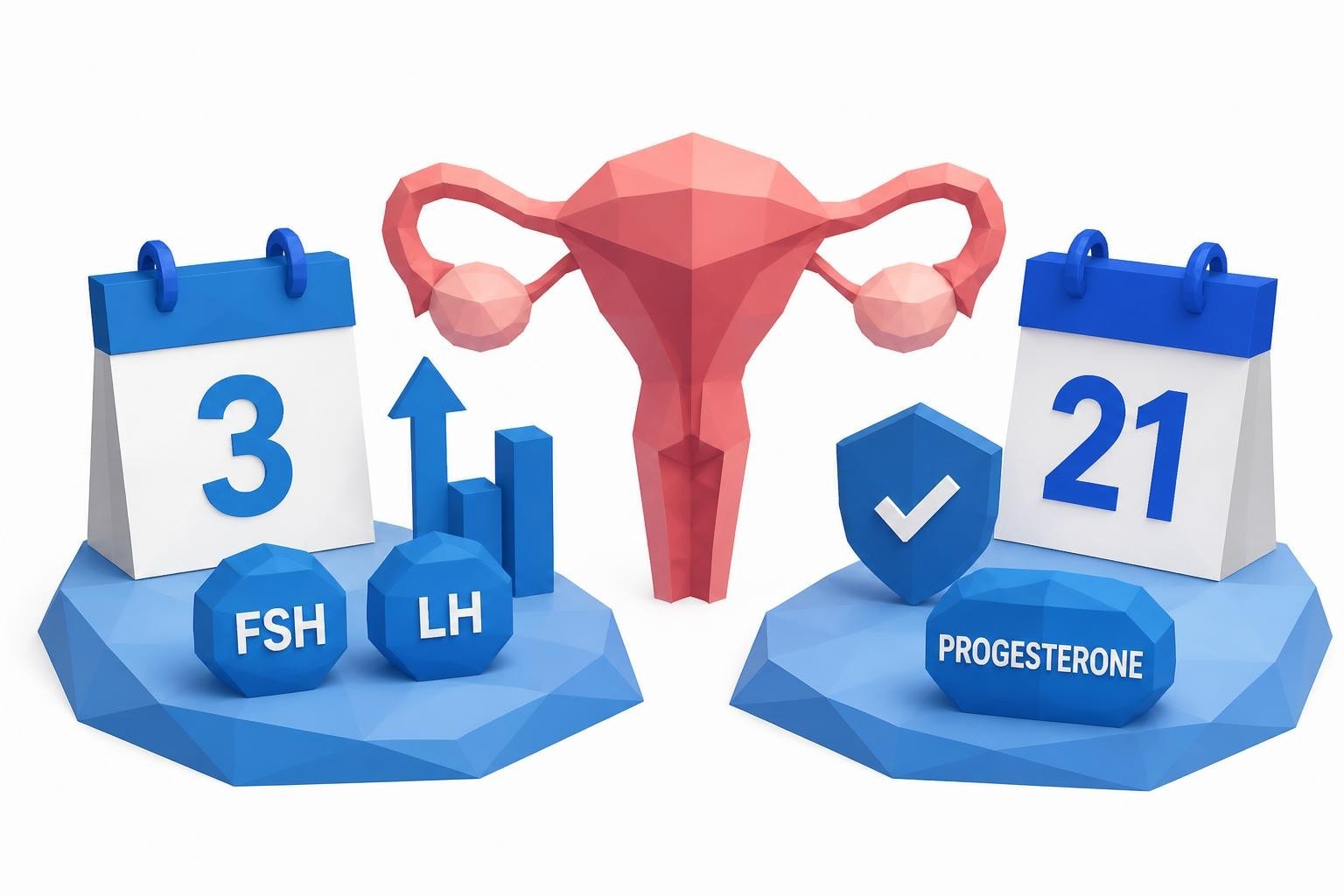
Understanding when to schedule hormone tests during your menstrual cycle can make the difference between accurate, actionable results and misleading data. The timing of hormone testing is not arbitrary-cycle day determines which hormones are elevated or suppressed, and testing at the wrong time can produce results that misrepresent your true hormonal status. Day 3 vs day 21 hormone testing represents two critical windows in the menstrual cycle that capture fundamentally different physiological states, each revealing distinct information about reproductive health and ovarian function.
Why Cycle Timing Changes Hormone Results
Hormone levels fluctuate dramatically throughout the menstrual cycle, making timing the single most important variable in fertility testing. A progesterone level that appears normal on day 7 might be alarmingly low on day 21, and an FSH measurement taken on day 10 cannot be compared to reference ranges established for day 3 testing.
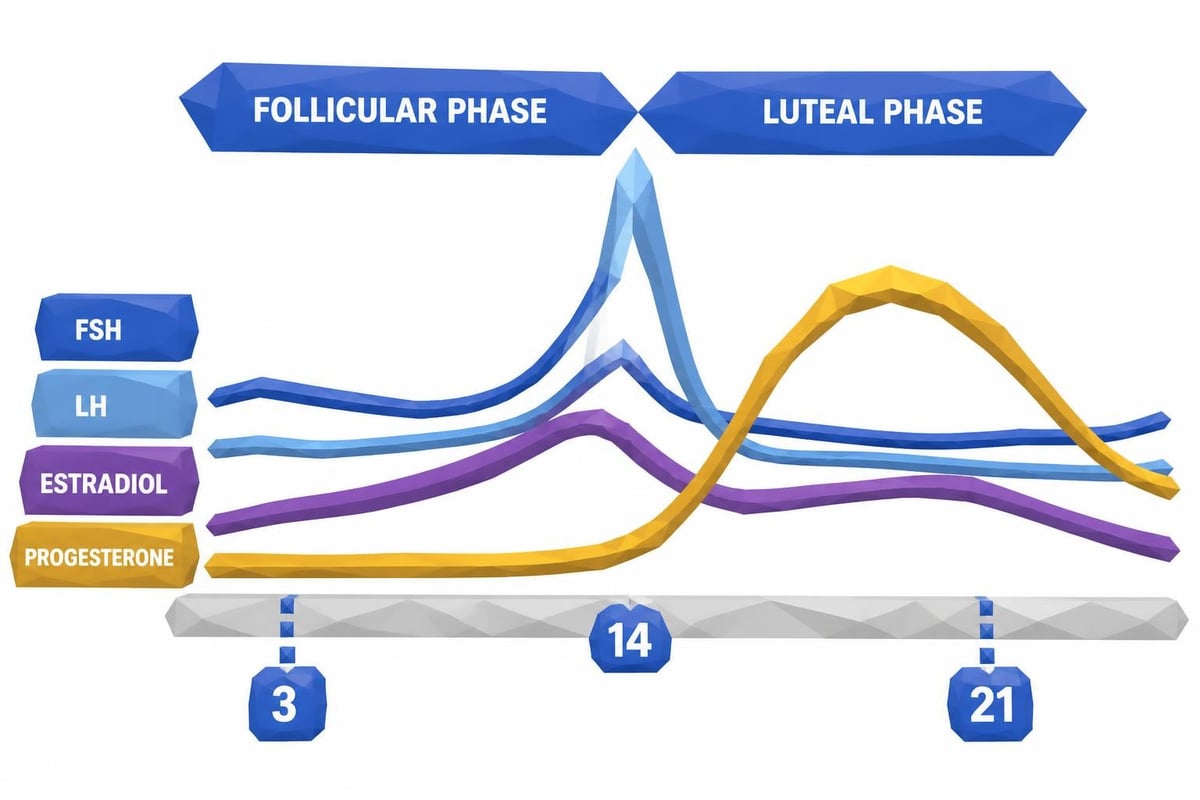
The menstrual cycle operates in distinct phases, each characterized by unique hormonal signatures. During the follicular phase (days 1-14 in a typical 28-day cycle), FSH and LH stimulate follicle development and estrogen production rises gradually. The luteal phase (days 15-28) features progesterone dominance as the corpus luteum supports a potential pregnancy.
Testing at standardized cycle days allows clinicians to:
- Compare results against validated reference ranges
- Assess ovarian reserve through early-follicular hormone levels
- Confirm ovulation through mid-luteal progesterone measurement
- Track treatment response consistently across cycles
- Identify luteal phase defects or anovulation
When tests are performed on non-standard days, interpretation becomes challenging and potentially unreliable. A day 10 FSH reading, for example, reflects different physiological conditions than day 3 FSH, making it impossible to apply standard diagnostic thresholds.
Day 3 Hormone Testing: Baseline Assessment
Day 3 testing-or more accurately, early follicular phase testing performed on cycle days 2-4-establishes baseline measurements of FSH, LH, and estradiol. This window captures hormones at their most stable and interpretable levels for assessing ovarian reserve and reproductive potential.
What Day 3 FSH and LH Reveal
Follicle-stimulating hormone (FSH) on day 3 indicates how hard your pituitary gland must work to recruit follicles for that cycle. Elevated day 3 FSH suggests diminished ovarian reserve-the ovaries require more stimulation to respond. According to clinical endocrine references on ovarian reserve testing, FSH values above 10-15 mIU/mL typically indicate reduced fertility potential, though thresholds vary by laboratory and age.
Luteinizing hormone (LH) measured alongside FSH provides additional context. An elevated LH:FSH ratio (greater than 2:1 or 3:1) can suggest polycystic ovary syndrome (PCOS), while balanced levels indicate normal hypothalamic-pituitary-ovarian axis function.
Recommended Test
FSH & LH
The FSH & LH panel measures both follicle stimulating hormone and luteinizing hormone together, providing comprehensive insight into reproductive function, fertility status, and hormonal balance.
Includes 2 biomarkers
$18
Day 3 estradiol complements FSH interpretation:
- Normal estradiol (<50-80 pg/mL) with normal FSH confirms adequate reserve
- Elevated estradiol (>80 pg/mL) with normal FSH may mask diminished reserve
- Low estradiol with high FSH confirms poor ovarian response
Optimal Timing for Day 3 Tests
Strictly speaking, "day 3" refers to the third day after menstrual bleeding begins, with day 1 defined as the first day of full flow (not spotting). Testing can occur on days 2, 3, or 4 without significantly compromising accuracy, but consistency matters when monitoring trends over multiple cycles.
For those accessing lab testing without traditional doctor orders, understanding this timing window empowers you to schedule appropriately. Most facilities require morning blood draws, as some hormone levels demonstrate mild diurnal variation.
| Hormone | Day 3 Normal Range | Clinical Significance |
|---|---|---|
| FSH | 3-10 mIU/mL | Ovarian reserve marker |
| LH | 2-10 mIU/mL | PCOS screening, baseline |
| Estradiol | 25-75 pg/mL | Reserve confirmation |
| Testosterone | Varies by age | PCOS evaluation |
Day 21 Hormone Testing: Ovulation Confirmation
Day 21 progesterone testing serves one primary purpose: confirming that ovulation occurred. Despite the common "day 21" terminology, the optimal timing is actually seven days after ovulation, which corresponds to day 21 only in women with perfect 28-day cycles.
Understanding Mid-Luteal Progesterone
After ovulation, the ruptured follicle transforms into the corpus luteum, which secretes progesterone to prepare the uterine lining for implantation. Progesterone levels peak approximately 7-8 days after ovulation, making this the ideal measurement window. Global guidelines on infertility diagnosis recommend mid-luteal progesterone assessment as a simple, cost-effective ovulation confirmation method.
Recommended Test
Progesterone
Progesterone is a key reproductive hormone that prepares the uterus for pregnancy and supports early pregnancy. This test helps evaluate ovulation, fertility, and hormonal balance.
Includes 1 biomarkers
$27
A mid-luteal progesterone level above 3 ng/mL generally confirms ovulation occurred, though levels above 10 ng/mL indicate robust ovulation with adequate luteal function. Values between 3-10 ng/mL suggest ovulation happened but may indicate luteal phase insufficiency.
Progesterone results interpretation:
- <3 ng/mL: Likely anovulatory cycle
- 3-10 ng/mL: Ovulation occurred, possible luteal defect
- 10-20 ng/mL: Normal ovulation and luteal function
-
20 ng/mL: Strong ovulation, possible early pregnancy
Timing Challenges with Day 21 Testing
The standard "day 21" recommendation creates significant problems for women with irregular cycles or cycle lengths other than 28 days. Recent reviews on individualized luteal-phase progesterone assessment emphasize that proper timing requires knowing when ovulation occurred, not simply counting to day 21.
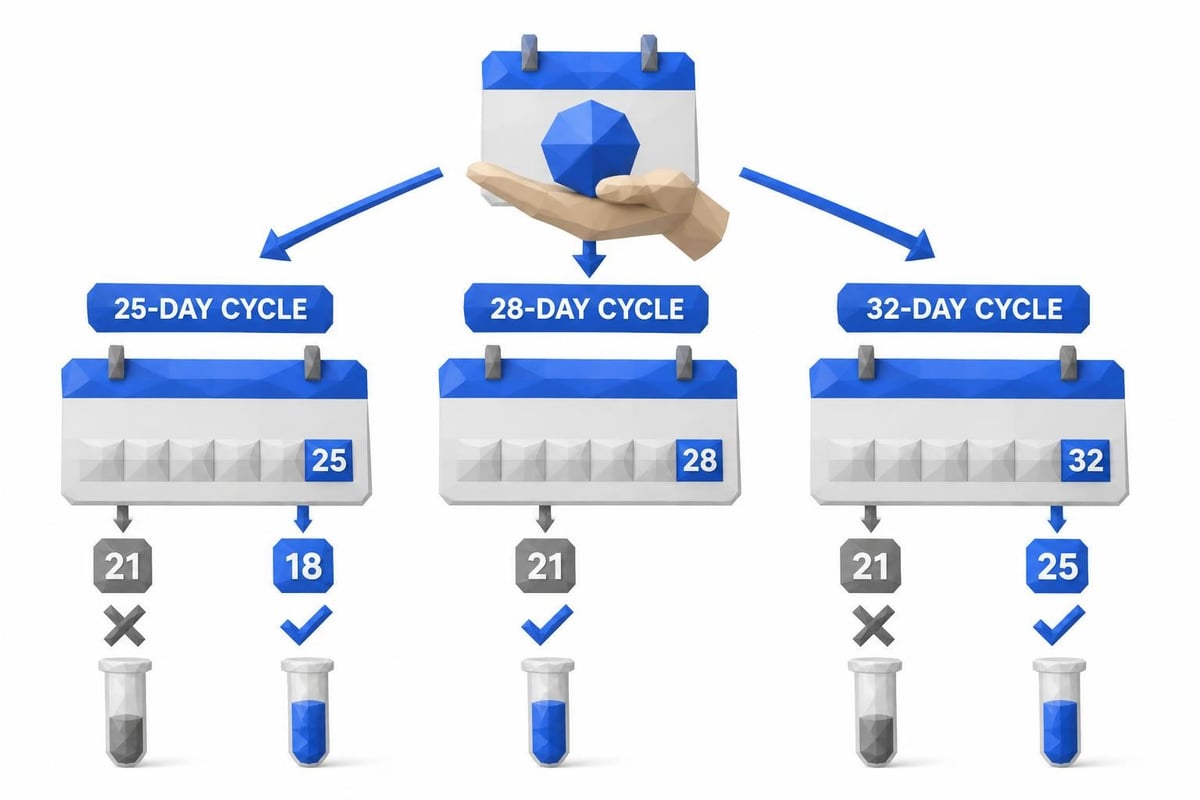
For accurate timing, count backward from expected menstruation. If you typically have 30-day cycles, test on day 23 (30 minus 7). If cycles run 26 days, test on day 19. This approach ensures you capture the true progesterone peak rather than testing too early or too late.
Women using ovulation predictor kits or tracking basal body temperature can pinpoint ovulation more precisely, testing exactly 7 days after the LH surge or temperature shift. This individualized approach significantly improves diagnostic accuracy compared to rigid day 21 testing.
Comparing Day 3 vs Day 21 Hormone Testing
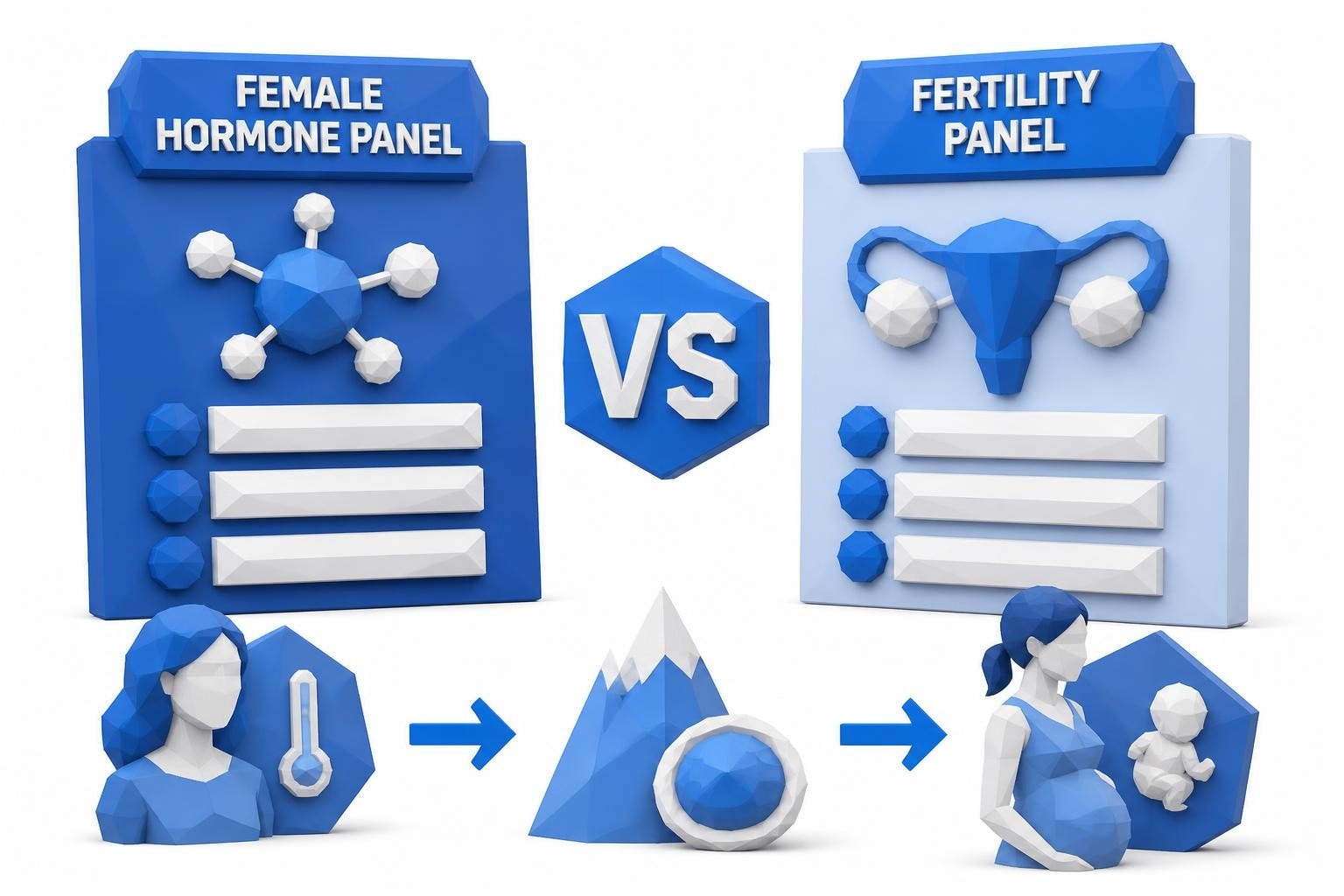
Day 3 vs day 21 hormone testing addresses entirely different clinical questions and should not be viewed as interchangeable or competing approaches. These tests complement each other in comprehensive fertility evaluation, each providing unique insights into reproductive function.
Different Purposes, Different Hormones
Day 3 testing evaluates potential-the ovarian reserve and hormonal environment available for follicle recruitment and development. It answers questions about quantity and quality of remaining eggs, pituitary function, and baseline reproductive hormones.
Day 21 testing evaluates performance-whether the ovary actually released an egg during that specific cycle and whether the corpus luteum functions adequately. It confirms that the processes initiated during the follicular phase reached their intended endpoint.
| Aspect | Day 3 Testing | Day 21 Testing |
|---|---|---|
| Primary Hormones | FSH, LH, Estradiol | Progesterone |
| Cycle Phase | Early Follicular | Mid-Luteal |
| Primary Purpose | Ovarian reserve assessment | Ovulation confirmation |
| Optimal Timing | Days 2-4 of cycle | 7 days post-ovulation |
| Frequency | Annual or as needed | Monthly when tracking |
| Clinical Question | "How many eggs remain?" | "Did I ovulate this month?" |
When to Use Each Test
Most comprehensive fertility workups include both day 3 and day 21 testing during initial evaluation. Day 3 tests establish baseline reserve and help predict response to fertility treatments, while day 21 progesterone confirms whether ovulation occurs naturally.
After initial assessment, testing strategies diverge based on findings. Women with confirmed regular ovulation but diminished reserve might monitor day 3 FSH annually while attempting conception. Those with adequate reserve but inconsistent ovulation might track day 21 progesterone monthly to identify ovulatory versus anovulatory cycles.
Certain conditions require more focused testing. Adult acne hormone workups might emphasize day 3 testosterone and DHEA-S alongside LH:FSH ratios to screen for PCOS. Luteal phase defect investigations prioritize properly timed progesterone measurement, sometimes with serial testing across multiple cycles.
Managing Irregular Cycles in Hormone Testing
Irregular menstrual cycles present the greatest challenge in hormone testing timing, yet these are precisely the situations where hormone assessment proves most valuable. When cycles vary unpredictably, strategic approaches can still yield interpretable results.
Defining Your Cycle Parameters
Before scheduling tests, establish what "irregular" means for your cycles. Track three to six cycles, noting the first day of bleeding and cycle length. Calculate your shortest and longest cycles to identify patterns.
Cycle irregularity categories:
- Mild irregularity: Cycles vary by 4-7 days (e.g., 26-33 days)
- Moderate irregularity: Cycles vary by 8-14 days (e.g., 24-38 days)
- Severe irregularity: Cycles vary by more than 14 days or are absent
For mild irregularity, standard timing still works with minor adjustments. Test on day 3 of any cycle, and time progesterone testing based on your shortest typical cycle length minus seven days. If cycles range from 26-30 days, test progesterone on day 19 (26 minus 7) to ensure you capture the luteal peak even in shorter cycles.
Strategies for Unpredictable Cycles
Women with moderate to severe irregularity need alternative approaches. Day 3 testing remains straightforward-simply test on day 3 of whenever bleeding occurs. The challenge lies in progesterone timing when you cannot predict cycle length.
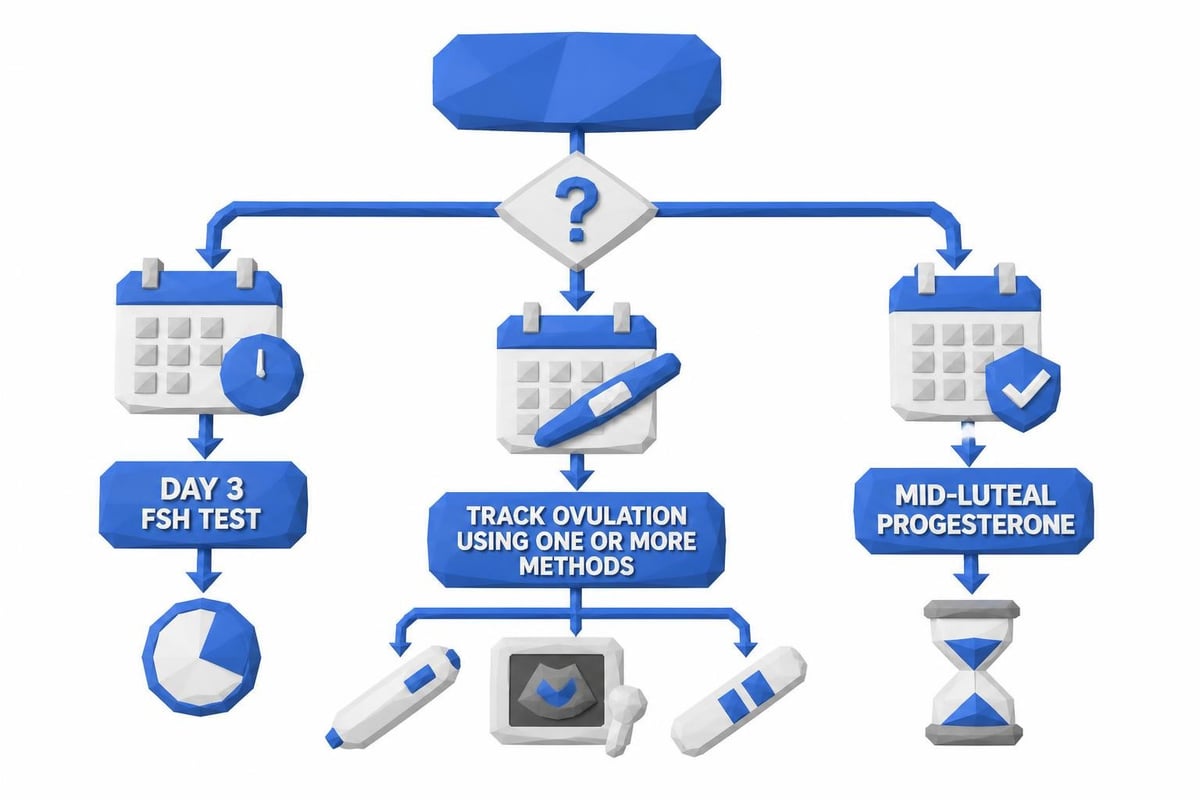
Options for irregular cycle progesterone testing:
-
Ovulation predictor kits: Test daily starting around day 10-12. Once you detect the LH surge, schedule progesterone testing for exactly 7 days later.
-
Basal body temperature tracking: Chart your waking temperature daily. After observing the sustained temperature rise indicating ovulation, count forward 7 days.
-
Serial progesterone testing: When ovulation timing remains uncertain, test progesterone on days 18, 21, and 24. At least one measurement should capture the luteal peak if ovulation occurred.
-
Ultrasound monitoring: For women undergoing fertility treatment, transvaginal ultrasound can visualize follicle development and confirm ovulation timing directly.
Platforms offering transparent lab test pricing make serial testing financially feasible, allowing multiple progesterone measurements across one cycle without insurance pre-authorization delays.
Interpreting Results in Clinical Context
Raw hormone values mean little without proper context. Age, body mass index, medications, time of day, and recent illness all influence hormone levels. Day 3 vs day 21 hormone testing results must be interpreted within your complete clinical picture.
Age-Related Reference Ranges
Ovarian reserve naturally declines with age, making age-specific interpretation essential. A day 3 FSH of 12 mIU/mL raises concerns in a 28-year-old but represents normal age-related decline in a 42-year-old. Similarly, AMH levels that indicate excellent reserve at age 25 would be exceptionally high at age 40.
Most laboratories report general reference ranges that apply broadly across reproductive years. However, fertility specialists use age-stratified thresholds when making treatment decisions. Women in their late 30s and early 40s should expect higher FSH and lower AMH than younger counterparts, even with normal fertility for their age.
Medication and Supplement Effects
Hormonal contraceptives completely invalidate cycle-based hormone testing. Birth control pills, patches, rings, and hormonal IUDs suppress the natural hypothalamic-pituitary-ovarian axis, making both day 3 and day 21 testing uninterpretable. You must discontinue hormonal contraception for at least one full cycle (preferably two or three) before testing.
Diagnostic and therapeutic progesterone use also affects testing. Women taking progesterone supplementation for luteal phase support cannot use progesterone testing to assess natural ovulation. Similarly, fertility medications like clomiphene or letrozole alter the hormonal milieu, requiring specialized interpretation.
Certain supplements and herbs may influence hormone levels, though effects are typically modest. DHEA supplementation can elevate testosterone and potentially improve ovarian response. Vitex (chasteberry) may affect prolactin and progesterone. Disclose all supplements to your healthcare provider when reviewing results.
When to Retest
Single abnormal values warrant confirmation before making major clinical decisions. Day 3 FSH can vary significantly between cycles, particularly in women with diminishing reserve. An isolated elevated FSH reading should be confirmed with repeat testing in a subsequent cycle.
Progesterone levels demonstrate even greater variability. One anovulatory cycle does not indicate chronic anovulation. Most fertility specialists recommend progesterone confirmation across three consecutive cycles before diagnosing consistent ovulation problems.
Retest recommendations:
- Abnormal day 3 FSH: Repeat in 1-2 subsequent cycles
- Low progesterone (<3 ng/mL): Repeat for 2-3 additional cycles
- Inconsistent ovulation patterns: Track for 3-6 months
- Monitoring treatment response: Monthly or per protocol
Accessing Day 3 and Day 21 Testing
Traditional fertility workups require multiple doctor appointments, insurance pre-authorization, and significant time delays. Modern self-pay testing platforms have transformed access, allowing women to proactively investigate their reproductive health without insurance barriers or referral requirements.
Self-Directed Testing Benefits
Direct-access laboratory testing puts you in control of timing, which proves crucial for cycle-dependent hormone measurement. Rather than waiting weeks for an appointment that may not align with day 3 of your cycle, you can schedule testing precisely when needed.
Many comprehensive fertility panels include multiple draw times at reduced package pricing. Women can order day 3 testing independently, then add day 21 progesterone when appropriate based on their cycle tracking.
Recommended Panel
Female Fertility Panel
Save $8This panel measures the key markers of female fertility: AMH (your egg reserve), reproductive hormones (FSH, LH, estradiol), and prolactin. Essential for understanding your fertility timeline.
Includes 5 biomarkers
$151
Advantages of self-pay testing for hormone panels:
- Schedule draws on exact cycle days without appointment delays
- Transparent pricing without insurance copays or surprise bills
- Results typically available within 1-3 business days
- No referral required from primary care or gynecologist
- Privacy in early investigation before involving providers
Cost Considerations
Insurance coverage for fertility testing varies dramatically. Many plans cover diagnostic testing only after 12 months of unsuccessful conception attempts (6 months for women over 35). Same-sex couples and single women face additional coverage barriers, with many plans excluding fertility evaluation entirely.
Self-pay pricing for basic hormone panels typically ranges from $50-200, depending on which hormones are included. When you consider insurance deductibles, copayments, and the cost of multiple doctor visits, HSA and FSA eligible lab tests through direct-access platforms often prove more economical than the insured pathway.
Testing through platforms like Justlabs eliminates price uncertainty. You know the exact cost before ordering, without surprise billing from separate laboratory, collection, and interpretation services.
Advanced Timing Considerations
Beyond basic day 3 vs day 21 hormone testing protocols, certain clinical situations require modified timing or additional measurements to capture a complete hormonal picture.
Cycle Monitoring During Treatment
Women undergoing ovulation induction, intrauterine insemination, or in vitro fertilization require frequent hormone monitoring that extends beyond standard day 3 and day 21 timepoints. Cycle monitoring protocols may include baseline testing on day 2-3, mid-cycle estradiol and LH measurement to predict ovulation, and luteal progesterone to confirm adequate corpus luteum function.
These intensive monitoring protocols help clinicians adjust medication dosing in real-time, time procedures precisely, and identify cycle cancellation indications before investing in unnecessary interventions. While traditional monitoring requires daily clinic visits, some protocols now incorporate home-based testing with rapid result reporting.
Hormonal Transitions and Testing
Perimenopause complicates hormone testing interpretation significantly. Cycles may remain regular in length while becoming anovulatory, or hormones may fluctuate wildly between cycles. An FSH level in the normal range one month may spike into menopausal levels the next, then return to reproductive-range values in a third cycle.
When evaluating hormonal transitions, serial testing across multiple cycles provides more reliable information than single timepoint assessment. Most clinicians recommend testing FSH on day 3 of three separate cycles to establish a pattern. If values consistently exceed 25-30 mIU/mL with accompanying symptoms, perimenopause becomes the likely diagnosis.
Male Factor Timing
While this article focuses on female cycle-dependent testing, male hormone evaluation requires different timing considerations. Testosterone, LH, and FSH in men should be measured in the morning (between 7-10 AM) when levels peak, but timing relative to any particular day or cycle is irrelevant.
Semen analysis, the cornerstone of male fertility evaluation, requires 2-5 days of abstinence before collection-not too short and not too long. When couples investigate fertility together, coordinating female cycle-dependent testing with male hormone and semen analysis ensures comprehensive evaluation within a single cycle.
Related reading
Understanding day 3 vs day 21 hormone testing timing empowers you to gather accurate data about your reproductive health at precisely the right moments in your cycle. Whether you are evaluating fertility potential, confirming ovulation, or investigating irregular cycles, proper timing transforms hormone tests from ambiguous numbers into actionable insights. Justlabs provides convenient access to comprehensive hormone testing with transparent pricing and results delivered in 1-3 days, putting you in control of your reproductive health journey without insurance obstacles or unnecessary appointment delays.
References
Thurston L, Abbara A, Dhillo WS. Investigation and management of subfertility. J Clin Pathol. 2019 Sep;72(9):579-587. doi: 10.1136/jclinpath-2018-205579. PMID: 31296604. https://pubmed.ncbi.nlm.nih.gov/31296604/
Cedars MI. Evaluation of Female Fertility-AMH and Ovarian Reserve Testing. J Clin Endocrinol Metab. 2022 May 17;107(6):1510-1519. doi: 10.1210/clinem/dgac039. PMID: 35100616. https://pubmed.ncbi.nlm.nih.gov/35100616/
Moolhuijsen LME, Visser JA. Anti-Müllerian Hormone and Ovarian Reserve: Update on Assessing Ovarian Function. J Clin Endocrinol Metab. 2020 Nov 1;105(11):3361-73. doi: 10.1210/clinem/dgaa513. PMID: 32770239. https://pubmed.ncbi.nlm.nih.gov/32770239/
Yang J, Chen C. Hormonal changes in PCOS. J Endocrinol. 2024 Apr 1;261(1). doi: 10.1530/JOE-23-0342. PMID: 38285626. https://pubmed.ncbi.nlm.nih.gov/38285626/
Allshouse A, Pavlovic J, Santoro N. Menstrual Cycle Hormone Changes Associated with Reproductive Aging and How They May Relate to Symptoms. Obstet Gynecol Clin North Am. 2018 Dec;45(4):613-628. doi: 10.1016/j.ogc.2018.07.004. PMID: 30401546. https://pubmed.ncbi.nlm.nih.gov/30401546/