Your testosterone level is not a single fixed number. It changes hour by hour, influenced by your body's internal clock and daily rhythms. Understanding how the time of day change your testosterone results is essential for accurate testing, proper diagnosis, and effective health monitoring. Whether you're experiencing symptoms of low testosterone or tracking hormone optimization, testing at the wrong time can lead to misleading results that may affect treatment decisions and health outcomes.
Big picture
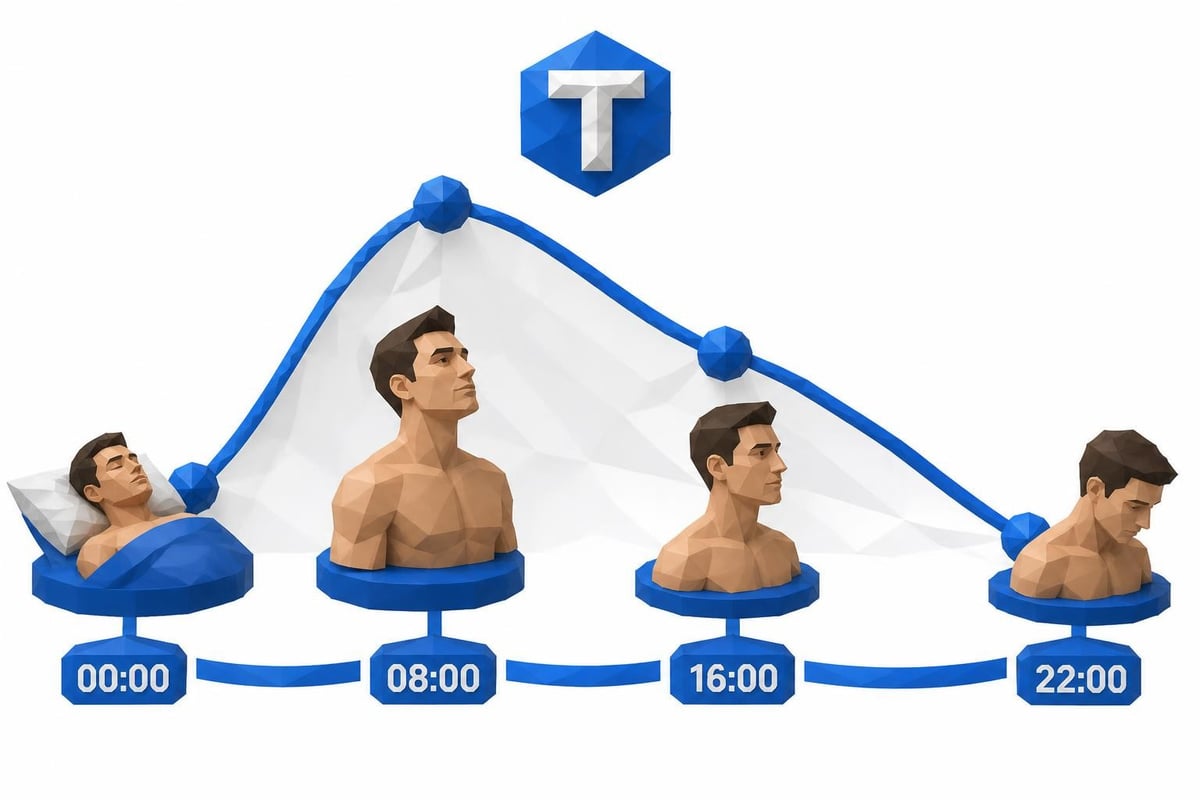
- Testosterone follows a daily rhythm controlled by your circadian clock, typically peaking in the early morning (6-8 AM) and declining by 20-50% throughout the day to reach its lowest point in the evening.
- Morning testing is the clinical standard because consistent timing reduces variability and captures peak values, which is why the Endocrine Society clinical practice guidelines recommend samples drawn between 7-11 AM.
- Testing at different times creates different results, not because your baseline testosterone has changed, but because you're measuring different points on your body's natural curve.
- Age affects how much variation you experience, with younger men showing larger morning-to-evening differences while older men may have blunted diurnal patterns that still exist but are less pronounced.
- Actionable step: Schedule testosterone tests consistently in the morning hours and avoid afternoon or evening testing unless specifically advised by your healthcare provider or when tracking specific clinical scenarios.
Why Time of Day Change Your Testosterone Results
Testosterone production follows a circadian rhythm governed by the hypothalamic-pituitary-gonadal axis. This isn't a minor fluctuation. Research published in peer-reviewed studies quantifying diurnal variation demonstrates that testosterone levels typically peak between 6 AM and 8 AM, then progressively decline throughout the day.
The magnitude of this variation is clinically significant. A healthy young man might measure 700 ng/dL at 8 AM but only 400-500 ng/dL by 4 PM. That same person, tested at different times, could appear to have normal testosterone in the morning but clinically low levels in the afternoon, even though nothing about their health has changed.
The Science Behind Daily Testosterone Fluctuation
Your body's master clock, located in the suprachiasmatic nucleus of the hypothalamus, coordinates hormone release with sleep-wake cycles. Testosterone synthesis increases during sleep, particularly during REM phases, leading to peak concentrations shortly after waking.
Several physiological mechanisms drive this pattern:
- Luteinizing hormone (LH) pulses from the pituitary gland stimulate testicular testosterone production with greatest frequency and amplitude in early morning hours
- Sleep architecture and quality directly affect the magnitude of overnight testosterone synthesis
- Cortisol patterns, which also peak in early morning, interact with testosterone production pathways
- Metabolic clearance rates remain relatively constant while production varies, creating the observed diurnal curve
The American Urological Association guidelines emphasize that understanding this variation is fundamental to proper testosterone assessment. Testing without accounting for time creates unreliable data that can lead to misdiagnosis or inappropriate treatment.
How Much Does Timing Actually Matter
The practical impact of when you test depends on your age, baseline testosterone level, and individual physiology. Recent analysis of diurnal variation in symptomatic men reveals that time-of-day effects vary substantially across patient populations.
Variation by Age Group
| Age Range | Morning Peak (avg) | Evening Level (avg) | Typical Variation |
|---|---|---|---|
| 20-30 years | 600-700 ng/dL | 350-450 ng/dL | 35-40% |
| 31-45 years | 500-650 ng/dL | 350-500 ng/dL | 25-30% |
| 46-60 years | 400-550 ng/dL | 350-450 ng/dL | 15-20% |
| 60+ years | 350-500 ng/dL | 300-400 ng/dL | 10-15% |
Younger men show the most dramatic swings. A 25-year-old might experience a 300 ng/dL difference between morning and evening, while a 65-year-old might see only a 75 ng/dL variation. This age-related blunting doesn't eliminate the need for consistent timing. It simply means the margin for error shrinks as men age.
Clinical Threshold Implications
The diagnostic threshold for low testosterone typically falls between 250-300 ng/dL, though some guidelines use 264 ng/dL as the cutoff. When time of day change your testosterone results by 200-300 ng/dL, timing becomes the difference between a diagnosis and a dismissal of symptoms.
Consider a man with true morning levels of 350 ng/dL, which sits in the borderline-low range. If he tests at 2 PM, he might measure 250 ng/dL and receive a low testosterone diagnosis. Conversely, someone with genuine deficiency measuring 200 ng/dL in the morning might test at 8 AM after sleeping poorly and measure 280 ng/dL, potentially missing appropriate treatment.
Factors That Amplify Time-of-Day Effects
Beyond the normal circadian rhythm, several factors can magnify how much time of day change your testosterone results. When you order lab tests online, understanding these variables helps you choose optimal testing conditions.
Sleep Quality and Timing
Testosterone synthesis depends heavily on sleep quality. Men who work night shifts or experience chronic sleep disruption show altered diurnal patterns. The research on shift work and steroidogenesis demonstrates that misaligned sleep schedules can flatten or even reverse normal testosterone rhythms.
Sleep-related considerations include:
- Total sleep duration (less than 5 hours can suppress next-day testosterone by 10-15%)
- Sleep quality and number of awakenings
- Consistency of sleep-wake schedule
- Recent travel across time zones
Exercise and Physical Activity
Physical exertion affects testosterone levels both acutely and in recovery periods. Recent studies examining salivary testosterone responses to exercise show that intense training can temporarily elevate testosterone, while prolonged endurance activity may suppress it.
Testing within 24-48 hours of exhaustive exercise can skew results. For accurate baseline measurement, avoid heavy training for at least 48 hours before your test and schedule it for a rest day when possible.

Stress and Cortisol Interaction
Acute psychological stress triggers cortisol release, which can acutely suppress testosterone production. Chronic stress creates a sustained elevation of cortisol that interferes with the hypothalamic-pituitary-gonadal axis.
Since cortisol also follows a diurnal rhythm with morning peaks, the interaction between these hormones adds complexity to interpretation. High-stress periods may flatten your normal testosterone curve or shift the timing of peak production.
Practical Testing Strategies for Accurate Results
Standardizing your testing approach eliminates time-of-day variation as a confounding factor. When you're monitoring testosterone through services that offer labs without insurance, you control the scheduling, which allows for optimal timing.
Optimal Testing Windows
Best practice testing schedule:
- Primary test: 7:00 AM - 11:00 AM (ideal window is 7-9 AM)
- Fasting status: At least 8 hours without food
- Activity level: Avoid exercise the morning of testing
- Consistency: Use the same time window for follow-up tests
- Sleep preparation: Ensure normal sleep the night before (7-9 hours)
The narrow morning window captures testosterone near its peak, maximizing sensitivity to detect true deficiency. When you need to track changes over time, such as monitoring therapy response, testing at the same time eliminates diurnal variation from your trend data.
When to Consider Afternoon Testing
Standard clinical practice uses morning samples, but specific scenarios may warrant afternoon testing:
- Shift workers whose circadian rhythms are inverted may need testing aligned with their personal wake time
- Comparison testing to quantify individual diurnal variation magnitude
- Baseline establishment in cases where morning testing is practically impossible
If afternoon testing is necessary, document the exact time and maintain consistency for all subsequent tests. Never compare morning and afternoon results directly without accounting for the expected diurnal difference.
Comprehensive Hormone Panels
Recommended Panel
Male Hormone Panel
Save $9This comprehensive panel measures testosterone (free and total), plus the supporting hormones that affect how testosterone works in your body: SHBG, estradiol sensitive, DHEA-S, and cortisol.
Includes 6 biomarkers
$101
Testosterone rarely operates in isolation. Testing related hormones provides context for interpreting results. The male hormone panel includes multiple markers that interact with testosterone metabolism and can help explain unexpected patterns.
Interpreting Results Across Different Testing Times
Understanding how time of day change your testosterone results requires more than knowing that variation exists. You need frameworks for interpreting what your specific result means given when it was collected.
Diagnostic Adjustment Factors
Some clinicians apply rough adjustment factors when evaluating non-morning samples, though this approach has limitations. No universal conversion formula exists, but general patterns hold:
| Test Time | Expected Level vs Morning Peak | Interpretation Considerations |
|---|---|---|
| 7-9 AM | 100% (reference) | Optimal diagnostic window |
| 10 AM-12 PM | 85-95% of morning | Acceptable but less ideal |
| 1-4 PM | 70-85% of morning | Significant reduction expected |
| 5-8 PM | 60-75% of morning | Near daily nadir |
| 9 PM-6 AM | Variable, rising toward AM | Not recommended for testing |
These percentages represent population averages. Individual variation means your personal curve may differ significantly. A 30-year-old athlete might maintain 95% of morning levels at noon, while a sedentary 55-year-old might drop to 70% by the same time.
Serial Testing for Pattern Recognition
Single measurements provide snapshots; serial testing reveals patterns. When symptoms don't match initial results, or when borderline values create diagnostic uncertainty, testing at multiple time points clarifies your individual rhythm.
Strategic serial testing approach:
- Initial morning baseline (7-9 AM)
- Mid-day sample (12-1 PM) if pattern verification needed
- Follow-up morning test 2-4 weeks later to confirm consistency
- Additional time points only if clinically indicated
Services like Justlabs make serial testing practical by offering transparent pricing and quick result turnaround, allowing you to build a complete picture without the complexity of multiple doctor visits.
Age-Related Changes in Diurnal Variation
The amplitude of daily testosterone fluctuation decreases with age, but the pattern persists throughout life. This age-related blunting has important implications for when and how to test older men.
Diminished but Persistent Rhythms
Men over 60 maintain circadian testosterone rhythms, but the peak-to-trough difference narrows substantially. A 70-year-old might measure 380 ng/dL at 8 AM and 340 ng/dL at 4 PM-still a measurable difference, but less dramatic than younger men.
This compression means that afternoon testing in older adults introduces less absolute error, though morning testing remains the standard for consistency with reference ranges and clinical guidelines.

Reference Range Considerations
Laboratory reference ranges for testosterone are typically derived from morning samples in healthy men. Using these ranges to interpret afternoon results creates systematic bias toward under-diagnosis in younger men and potentially over-diagnosis in older men.
When you receive results from platforms offering affordable lab testing, verify whether the reference range shown assumes morning collection. This information should be included in your test report.
Common Mistakes That Distort Results
Even when you understand that time of day change your testosterone results, practical execution errors can compromise your data. Avoiding these common pitfalls ensures your results reflect true baseline levels.
Inconsistent Follow-Up Timing
The scenario: Your initial test at 8 AM shows borderline-low testosterone at 320 ng/dL. A follow-up test three months later at 2 PM measures 280 ng/dL, suggesting a decline.
The reality: The apparent decrease may entirely reflect diurnal variation rather than true progression. If your 2 PM value represents 75% of your morning peak, your true morning level might be approximately 373 ng/dL-actually an increase from baseline.
The solution: All monitoring tests should occur within the same 2-hour window. If you initially tested at 8 AM, all subsequent tests should target 7-9 AM.
Testing During Illness or Acute Stress
Acute illness temporarily suppresses testosterone through inflammatory cytokines and stress hormone elevation. Testing during or immediately after illness provides data about your sick state, not your baseline health.
Wait at least two weeks after recovering from significant illness, infection, or surgical procedures before obtaining testosterone measurements for diagnostic or monitoring purposes.
Ignoring Medication Timing
Certain medications affect testosterone directly or interfere with the hypothalamic-pituitary-gonadal axis. Opioids, glucocorticoids, and some psychiatric medications can suppress production or alter diurnal rhythms.
Document all medications and supplements when testing, and maintain consistent dosing schedules relative to your test time. Changes in medication timing can create apparent testosterone changes that reflect altered pharmacokinetics rather than endocrine function.
Key Takeaways
Understanding how time of day change your testosterone results is fundamental to accurate hormone assessment. Your testosterone level peaks in early morning and declines by 20-50% throughout the day, creating the potential for dramatically different results depending on when you test. This variation is clinically significant-large enough to change diagnostic interpretation and treatment decisions. Morning testing between 7 AM and 11 AM is the clinical standard because it captures peak values and allows comparison to established reference ranges. Age affects the magnitude of variation, with younger men showing larger swings, but the pattern persists throughout life. Consistent timing for all tests eliminates diurnal variation as a confounding variable, making your results truly comparable over time. When scheduling hormone testing, prioritize early morning appointments, maintain consistent timing for follow-up tests, and ensure adequate sleep the night before to optimize accuracy. The difference between a normal and low testosterone diagnosis may simply be what time you walked into the lab.
FAQ
How much do testosterone levels drop from morning to evening?
The decline varies by individual and age but typically ranges from 20% to 50%. A young healthy male might experience a 300 ng/dL decrease from an 8 AM peak of 700 ng/dL to an evening level of 400 ng/dL. Older men show smaller absolute changes, often 10-20% variation, but still maintain measurable diurnal patterns throughout life.
Should I fast before a testosterone test?
Fasting is generally recommended, typically 8-12 hours before testing. While food intake has less direct impact on testosterone than on metabolic markers like glucose or triglycerides, fasting standardizes conditions and eliminates potential dietary influences on hormone-binding proteins. Schedule morning tests after overnight fasting for optimal consistency.
Can I test testosterone in the afternoon if that's more convenient?
Afternoon testing is possible but not recommended for diagnostic purposes. If morning testing is truly impossible due to work schedules or other constraints, afternoon testing can establish a baseline-but all subsequent monitoring must occur at the same time. Never compare morning and afternoon results directly, and inform your healthcare provider of the collection time for proper interpretation.
How long after waking up should I wait to test testosterone?
Peak testosterone levels typically occur 1-3 hours after waking. For most people on conventional schedules, testing between 7 AM and 9 AM captures this peak. If you wake at 5 AM, testing at 7-8 AM would be ideal. Shift workers should test 1-3 hours after their regular wake time, whenever that occurs.
Does poor sleep the night before affect my testosterone test?
Yes, significantly. A single night of inadequate sleep (less than 5 hours) can reduce next-day testosterone by 10-15%. Chronic poor sleep has more severe effects. For accurate baseline measurement, ensure 7-9 hours of quality sleep before testing. If you slept poorly, consider rescheduling your test to avoid misleading results that don't reflect your true baseline.
Why do guidelines recommend morning testing if testosterone fluctuates all day?
Morning testing is standardized because it captures peak values, maximizes test sensitivity to detect deficiency, and aligns with how reference ranges were established. Consistent morning timing eliminates time-of-day variation when comparing results over time or against population norms. This standardization is essential for reliable diagnosis and monitoring.
How many times should I test testosterone to get accurate results?
For initial diagnosis, two morning samples collected on different days confirm results and account for day-to-day variation. If the first two tests disagree significantly (more than 100 ng/dL apart), a third test provides clarity. For monitoring during therapy, quarterly or semi-annual testing at the same time of day tracks trends. Serial testing at different times of day is only needed to characterize individual diurnal variation patterns.
Do testosterone supplements or therapy eliminate the daily rhythm?
No, exogenous testosterone administration follows different kinetics depending on delivery method, but the body's natural rhythms persist. Injected testosterone peaks within days of administration then gradually declines, creating its own pattern. Transdermal gels may provide more stable levels but still show some variation. Men on testosterone replacement therapy should test at consistent times relative to their dosing schedule for accurate monitoring.
Time-of-day variation is one of the most significant factors affecting testosterone test results, yet it's easily controlled through proper scheduling. By testing consistently in the morning, you ensure accurate diagnosis and reliable monitoring that reflects your true hormone status rather than circadian fluctuations. When you're ready to test, Justlabs makes it simple to order comprehensive hormone testing online with transparent pricing, no insurance hassles, and results delivered in 1-3 days-giving you the flexibility to schedule your test at the optimal time for accurate, actionable results.