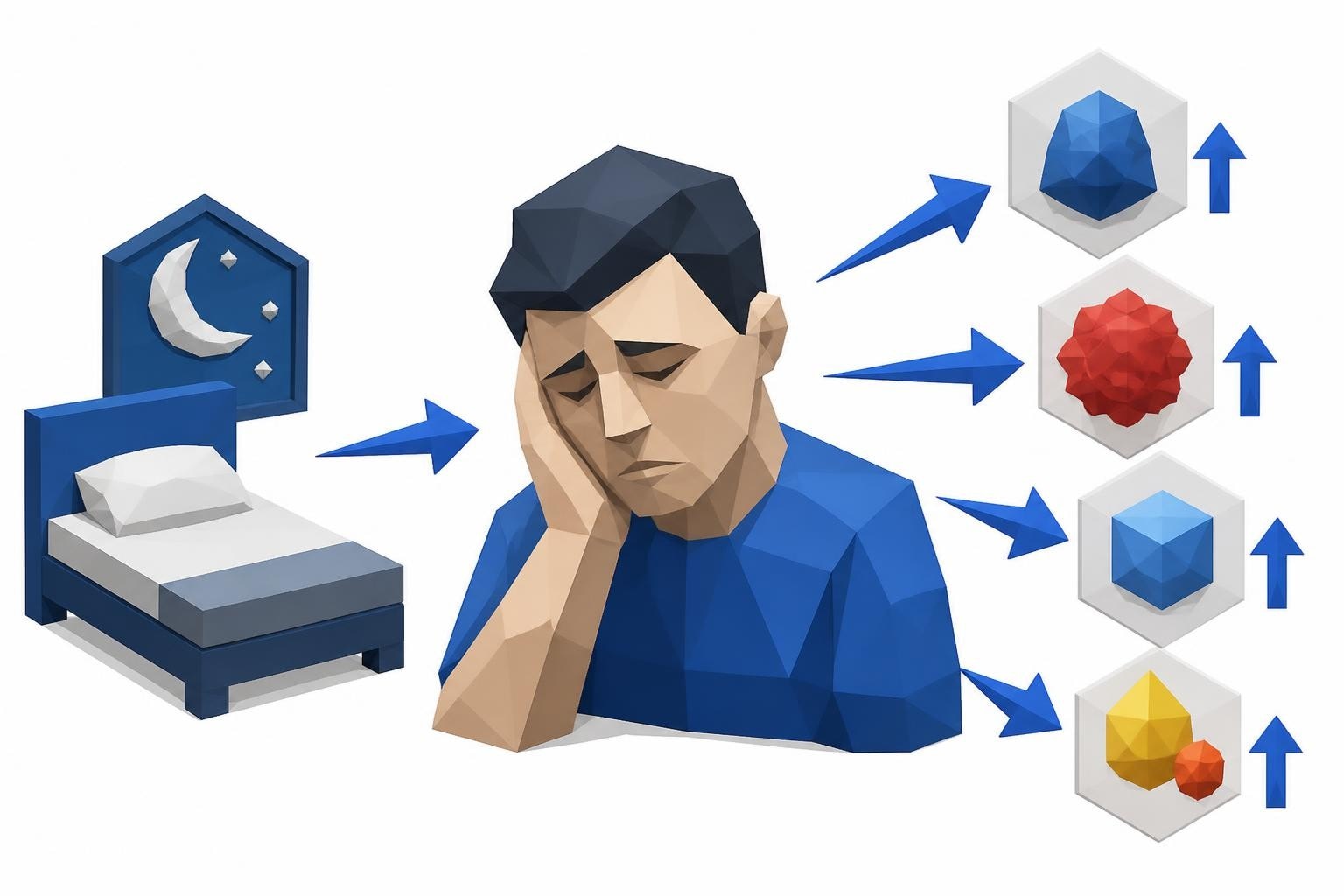
Sleep is one of the most powerful yet underestimated factors influencing your body's biochemistry. When you skimp on rest, your physiology shifts in measurable ways that appear directly on laboratory tests. Understanding how poor sleep affects your lab results helps you interpret findings accurately and optimize your health tracking efforts. Whether you're monitoring metabolic health, hormone levels, or inflammatory markers, the quality and duration of your sleep in the days leading up to testing can substantially alter the numbers you receive.
Big picture
- Poor sleep triggers measurable changes in blood chemistry, hormone levels, inflammatory markers, and metabolic parameters that show up on standard lab tests
- Even one night of inadequate sleep can elevate cortisol, inflammatory markers like C-reactive protein, fasting glucose, and alter lipid profiles
- Chronic sleep deprivation compounds these effects, potentially leading to abnormal results that might be mistaken for underlying disease when they actually reflect sleep debt
- Testing timing matters because many biomarkers follow circadian rhythms, and disrupted sleep patterns can shift these natural peaks and troughs
- Pre-test preparation should include consistent sleep for at least three nights before blood work to ensure results reflect your true baseline health status
- When reviewing results, consider recent sleep quality alongside normal versus optimal lab ranges to get the full picture
The Metabolic Cascade of Sleep Deprivation
Your metabolic system relies heavily on adequate rest to maintain equilibrium. When sleep falls short, glucose regulation becomes impaired within hours. Studies consistently demonstrate that even partial sleep restriction elevates fasting blood sugar levels and reduces insulin sensitivity.
Glucose and Insulin Markers
Sleep deprivation triggers a stress response that raises cortisol and growth hormone levels overnight, both of which oppose insulin action. This creates a temporary state of insulin resistance that persists into the morning hours when fasting blood draws typically occur.
Key metabolic markers affected by poor sleep:
- Fasting glucose (elevated by 10-20% after poor sleep)
- Hemoglobin A1c (can trend higher with chronic sleep debt)
- Fasting insulin (often elevated)
- HOMA-IR score (insulin resistance calculation increases)
If you're tracking diabetes risk or metabolic health with panels like those available through labs without insurance, sleep quality becomes a critical pre-test variable. A single night of four hours of sleep can push a borderline fasting glucose into the prediabetic range temporarily.
Recommended Panel
Comprehensive Diabetes Panel
This panel detects diabetes and prediabetes at every stage. Includes lipids because diabetes dramatically increases heart disease risk.
Includes 10 biomarkers
$35
Fasting required

Hormonal Disruption and Endocrine Testing
The endocrine system operates on precise circadian timing, making it especially vulnerable to sleep disturbances. How poor sleep affects your lab results becomes most apparent when testing hormones that peak or trough at specific times.
Cortisol and the Stress Axis
Morning cortisol, one of the most commonly tested hormones, shows significant variability based on sleep quality. Research quantifying acute sleep-deprivation effects on cortisol demonstrates that insufficient sleep can either blunt or exaggerate the normal morning cortisol peak depending on timing and duration of sleep loss.
A typical morning cortisol test expects you to have had regular sleep ending around your normal wake time. When you've had poor sleep, the hypothalamic-pituitary-adrenal axis becomes dysregulated, producing results that don't reflect your baseline function.
Thyroid Function Parameters
Thyroid hormones also follow circadian patterns and respond to sleep deprivation. TSH (thyroid stimulating hormone) naturally peaks during sleep and reaches its lowest point in late afternoon. Disrupted sleep can flatten this rhythm and lower morning TSH values.
| Thyroid Marker | Normal Pattern | Poor Sleep Effect |
|---|---|---|
| TSH | Nocturnal peak | Reduced morning values |
| Free T4 | Minimal variation | Generally stable |
| Free T3 | Slight morning peak | May show reduction |
| Reverse T3 | Rises with stress | Can elevate acutely |
Recommended Panel
Complete Thyroid Panel
Save $3Our most comprehensive thyroid panel includes all 5 essential markers: TSH, Free T4, Free T3, Reverse T3, and both thyroid antibodies. Get the complete picture of your thyroid health.
Includes 6 biomarkers
$84
Sex Hormones and Reproductive Markers
Testosterone production in men occurs primarily during sleep, with levels peaking in the early morning. Sleep restriction of just one week can reduce testosterone by 10-15% in healthy young men. For women, sleep disruption affects the delicate balance of estrogen, progesterone, and luteinizing hormone, potentially skewing fertility assessments.
Inflammatory Markers and Immune Function
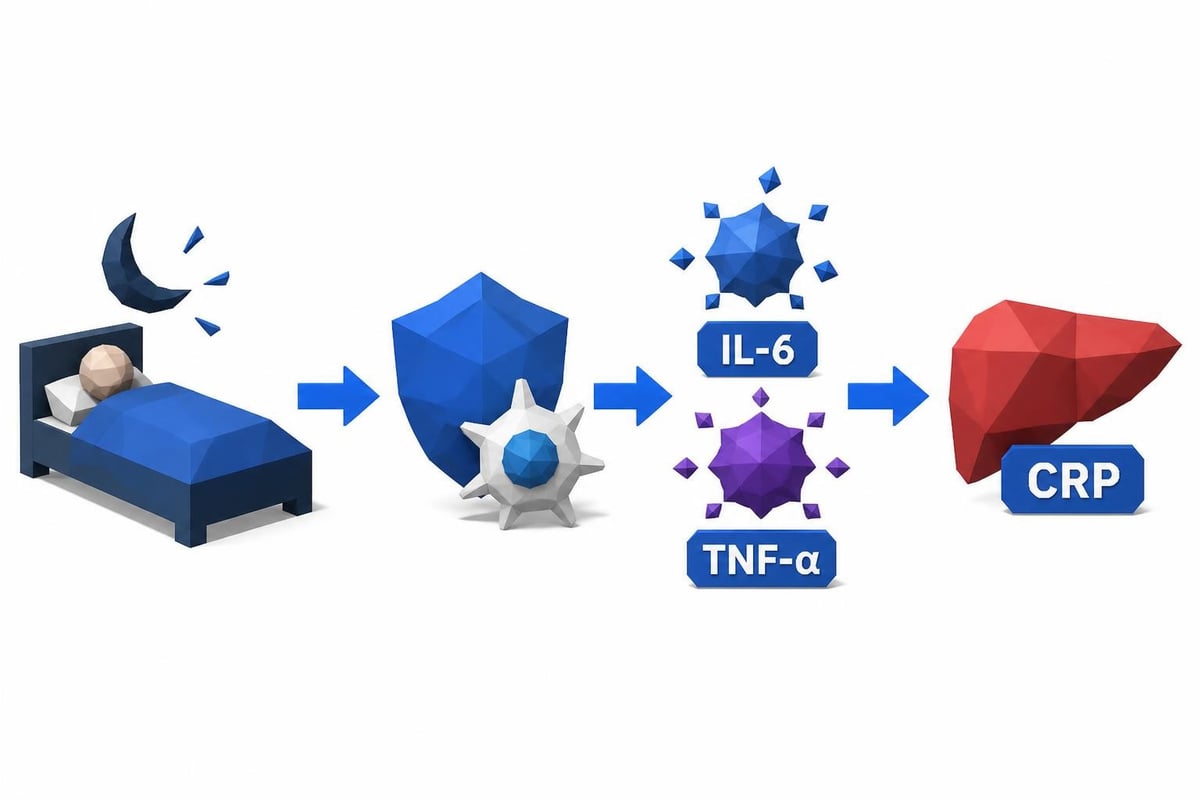
One of the most consistent findings in sleep research involves the relationship between sleep loss and systemic inflammation. Studies showing short-term sleep loss raises systemic inflammatory markers document significant increases in interleukin-6 (IL-6) and C-reactive protein (CRP) following even a single night of sleep deprivation.
CRP is widely used as a cardiovascular risk marker and general inflammation indicator. If you've experienced several nights of poor sleep before testing, an elevated CRP might reflect sleep debt rather than underlying inflammation. The marker typically returns to baseline after recovery sleep, but this temporary elevation can cause unnecessary concern or lead to additional testing.
Inflammation markers sensitive to sleep quality:
- High-sensitivity C-reactive protein (hs-CRP)
- Interleukin-6 (IL-6)
- Tumor necrosis factor-alpha (TNF-α)
- White blood cell count
- Neutrophil-to-lymphocyte ratio
Understanding these connections helps when understanding lab results that show unexpected inflammatory elevations. Before attributing abnormal values to disease processes, consider whether inadequate sleep might be a contributing factor.
Lipid Profiles and Cardiovascular Markers
How poor sleep affects your lab results extends significantly to cardiovascular health markers. The relationship between sleep patterns and lipid metabolism has gained substantial research attention, revealing that both acute sleep deprivation and chronic irregular sleep patterns influence cholesterol and triglyceride levels.
Cholesterol and Triglycerides
Population studies linking weekend catch-up sleep and social jetlag to dyslipidemia demonstrate that habitual sleep irregularity associates with unfavorable lipid profiles. People who maintain inconsistent sleep schedules show higher total cholesterol, LDL cholesterol, and triglycerides compared to those with regular sleep patterns.
The mechanism involves disrupted lipid metabolism and altered liver function during sleep debt. Triglycerides particularly respond to poor sleep, with levels rising when circadian rhythms become desynchronized.
Recommended Panel
Advanced Heart Health Panel
Save $6Go beyond basic cholesterol testing. This advanced panel includes the markers cardiologists use to assess true cardiovascular risk: ApoB, Lp(a), homocysteine, and inflammation.
Includes 10 biomarkers
$86
Fasting required
For individuals monitoring cardiovascular risk factors or exploring genetic influences like APOE genotype and cholesterol, sleep consistency should be considered alongside dietary and exercise factors. A lipid panel drawn after a week of poor sleep may not accurately represent your optimized baseline.
Other Cardiovascular Biomarkers
| Marker | Sleep Deprivation Effect | Clinical Significance |
|---|---|---|
| Homocysteine | Increases | Cardiovascular risk elevation |
| Lipoprotein(a) | Minimal change | Generally sleep-independent |
| Apolipoprotein B | May increase | Reflects LDL particle changes |
| Fibrinogen | Elevates | Thrombosis risk marker |
Hematology and Complete Blood Count Changes
Blood cell populations show surprising sensitivity to sleep patterns. Systematic reviews of circadian and diurnal rhythms in complete blood count components reveal that white blood cells, red blood cells, and platelets all fluctuate throughout the day, with sleep quality influencing these patterns.
White blood cell counts typically rise during sleep deprivation as part of the stress response. Neutrophils increase while lymphocytes may decrease, shifting the differential count. These changes are usually modest but can occasionally push values outside reference ranges.
Platelet counts and mean platelet volume also respond to sleep disruption, potentially affecting coagulation markers. Red blood cell parameters remain more stable, though chronic sleep disorders have been associated with mild anemia in some populations.
Vitamin and Mineral Status
Micronutrient levels can indirectly reflect sleep quality through several mechanisms. Magnesium, a mineral involved in sleep regulation, may show reduced levels in people with chronic sleep problems, though the relationship is bidirectional-both poor sleep depletes magnesium and low magnesium impairs sleep.
Vitamin D metabolism follows circadian patterns, and some research suggests sleep disorders may interfere with vitamin D receptor function. Iron studies can be influenced by the inflammatory response to sleep deprivation, as inflammation suppresses iron levels through hepcidin elevation.
Micronutrients with sleep connections:
- Magnesium (depleted by chronic stress and poor sleep)
- Vitamin D (receptor function may be impaired)
- Iron and ferritin (influenced by inflammation from sleep loss)
- B vitamins (metabolism affected by stress response)
- Zinc (immune function and stress response)
Recommended Test
Zinc
Zinc is an essential trace mineral involved in over 300 enzymatic reactions, including immune function, wound healing, thyroid hormone production, and testosterone synthesis.
Includes 1 biomarkers
$20
Circadian Biology and Test Timing
Beyond sleep duration and quality, the timing of blood draws relative to your circadian rhythm significantly impacts results. Reviews on physiological rhythms and biological variation of biomolecules explain that virtually every measurable substance in blood follows some degree of circadian variation.

Standardizing Collection Times
Most clinical laboratories establish reference ranges based on morning fasting samples, typically collected between 7-10 AM. This standardization helps minimize biological variation, but it only works if you've maintained regular sleep patterns leading up to testing.
When sleep schedules shift dramatically-such as working night shifts or experiencing jet lag-your internal clock becomes misaligned with the collection time. A cortisol level drawn at 8 AM might catch you at your biological 2 AM, producing results that appear abnormally low.
The practical solution when ordering lab tests involves maintaining consistent sleep-wake timing for at least three days before testing, ideally matching your usual schedule.
Pre-Test Sleep Optimization Strategies
Knowing how poor sleep affects your lab results empowers you to prepare appropriately for testing. The goal isn't perfection but rather establishing a stable baseline that reflects your true health status rather than acute sleep debt.
Three-Day Preparation Protocol
- Maintain consistent sleep-wake times matching your typical schedule
- Aim for 7-9 hours of sleep opportunity each night
- Avoid alcohol and sedatives that fragment sleep architecture
- Minimize blue light exposure two hours before bed
- Keep your sleep environment cool (65-68°F optimal)
- Document your sleep using a journal or tracker
This preparation is particularly important for hormone panels, metabolic assessments, and inflammation markers. When accessing affordable lab test pricing, the investment yields more meaningful results when sleep variables are controlled.
When to Reschedule Testing
Certain situations warrant postponing laboratory work:
- Recovering from acute illness that disrupted multiple nights of sleep
- Experiencing jet lag from crossing multiple time zones
- Working unusual shifts that recently changed
- Taking new medications that significantly alter sleep
- Dealing with acute stress or major life events
Most testing can be delayed by a week to allow sleep patterns to stabilize without compromising clinical utility.
Interpreting Results in Context
When you receive lab results that seem unexpected, sleep history should be part of your interpretive framework. A single abnormal value on otherwise healthy individuals often reflects testing conditions rather than disease.
Consider requesting repeat testing after optimizing sleep if results show:
- Borderline elevated fasting glucose without other diabetes risk factors
- Elevated inflammatory markers (CRP, ESR) without symptoms
- Unexpected hormone imbalances
- Lipid abnormalities inconsistent with lifestyle factors
The convenience of services that let you order labs without a doctor means you can retest affordably once sleep normalizes, helping differentiate transient from persistent abnormalities.
Special Populations and Considerations
Certain groups face unique challenges regarding sleep and laboratory testing accuracy.
Shift Workers
People working non-traditional hours experience chronic circadian misalignment. Their optimal testing time may not align with standard morning draws. Some specialized labs offer evening collection for shift workers, though reference ranges remain based on day-shift populations.
Athletes and High-Stress Professionals
Both groups often experience inadequate recovery sleep. Athletes may show inflammatory markers and elevated cortisol from training stress compounded by insufficient rest. High-stress professionals similarly demonstrate stress axis activation that affects multiple biomarker systems.
Menopausal Women
Sleep disruption from night sweats and hormonal changes complicates testing for hormone health after menopause. The interplay between changing reproductive hormones and sleep quality makes serial testing with consistent sleep preparation especially important.
Key Takeaways
Understanding how poor sleep affects your lab results transforms the way you approach health monitoring. Sleep deprivation creates measurable biochemical changes across metabolic, hormonal, inflammatory, and hematologic systems that can significantly alter test outcomes.
Essential points to remember:
- Single nights of poor sleep can elevate cortisol, glucose, inflammatory markers, and alter lipid profiles
- Chronic sleep debt compounds these effects and may produce results suggesting disease when adequate rest would normalize findings
- Most biomarkers follow circadian rhythms that become disrupted by irregular sleep patterns
- Optimal pre-test preparation includes three consecutive nights of adequate, consistent sleep
- When interpreting unexpected results, consider recent sleep quality before assuming pathology
- Retesting after sleep optimization often clarifies whether abnormalities reflect sleep debt or underlying conditions
The self-directed nature of modern lab testing through platforms offering convenient access to comprehensive panels empowers you to control testing conditions, including sleep preparation. This control improves result accuracy and reduces the likelihood of false abnormalities requiring unnecessary follow-up.
FAQ
How many nights of poor sleep does it take to affect lab results?
Even a single night of significant sleep deprivation (less than 4-5 hours) can measurably affect certain biomarkers, particularly cortisol, glucose, and inflammatory markers like CRP. However, the most significant changes occur with consecutive nights of inadequate sleep or chronic sleep restriction. For most stable markers like cholesterol and thyroid hormones, three to seven days of poor sleep typically produces detectable changes.
Should I mention poor sleep to my healthcare provider when reviewing results?
Absolutely. Sleep quality in the days preceding testing represents important contextual information that helps interpret findings accurately. Documentation of recent sleep patterns helps distinguish transient testing artifacts from meaningful clinical abnormalities requiring intervention. Most providers appreciate this information as it prevents unnecessary additional testing or treatment.
Can catching up on sleep the night before testing normalize my results?
Recovery sleep helps, but single-night catch-up doesn't fully reverse the effects of accumulated sleep debt on most biomarkers. Inflammatory markers like CRP may remain elevated for 24-48 hours after sleep restriction ends. Metabolic parameters including glucose and insulin sensitivity improve with recovery sleep but may need several nights to fully normalize. Hormone levels particularly benefit from consistent sleep patterns rather than sporadic recovery.
Do sleep medications or supplements affect lab results?
Many sleep medications can influence laboratory findings. Benzodiazepines and certain antidepressants may affect hormone levels, particularly cortisol and thyroid function. Melatonin supplementation generally has minimal direct effects on standard lab tests but may influence circadian-dependent biomarkers. Natural supplements like magnesium could theoretically affect electrolyte panels if taken in high doses. Inform your testing provider about all sleep aids when ordering tests.
Which lab tests are most sensitive to sleep quality?
The most sleep-sensitive tests include morning cortisol, fasting glucose and insulin, inflammatory markers (CRP, IL-6), lipid panels (especially triglycerides), testosterone in men, complete blood counts (white cell differential), and comprehensive metabolic panels. Thyroid function tests show moderate sensitivity, while tests like hemoglobin A1c, vitamin levels, and genetic testing remain relatively stable despite short-term sleep variations.
How should shift workers or people with irregular schedules prepare for lab testing?
Shift workers face unique challenges since their circadian biology may be misaligned with standard testing times and reference ranges. The best approach involves maintaining the most consistent schedule possible for at least three days before testing, even if that schedule is non-traditional. Some shift workers benefit from testing at times that correspond to their biological morning (after their main sleep period) rather than clock morning. Communicate your work schedule when reviewing results, as some providers may interpret findings differently for shift workers.
Quality sleep proves essential not just for overall health but also for accurate laboratory testing. When you understand the biochemical connections between rest and biomarkers, you can better prepare for tests and interpret results with appropriate context. Whether you're tracking metabolic health, monitoring hormones, or investigating unexplained symptoms, ensuring adequate sleep in the days before testing helps guarantee that your results reflect your true health status rather than temporary sleep debt. When you're ready to take control of your health monitoring with transparent pricing and quick turnaround, Justlabs provides convenient access to comprehensive testing without the need for insurance or doctor visits, delivering reliable results in 1-3 days.