Working nights or rotating shifts places unique demands on your body, fundamentally altering your circadian rhythms and biochemical patterns. For the millions of Americans working non-traditional schedules, understanding how lab testing for shift workers and night schedules differs from conventional testing becomes essential for accurate health monitoring. Standard reference ranges and collection times often fail to account for circadian disruption, potentially leading to misinterpretation of results and overlooked health concerns specific to night-shift workers.
Big picture
- Circadian rhythms control hormone release: Cortisol, melatonin, testosterone, thyroid hormones, and metabolic markers follow 24-hour cycles that shift work disrupts, making standard morning testing times inappropriate for night workers.
- Timing matters more than you think: Lab tests ordered at "normal" times may show falsely abnormal results for shift workers, while tests timed to your actual sleep-wake cycle provide accurate baselines.
- Shift work increases health risks: Night and rotating schedules elevate risks for metabolic syndrome, cardiovascular disease, diabetes, and hormonal imbalances that require targeted monitoring.
- Standard reference ranges may not apply: Most lab reference ranges derive from day-working populations tested in morning fasting states, creating interpretation challenges for shift workers.
- Actionable step: Schedule lab testing aligned with your personal circadian phase (relative to when you sleep and wake) rather than clock time, and inform your testing provider about your work schedule for proper result interpretation.
Why Circadian Timing Transforms Lab Results
Your body operates on approximately 24-hour cycles controlled by internal biological clocks. These circadian rhythms regulate virtually every physiological process, from hormone secretion to immune function and metabolic activity.
The Challenge of Disrupted Rhythms
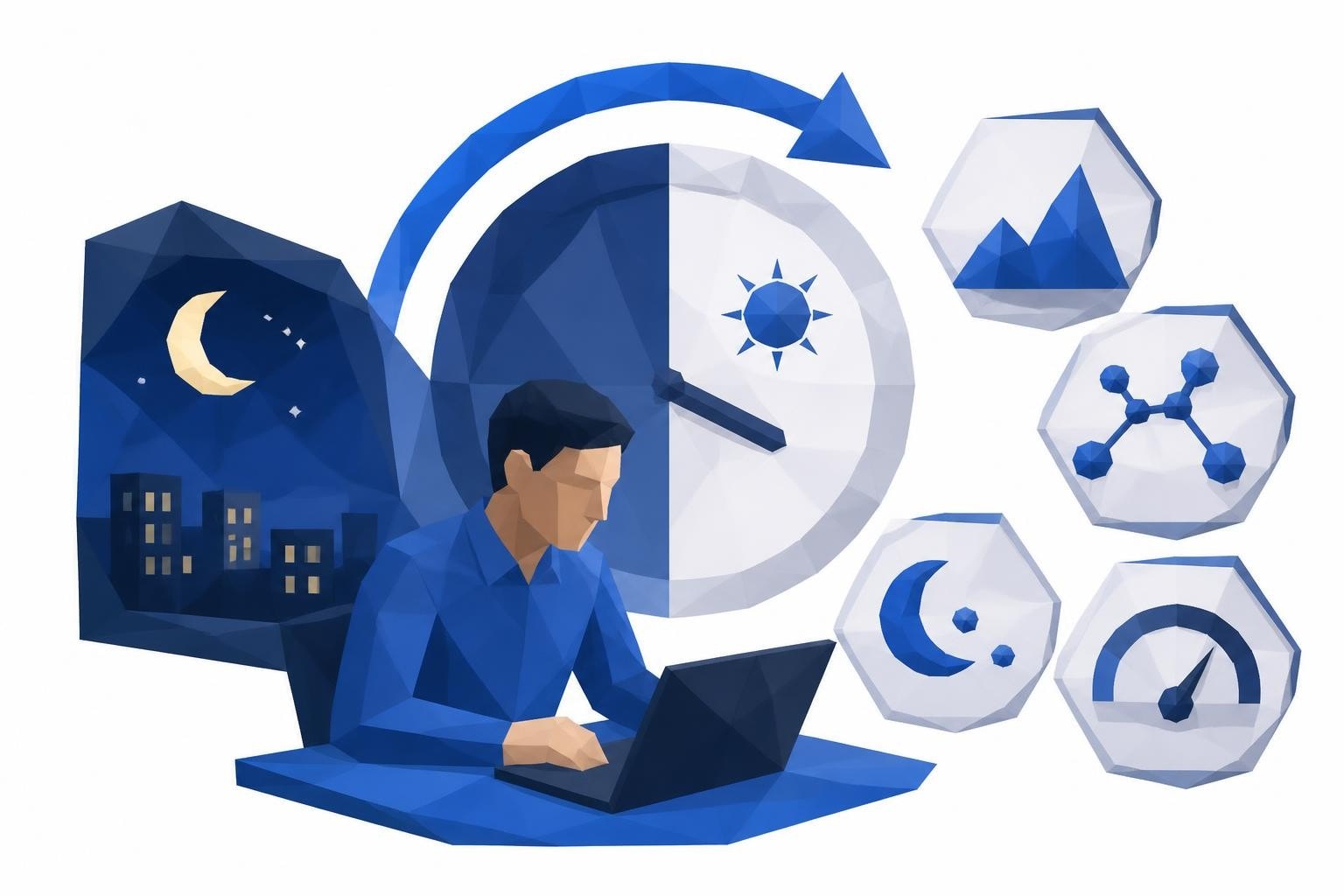
When you work nights, your circadian system receives conflicting signals. Light exposure during biological night suppresses melatonin production while cortisol patterns attempt to adapt to your altered schedule. This desynchronization creates what researchers call "circadian misalignment."
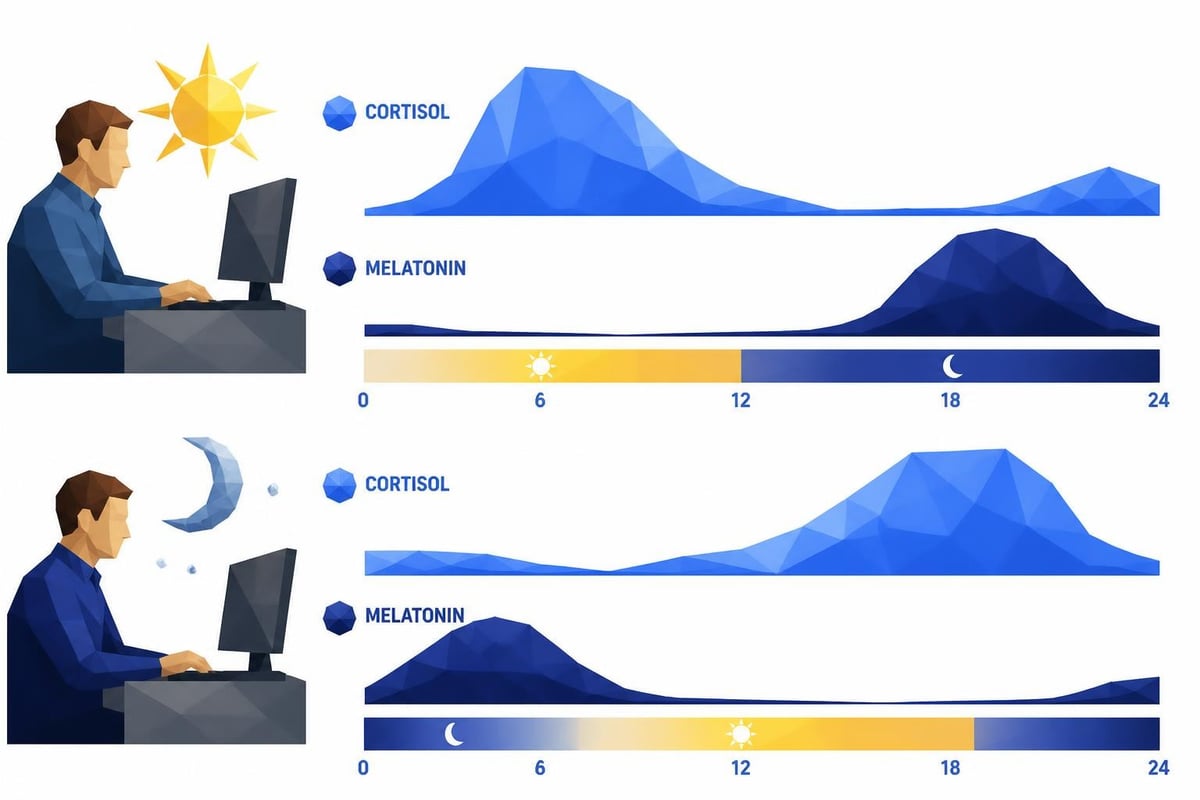
Research on shift work and steroidogenesis demonstrates that night shifts fundamentally alter cortisol and steroid hormone rhythms. Standard morning cortisol tests, typically collected at 8 AM for day workers, would occur during a night worker's sleep period, when cortisol should be at its nadir rather than peak.
Hormones Most Affected by Shift Work
Cortisol follows a pronounced daily rhythm, peaking within 30-45 minutes of waking (the cortisol awakening response) and declining throughout the active period. For night workers, this peak occurs in the evening or night, not morning.
Melatonin rises in darkness to promote sleep. Night shift workers exposed to bright light during biological night experience suppressed melatonin, disrupting sleep quality and circadian synchronization.
Thyroid hormones exhibit circadian variation, with TSH levels highest during biological night. Testing TSH at inappropriate circadian times can suggest thyroid dysfunction when none exists.
Testosterone peaks during sleep in men, regardless of whether sleep occurs during day or night. Collection timing relative to sleep becomes critical for accurate assessment.
Essential Tests for Night and Shift Workers
Lab testing for shift workers and night schedules should address both general health monitoring and specific risks associated with circadian disruption.
Metabolic Health Monitoring
Shift work significantly increases metabolic syndrome risk. Key tests include:
- Hemoglobin A1C: Reflects average blood glucose over 90 days, unaffected by circadian timing
- Fasting glucose and insulin: Must be collected after your fasting period, regardless of clock time
- Lipid panel: Total cholesterol, LDL, HDL, and triglycerides
- Complete metabolic panel: Assesses kidney function, electrolytes, and liver enzymes
Recommended Panel
Complete Metabolic Health Panel
Save $3.5This comprehensive panel evaluates all aspects of metabolic health: organ function, cholesterol, blood sugar, insulin resistance, and inflammation - the key drivers of chronic disease.
Includes 26 biomarkers
$50
Fasting required
The advantage of tests like A1C is their independence from immediate circadian phase. Unlike single-point glucose measurements, A1C provides reliable information regardless of when you sleep or eat.
Hormone Assessment Strategies
| Hormone | Standard Timing | Shift Worker Timing | Key Consideration |
|---|---|---|---|
| Cortisol | 8 AM | 30-60 min after waking | Align with personal cortisol awakening response |
| TSH | Morning | Upon waking (your morning) | TSH peaks during biological night/sleep |
| Testosterone | 7-10 AM | After sleep period | Peaks during/after sleep regardless of clock time |
| Melatonin | Evening (DLMO) | Relative to usual sleep time | Requires multiple samples for DLMO assessment |
For shift workers, ordering labs without a doctor through services like Justlabs provides flexibility to schedule collections at biologically appropriate times rather than standard office hours.
Thyroid Function in Shift Workers
Recommended Panel
Complete Thyroid Panel
Save $3Our most comprehensive thyroid panel includes all 5 essential markers: TSH, Free T4, Free T3, Reverse T3, and both thyroid antibodies. Get the complete picture of your thyroid health.
Includes 6 biomarkers
$84
Thyroid testing deserves special attention for night workers. TSH exhibits robust circadian rhythmicity, with levels 25-50% higher during biological night. If you work nights and have your TSH tested at 8 AM (during your sleep time), results may appear elevated simply due to circadian timing.
Best practice: Schedule thyroid testing 2-4 hours after your typical wake time, maintaining consistency across repeated tests for accurate trend monitoring.
Cardiovascular Risk Markers
Night shift work increases cardiovascular disease risk by 20-40%. Proactive monitoring includes:
- High-sensitivity C-reactive protein (hs-CRP): Inflammation marker
- Homocysteine: Independent cardiovascular risk factor
- Lipoprotein(a): Genetic cardiovascular risk marker unaffected by circadian timing
- Complete blood count: Monitors for anemia and inflammatory markers
Recommended Panel
Advanced Heart Health Panel
Save $6Go beyond basic cholesterol testing. This advanced panel includes the markers cardiologists use to assess true cardiovascular risk: ApoB, Lp(a), homocysteine, and inflammation.
Includes 10 biomarkers
$86
Fasting required

Specialized Circadian Testing Approaches
For shift workers experiencing persistent fatigue, sleep difficulties, or suspected circadian rhythm disorders, specialized testing may be warranted.
Dim Light Melatonin Onset Testing
Dim light melatonin onset (DLMO) represents the gold standard for assessing circadian phase. Methodological considerations for circadian biomarkers emphasize proper sampling protocols and environmental controls for accurate DLMO measurement.
DLMO testing requires:
- Controlled dim light conditions (typically <10 lux)
- Multiple saliva or blood samples collected every 30-60 minutes across the evening
- Maintained usual sleep-wake schedule for 7-10 days prior
- Avoidance of caffeine, exercise, and certain medications
Analytical methods for melatonin testing include immunoassays and LC-MS/MS, with important implications for sample handling and result interpretation.
Actigraphy and Sleep Monitoring
Actigraphy devices for sleep-wake monitoring provide objective data on sleep patterns, circadian rhythms, and light exposure over extended periods. The American Academy of Sleep Medicine recommends actigraphy for assessing circadian rhythm sleep-wake disorders common in shift workers.
When Polysomnography Is Indicated
Shift workers face elevated risk for obstructive sleep apnea, insomnia, and excessive sleepiness. Diagnostic pathways for sleep disorders may include overnight polysomnography or multiple sleep latency testing when symptoms persist despite schedule optimization.
Practical Strategies for Accurate Testing
Timing Your Lab Visits
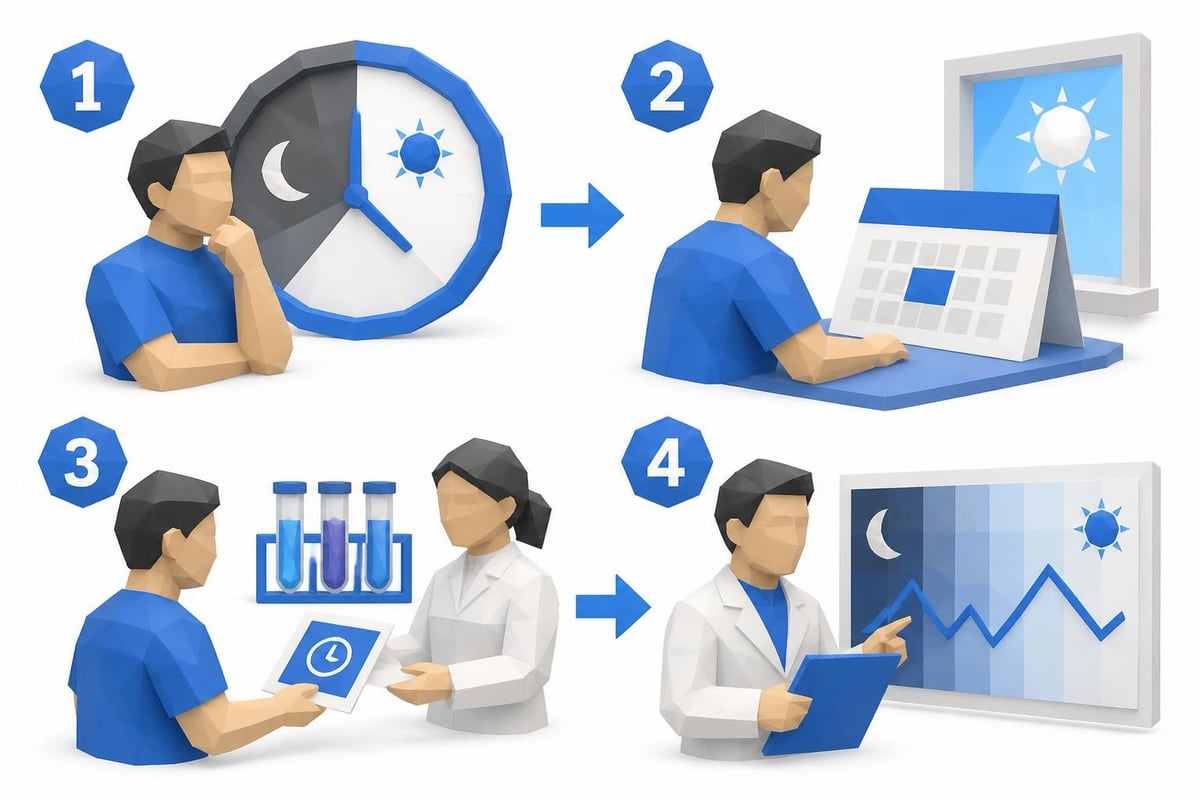
Align with your biology, not the clock. If you sleep from 9 AM to 5 PM, schedule morning labs for 6-7 PM (your biological morning). Most 24-hour lab facilities accommodate non-standard collection times.
The Justlabs network includes locations with extended hours, making it easier to schedule collections during your waking hours rather than forcing visits during your sleep time.
Fasting Requirements Translated
Standard "8-12 hour overnight fast" instructions assume night sleep. For shift workers:
- Fast for 8-12 hours before your scheduled collection
- This fast occurs during your usual sleep period
- Maintain your typical eating schedule on non-testing days
- Communicate your schedule to the testing facility
Documentation for Result Interpretation
When ordering lab testing for shift workers and night schedules, provide:
- Current shift schedule: Days, nights, or rotating pattern
- Usual sleep hours: Specify your typical sleep-wake times
- Time since last sleep: Note hours elapsed from waking to collection
- Consistency of schedule: Length of time on current shift pattern
This information enables proper interpretation against appropriate reference ranges and circadian context.
Tests Less Affected by Circadian Timing
Some markers provide reliable information regardless of collection time, offering practical advantages for shift workers:
- Hemoglobin A1C: 90-day glucose average
- Vitamin D (25-hydroxyvitamin D): Stable across the day
- Vitamin B12 and folate: Minimal circadian variation
- Iron and ferritin: Some diurnal variation but clinically less significant
- Complete blood count: Relatively stable
Recommended Panel
Vitamin & Mineral Panel
Save $5This panel tests the most commonly deficient nutrients: Vitamin D, B12, Folate, Iron (with complete iron studies), Ferritin, and Magnesium - the building blocks your body needs to function optimally.
Includes 9 biomarkers
$64
Fasting required
These tests can be scheduled based on convenience rather than strict circadian timing, though maintaining consistent conditions across serial measurements remains important.
Addressing Common Health Concerns
Fatigue and Energy Issues
Chronic fatigue affects most shift workers at some point. Beyond obvious causes like insufficient sleep, consider testing:
- Complete thyroid panel: TSH, Free T4, Free T3, thyroid antibodies
- Iron studies: Ferritin, serum iron, TIBC, transferrin saturation
- Vitamin B12 and folate: Essential for energy metabolism
- Vitamin D: Deficiency common in night workers with limited sun exposure
- Cortisol: Both morning and evening samples relative to your schedule
Recommended Panel
Energy & Fatigue Panel
Save $4.5Fatigue has many causes - this panel tests for the most common ones: thyroid dysfunction, iron deficiency, vitamin deficiencies, anemia, and metabolic issues. Stop guessing, start knowing.
Includes 36 biomarkers
$72
Fasting required
Understanding how to interpret lab results in the context of shift work helps distinguish circadian-related variations from true pathology.
Metabolic and Weight Concerns
Shift work disrupts metabolic regulation, contributing to weight gain and insulin resistance. Monitor these markers regularly:
- Fasting insulin and glucose: Assess insulin sensitivity
- Hemoglobin A1C: Diabetes screening and monitoring
- Lipid panel: Cardiovascular risk assessment
- Liver function tests: Shift work associated with fatty liver disease
Hormone Imbalances
Both men and women experience hormonal disruption from shift work. For suspected issues like those causing night sweats requiring blood tests, comprehensive panels timed appropriately to your schedule provide accurate assessment.
For women:
- Estradiol, progesterone, LH, FSH (timed to menstrual cycle phase)
- DHEA-S and testosterone
- Prolactin (can be elevated by shift work stress)
For men:
- Total and free testosterone (collected after sleep period)
- SHBG (sex hormone binding globulin)
- Estradiol
- LH and FSH
Key Takeaways
Circadian biology matters for lab accuracy: Most hormones and metabolic markers follow 24-hour rhythms that shift work disrupts, making standard collection times inappropriate for night workers.
Time tests to your personal rhythm: Schedule collections relative to your sleep-wake cycle rather than clock time-test cortisol 30-60 minutes after waking, regardless of whether that's 7 AM or 7 PM.
Choose circadian-independent tests when possible: Hemoglobin A1C, vitamin D, B12, and complete blood counts provide reliable information without strict timing requirements.
Communicate your schedule: Always inform testing providers about your shift work pattern so results can be interpreted with appropriate circadian context.
Monitor shift-work-specific risks: Proactively test for metabolic syndrome, cardiovascular markers, thyroid function, and hormonal imbalances that occur at higher rates in shift workers.
Access matters: Transparent lab test pricing and flexible scheduling through self-pay services make regular monitoring practical for shift workers who may struggle with traditional healthcare access.
FAQ
What time should I get blood drawn if I work night shift?
Schedule blood collection 2-4 hours after your typical wake time, regardless of clock time. This aligns with your biological morning when cortisol and other hormones should be at appropriate levels. If you sleep 9 AM to 5 PM, schedule collections for 7-9 PM. Communicate your schedule to the testing facility to ensure proper result interpretation.
Do I need to fast during the day if I work nights?
Fast during your usual sleep period for 8-12 hours before your scheduled collection. If you normally eat during night hours and sleep during the day, your fasting period occurs during daytime sleep. Maintain your typical eating pattern on non-testing days to ensure results reflect your actual metabolic state.
Why are my cortisol levels different from reference ranges?
Standard reference ranges assume morning collection during the cortisol peak after night sleep. If tested during your sleep time, cortisol should be low-appearing "abnormal" against standard ranges. Request interpretation based on time-since-waking rather than clock time, or ask for reference ranges specific to circadian phase.
Can shift work cause abnormal thyroid test results?
Shift work itself doesn't cause thyroid disease, but circadian timing affects TSH levels significantly. TSH peaks during biological night/sleep, so testing during your sleep period may show elevated values without actual hypothyroidism. For accurate assessment, test at consistent circadian times and interpret trends rather than single values.
How often should shift workers get lab testing?
Annual comprehensive metabolic and cardiovascular screening provides a baseline for most shift workers. If you have risk factors (obesity, family history, symptoms), test every 6 months. For known conditions requiring monitoring, follow your treatment plan's testing schedule but ensure collections align with your circadian phase.
Are there labs open during night shift hours?
Many lab facilities offer extended or 24-hour service, particularly in hospital settings and major metropolitan areas. Through Justlabs' network, you can locate convenient facilities with hours matching your schedule, and the straightforward process allows online ordering without appointment conflicts.
Does insurance cover lab testing for shift workers?
Insurance coverage for lab testing doesn't typically distinguish shift workers, but standard benefits apply. However, labs without insurance through self-pay services often provide more scheduling flexibility and transparent costs, avoiding restrictions on testing frequency or requiring pre-authorization that delays needed monitoring.
What's the most important test for night shift workers?
No single test captures all shift-work health impacts. Comprehensive metabolic panels addressing glucose regulation, lipid profiles, and inflammatory markers provide the broadest screening. Adding thyroid function and hormone assessment timed to your circadian phase creates a complete picture of shift-work effects on your health.
Lab testing for shift workers and night schedules requires understanding how circadian biology affects hormone levels, metabolic markers, and result interpretation. By timing collections to your personal sleep-wake cycle rather than clock time, you ensure accurate assessment of your health status. Whether you need routine screening or targeted testing for specific concerns, Justlabs provides the flexibility to order comprehensive lab panels online, schedule collections during your waking hours, and receive results within 1-3 days-all at transparent, affordable prices that work around your schedule, not against it.