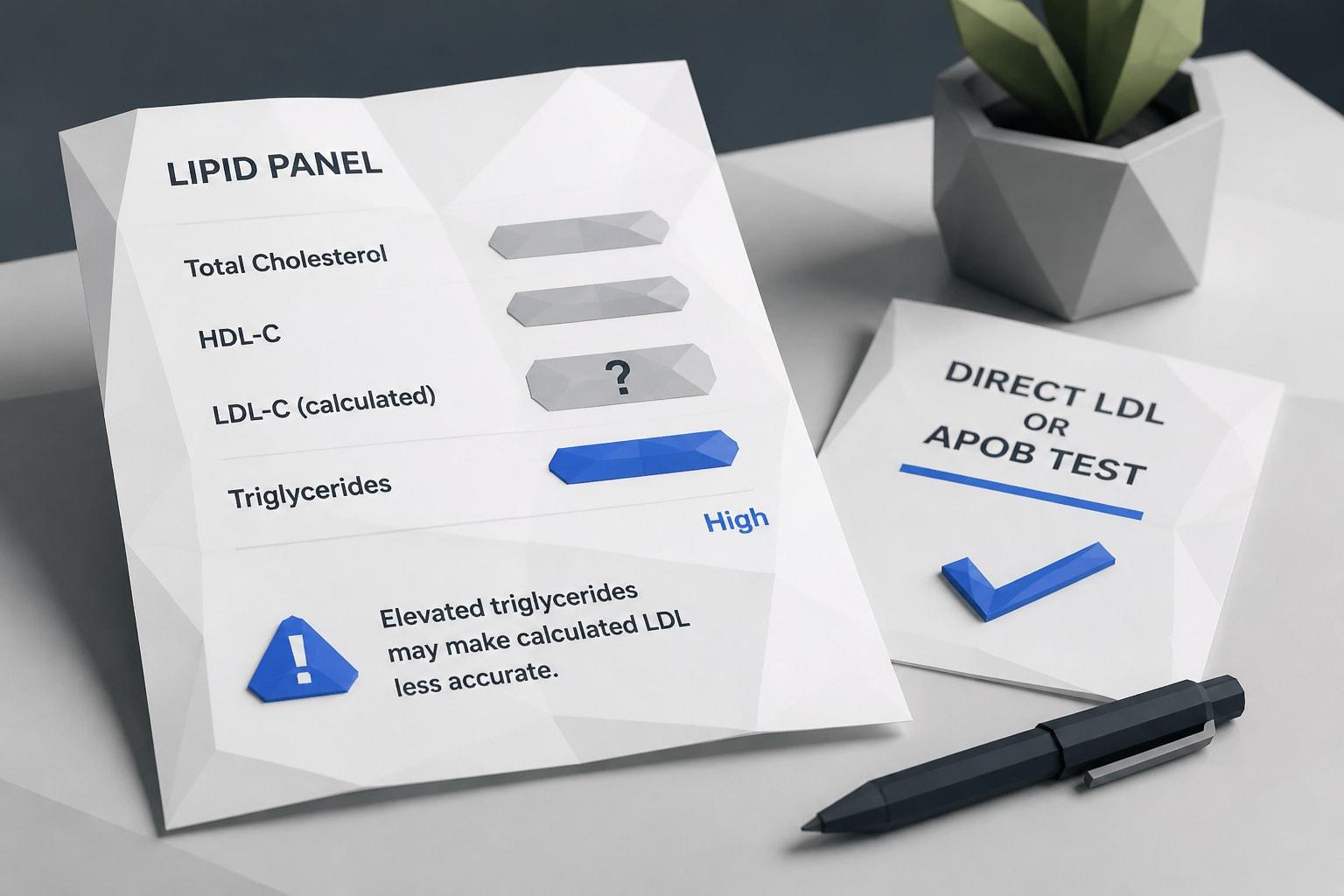
Calculated LDL stops being reliable mainly when triglycerides are high, when LDL itself is very low, or when a rare lipid disorder distorts the math. Under ordinary conditions the estimate on a standard cholesterol panel is accurate enough for most decisions, and the problems appear in specific, predictable situations that you can recognize on your own results.
Big picture
- What it is: Most lipid panels do not measure LDL cholesterol directly. They measure total cholesterol, HDL and triglycerides, then estimate LDL with an equation.
- Why it matters: An inaccurate LDL number can make your risk look lower or higher than it is, which affects whether you act on a result or ignore it.
- Who it affects: Adults with elevated triglycerides, very low LDL, diabetes, metabolic syndrome or a family history of lipid disorders are most likely to see unreliable estimates.
- No single cutoff: Current guidance does not say every calculated LDL becomes inaccurate above one threshold. Reliability declines gradually and depends on which equation the lab uses.
- Next step: Look at your triglyceride value first. If it is high or your LDL is unexpectedly low or high, consider a direct LDL test or an ApoB test for a second look.
How is LDL calculated, and why is it usually an estimate?
LDL cholesterol on a routine panel is an estimate derived from other measurements, not a count of LDL particles or a direct assay of the LDL fraction. A standard panel reports total cholesterol, HDL cholesterol and triglycerides, and the laboratory computes LDL from those three values.
The American Heart Association notes that a lipid panel may be fasting or nonfasting and includes total cholesterol, HDL, LDL and triglycerides. The LDL line on that report is almost always the output of a formula. This works well because the underlying assumption is reasonable for most people: nearly all cholesterol in the blood is carried by LDL, HDL and very-low-density lipoprotein (VLDL), so if you can estimate VLDL cholesterol, you can subtract it and HDL from the total to isolate LDL.
The difficulty is that VLDL cholesterol is not measured either. Every equation approximates it from triglycerides. How well that approximation holds is what determines whether the final LDL number can be trusted.
What is the formula for calculating LDL cholesterol?
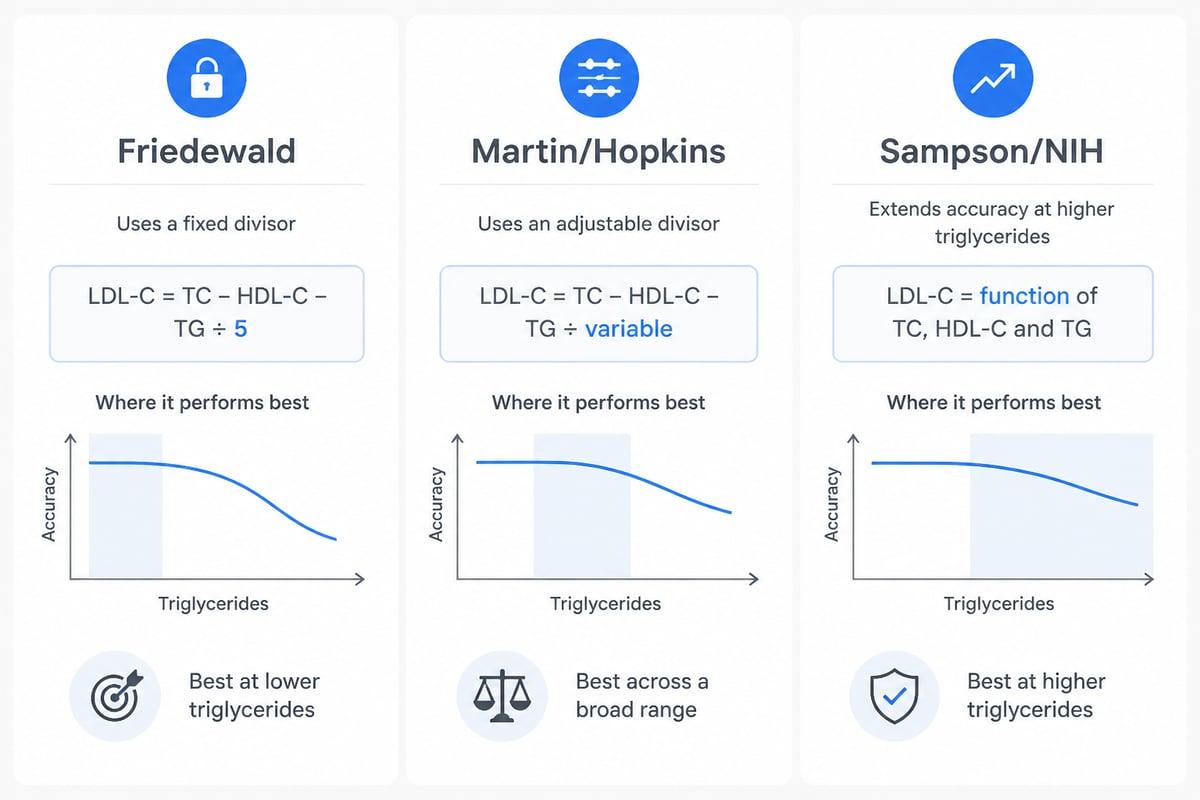
The classic formula is the Friedewald equation: LDL = total cholesterol minus HDL minus (triglycerides divided by 5), with all values in mg/dL. The divisor of 5 stands in for the assumption that VLDL cholesterol equals one fifth of triglycerides.
That fixed ratio is the weak point. In reality the ratio of triglycerides to VLDL cholesterol varies from person to person and shifts as triglycerides rise or LDL falls. Two newer equations address this by using an adjustable divisor instead of a fixed one.
| Equation | How it estimates VLDL cholesterol | Practical note |
|---|---|---|
| Friedewald | Triglycerides divided by a fixed 5 | Oldest and most widely reported; least accurate when triglycerides are high or LDL is low |
| Martin/Hopkins | Triglycerides divided by an adjustable factor based on non-HDL cholesterol and triglyceride level | Better agreement with measured LDL, particularly at low LDL |
| Sampson/NIH | Uses a modified formula designed to remain accurate at higher triglyceride levels | Better agreement with measured LDL across a wider triglyceride range |
The Martin/Hopkins method uses an adjustable factor table, and the Sampson/NIH equation was derived to extend accuracy into the higher triglyceride range. Which one your laboratory uses is usually not printed on the report, so it is reasonable to ask the lab or check its documentation if your result looks inconsistent.
Which equation is more accurate: Friedewald, Martin/Hopkins or Sampson?
Martin/Hopkins and Sampson/NIH are more accurate than Friedewald in the situations where Friedewald struggles, and current guidance favors them. The ACC/AHA dyslipidemia guideline summary prefers the Martin/Hopkins or Sampson/NIH equation over the Friedewald equation for estimating LDL-C.
The Association for Diagnostics & Laboratory Medicine (ADLM) goes further and recommends switching from Friedewald to the Martin or Sampson equations. Its guidance states that these show improved comparability to measured LDL-C, particularly when LDL-C is below 70 mg/dL and triglycerides are elevated up to 800 mg/dL.
Two practical points follow from this:
- Friedewald tends to underestimate LDL when triglycerides are elevated, because dividing by 5 overstates the VLDL fraction and subtracts too much.
- The error matters most at low LDL. A result that reads 62 mg/dL on one equation could be meaningfully higher on another, and that gap can move someone across a treatment threshold.
If your report was generated with Friedewald, the number is not wrong in a clerical sense. It simply carries more uncertainty in certain ranges than a newer equation would.
When calculated LDL stops being reliable: the main triggers
The situations where calculated LDL stops being reliable fall into four groups, and most readers will recognize at least one on their own report.
High triglycerides
Triglycerides are the biggest source of error because every equation relies on them to estimate VLDL cholesterol. The ADLM notes that elevated triglycerides can interfere with both estimated and direct homogeneous LDL-C methods, so even a directly measured value is not immune.
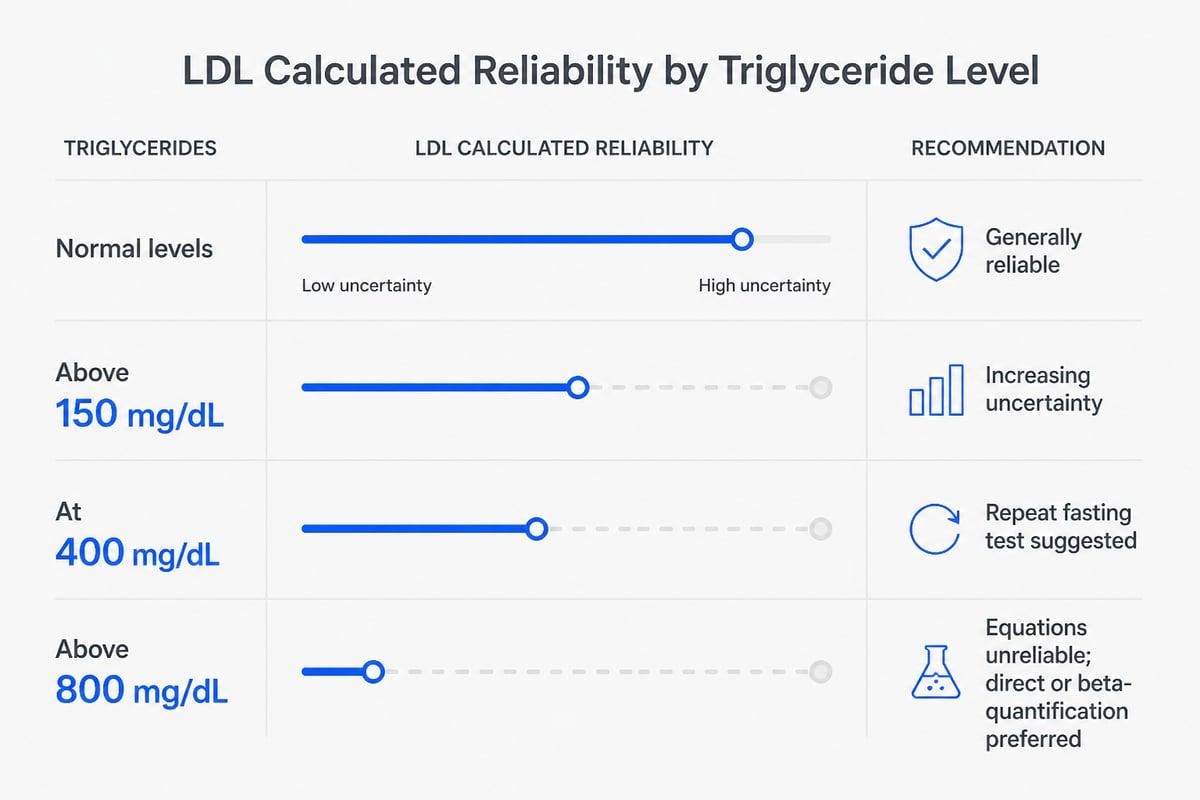
For orientation, a nonfasting triglyceride result of 400 mg/dL or higher is the point where guidelines advise a closer look. The ACC/AHA summary recommends a fasting lipid profile to estimate LDL-C more accurately for adults and children with a nonfasting triglyceride result of at least 400 mg/dL (4.5 mmol/L). This is a prompt to repeat the test under better conditions, not a cutoff above which every value is meaningless.
Very low LDL
When LDL is already low, small absolute errors become large relative errors. A calculation that is off by 10 mg/dL barely matters at an LDL of 160 but can change the interpretation at 50. This is why the newer equations were validated specifically in the sub-70 mg/dL range.
Very high triglycerides or rare disorders
At triglycerides above 800 mg/dL, and in type III hyperlipidemia (familial dysbetalipoproteinemia), the assumptions behind the equations break down. The ADLM states that none of the LDL-C equations should be used for patients with type III hyperlipidemia, and that if LDL-C is needed in type III hyperlipidemia or with triglycerides above 800 mg/dL, beta-quantification is preferred. Beta-quantification is a specialized ultracentrifugation method generally performed in reference or research laboratories.
Recent illness, medication changes or inconsistent results
Acute illness can shift lipid values temporarily, and some medications alter triglycerides or HDL. If a result looks out of character, it is worth reading about whether being sick changes your blood test results before drawing conclusions.
Is there a single triglyceride threshold where the calculation fails?
No. Reliability declines along a gradient rather than collapsing at one number, and the picture depends on which equation was used. Older teaching often cited 400 mg/dL as the point where Friedewald could not be used, and that figure still appears on many laboratory reports as a cutoff for suppressing the LDL value entirely.
Current guidance is more nuanced. The 400 mg/dL nonfasting triglyceride figure is a trigger for repeat testing under fasting conditions, not a declaration that LDL is unknowable. The ADLM says a comment suggesting fasting reassessment is reasonable when nonfasting triglycerides exceed 400 mg/dL, and recommends fasting retesting for adults with hypertriglyceridemia.
With Martin/Hopkins or Sampson/NIH, estimates stay useful at higher triglyceride levels than Friedewald allows, up to about 800 mg/dL per ADLM's guidance. Beyond that, direct methods or beta-quantification become the better tools. So the useful question is not whether your triglycerides crossed a magic line, but which equation produced your number and how far into the high-triglyceride range you are.
Does fasting change how reliable calculated LDL is?
Fasting affects triglycerides far more than it affects LDL, so it matters mainly through its effect on the calculation. After a meal, triglycerides rise, sometimes substantially, and a higher triglyceride value feeds directly into the equation and can distort the LDL estimate.
For most people with normal triglycerides, the difference between fasting and nonfasting LDL is small, which is why many guidelines now accept nonfasting samples for a lipid panel for routine screening. The practical rule is simple:
- If your nonfasting triglycerides are modest and your LDL looks plausible, the result is usually fine to act on.
- If your nonfasting triglycerides reach 400 mg/dL or higher, repeat the panel after a proper fast.
- If your triglycerides remain high even when fasting, the calculated LDL deserves less trust and a direct measurement or ApoB test becomes useful.
Fasting generally means no food or caloric drinks for a period before the draw, with water allowed. Because routine fasting is no longer required for every panel, it is worth deciding in advance whether your situation calls for it. Anyone with a history of high triglycerides, diabetes or an unexpected prior result should lean toward fasting.
What is the difference between calculated and directly measured LDL?
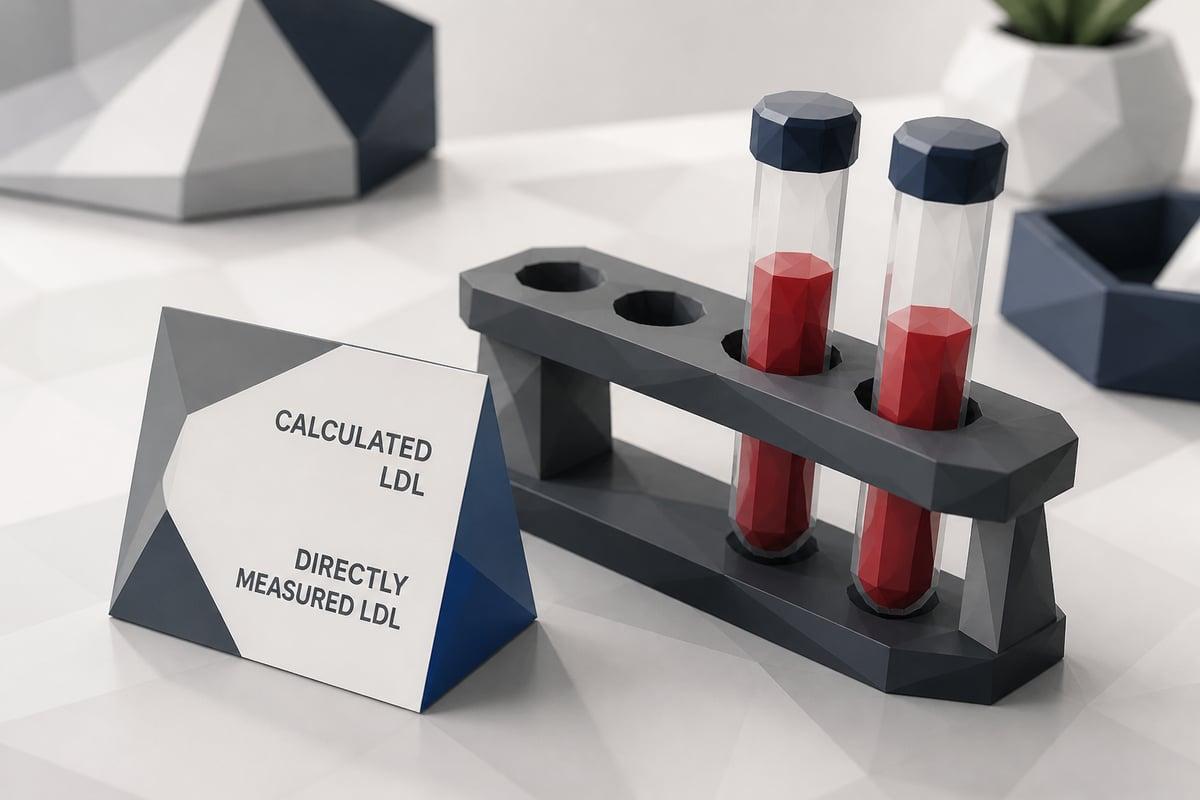
Directly measured LDL uses a laboratory assay rather than a triglyceride-based formula. The calculated version infers LDL, and the direct version measures it.
Direct LDL has advantages in the settings described above, but it is not perfect. As noted, elevated triglycerides can interfere with both estimated and direct homogeneous LDL-C methods, so a direct result in a person with very high triglycerides should still be interpreted carefully. Direct testing also costs more than simply reading the calculated value that comes with a standard panel, and the two numbers can differ by a few points even in healthy people without either being wrong.
A direct LDL test is most useful as a cross-check when your calculated result is surprising, when triglycerides are elevated, or when your LDL is low enough that a small error could change what the number means. If you want a clearer picture of how LDL relates to the rest of your lipids, the explainer on HDL versus LDL covers the basics.
Recommended Test
LDL Cholesterol, Direct
Measures LDL cholesterol directly in the lab rather than estimating it from a formula. It is mainly useful when your triglycerides are high enough that a calculated LDL may be unreliable or cannot be reported.
Includes 1 biomarkers
$13
What happens if my LDL cholesterol level is too low?
Very low LDL is generally not harmful by itself, but it is the range where calculated values are least trustworthy, so it deserves confirmation. Many people reach low LDL through diet, exercise or statin therapy, and low levels in that context are expected and often desirable.
Persistently very low LDL without an obvious cause can occasionally reflect an underlying condition, such as a genetic disorder affecting lipoprotein production, hyperthyroidism, malabsorption or liver disease. These are uncommon, and a single low number is not a diagnosis. The point for this guide is narrower: when LDL falls below roughly 70 mg/dL, the choice of equation matters, and a Friedewald result can understate the true value. If the number will drive a decision, confirming it with a Martin/Hopkins or Sampson result, or with a direct measurement, is reasonable.
Anyone with symptoms or a markedly low result should discuss it with a clinician, since a self-ordered lab report cannot establish a cause or direct treatment.
Why is my LDL so high but I am healthy?
A high LDL in someone who feels healthy is common, because elevated LDL usually causes no symptoms, and the number can be accurate, inflated by the calculation, or both. Feeling well says little about LDL, and a healthy lifestyle does not rule out genetically driven high LDL.
Several explanations are worth separating:
- True high LDL. Genetics, such as familial hypercholesterolemia, can raise LDL substantially in lean, active people.
- Calculation error. Less often, the estimate overstates LDL, although the more common error with Friedewald is understatement when triglycerides are high.
- Particle number versus cholesterol content. LDL cholesterol measures the cholesterol carried, not how many particles carry it. Someone can have a modest LDL-C but a high particle count, or the reverse.
- Temporary factors. Recent illness, rapid weight change or unusual diet before the test can shift results.
If your number surprised you, repeat it under standard conditions and consider a second method before drawing conclusions. The guidance on what to do when your results are borderline is a useful framework for deciding whether to retest, change habits or seek clinical advice.
When should ApoB or other testing be added?
ApoB testing adds context when calculated LDL and triglycerides do not tell a consistent story. Each atherogenic particle, including LDL and VLDL remnants, carries one ApoB molecule, so ApoB reflects the number of potentially artery-clogging particles rather than the cholesterol they contain.
The ADLM identifies apoB as especially useful when triglycerides are elevated, precisely the situation where calculated LDL is shakiest. ApoB does not depend on a triglyceride-based formula, which makes it a stable reference point when the LDL equation is under strain.
Consider adding ApoB or another advanced test in these situations:
- Triglycerides are elevated and calculated LDL looks lower than your overall profile suggests.
- You have diabetes, metabolic syndrome or insulin resistance, where particle number and LDL-C often diverge.
- Your LDL is low but you have a strong family history or other risk markers.
- Two panels taken weeks apart give noticeably different LDL values.
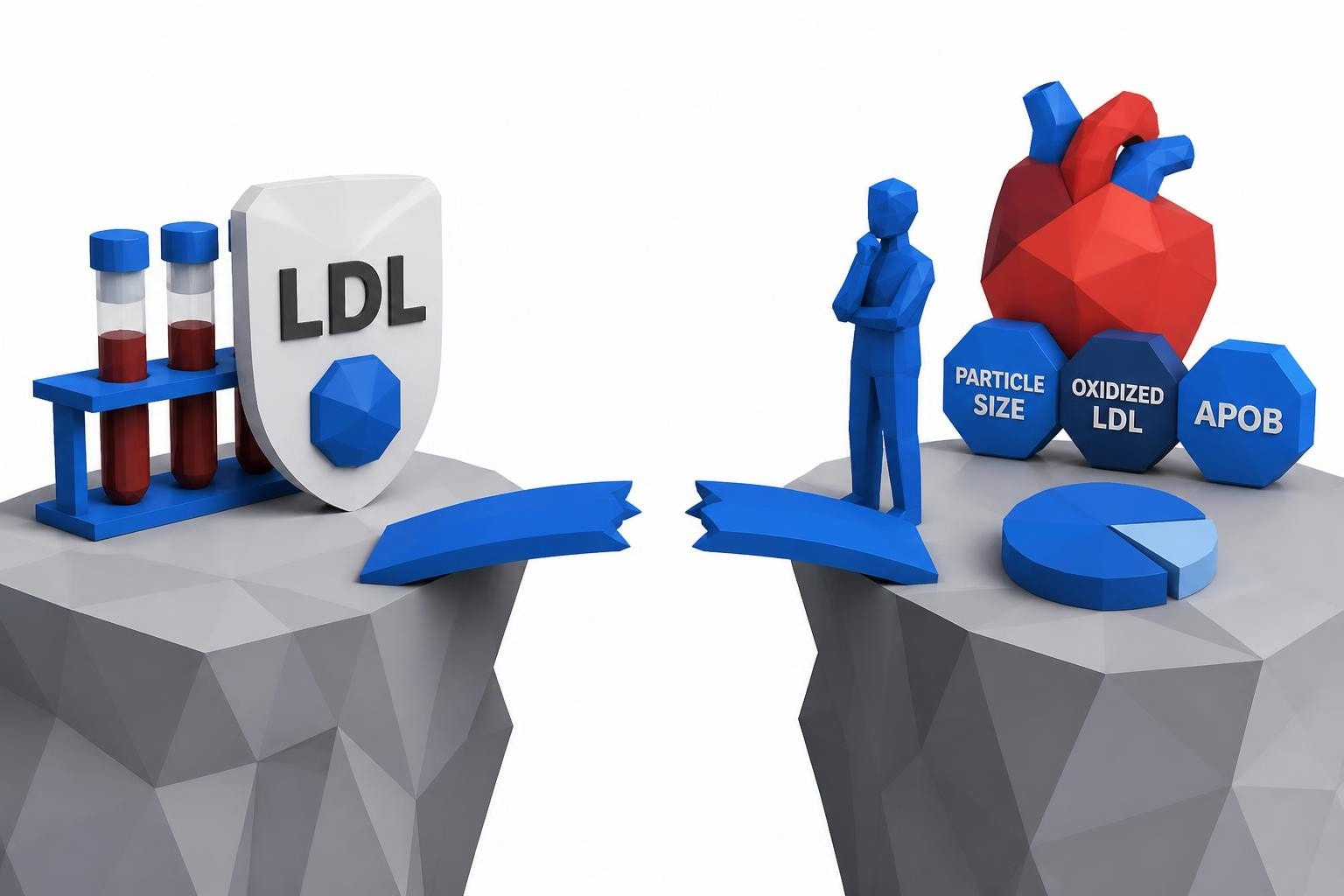
Other tests add further detail. Nuclear magnetic resonance (NMR) lipoprotein profiling counts particles and sizes directly, and the comparison of an NMR profile with a standard lipid panel shows what each can and cannot tell you. Oxidized LDL testing addresses a different question, the oxidative state of LDL particles, and is not a replacement for LDL-C or ApoB.
Recommended Panel
Advanced Heart Health Panel
Save $4Go beyond basic cholesterol testing. This advanced panel includes the markers cardiologists use to assess true cardiovascular risk: ApoB, Lp(a), homocysteine, and inflammation.
Includes 10 biomarkers
$78.30
How do the 2026 guideline updates affect this?
The current dyslipidemia guidance does not declare calculated LDL invalid above a single threshold. It instead steers laboratories and clinicians toward better equations, targeted repeat testing and, where needed, supplementary markers such as ApoB.
The practical themes in the guideline material cited here are consistent. Prefer Martin/Hopkins or Sampson/NIH over Friedewald. Treat a nonfasting triglyceride result of 400 mg/dL or higher as a reason to repeat a fasting profile. Recognize that directly measured LDL and ApoB offer additional information when triglycerides are high or LDL is low. For rare conditions such as type III hyperlipidemia, none of the equations should be relied on.
For a self-directed reader, this means the goal is not to distrust every calculated LDL but to know the specific flags that justify a second look. A result that is consistent with your triglycerides, HDL and history can generally be accepted. A result that conflicts with them is the one to double-check.
How can I check whether my own result is reliable?
You can screen your own report in a few minutes by checking triglycerides, LDL level, fasting status and consistency with prior results. Work through these steps in order:
- Find your triglyceride value. At normal levels, calculated LDL is usually dependable. Between 150 and 400 mg/dL, accuracy depends on the equation. At 400 mg/dL or above on a nonfasting sample, plan a fasting repeat.
- Check the LDL range. If LDL is below 70 mg/dL, ask which equation the lab used, or confirm with a direct measurement.
- Note whether you fasted. If you did not and triglycerides are high, the nonfasting state may be the explanation.
- Compare to earlier results. A sudden jump or drop with no change in habits or medications is a reason to retest.
- Look for a lab comment. Some reports suppress LDL or add a note recommending a fasting sample. Take that note seriously.
- Add ApoB or direct LDL if the picture is unclear. Use one to adjudicate between conflicting numbers.
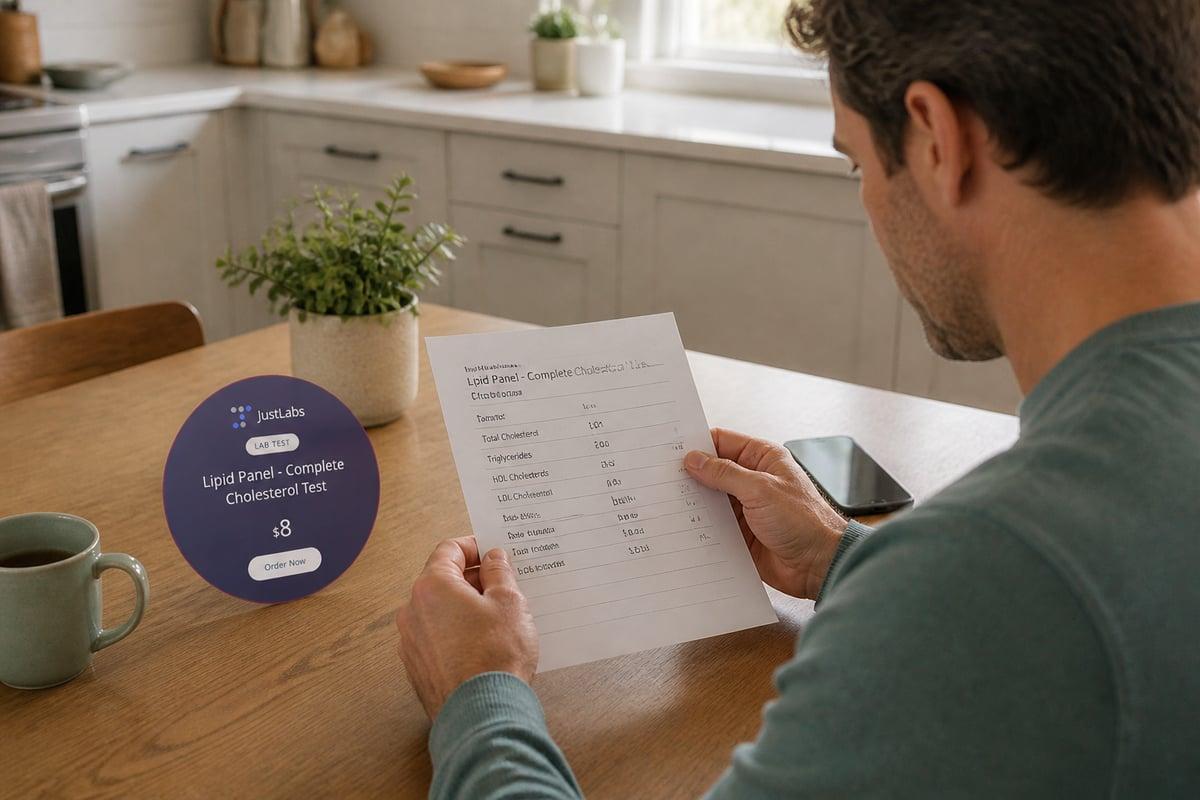
The JustLabs Lipid Panel covers the core measurements, including total cholesterol, HDL, LDL and triglycerides, and gives you the baseline from which these checks begin. Results are reported online with values and reference ranges, which makes it easier to apply the steps above. Because JustLabs is a self-pay service with no insurance or doctor visit required, it suits adults who want to repeat or confirm a result on their own schedule. It does not replace medical care, and a result that worries you should be reviewed with a clinician.
The American Heart Association also summarizes key cholesterol guideline points, including which measurements a cholesterol panel includes.
Key takeaways
- Calculated LDL is an estimate built from total cholesterol, HDL and triglycerides, and its accuracy depends on the equation used.
- Calculated LDL stops being reliable mostly with high triglycerides, very low LDL, and rare conditions such as type III hyperlipidemia.
- Martin/Hopkins and Sampson/NIH are preferred over Friedewald by ACC/AHA and ADLM guidance, especially at low LDL and elevated triglycerides.
- A nonfasting triglyceride of 400 mg/dL or higher is a signal to repeat a fasting panel, not proof that LDL is unusable.
- Above 800 mg/dL triglycerides, or in type III hyperlipidemia, equations should not be relied on and beta-quantification is preferred.
- Direct LDL and ApoB add independent information, and ApoB is especially useful when triglycerides are elevated.
- Check your own triglycerides, LDL range, fasting status and history before trusting or dismissing a result.
FAQ
Can I trust my LDL result if I did not fast?
Often yes. Nonfasting samples are acceptable for routine screening when triglycerides are modest. If your nonfasting triglycerides are 400 mg/dL or higher, repeat the panel after fasting for a more accurate estimate.
Is a direct LDL test always more accurate than a calculated one?
Not always. Direct measurement avoids the triglyceride-based formula, which helps when triglycerides are high or LDL is low, but elevated triglycerides can still interfere with some direct methods. It works best as a cross-check, not an automatic upgrade.
Which equation does my lab use?
Many labs still report Friedewald by default, and the equation is often not printed on the report. You can ask the lab or review its method documentation. If the result is close to a decision point, it is reasonable to ask whether a Martin/Hopkins or Sampson/NIH value is available.
How often should I retest if my LDL result looks off?
A repeat under standard conditions within a few weeks is a common approach, particularly if illness, a diet change or a missed fast could have affected the first sample. Persistent discrepancies are a reason to add a direct LDL or ApoB test and to discuss the pattern with a clinician.
Does ApoB replace the lipid panel?
No. ApoB complements the lipid panel by counting atherogenic particles, while the panel reports cholesterol content and triglycerides. Used together, they give a fuller picture than either alone.
What if my triglycerides are above 800 mg/dL?
At that level the standard equations are not appropriate, and a clinician may need to arrange specialized testing. Very high triglycerides also carry their own health considerations, so this result warrants prompt medical attention rather than self-interpretation.
If your most recent panel showed high triglycerides or an LDL that surprised you, the next step is to note your triglyceride value and decide whether a fasting repeat or a second measurement makes sense. You can order the Lipid Panel directly, with no insurance or doctor visit needed, and view your results online, generally within 1 to 3 business days. If you want a clearer view across several markers, you can browse tests to find an ApoB or advanced lipid option and confirm your result at your own pace.
Related reading

References
Martin SS, Blaha MJ, Elshazly MB, Toth PP, Kwiterovich PO, Blumenthal RS, Jones SR. Comparison of a novel method vs the Friedewald equation for estimating low-density lipoprotein cholesterol levels from the standard lipid profile. JAMA. 2013 Nov 20;310(19):2061-8. doi: 10.1001/jama.2013.280532. PMID: 24240933. https://pubmed.ncbi.nlm.nih.gov/24240933/
Sampson M, Ling C, Sun Q, Harb R, Ashmaig M, Warnick R, Sethi A, Fleming JK, Otvos JD, Meeusen JW, Delaney SR, Jaffe AS, Shamburek R, Amar M, Remaley AT. A New Equation for Calculation of Low-Density Lipoprotein Cholesterol in Patients With Normolipidemia and/or Hypertriglyceridemia. JAMA Cardiol. 2020 May 1;5(5):540-548. doi: 10.1001/jamacardio.2020.0013. PMID: 32101259. https://pubmed.ncbi.nlm.nih.gov/32101259/
Martins J, Steyn N, Rossouw HM, Pillay TS. Best practice for LDL-cholesterol: when and how to calculate. J Clin Pathol. 2023 Mar;76(3):145-152. doi: 10.1136/jcp-2022-208480. PMID: 36650044. https://pubmed.ncbi.nlm.nih.gov/36650044/
Nordestgaard BG, Langsted A, Mora S, Kolovou G, Baum H, Bruckert E, Watts GF, Sypniewska G, Wiklund O, Borén J, Chapman MJ, Cobbaert C, Descamps OS, von Eckardstein A, Kamstrup PR, Pulkki K, Kronenberg F, Remaley AT, Rifai N, Ros E, Langlois M, European Atherosclerosis Society (EAS) and the European Federation of Clinical Chemistry and Laboratory Medicine (EFLM) joint consensus initiative. Fasting is not routinely required for determination of a lipid profile: clinical and laboratory implications including flagging at desirable concentration cut-points-a joint consensus statement from the European Atherosclerosis Society and European Federation of Clinical Chemistry and Laboratory Medicine. Eur Heart J. 2016 Jul 1;37(25):1944-58. doi: 10.1093/eurheartj/ehw152. PMID: 27122601. https://pubmed.ncbi.nlm.nih.gov/27122601/
Glavinovic T, Thanassoulis G, de Graaf J, Couture P, Hegele RA, Sniderman AD. Physiological Bases for the Superiority of Apolipoprotein B Over Low-Density Lipoprotein Cholesterol and Non-High-Density Lipoprotein Cholesterol as a Marker of Cardiovascular Risk. J Am Heart Assoc. 2022 Oct 18;11(20):e025858. doi: 10.1161/JAHA.122.025858. PMID: 36216435. https://pubmed.ncbi.nlm.nih.gov/36216435/