Receiving lab results that fall into the borderline or equivocal range creates uncertainty for both patients and healthcare providers. Unlike clear positive or negative findings, borderline results sit in a gray zone that requires careful interpretation, additional context, and often further testing. Understanding what to do when your results are borderline can transform confusion into actionable steps that lead to accurate health assessments and appropriate care decisions.
Big picture
- Borderline results fall in a range between normal and abnormal where the test cannot definitively confirm or rule out a condition, often due to biological variability, test limitations, or early-stage disease processes
- They matter because acting on inconclusive information (either through unnecessary treatment or false reassurance) can impact your health outcomes and healthcare costs
- Common causes include timing of the test, pre-analytical factors like diet or exercise, technical variability, or genuine early physiological changes that need monitoring
- Immediate action involves documenting the result, understanding the specific reference range used, and consulting with a healthcare provider about whether repeat testing, confirmatory tests, or clinical observation is most appropriate
- Long-term strategy focuses on establishing baseline patterns through periodic testing, optimizing pre-test conditions, and integrating lab findings with symptoms and medical history
Understanding Borderline Laboratory Results
Borderline results represent measurements that fall close to the cutoff between normal and abnormal ranges. These values occupy a statistical gray zone where test sensitivity and specificity overlap, creating genuine uncertainty about clinical significance.
What Defines a Borderline Result
Laboratory tests establish reference ranges based on population statistics, typically using the middle 95% of values from healthy individuals. Results falling just outside this range or in designated equivocal zones require careful interpretation.
Key characteristics of borderline findings:
- Values within 10-15% of the reference range cutoff
- Results labeled as "equivocal," "indeterminate," or "borderline"
- Measurements in designated gray zones where confirmatory testing is recommended
- Results that conflict with clinical presentation or other test findings
The WHO operational handbook on laboratory testing provides detailed guidance on handling equivocal results in clinical practice, emphasizing the importance of algorithmic approaches to confirmation.
Why Borderline Results Occur
Multiple factors contribute to borderline laboratory findings. Biological variability causes natural fluctuations in biomarker levels throughout the day, across menstrual cycles, or in response to stress, exercise, and dietary intake.
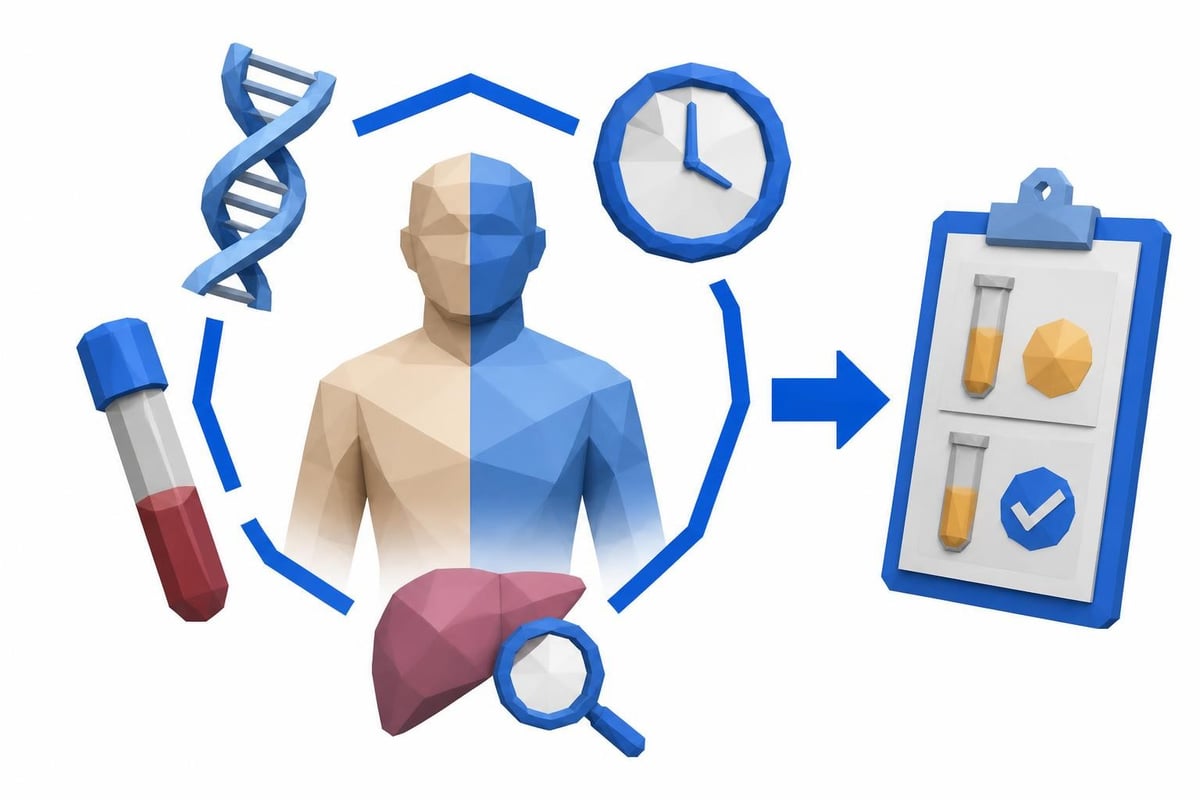
Technical measurement variability also plays a role. Even highly precise laboratory instruments have inherent measurement uncertainty, typically 2-5% for most chemistry tests. When a true value sits near a cutoff, this normal variation can push results across the threshold.
| Factor Category | Examples | Impact on Results |
|---|---|---|
| Biological Variation | Circadian rhythms, hydration status, recent meals | Can shift values 5-20% |
| Pre-analytical | Sample handling, collection time, patient preparation | May alter results by 10-30% |
| Analytical | Instrument calibration, reagent lot, methodology | Creates ±2-5% uncertainty |
| Early Disease | Subclinical conditions, early immune responses | Produces genuine borderline values |
Understanding normal versus optimal lab ranges helps contextualize where borderline results fit within the broader spectrum of health markers.
When Borderline Results Require Immediate Action
Certain borderline findings demand prompt follow-up due to potential clinical significance. Knowing what to do when your results are borderline depends heavily on the specific test and your individual risk factors.
High-Priority Borderline Results
Infectious disease markers with borderline values require careful algorithmic testing. The CDC's model for interpreting discordant diagnostic results demonstrates how pretest probability and timing affect the meaning of equivocal findings, particularly for conditions like COVID-19.
HIV testing with indeterminate results follows specific confirmatory algorithms recommended by WHO, using multiple assays with different methodologies to resolve uncertainty. This approach prevents both false-positive diagnoses and missed infections.
Cancer markers in the borderline range merit different strategies depending on the biomarker:
- PSA values between 4-10 ng/mL may benefit from free versus total PSA ratio testing to improve specificity
- Borderline HER2 results in breast cancer require reflex testing, as detailed in CAP guidelines for equivocal HER2 IHC findings
- Thyroid nodule markers with indeterminate findings often need ultrasound correlation and possible biopsy
Metabolic and Hormone Borderline Values
Glucose measurements in the prediabetic range (100-125 mg/dL fasting) represent clinically actionable borderline results. These values indicate increased diabetes risk and warrant lifestyle intervention plus periodic monitoring.
Recommended Panel
Comprehensive Diabetes Panel
This panel detects diabetes and prediabetes at every stage. Includes lipids because diabetes dramatically increases heart disease risk.
Includes 10 biomarkers
$35
Fasting required
Thyroid function tests frequently produce borderline results due to the complex feedback loops regulating hormone production. TSH values between 2.5-4.5 mIU/L may be borderline depending on clinical context, pregnancy status, and symptom presentation.
Recommended Panel
Complete Thyroid Panel
Save $3Our most comprehensive thyroid panel includes all 5 essential markers: TSH, Free T4, Free T3, Reverse T3, and both thyroid antibodies. Get the complete picture of your thyroid health.
Includes 6 biomarkers
$84
Lipid panel borderline findings:
- Total cholesterol 200-239 mg/dL (borderline high)
- LDL cholesterol 130-159 mg/dL (borderline high)
- HDL cholesterol 40-59 mg/dL (borderline low in men)
- Triglycerides 150-199 mg/dL (borderline high)
These values typically prompt cardiovascular risk assessment using additional markers and clinical risk calculators before determining treatment necessity.
Step-by-Step Response to Borderline Results
Navigating what to do when your results are borderline requires a systematic approach that balances caution with avoiding unnecessary intervention.
Immediate Assessment Steps
Document the complete result including the actual numerical value, reference range used, testing methodology, and date of collection. Laboratory reports from services like Justlabs provide this complete information, essential for tracking trends over time.
Review pre-test conditions that might have influenced the result:
- Fasting status and duration
- Recent exercise or physical activity
- Medications or supplements taken
- Time of day for collection
- Hydration level
- Recent illness or stress

The NHS guidance on faecal calprotectin provides an excellent clinical example of how to interpret borderline biomarker results, including specific repeat testing timelines.
Confirmatory Testing Strategies
Repeat testing under standardized conditions often resolves borderline uncertainty. The optimal timing for repeat tests varies by biomarker:
| Test Type | Recommended Repeat Interval | Reason |
|---|---|---|
| Glucose/HbA1c | 3 months | Reflects average glycemic control |
| Lipid panel | 2-12 weeks | Allows dietary modification trial |
| Thyroid function | 6-8 weeks | Permits hormonal equilibration |
| Inflammatory markers | 2-4 weeks | Distinguishes acute from chronic elevation |
| Vitamin/mineral levels | 8-12 weeks | Time for supplementation effect |
Alternative or confirmatory tests may provide clarity when initial results remain borderline. For example, understanding CBC with automated differential helps determine when borderline white blood cell counts warrant more detailed immune system evaluation.
Integrating Clinical Context
Laboratory values never exist in isolation. What to do when your results are borderline depends critically on the complete clinical picture.
Consider these contextual factors:
- Symptom presence, severity, and duration
- Personal medical history and family history
- Current medications and their known effects on lab values
- Recent lifestyle changes or environmental exposures
- Results from related or complementary tests
- Trajectory of previous results if available
The Washington State Department of Health laboratory reporting guidelines address how borderline results affect public health reporting requirements, illustrating the broader implications of equivocal findings.
Managing Specific Borderline Scenarios
Different categories of borderline results require tailored approaches based on their clinical implications and the availability of confirmatory methods.
Borderline Kidney Function Markers
Creatinine values at the upper limits of normal or slightly elevated create diagnostic uncertainty. Factors like muscle mass, dietary protein, and supplement use significantly influence creatinine levels, as discussed in how creatine supplementation affects kidney tests.
For borderline kidney function:
- Calculate eGFR using age, sex, and race-adjusted equations
- Obtain a cystatin C level as an alternative filtration marker
- Check for proteinuria with a urine albumin-to-creatinine ratio
- Repeat testing after discontinuing creatine supplements and moderating protein intake
- Monitor trends over 3-6 months before concluding chronic kidney disease exists
Borderline Inflammatory and Autoimmune Markers
Mildly elevated inflammatory markers like CRP or ESR often occur without serious underlying disease. Transient infections, minor injuries, or stress can produce borderline elevations.
Recommended Panel
Inflammation Panel
Save $2Chronic inflammation is the hidden driver of heart disease, cancer, and accelerated aging. This panel measures the key markers that reveal whether silent inflammation is damaging your body.
Includes 17 biomarkers
$52
Fasting required
Autoantibody tests with low-positive results present particular challenges. Many healthy individuals have detectable autoantibodies at low levels without autoimmune disease. Borderline antinuclear antibody (ANA) results require correlation with specific clinical criteria before diagnosis.
Borderline Nutrient Levels
Vitamin D, B12, iron, and other nutrient markers frequently produce borderline results that fall into zones of sufficiency versus deficiency debate.
Vitamin D interpretation:
- Below 20 ng/mL: Deficiency
- 20-30 ng/mL: Borderline/insufficiency
- 30-50 ng/mL: Sufficiency
- Above 50 ng/mL: Higher levels
Recommended Panel
Vitamin & Mineral Panel
Save $5This panel tests the most commonly deficient nutrients: Vitamin D, B12, Folate, Iron (with complete iron studies), Ferritin, and Magnesium - the building blocks your body needs to function optimally.
Includes 9 biomarkers
$64
Fasting required
Borderline nutrient results often benefit from:
- Assessing functional markers (like methylmalonic acid for B12)
- Evaluating absorption capacity through additional testing
- Trial supplementation with repeat testing after 8-12 weeks
- Dietary assessment to identify intake patterns
Communication and Documentation Best Practices
Effective management of borderline results requires clear communication between patients, testing services, and healthcare providers.
Questions to Ask About Borderline Results
When you receive borderline findings, gather specific information to guide next steps:
About the test itself:
- What is the exact numerical value and reference range?
- How close is the result to the normal/abnormal cutoff?
- What is the test's analytical variability?
- Were there any quality flags or comments on the report?
About interpretation:
- Could pre-test factors have influenced this result?
- What is the clinical significance of this borderline finding?
- What percentage of borderline results for this test ultimately prove clinically significant?
- Are there symptoms or risk factors that change the interpretation?
About next steps:
- Should this test be repeated, and if so, when?
- Are there confirmatory or alternative tests recommended?
- What preparation or conditions should be optimized for repeat testing?
- What symptoms or changes should prompt earlier follow-up?
Tracking Results Over Time
Serial measurements provide critical context for borderline values. What appears borderline on a single test may represent your personal normal if consistently stable, or may indicate a trend requiring intervention if progressively changing.

Create a personal lab results log documenting:
- Test name and date
- Numerical result and reference range
- Pre-test conditions (fasting, time of day, recent activities)
- Symptoms present at time of testing
- Any lifestyle or medication changes
- Provider recommendations
The understanding lab results resources at Justlabs help patients interpret their findings and track changes over time.
Risk Stratification with Borderline Results
Not all borderline results carry equal clinical weight. Proper risk stratification helps prioritize follow-up and avoid both overtreatment and dangerous delays.
Assessing Individual Risk Factors
Personal and family medical history substantially modify the significance of borderline laboratory findings. A borderline glucose result carries different implications for someone with a strong family history of diabetes versus someone without risk factors.
High-risk features that increase the significance of borderline results:
- Strong family history of the relevant condition
- Presence of suggestive symptoms
- Multiple related biomarkers trending toward abnormal
- Known genetic predisposition
- Progressive worsening from previously normal values
- Exposure to relevant environmental or occupational risk factors
Population-Based Risk Assessment Tools
Many borderline results benefit from integration into validated risk calculators. Cardiovascular risk scores incorporate borderline lipid values alongside age, blood pressure, and smoking status to generate personalized risk estimates.
These tools help answer what to do when your results are borderline by quantifying absolute risk rather than focusing solely on whether individual markers fall inside or outside reference ranges.
Prevention and Optimization Strategies
Minimizing the occurrence of borderline results that reflect technical or pre-analytical factors rather than true physiology improves diagnostic accuracy.
Pre-Test Preparation
Standardizing the conditions under which you undergo testing reduces variability:
- Fasting tests: Complete 8-12 hour fast with only water permitted
- Timing: Schedule tests at consistent times of day when possible
- Hydration: Maintain normal hydration without excessive water loading
- Exercise: Avoid strenuous exercise for 24 hours before testing
- Supplements: Discontinue biotin and other interfering supplements 72 hours prior
- Medications: Take chronic medications as prescribed unless specifically instructed otherwise
When to Retest
Understanding appropriate retesting intervals prevents both premature repeat testing (before physiological changes could occur) and excessive delays (allowing potentially significant conditions to progress).
The how it works process at Justlabs makes repeat testing convenient and affordable when borderline results require confirmation.
Key Takeaways
Borderline results are common and often reflect normal biological variation rather than disease. Approximately 5% of healthy people will have results outside reference ranges on any given test, with many more falling into borderline zones.
Context determines significance. The same borderline value carries different meanings depending on symptoms, risk factors, trends over time, and results of related tests. Never interpret a borderline finding in isolation.
Systematic follow-up resolves uncertainty. Whether through repeat testing, confirmatory assays, or clinical monitoring, borderline results require a deliberate next step rather than being ignored or immediately treated.
Documentation enables longitudinal assessment. Tracking results over time distinguishes your personal baseline from clinically significant changes, making borderline values more interpretable.
Risk stratification guides urgency. High-risk individuals with borderline results need more aggressive follow-up than low-risk individuals with the same laboratory findings.
FAQ
What does it mean when a lab result is borderline?
A borderline result falls in a gray zone near the cutoff between normal and abnormal ranges, where the test cannot definitively confirm or exclude a condition. These values may reflect normal individual variation, early disease processes, or technical measurement uncertainty. Borderline results typically require repeat testing, clinical correlation, or confirmatory assays to establish their significance.
Should I be worried about borderline lab results?
The level of concern for borderline results depends on the specific test, your symptoms, and personal risk factors. Many borderline findings in asymptomatic, low-risk individuals prove clinically insignificant upon repeat testing. However, borderline results for certain markers (like infectious disease tests or cancer screening) warrant more serious follow-up. Consult with a healthcare provider to assess your individual situation.
How long should I wait before retesting borderline results?
Optimal retesting intervals vary by biomarker. Fast-changing markers like inflammatory proteins may be retested in 2-4 weeks, while slower metrics like HbA1c or vitamin levels typically require 8-12 weeks for meaningful change. The available tests at Justlabs include guidance on appropriate retesting timeframes for common panels.
Can lifestyle changes affect borderline test results?
Yes, many borderline results respond to lifestyle modifications. Borderline glucose improves with diet and exercise, lipid panels respond to dietary fat modifications, and inflammatory markers often decrease with weight loss and stress reduction. For borderline findings related to modifiable factors, a 2-3 month trial of lifestyle optimization followed by repeat testing often clarifies clinical significance.
Do I need to see a doctor for borderline lab results?
While not all borderline results require immediate physician consultation, discussing findings with a healthcare provider helps determine appropriate next steps. Self-pay testing services like Justlabs provide direct access to laboratory testing, but interpretation and clinical decision-making benefit from professional guidance. Consider contacting Justlabs for assistance understanding your results and recommendations for follow-up.
Are borderline results covered by FSA or HSA?
Many laboratory tests, including those performed to clarify borderline results, qualify as eligible expenses under FSA and HSA accounts. Justlabs offers FSA and HSA eligible testing, making follow-up testing more affordable when borderline findings require confirmation.
What's the difference between borderline, equivocal, and indeterminate results?
These terms are often used interchangeably to describe results in the diagnostic gray zone. "Borderline" typically indicates values near reference range cutoffs, "equivocal" suggests uncertainty in interpretation, and "indeterminate" often applies to categorical tests (like infectious disease assays) that cannot definitively determine positive or negative status. All three situations require similar approaches: clinical correlation, repeat testing, or confirmatory methods.
Can medications cause borderline lab results?
Many medications influence laboratory test results, potentially creating borderline values. Thyroid medications affect TSH levels, statins alter liver enzymes, and diuretics impact electrolyte balance. Always inform your healthcare provider and testing service about current medications when interpreting borderline results. Some borderline findings resolve after medication adjustment or timing changes relative to testing.
Understanding what to do when your results are borderline transforms uncertainty into an actionable pathway toward accurate health assessment. By combining repeat testing under standardized conditions, clinical context integration, and appropriate follow-up intervals, you can resolve most borderline findings effectively. When you need convenient, affordable access to initial or confirmatory laboratory testing, Justlabs provides transparent pricing and fast results without the need for insurance or doctor visits, helping you take control of your health monitoring and get the clarity you need from your lab work.