Understanding your liver health requires more than just looking at individual enzyme levels. The alt ast liver enzime ratio provides critical insight into the type and severity of liver conditions you might be experiencing. This ratio compares two essential liver enzymes-alanine aminotransferase (ALT) and aspartate aminotransferase (AST)-to help healthcare providers distinguish between various hepatic disorders and guide appropriate treatment decisions.
What Are ALT and AST Enzymes?
Before examining the alt ast liver enzime ratio, it's essential to understand these individual markers. Alanine aminotransferase (ALT) is an enzyme found primarily in liver cells. When liver tissue becomes damaged or inflamed, ALT leaks into the bloodstream, making it a sensitive indicator of hepatic injury.
Aspartate aminotransferase (AST) exists in multiple organs including the liver, heart, muscles, and kidneys. While elevated AST levels can signal liver problems, they may also indicate issues in other organs, making AST less specific to liver function than ALT.
Normal Reference Ranges
The typical reference ranges for these enzymes vary slightly between laboratories, but generally fall within these parameters:
| Enzyme | Normal Range (Units/L) | Primary Location |
|---|---|---|
| ALT | 7-56 U/L | Liver (specific) |
| AST | 10-40 U/L | Liver, heart, muscle, kidneys |
| Normal Ratio | 0.8-1.0 | Calculated value |
When you order lab tests without a doctor through direct-access services, these values help establish baseline liver function. Both enzymes are measured simultaneously in a comprehensive hepatic function panel.

Calculating and Interpreting the Alt AST Liver Enzime Ratio
The alt ast liver enzime ratio, also known as the De Ritis ratio after its discoverer, is calculated by dividing the AST value by the ALT value (AST/ALT). This simple calculation reveals patterns that help differentiate between various liver conditions.
Why the Ratio Matters
Individual enzyme elevations tell you that liver damage exists, but the ratio provides context about the underlying cause. Different liver diseases produce characteristic ratio patterns:
- Viral hepatitis typically shows ALT higher than AST (ratio less than 1.0)
- Alcoholic liver disease often presents AST higher than ALT (ratio greater than 2.0)
- Cirrhosis generally demonstrates AST elevation exceeding ALT
- Non-alcoholic fatty liver disease usually shows ratios below 1.0
According to research on the AST/ALT ratio, Fernando De Ritis first described this ratio in 1957 when studying acute viral hepatitis patients. His observations established the foundation for modern ratio interpretation.
Common Ratio Patterns and Their Significance
Understanding what different ratio values indicate helps contextualize your results:
Ratio less than 1.0: This pattern suggests ALT is higher than AST, commonly seen in:
- Acute viral hepatitis (hepatitis A, B, or C)
- Non-alcoholic fatty liver disease (NAFLD)
- Chronic hepatitis
- Medication-induced liver injury
Ratio between 1.0 and 2.0: This intermediate range may indicate:
- Early alcoholic liver disease
- Chronic liver conditions
- Mixed etiology requiring further evaluation
Ratio greater than 2.0: This elevated ratio strongly suggests:
- Alcoholic hepatitis or cirrhosis
- Advanced liver disease with significant fibrosis
- Severe hepatic damage requiring immediate attention
The Cleveland Clinic's approach to liver tests emphasizes that ratio interpretation should always occur alongside other clinical findings and patient history.
Clinical Applications of the Alt AST Liver Enzime Ratio
Healthcare providers utilize the alt ast liver enzime ratio across multiple diagnostic scenarios. Understanding these applications helps you appreciate why this measurement matters for your health monitoring.
Distinguishing Alcoholic from Non-Alcoholic Liver Disease
One of the most valuable uses involves differentiating between alcoholic and non-alcoholic liver conditions. Studies examining the diagnostic utility demonstrate that a ratio greater than 2.0 strongly suggests alcoholic liver disease, while ratios below 1.0 typically indicate non-alcoholic conditions.
This distinction matters because treatment approaches differ significantly:
- Alcoholic liver disease requires alcohol cessation, nutritional support, and sometimes medications
- Non-alcoholic fatty liver disease responds to weight loss, exercise, and metabolic management
- Viral hepatitis necessitates antiviral therapy and regular monitoring
Assessing Disease Severity and Progression
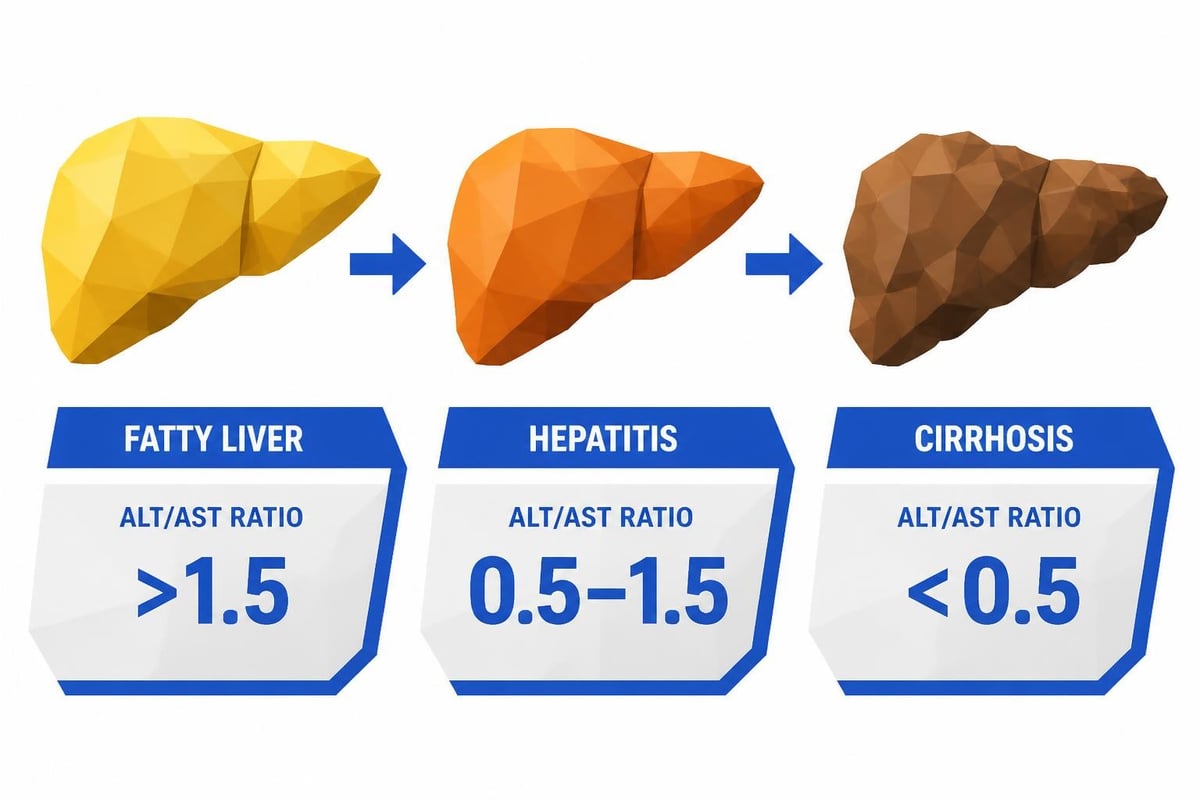
The alt ast liver enzime ratio helps track disease progression over time. As chronic liver disease advances toward cirrhosis, the ratio typically increases because:
- AST has a longer half-life than ALT
- Cirrhotic livers produce relatively more AST
- Mitochondrial AST release increases with severe damage
- ALT production capacity decreases in advanced disease
| Disease Stage | Typical Ratio | ALT Level | AST Level |
|---|---|---|---|
| Mild fatty liver | 0.5-0.8 | Mildly elevated | Normal to mild |
| Acute hepatitis | 0.5-1.0 | Significantly elevated | Moderately elevated |
| Alcoholic hepatitis | 2.0-3.0 | Moderately elevated | Significantly elevated |
| Cirrhosis | >1.0 | Variable | Elevated |
Monitoring Treatment Response
When you're undergoing treatment for liver conditions, serial measurements of the alt ast liver enzime ratio help assess therapeutic effectiveness. Improvement typically shows as:
- Decreasing enzyme levels overall
- Ratio normalization toward 1.0
- Sustained improvements over multiple measurements
- Correlation with symptom reduction
Through affordable lab testing services, patients can monitor these trends without insurance barriers, enabling more frequent assessment during critical treatment periods.
Factors Affecting the Alt AST Liver Enzime Ratio
Several variables influence enzyme levels and ratios beyond liver disease. Understanding these factors ensures accurate interpretation and prevents misdiagnosis.
Physiological Variables
Age: Enzyme levels naturally fluctuate across the lifespan. Older adults may show different baseline values compared to younger individuals.
Sex: Men typically have slightly higher baseline ALT and AST levels than women, though reference ranges account for these differences.
Body composition: Muscle mass affects AST levels more than ALT because muscle tissue contains significant AST concentrations.
Exercise intensity: Strenuous physical activity temporarily elevates both enzymes, particularly AST, which can skew the ratio for 24-48 hours post-exercise.
Medications and Substances
Numerous medications influence liver enzyme levels:
- Statins may cause mild ALT elevation
- Acetaminophen in high doses damages liver cells
- Certain antibiotics affect hepatic enzyme production
- Herbal supplements can alter enzyme levels unpredictably
Alcohol consumption dramatically impacts the alt ast liver enzime ratio. Even moderate drinking can shift the ratio upward, while chronic heavy consumption typically produces ratios exceeding 2.0 — which is why timing your alcohol abstinence before a liver function test matters for an accurate reading.
Other Medical Conditions
Non-hepatic conditions affecting enzyme levels include:
- Muscle disorders (elevate AST disproportionately)
- Heart disease (AST rises with cardiac injury)
- Hemolysis (artificially elevates both enzymes)
- Thyroid dysfunction (alters metabolic enzyme production)
The comprehensive overview from MedlinePlus details how various conditions affect ALT testing and interpretation.
Testing Frequency and Best Practices
Determining when and how often to measure the alt ast liver enzime ratio depends on your individual circumstances and risk factors.
Who Should Get Tested?
Regular monitoring benefits several populations:
- Individuals with diagnosed liver disease
- People taking hepatotoxic medications
- Those with metabolic syndrome or diabetes
- Patients with alcohol use concerns
- Anyone with unexplained fatigue or abdominal discomfort
Optimal Testing Intervals
Testing frequency varies by situation:
Baseline screening: Annual testing for adults over 40 or those with risk factors Active disease monitoring: Every 3-6 months during treatment Medication monitoring: According to specific drug protocols Post-treatment surveillance: Every 6-12 months after successful therapy
When you understand your lab results properly, you can make informed decisions about testing frequency in consultation with healthcare providers.

Limitations and Considerations
While valuable, the alt ast liver enzime ratio has important limitations that require acknowledgment.
When the Ratio May Be Misleading
Certain scenarios reduce ratio reliability:
- Very mild enzyme elevations (near upper normal limits)
- Acute muscle injury (skews AST disproportionately)
- Recent intense exercise (temporarily alters both enzymes)
- Hemolyzed blood samples (produces falsely elevated results)
Need for Comprehensive Assessment
The alt ast liver enzime ratio represents just one component of liver function evaluation. Complete assessment requires:
- Additional liver function tests (bilirubin, alkaline phosphatase, albumin)
- Imaging studies (ultrasound, CT, MRI)
- Detailed patient history and physical examination
- Sometimes liver biopsy for definitive diagnosis
According to the detailed explanation from HealthMatters.io, interpreting enzyme ratios alongside other biomarkers provides the most accurate diagnostic picture.
Individual Variability
Each person's baseline enzyme levels differ based on genetics, lifestyle, and underlying health status. A single abnormal result doesn't necessarily indicate disease-trends over time prove more informative than isolated measurements.
Accessing Direct Lab Testing
Modern healthcare increasingly embraces patient autonomy through direct-access laboratory services. Understanding your options helps you take control of liver health monitoring without traditional barriers.
Benefits of Self-Pay Testing
Direct laboratory testing offers several advantages:
- No insurance requirements: Bypass coverage limitations and pre-authorization hurdles
- Transparent pricing: Know costs upfront without surprise bills
- Rapid results: Typically available within 1-3 business days
- Privacy: Results come directly to you
- Convenience: Order online and visit local collection facilities
When you need to get lab tests without insurance, self-pay options eliminate common obstacles while maintaining quality and accuracy.
What to Expect During Testing
The process for measuring the alt ast liver enzime ratio involves simple blood collection:
Preparation: Usually requires fasting for 8-12 hours before collection
Collection: Quick venipuncture taking less than five minutes
Processing: Laboratory analysis completed within hours
Reporting: Digital results delivery with reference ranges clearly marked
Many facilities accept FSA and HSA payments for eligible laboratory testing, making self-pay options even more accessible.
Recommended Test
Hepatic Function Panel
A comprehensive 7-biomarker panel that evaluates liver health by measuring enzymes, proteins, and bilirubin levels.
Includes 7 biomarkers
$8
Understanding the alt ast liver enzime ratio empowers you to monitor liver health effectively and recognize patterns that warrant further evaluation. This simple calculation provides remarkable insight into hepatic function, disease classification, and treatment response when interpreted correctly alongside other clinical information. Whether you're managing a known liver condition, monitoring medication effects, or establishing baseline health metrics, Justlabs makes accessing affordable, convenient liver function testing straightforward with transparent pricing and results delivered in just 1-3 days.