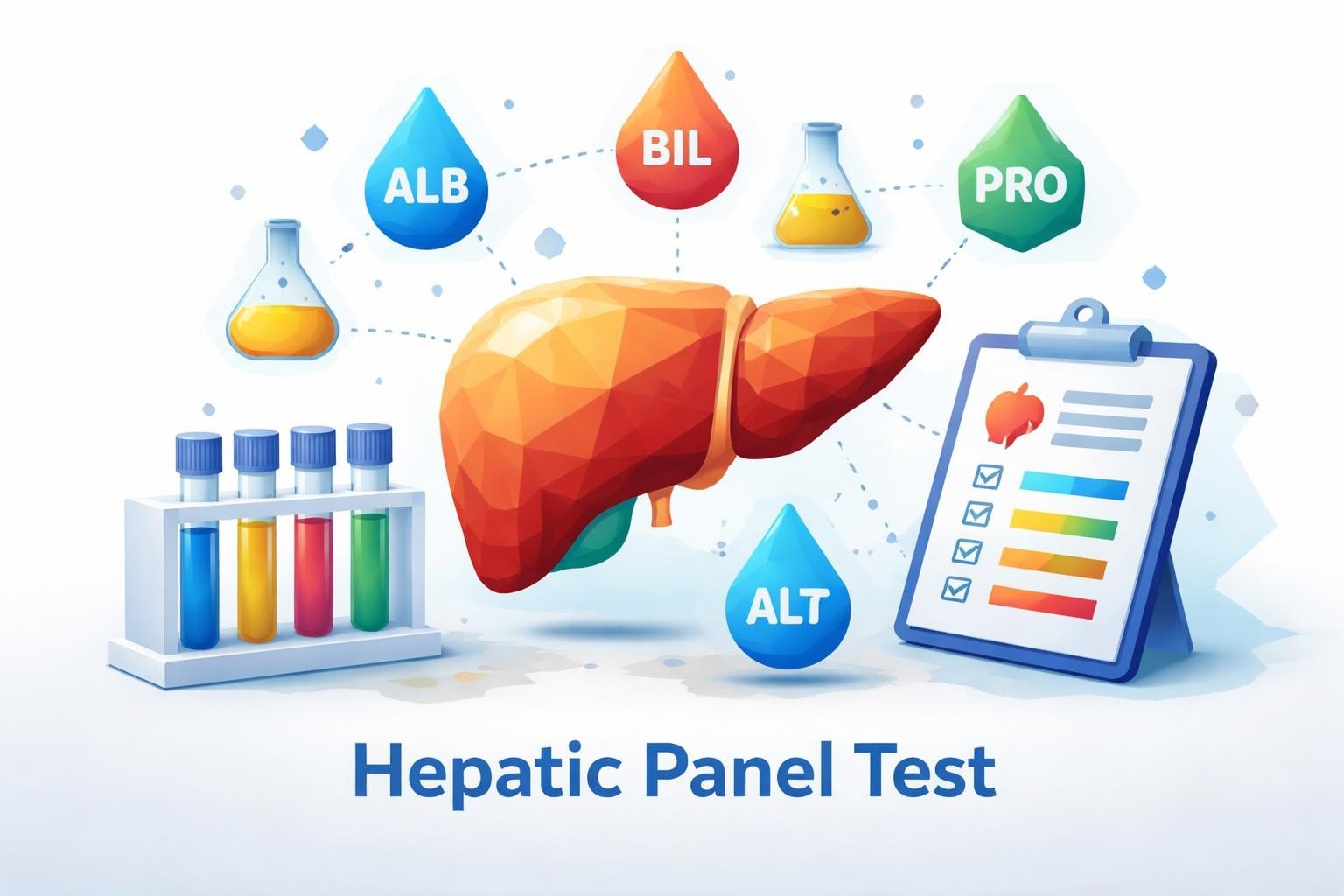
Your liver performs over 500 essential functions every day, from filtering toxins to producing proteins that help your blood clot. When doctors need to evaluate how well this vital organ is working, they often order a hepatic panel test-a group of blood tests that provide a comprehensive snapshot of liver function and health.
Big picture
- A hepatic panel test is a standardized group of blood tests that measures specific enzymes, proteins, and substances produced or processed by the liver to assess its overall function and detect potential damage or disease
- This testing matters because liver disease often develops silently without symptoms until significant damage has occurred, making routine screening essential for early detection and treatment
- Anyone experiencing fatigue, jaundice, abdominal pain, or taking medications that affect the liver should consider this panel, along with those monitoring chronic conditions like hepatitis or fatty liver disease
- Results help doctors identify liver inflammation, blockages, infections, cirrhosis, and other conditions that require medical intervention before they progress to life-threatening stages
- You can order a hepatic panel test directly through services that provide affordable lab testing without insurance, making it easier to monitor your liver health proactively
- Taking action early based on abnormal results can prevent complications through lifestyle changes, medication adjustments, or further diagnostic testing
Understanding the Hepatic Panel Test Components
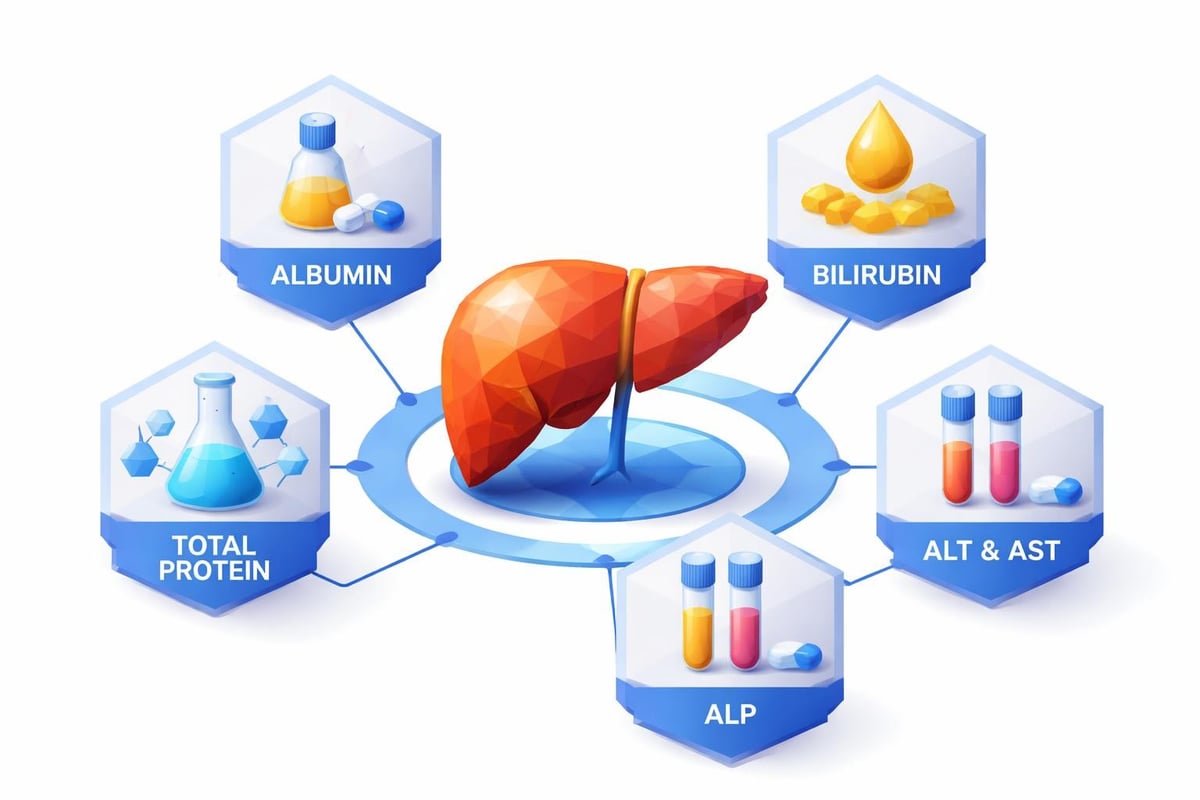
A hepatic panel test consists of several distinct measurements that work together to paint a complete picture of liver health. Each component provides specific information about different aspects of liver function.
Albumin and Total Protein
Albumin is the most abundant protein in your blood, manufactured exclusively by the liver. This protein maintains proper fluid balance in your bloodstream and transports hormones, vitamins, and medications throughout your body. Low albumin levels may indicate chronic liver disease, malnutrition, or kidney problems.
Total protein measures both albumin and globulins combined. According to ARUP Laboratories' hepatic function panel information, the albumin-to-globulin ratio helps clinicians differentiate between various liver conditions and other systemic diseases.
Bilirubin Measurements
Bilirubin forms when your body breaks down old red blood cells. The liver processes this yellow-orange substance and eliminates it through bile. The hepatic panel test typically measures both total bilirubin and direct (conjugated) bilirubin.
Elevated bilirubin levels cause jaundice-the yellowing of skin and eyes. High total bilirubin with normal direct bilirubin suggests problems with bilirubin production or uptake. When both are elevated, it indicates issues with bile flow or liver processing.
Liver Enzymes
Three key enzymes provide crucial information about liver cell integrity and bile duct function:
- Alanine aminotransferase (ALT) primarily exists in liver cells and releases into the bloodstream when liver cells are damaged or dying
- Aspartate aminotransferase (AST) appears in the liver, heart, muscles, and other tissues, making it less specific to liver problems alone
- Alkaline phosphatase (ALP) concentrates in liver cells lining bile ducts and rises when bile flow is obstructed
The AST-to-ALT ratio helps doctors identify the underlying cause of liver damage. Different patterns emerge with alcoholic liver disease, viral hepatitis, or non-alcoholic fatty liver disease.
When You Need a Hepatic Panel Test
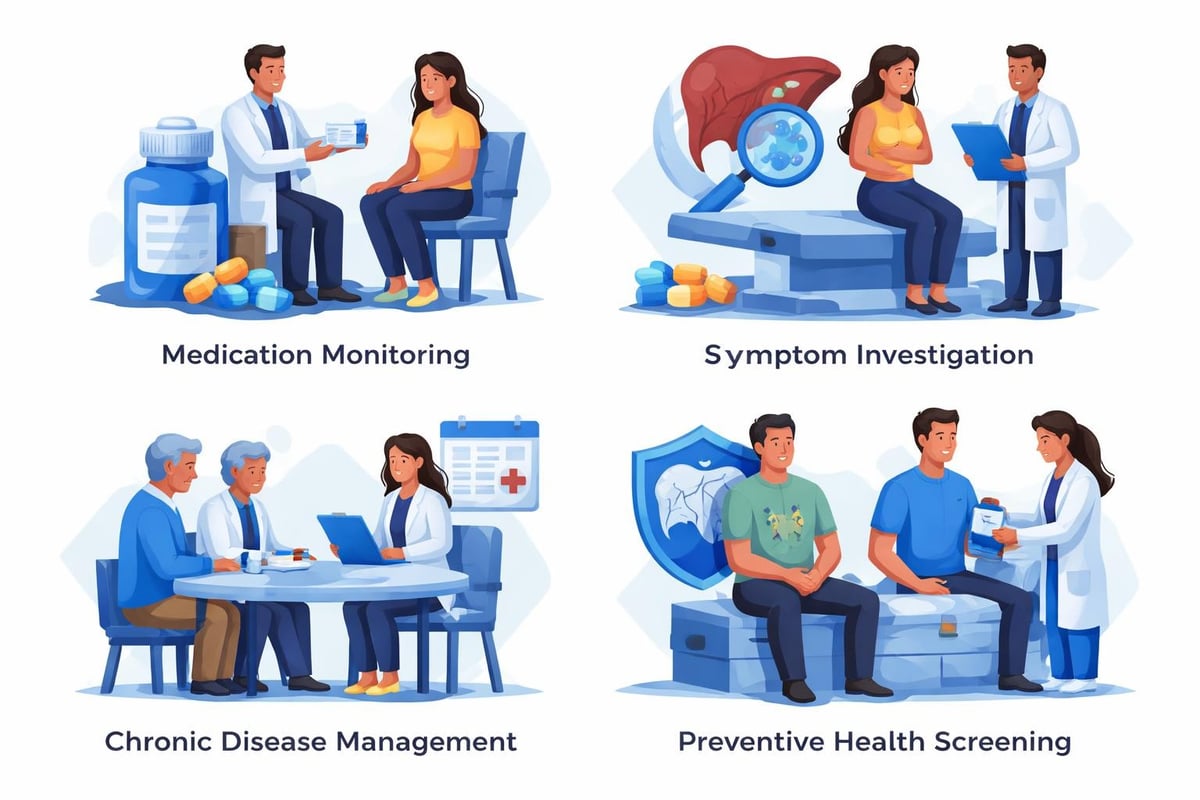
Doctors order this comprehensive panel for multiple clinical situations, from routine health screenings to diagnosing specific symptoms.
Symptom Investigation
Several warning signs prompt immediate hepatic panel testing:
- Persistent fatigue or weakness that doesn't improve with rest
- Jaundice affecting the skin or whites of the eyes
- Dark urine or pale-colored stools
- Abdominal pain or swelling, especially in the upper right quadrant
- Unexplained nausea, vomiting, or loss of appetite
- Easy bruising or bleeding
These symptoms may indicate liver dysfunction requiring prompt evaluation and treatment.
Medication Monitoring
Many commonly prescribed medications can affect liver function. Healthcare providers regularly monitor patients taking:
- Statins for cholesterol management
- Certain antibiotics and antifungal medications
- Anti-seizure medications
- Tuberculosis treatments
- Some pain relievers when used long-term
Research published in PubMed on liver function test interpretation emphasizes the importance of baseline and periodic testing when patients start medications with known hepatotoxic potential.
Chronic Condition Management
People with diagnosed liver conditions need regular hepatic panel testing to track disease progression and treatment effectiveness:
| Condition | Testing Frequency | Key Markers to Watch |
|---|---|---|
| Hepatitis B or C | Every 3-6 months | ALT, AST, bilirubin |
| Fatty liver disease | Every 6-12 months | ALT, AST, albumin |
| Cirrhosis | Every 3-6 months | All components, especially albumin |
| Autoimmune hepatitis | Every 3-6 months | ALT, AST, total protein |
Preventive Screening
Even without symptoms, certain individuals benefit from proactive testing:
- Adults over 40 during annual physical examinations
- People with family history of liver disease
- Individuals with diabetes or obesity
- Those who consume alcohol regularly
- Anyone exposed to hepatitis viruses
You can order labs without a doctor for preventive screening, making it convenient to monitor your health proactively.
Interpreting Your Hepatic Panel Test Results
Understanding what your results mean requires context about reference ranges and patterns of abnormality. Each laboratory establishes its own normal ranges based on the testing population and methodology used.
Normal vs. Abnormal Ranges
Reference ranges vary slightly between laboratories, but typical normal values include:
| Test Component | Normal Range (Adults) | Units |
|---|---|---|
| Albumin | 3.5-5.5 | g/dL |
| Total Protein | 6.3-7.9 | g/dL |
| Total Bilirubin | 0.1-1.2 | mg/dL |
| Direct Bilirubin | 0.0-0.3 | mg/dL |
| ALT | 7-56 | U/L |
| AST | 10-40 | U/L |
| ALP | 44-147 | U/L |
According to the Wikipedia overview of liver function tests, mild elevations don't always indicate serious disease, while normal results don't completely rule out liver problems.
Pattern Recognition
Healthcare providers analyze patterns across multiple components rather than focusing on individual values:
Hepatocellular Pattern: Significantly elevated ALT and AST with normal or slightly elevated ALP suggests damage to liver cells themselves. Common causes include viral hepatitis, medication toxicity, or fatty liver disease.
Cholestatic Pattern: Elevated ALP and bilirubin with normal or mildly elevated ALT and AST indicates problems with bile flow. Gallstones, tumors, or primary biliary cholangitis might be responsible.
Mixed Pattern: Elevations across multiple markers require additional testing to determine the underlying cause and extent of liver involvement.
Factors Affecting Results
Several non-disease factors can influence hepatic panel test results:
- Recent alcohol consumption elevates AST more than ALT
- Strenuous exercise within 24 hours may raise enzyme levels
- Certain supplements and herbal products affect liver enzymes
- Pregnancy normally lowers albumin and raises ALP
- Muscle injury or heart attack increases AST independently of liver problems
Always discuss medication use, supplements, and recent activities with your healthcare provider when reviewing results.
Common Conditions Detected
The hepatic panel test helps identify numerous liver-related conditions, each with characteristic patterns of abnormality.
Viral Hepatitis
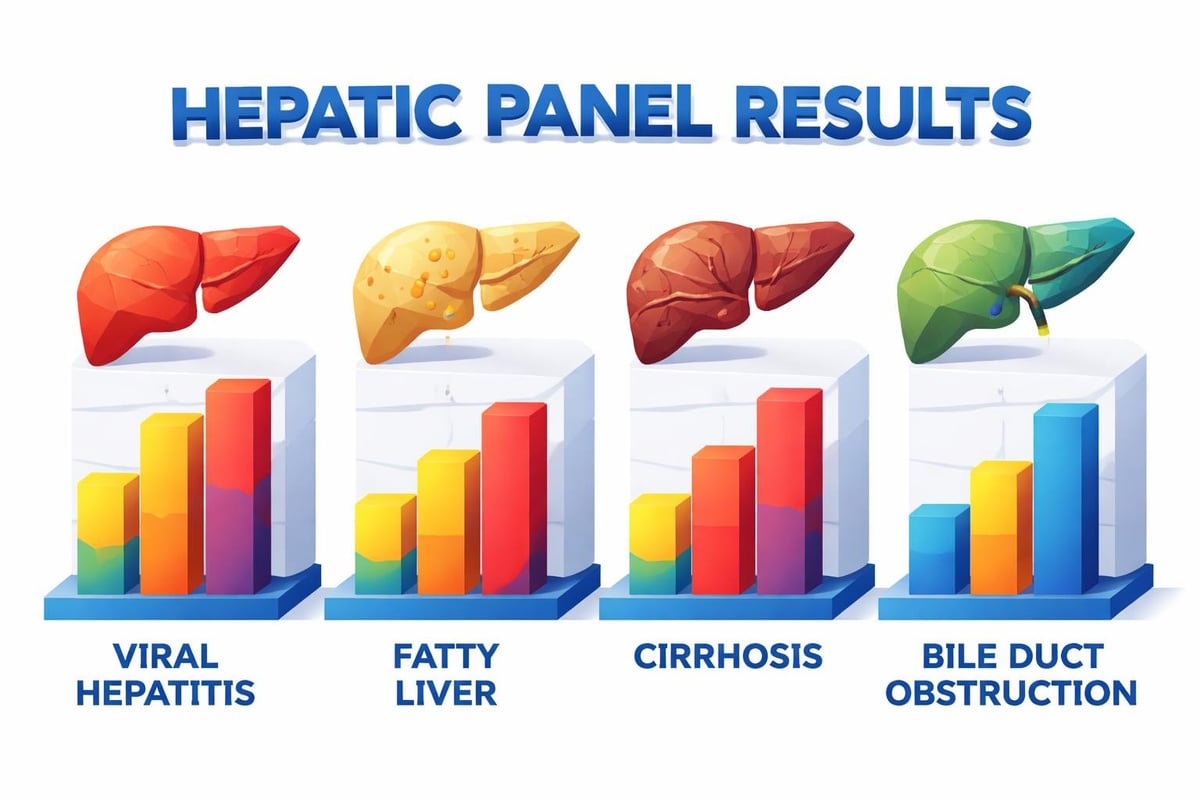
Hepatitis A, B, and C infections cause inflammation that damages liver cells. The hepatic panel test shows markedly elevated ALT and AST levels, often in the hundreds or thousands. ALT typically exceeds AST in viral hepatitis.
Additional specific antibody and antigen tests confirm which hepatitis virus is present. Early detection through abnormal hepatic panel results allows for timely antiviral treatment.
Non-Alcoholic Fatty Liver Disease (NAFLD)
This increasingly common condition affects up to 25% of adults worldwide. Fat accumulation in liver cells causes mild to moderate enzyme elevations.
Characteristic findings include:
- ALT elevated more than AST (opposite of alcoholic liver disease)
- AST-to-ALT ratio less than 1
- Other markers often remain normal until advanced disease develops
Cirrhosis
Advanced scarring from chronic liver disease produces a distinct pattern. As functional liver tissue decreases, albumin and total protein levels drop while bilirubin rises. Enzyme levels may actually normalize in late-stage cirrhosis because fewer healthy liver cells remain to release enzymes.
Medication-Induced Liver Injury
Drug-induced hepatotoxicity accounts for significant emergency room visits and hospitalizations annually. Different medications create different patterns:
- Acetaminophen overdose causes massive ALT and AST elevations
- Statins typically produce mild enzyme increases that may normalize despite continued use
- Antibiotics can trigger cholestatic or hepatocellular patterns
Preparing for Your Hepatic Panel Test
Proper preparation ensures accurate results and avoids the need for repeat testing.
Fasting Requirements
Most hepatic panel tests don't require fasting, though some healthcare providers prefer an 8-12 hour fast for consistency. Check specific instructions when you learn how lab testing works through direct-access services.
If fasting is required:
- Schedule your blood draw for early morning
- Drink water freely to stay hydrated
- Take regular medications unless specifically instructed otherwise
- Avoid alcohol for 24 hours before testing
What to Bring
When arriving for your blood draw, have the following ready:
- Photo identification
- Test order or requisition form
- Insurance information if applicable
- List of current medications and supplements
- Any previous lab results for comparison
The Testing Process
The blood draw for a hepatic panel test takes just minutes:
- A healthcare professional cleanses the inside of your elbow
- A tourniquet temporarily restricts blood flow to make veins more visible
- A small needle collects blood into one or more tubes
- Pressure and a bandage are applied to prevent bruising
- You can resume normal activities immediately
Results typically become available within 1-3 days through your healthcare provider's portal or directly if you use services for where to get lab tests without traditional doctor visits.
Cost Considerations and Access
Understanding the financial aspects of hepatic panel testing helps you make informed healthcare decisions.
Traditional Healthcare Costs
When ordered through conventional medical channels, hepatic panel test costs vary considerably:
- Insurance copays range from $10 to $100 depending on your plan
- Uninsured patients may face facility fees of $200-500
- Hospital-based testing costs more than independent laboratories
- Additional consultation fees apply for doctor visits
The Centers for Medicare & Medicaid Services transparency documentation provides information about standardized billing codes for hepatic function panels.
Direct-Access Testing Benefits
Self-pay laboratory services offer several advantages:
| Traditional Route | Direct-Access Testing |
|---|---|
| Requires doctor appointment | Order online directly |
| Insurance processing delays | Pay upfront, transparent pricing |
| Weeks for appointments | Schedule within days |
| Limited price information | Clear costs before ordering |
| Results through doctor's office | Direct result access |
You can use FSA or HSA eligible accounts to pay for direct-access hepatic panel testing with pre-tax dollars.
When Insurance Makes Sense
Insurance coverage works best when:
- You've already met your annual deductible
- The test is part of comprehensive care for diagnosed liver disease
- Your doctor orders additional specialized tests alongside the basic panel
- You need follow-up consultations included in your visit copay
For routine screening or one-time testing, transparent lab test pricing through self-pay options often costs less than insurance copays and deductibles.
Follow-Up Testing and Next Steps
Abnormal hepatic panel test results don't provide a final diagnosis but rather indicate the need for further evaluation.
Additional Liver Tests
Your healthcare provider may order supplementary tests based on initial findings:
- Viral hepatitis panels detect specific antibodies and antigens for hepatitis A, B, and C
- Autoimmune markers identify conditions like autoimmune hepatitis or primary biliary cholangitis
- Iron studies and ferritin screen for hemochromatosis
- Ceruloplasmin evaluates Wilson's disease in younger patients
- Alpha-1 antitrypsin checks for genetic deficiency
- Prothrombin time (PT/INR) measures how well the liver still makes clotting factors, a marker the hepatic panel does not include
Imaging Studies
Visual examination of liver structure helps identify masses, fatty infiltration, or cirrhosis:
- Ultrasound provides non-invasive initial imaging
- CT scans offer detailed cross-sectional views
- MRI gives superior soft tissue contrast
- FibroScan measures liver stiffness without biopsy
Liver Biopsy
When non-invasive testing proves inconclusive, a small tissue sample allows microscopic examination. This procedure definitively diagnoses conditions like cirrhosis, fatty liver disease staging, and certain cancers.
Modern techniques including transient elastography reduce the need for invasive biopsies in many cases.
Key Takeaways
Understanding hepatic panel testing empowers you to take control of your liver health. These blood tests provide essential information about how well your liver functions and whether disease processes are present. Early detection through routine screening catches problems when treatment is most effective.
Anyone experiencing symptoms like fatigue, jaundice, or abdominal discomfort should request testing. People taking medications that affect the liver, those with chronic conditions, or individuals at higher risk due to family history benefit from regular monitoring. The convenience of direct-access testing removes traditional barriers like lengthy appointment waits and opaque pricing.
Abnormal results require medical evaluation but don't automatically mean serious disease. Many factors affect these tests, and patterns across multiple components matter more than isolated values. Working with healthcare providers to interpret results in context ensures appropriate follow-up and treatment when needed.
FAQ
How often should I get a hepatic panel test?
The frequency depends on your individual risk factors and health status. People with diagnosed liver disease typically need testing every 3-6 months to monitor progression and treatment response. Those taking medications that affect the liver should get baseline testing before starting and follow-up testing as recommended by their healthcare provider, often every 6-12 months. For preventive screening in healthy adults without risk factors, testing every 1-2 years during routine physical examinations provides adequate monitoring.
Can I eat before a hepatic panel test?
Most hepatic panel tests don't require fasting, and you can eat normally before your blood draw. However, some healthcare providers prefer you fast for 8-12 hours to ensure consistency with other tests that might be ordered simultaneously. Check specific instructions when scheduling your test. If fasting is required, you can drink water but should avoid food, coffee, juice, and other beverages. Take your regular medications unless specifically instructed otherwise by your healthcare provider.
What does it mean if my liver enzymes are slightly elevated?
Mild enzyme elevations (1-2 times the upper limit of normal) are relatively common and don't always indicate serious disease. Many factors can temporarily raise liver enzymes, including recent strenuous exercise, certain medications, supplements, alcohol consumption, or even the common cold. Your healthcare provider will likely recommend repeat testing in 2-4 weeks to see if levels normalize. Persistent elevations require further investigation through additional blood tests, imaging studies, or consultation with a liver specialist. The pattern of enzyme elevation and changes in other hepatic panel components help determine the underlying cause.
How long does it take to get hepatic panel test results?
Result timing varies by testing facility and ordering method. Traditional laboratory testing through your doctor's office typically provides results within 1-3 business days after the blood draw. Some hospital-based facilities offer same-day results for urgent situations. When you use direct-access laboratory services, results usually become available within 1-3 days through secure online portals. Abnormal or critical values may be reported more quickly to ensure timely medical intervention. Processing time includes transportation to the laboratory, actual testing procedures, quality control verification, and result reporting.
Can I order a hepatic panel test without seeing a doctor?
Yes, you can order hepatic panel testing directly through self-pay laboratory services without a doctor's visit or prescription. Direct-access testing allows you to select the tests you want, pay transparent prices upfront, and schedule convenient blood draws at participating laboratories nationwide. Results are delivered securely online, typically within 1-3 days. This approach works well for preventive screening, monitoring known conditions between doctor visits, or investigating concerning symptoms before committing to an expensive office visit. While you can order tests independently, abnormal results should prompt consultation with a healthcare provider for proper interpretation and follow-up care.
Will insurance cover my hepatic panel test?
Insurance coverage depends on your specific plan, deductible status, and the medical necessity of testing. When your doctor orders the test due to symptoms or to monitor diagnosed liver disease, most insurance plans provide coverage subject to your copay and deductible. Preventive screening without symptoms may or may not be covered depending on your age and risk factors. Many people discover that self-pay pricing for hepatic panel testing costs less than their insurance copay and deductible, especially early in the year before meeting their deductible. Reviewing transparent pricing options helps you make informed decisions about the most cost-effective testing approach for your situation.
What should I do if my hepatic panel results are abnormal?
Abnormal results require evaluation by a healthcare provider who can interpret findings in the context of your medical history, symptoms, and medications. Don't panic-many abnormalities are mild and temporary. Schedule an appointment with your primary care physician or a gastroenterologist to review results. Your provider will likely order repeat testing to confirm abnormalities and may request additional blood tests, imaging studies, or specialist consultation. Bring a complete list of medications, supplements, and recent health changes to your appointment. Avoid alcohol and unnecessary medications until you've discussed results with your doctor. Early evaluation and appropriate follow-up prevent minor issues from progressing to serious conditions.
Monitoring your liver health through hepatic panel testing provides essential information for preventing and managing disease. Whether you're investigating symptoms, managing chronic conditions, or screening proactively, understanding these tests empowers better health decisions. Justlabs makes hepatic panel testing accessible with transparent pricing, convenient online ordering, and rapid results delivery-all without insurance complications or lengthy doctor appointments. Take control of your liver health today with affordable, straightforward testing that fits your schedule and budget.