When you receive lab results and see the notation "hemolyzed sample" or "results affected by hemolysis," you might wonder what went wrong with your test. Understanding what hemolyzed sample means on your lab report is essential for interpreting your results accurately and knowing whether you need to have your blood drawn again. This common laboratory issue affects thousands of blood tests daily and can impact the reliability of critical health measurements.
Big picture
- Hemolysis occurs when red blood cells break open during or after blood collection, releasing their internal contents into the liquid portion of blood (serum or plasma) where most tests are performed
- This affects test accuracy because substances normally confined inside red blood cells mix with the sample, artificially raising or lowering certain test results and potentially leading to incorrect medical decisions
- Not all tests are equally affected by hemolysis; some measurements remain perfectly valid while others must be rejected entirely, which is why your report may show some results with a hemolysis comment
- Most hemolyzed samples result from collection technique issues rather than underlying health conditions, meaning the problem lies with the sample itself, not your body
- If you see a hemolysis notation, contact your testing provider to determine whether affected results need to be redrawn or if the values are still clinically useful for your specific situation
Understanding What Hemolysis Actually Means
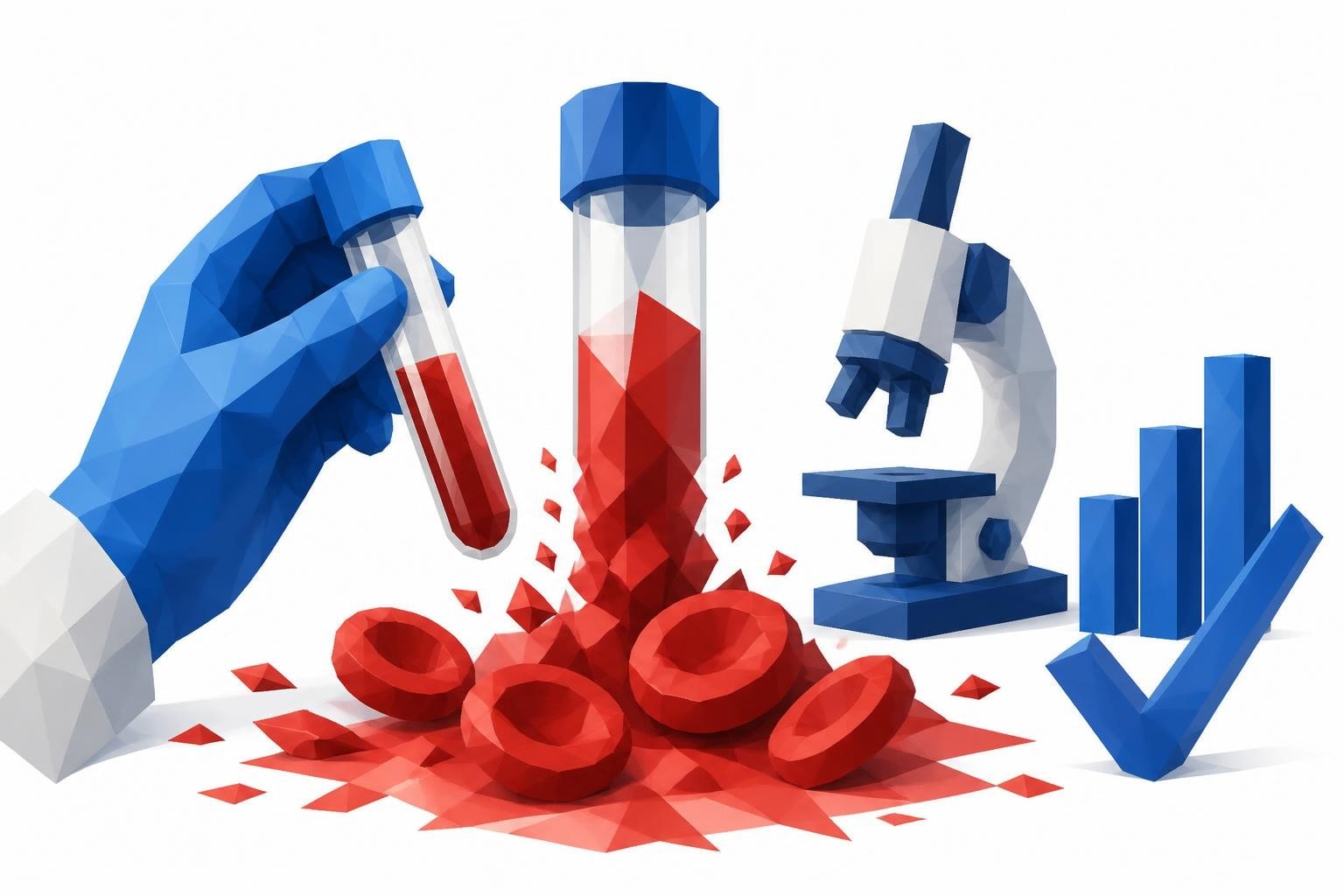
Hemolysis refers to the rupture or breakdown of red blood cells, which releases hemoglobin and other intracellular components into the surrounding fluid. In normal, intact blood, red blood cells keep their contents separate from the serum or plasma where most laboratory measurements take place.
When these cells break apart, they contaminate the sample with substances that shouldn't be present in those concentrations. The released hemoglobin gives the serum a characteristic pink or red tint, which laboratory staff can often detect visually before running tests.
How Hemolysis Happens During Sample Collection
The most common cause of what hemolyzed sample means on your lab report relates to mechanical stress during the collection process. Several factors can trigger red blood cell rupture:
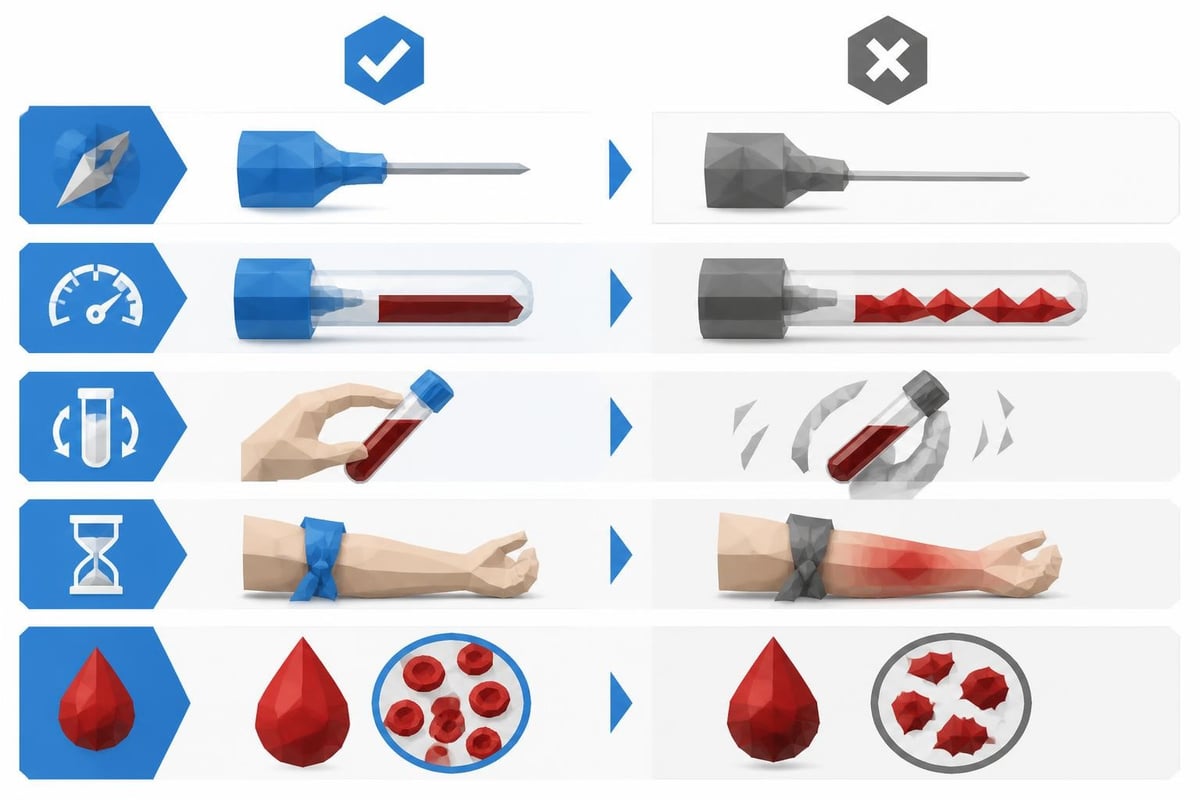
Collection technique issues include using too small a needle gauge, drawing blood too quickly through the needle, or applying excessive negative pressure with the vacuum tube. These actions create shear forces that physically tear cell membranes.
Sample handling problems occur when tubes are shaken vigorously instead of gently inverted, when blood is transferred between containers incorrectly, or when samples are exposed to temperature extremes during transport.
- Prolonged tourniquet application (over one minute)
- Difficult venipuncture requiring multiple attempts
- Drawing from an IV line or central catheter
- Contamination with alcohol that hasn't dried completely
- Using expired or damaged collection tubes
The CLSI PRE04 guideline provides authoritative standards on preventing hemolysis during specimen collection, transport, and processing.
Which Lab Tests Are Most Affected by Hemolysis
Understanding what hemolyzed sample means on your lab report requires knowing that different tests have varying sensitivity to this interference. Some measurements become completely unreliable, while others remain minimally affected.
Tests That Show Falsely Elevated Results
When red blood cells rupture, they release high concentrations of certain substances directly into the serum, causing artificially high readings:
| Test | Why It's Affected | Typical Impact |
|---|---|---|
| Potassium (K+) | Red cells contain 20x more potassium than serum | Can appear critically high when it's actually normal |
| LDH (Lactate Dehydrogenase) | Abundant inside red blood cells | Results may be 10-20x normal values |
| AST (Aspartate Aminotransferase) | Present in red cells at high concentration | May mimic liver damage |
| Phosphorus | Released from red cell breakdown | Falsely suggests hyperphosphatemia |
| Magnesium | Contained within red blood cells | Moderately elevated readings |
Potassium is particularly problematic because medical teams make critical treatment decisions based on these values. A falsely elevated potassium from hemolysis could trigger unnecessary interventions.
Tests That Show Falsely Decreased Results
Hemolysis doesn't only elevate results. The released hemoglobin itself interferes with certain measurement methods:
Spectrophotometric interference occurs because hemoglobin absorbs light at specific wavelengths, interfering with colorimetric assays. Tests measuring bilirubin, cholesterol, and certain proteins may read falsely low.
Enzymatic interference happens when intracellular enzymes released during hemolysis break down the substance being measured. This affects some coagulation studies and specialized hormone assays.
Research shows that hemolysis affects multiplex cytokine quantification, which has implications for newer biomarker testing panels that measure multiple inflammation markers simultaneously.
How Laboratories Detect and Report Hemolysis
Modern laboratories use systematic approaches to identify hemolyzed samples before releasing results. Most facilities employ automated hemolysis detection systems that measure the concentration of free hemoglobin in each sample.
The Hemolysis Index System
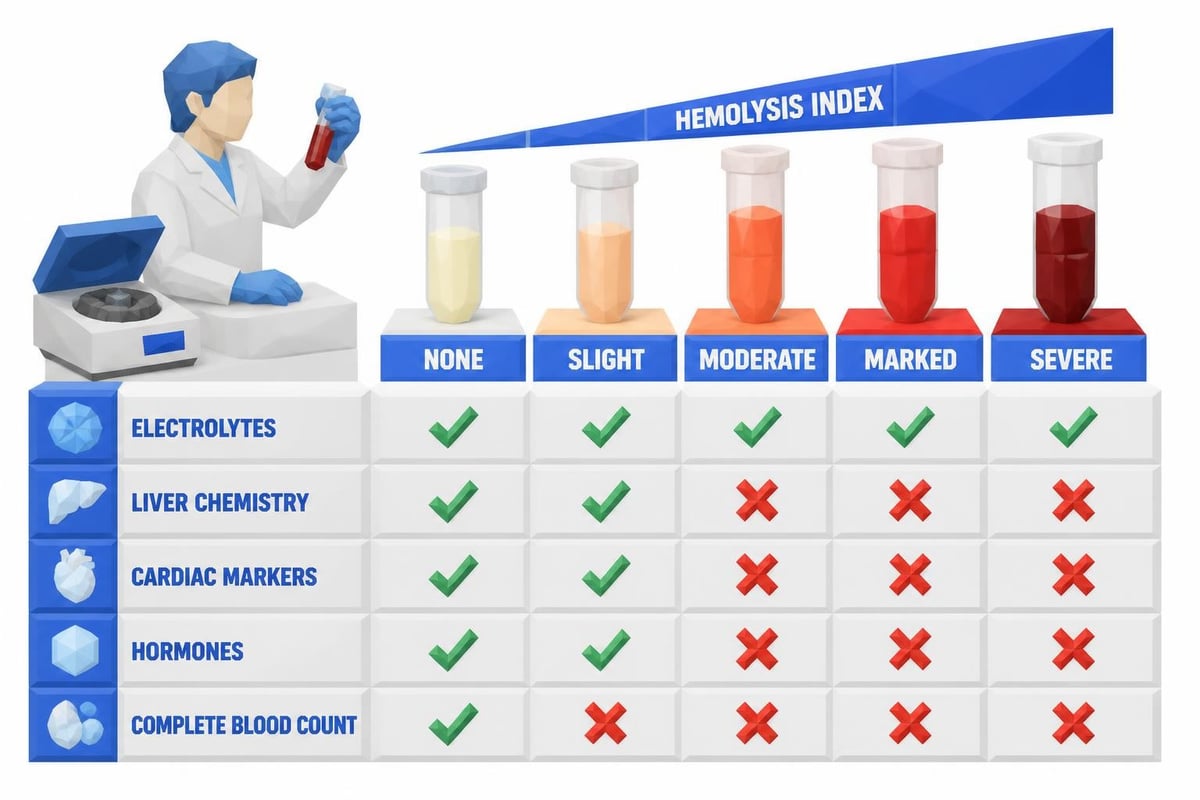
Laboratories assign a numerical hemolysis index (H-index) based on the amount of free hemoglobin detected:
- H-index 0-1: No visible hemolysis, minimal interference
- H-index 2: Slight hemolysis, may affect sensitive tests
- H-index 3-4: Moderate hemolysis, affects multiple analytes
- H-index 5+: Severe hemolysis, most results unreliable
This standardized approach helps determine which results can be reported and which must be rejected. The European Federation of Clinical Chemistry guidelines provide recommendations on managing hemolyzed specimens, including when to suppress results and how to word comments.
What You'll See on Your Report
When hemolysis affects your sample, the laboratory adds specific notations to your results. Common phrasings include:
"Hemolyzed sample, results may be affected" indicates mild hemolysis where results are reported but flagged for clinical interpretation with caution.
"Result cannot be determined due to hemolysis" means the test is too severely affected to report any value reliably.
"Recollection recommended" suggests the degree of hemolysis makes results clinically unreliable for medical decision-making.
If you've used Justlabs to order lab tests without a doctor, their support team can help you interpret these notations and determine whether retesting is necessary.
What to Do When Your Sample Is Hemolyzed
Seeing what hemolyzed sample means on your lab report doesn't automatically require a redraw. The appropriate response depends on several factors.
Assess Which Tests Were Affected
Review your report carefully to identify which specific results have hemolysis notations. If the affected tests weren't critical to your health assessment, you may not need immediate action.
Results still reliable despite hemolysis:
- Complete blood count (CBC) parameters
- Blood glucose (unless severely hemolyzed)
- Sodium levels (minimally affected)
- Chloride measurements
- Most immunoassays and antibody tests
Results requiring recollection:
- Potassium showing abnormal values
- Liver enzymes (AST, ALT, LDH)
- Cardiac markers in suspected heart conditions
- Coagulation studies
- Any critical value that will guide immediate treatment
Preventing Hemolysis on Your Next Draw
If you need to have blood redrawn, certain strategies reduce the likelihood of repeat hemolysis:
- Stay well-hydrated before your appointment, as dehydration makes veins harder to access and increases difficult draws
- Inform the phlebotomist if you've had hemolysis issues previously so they can take extra precautions
- Keep your arm warm before the draw to promote better blood flow and easier venipuncture
- Remain still and relaxed during collection to facilitate a smooth, single-attempt draw
- Ask for an experienced phlebotomist if you have difficult veins or a history of problematic draws
The NIH review on hemolysis and laboratory testing interference provides accessible explanations of mechanisms and prevention strategies for both patients and healthcare providers.
The Cost Impact of Hemolyzed Samples
Understanding what hemolyzed sample means on your lab report also involves recognizing the financial implications. When using self-pay services like Justlabs, where you pay transparent lab test pricing upfront, hemolysis creates additional considerations.
Recollection Policies and Costs
Most reputable laboratories, including those in the Justlabs network, don't charge patients for recollection when hemolysis occurs during the initial draw. This policy recognizes that sample quality issues typically stem from technical factors rather than patient problems.
However, timing and convenience factors matter:
| Scenario | Cost Implication | Action Needed |
|---|---|---|
| Hemolysis from initial draw | Usually no additional charge | Schedule recollection appointment |
| Severe hemolysis affecting all tests | Full recollection at no cost | Return to collection site |
| Mild hemolysis affecting only 1-2 tests | May retest only affected analytes | Discuss with provider |
| Hemolysis from patient fainting/movement | Policies vary by facility | Check with testing service |
Time Delays and Result Availability
Justlabs typically provides results within 1-3 days, but hemolysis can extend this timeline. If your sample requires recollection, you'll need to:
- Schedule a new appointment at a convenient location
- Wait for the new sample to reach the laboratory
- Allow standard processing time for the replacement tests
For time-sensitive health monitoring, communicate with your provider about expediting the recollection process.

Special Considerations for Common Test Panels
When ordering comprehensive panels, understanding what hemolyzed sample means on your lab report becomes more complex because some components may be valid while others aren't.
Metabolic Panels and Hemolysis
Complete metabolic panels (CMP) and basic metabolic panels (BMP) measure multiple electrolytes and chemistry markers simultaneously. Hemolysis creates a mixed picture:
Unaffected or minimally affected: Sodium, chloride, glucose, creatinine, blood urea nitrogen (BUN), calcium
Significantly affected: Potassium (most critical concern), phosphorus, total protein
If you've ordered metabolic testing and see hemolysis notations, the sodium, glucose, and kidney function markers usually remain interpretable, but potassium results may require recollection.
Recommended Panel
Complete Metabolic Health Panel
Save $3.5This comprehensive panel evaluates all aspects of metabolic health: organ function, cholesterol, blood sugar, insulin resistance, and inflammation - the key drivers of chronic disease.
Includes 26 biomarkers
$50
Fasting required
Liver Function Tests and Hemolysis
Liver panels typically measure AST, ALT, alkaline phosphatase (ALP), bilirubin, albumin, and total protein. Hemolysis impacts these differently:
AST and LDH become extremely elevated with hemolysis because red blood cells contain abundant quantities of these enzymes. This can falsely suggest liver damage or hepatitis when none exists.
ALT is less affected than AST but still shows some elevation with moderate to severe hemolysis.
Bilirubin measurements may be falsely decreased due to spectrophotometric interference from free hemoglobin.
Alkaline phosphatase and albumin generally remain reliable unless hemolysis is severe.
Hormone and Specialized Testing
Many hormone tests use immunoassay methods that resist hemolysis interference reasonably well. Thyroid function tests (TSH, Free T4, Free T3) typically remain valid even with mild to moderate hemolysis.
However, certain specialized biomarkers and cytokine panels show significant sensitivity to hemolysis, particularly in research and advanced diagnostic settings.
Understanding Laboratory Quality Control
Recognizing what hemolyzed sample means on your lab report also means understanding that laboratories have rigorous quality standards. Accredited facilities follow strict protocols to ensure result accuracy.
Why Laboratories Reject Hemolyzed Samples
Rather than reporting potentially misleading values, laboratories prefer to reject severely hemolyzed samples for affected tests. This conservative approach protects patients from incorrect medical decisions based on artifactual results.
Clinical safety takes priority over convenience. A falsely elevated potassium could trigger emergency treatment with potentially dangerous cardiac medications. A masked low bilirubin might delay diagnosis of liver dysfunction.
Professional standards require laboratories to validate that results accurately reflect patient physiology rather than pre-analytical artifacts.
Hemolysis Rates and Quality Metrics
Healthcare facilities track hemolysis rates as quality indicators. Typical benchmarks include:
- Emergency department samples: 3-8% hemolysis rate (higher due to urgent conditions)
- Outpatient collection sites: 1-3% hemolysis rate (controlled conditions)
- Hospital inpatient draws: 2-5% hemolysis rate (varies by patient acuity)
When you use standardized collection sites through Justlabs' network, you benefit from professional phlebotomists trained in hemolysis prevention techniques.
Key Takeaways
Understanding what hemolyzed sample means on your lab report empowers you to respond appropriately when this common laboratory issue occurs. Hemolysis happens when red blood cells rupture during or after collection, releasing internal contents that interfere with certain test measurements.
Not all results become invalid with hemolysis. Tests for sodium, glucose, kidney function, and most hormones often remain reliable, while potassium, liver enzymes, and certain specialized markers require recollection.
Most hemolysis stems from collection technique rather than health problems. Factors like needle size, draw speed, sample handling, and vein accessibility create the mechanical stress that ruptures cells.
Laboratories use standardized hemolysis detection systems to objectively assess sample quality and determine which results can be reported versus which must be rejected for patient safety.
Prevention strategies include proper hydration, keeping arms warm, communicating with phlebotomists about previous difficulties, and choosing experienced collection facilities that maintain low hemolysis rates through quality protocols.
The financial impact with self-pay testing is typically minimal since reputable services don't charge for recollection when hemolysis occurs during the initial draw, though timing for result availability may be extended.
FAQ
Can I refuse to have my blood redrawn if hemolysis occurs?
You can decline recollection, but this decision should be made in consultation with your healthcare provider or testing service. Some hemolyzed results remain clinically useful despite notations, particularly if values fall clearly within normal ranges or if only mildly affected tests are involved. However, for critical values like severely elevated potassium or for tests guiding immediate treatment decisions, recollection ensures you receive accurate information for proper health management.
Does hemolysis on my lab report mean I have a blood disorder?
Hemolysis on laboratory reports almost never indicates an underlying blood disorder. The vast majority of hemolyzed samples result from mechanical stress during collection, handling, or transport rather than from in vivo hemolysis (red blood cell destruction occurring in your body). True hemolytic conditions would show specific patterns on complete blood counts and other markers that your physician would identify separately from sample quality notations.
How long should I wait before having blood redrawn after hemolysis?
You can typically have blood redrawn immediately or within 1-2 days without any medical concerns. There's no physiological reason to wait between collection attempts. The primary considerations are scheduling convenience and ensuring you follow any preparation requirements (fasting, timing, medication holds) that apply to your specific tests. If the initial hemolysis resulted from dehydration or difficult vein access, addressing those factors before the next attempt improves success rates.
Will hemolysis affect my complete blood count (CBC) results?
Complete blood counts are among the tests least affected by hemolysis because they analyze whole blood rather than serum or plasma. The automated analyzers that perform CBCs count cells before any separation occurs. However, severe hemolysis can interfere with certain CBC parameters, particularly mean corpuscular hemoglobin concentration (MCHC) measurements. Most CBC components including white blood cell count, red blood cell count, hemoglobin, hematocrit, and platelet count remain accurate despite hemolysis.
Are certain people more prone to hemolyzed samples?
Some patient characteristics increase hemolysis risk, though collection technique remains the dominant factor. Individuals with very small or fragile veins, including elderly patients and those with chronic illness, face higher rates. People with significant dehydration, those on certain medications affecting vein integrity, and patients requiring multiple venipuncture attempts also experience more frequent hemolysis. Communicating these factors to your phlebotomist allows them to adjust technique accordingly, such as using smaller needles or butterfly collection systems.
Can I use hemolyzed test results for insurance or employment purposes?
For non-medical purposes like insurance applications, employment screenings, or legal documentation, hemolyzed samples typically cannot be used if the specific tests required for that purpose were affected. Organizations requesting laboratory testing usually specify acceptable quality standards, and hemolysis notations may disqualify results even if values appear normal. Contact the requesting entity to determine their specific policies on hemolyzed specimens before assuming results will be accepted.
Does the time of day affect hemolysis risk?
Time of day doesn't directly cause hemolysis, but it influences related factors. Morning appointments often have advantages because you're typically well-hydrated from overnight fluid intake (even when fasting), you're rested rather than fatigued, and collection sites are less rushed. Additionally, some tests require morning collection for accuracy (cortisol, testosterone), so combining proper timing with optimal collection conditions reduces the need for repeat draws.
Are there alternatives if my veins consistently produce hemolyzed samples?
For patients with extremely difficult venous access who experience repeated hemolysis, alternatives include capillary collection (finger stick) for certain tests, using ultrasound guidance to locate suitable veins, or having collections performed by specialized phlebotomy teams trained in difficult access techniques. Some tests can be measured through alternative sample types like saliva or urine, though this depends on the specific biomarker. Discussing persistent hemolysis issues with your provider helps identify the most appropriate solution for your testing needs.
Understanding what hemolyzed sample means on your lab report helps you respond appropriately when this common collection issue affects your results, knowing which values remain reliable and when recollection is necessary for accurate health assessment.
When you need convenient, affordable laboratory testing with transparent pricing and rapid results, Justlabs provides self-pay lab services that eliminate insurance hassles and unnecessary doctor visits, delivering results in 1-3 days so you can make informed health decisions quickly. If hemolysis affects your initial sample, their support team guides you through the recollection process to ensure you receive accurate, actionable health information.