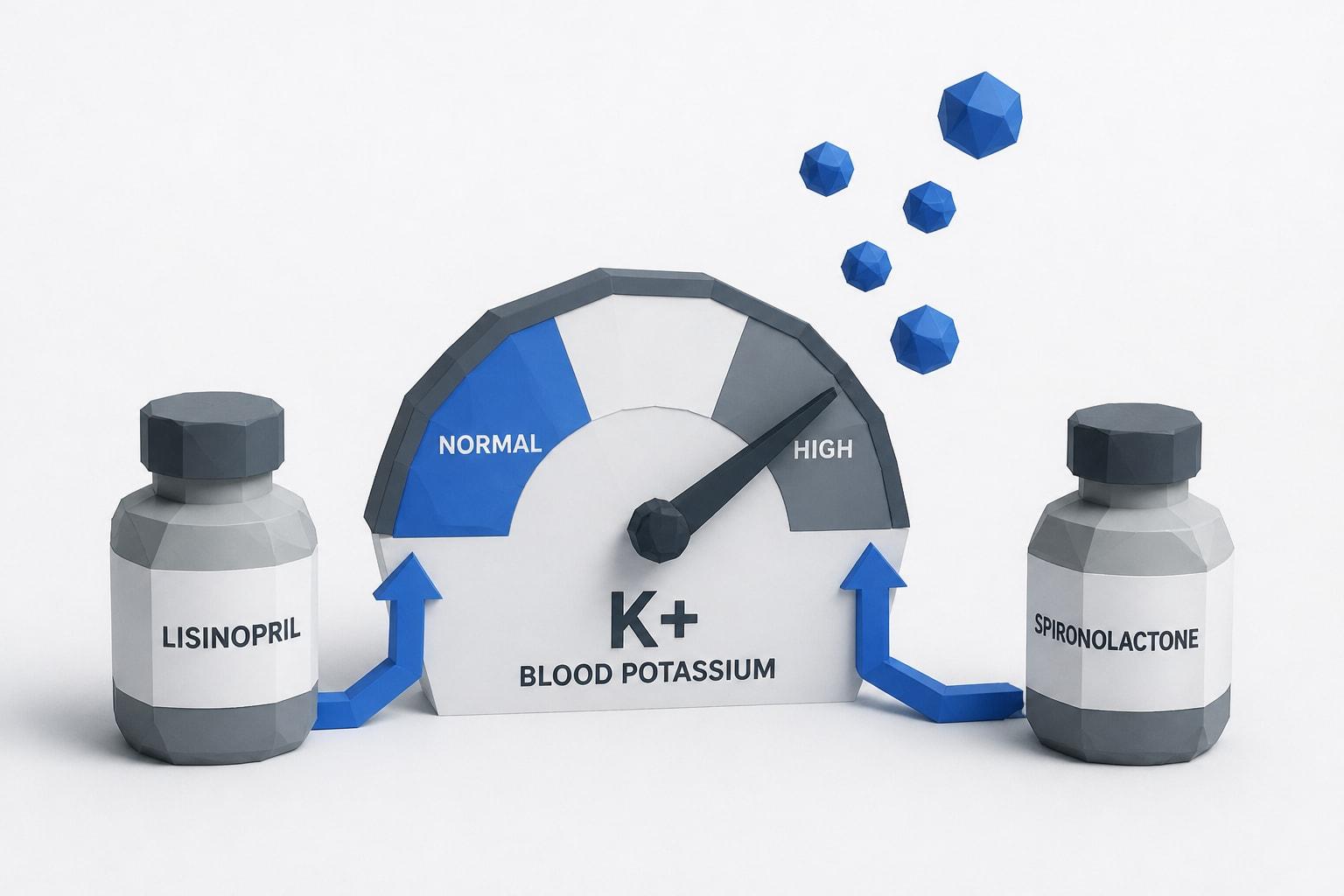
Yes, both medications can raise potassium, and the risk is higher when they are taken together or when kidney function is reduced. Lisinopril, an ACE inhibitor, and spironolactone, a potassium-sparing diuretic, each reduce the amount of potassium the kidneys remove, so levels in the blood can climb above the normal range.
Big picture
- What it is: Lisinopril and spironolactone can both cause hyperkalemia, which means higher-than-normal potassium in the blood.
- Why it matters: High potassium often causes no symptoms at first, yet it can disturb heart rhythm when levels rise far enough.
- Who it affects: People with reduced kidney function, diabetes, or heart failure, and anyone taking both drugs or using potassium supplements or salt substitutes, face more risk.
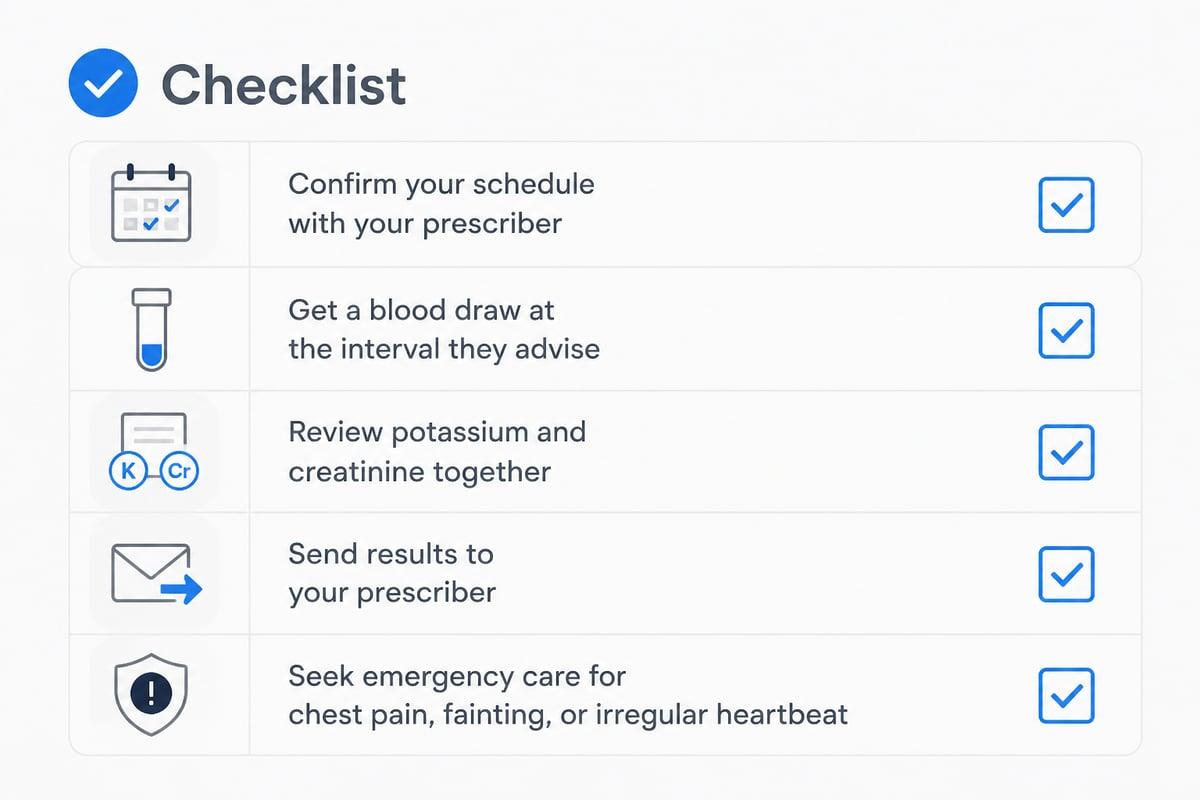
- Actionable next step: Ask your prescriber when your potassium should be checked, and keep a record of your results so you can compare them over time.
- Not a substitute for medical care: Never stop or change a prescribed medication on your own because of a lab value. Call your prescriber first.
How do lisinopril and spironolactone affect potassium?
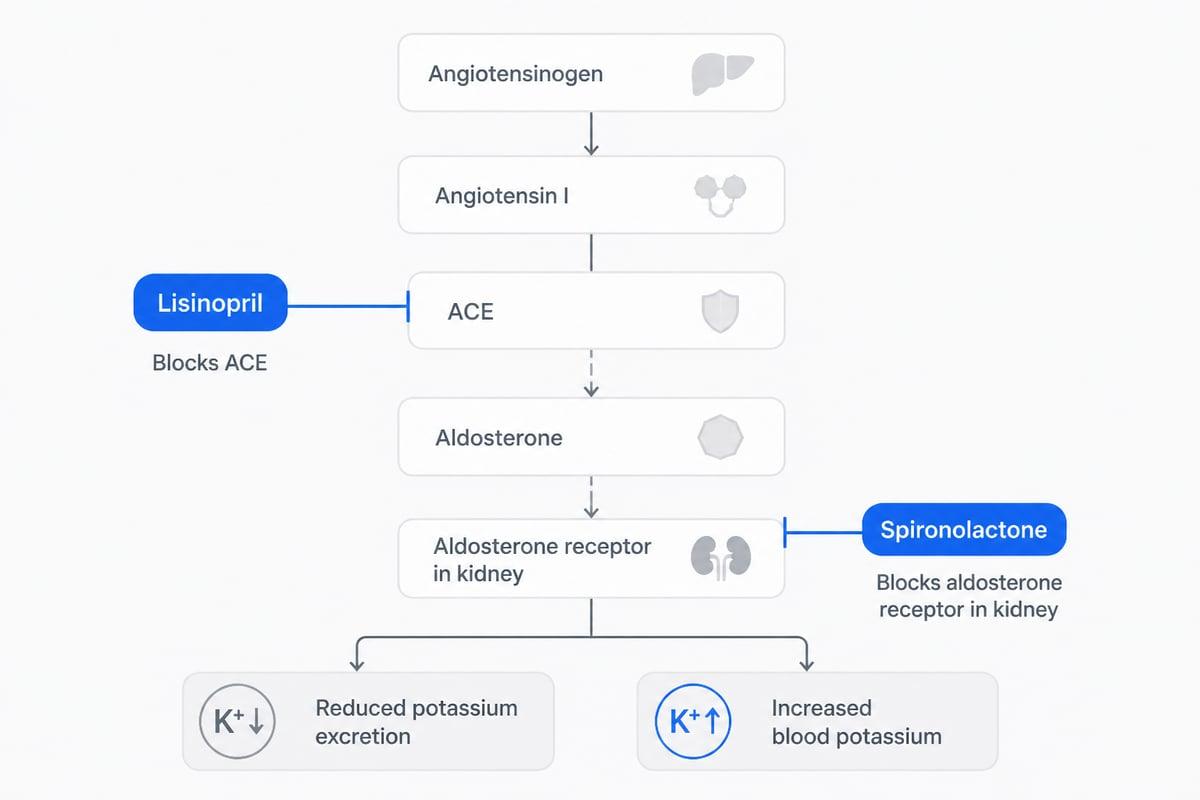
Both drugs interfere with the kidney's normal process of excreting potassium, although they do it through different pathways.
Lisinopril blocks the angiotensin-converting enzyme, which lowers production of angiotensin II. That reduces the signal for the adrenal glands to release aldosterone, a hormone that tells the kidneys to remove potassium in urine. With less aldosterone, the kidneys hold on to more potassium.
Spironolactone works one step later. It blocks the aldosterone receptor directly, so even if aldosterone is present, the kidneys do not respond to it fully. This is why spironolactone is classified as potassium-sparing: it removes sodium and water while retaining potassium.
The two mechanisms overlap. When both medications are used together, aldosterone activity is reduced at two points, and the effect on potassium is additive.
Does lisinopril mess with potassium levels?
Yes, lisinopril can raise potassium, though most people on it stay within a normal range. The lisinopril prescribing information on DailyMed reports that potassium above 5.7 mEq/L occurred in a small share of patients in clinical trials, with a higher share among those treated for heart failure than for hypertension.
Those figures show that significant elevations are uncommon but real. The same label recommends periodic serum-potassium monitoring and lists several factors that raise the risk:
- Kidney impairment
- Diabetes
- Potassium-sparing diuretics, such as spironolactone
- Potassium supplements
- Potassium-containing salt substitutes
The dose matters less than the person taking it. Reduced kidney function raises the risk at any dose, which is why a low starting dose does not remove the need for a blood test.
Does spironolactone make your potassium go up or down?
Spironolactone makes potassium go up, not down. This sets it apart from many other water pills, such as hydrochlorothiazide and furosemide, which tend to lower potassium by increasing its loss in urine.
The spironolactone prescribing information on DailyMed states that the drug can cause hyperkalemia, with greater risk in people with impaired kidney function or those taking potassium supplements, potassium-containing salt substitutes, ACE inhibitors, or ARBs. Lisinopril is an ACE inhibitor, so it falls directly into that category.
Spironolactone is prescribed for several conditions, including high blood pressure, heart failure, and fluid retention. Some people also take it for hormone-related skin concerns. The potassium effect applies regardless of the reason it was prescribed.
What happens when you take lisinopril and spironolactone together?
Taking both medications raises the chance of hyperkalemia more than either one alone, and the lisinopril label says so explicitly. The lisinopril label warns that combining it with potassium-sparing diuretics such as spironolactone can increase hyperkalemia risk, and it advises frequent serum-potassium monitoring if the combination is used.
This pairing is not unusual or inappropriate. Clinicians sometimes prescribe it deliberately, particularly in heart failure. The point is that the benefit comes with a requirement for closer lab follow-up.
Conditions that make the combination riskier include:
- Chronic kidney disease or a recent drop in kidney function
- Diabetes, especially with kidney involvement
- Dehydration from vomiting, diarrhea, or heavy sweating
- Use of potassium supplements or potassium-based salt substitutes
- Regular use of NSAIDs such as ibuprofen or naproxen, which can reduce kidney blood flow
Why do kidney function and diabetes raise the risk?
The kidneys remove most of the potassium the body does not need, so reduced kidney function leaves less capacity to clear it. When a medication already slows potassium excretion, a kidney with limited reserve has little room to compensate.
Diabetes adds a second layer. The lisinopril label lists diabetes as a risk factor for hyperkalemia.
Kidney function can also change quickly. An illness with dehydration, a new anti-inflammatory medication, or a flare of kidney disease can turn a stable potassium level into a high one within days. That is one reason a single normal result from months ago does not guarantee a normal result today.

What are the signs of high potassium?
High potassium often produces no symptoms until it is significant, which is why testing is the dependable way to detect it. When symptoms do appear, they tend to be vague and easy to attribute to something else.
Signs that can occur with elevated potassium include:
- Muscle weakness or heaviness in the legs
- Fatigue
- Tingling or numbness
- Nausea
- Palpitations, a fluttering or skipping heartbeat
- A slow or irregular pulse
- Shortness of breath
When symptoms are an emergency
Chest pain, fainting, severe weakness, trouble breathing, or a very slow or irregular heartbeat can signal dangerous potassium levels affecting the heart. These symptoms need emergency care. Call 911 or go to the nearest emergency department rather than ordering a test. Home testing and online lab ordering are not appropriate for urgent situations.
How often should potassium be checked?
Your prescriber sets the schedule, and the drug labels offer a framework for monitoring. The spironolactone label recommends checking serum potassium within one week after starting or increasing the dose, and regularly thereafter. It also notes that more frequent monitoring may be needed when spironolactone is used with other potassium-raising drugs or in people with impaired kidney function.
For lisinopril, the label recommends periodic monitoring, with more frequent checks if you are also on a potassium-sparing diuretic.
A practical pattern many clinicians follow looks like this, though your own schedule may differ:
| Situation | Typical timing of potassium checks |
|---|---|
| Starting or raising the dose of spironolactone | Within one week, then regularly |
| Adding spironolactone to lisinopril, or the reverse | Soon after the change, then at closer intervals as your prescriber directs |
| Stable on treatment with healthy kidneys | Periodic, as your prescriber directs |
| Kidney disease, diabetes, or a recent illness | More frequent checks |
Treat the table as general orientation, not a personal plan. Your prescriber decides the exact interval.
Which blood tests show potassium and kidney function?
A potassium test measures the electrolyte directly, and a metabolic panel adds the kidney markers that explain why potassium might be changing. Looking at both together gives a clearer picture than potassium alone.
For standalone monitoring, a potassium blood test gives you the number your prescriber is watching. If you want to know what the result means and how the test is performed, this overview of the potassium blood test explains it in plain terms.
The Comprehensive Metabolic Panel (CMP) reports potassium along with creatinine, BUN, sodium, and blood sugar, so you can see kidney function and electrolyte balance in one draw.
Recommended Panel
Complete Metabolic Health Panel
Save $3.50This comprehensive panel evaluates all aspects of metabolic health: organ function, cholesterol, blood sugar, insulin resistance, and inflammation - the key drivers of chronic disease.
Includes 26 biomarkers
$44.70
Fasting required

Pairing potassium with kidney markers helps show whether a change in potassium may relate to kidney filtration. One point worth knowing: creatinine can also be nudged upward by factors unrelated to kidney damage, such as creatine supplements, and this explanation of how creatine raises creatinine helps you interpret a result without alarm.
How do you arrange a blood draw without insurance?
Adults who pay out of pocket or carry a high-deductible plan can order routine blood tests online and skip the scheduling and visit fees. With JustLabs, you choose a test, pay a transparent upfront cash price, and have your blood drawn at one of more than 2,200 Quest Diagnostics locations nationwide. Results are delivered securely online, generally within 1 to 3 business days, with values and reference ranges shown.
Before you order, check the potassium test cost so you know the price in advance. Service is not currently offered in New York, New Jersey, Rhode Island, or Hawaii.
Self-ordered testing is a way to get a number. It does not replace your prescriber's judgment. If a result falls outside the reference range, share it with the clinician who prescribed your medication and let them decide what to do. The spironolactone label itself advises that if hyperkalemia develops, the dose is reduced or the drug is discontinued and the hyperkalemia is treated, which is a decision for your prescriber, not something to do alone.
How can you lower your risk of high potassium?
You can reduce risk by controlling the dietary and over-the-counter sources of potassium that stack on top of your medication. This is the area where small daily choices make the biggest difference.
- Check salt substitutes. Many are made with potassium chloride. Both drug labels identify potassium-containing salt substitutes as a risk factor.
- Review supplements. Avoid potassium supplements unless your prescriber specifically recommends one.
- Be careful with NSAIDs. Regular ibuprofen or naproxen use can reduce kidney blood flow and push potassium higher.
- Stay hydrated during illness. Vomiting or diarrhea can strain the kidneys. Contact your prescriber if you cannot keep fluids down while on these medications.
- Know your diet. Many common foods, including bananas, potatoes, and tomatoes, contain potassium. You rarely need to eliminate them, but ask your prescriber whether your levels call for adjusting portions.
- Keep your medication list current. Tell every clinician and pharmacist that you take lisinopril, spironolactone, or both.
Medication monitoring also fits into a wider habit of baseline testing before treatment changes. The same logic applies to other drug starts, as this guide to baseline labs before starting a GLP-1 illustrates.
Key takeaways
- Both lisinopril and spironolactone can raise potassium, and taking them together increases the effect.
- Lisinopril trials recorded potassium above 5.7 mEq/L in 2.2% of hypertension patients and 4.8% of heart failure patients.
- Kidney impairment, diabetes, supplements, and potassium-based salt substitutes raise the risk.
- High potassium often has no symptoms, so blood testing is the reliable way to catch it.
- Spironolactone labeling calls for a potassium check within one week of starting or increasing the dose, then regular checks.
- Chest pain, fainting, severe weakness, or an irregular heartbeat need emergency care.
- Dose changes are a prescriber's decision. Share every result with them.
FAQ
What are the 10 signs of high potassium?
High potassium rarely announces itself with a fixed list of ten signs, but the most commonly reported ones are muscle weakness, fatigue, tingling or numbness, nausea, palpitations, a slow or irregular pulse, shortness of breath, chest discomfort, lightheadedness, and fainting. Many people have no symptoms at all until levels are quite high, so symptoms alone are an unreliable guide. Chest pain, fainting, or an irregular heartbeat need emergency care.
What are the common side effects of spironolactone?
Common side effects include increased urination, dizziness, headache, stomach upset, and breast tenderness or enlargement. The most important lab-related effect is hyperkalemia, which is why potassium monitoring is part of treatment. Discuss any persistent or bothersome side effect with your prescriber rather than stopping the medication.
Can a low dose of lisinopril still raise potassium?
Yes. Risk depends heavily on kidney function, diabetes, and other medications or supplements, not only on dose. A person with reduced kidney function can see potassium rise on a low dose, which is why monitoring applies at every dose.
Is a high potassium result always caused by medication?
No. Kidney disease, dehydration, certain supplements, and a sample that was handled poorly can all produce a high reading. Your prescriber can judge whether a result reflects your medication or something else, and may repeat the test to confirm it.
Should I stop my medication if my potassium is high?
No. Stopping lisinopril or spironolactone on your own can raise blood pressure or worsen heart failure. Contact your prescriber promptly with the result, and let them decide whether to adjust the dose or treat the potassium.
Your next step is to ask your prescriber for the potassium-testing schedule that fits your medications and kidney health, then write the dates down. When you are ready to track your levels between visits, a Comprehensive Metabolic Panel shows potassium alongside kidney markers, and you can bring the results to your prescriber to review. JustLabs lets you order tests online at upfront cash prices with no insurance or visit required, so you can Browse Tests and book a draw at a nearby Quest Diagnostics location.