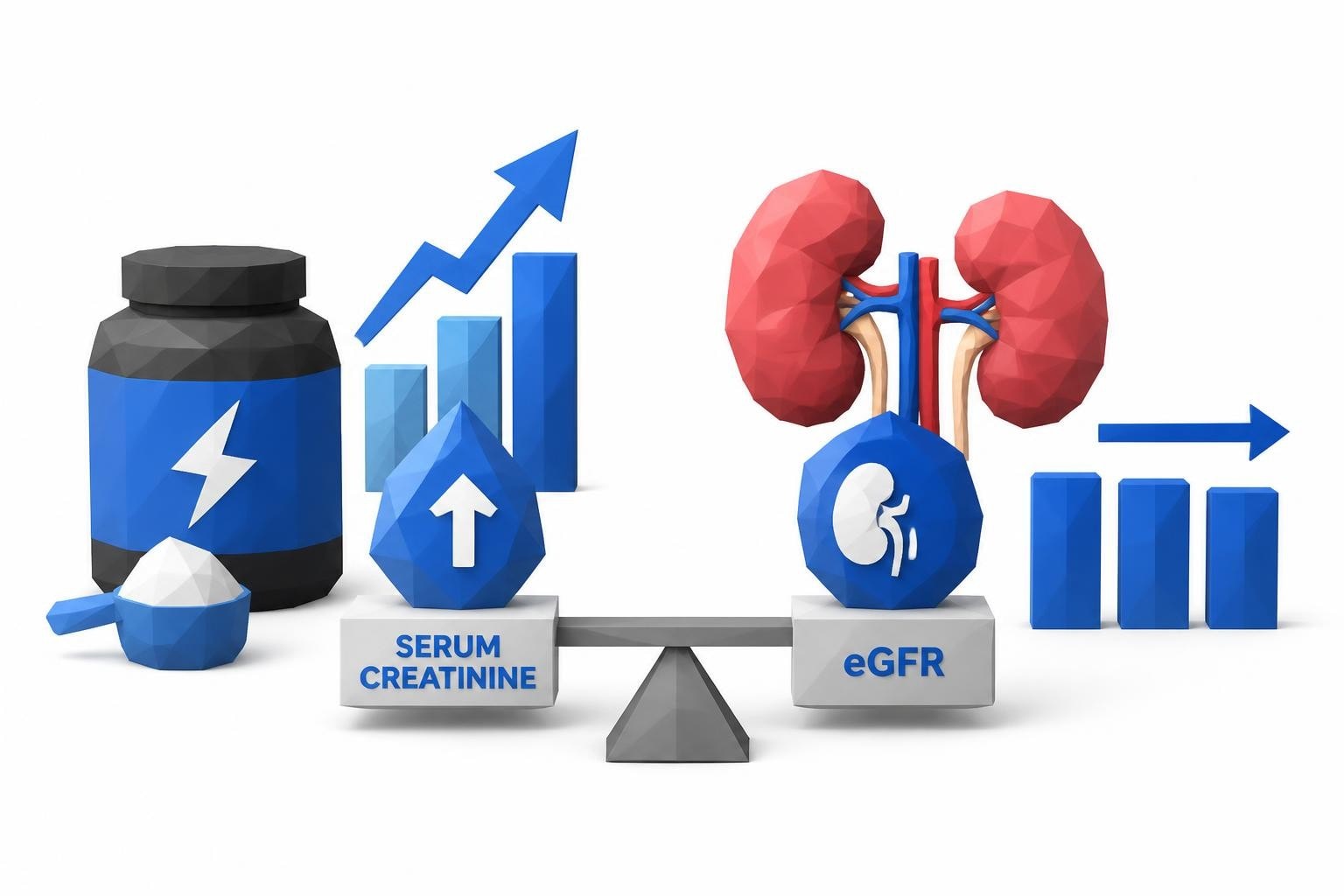
Athletes, bodybuilders, and fitness enthusiasts who supplement with creatine often face an unexpected concern when they receive routine lab results: elevated creatinine levels and decreased estimated glomerular filtration rate (eGFR). For many, this triggers alarm bells about potential kidney damage. However, understanding how creatine raises creatinine kidney test results reveals a much more reassuring picture. The elevation in serum creatinine from creatine supplementation represents a false alarm rather than evidence of kidney dysfunction. This distinction matters tremendously for anyone who relies on these supplements for athletic performance or muscle building yet needs accurate assessment of their renal health.
Why Creatine Supplementation Elevates Serum Creatinine
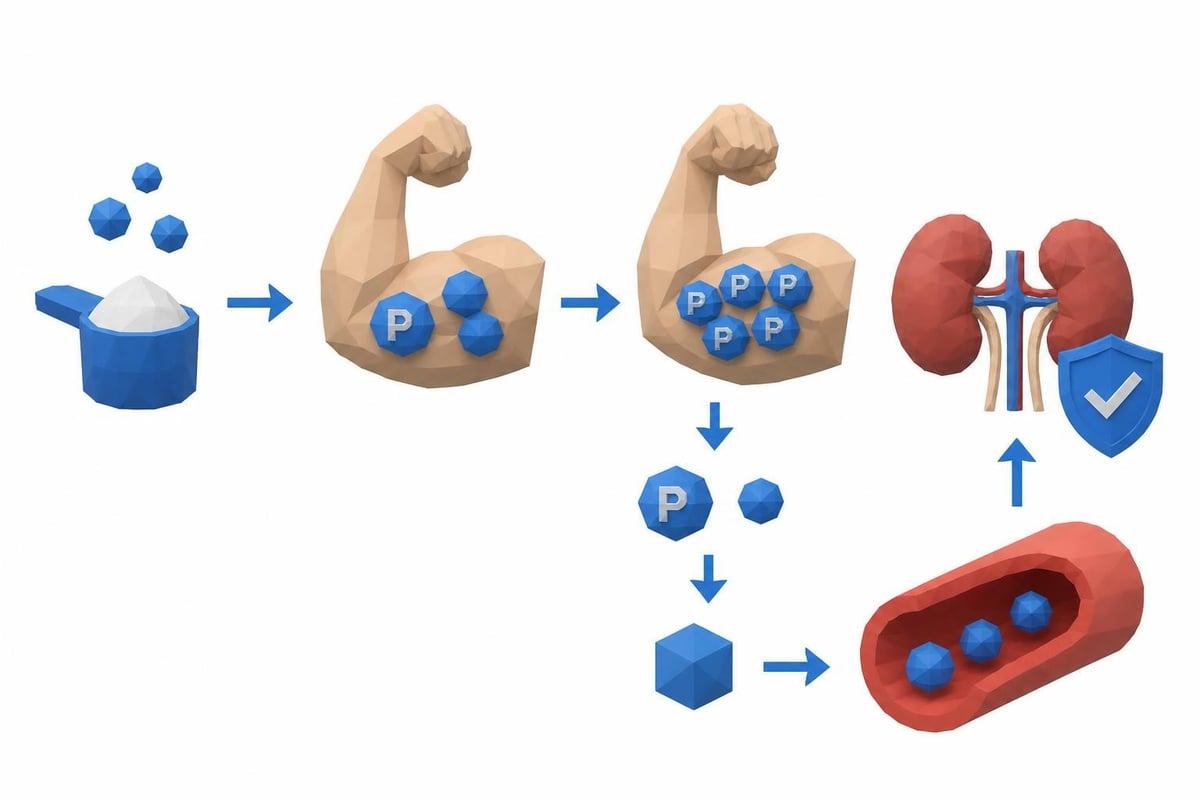
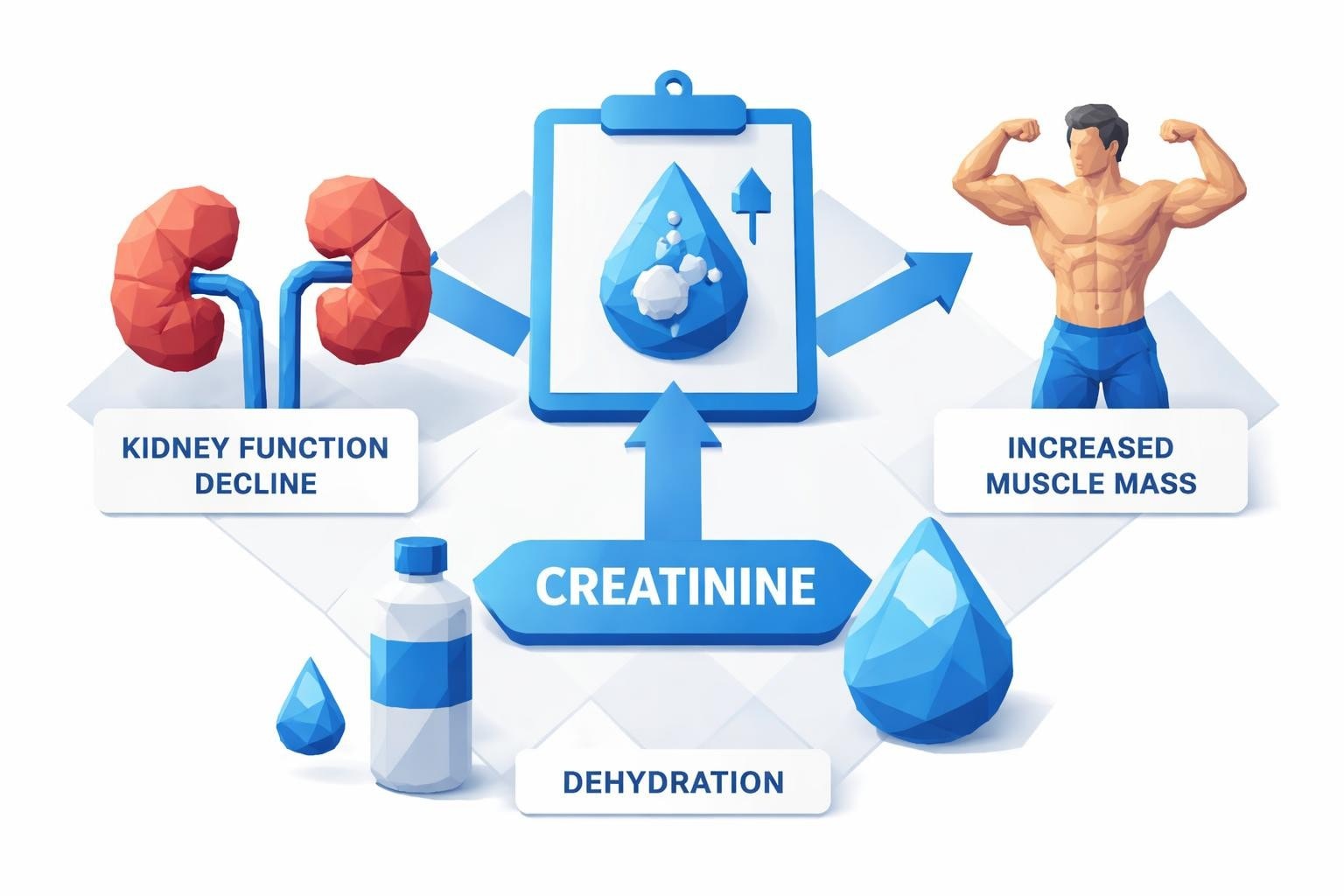
Creatine and creatinine share a metabolic relationship that directly explains the laboratory findings. When you supplement with creatine monohydrate or other forms of creatine, your muscle tissue stores increase the amount of phosphocreatine available for energy production during high-intensity activities. A small percentage of this stored creatine spontaneously converts to creatinine through a non-enzymatic process at a relatively constant rate.
The conversion happens continuously in muscle tissue:
- Approximately 1-2% of muscle creatine converts to creatinine daily
- Higher creatine stores naturally produce more creatinine
- This metabolic byproduct enters the bloodstream
- Kidneys filter creatinine from blood into urine
Because creatine supplementation significantly increases muscle creatine stores (often by 20-40%), the baseline production of creatinine rises proportionally. This biochemical reality means that creatine raises creatinine kidney test results through normal metabolism rather than impaired kidney function.
The Impact on Laboratory Reference Ranges
Standard laboratory reference ranges for serum creatinine assume normal dietary creatine intake from meat and fish, without additional supplementation. When clinicians see creatinine values above the reference range, they typically interpret this as reduced kidney filtration. National Institute of Diabetes and Digestive and Kidney Diseases research confirms that muscle mass, diet, and supplements like creatine represent non-GFR determinants that can skew creatinine-based estimates.
For individuals taking creatine supplements, typical increases include:
| Creatine Dose | Average Creatinine Increase | Typical eGFR Decrease |
|---|---|---|
| 3-5 g/day (maintenance) | 0.1-0.3 mg/dL | 5-15 mL/min/1.73m² |
| 20 g/day (loading phase) | 0.3-0.5 mg/dL | 15-25 mL/min/1.73m² |
| Long-term high dose (>10 g/day) | 0.4-0.7 mg/dL | 20-30 mL/min/1.73m² |
These elevations often push test results outside normal ranges, triggering concerns from both patients and healthcare providers who may not immediately recognize the connection.
How Estimated GFR Calculations Create Misleading Results
The estimated glomerular filtration rate serves as the primary clinical measure of kidney function in routine practice. Most laboratories calculate eGFR using equations that incorporate serum creatinine, age, sex, and sometimes race. The two most common formulas-the CKD-EPI equation and the MDRD equation-both assume that elevated creatinine reflects reduced kidney filtration capacity.
When creatine raises creatinine kidney test values through increased production rather than decreased filtration, these equations mathematically generate lower eGFR estimates. A systematic review published in Springer evaluated creatine supplementation's effects on kidney health and found that observed rises in serum creatinine did not correlate with measures of true renal function.
The Mathematical Disconnect
Consider a healthy 30-year-old male athlete:
Without creatine supplementation:
- Serum creatinine: 1.0 mg/dL
- Calculated eGFR: 107 mL/min/1.73m²
- Interpretation: Normal kidney function
With 5 grams daily creatine:
- Serum creatinine: 1.4 mg/dL
- Calculated eGFR: 71 mL/min/1.73m²
- Interpretation: Stage 2 chronic kidney disease (falsely suggested)
This mathematical artifact creates significant clinical confusion. The athlete's actual filtration capacity remains unchanged at approximately 107 mL/min/1.73m², but the creatinine-based calculation suggests moderate kidney impairment.
Evidence That Creatine Does Not Damage Kidneys
Decades of research have examined whether creatine supplementation causes actual kidney injury, and the scientific consensus provides reassurance. Meta-analysis results available through PubMed confirm that creatine supplementation associates with modest increases in serum creatinine while not indicating true kidney damage.
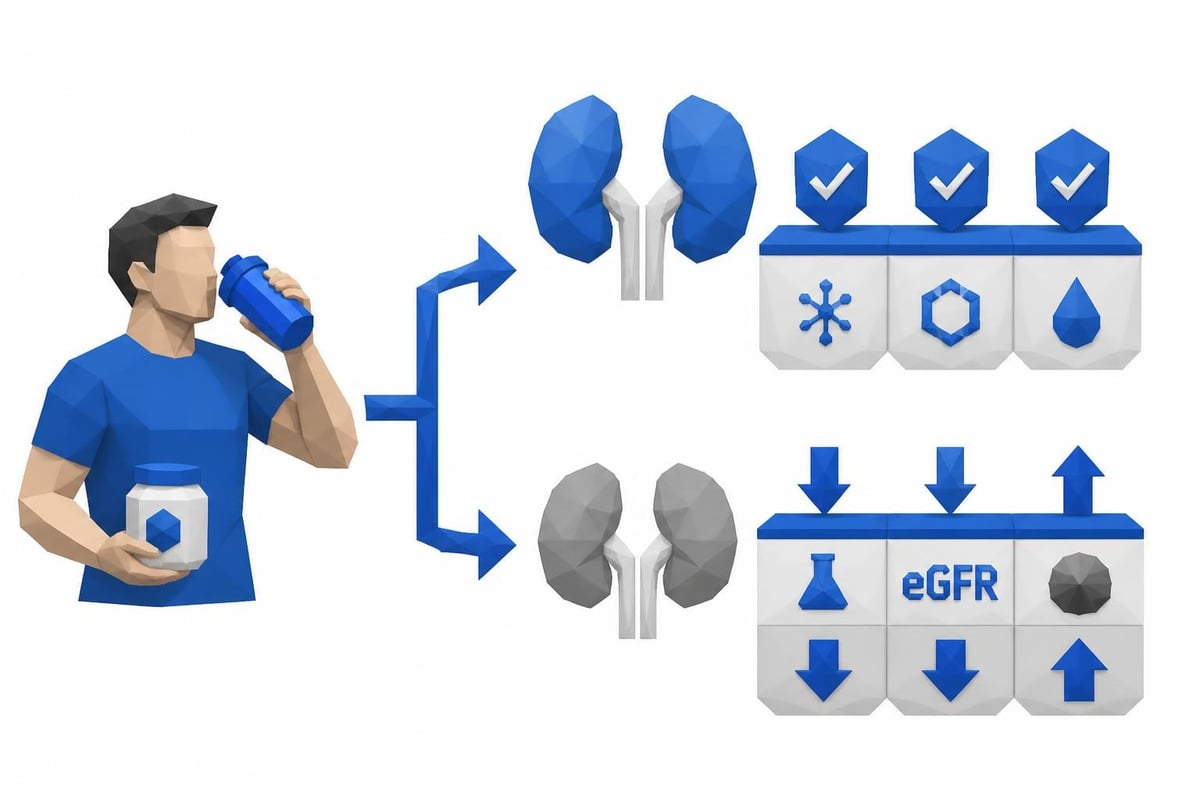
Studies using direct measures of kidney function consistently demonstrate:
- Normal urinary protein excretion during creatine supplementation
- Stable cystatin C levels despite elevated creatinine
- Unchanged inulin clearance (gold standard GFR measurement)
- No histological kidney damage in biopsy studies
- Normal kidney imaging findings on ultrasound and MRI
Key research findings include:
- A comprehensive systematic review in PMC summarized trials showing creatine raises serum creatinine without indicating kidney damage
- Long-term supplementation studies (up to 5 years) show no progression to chronic kidney disease
- Athletes with high muscle mass and creatine use maintain normal kidney function when assessed by direct methods
- Discontinuing creatine returns creatinine values to baseline within 2-4 weeks
Professional and amateur athletes can access affordable kidney function testing to monitor their health without the need for insurance authorization or physician referrals.
The Solution: Cystatin C Testing for Accurate Assessment
When creatine raises creatinine kidney test results and creates misleading eGFR calculations, healthcare providers need alternative methods to accurately assess kidney function. Cystatin C emerges as the most practical solution for creatine users who require reliable renal function monitoring.
Why Cystatin C Provides Accuracy for Creatine Users
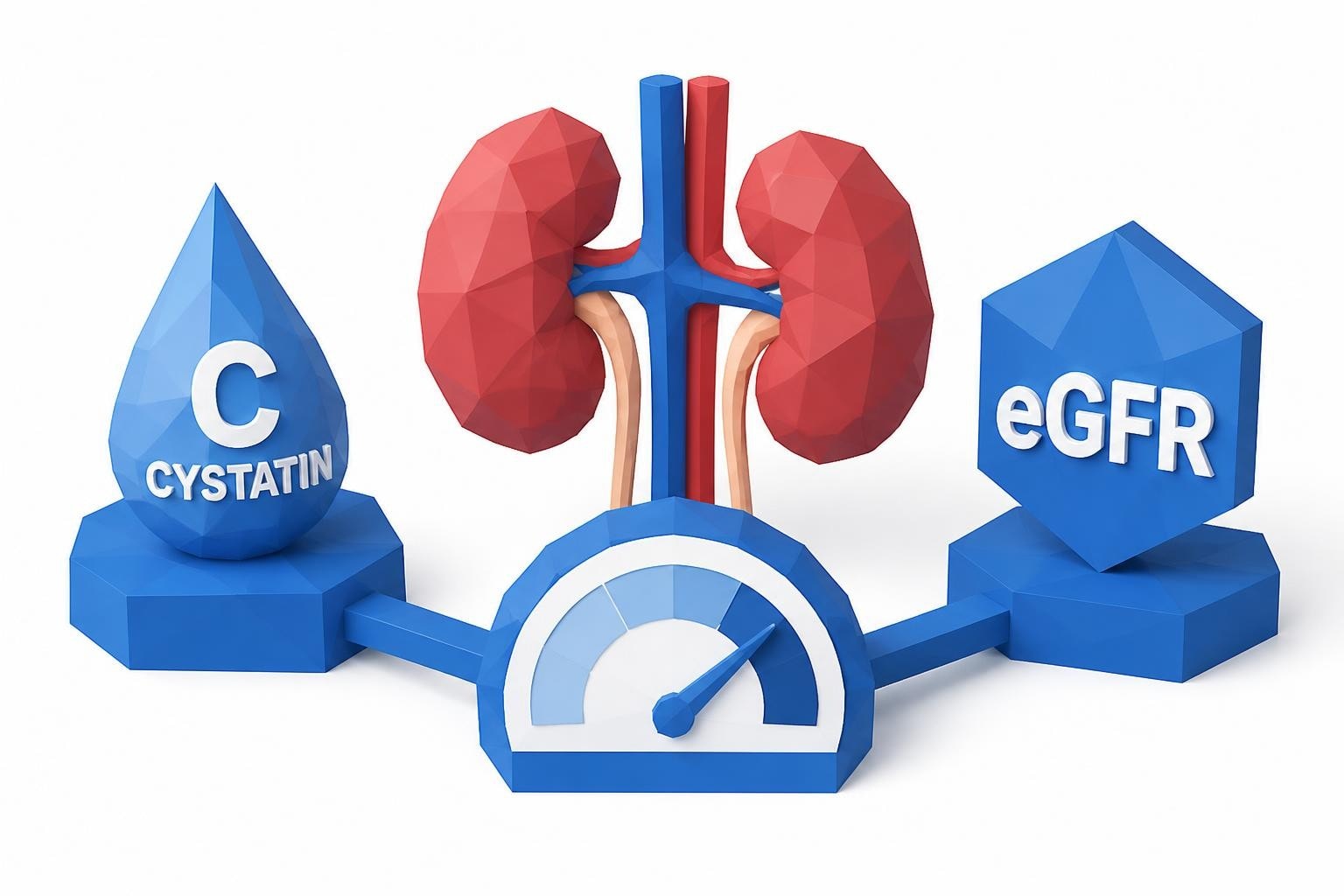
Cystatin C is a small protein produced by all nucleated cells at a constant rate. Unlike creatinine, cystatin C production occurs independently of muscle mass, dietary protein intake, or creatine supplementation. The kidneys filter cystatin C from blood, making its serum concentration a direct reflection of glomerular filtration rate.
Advantages of cystatin C for creatine users:
- No interference from muscle metabolism or creatine supplements
- Stable production rate unaffected by dietary factors
- Earlier detection of actual kidney function decline
- More accurate eGFR calculation when combined with creatinine
- Eliminates false positives from creatine supplementation
Recommended Test
Cystatin C with eGFR
Cystatin C is a superior marker for kidney function that provides more accurate results than creatinine, especially for people with unusual muscle mass or those needing precise kidney assessment.
Includes 2 biomarkers
$26
BMC Nephrology research emphasizes the limitations of creatinine-based GFR estimation and recommends alternative markers or direct GFR measurement when needed, particularly for populations with altered muscle mass or creatine supplementation.
Interpreting Combined Creatinine and Cystatin C Results
The most informative approach combines both markers to distinguish true kidney dysfunction from metabolic elevation of creatinine. This strategy is particularly valuable when creatine raises creatinine kidney test values and creates diagnostic uncertainty.
| Test Result Pattern | Interpretation | Recommendation |
|---|---|---|
| High creatinine, normal cystatin C | Creatine effect, normal kidneys | Continue supplementation, recheck periodically |
| High creatinine, high cystatin C | Possible kidney dysfunction | Discontinue creatine, consult nephrologist |
| Normal creatinine, normal cystatin C | Normal kidney function | No concern |
| Normal creatinine, high cystatin C | Early kidney decline | Further evaluation needed |
For athletes and fitness enthusiasts who want clear answers about their kidney health while continuing creatine supplementation, understanding lab results becomes essential for making informed decisions.
Practical Guidance for Creatine Users Facing Elevated Creatinine
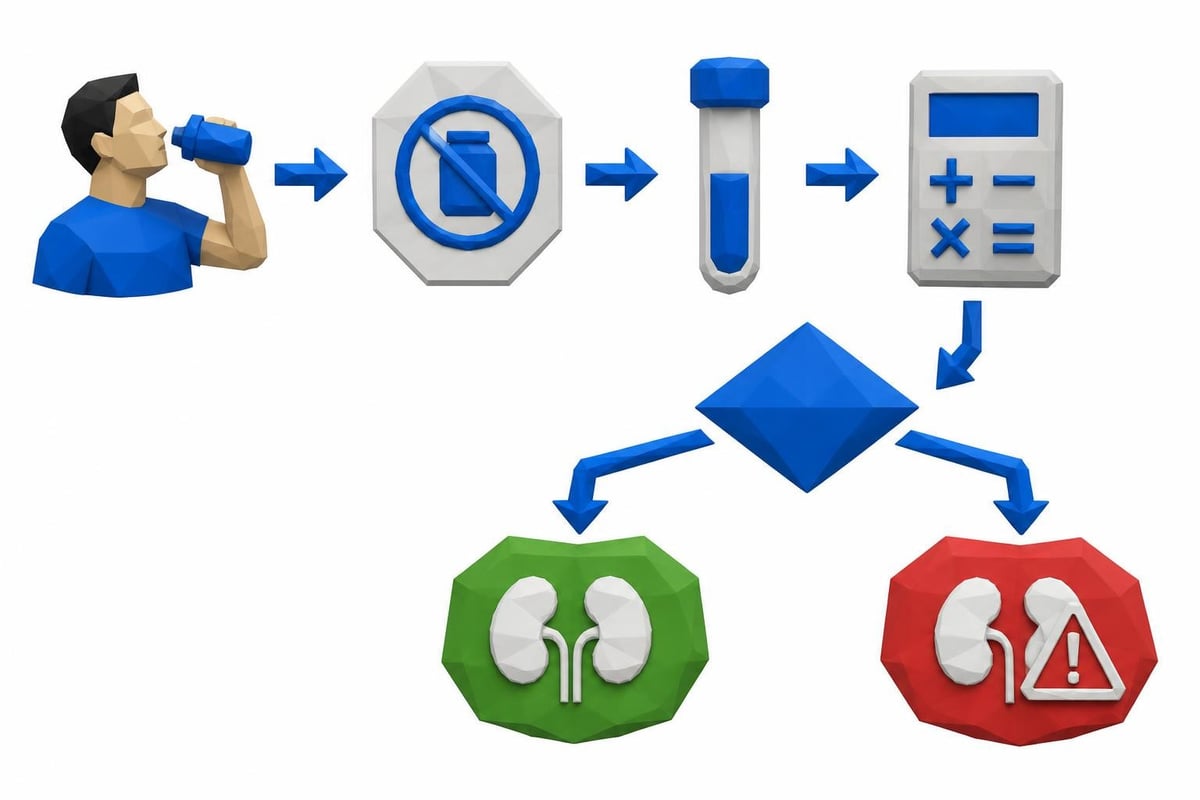
If your routine laboratory work shows elevated creatinine or decreased eGFR and you supplement with creatine, several steps can clarify whether you face actual kidney concerns or simply the expected metabolic effects of supplementation.
Immediate Assessment Strategy
Step 1: Review your supplement regimen Document your exact creatine dose, duration of use, and any other supplements that might affect kidney markers. Note that some pre-workout formulas contain creatine without clearly listing it as a primary ingredient.
Step 2: Temporarily discontinue creatine Stop all creatine supplementation for 3-4 weeks and repeat your serum creatinine and eGFR tests. If values normalize, this confirms that creatine raises creatinine kidney test results in your case without indicating kidney damage.
Step 3: Add cystatin C testing Request cystatin C measurement alongside your creatinine test. Professional guidance from LabTestsOnline notes that creatine supplements and dietary meat can raise creatinine and affect interpretation of kidney function tests.
Step 4: Calculate combined eGFR Use equations that incorporate both creatinine and cystatin C (such as CKD-EPI 2021) for more accurate kidney function assessment that accounts for non-GFR determinants of creatinine.
Step 5: Consider comprehensive kidney panels Additional markers including blood urea nitrogen (BUN), urinalysis for protein, and albumin-to-creatinine ratio provide broader context for kidney health assessment.
Recommended Test
Renal Function Panel
A comprehensive 11-biomarker panel that evaluates kidney health by measuring waste filtration, electrolyte balance, and mineral levels.
Includes 11 biomarkers
$11
Those seeking convenient access to kidney function testing can order lab tests without a doctor visit, receiving results within 1-3 days at transparent pricing.
Communicating with Healthcare Providers About Creatine Use
Many physicians and nurse practitioners receive limited education about sports nutrition supplements and may not immediately recognize how creatine raises creatinine kidney test values through normal metabolism. Proactive communication helps prevent unnecessary diagnostic workups, inappropriate supplement discontinuation recommendations, or unwarranted anxiety about kidney health.
Information to Share with Your Provider
When discussing elevated creatinine results, provide your healthcare team with specific details:
- Exact creatine dose and formulation (monohydrate, HCL, buffered, etc.)
- Duration of supplementation (both current cycle and lifetime use)
- Loading phases if applicable (typically 20 grams daily for 5-7 days)
- Other supplements that might contain creatine or affect kidney markers
- Dietary protein intake which can also influence creatinine levels
- Training volume and muscle mass as contextual factors
Evidence from the American Kidney Fund summarizes how creatine supplements can raise serum creatinine and potentially produce misleading kidney test results, offering practical advice on counseling and monitoring.
Questions to Ask Your Healthcare Provider
Recommended discussion points include:
- Can we add cystatin C testing to get an accurate kidney function assessment?
- Should we repeat testing after temporarily stopping creatine supplementation?
- Are there other markers (urinary albumin, BUN ratio) that would help clarify my kidney health?
- Would a combined creatinine-cystatin C eGFR equation be more appropriate for me?
- Do you have experience with other patients who supplement with creatine?
Most providers appreciate informed patients who bring relevant research and specific questions to appointments. Sharing peer-reviewed evidence helps build collaborative decision-making about testing and interpretation.
Special Considerations for Athletes and Bodybuilders
High-performance athletes and bodybuilders face unique challenges when creatine raises creatinine kidney test results because they often combine several factors that elevate creatinine through non-pathological mechanisms. These populations typically have significantly higher muscle mass than average patients, consume high-protein diets, and use multiple sports nutrition supplements.
The cumulative effect can produce creatinine values that appear quite alarming on standard laboratory reports:
Factors that additively raise creatinine in athletes:
- Creatine supplementation (primary factor)
- High muscle mass and lean body composition
- Dietary creatine from red meat, poultry, and fish
- Protein supplements (whey, casein, collagen)
- Intense resistance training (acute muscle breakdown)
- Beta-alanine and other supplement ingredients
For competitive athletes subject to drug testing or medical clearance examinations, documentation of normal kidney function via cystatin C or other alternative markers becomes particularly important. NICE guidelines on chronic kidney disease acknowledge non-GFR determinants of serum creatinine including diet, muscle mass, and supplements.
Monitoring Recommendations for Regular Creatine Users
Establishing a baseline before starting supplementation provides the most valuable comparison point, though many users begin creatine before ever having kidney function tested. For ongoing monitoring while maintaining creatine supplementation:
Recommended testing frequency:
- Annual comprehensive metabolic panel including creatinine and eGFR
- Annual cystatin C testing for accurate GFR assessment
- Urinalysis every 1-2 years to screen for proteinuria
- More frequent testing (every 3-6 months) if any abnormalities appear
Athletes can access affordable lab test pricing without insurance markups, making regular monitoring practical and budget-friendly.
The Science Behind Creatine Safety in Healthy Individuals
Understanding the extensive safety research provides confidence for individuals who experience anxiety when creatine raises creatinine kidney test values. The International Society of Sports Nutrition, based on comprehensive review of available evidence, positions creatine monohydrate as one of the most effective and safest ergogenic supplements available.
Safety data spans multiple decades and includes:
- Short-term studies: 4-12 weeks at doses up to 30 grams daily
- Long-term studies: Up to 5 years of continuous supplementation
- Diverse populations: Athletes, elderly individuals, clinical populations
- High doses: Loading protocols of 20-25 grams daily
- Combination protocols: Creatine with other supplements and medications
Across this extensive research base, creatine supplementation in healthy individuals with normal baseline kidney function shows no evidence of causing kidney damage, kidney stones, or progression to chronic kidney disease. The elevation of serum creatinine represents the only consistent kidney-related laboratory finding, and this occurs through the metabolic mechanism described earlier rather than indicating renal injury.
When Caution Is Warranted
While creatine appears safe for healthy individuals, certain populations should exercise caution or avoid supplementation:
Groups who should consult specialists before using creatine:
- Individuals with pre-existing chronic kidney disease
- People with diabetes (increased kidney disease risk)
- Those taking medications that affect kidney function (NSAIDs, certain antibiotics)
- Individuals with a family history of kidney disease
- Anyone with proteinuria or other kidney abnormalities
For these populations, the concern is not that creatine directly damages kidneys, but rather that it may complicate monitoring of existing conditions and that even small additional metabolic demands might matter in compromised kidneys. Additionally, when creatine raises creatinine kidney test results in someone with underlying kidney disease, it becomes more difficult to track disease progression using standard creatinine-based monitoring.
Alternative Testing Methods for Comprehensive Kidney Assessment
Beyond cystatin C, several additional testing options can help verify kidney health when creatine supplementation complicates standard creatinine interpretation. These approaches range from simple urine tests to sophisticated direct measurement techniques.
Urinary Markers and Ratios
Albumin-to-creatinine ratio (ACR): Early kidney damage typically causes protein leakage before GFR declines. A normal ACR (less than 30 mg/g) provides reassurance that kidney filtration barriers remain intact, even when serum creatinine is elevated from creatine supplementation.
Urine protein electrophoresis: This detailed analysis identifies specific proteins in urine, helping distinguish normal variation from pathological kidney damage. Creatine supplementation should not affect urinary protein patterns.
Beta-2 microglobulin: Similar to cystatin C, this small protein filtered by kidneys can indicate GFR changes without interference from muscle metabolism.
| Testing Method | Interference from Creatine | Accuracy for GFR | Availability | Cost Tier |
|---|---|---|---|---|
| Serum creatinine | High (direct effect) | Low in users | Universal | $ |
| Cystatin C | None | High | Widely available | $$ |
| Inulin clearance | None | Gold standard | Specialized centers | $$$$ |
| Iohexol clearance | None | Excellent | Limited centers | $$$$ |
| Creatinine clearance (24-hour urine) | Moderate | Moderate | Common | $ |
| Cystatin C + creatinine combined eGFR | Minimal | Very high | Common | $$ |
For most creatine users seeking to confirm normal kidney function, cystatin C testing offers the optimal balance of accuracy, availability, and cost. Those who want to get lab tests conveniently can access thousands of patient service centers nationwide.
Regulatory and Clinical Guidelines on Creatine Testing
Healthcare systems worldwide continue developing guidance for interpreting kidney function tests in individuals using creatine supplements. As supplementation becomes increasingly common, clinical laboratories and professional societies recognize the need for context-specific interpretation.
Current guideline recommendations:
- Document supplement use in medical records as part of medication reconciliation
- Consider cystatin C-based or combined eGFR equations for patients using creatine
- Avoid diagnosing chronic kidney disease based solely on elevated creatinine in supplement users
- Repeat testing after temporary supplement discontinuation when diagnostic uncertainty exists
- Educate patients that creatine raises creatinine kidney test values without indicating kidney damage
Some progressive laboratory reporting systems now include automated flags or interpretive comments when creatinine values fall within ranges consistent with creatine supplementation in young, muscular individuals. These interpretive notes help prevent misdiagnosis and unnecessary downstream testing or referrals.
The Future of Kidney Function Assessment
Research continues into novel biomarkers and calculation methods that could eventually replace creatinine-based testing as the standard approach. Promising developments include:
- Machine learning algorithms that incorporate multiple variables (age, sex, race, muscle mass, supplement use) for personalized eGFR estimation
- Point-of-care cystatin C testing that could make this marker as accessible as creatinine
- Urinary biomarker panels combining multiple proteins for comprehensive kidney health assessment
- Wearable biosensors capable of continuous monitoring of kidney function markers
Until these advances become standard practice, individuals who supplement with creatine should proactively seek cystatin C testing and communicate clearly with healthcare providers about their supplement use.
Related reading

Understanding that creatine raises creatinine kidney test results through normal muscle metabolism rather than kidney damage prevents unnecessary anxiety and inappropriate medical interventions. Cystatin C testing provides the accurate assessment that creatine users need to verify their kidney health. Whether you're monitoring the effects of supplementation or seeking baseline kidney function data, Justlabs offers convenient access to comprehensive testing panels including both creatinine and cystatin C, with transparent pricing and results delivered in 1-3 days without requiring insurance authorization or physician visits.
References
de Souza E Silva A, Pertille A, Reis Barbosa CG, Aparecida de Oliveira Silva J, de Jesus DV, Ribeiro AGSV, Baganha RJ, de Oliveira JJ. Effects of Creatine Supplementation on Renal Function: A Systematic Review and Meta-Analysis. J Ren Nutr. 2019 Nov;29(6):480-489. doi: 10.1053/j.jrn.2019.05.004. PMID: 31375416. https://pubmed.ncbi.nlm.nih.gov/31375416/
de Souza Almeida A, da Silva LOD, Takahasi BNA, Terada BD, Gonçalves FGA, Porto BC, da Silva Sardenberg RA, Passerotti CC, Maia RS, Samaan F, Thoman M, Molina WR, Shiomi da Cruz JA. Impact of creatine supplementation on kidney health: a systematic review and meta-analysis. Int Urol Nephrol. 2026 Jul 27. doi: 10.1007/s11255-026-05287-x. PMID: 42507286. https://pubmed.ncbi.nlm.nih.gov/42507286/
Longobardi I, Gualano B, Seguro AC, Roschel H. Is It Time for a Requiem for Creatine Supplementation-Induced Kidney Failure? A Narrative Review. Nutrients. 2023 Mar 18;15(6). doi: 10.3390/nu15061466. PMID: 36986197. https://pubmed.ncbi.nlm.nih.gov/36986197/
Antonio J, Candow DG, Forbes SC, Gualano B, Jagim AR, Kreider RB, Rawson ES, Smith-Ryan AE, VanDusseldorp TA, Willoughby DS, Ziegenfuss TN. Common questions and misconceptions about creatine supplementation: what does the scientific evidence really show?. J Int Soc Sports Nutr. 2021 Feb 8;18(1):13. doi: 10.1186/s12970-021-00412-w. PMID: 33557850. https://pubmed.ncbi.nlm.nih.gov/33557850/
Ávila M, Mora Sánchez MG, Bernal Amador AS, Paniagua R. The Metabolism of Creatinine and Its Usefulness to Evaluate Kidney Function and Body Composition in Clinical Practice. Biomolecules. 2025 Jan 1;15(1). doi: 10.3390/biom15010041. PMID: 39858438. https://pubmed.ncbi.nlm.nih.gov/39858438/
Delanaye P, Pottel H, Cavalier E, Flamant M, Stehlé T, Mariat C. Diagnostic standard: assessing glomerular filtration rate. Nephrol Dial Transplant. 2024 Jun 28;39(7):1088-1096. doi: 10.1093/ndt/gfad241. PMID: 37950562. https://pubmed.ncbi.nlm.nih.gov/37950562/