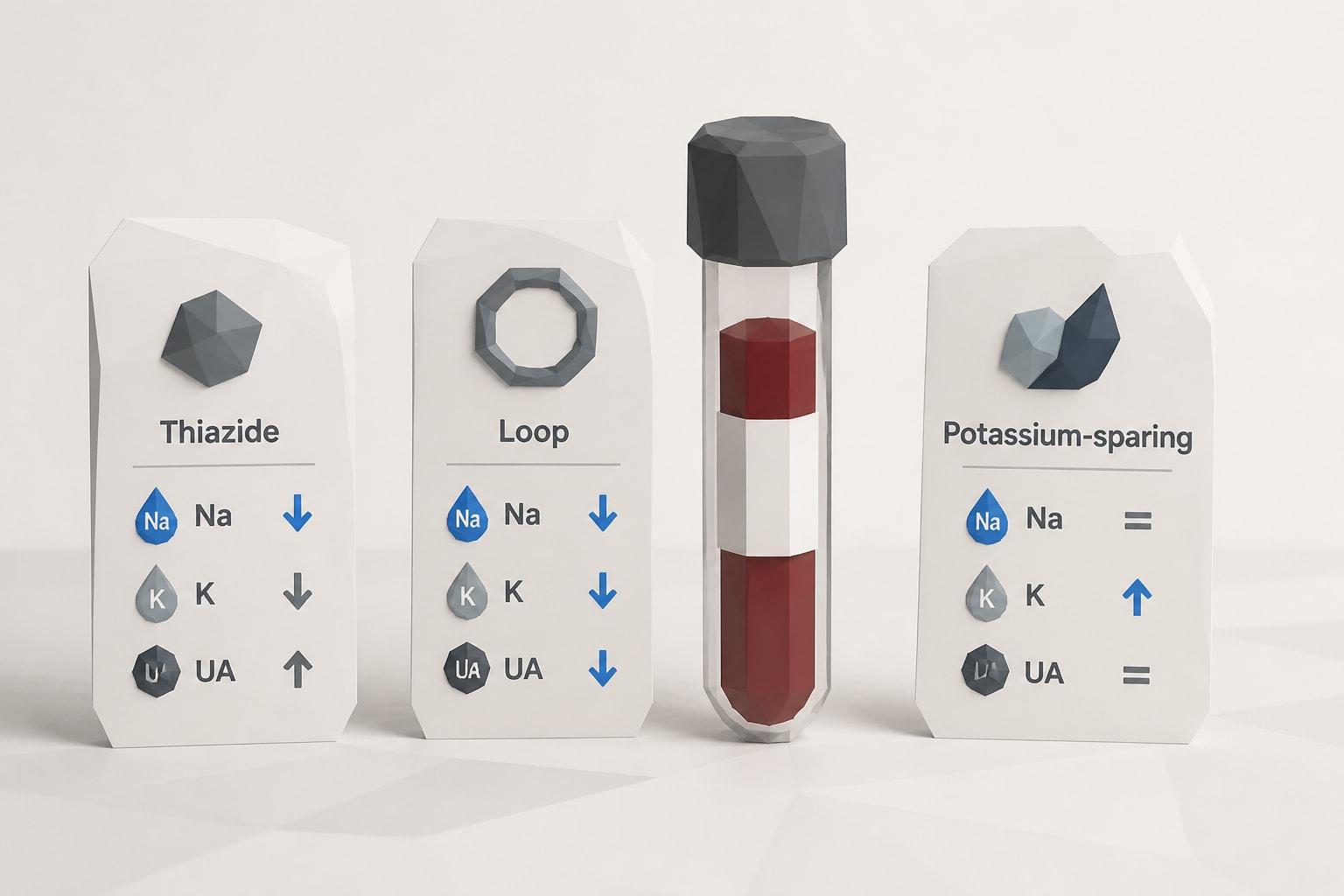
Yes, water pills (diuretics) can change your blood sodium, potassium and uric acid, though the direction and size of the change depend on the type of diuretic you take. Thiazide and loop diuretics tend to lower sodium and potassium and raise uric acid, while potassium-sparing diuretics tend to raise potassium. A blood test is the only reliable way to see what your own numbers are doing.
Big picture
- What it is: Diuretics make your kidneys remove extra salt and water. That lowers fluid volume and blood pressure, but it also shifts the minerals dissolved in your blood. Thiazide and loop types tend to lower sodium and potassium, while potassium-sparing types tend to raise potassium.
- Why it matters: Sodium and potassium that drift too low or too high can cause weakness, cramps, confusion or irregular heartbeat. Higher uric acid can contribute to gout. These shifts often cause no obvious symptoms early on, so they can go unnoticed without a blood test.
- Who it affects: Adults taking diuretics for high blood pressure, heart failure or fluid retention, along with their household members who manage these prescriptions. Older adults and people with reduced kidney function or a history of gout have more reason to pay attention.
- What to do: Never stop or change a prescribed diuretic on your own. Keep a record of your lab values over time and share them with your prescriber. A routine blood panel gives you those numbers. Blood Pressure UK reports that tests are usually done once a year for people on thiazide or loop diuretics, so check when your last one was.
- When to seek care: Severe dizziness, fainting, muscle weakness, a racing or irregular heartbeat or a swollen, intensely painful joint need prompt medical attention, not a lab order.
How Water Pills Affect Your Blood Chemistry
Diuretics work on different parts of the kidney, and each site of action changes how much sodium, potassium and uric acid leave your body or stay in it.
Your kidneys filter blood constantly, then decide what to keep and what to discard. Diuretics interfere with salt reabsorption at specific points along that path. Water follows salt, so more salt in the urine means more urine overall. The side effect is that electrolytes such as potassium, magnesium and calcium can shift along with sodium. According to Healthdirect Australia, diuretics can alter blood sodium, calcium, magnesium and uric acid, and depending on the type they can lower or raise potassium.
Each marker follows its own logic. Potassium is lost when more sodium reaches the later parts of the kidney, where potassium is exchanged for sodium, so drugs that act earlier in the nephron tend to lower it, and drugs that block that exchange tend to raise it. Uric acid rises because the drug and uric acid share a clearance route and because a smaller fluid volume concentrates it. Magnesium and calcium move in different directions depending on the class. Because several values shift together, clinicians read them as a set, which is why a panel is more informative than a single number.
So the question of whether water pills change sodium, potassium and uric acid has a layered answer. All three markers can move, but not every pill moves them the same way.
Thiazide, Loop and Potassium-Sparing Diuretics Compared
The three main diuretic classes act at different kidney sites, which is why one may lower potassium while another raises it.
Thiazide diuretics (such as hydrochlorothiazide and chlorthalidone) act in the distal tubule. They are commonly used for high blood pressure. Their effect on sodium can be meaningful, and low sodium is a recognized risk.
Loop diuretics (such as furosemide and bumetanide) act in the loop of Henle, a segment that reabsorbs a large share of filtered sodium. They are strong and fast, and they are often used for heart failure and significant fluid buildup. The Cambridge University Hospitals patient information notes that loop diuretics can cause loss of too much water, so clinicians monitor kidney function and blood sodium and potassium and may adjust the dose based on test results.
Potassium-sparing diuretics (such as spironolactone, eplerenone, amiloride and triamterene) act late in the nephron. They remove less sodium and water than the other classes, but they hold on to potassium. The British Heart Foundation notes that potassium-sparing diuretics such as spironolactone and eplerenone help prevent excessive potassium loss, which is why they are sometimes paired with other diuretics.
Which Water Pills Lower Sodium, Lower Potassium or Raise Potassium?
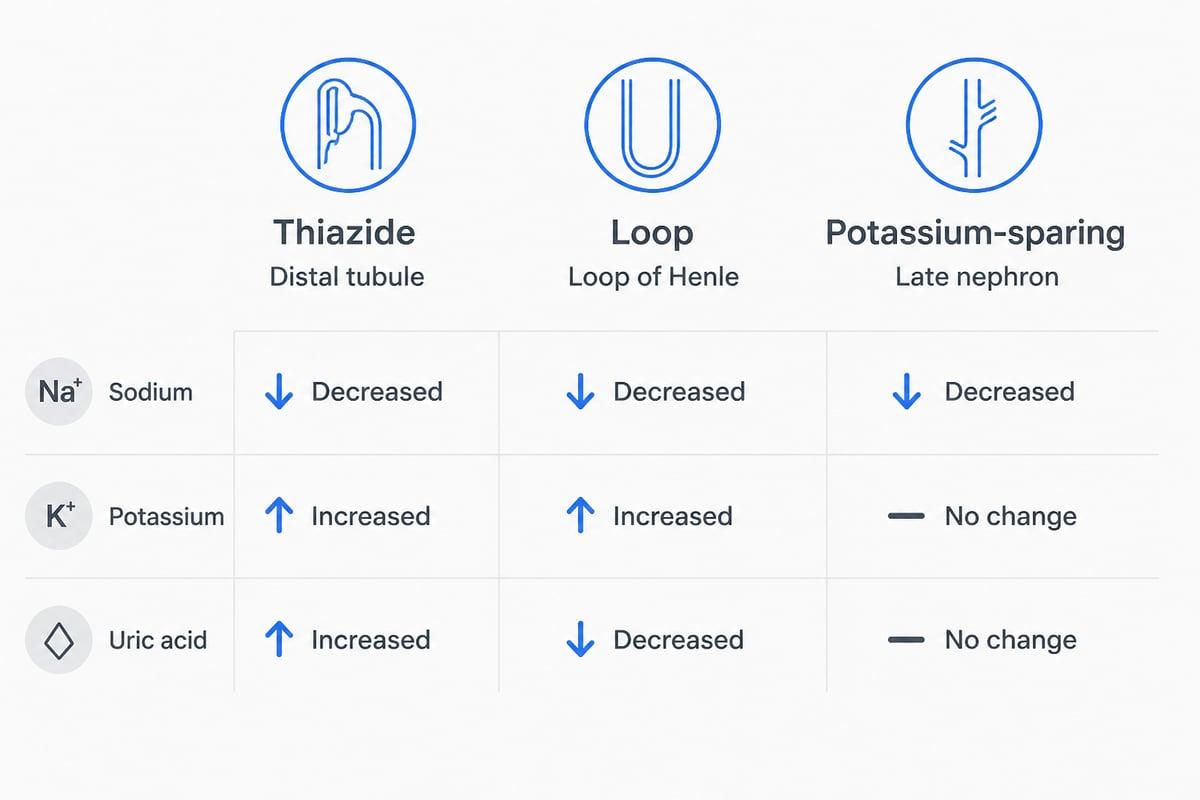
Thiazide and loop diuretics typically lower both sodium and potassium, while potassium-sparing diuretics typically raise potassium and have a smaller effect on sodium.
The table below summarizes general tendencies. Individual results vary with dose, diet, kidney function and other medications.
| Diuretic class | Common examples | Sodium | Potassium | Uric acid |
|---|---|---|---|---|
| Thiazide | Hydrochlorothiazide, chlorthalidone | May lower | May lower | May raise |
| Loop | Furosemide, bumetanide | May lower | May lower | May raise |
| Potassium-sparing | Spironolactone, eplerenone, amiloride | May lower modestly | May raise | Generally less of an effect |
Blood Pressure UK states that thiazide and loop diuretics can lower potassium and sodium and raise uric acid, and it reports that blood tests are usually done once a year for people taking these medicines. Some people need testing more often, especially after a dose change or when another illness is present.
Combination pills exist, too. A prescription that pairs a thiazide with a potassium-sparing agent is designed so the effects on potassium partly offset each other. If you are unsure what your tablet contains, check the label or ask your pharmacist.
Does Thiazide Increase Uric Acid?
Yes, thiazide diuretics can raise uric acid in the blood, and loop diuretics can do the same.
The mechanism is straightforward. Uric acid and these diuretics are cleared through overlapping pathways in the kidney. When the diuretic competes for that route and fluid volume drops, less uric acid is excreted and blood levels climb. The British Heart Foundation source above notes that thiazide and loop diuretics can raise uric acid and contribute to gout.
A higher number does not guarantee a gout attack. Many people with raised uric acid never develop symptoms. But if you have a history of gout, or gout runs in your family, the effect matters more. Guidance summarized by bpacnz describes diuretics as reducing urate excretion and advises considering alternatives to diuretics when appropriate. It also describes losartan as having mild urate-excreting properties for people who have both gout and hypertension. That is a decision for your prescriber, and it is a good example of why your lab history is worth bringing to an appointment.
Related reading on this site covers uric acid beyond a gout marker and the tests that sit alongside uric acid in a gout workup.
Do Diuretics Increase Sodium in Urine?
Yes, diuretics increase the amount of sodium in urine, which is the core of how they work, and that loss can pull sodium down in the blood.
Sodium excreted in urine is the intended effect. The goal is to shed excess salt and the water that travels with it. Whether blood sodium actually falls depends on how sodium loss compares with water loss. Thiazides are more strongly associated with low blood sodium than other diuretic types, because they can impair the kidney's ability to dilute urine. Loop diuretics can also lower sodium, particularly when fluid losses are large.
Several habits can widen that gap. Drinking large volumes of plain water while on a thiazide can dilute blood sodium further, which is one reason fluid advice should come from your prescriber. A very low-salt diet combined with a diuretic can also lower sodium faster than either alone. Potassium-sparing diuretics tend to move sodium less, though a modest drop is possible. Healthdirect Australia lists sodium among the blood markers diuretics can alter, and clinicians may monitor it during treatment.
Common signs of low sodium include headache, nausea, fatigue, muscle cramps and, in more serious cases, confusion. These symptoms overlap with many other conditions, which is another reason numbers matter more than guesses. A serum sodium result from a metabolic panel is the direct way to see where you stand.
Dehydration, Kidney Function and Why Context Changes Your Results
Dehydration and reduced kidney function can amplify the effects of a diuretic, so the same dose may produce different lab values in different circumstances.
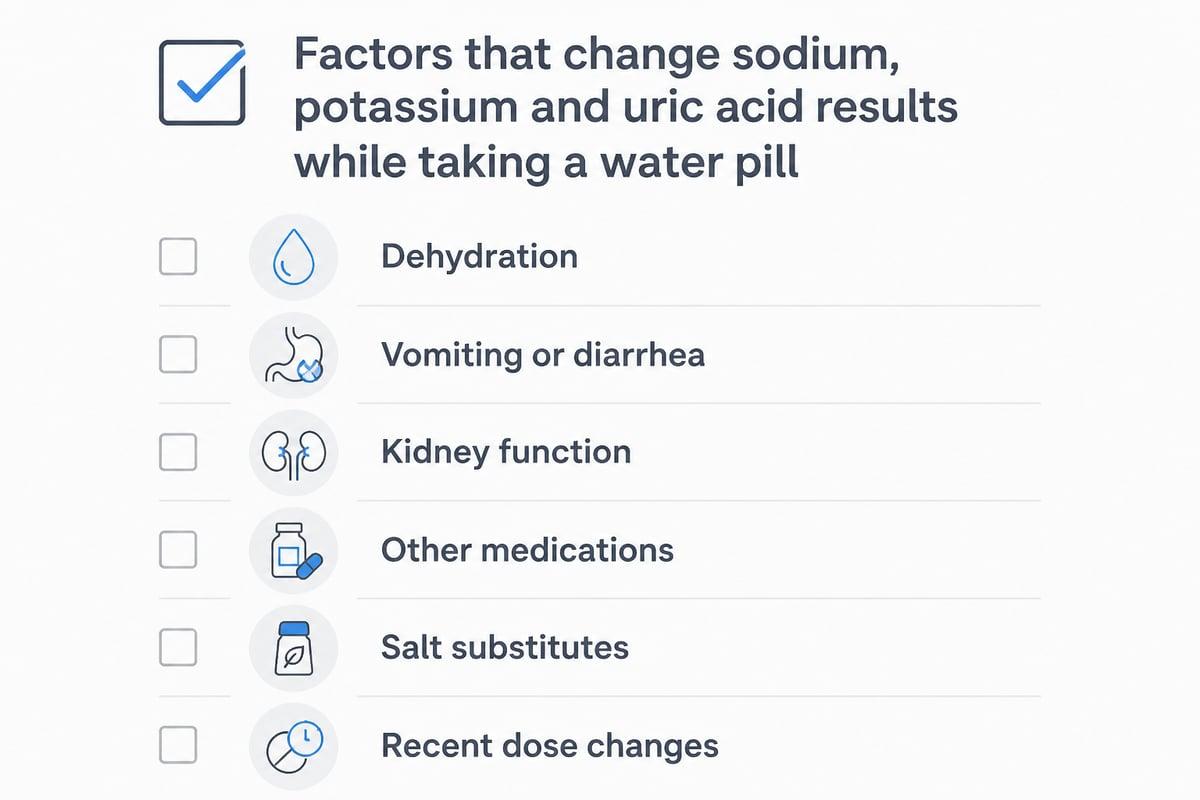
Consider a few common situations:
- Vomiting, diarrhea or heavy sweating while on a diuretic can push fluid and electrolyte losses further than intended.
- Reduced kidney function changes how quickly drugs and potassium are cleared. This is especially relevant for potassium-sparing diuretics, since slower clearance raises the chance of high potassium.
- Other medications such as ACE inhibitors, ARBs and some anti-inflammatory drugs can interact with diuretics and shift potassium or kidney function.
- Diet and supplements including potassium-rich salt substitutes can matter when a potassium-sparing diuretic is part of your regimen.
Dehydration can also skew lab values on its own, independent of any drug. This site's explainer on how dehydration changes blood test results covers that effect, and the article on why results can differ between two blood draws is useful when comparing numbers over time.
Kidney function is usually tracked with creatinine and eGFR. The Cambridge University Hospitals guidance already noted that clinicians watch kidney function alongside sodium and potassium, which is why these markers are reviewed together rather than one at a time.
How Long Should a Person Be on Diuretics?
How long someone takes a diuretic depends on the condition being treated, and many people take them for years while others need them only briefly.
For high blood pressure and heart failure, diuretics are often long-term medicines because the underlying condition is long-term. For short-term swelling after an illness or surgery, a course may last days or weeks. Your prescriber sets the duration and reviews it periodically. The guideline on loop diuretic initiation and titration shows how clinicians adjust doses over time and what they watch for, including electrolyte abnormalities and gout.
Two practical points apply regardless of duration:
- Do not stop a diuretic abruptly without medical advice. Fluid can return quickly, and blood pressure can rise.
- Ongoing use calls for ongoing monitoring, because your sodium, potassium, kidney function and uric acid can drift even when you feel fine.
What Diuretic Is Least Harmful to the Kidneys?
No diuretic is universally the gentlest on the kidneys, because the safest choice depends on your kidney function, your condition and your other medications, so the decision belongs with your prescriber.
Every diuretic can reduce kidney blood flow if it removes too much fluid. Potassium-sparing agents carry a particular risk of high potassium when kidney function is reduced. Loop diuretics are often preferred when kidney function is low. Over-diuresis from any type can strain the kidneys, which is why creatinine and eGFR are checked after starting or changing a dose.
The risk also shifts with circumstances rather than staying fixed to a drug. A person with stable kidney function who takes a modest dose of a thiazide faces a different picture than someone on a high-dose loop diuretic who develops a stomach illness with vomiting. Cambridge University Hospitals notes that loop diuretics can cause loss of too much water, which is why clinicians review kidney function and adjust doses based on test results. Combining a diuretic with an ACE inhibitor, an ARB or an anti-inflammatory painkiller can add further strain. Ask your prescriber which of your medicines should be paused during an illness, and ask before you need to know.
If you notice much less urine than usual, extreme thirst or lightheadedness when standing, contact your prescriber promptly rather than waiting for the next scheduled test.
Monitoring Your Numbers Between Doctor Visits
Checking sodium, potassium, kidney markers and uric acid with periodic blood tests gives you a record that makes conversations with your prescriber far more specific.
The tests most relevant to someone on a water pill are:
- Sodium and potassium: the electrolytes most directly affected.
- Creatinine and eGFR: kidney function markers that guide dosing.
- Uric acid: relevant if you have gout, or if you want to see how a thiazide or loop diuretic is affecting you.
- Calcium, magnesium and glucose: often reviewed alongside the core markers.
A basic metabolic panel covers sodium, potassium, kidney markers and glucose, and a Comprehensive Metabolic Panel (CMP) adds liver markers and protein to that same electrolyte and kidney picture. Adults who prefer to pay cash can order a panel directly, which is one practical way to keep tabs on these values.
Recommended Panel
Complete Metabolic Health Panel
Save $3.50This comprehensive panel evaluates all aspects of metabolic health: organ function, cholesterol, blood sugar, insulin resistance, and inflammation - the key drivers of chronic disease.
Includes 26 biomarkers
$44.70
Fasting required

Uric acid is measured separately. JustLabs offers a standalone uric acid test, and a page on high uric acid explains how to read elevated results.
Timing matters for interpretation. Compare results drawn under similar conditions, such as the same time of day, a similar hydration level and the same medication schedule. A reading taken during a stomach bug will not look like your usual baseline, a point covered in how being sick changes blood test results.
Home lab testing informs, but it does not replace medical care. If a result comes back far outside the reference range, or you have symptoms such as fainting, severe weakness or a rapid irregular pulse, seek medical attention rather than waiting. A lab report also cannot tell you whether to change your prescription. Share it with your prescriber and let them decide.
Key takeaways
- Do water pills change sodium, potassium and uric acid? Yes. Thiazide and loop diuretics typically lower sodium and potassium and raise uric acid. Potassium-sparing diuretics typically raise potassium.
- The size of the effect depends on your dose, kidney function, hydration, diet and other medicines. The same tablet can produce different numbers during a stomach illness than on an ordinary week.
- Raised uric acid from a diuretic can matter most if you already have gout or a family history of it. Guidance summarized by bpacnz advises considering alternatives to diuretics when appropriate, which is a prescriber decision.
- Blood tests are usually done about once a year for people on thiazide or loop diuretics, and more often after dose changes or illness, according to Blood Pressure UK and clinical guidance.
- Never stop a prescribed diuretic on your own. Bring your lab history to your prescriber and let them adjust treatment.
- A metabolic panel tracks sodium, potassium and kidney function, and a separate uric acid test covers the third marker. Compare results drawn under similar conditions, such as the same time of day and similar hydration, so the trend reflects your medication and not your morning.
- Severe weakness, fainting, a racing or irregular pulse or a swollen, intensely painful joint calls for prompt medical care, not a lab order.
FAQ
How often should I get blood tests while taking a water pill?
Blood Pressure UK reports that tests are usually done once a year for people taking thiazide or loop diuretics. Your prescriber may want them sooner after starting a diuretic, changing the dose, adding another blood pressure medicine or recovering from an illness with vomiting or diarrhea.
Can a water pill cause high potassium?
Potassium-sparing diuretics such as spironolactone and eplerenone can raise potassium, particularly when kidney function is reduced or when combined with ACE inhibitors, ARBs or potassium supplements. Thiazide and loop diuretics more often lower it.
Can I lower my uric acid if my diuretic is raising it?
Uric acid can be influenced by diet, hydration, body weight, alcohol intake and medications. Whether a different blood pressure medicine is suitable is a decision for your prescriber, who can weigh your gout risk against your other health needs.
Do I need a fasting test to check these markers?
Requirements vary by test. Check the instructions on the specific test page before your blood draw, since some panels ask for fasting and others do not.
Is it safe to drink more water to offset a diuretic?
Fluid advice differs by condition. People with heart failure are sometimes told to limit fluids, while others are encouraged to stay well hydrated. Ask your prescriber what applies to you rather than adjusting on your own.
If you take a water pill, a practical next step is to gather your most recent lab results and write down your dose and the date you last had your sodium, potassium and kidney function checked. If it has been a year or more, or you recently changed medicines, a Comprehensive Metabolic Panel shows your electrolytes and kidney markers in one draw. JustLabs lets adults order labs online at upfront cash prices, with blood draws at Quest Diagnostics locations and results generally within 1-3 business days, so you can browse tests and pick the ones that match what your prescriber wants to track.