
Millions of Americans take metformin to manage type 2 diabetes, making it one of the most prescribed medications worldwide. While this first-line treatment effectively controls blood sugar levels, long-term use creates a hidden risk that often goes undetected: vitamin B12 deficiency. Understanding when and how to test for this complication can prevent serious neurological damage and help distinguish deficiency symptoms from other diabetes-related complications.
Understanding How Metformin Depletes Vitamin B12
Metformin interferes with the normal absorption of vitamin B12 in the small intestine through a specific mechanism. The medication disrupts calcium-dependent membrane action in the terminal ileum, where B12 absorption occurs. This interference affects the binding of the vitamin B12-intrinsic factor complex to ileal cell receptors, reducing the amount of B12 that enters the bloodstream.
The process happens gradually, which explains why deficiency typically develops after years of metformin use rather than immediately. Calcium supplementation may partially offset this effect, though evidence remains mixed on its protective benefits.

Prevalence and Risk Factors
According to systematic reviews of metformin and B12 deficiency, between 10% and 30% of long-term metformin users develop low B12 levels. The risk increases with several factors:
- Duration of use: Deficiency becomes more common after 3-4 years of continuous metformin therapy
- Dosage: Higher daily doses (2,000 mg or more) carry greater risk
- Age: Older adults already face reduced B12 absorption from age-related changes
- Dietary patterns: Vegetarians and vegans have lower baseline B12 stores
- Gastric conditions: Previous stomach surgery or conditions affecting acid production compound the problem
The NICE evidence review on B12 deficiency risk factors specifically identifies metformin as a medication requiring monitoring consideration, particularly when combined with other risk factors.
Why Symptoms Get Missed in Diabetes Patients
One of the most challenging aspects of identifying B12 deficiency in metformin users involves symptom overlap with diabetic neuropathy. Both conditions produce remarkably similar neurological symptoms, creating diagnostic confusion.
Overlapping Neurological Symptoms
Patients with either condition may experience:
- Tingling and numbness in hands and feet
- Balance problems and unsteady gait
- Muscle weakness
- Burning sensations in extremities
- Reduced sensation to touch and temperature
The critical difference: While diabetic neuropathy results from prolonged high blood sugar damaging nerve fibers, B12 deficiency causes demyelination of nerves. Both mechanisms produce peripheral neuropathy, but B12-related damage is potentially reversible if caught early.
Cognitive and Mood Changes
B12 deficiency also produces symptoms less commonly associated with diabetes complications:
| B12 Deficiency Symptoms | Often Attributed To |
|---|---|
| Memory problems | Normal aging |
| Difficulty concentrating | Stress or depression |
| Mood changes and irritability | Blood sugar fluctuations |
| Fatigue and weakness | Poor diabetes control |
| Depression | Chronic disease burden |
Because these symptoms develop slowly and have multiple potential causes, healthcare providers may not immediately consider B12 deficiency as the underlying issue. The NHS metformin information page notes this deficiency as a recognized side effect requiring awareness and monitoring.
Which Tests Detect B12 Deficiency
The metformin b12 deficiency test landscape includes several options, each with specific advantages and limitations. Selecting the right test depends on clinical context and the level of diagnostic certainty required.
Serum Total B12 Test
Recommended Test
Vitamin B12
Vitamin B12 is essential for nerve function, DNA synthesis, red blood cell formation, and energy production. Deficiency is common and often undiagnosed.
Includes 1 biomarkers
$8
The most commonly ordered screening test measures total vitamin B12 in blood serum. This test provides a reasonable first assessment:
Advantages:
- Widely available at most laboratories
- Relatively inexpensive
- Good negative predictive value when results are clearly normal
Limitations:
- Poor sensitivity in the borderline range (200-400 pg/mL)
- Cannot distinguish between active and inactive B12 forms
- Results affected by recent B12 supplementation
- May miss early or subclinical deficiency
Methylmalonic Acid Testing
Recommended Test
Methylmalonic Acid (MMA)
MMA is the most sensitive and specific marker for B12 deficiency at the tissue level. When B12 is low, MMA accumulates because B12 is required to convert it to succinyl-CoA.
Includes 1 biomarkers
$44
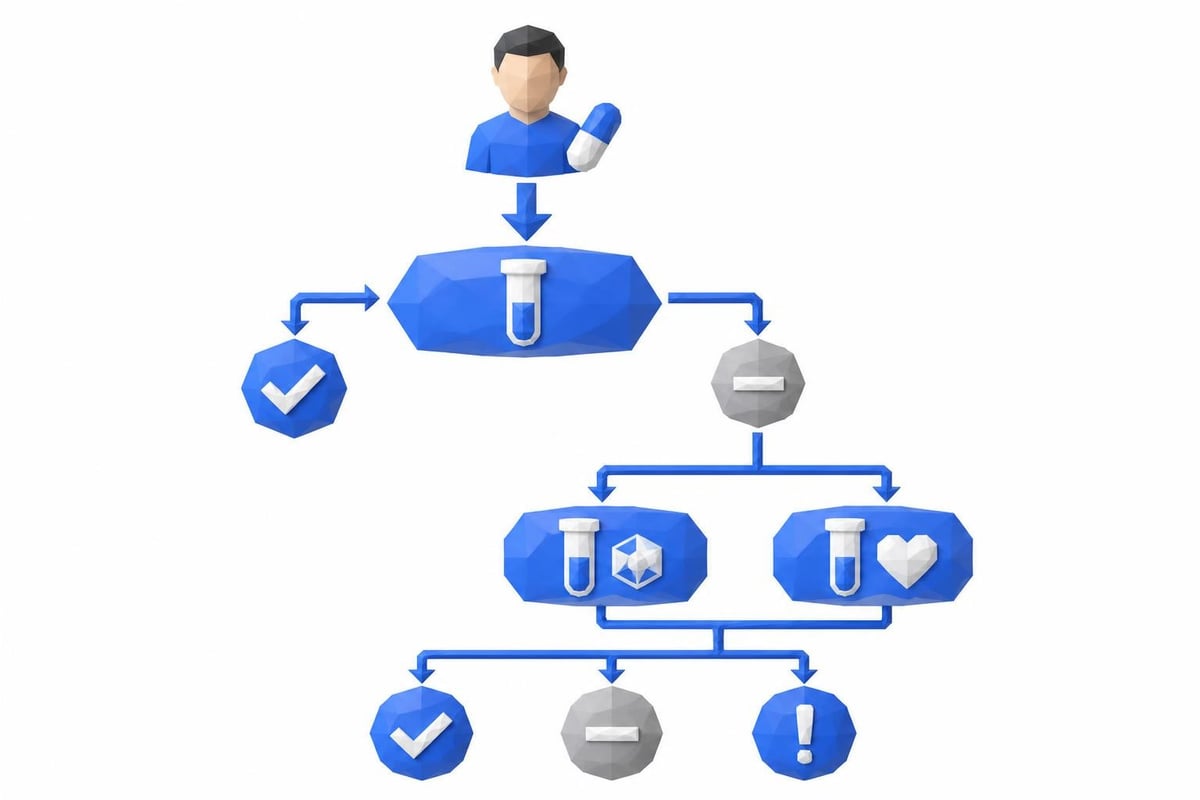
When serum B12 levels fall in the borderline range, methylmalonic acid (MMA) provides superior diagnostic accuracy. B12 serves as a cofactor for the enzyme that converts MMA to succinyl-CoA. When B12 is insufficient, MMA accumulates in tissues and blood.
Key advantages of MMA testing:
- Higher sensitivity: Detects functional B12 deficiency even when serum levels appear borderline
- Earlier detection: Rises before B12 drops to clearly deficient levels
- Confirms deficiency: Helps distinguish true deficiency from other causes of low B12
The NICE guidelines on B12 diagnosis recommend metabolite testing like MMA when total B12 results are inconclusive or when clinical suspicion remains high despite normal B12 levels.
Active B12 (Holotranscobalamin) Test
Active B12 measures only the biologically available form bound to transcobalamin, representing approximately 20% of total B12. This newer test offers:
- Better correlation with tissue B12 status
- Improved sensitivity for early deficiency
- Less affected by inactive B12 forms
However, active B12 testing costs more and has less extensive research validation compared to total B12 combined with MMA.
Homocysteine Testing
Like MMA, homocysteine elevates when B12 levels become insufficient. B12 acts as a cofactor for methionine synthase, which converts homocysteine to methionine. However, homocysteine is less specific than MMA because folate deficiency and kidney disease also raise levels.
Testing Recommendations for Metformin Users
The question of when to perform a metformin b12 deficiency test depends on multiple factors including duration of therapy, symptom presence, and individual risk factors.
Baseline and Periodic Screening
Before starting metformin: Measuring baseline B12 levels helps establish an individual reference point, though this is not universally practiced. Patients with already low or borderline B12 may need more frequent monitoring or earlier supplementation.
During long-term therapy: Annual B12 testing makes sense for patients who have used metformin for three or more years. The KDIGO 2026 diabetes and CKD guideline draft discusses monitoring considerations for metformin users, particularly those with additional risk factors.
Symptom-Based Testing
Don't wait for annual screening if symptoms develop. Test immediately when patients report:
- New or worsening numbness and tingling
- Balance difficulties or frequent falls
- Unexplained fatigue despite good glucose control
- Memory problems or cognitive changes
- Persistent mood disturbances
These symptoms warrant prompt B12 assessment regardless of when the last test occurred.
High-Risk Patient Monitoring
Certain patients need more frequent testing than the general metformin-using population:
| Risk Category | Suggested Testing Frequency |
|---|---|
| Metformin dose ≥2,000 mg daily | Every 12 months |
| Age 65 and older | Every 12 months |
| Vegetarian or vegan diet | Every 6-12 months |
| Previous gastric surgery | Every 6 months |
| Chronic kidney disease | Every 6-12 months |
| Symptoms suggestive of deficiency | Immediate testing |
Interpreting Test Results
Understanding what B12 test results mean in the context of metformin use requires nuance, particularly in borderline cases where decisions become more complex.
Total B12 Interpretation
Standard reference ranges typically classify results as:
- Normal: >400 pg/mL
- Borderline: 200-400 pg/mL
- Deficient: <200 pg/mL
However, these cutoffs don't tell the complete story. Some individuals develop symptoms at levels above 400 pg/mL, while others remain asymptomatic below 200 pg/mL. Clinical context matters significantly.
For metformin users specifically, maintaining B12 levels above 400 pg/mL provides a safer buffer against progressive decline. When results fall between 200-400 pg/mL, additional testing with MMA becomes particularly valuable for clarifying true deficiency status.
MMA Interpretation
MMA reference ranges vary slightly by laboratory, but generally:
- Normal: <0.40 µmol/L
- Elevated: >0.40 µmol/L
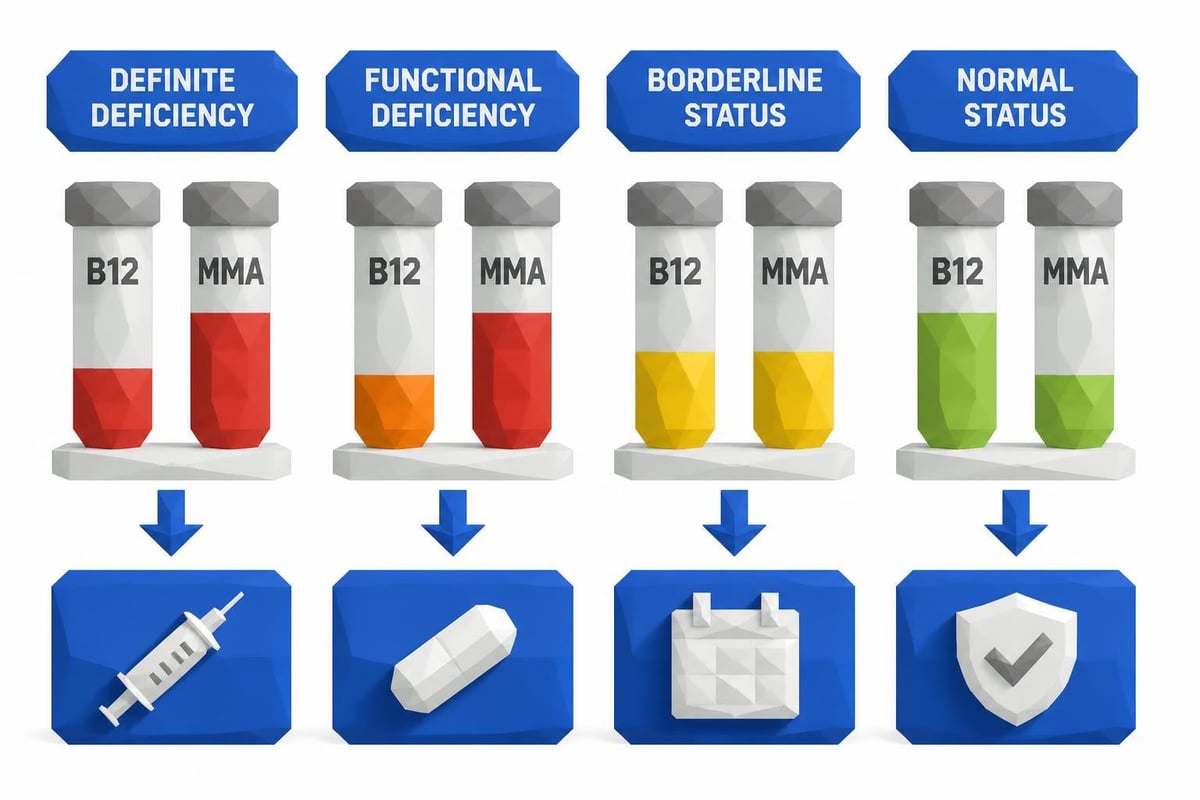
Elevated MMA with borderline B12 strongly suggests functional deficiency at the tissue level, even though serum B12 hasn't fallen to clearly deficient levels. This combination warrants treatment in most cases.
Normal MMA with borderline B12 suggests adequate tissue B12 status, though continued monitoring remains important for metformin users.
Combined Test Interpretation
| Total B12 | MMA Level | Interpretation | Action |
|---|---|---|---|
| <200 pg/mL | Any | Deficient | Treat |
| 200-400 pg/mL | Elevated | Functional deficiency | Treat |
| 200-400 pg/mL | Normal | Likely adequate | Monitor closely |
| >400 pg/mL | Normal | Normal | Routine monitoring |
| >400 pg/mL | Elevated | Possible early deficiency or other cause | Investigate further |
Managing B12 Deficiency Without Stopping Metformin
Metformin remains a cornerstone diabetes medication with proven cardiovascular benefits and decades of safety data. Finding low B12 levels does not mean metformin therapy must end.
Supplementation Strategies
Oral B12 supplementation works effectively for most metformin-induced deficiency cases:
- Typical doses range from 1,000 to 2,000 mcg daily
- High doses overcome absorption interference
- Sublingual and oral forms show similar effectiveness
- Over-the-counter supplements are widely available and affordable
Injectable B12 becomes necessary only when:
- Oral supplementation fails to restore levels
- Severe neurological symptoms are present
- Absorption is compromised by multiple factors
- Rapid repletion is medically necessary
Monitoring Response to Treatment
After starting B12 supplementation, retest levels in 2-3 months to confirm response. Most patients see significant improvement within this timeframe. If levels remain low despite adequate supplementation, investigate other potential causes of deficiency.
Comprehensive Diabetes Management
Recommended Panel
Comprehensive Diabetes Panel
This panel detects diabetes and prediabetes at every stage. Includes lipids because diabetes dramatically increases heart disease risk.
Includes 10 biomarkers
$35
Fasting required
B12 monitoring represents just one aspect of thorough diabetes care. Regular comprehensive testing helps identify multiple potential complications and metabolic changes early. Integrated monitoring approaches catch problems before they become symptomatic or irreversible.
Accessing B12 Testing Conveniently
Getting tested for B12 deficiency doesn't require extensive delays or insurance authorization. Understanding your testing options helps you take proactive steps toward health monitoring.
Direct-Access Laboratory Testing
Services offering lab tests without insurance requirements provide an accessible pathway for metformin users who want regular B12 monitoring. Direct ordering eliminates several common barriers:
- No insurance pre-authorization delays
- No requirement for doctor referrals
- Transparent, affordable pricing
- Quick results turnaround
This approach particularly benefits patients whose healthcare providers may not routinely order B12 screening or those managing diabetes independently with direct primary care arrangements.
Test Selection and Ordering
When ordering a metformin b12 deficiency test, consider starting with total B12 as a screening measure. If results come back in the borderline range (200-400 pg/mL), order MMA testing to clarify your true deficiency status. Many people find it helpful to browse available lab tests to understand their options before ordering.
Understanding Your Results
After receiving test results, take time to review them carefully. Resources on understanding lab results can help you interpret what the numbers mean for your health. While reviewing results independently provides valuable insight, discussing findings with your healthcare provider ensures comprehensive interpretation within your full clinical context.
Cost Considerations for B12 Testing
Financial concerns shouldn't prevent necessary health monitoring. B12 testing remains relatively affordable, especially compared to the potential costs of treating advanced deficiency complications.
Typical Testing Costs
Without insurance, expect these approximate ranges for B12-related tests:
- Serum B12: $25-$60
- MMA: $80-$150
- Complete deficiency panel (B12 + MMA + homocysteine): $120-$200
Transparent lab test pricing helps you budget for regular monitoring without surprise bills. Many people find that annual B12 testing costs less than a single month of some prescription medications.
Health Savings Account Eligibility
B12 testing typically qualifies as an eligible expense for Health Savings Accounts (HSA) and Flexible Spending Accounts (FSA), allowing you to use pre-tax dollars for monitoring. This reduces the effective cost significantly for those with these accounts.
Preventing B12 Deficiency in Metformin Users
While testing identifies existing deficiency, prevention strategies can reduce risk in the first place.
Dietary Optimization
B12 occurs naturally only in animal products, so metformin users should ensure adequate intake through:
- Meat and poultry: Beef liver contains exceptionally high B12 concentrations
- Fish and seafood: Salmon, trout, and shellfish provide excellent sources
- Dairy products: Milk, yogurt, and cheese contribute meaningful amounts
- Eggs: Particularly the yolks contain concentrated B12
- Fortified foods: Plant-based milk, cereals, and nutritional yeast offer options for vegetarians
Even with good dietary intake, metformin's absorption interference may overcome dietary measures alone, making testing still important.
Proactive Supplementation
Some healthcare providers recommend starting low-dose B12 supplementation (500-1,000 mcg daily) when initiating long-term metformin therapy rather than waiting for deficiency to develop. This preventive approach has minimal risk since B12 is water-soluble and excess amounts are excreted.
Regular Monitoring Schedule
Establishing a consistent testing routine prevents deficiency from progressing to symptomatic stages. Mark your calendar for annual B12 testing after reaching three years of continuous metformin use. Earlier testing makes sense if you have additional risk factors.
Special Populations Requiring Extra Attention
Certain groups face compounded risks when taking metformin and need particularly vigilant B12 monitoring.
Older Adults
Age-related reduction in stomach acid production already impairs B12 absorption in many people over 60. Adding metformin creates dual risk. Older adults may also attribute deficiency symptoms to normal aging rather than recognizing them as treatable conditions.
Chronic Kidney Disease Patients
People with diabetes and CKD face complex medication management. Metformin dosing requires adjustment in kidney disease, but remains valuable for many patients. The combination of kidney disease and metformin may accelerate B12 depletion through multiple mechanisms.
Vegetarians and Vegans
Plant-based diets provide negligible B12, creating baseline deficiency risk. When combined with metformin use for diabetes management, these patients need especially careful monitoring and likely benefit from routine supplementation rather than testing-and-treating approach.
Post-Surgical Patients
Any gastric surgery (including bariatric procedures) drastically reduces intrinsic factor production and alters absorption. Metformin adds another layer of absorption impairment. These patients often require injectable B12 regardless of metformin use.
The Role of Healthcare Provider Collaboration
While direct-access testing provides convenient monitoring, working collaboratively with healthcare providers ensures comprehensive diabetes management.
When to Contact Your Provider
Reach out to your healthcare team when:
- B12 levels fall below 400 pg/mL
- MMA testing shows elevation
- Neurological symptoms develop or worsen
- You're considering starting B12 supplementation
- Previous supplementation hasn't improved levels
Sharing Test Results
If you obtain testing through direct-access services, share results with your provider. This information helps them make informed decisions about your overall treatment plan and adjust other therapies as needed. Many providers appreciate engaged patients who take initiative in monitoring their health.
Integrated Care Approach
Your provider can evaluate whether symptoms result from B12 deficiency, diabetic neuropathy, or both. They can also assess whether any medication adjustments make sense, review your diabetes control comprehensively, and coordinate care with specialists if needed.
Related reading


Metformin users face a significant but manageable risk of B12 deficiency that requires awareness and proactive monitoring. Regular testing with appropriate follow-up ensures this valuable diabetes medication continues providing benefits without allowing preventable neurological complications to develop. Justlabs makes it simple to order B12 and MMA testing online at transparent prices, with results delivered in 1-3 days, giving you the tools to monitor your health conveniently between regular medical appointments.
References
Chapman LE, Darling AL, Brown JE. Association between metformin and vitamin B(12) deficiency in patients with type 2 diabetes: A systematic review and meta-analysis. Diabetes Metab. 2016 Nov;42(5):316-327. doi: 10.1016/j.diabet.2016.03.008. PMID: 27130885. https://pubmed.ncbi.nlm.nih.gov/27130885/
Khattab R, Albannawi M, Alhajjmohammed D, Alkubaish Z, Althani R, Altheeb L, Ayoub H, Mutwalli H, Altuwajiry H, Al-Sheikh R, Purayidathil T, Abuzaid O. Metformin-Induced Vitamin B12 Deficiency among Type 2 Diabetes Mellitus' Patients: A Systematic Review. Curr Diabetes Rev. 2023;19(4):e180422203716. doi: 10.2174/1573399818666220418080959. PMID: 35440313. https://pubmed.ncbi.nlm.nih.gov/35440313/
Green R, Allen LH, Bjørke-Monsen AL, Brito A, Guéant JL, Miller JW, Molloy AM, Nexo E, Stabler S, Toh BH, Ueland PM, Yajnik C. Vitamin B(12) deficiency. Nat Rev Dis Primers. 2017 Jun 29;3:17040. doi: 10.1038/nrdp.2017.40. PMID: 28660890. https://pubmed.ncbi.nlm.nih.gov/28660890/
Stabler SP. Clinical practice. Vitamin B12 deficiency. N Engl J Med. 2013 Jan 10;368(2):149-60. doi: 10.1056/NEJMcp1113996. PMID: 23301732. https://pubmed.ncbi.nlm.nih.gov/23301732/
Wang H, Li L, Qin LL, Song Y, Vidal-Alaball J, Liu TH. Oral vitamin B(12) versus intramuscular vitamin B(12) for vitamin B(12) deficiency. Cochrane Database Syst Rev. 2018 Mar 15;3(3):CD004655. doi: 10.1002/14651858.CD004655.pub3. PMID: 29543316. https://pubmed.ncbi.nlm.nih.gov/29543316/
Pratama S, Lauren BC, Wisnu W. The efficacy of vitamin B(12) supplementation for treating vitamin B(12) deficiency and peripheral neuropathy in metformin-treated type 2 diabetes mellitus patients: A systematic review. Diabetes Metab Syndr. 2022 Oct;16(10):102634. doi: 10.1016/j.dsx.2022.102634. PMID: 36240684. https://pubmed.ncbi.nlm.nih.gov/36240684/