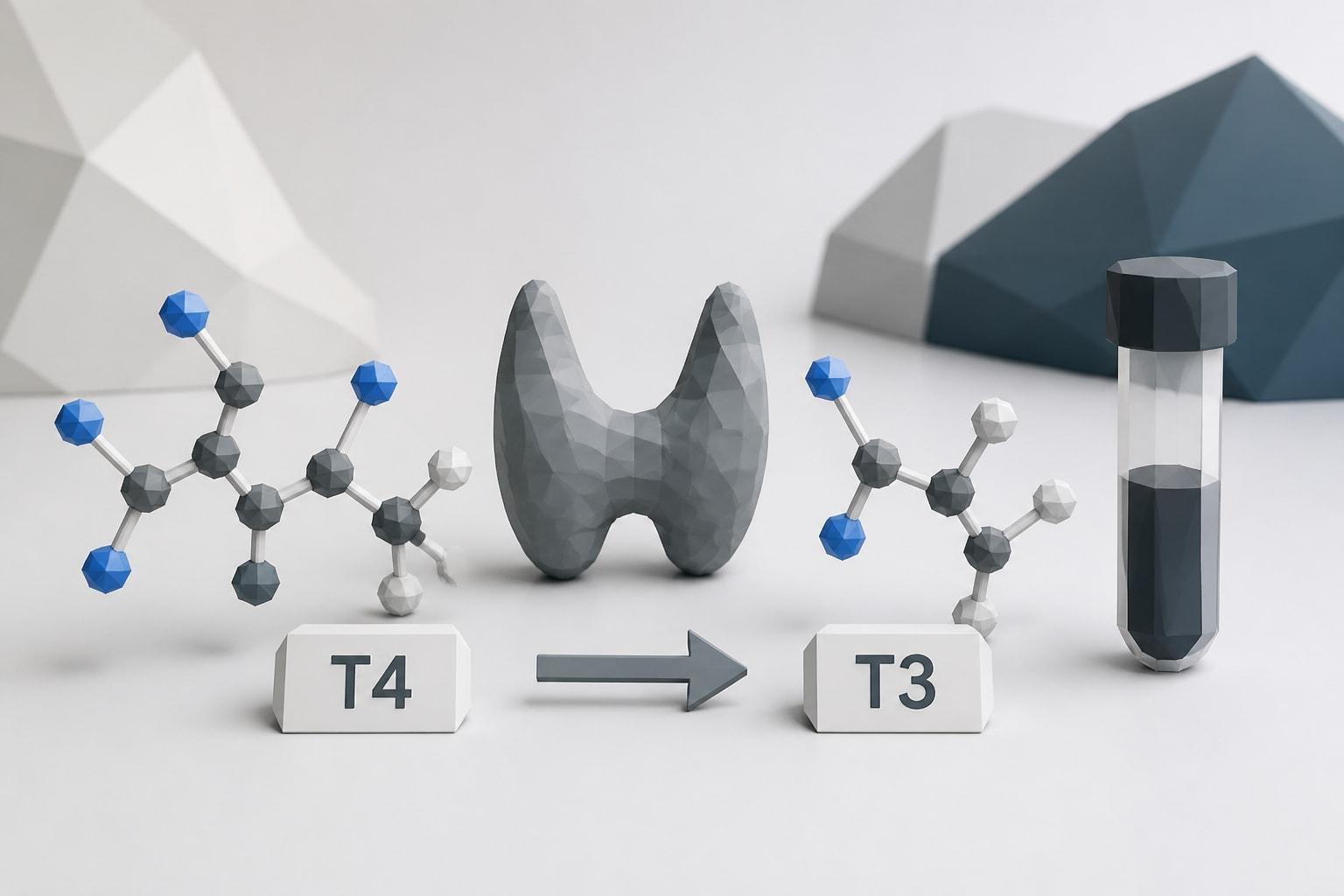
T3 and T4 are the two main hormones made by your thyroid gland: T4 (thyroxine) is the stored, less active form, and T3 (triiodothyronine) is the active form that your cells actually use. In a T3 vs T4 comparison, T4 is produced in larger amounts and converts into T3 in the body, so a lab report usually reads them together with TSH to show whether your thyroid is underactive, overactive, or normal.
Big picture
- What they are: T4 is the main hormone the thyroid releases. T3 is the more potent hormone that T4 becomes in the liver, kidneys, and other tissues.
- Why it matters: Together they set your metabolic pace, influencing heart rate, body temperature, energy, weight, and mood.
- Who it affects: Adults with unexplained fatigue, weight changes, feeling too hot or cold, heart palpitations, or a family history of thyroid disease.
- How labs read them: TSH is typically checked first. Free T4 and free T3 clarify what TSH suggests.
- Next step: If you have symptoms but no prior results, start with a TSH test and add free T4 and free T3 if the TSH is outside the reference range.
What the thyroid gland does and how T3 and T4 fit in
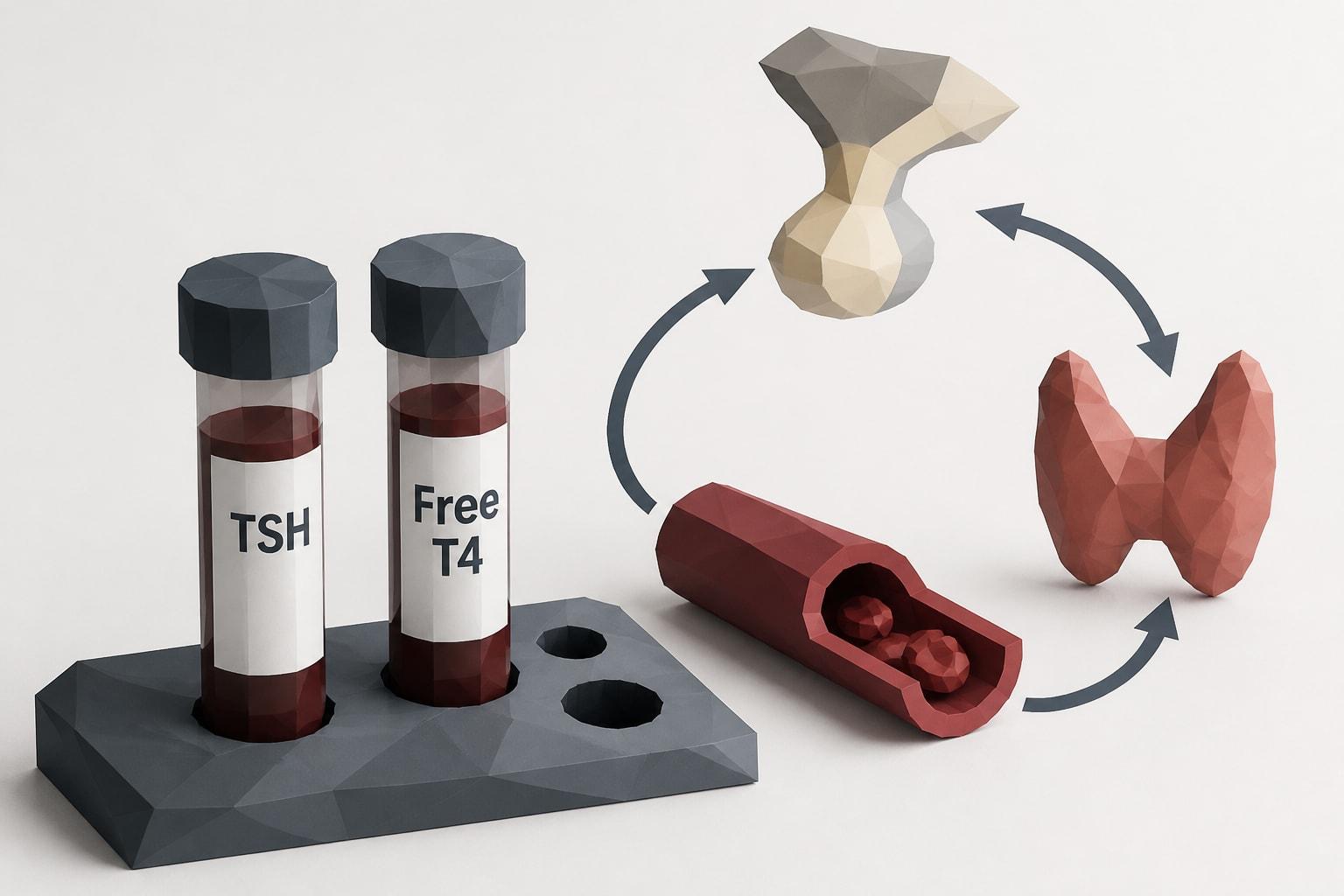
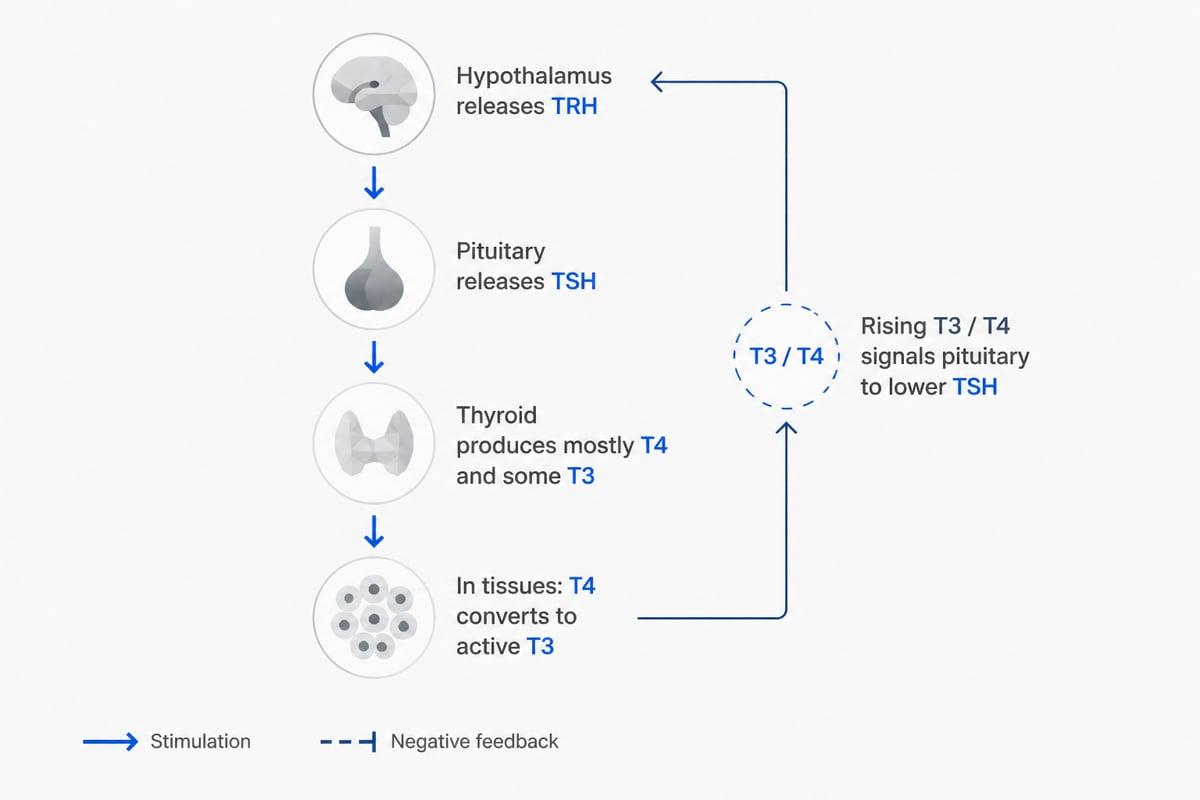
The thyroid gland is a butterfly-shaped organ at the base of the neck that produces hormones controlling the speed of your metabolism. It releases mostly T4 and a smaller share of T3, and the pituitary gland adjusts that output by sending thyroid-stimulating hormone (TSH).
Think of T4 as a reserve supply. It circulates in the blood for days and is converted into T3 as tissues need it. T3 binds to receptors inside cells and does the actual work: regulating how quickly cells burn energy, how fast the heart beats, and how the digestive tract moves. The Merck Manual's overview of thyroid function describes this relationship and the patterns seen in different thyroid conditions.
T3 vs T4: the core differences
T3 is faster and stronger, while T4 is longer-lasting and more abundant. Understanding these differences explains why labs order them the way they do.
| Feature | T4 (Thyroxine) | T3 (Triiodothyronine) |
|---|---|---|
| Role | Storage and transport form | Active hormone |
| Amount produced by thyroid | Larger share | Smaller share |
| Potency | Lower | Several times higher |
| Half-life in blood | Longer | Shorter |
| Main source | Thyroid gland | Mostly converted from T4 in tissues |
| Typical use in testing | Confirms underactive or overactive thyroid | Helps identify overactive thyroid and conversion problems |
Because T4 lasts longer, free T4 tends to be a steadier marker. T3 fluctuates more and can stay normal in early hypothyroidism, since the body often preserves T3 even as T4 falls. In hyperthyroidism, T3 sometimes rises before T4 does.
Free vs total: which version of T3 and T4 matters
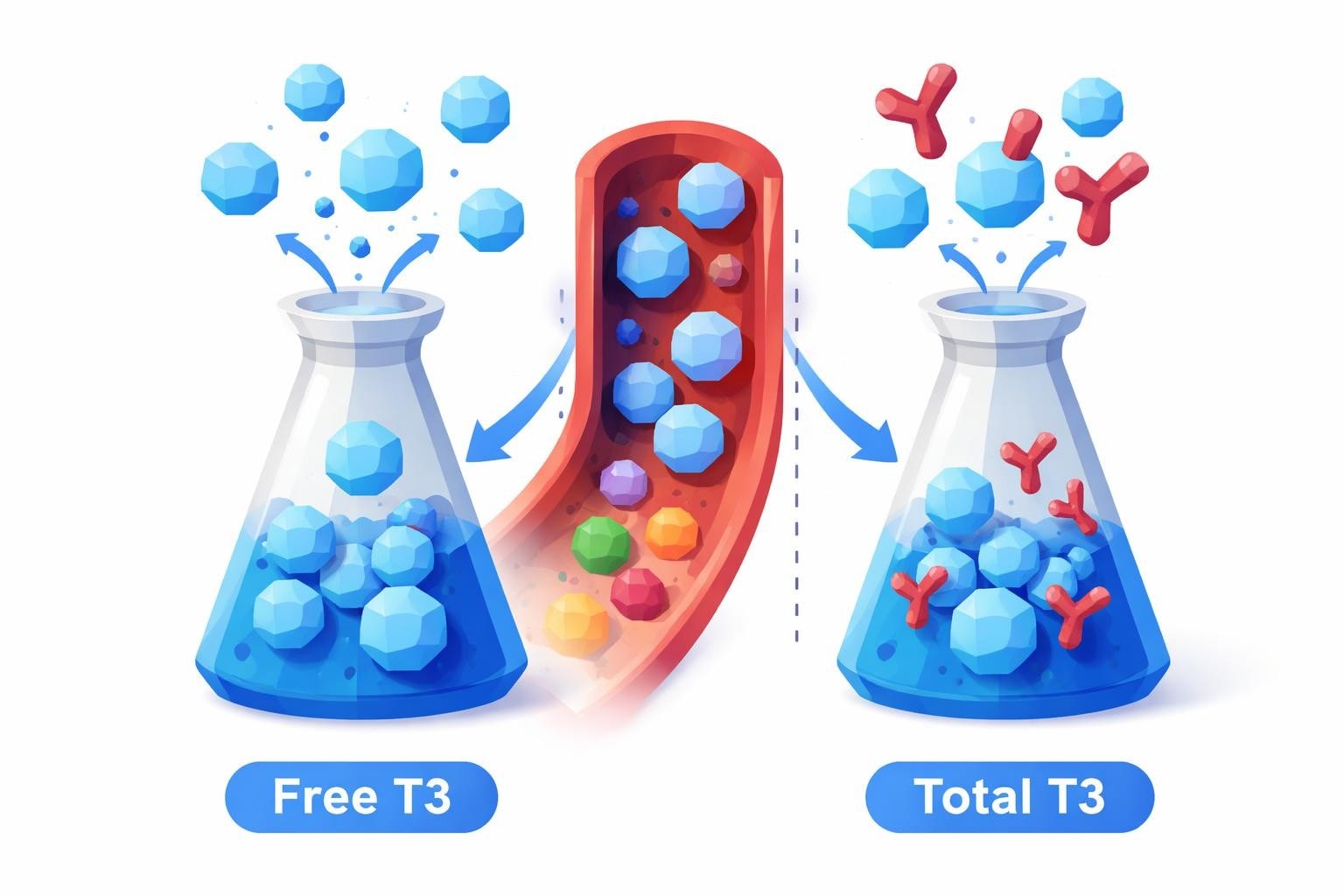
Free T3 and free T4 measure the hormone that is unattached to proteins and available to your cells, while total T3 and total T4 include hormone bound to carrier proteins. Most of each hormone travels bound to proteins, so total values can shift when protein levels change, even if your thyroid function is unchanged. This guide to free T3 vs total T3 explains when each version is the right order.
Common situations that change binding proteins include pregnancy, estrogen-containing medications, and certain liver or kidney conditions. For that reason, free T4 and free T3 are generally preferred for routine screening in adults. Total T3 and total T4 are still reported by some labs and can be useful in specific contexts.
What do normal T3 and T4 results look like?
Cleveland Clinic lists general reference ranges of 0.3 to 4.0 mIU/L for TSH, 2.3 to 4.1 pg/mL for free T3, and 0.7 to 2.1 ng/dL for free T4, according to Cleveland Clinic. The same source notes that ranges vary by laboratory, so always compare your result to the range printed on your own report.
For total T3, MedlinePlus lists reference values of 78 to 158 ng/dL and free T3 values of 210 to 440 pg/dL, again noting that ranges can differ by laboratory and age. Units matter here. Free T3 reported in pg/dL and in pg/mL are not interchangeable, so check the units before judging a number.
Common result patterns
These patterns are general guides, not diagnoses. A clinician should interpret any abnormal result alongside symptoms and history.
- High TSH, low free T4: Suggests an underactive thyroid (hypothyroidism).
- Low TSH, high free T4 and/or free T3: Suggests an overactive thyroid (hyperthyroidism).
- Low TSH, normal free T4, high free T3: Can point to a T3-predominant form of overactivity.
- High TSH, normal free T4: Often described as subclinical hypothyroidism and usually rechecked over time.
What does a low TSH level indicate?
A low TSH level usually indicates that the thyroid is making too much hormone, a pattern associated with hyperthyroidism. The pituitary lowers TSH when it senses plenty of T3 and T4 in the blood. The National Institute of Diabetes and Digestive and Kidney Diseases notes that TSH is usually the first blood test used to assess thyroid function, with a high TSH most often suggesting hypothyroidism and a low TSH usually suggesting hyperthyroidism.
A low TSH does not always mean thyroid disease. Certain medications, recent illness, and pregnancy can lower it. If your TSH is low, free T4 and free T3 help confirm whether the thyroid is truly overproducing. For a closer look at how TSH and free T4 work together, see this breakdown of TSH vs free T4.
Thyroid tests at a glance
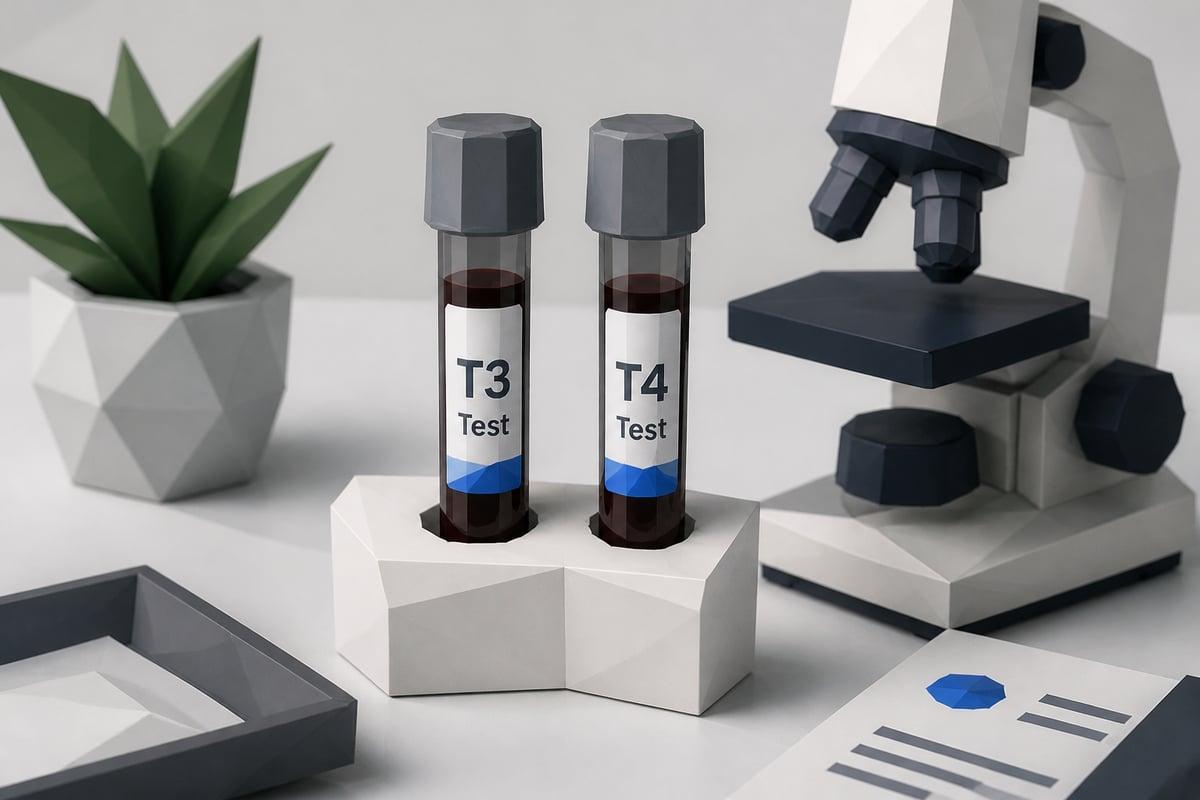
The table below shows what each test measures, when to order it, and whether fasting is required. Fasting is generally not needed for thyroid hormone tests, though some people schedule morning draws for consistency, and biotin supplements can interfere with results, so ask your lab about timing.
| Test | What it measures | When to order it | Fasting needed? |
|---|---|---|---|
| TSH | Pituitary signal telling the thyroid how much hormone to make | First-line screening for symptoms or routine monitoring | No |
| Free T4 | Unbound thyroxine available to tissues | After an abnormal TSH, or to track treatment | No |
| Free T3 | Unbound active hormone | When hyperthyroidism is suspected or TSH and T4 don't match symptoms | No |
| Reverse T3 | Inactive T3 variant | Specialized follow-up when conversion is a question | No |
| TPO and thyroglobulin antibodies | Autoimmune activity against the thyroid | When autoimmune thyroid disease is suspected | No |
Which one should I order?
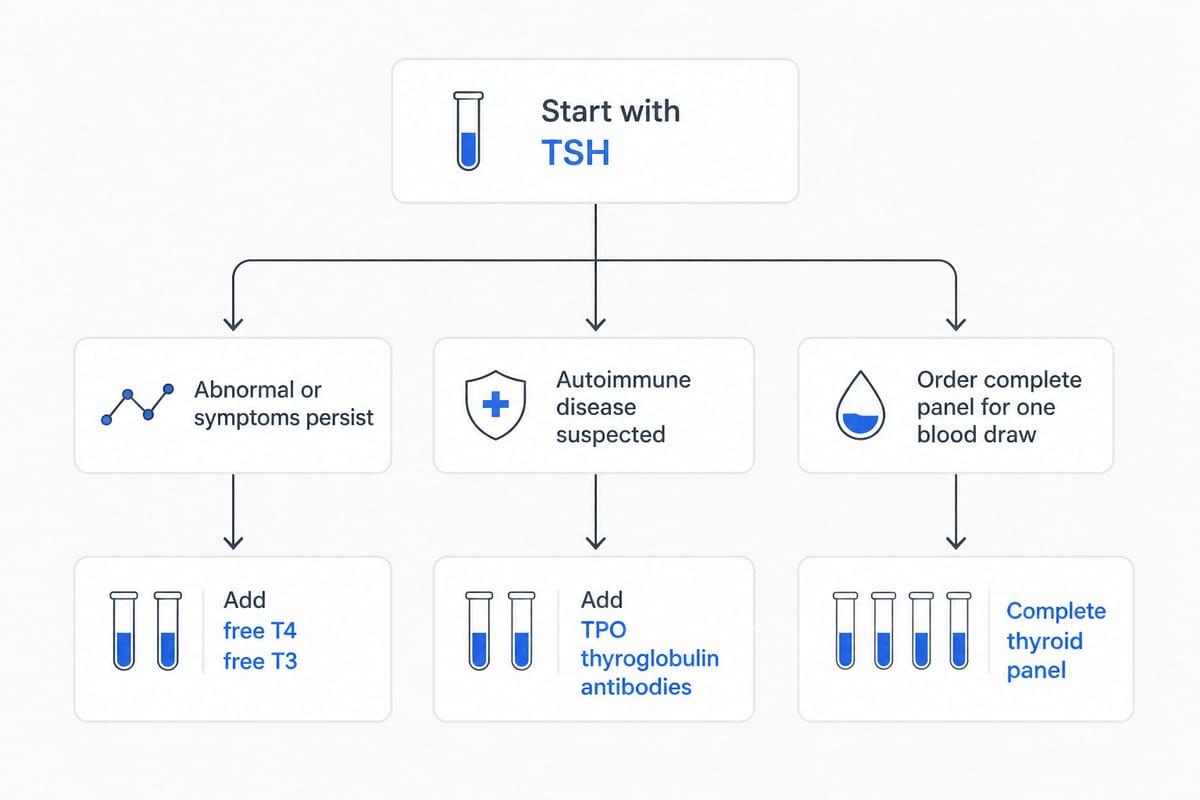
Order TSH first if you have no prior thyroid results and want a baseline. If TSH is outside the range, or your symptoms persist despite a normal TSH, add free T4 and free T3. Order a full panel up front if you want one draw to cover everything.
- Baseline check, no known thyroid history: The TSH Blood Test is the usual starting point.
- Abnormal TSH or lingering symptoms: Add free T4 and free T3 to see which hormone is driving the pattern.
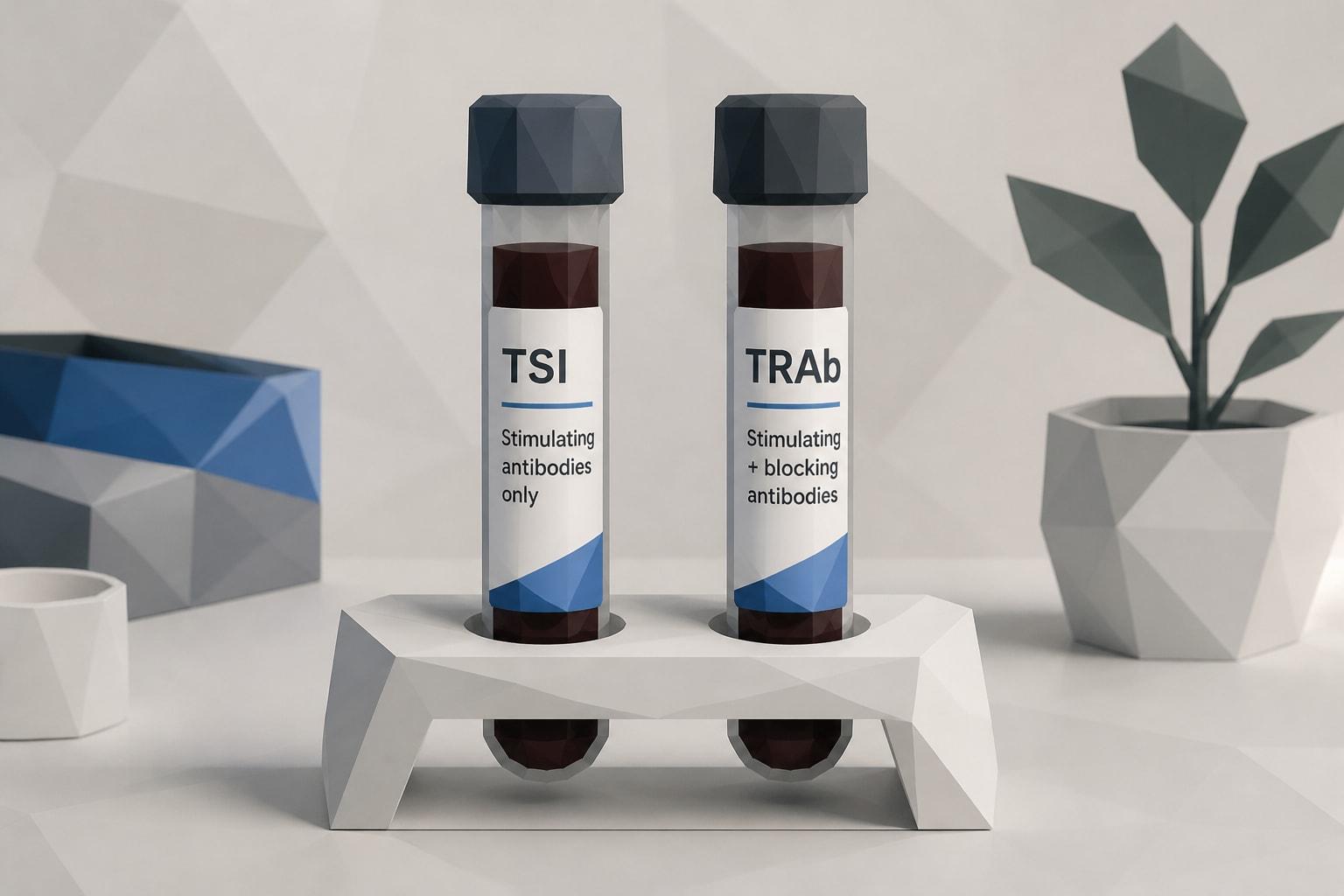
- Suspected autoimmune cause or family history of Hashimoto's or Graves' disease: Include thyroid antibodies.
- Wanting the complete picture in one order: A full panel avoids a second blood draw.
Recommended Test
TSH (Thyroid Stimulating Hormone)
The TSH test is the gold standard for evaluating thyroid function. It's the first test doctors order when thyroid problems are suspected.
Includes 1 biomarkers
$7.50
When you need both T3 and T4
You need both when TSH is abnormal and the cause is unclear, when symptoms don't match a normal TSH, or when a clinician is adjusting thyroid medication. Free T4 alone can miss an overactive thyroid driven mainly by T3, and free T3 alone can miss early underactivity. Reading both alongside TSH gives the clearest view.
Recommended Panel
Basic Thyroid Panel
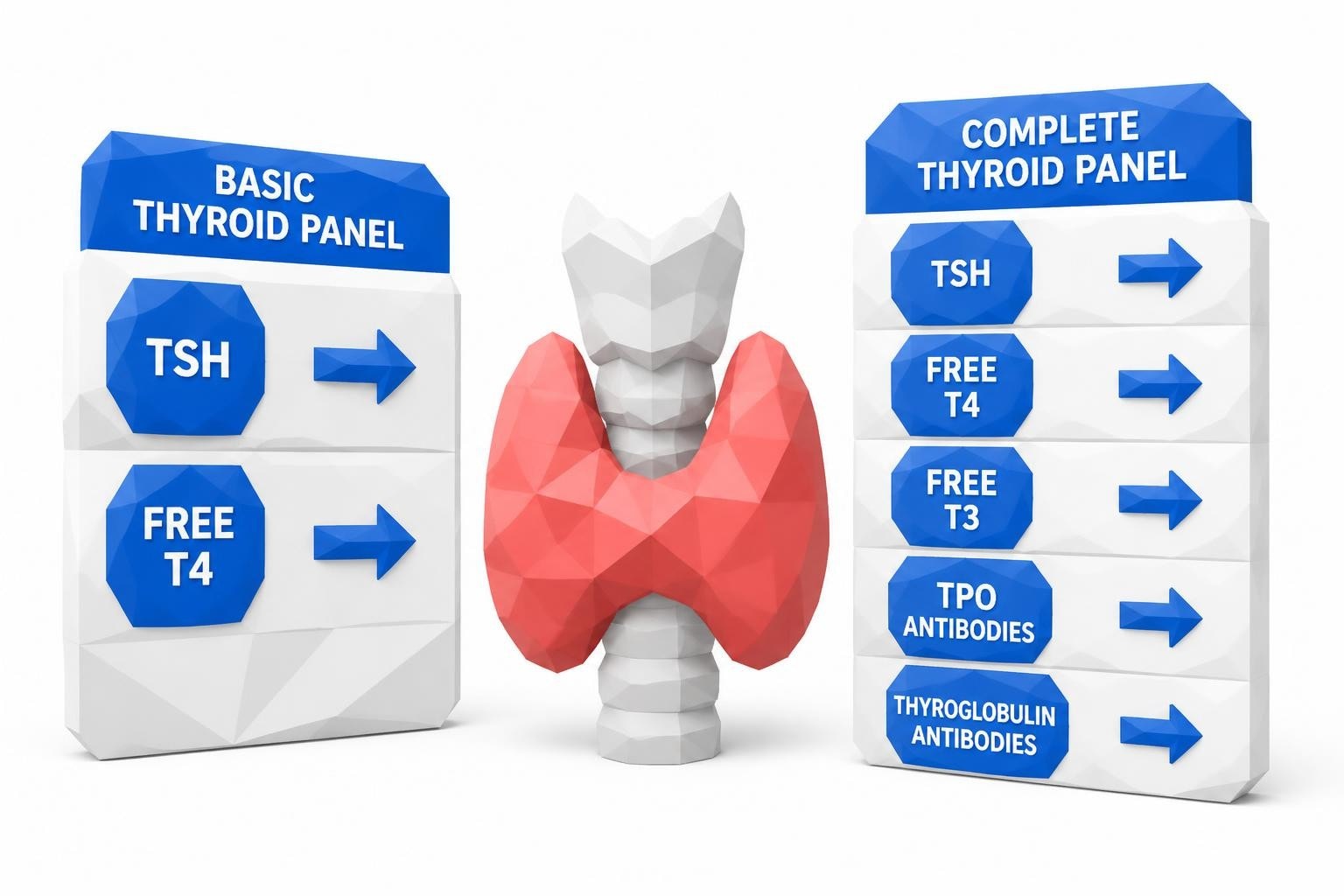
Save $2This panel includes the 3 essential thyroid markers: TSH, Free T4, and Free T3. The perfect starting point for evaluating thyroid function without unnecessary tests.
Includes 3 biomarkers
$27.80
If you are managing a thyroid condition under a doctor's care, bring your results to your prescriber. Treatment decisions, including medication changes, belong with a clinician, not with a home result.
Thyroid test options compared
Several at-home and self-order thyroid tests are available, and they differ mainly in which markers they include and how the sample is collected. Prices below are as listed in the sources available for this article and may change.
| Option | Markers included | Collection | Approx. price |
|---|---|---|---|
| Verisana Thyroid Test | TSH, free T3, free T4 | At-home kit, CLIA-certified lab, prepaid return shipping | Price not listed |
| Paloma Health Thyroid Test | TSH, free T3, free T4, TPO antibodies | At-home kit, physician-reviewed results, thyroid-specialist telehealth support | Price not listed |
| LetsGetChecked At-Home Thyroid Test | TSH, free T4, free T3, thyroglobulin and TPO antibodies | Finger-prick, results in about 2 to 5 days | About $119 |
| Everlywell Thyroid Test | TSH, free T3, free T4, TPO antibodies | Finger-prick, results in about 5 to 7 days | About $149 |
| JustLabs TSH Blood Test | TSH | Blood draw at a Quest Diagnostics location | $9 |
| JustLabs Complete Thyroid Panel | TSH, free T4, free T3, reverse T3, and both thyroid antibodies | Blood draw at a Quest Diagnostics location | $84 |
Verisana suits people who want the three core hormones without an antibody panel. Paloma Health fits those who want physician review and thyroid-specialist support alongside testing. LetsGetChecked offers a broader antibody panel with a 2 to 5 day turnaround, and Everlywell provides a straightforward panel with TPO antibodies and a 5 to 7 day turnaround.
The two JustLabs options differ in scope. The TSH test is a low-cost screen. The Complete Thyroid Panel includes five markers in one order: TSH, free T4, free T3, reverse T3, and both thyroid antibodies, so it covers the T3 vs T4 question and the autoimmune question together.
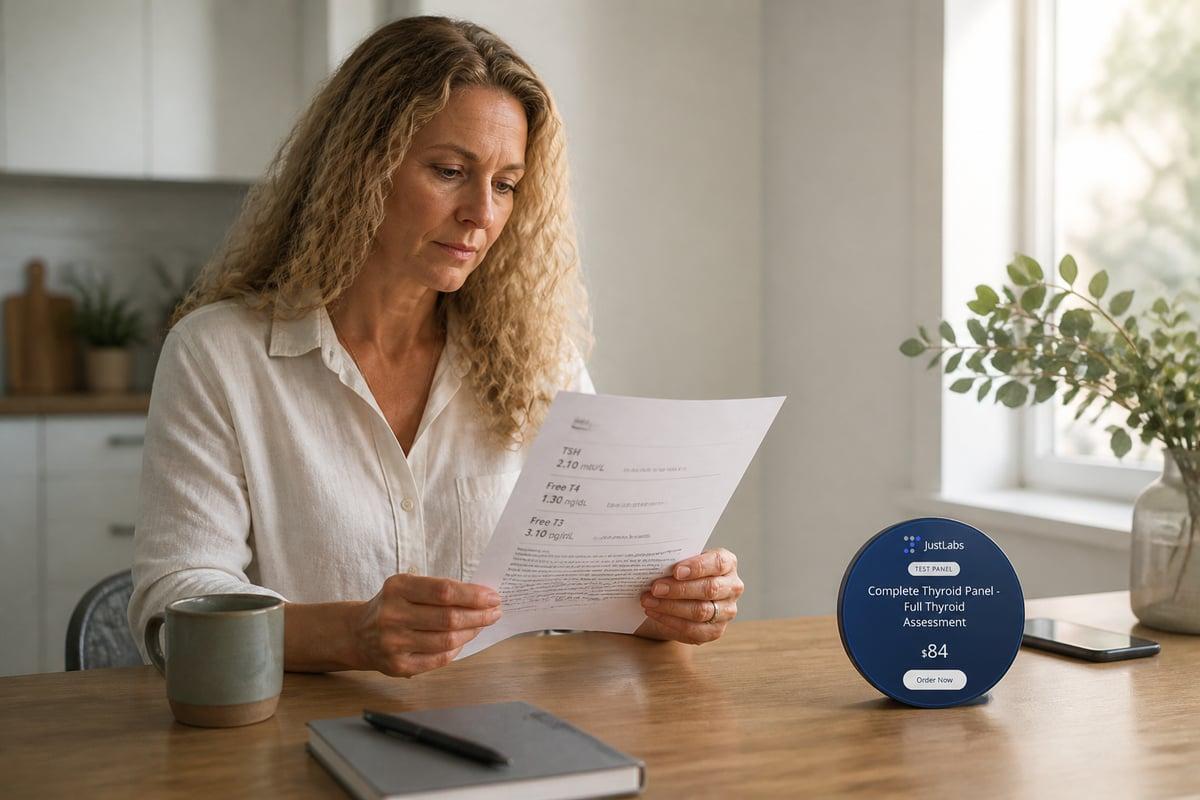
JustLabs tests are drawn at any of 2,200+ Quest Diagnostics locations, with results delivered online with values and reference ranges, generally within 1 to 3 business days. Pricing is cash and upfront, with no insurance or doctor visit required to order.
Recommended Panel
Complete Thyroid Panel
Save $3Our most comprehensive thyroid panel includes all 5 essential markers: TSH, Free T4, Free T3, Reverse T3, and both thyroid antibodies. Get the complete picture of your thyroid health.
Includes 6 biomarkers
$81.30
What are 5 foods to avoid for thyroid?
No food needs to be eliminated outright for most people, but a few can interfere with thyroid function or with thyroid medication and test accuracy. These are commonly discussed categories:
- Biotin supplements (not a food, but a frequent culprit): High-dose biotin can distort some thyroid lab results. Ask your lab how long to pause it before a draw.
- Very high-iodine foods and supplements: Kelp and seaweed products can contain large amounts of iodine, which may worsen some thyroid conditions.
- Soy in large amounts: Can reduce absorption of thyroid medication if taken at the same time.
- Raw cruciferous vegetables in very large quantities: Typical dietary amounts are generally fine, but extreme intake can affect iodine use.
- Calcium and iron supplements near medication time: These can bind to thyroid medication and reduce absorption.
If you take thyroid medication, discuss timing with your prescriber rather than changing your diet on your own.
Reverse T3 and thyroid antibodies: the context behind the numbers
Reverse T3 is an inactive form the body makes from T4, and it is usually considered only after the main markers raise a question about conversion. It is a specialized add-on, not a routine screen, and a high value does not diagnose anything by itself.
Antibodies add a different kind of information. Thyroid peroxidase (TPO) and thyroglobulin antibodies indicate whether the immune system is targeting the thyroid, which is the pattern in Hashimoto's disease. A person can have a normal TSH and still carry positive antibodies, which is why antibody testing is often paired with hormone testing when there is a family history. If you have other autoimmune concerns, a related read is this overview of what a positive ANA test can mean.
FAQ
What is the normal range for T3 uptake levels?
T3 uptake is a different test from free T3 or total T3. It measures how many binding sites on thyroid-binding proteins are open, and results are often reported as a percentage, commonly in a range near 24 to 39 percent, though this varies by lab. Because it is rarely used on its own today, check the range printed on your report, and consider free T4 and free T3 as the more direct measures.
Is T3 or T4 more important?
Neither is more important in isolation. T4 serves as the reservoir and T3 as the active hormone, so a healthy thyroid needs both, along with a normal TSH. Labs read them together.
Can T3 be normal when T4 is abnormal?
Yes. The body can preserve T3 by converting more T4 into T3, so T3 may stay in range while T4 drifts out of range, particularly in early underactive thyroid. This is one reason T4 and TSH are usually weighed first.
Do I need to fast for a T3 or T4 test?
No. Fasting is generally not required for thyroid hormone tests. Consistent timing, such as a morning draw, can help if you are tracking changes, and pausing biotin supplements beforehand is commonly advised.
How often should thyroid levels be rechecked?
Timing depends on your results and symptoms, and a clinician sets the schedule if you are on treatment. For general monitoring without a diagnosis, many people recheck when symptoms change or after an abnormal result.
Key takeaways
- T4 is the abundant storage hormone and T3 is the potent active hormone; labs read both with TSH.
- Free T4 and free T3 are generally preferred over total values for routine screening.
- A high TSH points toward an underactive thyroid and a low TSH toward an overactive one, but confirm with free T4 and free T3.
- Reference ranges differ by lab, so compare results to the range on your own report.
- Start with TSH for a baseline, add free T4 and free T3 when results or symptoms warrant, and use a full panel when you want one draw to cover everything.
- Thyroid medication decisions belong with a clinician, and anyone with urgent symptoms should seek medical care promptly.
Related reading
Start by deciding whether you want a baseline screen or the full picture, then check your last thyroid result (if you have one) so you can compare values on the same units. JustLabs lets you order the TSH Blood Test as a low-cost first check, or the Complete Thyroid Panel to cover TSH, free T4, free T3, reverse T3, and thyroid antibodies in one order. Results arrive online with reference ranges, generally within 1 to 3 business days, and you can browse the full list of tests to see which markers fit your situation. Check whether JustLabs serves your state before ordering.
References
Mullur R, Liu YY, Brent GA. Thyroid hormone regulation of metabolism. Physiol Rev. 2014 Apr;94(2):355-82. doi: 10.1152/physrev.00030.2013. PMID: 24692351. https://pubmed.ncbi.nlm.nih.gov/24692351/
Ortiga-Carvalho TM, Chiamolera MI, Pazos-Moura CC, Wondisford FE. Hypothalamus-Pituitary-Thyroid Axis. Compr Physiol. 2016 Jun 13;6(3):1387-428. doi: 10.1002/cphy.c150027. PMID: 27347897. https://pubmed.ncbi.nlm.nih.gov/27347897/
Welsh KJ, Soldin SJ. DIAGNOSIS OF ENDOCRINE DISEASE: How reliable are free thyroid and total T3 hormone assays?. Eur J Endocrinol. 2016 Dec;175(6):R255-R263. doi: 10.1530/EJE-16-0193. PMID: 27737898. https://pubmed.ncbi.nlm.nih.gov/27737898/
Favresse J, Burlacu MC, Maiter D, Gruson D. Interferences With Thyroid Function Immunoassays: Clinical Implications and Detection Algorithm. Endocr Rev. 2018 Oct 1;39(5):830-850. doi: 10.1210/er.2018-00119. PMID: 29982406. https://pubmed.ncbi.nlm.nih.gov/29982406/
Dhir G, Jain V, Merritt A. Thyroid Disorders. Prim Care. 2024 Sep;51(3):405-415. doi: 10.1016/j.pop.2024.04.001. PMID: 39067967. https://pubmed.ncbi.nlm.nih.gov/39067967/