When you visit your doctor with symptoms like fatigue, weight gain, or brain fog, they'll often order a thyroid panel. But here's the problem: most physicians automatically order Total T3 instead of Free T3, missing critical information about your actual thyroid function. Understanding the free t3 vs total t3 distinction isn't just academic-it can mean the difference between getting an accurate diagnosis and continuing to suffer with undetected thyroid dysfunction. The test your doctor orders matters more than you might think, and the wrong choice can leave you with normal-looking results while your cells remain starved for thyroid hormone.
What Free T3 and Total T3 Actually Measure
The fundamental difference between these two tests lies in what they're designed to detect in your bloodstream.
Total T3: The Complete Picture That Misses the Point
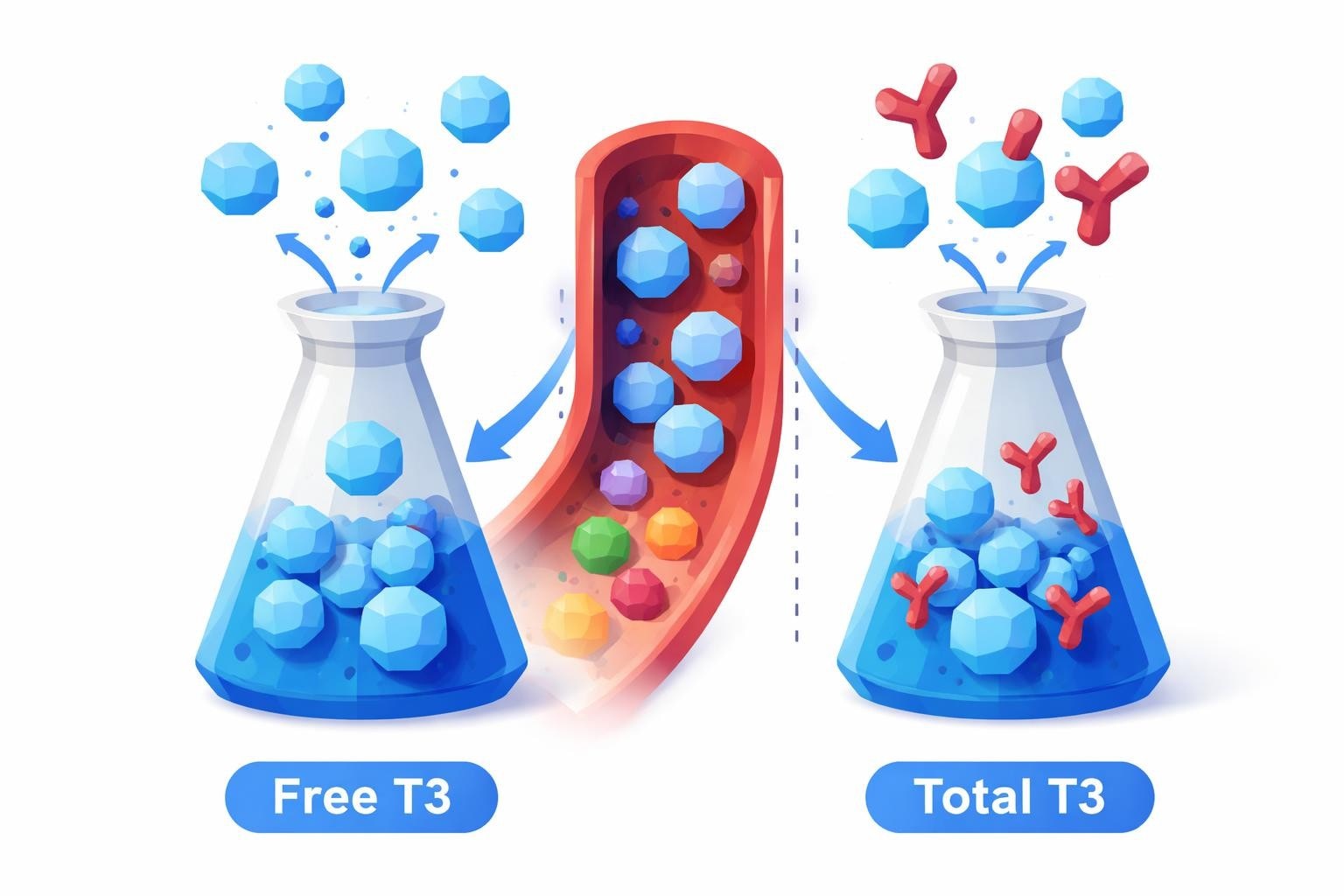
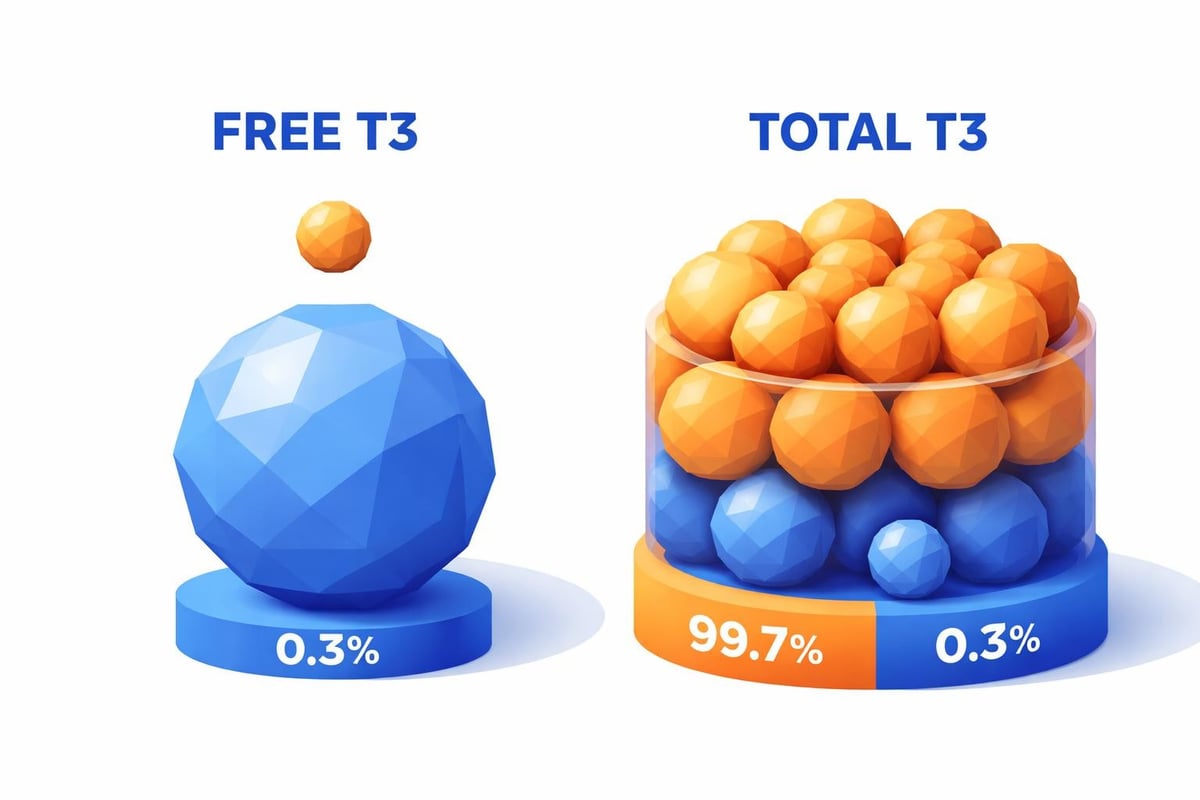
Total T3 measures all the triiodothyronine hormone in your blood, including both the bound and unbound forms. Approximately 99.7% of T3 in your bloodstream travels attached to carrier proteins like thyroxine-binding globulin (TBG), transthyretin, and albumin. Total T3 testing provides a combined measurement that reflects both the active and inactive forms of the hormone.
Think of it this way: Total T3 shows you how much money exists in your bank accounts, but doesn't tell you how much you can actually spend. The bound hormone is locked away, unavailable to your cells.
Free T3: The Active Hormone That Matters
Free T3 measures only the unbound, biologically active hormone-the tiny 0.3% fraction that can actually enter your cells and perform metabolic functions. This is the hormone that regulates your energy production, body temperature, heart rate, and countless other processes.
According to research on Free T3 measurement techniques, the free hormone correlates much more closely with thyroid status at the cellular level. When you need to order labs without a doctor, understanding this distinction helps you request the right test from the start.
Recommended Test
Free T3 (Triiodothyronine)
Free T3 measures the unbound, most active form of thyroid hormone. T3 is 3-4 times more potent than T4 and directly affects metabolism, heart rate, body temperature, and energy levels.
Includes 1 biomarkers
$14
Why Doctors Order the Wrong Test
Several factors contribute to physicians routinely ordering Total T3 when Free T3 would provide more valuable information.
Historical Practice Patterns
Total T3 testing was developed first and became the standard before Free T3 measurement technology improved. Many doctors continue ordering what they learned in medical school decades ago, even when better options exist. Medical education often lags behind current research by 10-15 years.
Insurance and Cost Considerations
Some insurance companies discourage Free T3 testing or reimburse it at lower rates. Physicians working within insurance networks face pressure to order the less expensive test, even when it's not the most clinically appropriate choice. This is where labs without insurance services can give you more control over which tests you receive.
Lack of Awareness About Binding Protein Issues
Many physicians don't fully appreciate how conditions that alter binding proteins can make Total T3 completely misleading. Pregnancy, birth control pills, hormone replacement therapy, liver disease, and certain medications all change TBG levels, which dramatically affects Total T3 without changing the actual amount of hormone available to cells.
| Condition | Effect on TBG | Total T3 Result | Free T3 Result |
|---|---|---|---|
| Pregnancy | Increases | Falsely high | Accurate |
| Birth control pills | Increases | Falsely high | Accurate |
| Liver disease | Decreases | Falsely low | Accurate |
| Testosterone therapy | Decreases | Falsely low | Accurate |
| Kidney disease | Decreases | Falsely low | Accurate |
When Total T3 Gives Misleading Results
Several common scenarios produce deceptive Total T3 values that mask thyroid dysfunction.
Estrogen and Binding Proteins
Women on birth control pills or hormone replacement therapy experience elevated TBG levels. This causes Total T3 to rise even though Free T3-the active hormone-remains unchanged or even decreases. A doctor relying on Total T3 might tell a patient her thyroid is "fine" or even "overactive" when she's actually hypothyroid at the cellular level.
The difference between measuring Free T3 and Total T3 becomes critically important for women taking hormonal medications.
Chronic Illness and Low T3 Syndrome
During severe illness, injury, or chronic stress, the body down-regulates thyroid hormone conversion as a protective mechanism. Free T3 drops significantly while Total T3 may appear only slightly decreased or even normal because of changes in binding proteins. Patients feel terrible, but Total T3 testing suggests their thyroid function is adequate.
Thyroid Replacement Therapy Monitoring
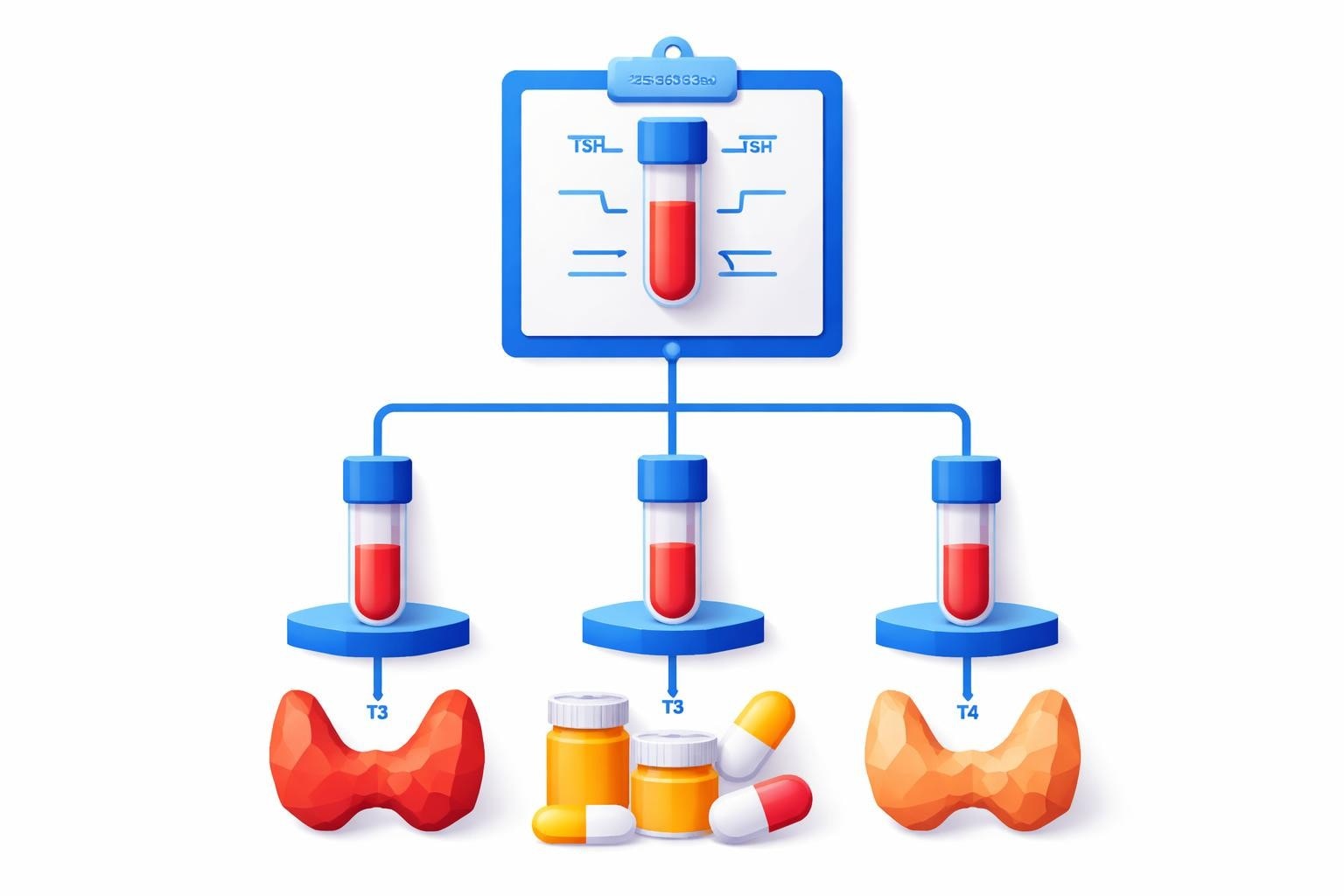
Patients taking thyroid medication need accurate monitoring to ensure proper dosing. Studies comparing Free T3 versus Total T3 in thyroid replacement therapy show that Free T3 provides much better information about whether the patient is receiving adequate hormone replacement.
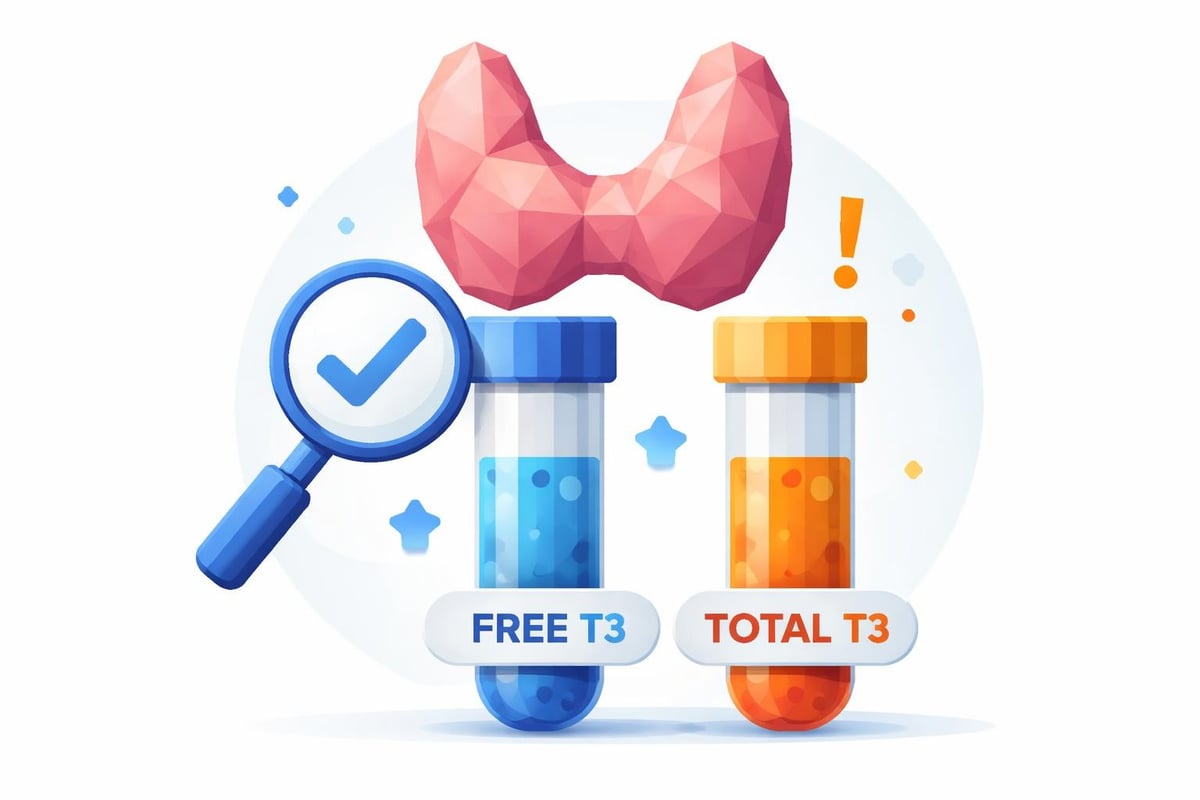
Total T3 can normalize with treatment while Free T3 remains low, leaving patients symptomatic despite "normal" lab results. This is particularly problematic for patients taking T3-containing medications or combination T4/T3 therapy.
The Clinical Advantages of Free T3 Testing
Free T3 offers several distinct benefits that make it the superior choice for most clinical situations.
Direct Assessment of Metabolic Activity
Free T3 directly reflects the hormone available to enter cells and activate nuclear receptors. This measurement correlates with actual metabolic rate, energy production, and symptom severity far better than Total T3. When you're trying to understand your lab results, Free T3 gives you information that actually relates to how you feel.
Independence from Binding Protein Fluctuations
Because Free T3 measures only unbound hormone, it remains accurate regardless of binding protein changes. This makes it reliable across different patient populations, health conditions, and medication regimens.
Better Detection of Conversion Issues
Many people have difficulty converting T4 (the storage form of thyroid hormone) into T3 (the active form). This conversion happens primarily in the liver and is affected by stress, inflammation, nutrient deficiencies, and genetics. Free T3 testing reveals these conversion problems that Total T3 might miss.
Consider these scenarios:
- Normal TSH, normal Free T4, low Free T3: Classic conversion problem
- Normal TSH, normal Free T4, normal Total T3, low Free T3: Binding protein issue masking true deficiency
- Optimal TSH, optimal Free T4, high Free T3: Possible overmedication or poor cellular uptake
Superior for Monitoring T3 Medication
Patients taking liothyronine (synthetic T3) or desiccated thyroid extract need Free T3 monitoring because these medications can dramatically affect total levels without necessarily improving the free, active hormone to optimal ranges. The comprehensive guide to thyroid function tests explains how different medications impact various measurements.
When Total T3 Still Has Value
Despite its limitations, Total T3 testing isn't completely without merit in specific situations.
Initial Screening for Hyperthyroidism
When hyperthyroidism (overactive thyroid) is suspected, Total T3 can serve as a reasonable screening tool because both bound and free fractions typically increase together in thyrotoxicosis. The guide to Total T3 measurements notes its utility in diagnosing conditions like Graves' disease or toxic nodular goiter.
However, even in hyperthyroidism, Free T3 remains more specific and less prone to false positives.
Research and Population Studies
Total T3 may be used in large-scale research studies where the goal is to assess overall thyroid hormone production across populations rather than individual cellular availability. The slightly lower cost and simpler methodology make it practical for studies involving thousands of participants.
Combined Testing Approach
Some practitioners order both tests to calculate the ratio of Free T3 to Total T3, which can provide information about binding protein status. While this approach offers additional data, it's generally more cost-effective to simply order Free T3 along with other thyroid markers like TSH and Free T4.
How to Get the Right Test Ordered
Taking control of your thyroid testing requires knowledge and sometimes advocacy.
Self-Ordering Options
The most direct approach is to order your own lab tests through services that don't require a doctor's prescription. This eliminates the barrier of physician preference or insurance limitations. You can specify exactly which tests you want, including Free T3, and receive results quickly without navigating the healthcare bureaucracy.
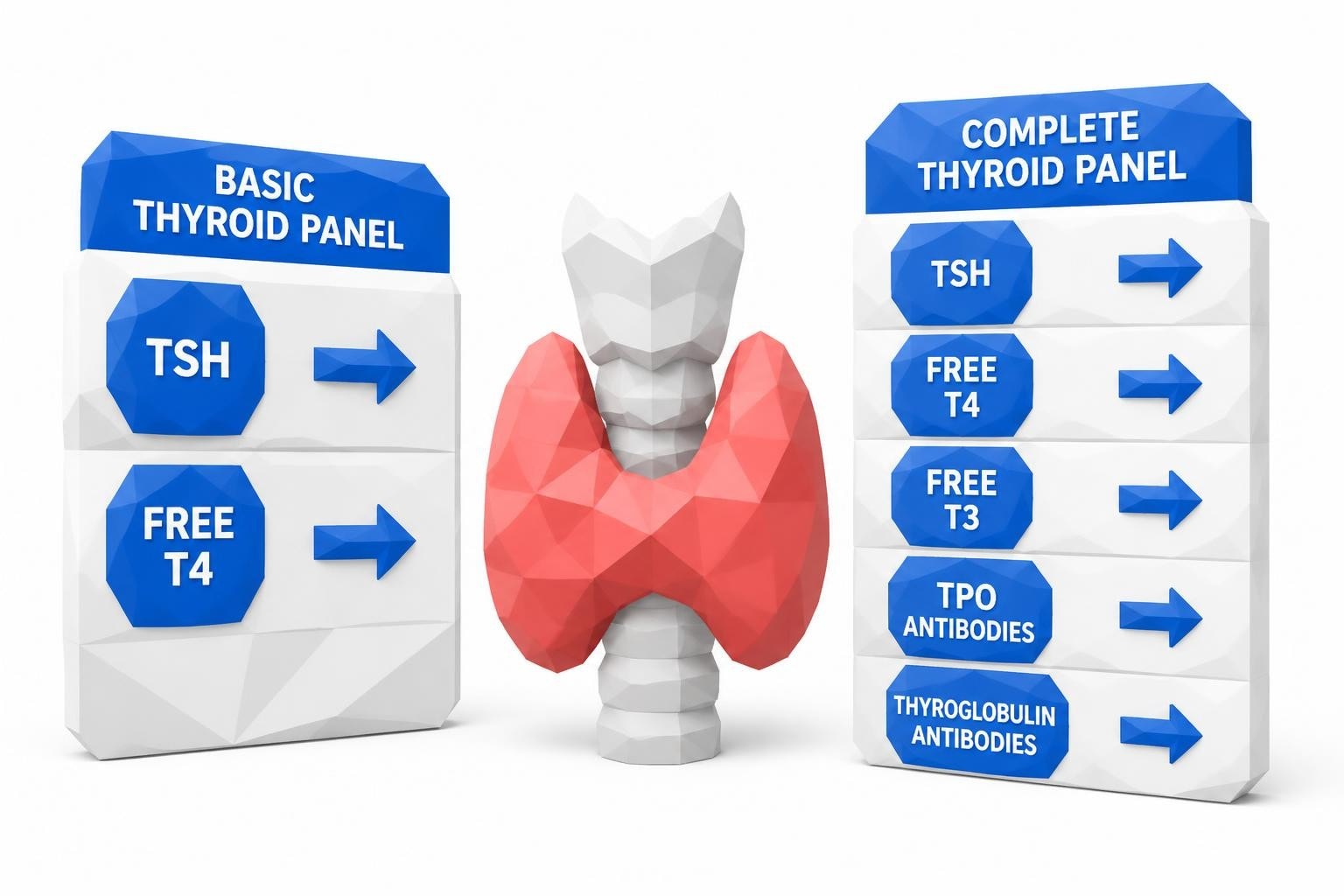
When reviewing available lab tests, look specifically for comprehensive thyroid panels that include Free T3 rather than settling for basic panels that only measure TSH and sometimes T4.
Recommended Panel
Complete Thyroid Panel
Save $3Our most comprehensive thyroid panel includes all 5 essential markers: TSH, Free T4, Free T3, Reverse T3, and both thyroid antibodies. Get the complete picture of your thyroid health.
Includes 6 biomarkers
$84
Advocating with Your Doctor
If you prefer to work through your physician, come prepared with specific requests:
- Explain your symptoms clearly: Document fatigue, weight changes, temperature sensitivity, hair loss, or other thyroid-related symptoms
- Request Free T3 specifically: Don't assume "T3" means Free T3-specify the exact test
- Bring research: Reference studies showing Free T3's superiority for your specific situation
- Mention binding protein concerns: If you take birth control, are pregnant, or have conditions affecting protein levels, explain why Total T3 would be unreliable
Understanding the Cost Difference
The price gap between free t3 vs total t3 testing has narrowed significantly in recent years. Many transparent lab test pricing services offer Free T3 at comparable or only slightly higher costs than Total T3, making the superior test accessible without financial burden.

Optimal Reference Ranges and Interpretation
Understanding what your Free T3 results mean requires knowing that reference ranges aren't the same as optimal ranges.
Standard Reference Ranges
Most laboratories report Free T3 reference ranges around 2.0-4.4 pg/mL (picograms per milliliter), though this varies slightly between labs. These ranges represent the middle 95% of the population-not necessarily the values associated with optimal health and symptom resolution.
Functional Medicine Perspectives
Many integrative and functional medicine practitioners aim for Free T3 levels in the upper third to upper half of the reference range for symptomatic patients. For example, with a reference range of 2.0-4.4 pg/mL, they target values around 3.5-4.2 pg/mL rather than accepting any value above 2.0 as "normal."
Individual Variation
Some people feel best at different points within the range. Factors affecting optimal Free T3 levels include:
- Age: Thyroid hormone needs often decrease slightly with age
- Activity level: Athletes and highly active individuals may need higher levels
- Stress: Chronic stress can increase thyroid hormone requirements
- Other hormones: Sex hormones, cortisol, and insulin interact with thyroid function
- Genetics: Variations in thyroid hormone receptor sensitivity affect optimal levels
The Complete Thyroid Testing Panel
Free T3 doesn't exist in isolation. Comprehensive thyroid assessment requires multiple measurements.
Essential Tests
A thorough thyroid evaluation should include:
- TSH (Thyroid Stimulating Hormone): Measures pituitary signaling to the thyroid gland
- Free T4: The storage form of thyroid hormone, most of which converts to T3
- Free T3: The active hormone, as discussed throughout this article
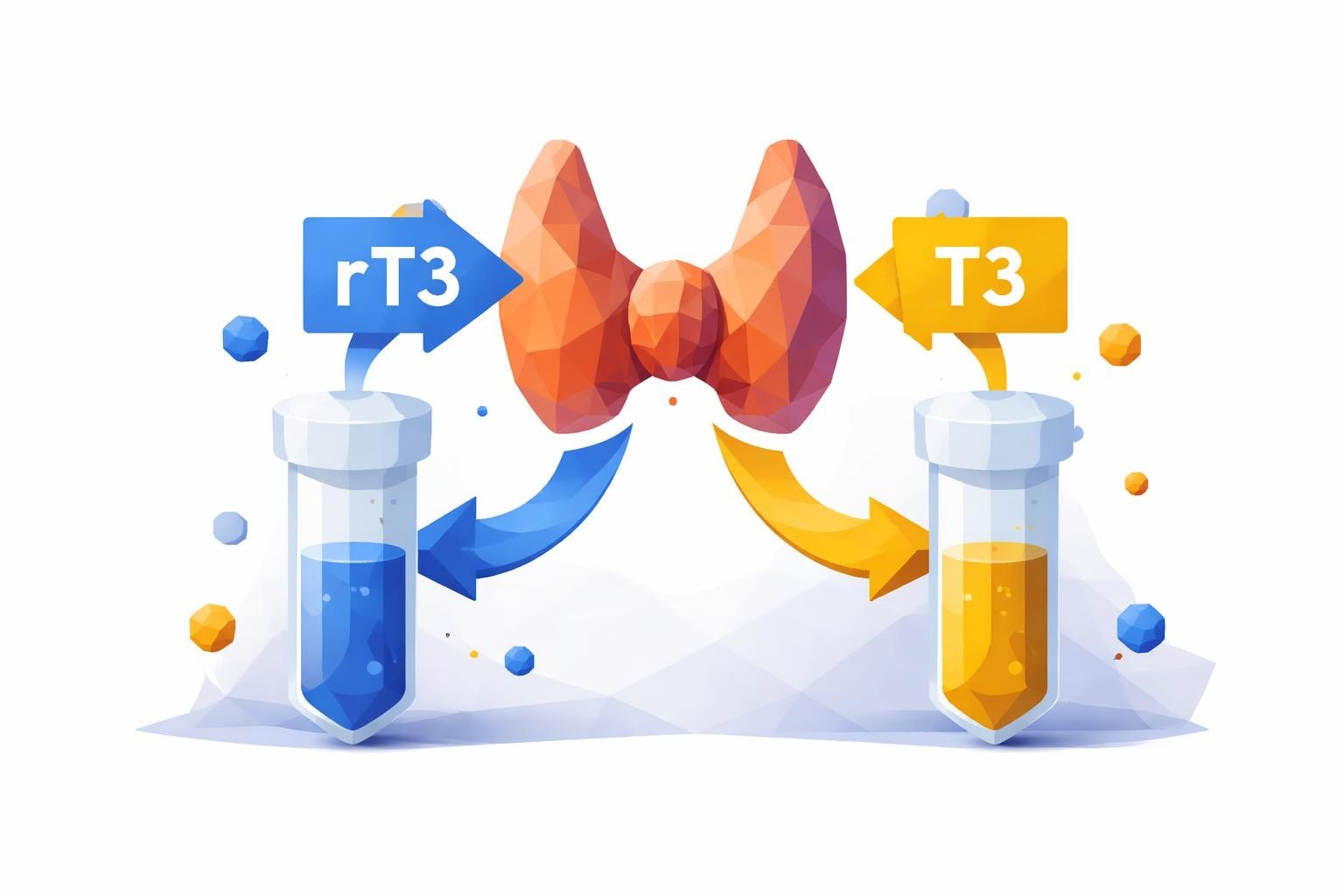
- Reverse T3: An inactive form that can block T3 receptors during stress or illness
- Thyroid antibodies: TPO and thyroglobulin antibodies detect autoimmune thyroid disease
The Free T3 to Reverse T3 Ratio
This calculation helps identify situations where the body is producing adequate thyroid hormone but shunting it into the inactive reverse T3 pathway rather than creating active Free T3. A ratio below 20 (using pg/mL for Free T3 and ng/dL for Reverse T3) suggests a conversion or utilization problem.
Pattern Recognition
Different combinations of results reveal specific problems:
| TSH | Free T4 | Free T3 | Likely Issue |
|---|---|---|---|
| High | Low | Low | Primary hypothyroidism |
| Normal/Low | High | Low | Conversion problem |
| Low | High | High | Hyperthyroidism or overmedication |
| Normal | Normal | Low | Subclinical T3 deficiency |
| High | Normal | Normal | Early hypothyroidism |
According to detailed Free T3 information, interpreting Free T3 alongside other thyroid markers provides much more diagnostic value than any single test alone.
Taking Action on Your Thyroid Health
Armed with knowledge about the free t3 vs total t3 distinction, you can make informed decisions about your thyroid testing and treatment.
The complexity of thyroid function-with its multiple hormones, conversion processes, and binding proteins-demands precise measurement. While Total T3 continues to be ordered out of habit, cost concerns, or simple lack of awareness, Free T3 provides the accurate picture of thyroid hormone activity that your symptoms and health deserve. Whether you choose to advocate for better testing through your physician or take the direct route through self-ordered labs, insist on measurements that actually reflect your cellular thyroid status. Your energy, metabolism, and overall wellbeing depend on getting this fundamental diagnostic choice right.
Understanding the critical differences between Free T3 and Total T3 empowers you to request the testing that actually reveals your thyroid function. Rather than accepting misleading Total T3 results that can mask genuine thyroid problems, you now know to insist on Free T3 measurement for accurate diagnosis and monitoring. Justlabs makes it simple to access the right thyroid tests without the barriers of insurance requirements or physician gatekeeping, delivering comprehensive results within 1-3 days so you can take control of your health with confidence.
Related Reading
References
Faix JD. Principles and pitfalls of free hormone measurements. Best Pract Res Clin Endocrinol Metab. 2013 Oct;27(5):631-45. doi: 10.1016/j.beem.2013.06.007. PMID: 24094635. https://pubmed.ncbi.nlm.nih.gov/24094635/
Thienpont LM, Van Uytfanghe K, Poppe K, Velkeniers B. Determination of free thyroid hormones. Best Pract Res Clin Endocrinol Metab. 2013 Oct;27(5):689-700. doi: 10.1016/j.beem.2013.05.012. PMID: 24094639. https://pubmed.ncbi.nlm.nih.gov/24094639/
Fliers E, Boelen A. An update on non-thyroidal illness syndrome. J Endocrinol Invest. 2021 Aug;44(8):1597-1607. doi: 10.1007/s40618-020-01482-4. PMID: 33320308. https://pubmed.ncbi.nlm.nih.gov/33320308/
Ortiga-Carvalho TM, Chiamolera MI, Pazos-Moura CC, Wondisford FE. Hypothalamus-Pituitary-Thyroid Axis. Compr Physiol. 2016 Jun 13;6(3):1387-428. doi: 10.1002/cphy.c150027. PMID: 27347897. https://pubmed.ncbi.nlm.nih.gov/27347897/