
Receiving an ana test positive result can feel alarming, especially when you're unsure what it means for your health. The antinuclear antibody (ANA) test is a screening tool used to detect autoimmune activity in your body, but a positive result doesn't automatically mean you have an autoimmune disease. Understanding what this test measures, why you might test positive, and what steps to take next can help you navigate this common laboratory finding with confidence. Whether you're managing symptoms or following up on routine screening, knowing how to interpret your results is essential for making informed health decisions.
What the ANA Test Actually Measures
The ANA test detects antibodies that your immune system produces against the components of your own cell nuclei. In a healthy immune system, antibodies target foreign invaders like bacteria and viruses. However, when you have an autoimmune condition, your body may produce antibodies that attack your own tissues.
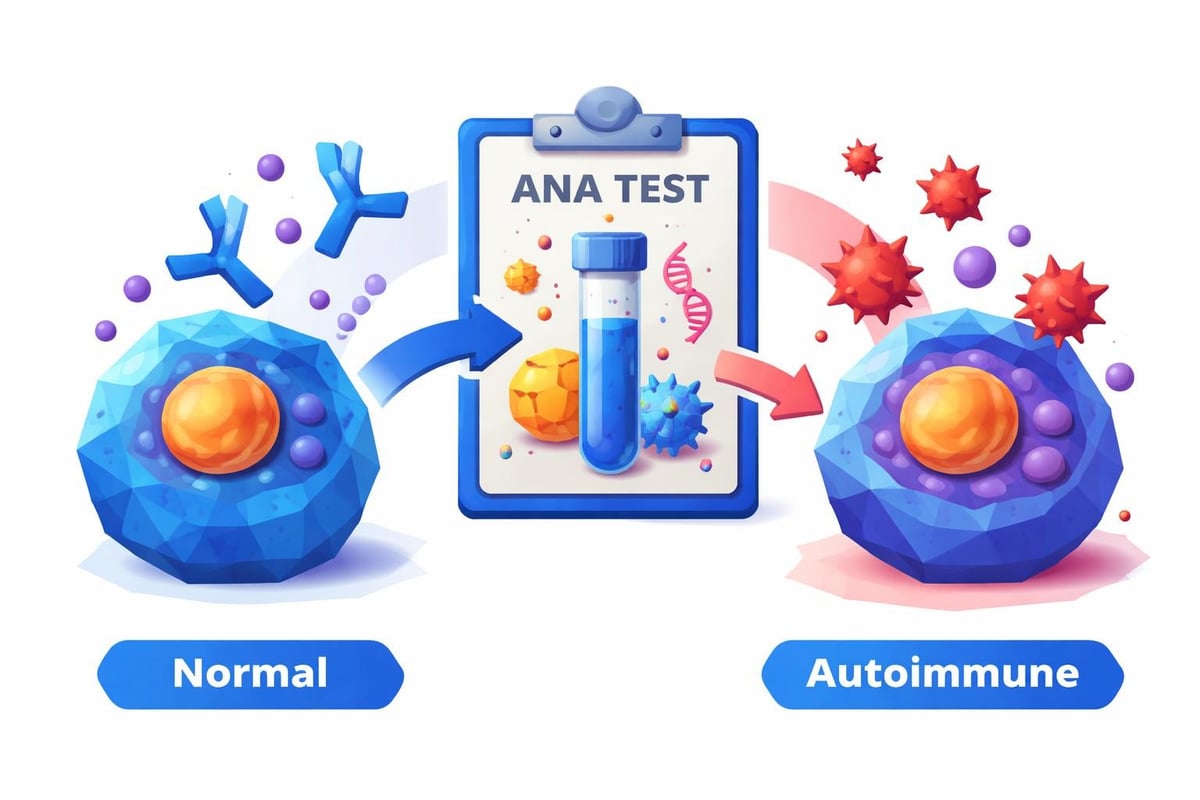
The test looks for several types of antibodies:
- Anti-DNA antibodies
- Anti-histone antibodies
- Anti-centromere antibodies
- Anti-nucleolar antibodies
- Anti-Ro and Anti-La antibodies
When laboratories perform an ANA test, they report results in two ways: positive or negative, and if positive, a titer level. The titer indicates how many times they can dilute your blood sample and still detect these antibodies. Common titers include 1:40, 1:80, 1:160, 1:320, and higher. According to MedlinePlus, higher titers generally suggest stronger autoimmune activity, though interpretation depends on your complete clinical picture.
Understanding Titer Levels and Patterns
The pattern your antibodies create under fluorescent microscopy provides additional diagnostic information. Different patterns correlate with different autoimmune conditions. A homogeneous pattern might suggest lupus or drug-induced lupus, while a speckled pattern appears in various conditions including Sjögren's syndrome and scleroderma.
| Titer Level | Clinical Significance | Follow-Up Recommended |
|---|---|---|
| 1:40 | Low positive; common in healthy individuals | Monitor symptoms |
| 1:80 | Borderline; may warrant further testing | Review clinical symptoms |
| 1:160 | Moderate positive; increased likelihood of autoimmune condition | Additional specific antibody tests |
| 1:320 or higher | High positive; stronger association with autoimmune disease | Comprehensive autoimmune panel |
Why You Might Get an ANA Test Positive Result
Many people receive an ana test positive result without having any autoimmune disease. Research shows that approximately 10-15% of healthy individuals test positive for ANA, with the percentage increasing with age. Women are more likely than men to have positive results, even without symptoms.
Common reasons for positive ANA tests include:
- Normal variation: Some people naturally produce low levels of antinuclear antibodies
- Age-related changes: The prevalence increases significantly after age 65
- Medications: Certain drugs can trigger temporary positive results
- Infections: Viral and bacterial infections may cause transient positivity
- Stress: Physical and emotional stress can influence immune function, as explored in this Healthline article on stress and ANA results
Conditions Associated with Positive ANA Results
While many positive results don't indicate disease, the ANA test serves as an important screening tool for autoimmune conditions. The Lupus Foundation of America emphasizes that while most people with lupus test positive for ANA, most people with positive ANA tests don't have lupus.
Autoimmune conditions commonly associated with positive ANA:
- Systemic lupus erythematosus (SLE)
- Sjögren's syndrome
- Scleroderma (systemic sclerosis)
- Mixed connective tissue disease
- Polymyositis and dermatomyositis
- Rheumatoid arthritis
- Autoimmune hepatitis
If you're experiencing symptoms like joint pain along with a positive result, Medical News Today discusses the connection between positive ANA and joint pain, which can help you understand the broader clinical context.
Recommended Test
ANA Screen with Reflex to Titer and Pattern
The gold standard ANA test — screens for antinuclear antibodies and automatically provides titer level and staining pattern if positive, giving you the most complete picture in one order.
Includes 3 biomarkers
$11
What Happens After an ANA Test Positive Result
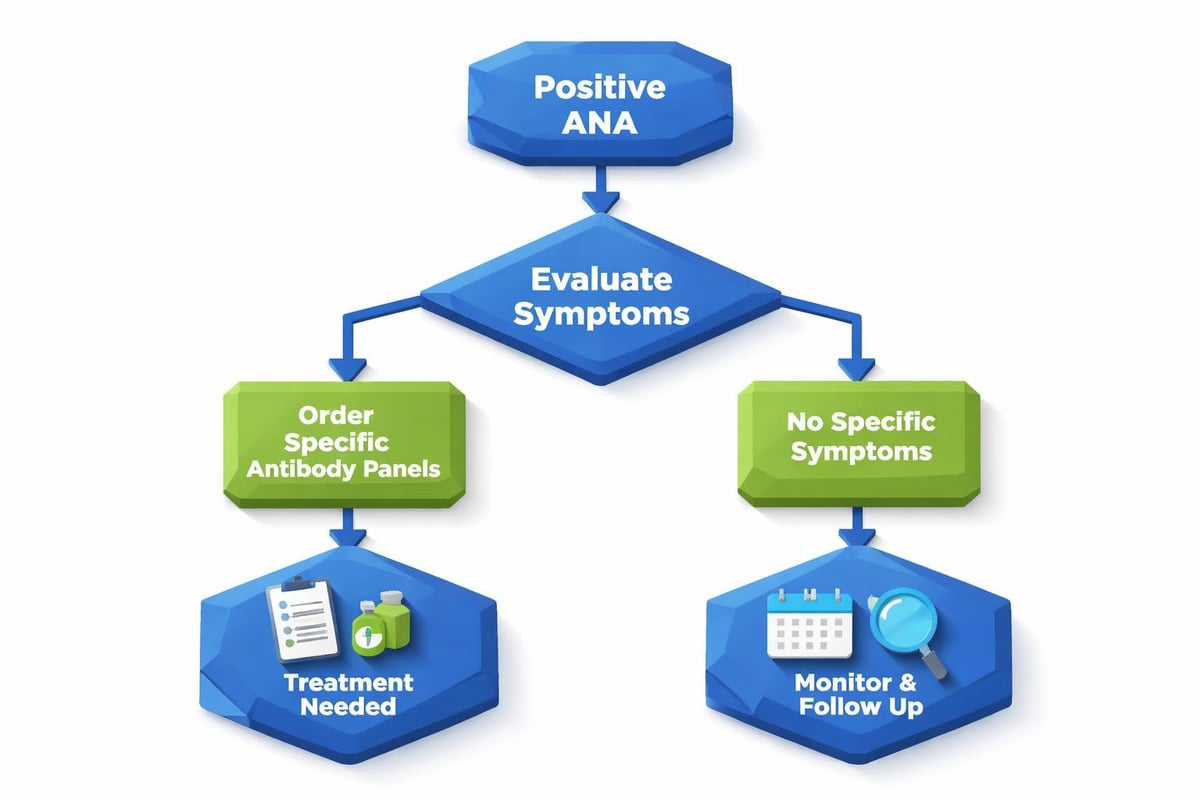
Getting an ana test positive result is just the beginning of the diagnostic process, not the end. Your healthcare provider will consider your complete medical picture, including symptoms, physical examination findings, and family history before determining next steps.
The Diagnostic Process
The journey from a positive screening test to a specific diagnosis involves multiple steps. Your provider will evaluate whether additional testing is necessary based on your individual circumstances.
Step 1: Symptom Assessment
Your doctor will review any symptoms you're experiencing, such as:
- Joint pain or swelling
- Skin rashes, particularly on sun-exposed areas
- Chronic fatigue
- Fever without obvious cause
- Mouth or nose ulcers
- Hair loss
- Raynaud's phenomenon (fingers turning white or blue in cold)
Step 2: Additional Specific Antibody Tests
When your ANA test is positive and you have concerning symptoms, your provider may order more specific antibody tests to narrow down the diagnosis:
| Test | Primary Associated Condition | What It Detects |
|---|---|---|
| Anti-dsDNA | Lupus | Double-stranded DNA antibodies |
| Anti-Smith | Lupus | Smith antigen antibodies |
| Anti-Ro/SSA | Sjögren's syndrome, Lupus | Ro antigen antibodies |
| Anti-La/SSB | Sjögren's syndrome | La antigen antibodies |
| Anti-Scl-70 | Scleroderma | Topoisomerase I antibodies |
| Anti-centromere | Limited scleroderma | Centromere protein antibodies |
Step 3: Additional Laboratory Work
Beyond antibody testing, your provider might order:
- Complete blood count (CBC) to check for anemia or low platelets
- Comprehensive metabolic panel to assess organ function
- Erythrocyte sedimentation rate (ESR) or C-reactive protein (CRP) to measure inflammation
- Complement levels (C3 and C4) which may be low in active lupus
- Urinalysis to check for kidney involvement
Recommended Panel
Autoimmune Screening Panel
Save $4Our most thorough initial autoimmune workup covers systemic autoimmune markers (ANA, Rheumatoid Factor), thyroid autoimmunity (TPO & TG Antibodies), inflammation (hs-CRP), and blood cell analysis (CBC) — 5 tests in one panel.
Includes 21 biomarkers
$63
For convenient access to these tests, you can order lab tests without insurance through services that offer transparent pricing.
When Repeat Testing Makes Sense
Sometimes your provider may recommend repeating the ANA test after several months, especially if:
- Your initial titer was low (1:40 or 1:80)
- You had no symptoms at the time of testing
- A recent infection might have triggered the result
- You were under significant stress when tested
Living with a Positive ANA Test
Many people receive an ana test positive result and never develop an autoimmune disease. This situation, often called having "isolated positive ANA," requires a balanced approach between vigilance and avoiding unnecessary anxiety.
Monitoring Without Overreacting
If you have a positive ANA test but no symptoms or diagnosis, your healthcare strategy should focus on awareness rather than aggressive intervention.
Practical monitoring steps:
- Schedule annual check-ups with your primary care provider
- Keep a symptom journal noting any new or unusual symptoms
- Report persistent joint pain, rashes, or fatigue to your doctor
- Maintain a healthy lifestyle to support immune function
- Avoid unnecessary sun exposure, which can trigger symptoms in some autoimmune conditions
Understanding your lab results is essential for effective self-monitoring. Resources like understanding lab results can help you interpret various test values and trends over time.
When to Seek Medical Attention
Even if your initial evaluation didn't reveal an autoimmune disease, certain symptoms warrant prompt medical attention:
- New persistent joint swelling or pain
- Unexplained rashes, especially butterfly-shaped rashes across the nose and cheeks
- Chest pain when breathing deeply
- Significant unexplained weight loss
- Persistent fever without infection
- Neurological symptoms like seizures or severe headaches
Special Considerations for Specific Conditions
An ana test positive result plays different roles in diagnosing various autoimmune conditions, and understanding these distinctions helps set appropriate expectations.
Lupus Monitoring and Diagnosis
For systemic lupus erythematosus, the ANA test is highly sensitive but not specific. More than 95% of people with active lupus test positive, but as discussed by the Lupus Research Alliance, additional criteria must be met for diagnosis.
The American College of Rheumatology uses classification criteria that include:
- Clinical symptoms (at least 4 out of 11 specific criteria)
- Laboratory findings including specific antibodies
- Exclusion of other conditions
If you're managing lupus or at risk for the condition, specialized lupus monitoring tests can track disease activity and treatment response.

Rheumatoid Arthritis Considerations
While rheumatoid arthritis primarily relies on different antibody tests (rheumatoid factor and anti-CCP antibodies), approximately 20-30% of people with RA also have an ana test positive result. However, the ANA test isn't used to diagnose or monitor rheumatoid arthritis.
For comprehensive rheumatoid arthritis evaluation, specialized rheumatoid arthritis testing panels provide more relevant information than ANA alone.
The Role of Self-Pay Testing in ANA Monitoring
Accessing laboratory testing has become more convenient and affordable with self-pay options. When you need to monitor your ANA status or follow up on previous results, transparent lab test pricing allows you to budget for testing without insurance complications.
Benefits of Direct Access Testing
Cost transparency: Know exactly what you'll pay before ordering tests, with no surprise bills from insurance processing.
Speed: Results typically available within 1-3 days, allowing faster decision-making about your health.
Convenience: Order tests online without a doctor's visit, though you should discuss results with a healthcare provider.
Accessibility: No need to schedule appointments weeks in advance just to request a lab order.
When to Use Self-Pay Testing
Self-pay laboratory services work well for several scenarios:
- Annual monitoring of known positive ANA without active disease
- Checking status before a scheduled rheumatology appointment
- Following up on borderline results after a waiting period
- Tracking trends when managing chronic autoimmune conditions
- Testing when you lack insurance coverage
Understanding how laboratory testing works can help you decide whether self-pay testing meets your needs.
Common Misconceptions About Positive ANA Tests
Several myths persist about what an ana test positive result means, leading to unnecessary worry or inappropriate action.
Myth 1: A positive ANA test means you have lupus
Reality: While most people with lupus test positive for ANA, the vast majority of positive ANA tests occur in people who don't have lupus. Specific diagnostic criteria must be met.
Myth 2: Higher titers always mean more serious disease
Reality: Titer levels don't directly correlate with disease severity. Some people with low titers have active disease, while others with high titers remain symptom-free for years.
Myth 3: A negative ANA test rules out all autoimmune diseases
Reality: Some autoimmune conditions don't produce positive ANA tests. Conditions like Hashimoto's thyroiditis or type 1 diabetes involve different antibody systems.
Myth 4: Once positive, always positive
Reality: ANA results can fluctuate over time. Some people revert to negative, especially if the initial positive resulted from infection or medication.
Myth 5: You need immediate treatment for any positive result
Reality: Treatment depends on diagnosis and symptoms, not screening test results alone. Many people with positive ANA never require treatment.
Making Informed Decisions About Testing and Follow-Up
Knowledge empowers you to work effectively with healthcare providers when dealing with an ana test positive result. Understanding what the test can and cannot tell you helps set realistic expectations.
Questions to Ask Your Healthcare Provider
When reviewing your results, consider asking:
- What was my specific titer level and pattern?
- Do my symptoms warrant additional testing?
- Should we repeat the test, and if so, when?
- What specific conditions are we considering or ruling out?
- What symptoms should prompt me to seek urgent care?
- How often should I follow up for monitoring?
Building Your Healthcare Team
Depending on your results and symptoms, you might work with:
- Primary care physician for overall coordination and initial evaluation
- Rheumatologist for specialized autoimmune disease diagnosis and management
- Immunologist for complex cases or unusual presentations
- Other specialists based on organ systems affected
Having accessible testing options like those available at convenient laboratory locations makes it easier to complete ordered tests promptly and maintain consistent monitoring.
Understanding False Positives and Technical Factors
Laboratory testing isn't perfect, and several technical factors can influence ANA test results. Understanding these limitations helps you interpret results more accurately.
Technical considerations include:
- Laboratory methodology variations between different testing facilities
- Timing of sample collection relative to infections or stress
- Medication interference with test accuracy
- Sample handling and storage issues
- Normal biological variation in antibody levels
Medical News Today provides comprehensive information about what to expect during the ANA test process, including preparation and result interpretation.
If you receive conflicting results from different laboratories, discussing these technical factors with your provider helps determine whether repeat testing is necessary.
Financial Planning for Ongoing Monitoring
When you need regular ANA monitoring or expanded autoimmune panels, costs can add up quickly. Planning ahead makes ongoing testing more manageable.
| Testing Scenario | Approximate Frequency | Cost Consideration |
|---|---|---|
| Isolated positive ANA, no symptoms | Annually or as needed | Single test, lower cost |
| Monitoring diagnosed lupus | Every 3-6 months | Multiple tests, higher cost |
| Initial diagnostic workup | One-time comprehensive panel | Highest upfront cost |
| Symptom-triggered follow-up | As symptoms appear | Variable, unpredictable |
Many people find that using FSA or HSA funds for testing provides tax advantages. Check whether your tests are FSA/HSA eligible to maximize healthcare dollars.
Receiving an ana test positive result requires informed interpretation rather than immediate alarm. Most positive results occur in healthy individuals who never develop autoimmune disease, making follow-up evaluation and symptom monitoring more important than the screening result alone. Whether you need initial testing or ongoing monitoring for a diagnosed condition, Justlabs offers convenient access to ANA tests and comprehensive autoimmune panels with transparent pricing and quick results, helping you stay informed about your health without insurance hassles or delayed appointments.