Vitamin B12 plays an essential role in nerve function, red blood cell formation, and DNA synthesis. Yet millions of Americans live with insufficient B12 levels without realizing it. The signs of B12 deficiency can develop gradually over months or years, often mimicking other health conditions and leading to delayed diagnosis. Understanding these warning signals and knowing when to pursue testing can prevent serious complications ranging from irreversible nerve damage to severe anemia.
Early Warning Signs You Shouldn't Ignore
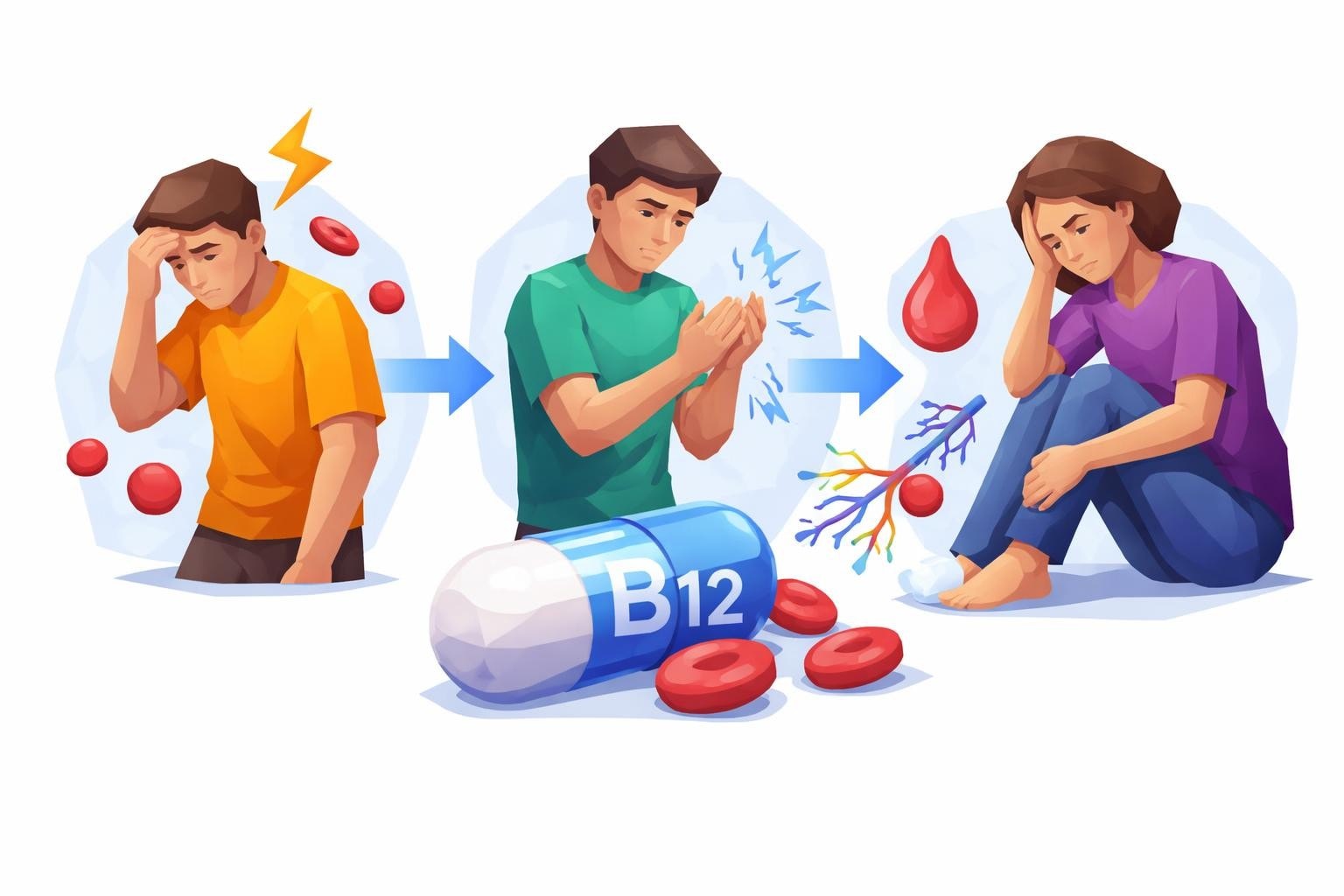
The initial signs of B12 deficiency often appear subtle and nonspecific, making them easy to dismiss as stress or normal aging. Persistent fatigue that doesn't improve with rest frequently tops the list of early symptoms. This exhaustion differs from typical tiredness because it affects your ability to complete routine activities and fails to respond to adequate sleep.
Cognitive changes emerge as another early indicator. Many people experience:
- Brain fog and difficulty concentrating
- Short-term memory problems
- Slower mental processing
- Confusion or disorientation
Pale or jaundiced skin provides a visible clue to B12 deficiency. When your body lacks sufficient B12, red blood cell production decreases, leading to a condition called megaloblastic anemia. The reduced oxygen-carrying capacity creates pallor, while the breakdown of fragile red blood cells releases bilirubin, potentially causing a yellowish tint.

Mood disturbances often accompany early B12 deficiency. According to research on vitamin B12's neurological impact, the vitamin's role in neurotransmitter synthesis means deficiency can trigger depression, anxiety, or irritability. These psychological symptoms may appear before physical manifestations become obvious.
Neurological Symptoms That Signal Advanced Deficiency
As B12 deficiency progresses, neurological symptoms intensify and become more concerning. The protective myelin sheath surrounding nerves requires adequate B12 for maintenance, and prolonged deficiency causes deterioration that manifests through distinct sensations.
Peripheral Neuropathy Indicators
Tingling and numbness typically begin in the hands and feet, following a "glove and stocking" distribution. This paresthesia can progress to:
- Burning sensations
- Sharp, shooting pains
- Reduced sensitivity to touch
- Difficulty detecting temperature changes
The Merck Manual highlights that these nerve-related signs of B12 deficiency can become permanent if left untreated for extended periods. Early detection and intervention prove crucial for reversing neurological damage.
Balance and Coordination Problems
B12 deficiency affects proprioception-your awareness of body position in space. This manifests as:
- Unsteady gait or frequent stumbling
- Difficulty walking in darkness
- Reduced coordination in fine motor tasks
- Increased fall risk, especially in older adults
| Neurological Symptom | Early Stage | Advanced Stage | Reversibility |
|---|---|---|---|
| Tingling/Numbness | Occasional, mild | Constant, severe | High if treated early |
| Balance Issues | Subtle unsteadiness | Significant gait problems | Moderate |
| Cognitive Decline | Mild forgetfulness | Memory loss, confusion | Variable |
| Vision Changes | Rare | Optic nerve damage | Low if prolonged |
Vision disturbances represent a serious complication. Optic neuropathy from B12 deficiency can cause blurred vision, reduced color perception, or even vision loss if the optic nerve sustains significant damage.
Physical Manifestations Beyond Fatigue
The signs of B12 deficiency extend to multiple body systems, creating a constellation of physical symptoms that impact daily functioning.
Glossitis and oral changes often provide diagnostic clues. A swollen, smooth, and unusually red tongue (known as "beefy tongue") indicates B12 deficiency. Accompanying symptoms include mouth sores, a burning sensation on the tongue, and altered taste perception.
Cardiovascular symptoms emerge as deficiency affects red blood cell production:
- Rapid heart rate (tachycardia)
- Shortness of breath during minimal exertion
- Chest pain or palpitations
- Dizziness upon standing
Digestive system complaints frequently accompany B12 deficiency. Many individuals experience decreased appetite, unintentional weight loss, constipation, or diarrhea. These gastrointestinal symptoms can create a problematic cycle, as digestive issues may further impair B12 absorption.
Who Faces Elevated Risk
Certain populations experience higher susceptibility to B12 deficiency due to absorption problems, dietary restrictions, or medical conditions.
Age-Related Risk Factors
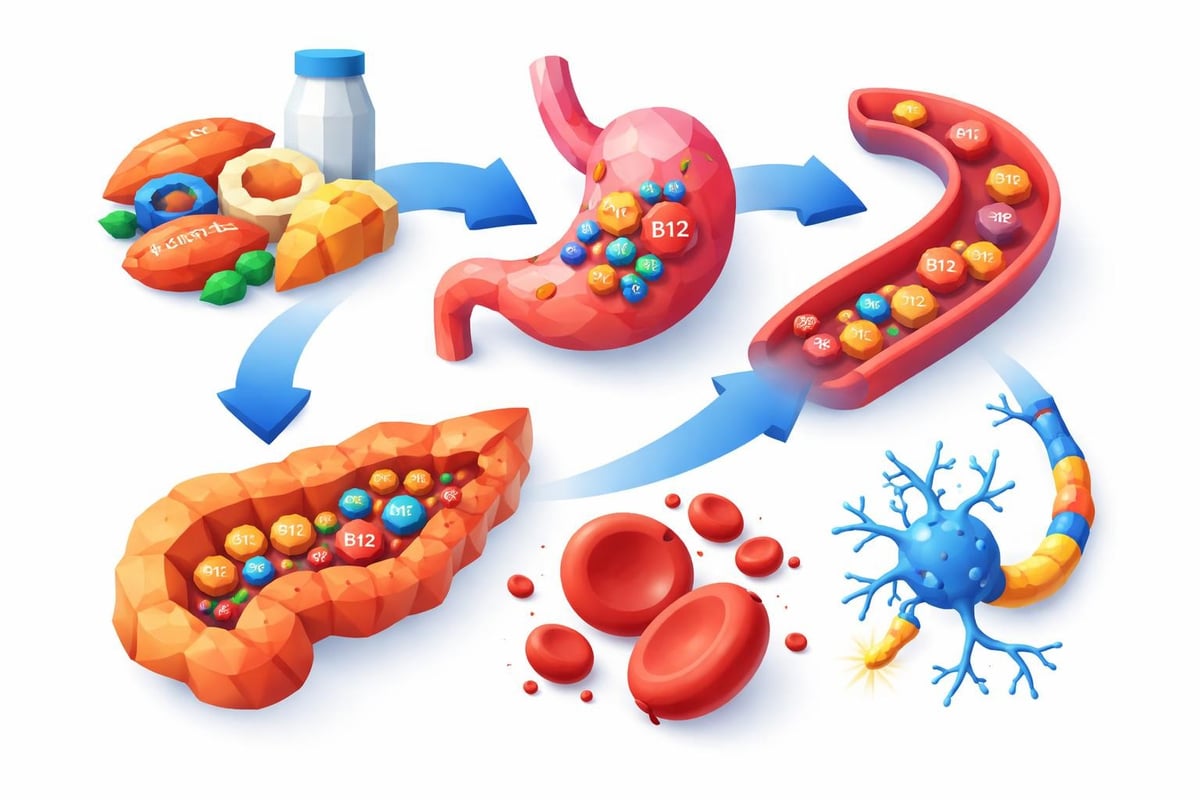
Adults over 50 face increased risk as stomach acid production naturally decreases. This hypochlorhydria impairs the release of B12 from food proteins, even when dietary intake remains adequate. The BMJ Best Practice guidelines emphasize regular screening for older adults, particularly those experiencing unexplained neurological symptoms.
Medical Conditions Affecting Absorption
Several health conditions interfere with B12 absorption:
- Pernicious anemia: An autoimmune condition destroying intrinsic factor
- Celiac disease: Damages intestinal lining where B12 absorbs
- Crohn's disease: Inflammation affects the ileum, the primary B12 absorption site
- Atrophic gastritis: Chronic stomach inflammation reduces acid production
Individuals who have undergone gastric bypass surgery or had portions of their stomach or small intestine removed face permanent absorption challenges requiring lifelong B12 supplementation.
Medication Interactions
Common medications can deplete B12 levels:
- Metformin (diabetes medication)
- Proton pump inhibitors (PPIs) for acid reflux
- H2 receptor antagonists
- Certain antibiotics
Ada Health notes that these medications don't necessarily contraindicate use but warrant monitoring B12 levels through regular testing.
Dietary Considerations
Strict vegetarians and vegans face heightened risk since B12 occurs naturally only in animal products. Plant-based eaters must obtain B12 through fortified foods or supplements. Anyone following restrictive diets should monitor their B12 status proactively, alongside the other nutrients a plant-based diet puts at risk.
The Definitive Test for Confirmation
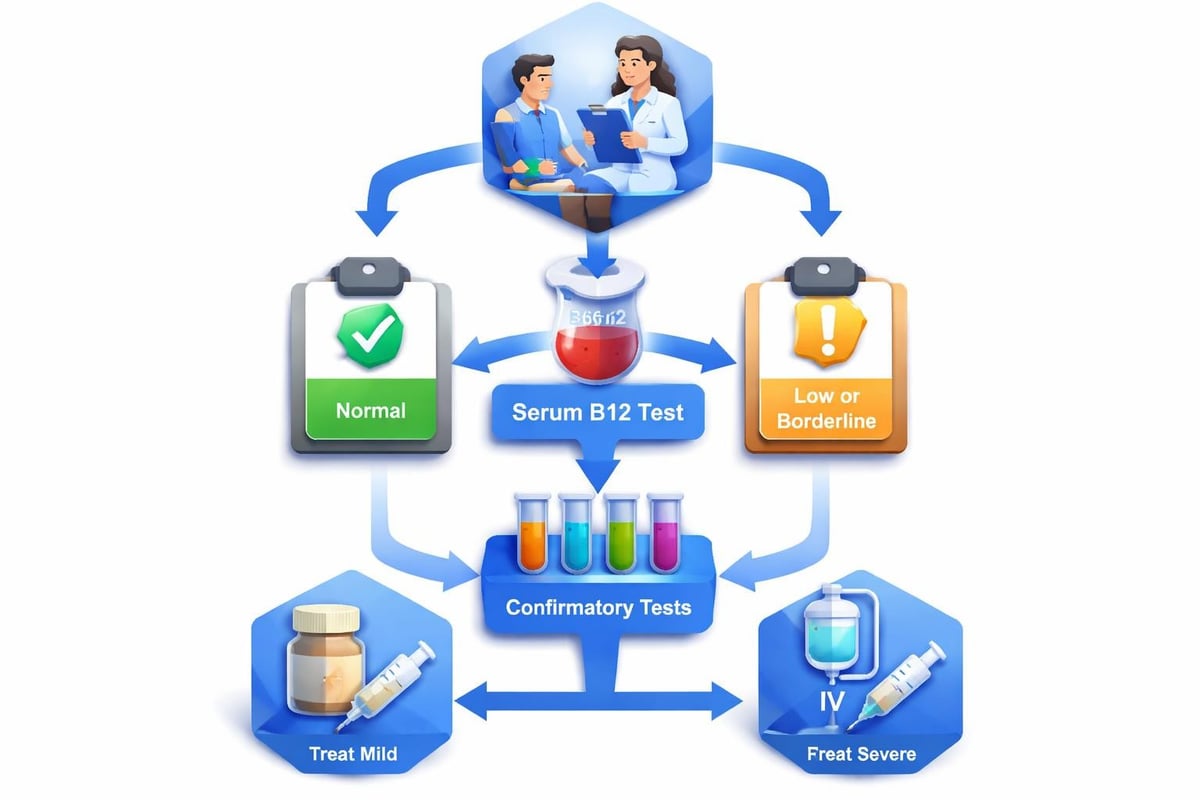
When signs of B12 deficiency appear, laboratory testing provides the only reliable confirmation. The serum B12 test measures the vitamin's concentration in your bloodstream and remains the standard first-line diagnostic tool.
Understanding Test Results
| B12 Level (pg/mL) | Classification | Action Needed |
|---|---|---|
| >300 | Normal | Routine monitoring |
| 200-300 | Borderline | Consider additional testing |
| <200 | Deficient | Treatment required |
| <150 | Severely deficient | Immediate intervention |
Standard reference ranges vary slightly between laboratories, but values below 200 pg/mL generally indicate deficiency requiring treatment. However, some individuals experience symptoms even with levels in the borderline range, particularly if they've recently dropped from higher baseline values.
Additional Diagnostic Tests
When serum B12 results prove inconclusive or symptoms persist despite normal levels, healthcare providers may order supplementary tests:
- Methylmalonic acid (MMA): Elevated levels indicate functional B12 deficiency
- Homocysteine: Increases when B12 deficiency impairs methylation
- Holotranscobalamin (active B12): Measures the metabolically active portion
- Complete blood count (CBC): Identifies megaloblastic anemia
These advanced tests help clarify ambiguous cases and assess whether cellular B12 levels support normal metabolic function.
Recommended Test
Vitamin B12
Vitamin B12 is essential for nerve function, DNA synthesis, red blood cell formation, and energy production. Deficiency is common and often undiagnosed.
Includes 1 biomarkers
$8
Getting Tested Without Insurance Hassles
Traditional testing pathways require doctor appointments, insurance pre-authorization, and potentially long waits for results. These barriers delay diagnosis when prompt action matters most for preventing permanent damage.
Self-pay lab testing eliminates these obstacles. Services like Justlabs enable you to order lab tests without a doctor visit, receiving results within 1-3 days. This direct access proves particularly valuable when you're experiencing signs of B12 deficiency but face scheduling challenges or insurance limitations.
The process works through these straightforward steps:
- Select your desired B12 test online from available tests
- Visit a convenient lab location for blood draw
- Receive comprehensive results electronically
- Share results with your healthcare provider for treatment planning
Transparent lab test pricing eliminates surprise bills and allows comparison shopping. Many tests qualify as FSA/HSA eligible, enabling use of pre-tax healthcare dollars.
Treatment Approaches Based on Severity
Once testing confirms B12 deficiency, treatment intensity depends on symptom severity and underlying cause.
Oral supplementation suffices for mild deficiency without absorption issues. High-dose oral B12 (1000-2000 mcg daily) can overcome minor absorption problems through passive diffusion. This approach works well for dietary insufficiency in vegetarians or individuals with marginal intake.
Intramuscular injections become necessary for:
- Pernicious anemia or intrinsic factor deficiency
- Severe neurological symptoms
- Malabsorption disorders
- Rapid correction requirements
Initial treatment typically involves daily or weekly injections until levels normalize, followed by monthly maintenance doses. The professional medical literature confirms that aggressive replacement prevents progression of neurological damage.
Sublingual and nasal formulations offer alternatives for those preferring non-injection routes while maintaining better absorption than standard oral tablets. These delivery methods bypass some digestive absorption challenges.
Monitoring Treatment Success
Follow-up testing typically occurs at:
- 4-6 weeks after treatment initiation
- 3 months to confirm sustained improvement
- Annually for maintenance monitoring
Symptom improvement often precedes laboratory normalization. Fatigue and cognitive symptoms may resolve within weeks, while neurological symptoms require months for maximum recovery. Some nerve damage becomes irreversible after prolonged deficiency, underscoring the importance of early detection.
Prevention Strategies for At-Risk Individuals
Proactive measures reduce deficiency risk, particularly for vulnerable populations.
Dietary Optimization
Excellent B12 sources include:
- Beef liver (one of the richest sources)
- Clams and oysters
- Salmon and trout
- Fortified breakfast cereals
- Eggs and dairy products
- Nutritional yeast (for plant-based diets)
Adults require approximately 2.4 mcg daily, with higher needs during pregnancy and lactation. Most omnivorous diets easily meet these requirements through regular consumption of animal products.
Supplementation Guidance
High-risk groups benefit from preventive supplementation:
- Adults over 50: Daily multivitamin with B12 or standalone supplement
- Vegetarians/vegans: Consistent use of fortified foods or 25-100 mcg daily supplement
- Individuals on B12-depleting medications: Regular monitoring and supplementation as needed
Quality matters when selecting supplements. Look for methylcobalamin or cyanocobalamin forms from reputable manufacturers. Understanding lab results helps track whether supplementation maintains adequate levels.
Regular Screening Recommendations
Annual B12 testing makes sense for:
- Adults over 60
- Anyone with absorption disorders
- Long-term users of acid-reducing medications
- Individuals following plant-based diets
- Those with unexplained neurological symptoms
Early detection through routine screening prevents the cascade of complications associated with prolonged deficiency. According to Encyclopaedia Britannica's nutritional disease overview, timely intervention reverses most symptoms and prevents permanent damage.
Distinguishing B12 Deficiency from Similar Conditions
The signs of B12 deficiency overlap significantly with other health conditions, complicating diagnosis without laboratory confirmation.
Folate deficiency produces nearly identical anemia and some similar symptoms, but lacks the neurological manifestations characteristic of B12 deficiency. Testing both vitamins simultaneously prevents misdiagnosis, though it helps to know how serum folate differs from RBC folate: serum reflects only the past few days of intake, while RBC folate reflects tissue stores over the previous three to four months.
Recommended Panel
Vitamin & Mineral Panel
Save $5This panel tests the most commonly deficient nutrients: Vitamin D, B12, Folate, Iron (with complete iron studies), Ferritin, and Magnesium - the building blocks your body needs to function optimally.
Includes 9 biomarkers
$64
Fasting required
Hypothyroidism shares fatigue, cognitive impairment, and mood changes with B12 deficiency. Comprehensive metabolic panels help differentiate these conditions.
Vitamin B6 toxicity produces the same glove-and-stocking numbness and loss of position sense, but from too much of a nutrient rather than too little — see the workup for vitamin B6 toxicity neuropathy. Anyone whose sensory symptoms persist despite normal B12 should have their supplement intake reviewed.
Multiple sclerosis and other demyelinating diseases mimic B12 deficiency's neurological symptoms. B12 testing should occur early in the diagnostic workup for unexplained neurological complaints.
Depression and anxiety disorders can result from or resemble B12 deficiency. Mental health professionals increasingly recognize the importance of ruling out nutritional deficiencies before attributing symptoms solely to psychiatric causes.
This diagnostic overlap reinforces why definitive testing proves essential rather than treating based on symptoms alone.
Recognizing the signs of B12 deficiency early prevents serious complications ranging from irreversible nerve damage to severe anemia. When symptoms appear, prompt testing provides the clarity needed for appropriate treatment. Justlabs makes B12 testing accessible without insurance complications or doctor visit delays, delivering results in 1-3 days so you can take action quickly. Visit Justlabs to order your B12 test today and gain the insights needed to protect your neurological health and overall wellbeing.