
Vitamin B12 deficiency affects millions of Americans, yet standard blood tests often miss this condition entirely. When doctors suspect B12 deficiency but serum levels appear normal, they turn to a more sophisticated diagnostic tool: the methylmalonic acid (MMA) test. This specialized assessment measures the buildup of methylmalonic acid in your blood or urine, providing critical insights that standard B12 tests cannot deliver. Understanding methylmalonic acid mma the b12 deficiency test empowers you to advocate for proper testing and catch deficiencies before they cause irreversible damage.
Why Standard B12 Tests Miss Deficiencies
Traditional serum vitamin B12 tests measure the total amount of vitamin B12 circulating in your bloodstream. While this seems straightforward, these tests have significant limitations.
Serum B12 levels don't always reflect cellular B12 status. You can have normal or even elevated B12 in your blood while your cells desperately lack this essential nutrient. This disconnect occurs because serum tests measure both active and inactive forms of B12.
Several factors interfere with standard B12 testing accuracy:
- Recent B12 supplementation or fortified food consumption
- Liver disease releasing stored B12 into the bloodstream
- Myeloproliferative disorders increasing B12-binding proteins
- Laboratory variations in testing methods and reference ranges
According to research on diagnostic challenges, MacroB12 interference creates false-normal results, particularly in older patients and those with autoimmune conditions. This is where the methylmalonic acid mma the b12 deficiency test becomes invaluable.
The Metabolic Pathway Connection
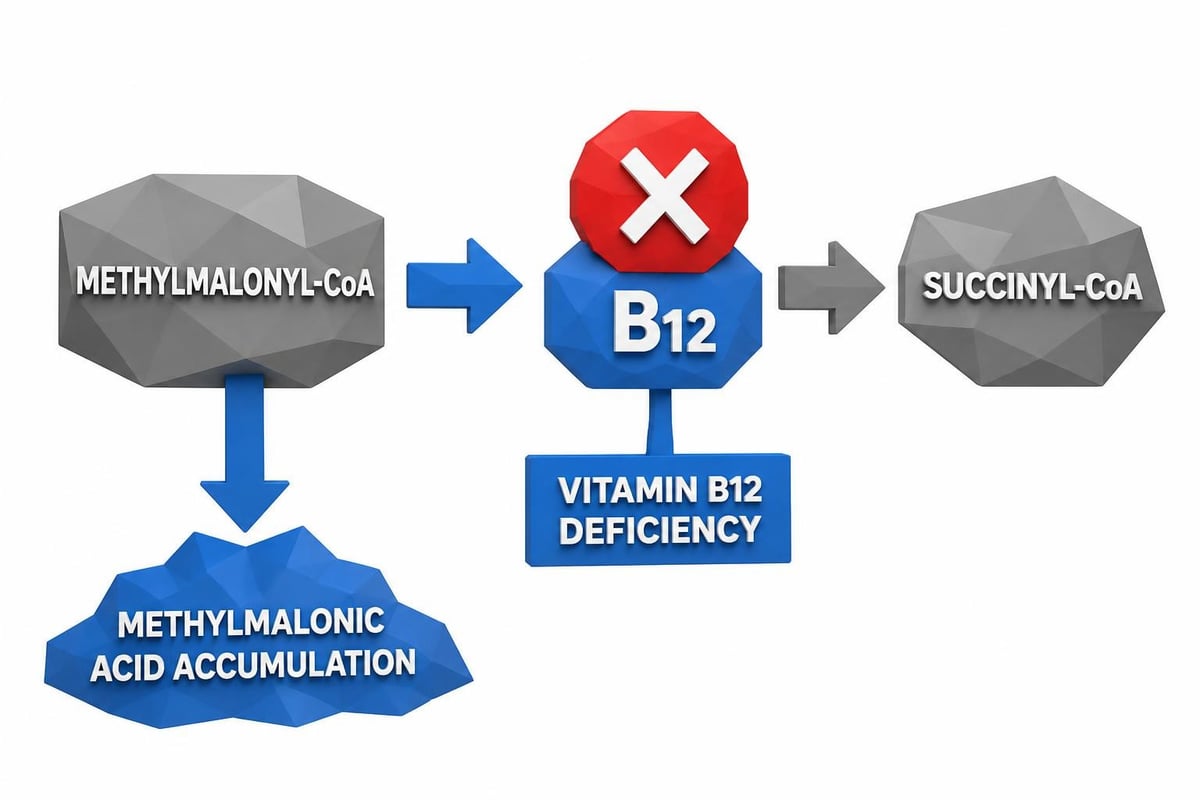
B12 serves as a cofactor for two critical enzymatic reactions in your body. One of these reactions converts methylmalonyl-CoA to succinyl-CoA, a process essential for metabolizing certain fatty acids and amino acids.
When B12 levels drop too low, this conversion cannot occur efficiently. Methylmalonyl-CoA accumulates and converts to methylmalonic acid, which spills into your bloodstream and urine. This metabolic bottleneck creates a measurable biomarker that directly reflects cellular B12 function.
Understanding the Methylmalonic Acid Test
The methylmalonic acid mma the b12 deficiency test measures MMA levels through blood or urine samples. MedlinePlus explains that this test plays a dual role: diagnosing vitamin B12 deficiency and screening newborns for rare genetic disorders affecting methylmalonic acid metabolism.
Blood vs. Urine MMA Testing
Both testing methods provide valuable diagnostic information, though they serve slightly different purposes.
| Test Type | Sample Method | Primary Use | Turnaround Time |
|---|---|---|---|
| Blood MMA | Venipuncture | B12 deficiency diagnosis | 1-3 days |
| Urine MMA | 24-hour collection or random sample | Genetic disorder screening, B12 monitoring | 2-4 days |
| Combined testing | Both samples | Comprehensive assessment | 3-5 days |
Blood MMA testing is the gold standard for B12 deficiency diagnosis. The test requires a simple blood draw, making it convenient for most patients. Results typically become available within days when you order lab tests through accessible services.
Urine MMA testing requires collecting all urine over 24 hours or providing a random sample. While less common for B12 deficiency alone, urine tests help monitor patients with known methylmalonic acidemia, a genetic condition.
Normal and Elevated MMA Levels
Understanding your results requires knowing the reference ranges. Normal blood MMA levels typically fall below 0.4 micromoles per liter (μmol/L), though exact ranges vary between laboratories.
Elevated MMA levels suggest one of several conditions:
- Vitamin B12 deficiency (most common cause)
- Methylmalonic acidemia (genetic disorder)
- Kidney disease (impaired MMA clearance)
- Dehydration affecting concentration
- Certain medications interfering with B12 metabolism
When MMA elevates alongside normal serum B12, clinicians investigate further. WebMD's guide to the MMA test emphasizes combining multiple markers for accurate diagnosis.
Who Should Get an MMA Test
Not everyone needs this specialized assessment. The methylmalonic acid mma the b12 deficiency test becomes essential in specific clinical scenarios.
Symptoms of B12 Deficiency
B12 deficiency develops gradually, often taking years to produce obvious symptoms. Early signs are frequently dismissed as normal aging or stress.
Neurological symptoms include:
- Numbness or tingling in hands and feet
- Balance problems and difficulty walking
- Memory issues and cognitive decline
- Mood changes, depression, or irritability
- Vision problems
Physical symptoms encompass:
- Fatigue and weakness despite adequate sleep
- Pale or jaundiced skin
- Smooth, red tongue
- Mouth ulcers
- Shortness of breath and dizziness
Research on B12 deficiency and chronic pain demonstrates neurological complications extend beyond typical presentations. Accurate testing prevents permanent nerve damage.

High-Risk Populations
Certain groups face elevated deficiency risk and benefit from proactive testing.
Dietary factors create deficiency in strict vegetarians and vegans, since B12 occurs naturally only in animal products. Plant-based eaters require supplementation or fortified foods, yet absorption issues may persist even with adequate intake.
Age-related changes reduce stomach acid production necessary for B12 absorption. Adults over 50 should monitor B12 status regularly, as diagnostic testing in older patients often requires confirmatory MMA assessment.
Digestive conditions interfere with B12 absorption:
- Pernicious anemia (autoimmune condition destroying intrinsic factor)
- Crohn's disease affecting the terminal ileum
- Celiac disease damaging intestinal villi
- Gastric bypass or bowel resection surgery
- Chronic atrophic gastritis
Medications that increase deficiency risk include metformin for diabetes, proton pump inhibitors for acid reflux, and H2 blockers. Long-term use of these drugs warrants periodic B12 assessment.
Combining MMA with Other B12 Tests
The methylmalonic acid mma the b12 deficiency test provides maximum value when combined with complementary assessments. This multi-marker approach eliminates diagnostic uncertainty.
Homocysteine Testing
Like MMA, homocysteine accumulates when B12 deficiency impairs enzymatic reactions. B12 serves as a cofactor for converting homocysteine to methionine. Without adequate B12, homocysteine levels rise.
Combining MMA and homocysteine testing creates this diagnostic pattern:
| MMA Level | Homocysteine Level | Likely Diagnosis |
|---|---|---|
| Elevated | Elevated | B12 deficiency |
| Elevated | Normal | Methylmalonic acidemia or kidney disease |
| Normal | Elevated | Folate deficiency |
| Normal | Normal | No B12 or folate deficiency |
This combination helps distinguish between different deficiency types. Dr. Ford Brewer's explanation of B12 testing emphasizes using both markers for comprehensive assessment.
Holotranscobalamin (Active B12)
Holotranscobalamin measures only the active, bioavailable form of B12 bound to transcobalamin II. This represents approximately 20-30% of total serum B12.
Active B12 testing offers these advantages:
- Earlier detection than serum B12
- Better correlation with tissue B12 status
- Less interference from inactive B12 forms
- Improved sensitivity in borderline cases
When combined with the methylmalonic acid mma the b12 deficiency test, holotranscobalamin provides a complete picture of B12 status from absorption through cellular utilization.
Preparing for Your MMA Test
Proper preparation ensures accurate results and avoids the need for repeat testing. Understanding how lab testing works streamlines the process.
Fasting and Medication Guidelines
Most MMA tests require 8-12 hours of fasting before your blood draw. This means no food or drinks except water during this period. Fasting prevents dietary factors from temporarily affecting MMA levels.
Certain medications and supplements require temporary discontinuation:
- B12 supplements: Stop 48-72 hours before testing
- Multivitamins containing B12: Discontinue 48 hours prior
- Antibiotics: May need to wait until treatment completes
- Thyroid medications: Usually taken after the morning blood draw
Always consult your healthcare provider before stopping any prescribed medication. Some conditions require continuous medication regardless of testing schedules.
What to Expect During Testing
The MMA blood test follows standard venipuncture procedures. A healthcare professional will:
- Clean your arm with an antiseptic wipe
- Apply a tourniquet to make veins more visible
- Insert a small needle to collect blood samples
- Remove the needle and apply pressure with gauze
- Label your sample and send it to the laboratory
The entire process takes less than five minutes. Most people experience minimal discomfort, describing it as a brief pinch or pressure sensation.
Results typically arrive within 1-3 days when you access lab testing services that prioritize efficiency. Some facilities offer same-day or next-day results for urgent cases.

Interpreting Your MMA Results
Understanding what your numbers mean empowers informed health decisions. The methylmalonic acid mma the b12 deficiency test provides quantitative data that requires context for proper interpretation.
Working with Reference Ranges
Laboratories establish reference ranges based on healthy population samples. However, these ranges vary between testing facilities due to different methodologies and equipment.
Typical MMA reference ranges:
- Normal: Less than 0.4 μmol/L
- Borderline elevated: 0.4-0.5 μmol/L
- Elevated: Greater than 0.5 μmol/L
- Significantly elevated: Greater than 1.0 μmol/L
Your results should always be compared to the specific reference range provided by your testing laboratory. What's normal at one facility might differ slightly at another.
When Results Are Elevated
Elevated MMA doesn't automatically confirm B12 deficiency. Several factors influence interpretation:
Kidney function significantly affects MMA levels. Impaired kidney function reduces MMA clearance, causing accumulation regardless of B12 status. Your doctor should evaluate creatinine levels alongside MMA to account for this variable.
Dehydration concentrates MMA in your blood, creating falsely elevated readings. Ensuring adequate hydration before testing improves accuracy.
Genetic conditions like methylmalonic acidemia cause extremely high MMA levels from birth. MedlinePlus discusses how MMA testing screens newborns for these rare metabolic disorders.
When MMA elevation confirms B12 deficiency, treatment begins immediately to prevent neurological complications. Resources for understanding lab results help you make sense of complex medical data.
Cost and Accessibility Considerations
Traditional healthcare routes often create barriers to accessing the methylmalonic acid mma the b12 deficiency test. Insurance requirements, physician referrals, and opaque pricing complicate what should be straightforward diagnostic testing.
Direct Access Testing Benefits
Modern healthcare increasingly embraces consumer-directed testing. This model eliminates traditional gatekeepers while maintaining professional standards.
Direct access testing provides:
- No physician referral required for initial screening
- Transparent, upfront pricing before you commit
- Convenient online ordering from home
- Quick turnaround times for results
- Privacy and discretion in sensitive health matters
Ordering labs without a doctor has become not only possible but practical for routine monitoring and screening. This approach particularly benefits individuals with risk factors who want proactive health management.
Recommended Test
Methylmalonic Acid (MMA)
MMA is the most sensitive and specific marker for B12 deficiency at the tissue level. When B12 is low, MMA accumulates because B12 is required to convert it to succinyl-CoA.
Includes 1 biomarkers
$44
Insurance vs. Self-Pay Options
Insurance coverage for MMA testing varies widely. Some plans cover it only when physicians document specific medical necessity criteria. Others exclude it entirely as a specialized test.
Self-pay testing offers distinct advantages:
- Known costs without surprise bills
- No insurance claim denials or appeals
- Faster scheduling without pre-authorization delays
- Control over which tests you receive
- Ability to retest as needed for monitoring
Many people discover that labs without insurance cost less than their insurance deductible or copay. Transparent lab test pricing eliminates billing surprises common in traditional healthcare.
FSA and HSA Eligibility
Tax-advantaged health accounts often cover diagnostic testing, including the methylmalonic acid mma the b12 deficiency test. Health Savings Accounts (HSAs) and Flexible Spending Accounts (FSAs) allow you to use pre-tax dollars for qualified medical expenses.
MMA testing typically qualifies as a deductible medical expense when used for:
- Diagnosing symptoms or medical conditions
- Monitoring known B12 deficiency
- Screening in high-risk populations
- Following up on abnormal previous results
Check with your account administrator for specific coverage details. FSA/HSA eligible tests provide tax benefits while maintaining healthcare affordability.
Treatment and Follow-Up After Testing
Confirming B12 deficiency through the methylmalonic acid mma the b12 deficiency test is just the beginning. Effective treatment requires addressing both the deficiency and its underlying cause.
B12 Supplementation Strategies
Treatment intensity depends on deficiency severity and symptom presentation.
Oral supplementation works for mild deficiencies and maintenance after restoration. High-dose oral B12 (1000-2000 mcg daily) bypasses absorption issues through passive diffusion. Even individuals lacking intrinsic factor absorb approximately 1-2% of high oral doses.
Intramuscular injections rapidly restore B12 levels in severe deficiency or when neurological symptoms appear. Typical protocols include:
- Loading phase: 1000 mcg injections daily or every other day for 1-2 weeks
- Stabilization phase: Weekly injections for 4-8 weeks
- Maintenance phase: Monthly injections indefinitely
Sublingual and nasal preparations offer alternatives to pills and injections. These formulations provide direct mucosal absorption, though evidence supporting superior efficacy over high-dose oral supplements remains limited.
Monitoring Treatment Response
Successful treatment requires follow-up testing to confirm B12 restoration and MMA normalization.
Initial recheck timing:
- Serum B12 levels: Retest after 3-4 weeks of treatment
- MMA levels: Recheck after 6-8 weeks (slower to normalize)
- Complete blood count: Monitor for resolution of macrocytic anemia
- Symptom assessment: Track neurological improvement
MMA levels should decrease to normal range within 2-3 months of adequate treatment. Persistent elevation despite normalized serum B12 suggests inadequate dosing, poor compliance, or alternative diagnoses requiring investigation.
Addressing Underlying Causes
Treating the deficiency without addressing its cause guarantees recurrence. The methylmalonic acid mma the b12 deficiency test identifies the problem, but comprehensive care requires identifying why deficiency developed.
Dietary insufficiency requires ongoing supplementation or dietary modification. Vegetarians and vegans need reliable B12 sources through fortified foods or supplements.
Malabsorption conditions often require lifelong treatment:
- Pernicious anemia: Indefinite monthly B12 injections
- Inflammatory bowel disease: Treatment of underlying condition plus B12 supplementation
- Surgical causes: Permanent supplementation needs
Medication-induced deficiency may resolve by switching drugs when medically appropriate. Patients requiring long-term metformin or acid-suppressing medications need routine B12 monitoring and supplementation.
The Role of Preventive Testing
Waiting for symptoms before testing creates unnecessary risk. The methylmalonic acid mma the b12 deficiency test serves both diagnostic and preventive purposes.
Screening Recommendations for High-Risk Groups
Medical guidelines increasingly support proactive screening in vulnerable populations. While universal screening lacks widespread endorsement, targeted approaches identify deficiency before irreversible complications develop.
Recommended screening intervals:
- Adults over 50: Every 2-3 years or when symptoms appear
- Strict vegetarians/vegans: Annually after diet adoption
- Patients on metformin or PPIs: Every 1-2 years
- Individuals with malabsorption disorders: Every 6-12 months
- Post-bariatric surgery patients: Every 3-6 months initially, then annually
Early detection through screening prevents the progression from subclinical deficiency to symptomatic disease. Neurological damage becomes irreversible when deficiency persists untreated for extended periods.
Integrating MMA into Comprehensive Health Monitoring
The methylmalonic acid mma the b12 deficiency test complements other routine health assessments. Integrating B12 evaluation into annual wellness testing creates a comprehensive health snapshot.
Consider combining MMA testing with:
- Complete blood count to detect macrocytic anemia
- Comprehensive metabolic panel for kidney function assessment
- Thyroid panel, as thyroid disorders often coexist with B12 deficiency
- Hemoglobin A1c for diabetics on metformin
- Homocysteine for cardiovascular risk assessment
This integrated approach maximizes testing efficiency while minimizing costs. When you explore available tests, consider which panels provide comprehensive insights into related health markers.
Recommended Test
Vitamin B12
Vitamin B12 is essential for nerve function, DNA synthesis, red blood cell formation, and energy production. Deficiency is common and often undiagnosed.
Includes 1 biomarkers
$8
Advanced Considerations in MMA Testing
Beyond basic B12 deficiency diagnosis, the methylmalonic acid mma the b12 deficiency test reveals additional physiological insights. Understanding these nuances improves clinical decision-making.
Differentiating B12 from Folate Deficiency
Both B12 and folate deficiency cause macrocytic anemia and elevated homocysteine. However, only B12 deficiency elevates MMA levels. This distinction proves critical because:
Treating B12 deficiency with folate alone masks the anemia while allowing neurological damage to progress. This dangerous scenario, called "masking," occurs when folate corrects blood cell abnormalities without addressing the underlying B12 deficit.
MMA testing prevents this pitfall by confirming which deficiency requires treatment. When homocysteine rises without MMA elevation, folate deficiency becomes the likely diagnosis — at which point choosing between serum folate and RBC folate testing decides whether you measure recent intake or three to four months of tissue stores.
Understanding False Positives and Negatives
No test achieves perfect accuracy. Recognizing factors that compromise MMA test reliability improves interpretation.
False positive MMA elevation may result from:
- Chronic kidney disease reducing clearance
- Bacterial overgrowth in the small intestine
- Certain rare genetic conditions
- Pregnancy (slight elevation is normal)
- Dehydration concentrating blood MMA
False negative results (normal MMA despite B12 deficiency) rarely occur but may happen with:
- Very recent supplementation before testing
- Early-stage deficiency before cellular depletion
- Laboratory error or sample handling issues
When clinical suspicion remains high despite normal MMA, repeat testing or alternative markers like holotranscobalamin help clarify diagnosis.
Research Perspectives on B12 and MMA
Scientific understanding of vitamin B12 continues evolving. Studies examining B12's electronic structure and excited states contribute to understanding its biochemical functions and deficiency implications.
This research foundation improves diagnostic approaches and treatment strategies. As testing methodologies advance, the methylmalonic acid mma the b12 deficiency test will likely become even more sensitive and specific.
Making Testing Decisions
Deciding when and how to get tested requires weighing symptoms, risk factors, and testing access. The methylmalonic acid mma the b12 deficiency test provides valuable information when used appropriately.
When to Request MMA Testing
Request MMA testing if you experience:
- Neurological symptoms with normal serum B12
- Borderline-low B12 levels (200-400 pg/mL)
- Symptoms despite B12 supplementation
- Family history of pernicious anemia
- Unexplained macrocytic anemia
Don't wait for severe symptoms to develop. Early testing catches deficiency when treatment prevents permanent complications. Comprehensive health information from Healthline explains additional testing scenarios.
Choosing Testing Providers
Multiple options exist for obtaining the methylmalonic acid mma the b12 deficiency test. Each approach offers distinct advantages depending on your circumstances.
Traditional healthcare routes involve:
- Primary care physician visit and symptom discussion
- Physician orders appropriate testing
- Laboratory visit for sample collection
- Follow-up appointment to review results
- Treatment plan development
Direct-access testing streamlines this process:
- Online test selection and ordering
- Visit convenient laboratory for sample collection
- Receive results electronically within days
- Consult with healthcare provider if needed for treatment
Finding convenient lab locations ensures testing fits your schedule without excessive travel or time commitment.
The methylmalonic acid (MMA) test provides essential insights that standard B12 testing often misses, enabling early detection and treatment of deficiency before irreversible damage occurs. For those seeking convenient, affordable access to this important diagnostic tool, Justlabs offers transparent pricing and quick results without the barriers of insurance requirements or physician referrals. With nationwide locations and results available in 1-3 days, taking control of your B12 status has never been more straightforward.