
As the fourth quarter of 2026 approaches, millions of Americans face a critical financial deadline that often catches them by surprise. Flexible Spending Accounts (FSAs) come with strict use-it-or-lose-it rules, and understanding the fsa eligible lab tests deadline can mean the difference between maximizing your healthcare dollars and forfeiting hundreds of dollars in hard-earned money. With many employer-sponsored FSA plans ending December 31, 2026, now is the time to evaluate your remaining balance and plan your healthcare spending strategically.
Understanding Your FSA Year-End Deadline
The traditional FSA plan year aligns with the calendar year, meaning December 31, 2026, marks the final day to incur eligible expenses for most participants. However, the actual deadline you face depends entirely on your employer's plan design. According to IRS Publication 969, employers may offer one of three structures that affect your fsa eligible lab tests deadline.
Standard Plan Year Structure
Under a standard plan year, all funds must be spent by December 31, 2026. Any remaining balance after this date is forfeited back to your employer. This strict deadline applies to roughly 60% of FSA plans nationwide, making it the most common structure workers encounter.
Grace Period Extension
Some employers offer a grace period extending 2.5 months into the following year. If your plan includes this provision, your fsa eligible lab tests deadline extends to March 15, 2027. The Healthcare.gov overview of Flexible Spending Accounts explains that this grace period allows you to use previous year's funds for expenses incurred in early 2027, providing valuable breathing room for year-end planning.
Carryover Provisions
A third option allows participants to carry over up to $640 from 2026 into 2027 (the indexed limit for plan years beginning in 2026). Plans offering carryover cannot simultaneously offer a grace period, so employers must choose one approach or the other.

Which Lab Tests Are FSA Eligible?
The good news for proactive healthcare consumers is that diagnostic lab testing qualifies as an FSA-eligible medical expense under IRS guidelines. IRS Publication 502 categorizes laboratory fees as eligible medical care expenses, meaning virtually all medically necessary lab tests can be paid for with your FSA funds before the deadline.
Commonly FSA-eligible lab tests include:
- Complete blood count (CBC) and comprehensive metabolic panels
- Lipid panels and cholesterol screening
- Thyroid function tests (TSH, T3, T4)
- Vitamin D and B12 deficiency testing
- Hemoglobin A1C for diabetes monitoring
- Hormone panels and fertility testing
- Food sensitivity and allergy testing
- STD/STI screening panels
- Liver and kidney function panels
The key requirement is that tests must be for medical diagnosis, treatment, or prevention of disease. Wellness screenings ordered proactively before symptoms appear still qualify, making your FSA an excellent vehicle for preventive health monitoring.
Recommended Panel
Basic Wellness Panel
Save $2.50Our most affordable comprehensive screening includes the 4 tests doctors order most: CBC, Comprehensive Metabolic Panel, Lipid Panel, and TSH. Covers 30+ biomarkers in one blood draw.
Includes 37 biomarkers
$30
Fasting required
| Test Category | Examples | Typical FSA Status |
|---|---|---|
| Preventive Screening | Annual wellness panels, cholesterol checks | Eligible |
| Diagnostic Testing | Thyroid panels, vitamin deficiencies | Eligible |
| Chronic Disease Monitoring | A1C, liver enzymes, kidney function | Eligible |
| Fertility & Hormones | Comprehensive hormone workups, fertility panels | Eligible |
| General Wellness | Basic metabolic panel, CBC | Eligible |
Strategic Planning for Your FSA Eligible Lab Tests Deadline
With the fsa eligible lab tests deadline approaching, strategic planning ensures you capture maximum value from your remaining FSA balance. Start by checking your current FSA balance through your benefits portal or administrator. Most plans provide online access showing your contributions, expenses year-to-date, and remaining funds available.
Calculate Your Remaining Window
Determine your exact deadline by reviewing your plan documents or contacting your HR benefits coordinator. Don't assume your plan follows the calendar year or offers a grace period without verification. Some plans have fiscal years beginning at different times, shifting your deadline entirely.
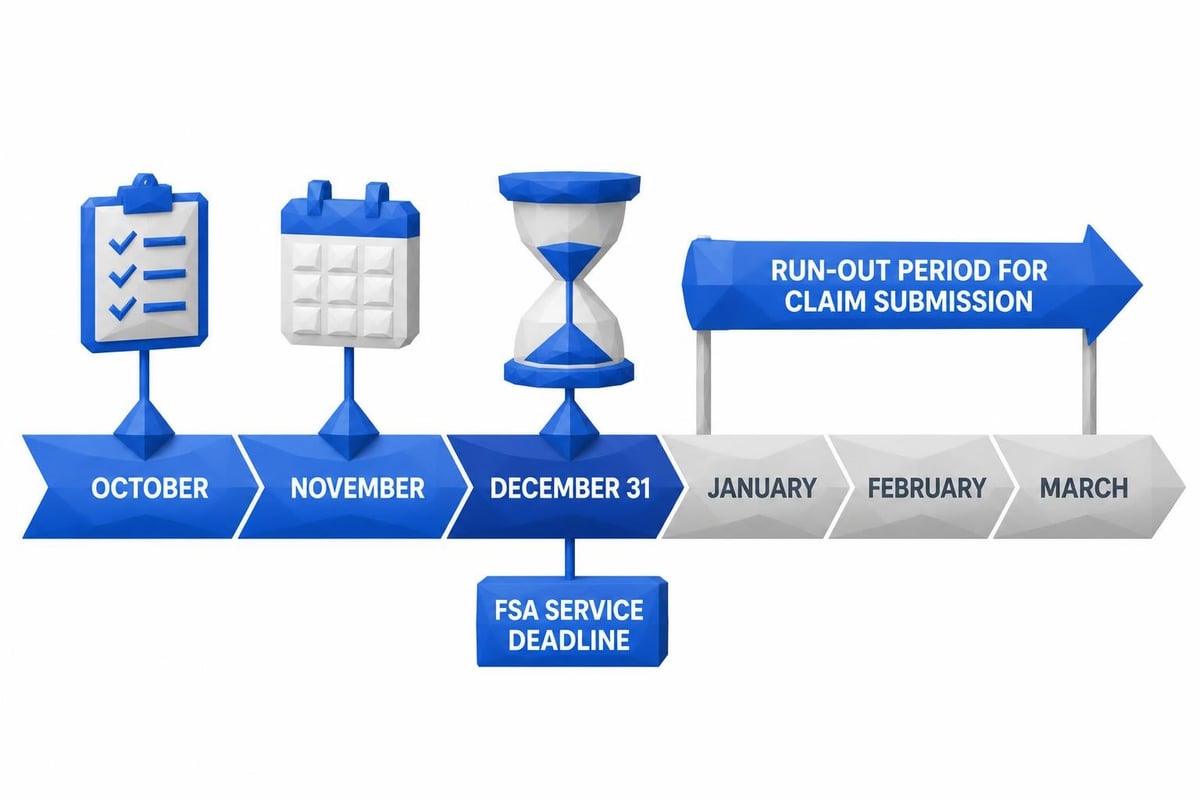
Once you know your deadline, work backward to account for timing. Lab tests must be incurred (the date of service, not when you pay) before the deadline. Even if you're using FSA-eligible tests at transparent prices, you need to complete the test itself before December 31, 2026, or your plan's specific cutoff date.
Run-Out Periods vs. Service Deadlines
Many FSA participants confuse the service deadline with the run-out period. The run-out period (typically 60-90 days after plan year end) is simply the window to submit claims for reimbursement. It doesn't extend when you can incur new expenses. Your lab test must occur before the fsa eligible lab tests deadline, but you may have until March 2027 to file the paperwork for reimbursement.
How to Maximize FSA Funds with Lab Testing
Lab testing presents an ideal strategy for utilizing remaining FSA dollars before the deadline. Unlike some FSA-eligible purchases that require stockpiling items you may not need, lab tests provide actionable health information that can guide your wellness decisions in 2027 and beyond.
Comprehensive Wellness Baseline
Consider establishing a comprehensive wellness baseline before year-end. A thorough panel measuring metabolic health, vitamin levels, hormone balance, and organ function provides valuable data for tracking health trends over time. Even if you feel healthy, baseline testing reveals potential issues early when they're most treatable.
Services like those offered through convenient online lab test ordering make it simple to schedule tests before the deadline without the hassle of doctor appointments or insurance pre-approvals.
Addressing Postponed Health Concerns
Many people delay addressing non-urgent health questions throughout the year. Perhaps you've wondered about persistent fatigue, unexplained weight changes, or family history risks. Your FSA deadline creates the perfect catalyst to finally get answers.
Common postponed health screenings that consume FSA balances effectively:
- Thyroid function testing for unexplained weight or energy changes
- Comprehensive hormone panels for mood, sleep, or reproductive concerns
- Advanced lipid testing beyond basic cholesterol screening
- Nutrient deficiency panels (iron, B vitamins, vitamin D)
- Inflammatory markers (CRP, ESR) for chronic pain or autoimmune concerns
Family Health Optimization
Remember that FSA funds cover eligible expenses for your spouse and dependents, not just yourself. If your children need well-child screening panels or your spouse has been postponing routine health checks, the fsa eligible lab tests deadline applies to their care as well.
Navigating the Direct-Pay Lab Testing Advantage
Traditional lab testing through insurance can involve frustrating delays: scheduling doctor appointments, waiting for referrals, dealing with prior authorizations, and deciphering surprise bills weeks later. When you're racing against an FSA deadline, these obstacles can cost you money.
Direct-pay lab testing services eliminate these barriers entirely. By offering transparent lab test pricing upfront, you know exactly how much you'll spend from your FSA before ordering. There's no uncertainty about coverage, no surprise balance bills, and no doctor visit copays eating into your FSA balance.
Speed and Convenience Before the Deadline
The typical timeline from ordering to results completion spans just days:
| Step | Timeline | FSA Consideration |
|---|---|---|
| Online test selection | Immediate | Review FSA balance first |
| Lab visit scheduling | Same or next day | Must occur before deadline |
| Sample collection | 15-20 minutes | Date of service = incurred date |
| Results delivery | 1-3 business days | Allows time to order additional tests |
This rapid turnaround proves critical when you discover your FSA balance in mid-December. With accessible lab locations and quick appointment availability, you can complete testing well before the December 31 deadline.
Documentation for FSA Reimbursement
Whether your FSA uses a debit card or reimbursement model, proper documentation ensures smooth claims processing. Lab testing invoices clearly itemize services rendered, dates of service, and costs-exactly what FSA administrators require.
Save your itemized receipt showing the lab test name, service date, and amount paid. Most FSA administrators accept electronic documentation, though some require original receipts for claims over certain dollar amounts. Since you typically have 60-90 days post-deadline to submit claims, you can complete testing in late December and handle the paperwork in early January.

Year-End FSA Checklist for Lab Testing
With the fsa eligible lab tests deadline approaching, use this streamlined checklist to maximize your benefits:
By November 15, 2026:
- Check your current FSA balance and remaining funds
- Verify your specific plan deadline (December 31 vs. grace period)
- List any postponed health screenings or family member needs
By December 1, 2026:
- Research which tests address your health priorities
- Review available test panels that fit your budget
- Place orders for comprehensive panels requiring multiple biomarkers
By December 20, 2026:
- Complete all lab visits (schedule earlier if testing multiple family members)
- Verify test results are processing
- Review remaining balance for additional testing needs
Before your deadline:
- Confirm all tests are completed and dated before cutoff
- Save all itemized receipts and documentation
- Note your claims submission deadline for reimbursement filing
Common FSA Deadline Mistakes to Avoid
Research from the Employee Benefit Research Institute shows that Americans forfeit approximately $400 million annually in unused FSA funds. Much of this loss stems from simple planning mistakes that careful attention to the fsa eligible lab tests deadline can prevent.
Waiting Until the Last Week
December's final week brings crowded lab facilities, limited appointment availability, and potential holiday closures. Schedule testing earlier in the month to avoid unnecessary stress. Even with a grace period extending into 2027, many participants forget to use their funds during the brief extension window.
Confusing Service Date with Payment Date
Your FSA cares about when you received the service, not when you paid for it. A lab test performed on December 30, 2026, counts against your 2026 FSA even if you pay in January 2027. Conversely, prepaying in December for a January appointment doesn't allow you to use 2026 FSA funds.
Assuming All Tests Require Prescriptions
While some lab tests require physician orders in certain states, many preventive and wellness tests don't require a doctor's visit. Getting lab tests without a doctor order has become increasingly accessible, eliminating a common barrier to using FSA funds before the deadline.
Overlooking Family Member Eligibility
Your FSA covers qualified medical expenses for yourself, your spouse, and your tax dependents. If you're the only person in your household getting tested, you're potentially leaving value on the table. Consider which family members might benefit from wellness screening before the deadline passes.
FSA vs. HSA: Understanding Your Deadline Differences
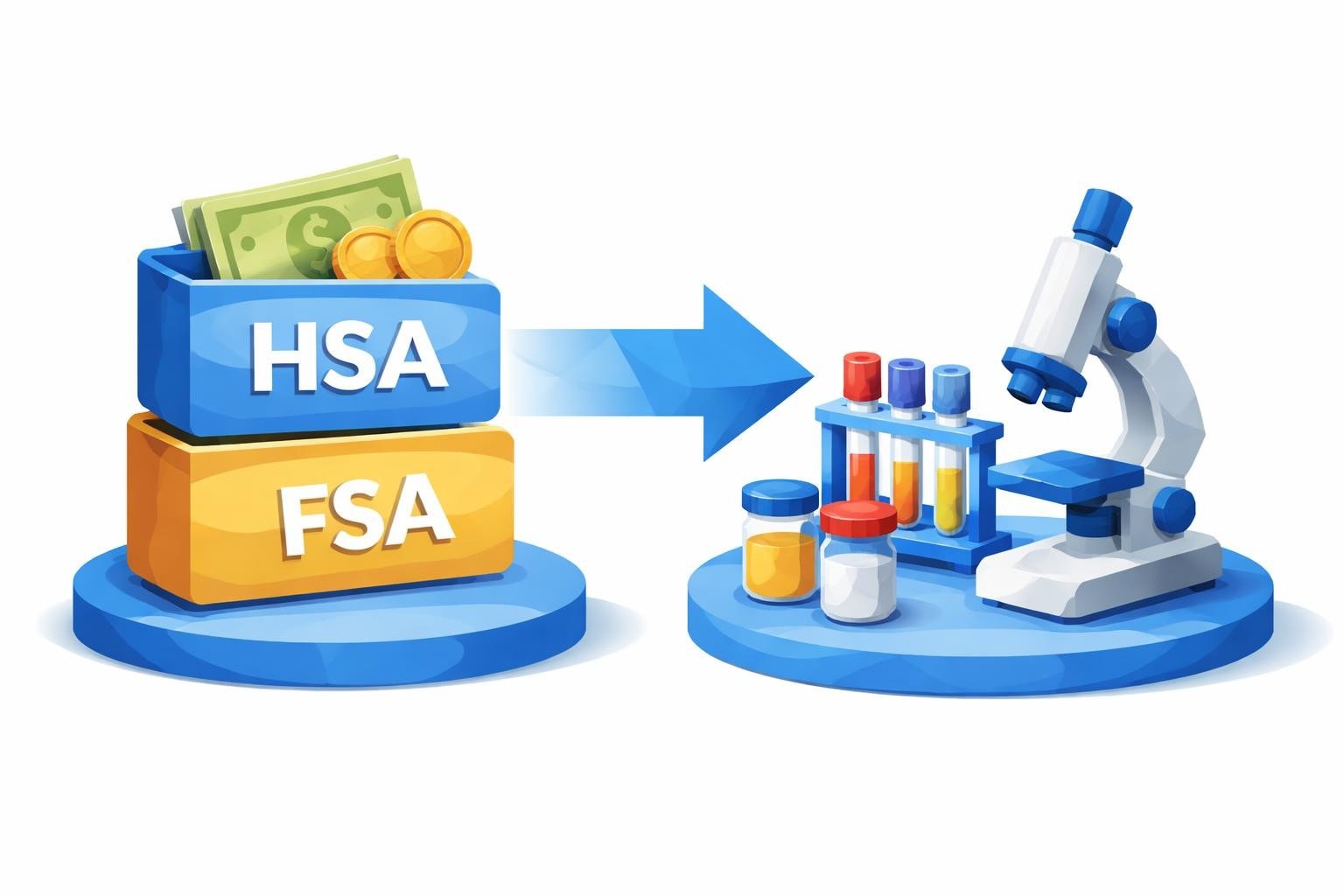
While this article focuses on the fsa eligible lab tests deadline, it's worth noting that Health Savings Accounts (HSAs) operate under different rules. HSAs don't have annual use-it-or-lose-it deadlines-funds roll over indefinitely and remain yours even if you change employers or retire. However, you can only contribute to an HSA if you have a qualifying high-deductible health plan.
For 2026, FSA contribution limits max out at $3,200 (for health FSAs), while HSA limits reach $4,150 for individual coverage and $8,300 for family coverage. If you have both accounts, strategic planning about which to use for lab testing before year-end can optimize your tax advantages across multiple years.
Looking Ahead: 2027 FSA Planning
As you address your 2026 fsa eligible lab tests deadline, consider your 2027 FSA enrollment decisions carefully. The Society for Human Resource Management recommends that employees review their healthcare spending patterns annually to optimize contributions.
If you consistently forfeit FSA funds, reduce your 2027 contribution to a more conservative level. Conversely, if you regularly exhaust your FSA early in the year, consider increasing contributions during open enrollment. Many people find that budgeting for annual lab testing-perhaps comprehensive wellness panels each fall-helps them plan FSA contributions more accurately.
The Value of Preventive Testing
Beyond simply avoiding FSA forfeiture, investing in preventive lab testing provides lasting value. Establishing baseline health metrics in your 30s and 40s creates comparison points for detecting subtle changes over time. Early detection of vitamin deficiencies, thyroid dysfunction, metabolic syndrome, or other conditions allows for intervention before serious complications develop.
Long-term benefits of annual baseline testing:
- Track trends in cholesterol, blood sugar, and inflammation markers
- Detect nutrient deficiencies before symptoms appear
- Monitor thyroid function and hormone balance changes
- Establish personalized normal ranges for key biomarkers
- Provide healthcare providers with comprehensive historical data
Special Considerations for Q4 2026
The final quarter of 2026 brings unique timing considerations for the fsa eligible lab tests deadline beyond typical year-end planning. Holiday closures at lab facilities and benefits offices can compress your effective window for scheduling and completing tests.
Key Q4 dates affecting your FSA deadline:
- Thanksgiving week (November 23-29): Reduced lab hours and benefits office availability
- Christmas week (December 21-27): Many labs close or operate limited schedules
- New Year's week (December 28-January 3, 2027): Final push before standard deadline
Plan your testing around these closures to ensure adequate time for appointments, sample processing, and any follow-up testing needed before December 31, 2026.
Making Informed Decisions with Test Results
When using FSA funds for lab testing before the deadline, you're not just spending money-you're investing in health information. Results delivered within 1-3 days provide actionable insights you can discuss with healthcare providers in early 2027, setting the stage for a healthy new year.
Consider tests that align with your health goals for the coming year. If you're planning to improve fitness, baseline metabolic and hormone testing establishes starting points for measuring progress. If you're addressing chronic issues like fatigue or digestive problems, comprehensive panels can identify underlying causes worth investigating further.
Recommended Panel
Comprehensive Wellness Panel
Save $4.50Our most thorough health screening covers blood cells, organ function, cholesterol, thyroid, blood sugar, vitamin D, inflammation, and iron - everything you need for a complete health picture.
Includes 44 biomarkers
$94
Fasting required
Related reading

Understanding and meeting the fsa eligible lab tests deadline ensures you maximize your healthcare benefits while gaining valuable insights into your health status. By planning strategically, choosing comprehensive testing that addresses your actual health needs, and scheduling appointments well before year-end closures, you transform a potential financial loss into a wellness investment. Whether you're establishing baseline health metrics, investigating concerning symptoms, or simply ensuring your family receives preventive care, lab testing represents one of the smartest ways to use remaining FSA dollars. JustLabs makes this process seamless by offering transparent pricing, convenient scheduling, and rapid results delivery-helping you beat the deadline while taking control of your health information before December 31, 2026.
References
Ndumele CE, Rangaswami J, Chow SL, Neeland IJ, Tuttle KR, Khan SS, Coresh J, Mathew RO, Baker-Smith CM, Carnethon MR, Despres JP, Ho JE, Joseph JJ, Kernan WN, Khera A, Kosiborod MN, Lekavich CL, Lewis EF, Lo KB, Ozkan B, Palaniappan LP, Patel SS, Pencina MJ, Powell-Wiley TM, Sperling LS, Virani SS, Wright JT, Rajgopal Singh R, Elkind MSV, American Heart Association. Cardiovascular-Kidney-Metabolic Health: A Presidential Advisory From the American Heart Association. Circulation. 2023 Nov 14;148(20):1606-1635. doi: 10.1161/CIR.0000000000001184. PMID: 37807924. https://pubmed.ncbi.nlm.nih.gov/37807924/
Green R, Allen LH, Bjørke-Monsen AL, Brito A, Guéant JL, Miller JW, Molloy AM, Nexo E, Stabler S, Toh BH, Ueland PM, Yajnik C. Vitamin B(12) deficiency. Nat Rev Dis Primers. 2017 Jun 29;3:17040. doi: 10.1038/nrdp.2017.40. PMID: 28660890. https://pubmed.ncbi.nlm.nih.gov/28660890/
Biondi B, Cappola AR, Cooper DS. Subclinical Hypothyroidism: A Review. JAMA. 2019 Jul 9;322(2):153-160. doi: 10.1001/jama.2019.9052. PMID: 31287527. https://pubmed.ncbi.nlm.nih.gov/31287527/