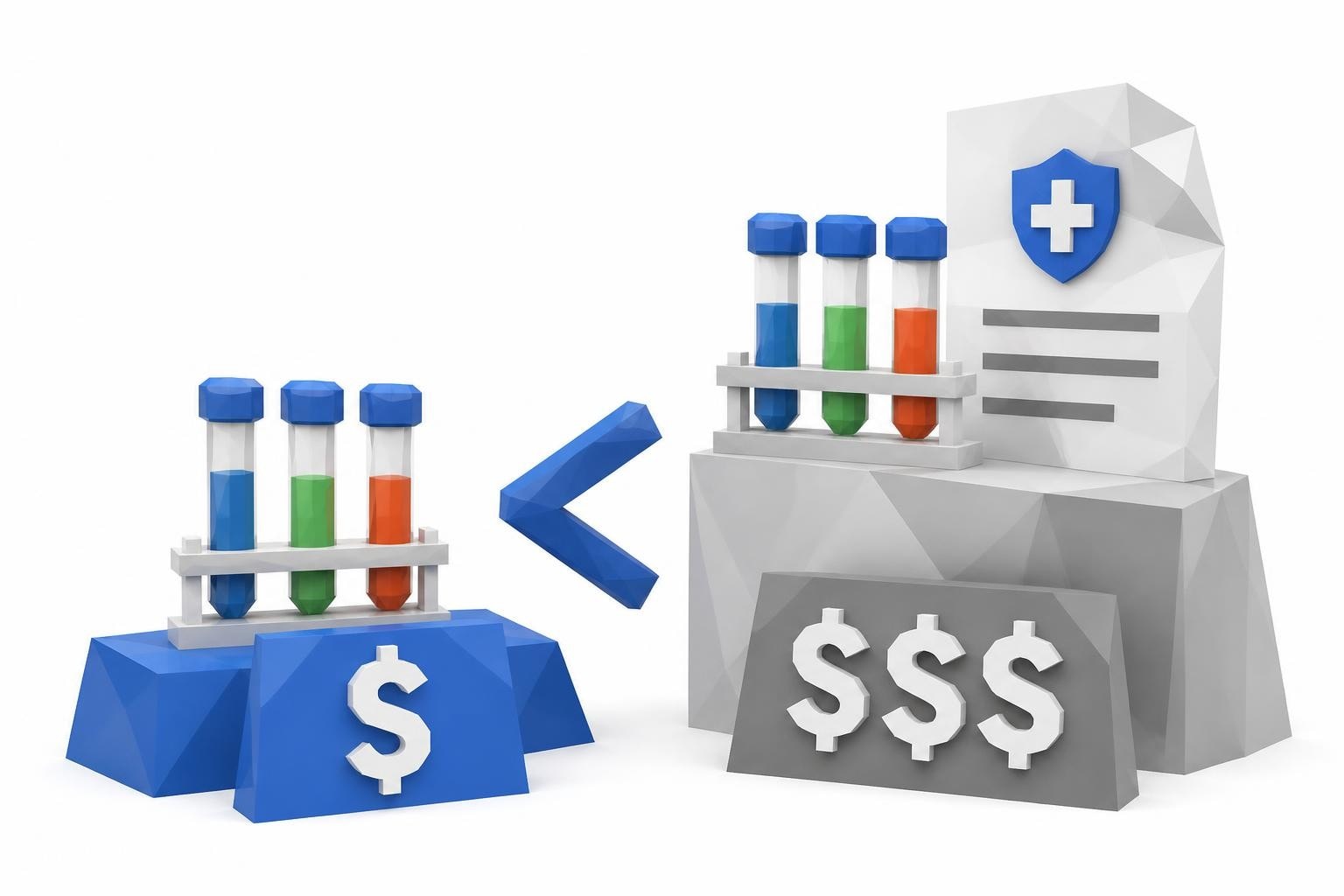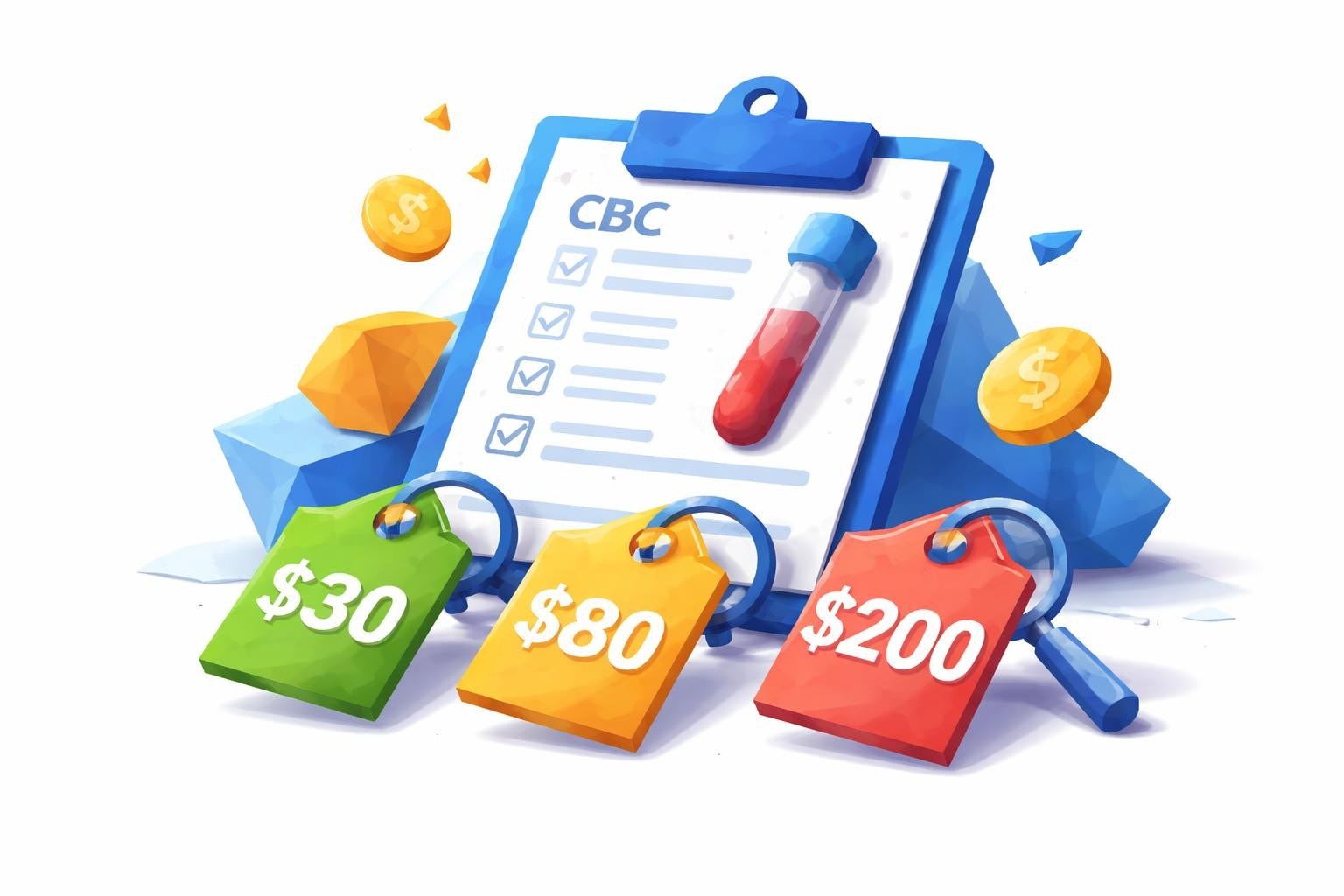
Healthcare costs continue to climb, and laboratory testing represents a significant portion of medical expenses for many Americans. Whether you're managing a chronic condition or simply want to monitor your health proactively, understanding the wide price variations across different testing facilities can save you hundreds of dollars annually. A lab test price comparison reveals that identical tests can vary by 300% or more depending on where you go and how you pay, making it essential to become an informed consumer in today's healthcare marketplace.
Big picture
- Lab test prices vary dramatically across providers, with the same test costing anywhere from $30 to $400 depending on the facility, payment method, and geographic location
- Price transparency has improved significantly with self-pay options and direct-to-consumer lab testing services that bypass traditional insurance markups and administrative fees
- Uninsured patients and those with high-deductible health plans benefit most from shopping around, as paying cash for lab tests often costs less than insurance copays
- Hospital-based labs typically charge 2-4 times more than independent labs or retail testing centers for identical procedures
- Actionable step: Before scheduling any lab work, request pricing from at least three different facilities and compare their self-pay rates against your insurance coverage costs
Understanding Lab Test Pricing Structures
Medical laboratory pricing operates differently from most consumer services. Unlike purchasing groceries or retail items, lab test costs rarely display clearly until after you've received service. This opacity has historically prevented patients from making informed financial decisions about their healthcare.
The Insurance Markup Problem
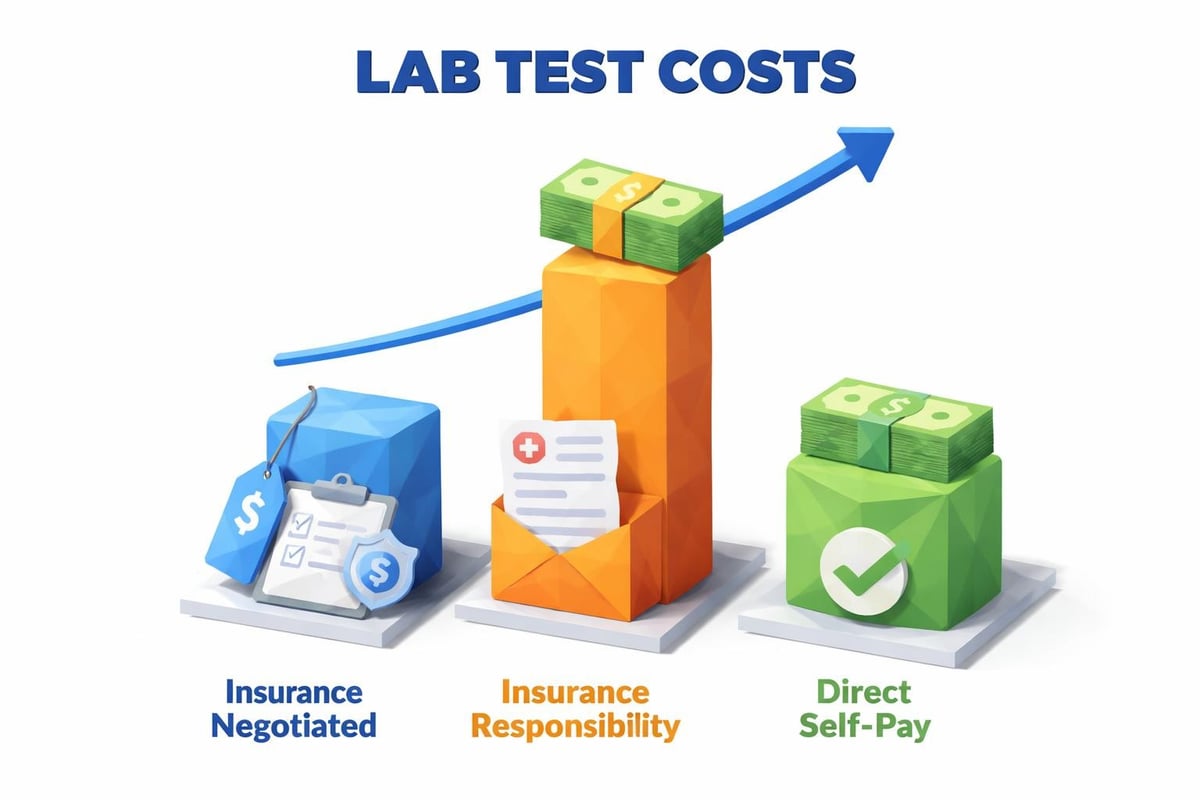
When tests run through insurance, the final cost depends on negotiated rates between your insurer and the testing facility. Research from the Health Care Cost Institute demonstrates that insurance-billed prices often exceed direct-pay rates significantly. Hospital laboratories charge the highest rates, followed by physician office labs, with independent testing facilities offering the most competitive pricing.
High-deductible health plans create particularly challenging situations. Patients must pay full negotiated rates until meeting their deductible, which means they're paying inflated insurance prices without receiving insurance benefits. This scenario makes self-pay options at transparent pricing facilities financially advantageous.
Common Test Price Ranges
Different tests carry vastly different price points. Understanding typical ranges helps you identify fair pricing when conducting a lab test price comparison:
| Test Type | Self-Pay Range | Insurance-Billed Range | Typical Use |
|---|---|---|---|
| Complete Blood Count (CBC) | $14-$45 | $60-$200 | General health screening |
| Comprehensive Metabolic Panel | $20-$55 | $80-$250 | Kidney/liver function |
| Lipid Panel (Cholesterol) | $18-$50 | $70-$220 | Heart health monitoring |
| Thyroid Panel (TSH) | $25-$60 | $90-$280 | Thyroid function |
| Hemoglobin A1C | $20-$55 | $75-$240 | Diabetes management |
| Vitamin D | $30-$70 | $100-$300 | Deficiency screening |
Recommended Test
TSH (Thyroid Stimulating Hormone)
The TSH test is the gold standard for evaluating thyroid function. It's the first test doctors order when thyroid problems are suspected.
Includes 1 biomarkers
$9
These ranges demonstrate why performing a thorough lab test price comparison before ordering tests makes significant financial sense. The same test at different facilities can represent a $200 difference in your out-of-pocket costs.
Where Price Variations Come From
Multiple factors influence laboratory testing costs beyond the actual analysis performed. Understanding these variables empowers you to make strategic decisions about where to obtain testing services.
Facility Type Impact
Hospital-based laboratories maintain the highest overhead costs, translating directly to patient bills. They must staff 24/7 operations, maintain extensive equipment for emergency services, and support complex administrative infrastructure. According to ABC15's investigative reporting, hospital labs frequently charge 40-400% more than independent facilities for identical tests.
Independent laboratories like Quest Diagnostics and LabCorp offer mid-range pricing. They benefit from economies of scale, processing millions of tests annually, but still carry substantial overhead from maintaining nationwide networks of patient service centers.
Direct-to-consumer testing services represent the newest category, often providing the most competitive rates. By eliminating physician ordering fees and streamlining operations, these facilities can offer significant savings while maintaining quality standards.
Geographic Considerations
Location substantially affects pricing. Urban areas with multiple competing laboratories tend to offer more competitive rates than rural regions with limited options. Coastal states generally show higher prices than Midwestern locations. A comprehensive metabolic panel might cost $35 in Phoenix but $85 in New York City at comparable facilities.
Recommended Panel
Complete Metabolic Health Panel
Save $3.5This comprehensive panel evaluates all aspects of metabolic health: organ function, cholesterol, blood sugar, insulin resistance, and inflammation - the key drivers of chronic disease.
Includes 26 biomarkers
$50
Fasting required
State regulations also impact pricing structures. Some states mandate price transparency, while others permit facilities to withhold pricing information until after service delivery. This regulatory patchwork makes standardized lab test price comparison challenging across state lines.
How to Effectively Compare Lab Test Prices
Conducting meaningful price comparisons requires systematic research and understanding of what questions to ask. The process differs from typical consumer shopping because medical billing involves multiple layers of costs and coding.
Essential Questions for Every Facility
Before committing to any laboratory, obtain clear answers to these critical questions:
- What is the exact self-pay price for my specific test? Request CPT codes and confirm the quote includes all associated fees
- Are there additional charges for blood draw, specimen collection, or processing? Some facilities separate these costs
- Do you offer any discounts for cash payment or multiple tests? Many labs provide 10-30% discounts for immediate payment
- How does this self-pay price compare to my insurance coverage? Ask them to estimate your insurance responsibility
- When will I receive results, and is there a fee for accessing them? Result delivery timeframes and portal fees vary
Using Online Comparison Tools
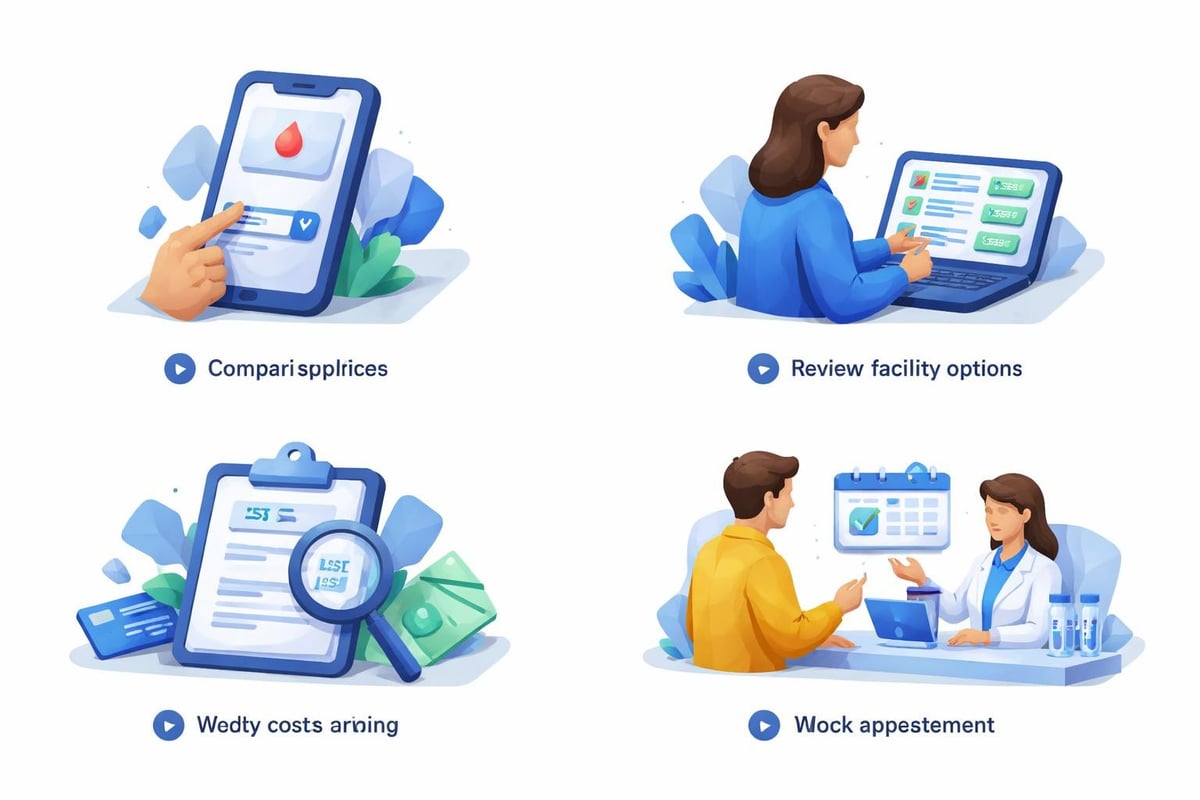
Several platforms now facilitate lab test price comparison across multiple providers. LabCost offers a cost estimator tool that compares prices across facilities and insurance types in your area. RateMyLab enables instant price comparisons and booking at competitive rates.
These tools aggregate pricing data from thousands of facilities, presenting side-by-side comparisons that reveal significant savings opportunities. However, always verify prices directly with the testing facility before scheduling, as online tools may not reflect recent price changes or promotional rates.
For those seeking straightforward pricing without insurance complications, ordering tests through transparent platforms eliminates surprise bills and provides guaranteed pricing before you commit.
Self-Pay vs Insurance: Making the Right Choice
Determining whether to use insurance coverage or pay out-of-pocket requires calculating your specific financial situation. Many patients assume insurance always provides better value, but a detailed lab test price comparison frequently proves otherwise.
When Self-Pay Saves Money
Uninsured patients obviously benefit from self-pay options, but they're not the only group. Consider self-pay pricing when:
- Your deductible hasn't been met, and you'd pay the full insurance-negotiated rate anyway
- The self-pay price is lower than your insurance copay or coinsurance percentage
- You want to avoid claims that might affect future insurance premiums or coverage
- You're using HSA or FSA funds and want to maximize their value with lower prices
- Your insurance doesn't cover certain preventive or wellness tests
Recommended Panel
Basic Wellness Panel
Save $2.5Our most affordable comprehensive screening includes the 4 tests doctors order most: CBC, Comprehensive Metabolic Panel, Lipid Panel, and TSH. Covers 30+ biomarkers in one blood draw.
Includes 37 biomarkers
$30
Fasting required
Research on lab costs without insurance demonstrates that direct-pay patients often save 40-60% compared to insurance-billed rates at high-markup facilities.
Insurance Advantages
Insurance coverage makes sense when you've already met your deductible for the year, making additional tests essentially free or very low cost. Additionally, if you require expensive specialized testing panels that cost thousands of dollars, insurance protection becomes valuable even with cost-sharing.
Some employer plans offer zero-copay preventive testing for specific screenings like annual cholesterol checks or diabetes monitoring. Review your specific plan benefits before assuming self-pay will save money.
Panel Testing vs Individual Tests
When ordering multiple related tests, choosing between comprehensive panels and individual tests affects both pricing and diagnostic value. A strategic approach to lab test price comparison considers both cost-efficiency and clinical usefulness.
Panel Pricing Advantages
Laboratories bundle related tests into panels that cost significantly less than ordering each component separately. A lipid panel typically includes total cholesterol, LDL, HDL, and triglycerides for $25-$50, while ordering these four tests individually might cost $80-$120.
Common cost-effective panels include:
- Basic Metabolic Panel: Glucose, calcium, electrolytes, kidney function (8 tests)
- Comprehensive Metabolic Panel: All basic panel tests plus liver function (14 tests)
- Lipid Panel: Complete cholesterol and triglyceride assessment (4-6 tests)
- Complete Blood Count: Red cells, white cells, platelets, hemoglobin (10+ measurements)
- Thyroid Panel: TSH, T4, T3, sometimes antibodies (2-5 tests)
Recommended Panel
Complete Thyroid Panel
Save $3Our most comprehensive thyroid panel includes all 5 essential markers: TSH, Free T4, Free T3, Reverse T3, and both thyroid antibodies. Get the complete picture of your thyroid health.
Includes 6 biomarkers
$84
Avoiding Unnecessary Tests
While panels offer better per-test pricing, ordering tests you don't need wastes money and can generate false positives requiring additional follow-up testing. Work with healthcare providers or use evidence-based testing guidelines to determine which tests address your specific health concerns.
Some direct-to-consumer services provide questionnaires that recommend appropriate tests based on symptoms, age, and health history, helping you avoid both over-testing and under-testing.
Regional Price Comparison Examples
Examining real-world pricing across different markets illustrates the importance of geographic considerations in lab test price comparison. These examples reflect actual self-pay rates from various facilities as of early 2026.
Major Metropolitan Areas
New York City:
- Hospital lab CBC: $180
- National chain lab CBC: $65
- Direct-to-consumer service CBC: $35
- Savings potential: $145 (80%)
Los Angeles:
- Hospital lab Lipid Panel: $195
- National chain lab Lipid Panel: $58
- Direct-to-consumer service Lipid Panel: $32
- Savings potential: $163 (84%)
Chicago:
- Hospital lab Comprehensive Metabolic Panel: $210
- National chain lab Comprehensive Metabolic Panel: $72
- Direct-to-consumer service Comprehensive Metabolic Panel: $38
- Savings potential: $172 (82%)
Mid-Size Markets
Smaller cities often show less dramatic but still significant price variations. University health systems sometimes publish transparent pricing that helps establish regional benchmarks.
| City | Test Type | Hospital | Chain Lab | Direct Service | Savings |
|---|---|---|---|---|---|
| Phoenix | Hemoglobin A1C | $165 | $55 | $29 | $136 |
| Denver | Vitamin D | $220 | $68 | $42 | $178 |
| Atlanta | TSH (Thyroid) | $175 | $52 | $31 | $144 |
These comparisons demonstrate that regardless of location, conducting a lab test price comparison before scheduling consistently reveals substantial savings opportunities.
Promotional Pricing and Discount Strategies
Beyond standard pricing structures, several strategies can further reduce laboratory testing costs. Smart consumers leverage timing, bundling, and special offers to maximize value.
Seasonal Promotions
Many laboratory services run promotional pricing during specific times. January often brings wellness-focused discounts as people pursue New Year health goals. Heart Health Month in February, Diabetes Awareness Month in November, and other health observances trigger related test discounts.
Promotional pricing on specific tests can reduce costs by 30-50% during limited-time offers. Subscribing to laboratory newsletters or following them on social media helps you catch these opportunities.
Membership and Subscription Programs
Some testing services offer membership programs that provide discounted rates for a monthly or annual fee. These work best for people requiring regular monitoring of chronic conditions or those committed to proactive wellness testing throughout the year.
Calculate whether membership savings exceed the enrollment fee based on your anticipated testing frequency. For someone monitoring thyroid function quarterly, a membership providing 25% discounts could save $200-$300 annually. For a side-by-side look at how an annual membership model stacks up against pay-per-test pricing, see our comparison of Function Health, JustLabs, and Quest.
Insurance-Free Testing Considerations
The growth of labs without insurance reflects increasing consumer demand for straightforward pricing and convenient access. This model offers several advantages beyond cost savings.
Privacy and Control
Self-pay testing provides complete control over your health information. Results go directly to you without entering insurance company databases that could potentially affect future coverage, premiums, or employment situations. This privacy proves particularly valuable for genetic testing, fertility assessments, or other sensitive health information.
Speed and Convenience
Insurance-free testing eliminates prior authorization delays and claim processing time. You can order tests online and receive results within 1-3 days, compared to the 1-2 weeks typical for insurance-processed testing.
This speed matters when monitoring time-sensitive conditions or when you need quick results for travel clearance, medication adjustments, or lifestyle decisions.
Recommended Panel
Female Hormone Panel
Save $5This comprehensive panel measures all major female hormones: estrogen, progesterone, reproductive hormones (FSH/LH), and androgens (testosterone/DHEA-S) - essential for understanding hormonal balance.
Includes 7 biomarkers
$105
Accessibility Without Provider Gatekeeping
Traditional testing requires a physician order, necessitating an appointment (and associated costs) before obtaining lab work. Direct-access testing removes this barrier, allowing you to pursue proactive health monitoring without the time and expense of doctor visits.
This accessibility particularly benefits people managing stable chronic conditions who need regular monitoring but don't require frequent physician consultations.
Quality Assurance Across Price Points
A common concern when conducting a lab test price comparison involves whether lower prices compromise accuracy or reliability. Understanding laboratory certification and quality standards addresses these valid concerns.
Regulatory Oversight
All clinical laboratories operating in the United States must comply with CLIA (Clinical Laboratory Improvement Amendments) standards regardless of pricing structure. These federal regulations establish quality standards for all laboratory testing performed on humans, from the smallest clinic to the largest reference laboratory.
CLIA certification ensures:
- Qualified personnel perform testing
- Laboratories participate in proficiency testing programs
- Quality control procedures meet federal standards
- Regular inspections verify compliance
- Equipment maintenance follows manufacturer specifications
Testing Method Consistency
The actual testing methodologies remain identical whether you pay $30 or $300 for a CBC. Commercial laboratories use the same automated analyzers, reference ranges, and quality control materials. Price differences reflect facility overhead and billing practices, not testing quality variations.
Budget-friendly testing facilities maintain CLIA certification and often partner with major reference laboratories like Quest or LabCorp for specimen analysis. Your lower price reflects efficient operations and reduced administrative costs, not inferior testing quality.
Specialized Testing Considerations
While routine tests like CBC, metabolic panels, and cholesterol checks show the most dramatic price variations, specialized testing requires additional lab test price comparison strategies.
Advanced Diagnostic Tests
Genetic testing, cancer markers, allergy panels, and other specialized diagnostics cost substantially more than routine tests. Prices for these advanced procedures can range from $200 to over $5,000 depending on complexity.
For expensive specialized tests:
- Verify medical necessity before ordering to avoid paying for tests you don't need
- Request specific CPT codes and compare pricing across reference laboratories
- Check if your condition qualifies for patient assistance programs offered by testing companies
- Consider waiting for promotional periods when some companies discount expensive panels
Recommended Panel
Autoimmune Screening Panel
Save $4Our most thorough initial autoimmune workup covers systemic autoimmune markers (ANA, Rheumatoid Factor), thyroid autoimmunity (TPO & TG Antibodies), inflammation (hs-CRP), and blood cell analysis (CBC) — 5 tests in one panel.
Includes 21 biomarkers
$63
Fertility and Hormone Testing
Hormone assessments and fertility evaluations represent another category where price comparison yields significant savings. Comprehensive hormone panels that might cost $600-$800 through traditional medical channels are often available for $150-$250 through direct-access services.
These tests rarely receive insurance coverage even when medically indicated, making self-pay pricing research essential for anyone pursuing fertility evaluation or hormone optimization.
HSA and FSA Optimization
Health Savings Accounts and Flexible Spending Arrangements provide tax-advantaged ways to pay for qualified medical expenses, including laboratory testing. Combining these tools with smart lab test price comparison maximizes their value.
Qualifying Expenses
FSA and HSA-eligible tests include diagnostic procedures ordered for medical purposes. Preventive screenings recommended by healthcare providers also qualify, even when pursued proactively through direct-access services.
Using HSA/FSA funds strategically:
- Pay lower self-pay prices with tax-free HSA dollars instead of higher insurance-negotiated rates
- Avoid copays that might exceed efficient direct-pay pricing
- Document medical necessity for preventive tests to ensure HSA/FSA reimbursement
- Maximize annual contribution limits by funding accounts based on anticipated testing needs
Documentation Requirements
Maintain receipts, test orders, and result reports when using HSA or FSA funds for laboratory testing. Most direct-to-consumer services provide itemized receipts that satisfy account administrator requirements for reimbursement or documentation.
Key Takeaways
Understanding lab test price comparison empowers you to access necessary healthcare services while controlling costs effectively. The same test can vary by hundreds of dollars depending on where and how you obtain it, making price research an essential healthcare consumer skill. Self-pay options frequently cost less than insurance copays, particularly at high-deductible plans or before meeting annual deductibles. Online comparison tools, transparent pricing services, and direct-to-consumer laboratories provide accessible ways to research costs before committing to service. Quality remains consistent across price points due to federal CLIA regulations that standardize testing procedures and certification requirements. Strategic use of HSA and FSA accounts combined with competitive self-pay pricing maximizes your healthcare dollars while maintaining access to comprehensive testing services.
See also: For a deep dive on costs, read How Much Do Lab Tests Really Cost?. Using health funds? See our HSA/FSA Eligible Tests guide.
FAQ
How much can I realistically save by comparing lab test prices?
Savings typically range from $50 to $300 per test depending on the specific procedure and facilities compared. Routine tests like CBC or metabolic panels might save $30-$80, while specialized panels can save $200-$400. Analysis of lab pricing variations shows that comparing hospital labs against independent facilities consistently yields 60-80% savings on common tests.
Are lower-priced labs less accurate than expensive ones?
No. All clinical laboratories must meet identical CLIA federal standards regardless of pricing. Testing accuracy depends on proper certification, equipment maintenance, and quality control procedures mandated by law. Lower prices reflect operational efficiency and reduced overhead rather than quality differences in testing methodology or equipment.
Can I order lab tests without visiting a doctor first?
Yes, direct-access testing services allow you to order lab tests without a doctor in most states. These services provide physician review and test authorization as part of their process, eliminating the need for a separate doctor appointment while ensuring appropriate medical oversight.
Will using self-pay affect my insurance coverage?
No. Choosing to pay out-of-pocket for laboratory testing doesn't affect your insurance status or future coverage. However, self-paid tests won't count toward your deductible or out-of-pocket maximum. Many people choose self-pay specifically to keep certain health information private and separate from insurance records.
How do I know if a lab test price quote is fair?
Compare quotes from at least three different facilities including a hospital lab, national chain like Quest or LabCorp, and a direct-to-consumer service. Research typical price ranges for your specific test online using comparison tools. Fair pricing for common tests typically falls within the lower third of the range you discover during research.
What's included in a lab test price quote?
Always clarify whether quotes include the blood draw fee, specimen collection, processing charges, and result delivery. Some facilities separate these costs while others bundle them. A complete price should cover all services from blood draw through result reporting without hidden fees.
How quickly can I get lab results with self-pay testing?
Most direct-access laboratories provide results within 1-3 business days for routine tests. This matches or exceeds the timeframe for insurance-billed testing, which often takes 3-7 days due to claim processing requirements. Expedited processing is sometimes available for urgent situations.
Can I use my HSA or FSA card for self-pay lab tests?
Yes. Laboratory testing qualifies as a medical expense eligible for HSA and FSA payment when performed for diagnostic or preventive purposes. Using these tax-advantaged accounts to pay lower self-pay prices maximizes their value compared to paying higher insurance-negotiated rates.
Conducting a thorough lab test price comparison before ordering healthcare services consistently reveals opportunities to save hundreds of dollars while maintaining access to high-quality testing. Armed with knowledge about price variations, comparison strategies, and self-pay options, you can make informed decisions that support both your health goals and financial well-being. Justlabs provides transparent, affordable lab testing with online ordering, guaranteed pricing, and results delivered in 1-3 days, making it simple to access the tests you need without insurance hassles or surprise bills.