Normal Cortisol Levels by Time of Day: Complete Guide
Understanding your cortisol levels requires more than just a single number on a lab report. The timing of your test matters significantly because cortisol follows a predictable daily rhythm that dramatically affects what constitutes a "normal" result. Whether you're investigating fatigue, stress symptoms, or metabolic concerns, knowing when to test and what to expect at different times can make the difference between an accurate assessment and misleading results.
Big picture
-
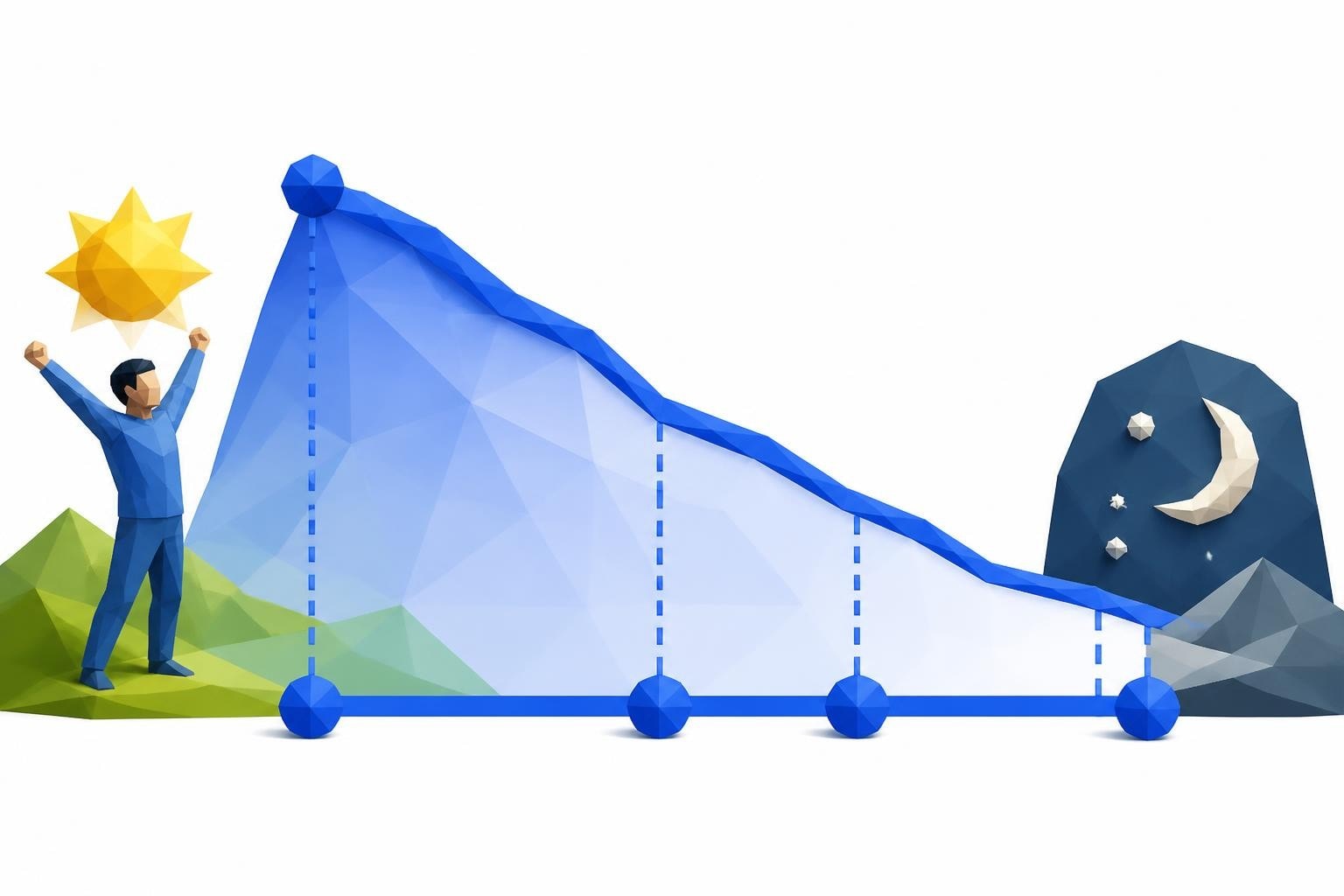
Cortisol follows a natural 24-hour rhythm called the circadian pattern, with levels highest within 30 minutes of waking (typically 10-20 mcg/dL) and lowest around midnight (usually 2-4 mcg/dL). This variation means the same person can have drastically different "normal" levels depending on when blood is drawn.
-
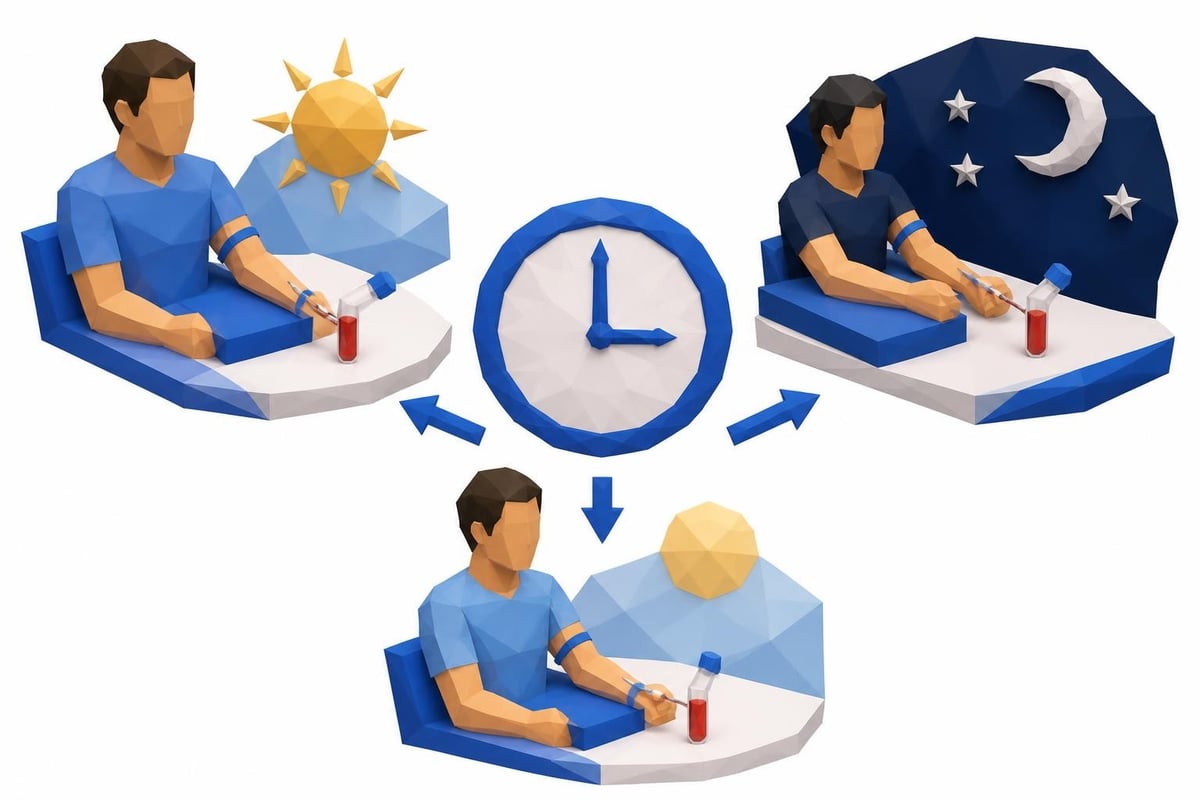
Testing at the wrong time can lead to misdiagnosis. A cortisol level of 8 mcg/dL is perfectly normal at 4 PM but may indicate adrenal insufficiency at 8 AM, while 15 mcg/dL at midnight could suggest Cushing's syndrome but is expected in the morning.
-
Different conditions require different testing times. Screening for adrenal excess typically uses late-night samples, while evaluating adrenal insufficiency requires early morning draws when cortisol should naturally peak.
-
Self-pay testing through services like JustLabs gives you control over timing, allowing you to schedule blood draws at the appropriate time of day without waiting weeks for doctor appointments or dealing with insurance restrictions.
-
Your next step is simple: If you're experiencing symptoms like unexplained fatigue, difficulty managing stress, or metabolic changes, order a cortisol test scheduled for the morning (typically between 7-9 AM) to establish your baseline when levels should be at their peak.
The Science Behind Cortisol's Daily Rhythm
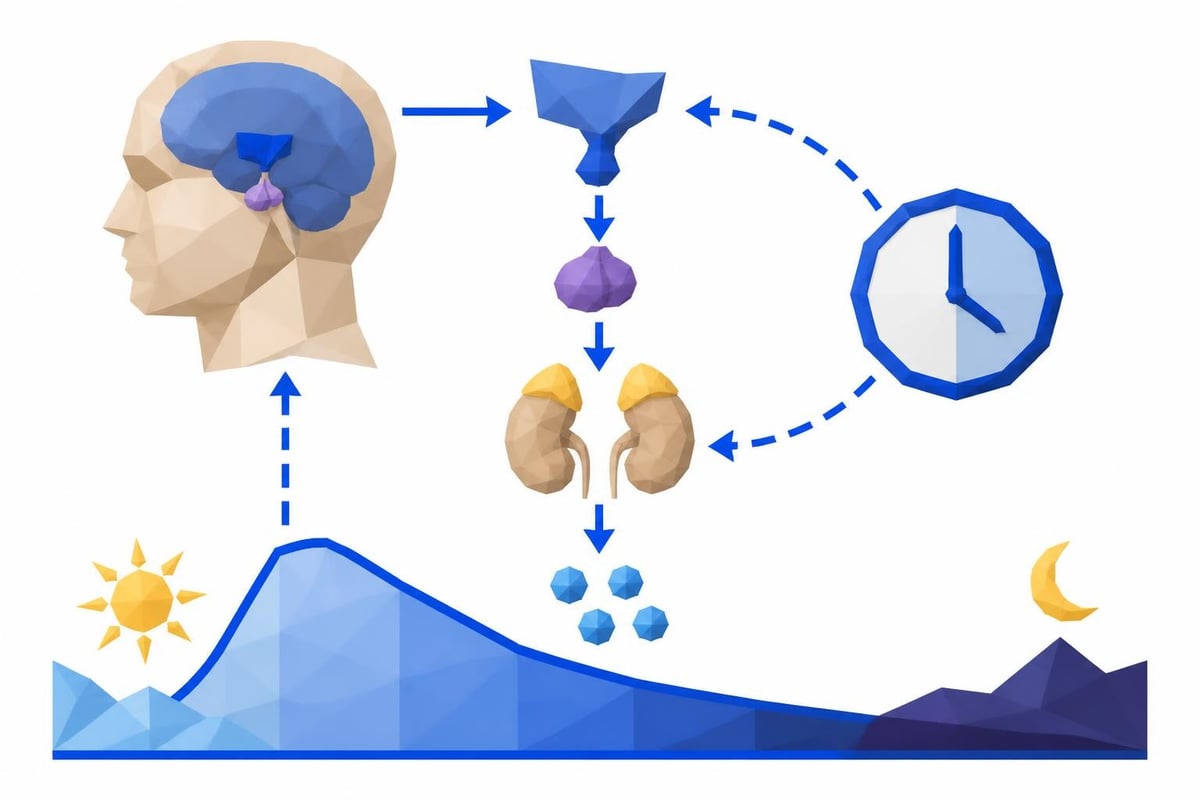
Cortisol production follows one of the most robust circadian rhythms in human physiology. Your adrenal glands don't produce this essential stress hormone at a constant rate throughout the day. Instead, they follow instructions from your brain's master clock, creating a predictable pattern that researchers have studied extensively.
Morning Cortisol Peak
The cortisol awakening response represents your body's natural preparation for the day ahead. Within 30 to 45 minutes after you wake up, cortisol levels surge by 50-75% above your sleeping baseline. This morning peak typically occurs between 6 AM and 9 AM for most people, though your specific timing depends on your individual sleep-wake schedule.
According to research on cortisol's circadian patterns, this morning surge serves multiple purposes: it increases blood sugar availability, enhances mental alertness, and prepares your metabolism for the energy demands of being awake and active. Normal morning cortisol levels generally range from 10 to 20 mcg/dL when measured via serum blood tests, though some laboratories use slightly different reference ranges.
The timing and magnitude of this peak provide crucial diagnostic information. A blunted morning rise may indicate adrenal insufficiency, chronic stress, or disrupted circadian rhythms. Conversely, an exaggerated response might suggest anxiety disorders or early-stage metabolic dysfunction.
Afternoon Decline Pattern
After reaching its morning zenith, cortisol doesn't simply plateau. Instead, it begins a gradual, stepwise descent throughout the day. By noon, levels typically drop to approximately 60-70% of the morning peak. This decline continues into the afternoon, with normal cortisol levels by time of day showing readings between 5 and 10 mcg/dL when tested between 4 PM and 6 PM.
This afternoon window presents unique testing challenges and opportunities. While less commonly used for routine screening, afternoon cortisol measurements can help identify abnormal diurnal variation. Some individuals with cortisol dysregulation maintain elevated levels into the afternoon when they should be declining, a pattern that single morning tests might miss.
Evening and Nighttime Cortisol Levels
The evening hours reveal some of the most diagnostically valuable cortisol measurements. As your body prepares for sleep, cortisol production drops to its lowest point of the entire 24-hour cycle. Normal cortisol levels by time of day reach their nadir around midnight, typically falling below 5 mcg/dL and often measuring between 2 and 4 mcg/dL in healthy individuals.
Clinical Significance of Late-Night Testing
Late-night salivary cortisol has emerged as a powerful screening tool for cortisol excess. The Endocrine Society guidelines for diagnosing Cushing's syndrome recommend late-night salivary cortisol as one of the first-line tests because the loss of normal nighttime suppression is an early and sensitive marker of hypercortisolism.
Why nighttime testing matters:
- Normal circadian rhythm should suppress cortisol to very low levels after 11 PM
- Persistent elevation suggests the body's stress response isn't properly "turning off"
- Late-night samples avoid the high variability seen in morning measurements
- Salivary collection at home eliminates the stress of venipuncture that can artificially raise results
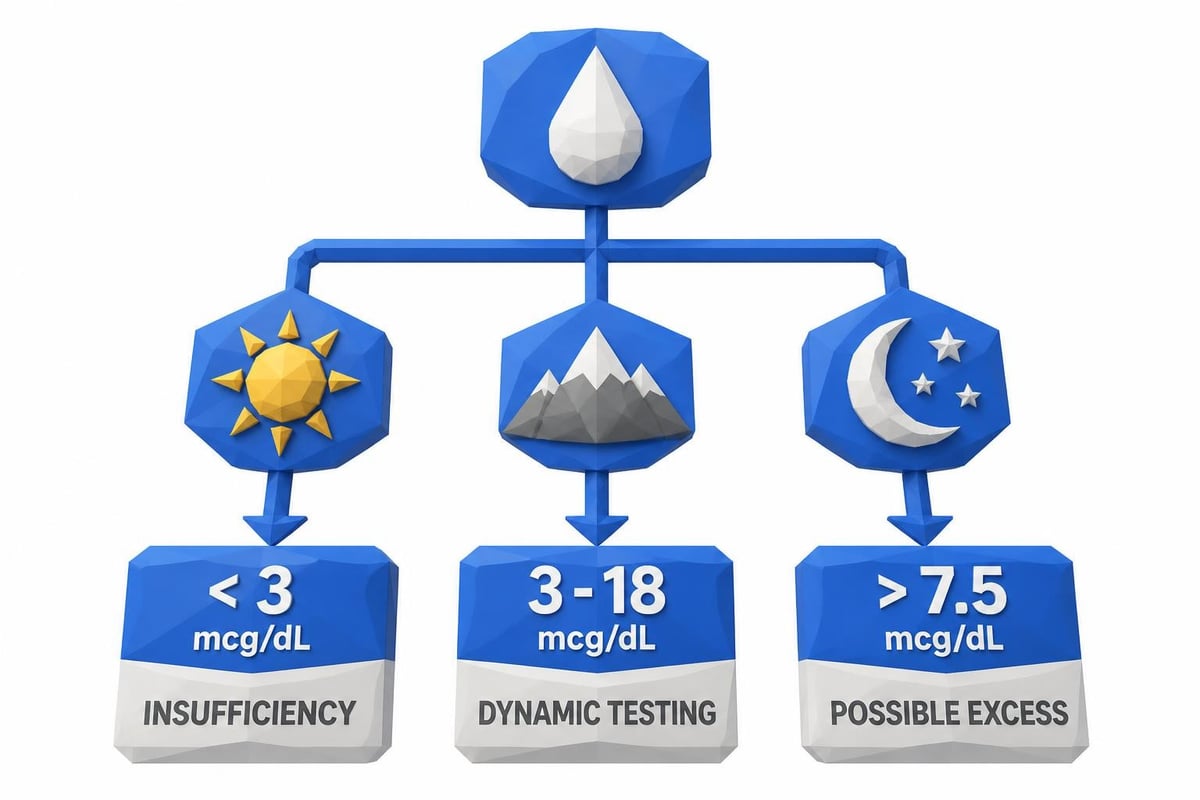
Unlike morning samples that require precise timing and can be affected by acute stress, late-night measurements offer a more stable diagnostic window. A cortisol level above 7.5 mcg/dL at midnight raises significant concern for Cushing's syndrome or other disorders of cortisol excess.
Reference Ranges by Time of Day
Understanding what's normal requires looking at established reference ranges for different collection times. These ranges represent the values seen in healthy populations without adrenal dysfunction, though individual variation exists.
| Time of Day | Serum Cortisol (mcg/dL) | Salivary Cortisol (ng/mL) | Clinical Context |
|---|---|---|---|
| 6-8 AM | 10-20 | 3-8 | Peak levels; primary screening time |
| 12 PM | 7-14 | 2-5 | Mid-decline; less commonly tested |
| 4-6 PM | 5-10 | 1-3 | Afternoon nadir approaching |
| 11 PM-Midnight | <5 | <1.5 | Critical for Cushing's screening |
These ranges use conventional units (mcg/dL for serum, ng/mL for saliva), though some laboratories report in SI units (nmol/L). The comprehensive guidelines on cortisol testing emphasize that each laboratory should establish its own reference ranges based on assay methodology and local population norms.
Factors That Influence Your Personal Range
While population-based reference ranges provide guidance, several factors affect where your individual levels fall:
- Sleep-wake timing: Shift workers and people with delayed sleep phase have shifted cortisol rhythms that peak later than conventional morning ranges
- Age: Older adults often show flattened cortisol curves with relatively higher evening levels and lower morning peaks
- Chronic stress: Prolonged stress can blunt the morning rise and elevate evening baseline
- Medications: Glucocorticoid medications suppress endogenous production; estrogen-containing contraceptives increase binding proteins and apparent total cortisol
When ordering tests through transparent lab testing services, understanding these individual factors helps you and your healthcare provider interpret results in proper context.
When to Test for Specific Conditions
The clinical question you're trying to answer determines optimal testing timing. Different endocrine disorders reveal themselves at different points in the cortisol curve, making strategic timing essential for accurate diagnosis.
Suspected Adrenal Insufficiency
Testing for low cortisol production requires capturing your morning peak. Since cortisol should be at its highest within one to two hours of waking, this is when deficiency becomes most apparent. The clinical protocols for HPA-axis testing recommend 8 AM sampling as the standard approach.
A morning cortisol below 3 mcg/dL strongly suggests adrenal insufficiency, while levels above 18 mcg/dL effectively rule it out. The intermediate zone (3-18 mcg/dL) requires additional dynamic testing such as ACTH stimulation to clarify adrenal function. This is why baseline morning cortisol serves as the appropriate first step before more complex testing.
For patients with suspected secondary adrenal insufficiency (pituitary-driven), morning cortisol should be paired with ACTH measurement at the same time point. The relationship between these two hormones, assessed when both should be at their peak, provides crucial diagnostic insight.
Screening for Cortisol Excess
Cushing's syndrome and other conditions involving cortisol overproduction are best detected when cortisol should be low. According to recent research on endocrine circadian control, the loss of normal circadian suppression represents one of the earliest detectable abnormalities in hypercortisolism.
Recommended screening approaches:
- Late-night salivary cortisol (collected at 11 PM or midnight)
- 24-hour urinary free cortisol (captures total daily production)
- Overnight dexamethasone suppression test (assesses feedback mechanisms)
Late-night testing offers several advantages. Collection can occur at home using salivary kits, avoiding the hospital setting that might elevate stress. Normal cortisol levels by time of day should be profoundly suppressed during sleep, making elevated late-night values highly specific for pathologic overproduction. A salivary cortisol above 145 ng/dL at 11 PM suggests Cushing's syndrome with high sensitivity and specificity.
Practical Testing Considerations
Successfully measuring cortisol requires attention to practical details that affect result accuracy. Even properly timed samples can yield misleading values if collection and handling aren't optimized.
Preparing for Your Blood Draw
Morning cortisol testing demands specific preparation to ensure accurate results. Schedule your blood draw between 7 AM and 9 AM when possible, ideally within two hours of your normal wake time. Avoid intense exercise before testing, as physical stress acutely raises cortisol. Similarly, try to minimize psychological stress, though the anxiety of venipuncture itself is unavoidable and generally accounts for in reference ranges.
Fasting isn't strictly required for cortisol measurement, unlike many other blood tests. However, many people combine cortisol with glucose or comprehensive metabolic panels, which do require fasting. Check with your testing facility about whether your specific test panel requires overnight fasting.
Understanding how the lab testing process works helps reduce anxiety and ensures you're properly prepared. When you order tests online, you receive detailed preparation instructions and can choose convenient collection locations near you.
Salivary vs. Serum Testing
Different sample types serve different purposes in cortisol assessment. Each has distinct advantages for measuring normal cortisol levels by time of day:
| Sample Type | Best Used For | Advantages | Limitations |
|---|---|---|---|
| Serum (blood) | Morning baseline, adrenal insufficiency | Gold standard, widely available | Requires venipuncture, stress can elevate |
| Salivary | Late-night screening, diurnal profiles | Home collection, stress-free, measures free cortisol | Limited lab availability, technique-sensitive |
| 24-hour urine | Total daily production, Cushing's screening | Integrates entire day, less affected by timing | Cumbersome collection, misses diurnal pattern |
Salivary cortisol specifically measures the unbound, biologically active fraction that freely passes into saliva. This makes it particularly valuable for late-night sampling when you want to avoid the stress and inconvenience of midnight blood draws. Collection involves placing a cotton swab in your mouth for two to three minutes, then storing the sample in your refrigerator until delivery to the lab.
Interpreting Your Results
Receiving cortisol results without proper context can be confusing or alarming. A number flagged as "high" or "low" must be evaluated against the time of collection, your individual circumstances, and the specific clinical question being addressed.
Morning Results
A morning cortisol of 15 mcg/dL typically indicates healthy adrenal function. This mid-range value, when sampled between 7 AM and 9 AM, suggests your adrenal glands are producing adequate cortisol and responding appropriately to circadian signals. You can generally be reassured that adrenal insufficiency is unlikely.
Values below 10 mcg/dL in the morning warrant closer attention, though they don't automatically indicate disease. Factors like recent illness, medications, or simply catching the tail end of your morning rise (if tested later in the morning window) can explain lower results. Repeat testing or dynamic stimulation tests help clarify whether these levels represent true adrenal dysfunction.
Extremely low morning cortisol (below 3 mcg/dL) raises serious concern for adrenal insufficiency and requires prompt medical evaluation. This finding, especially when accompanied by symptoms like fatigue, weight loss, low blood pressure, or darkening skin, may indicate Addison's disease or secondary adrenal failure requiring hormone replacement therapy.
Evening and Late-Night Results
Evening cortisol that measures 3 mcg/dL at 6 PM generally falls within normal expectations, representing the appropriate afternoon decline. However, a level of 12 mcg/dL at the same time would be abnormally elevated, suggesting impaired circadian rhythm or possible hypercortisolism.
Late-night values deserve special scrutiny. Normal cortisol levels by time of day should drop below 5 mcg/dL in serum or 1.5 ng/mL in saliva by midnight. Persistently elevated late-night cortisol, especially when confirmed on multiple occasions, strongly suggests disrupted HPA axis regulation and warrants investigation for Cushing's syndrome or other forms of glucocorticoid excess.
Beyond Single Time Points
While understanding normal cortisol levels by time of day at specific moments provides valuable information, some clinical situations benefit from more comprehensive assessment. Serial sampling throughout the day reveals your complete cortisol curve and how well you maintain diurnal variation.
Four-Point Salivary Cortisol Profiles
Some practitioners order four-point salivary cortisol profiles that capture:
- Morning (within 30 minutes of waking)
- Midday (around noon)
- Late afternoon (4-5 PM)
- Bedtime (10-11 PM)
This approach maps your entire cortisol curve, revealing patterns that single time points might miss. Someone with adrenal dysfunction might show a relatively normal morning value but fail to sustain levels through the afternoon, or maintain inappropriately high evening cortisol. The curve also helps assess conditions like "adrenal fatigue" (though this remains controversial in conventional endocrinology) by showing flattened or inverted patterns.
When Results Don't Match Symptoms
Sometimes cortisol results fall within normal ranges despite concerning symptoms. This apparent contradiction has several possible explanations. First, reference ranges represent population averages, and your personal optimal cortisol may differ from the statistical norm. Second, single measurements capture only a moment in time, potentially missing intermittent abnormalities. Third, cortisol sensitivity at tissue level varies, meaning normal circulating levels might produce abnormal effects if cellular receptors are overly sensitive or resistant.
If your symptoms persist despite reassuring cortisol results, consider comprehensive hormone testing that includes thyroid function, as conditions like hypothyroidism can mimic adrenal dysfunction. The TSH and Free T4 tests help rule out thyroid disorders that commonly overlap with cortisol-related symptoms.
Special Populations and Timing Considerations
Certain groups require modified approaches to cortisol testing because their normal circadian patterns differ from standard references or their testing needs differ from typical screening.
Shift Workers
People working night shifts or rotating schedules present unique challenges for cortisol assessment. Your circadian rhythm partially adapts to your sleep-wake schedule, shifting the cortisol peak to align with your actual wake time rather than clock time. For someone who sleeps from 9 AM to 5 PM and wakes for a night shift, cortisol should peak around 5-6 PM, not the conventional morning hours.
When testing shift workers, timing samples relative to wake time rather than clock time produces more meaningful results. A cortisol drawn two hours after a 5 PM wake time captures the shifted morning peak. However, clinical testing guidelines note that circadian adaptation in shift workers is often incomplete, creating ambiguity in interpretation.
Pregnant Individuals
Pregnancy dramatically alters cortisol physiology. Rising estrogen levels increase cortisol-binding globulin, which elevates total cortisol measurements while free (active) cortisol remains relatively normal. By the third trimester, total cortisol levels can reach values that would indicate Cushing's syndrome in non-pregnant individuals, yet this represents normal adaptation.
Testing cortisol during pregnancy requires specialized interpretation, preferably using salivary measurements that reflect free cortisol or adjusting serum values for trimester-specific reference ranges. The normal circadian pattern persists during pregnancy but at higher absolute levels.
Older Adults
Aging affects cortisol regulation in complex ways. Many studies show that older adults maintain similar morning peaks but exhibit higher evening and nighttime levels compared to younger people, resulting in a flattened diurnal curve. This "hypercortisolemic" pattern may contribute to age-related metabolic changes and cognitive decline.
When evaluating cortisol in older adults, slight elevations in evening cortisol shouldn't automatically trigger Cushing's evaluation, though the loss of diurnal rhythm still warrants investigation. Age-appropriate reference ranges help avoid over-diagnosis while not missing true pathology.
Key Takeaways
Understanding normal cortisol levels by time of day is essential for accurate health assessment. The dramatic variation from morning peak (10-20 mcg/dL) to nighttime low (2-4 mcg/dL) means timing can completely change whether a result is considered normal or abnormal.
Testing strategy depends on your clinical concern. Morning samples between 7-9 AM serve as the gold standard for screening adrenal insufficiency, while late-night salivary cortisol collected around 11 PM provides the best initial test for cortisol excess. Using the wrong timing can lead to false reassurance or unnecessary alarm.
Individual factors modify your cortisol pattern. Your sleep schedule, age, stress level, medications, and even pregnancy status affect where your cortisol falls within normal ranges. Interpreting results requires considering these personal variables alongside population-based reference values.
Access to properly timed testing matters. Traditional healthcare often struggles to schedule blood draws at optimal times, particularly for late-night samples that require home collection. Direct-access lab services eliminate these barriers, letting you test when medically appropriate rather than when convenient for office schedules.
Serial measurements often tell a more complete story than single values. While individual time points provide important snapshots, tracking your cortisol curve throughout the day can reveal patterns that single measurements miss, particularly for complex cases where initial results don't fully explain symptoms.
FAQ
What time of day is cortisol highest?
Cortisol reaches its peak level within 30 to 60 minutes after waking, typically between 6 AM and 9 AM for people on conventional sleep schedules. This morning surge represents the cortisol awakening response, with levels commonly ranging from 10 to 20 mcg/dL during this window. The exact timing shifts based on your individual wake time rather than clock time, so someone who routinely wakes at 10 AM will experience their cortisol peak around 10:30 to 11 AM.
How low should cortisol be at night?
Normal nighttime cortisol should drop below 5 mcg/dL in serum samples collected around midnight, with healthy individuals often measuring between 2 and 4 mcg/dL. For salivary cortisol measured at 11 PM or midnight, levels should typically fall below 1.5 ng/mL. This profound nighttime suppression is essential for restorative sleep and metabolic health, and the failure to achieve these low levels may indicate disorders like Cushing's syndrome or other disruptions of the hypothalamic-pituitary-adrenal axis.
Can I test cortisol at any time of day?
While cortisol can technically be measured at any time, the clinical value depends entirely on timing. Random cortisol levels are rarely useful because the wide normal variation throughout the day makes single values difficult to interpret without time context. Morning sampling (7-9 AM) works best for screening adrenal insufficiency, while late-night collection (11 PM to midnight) is optimal for detecting cortisol excess. Testing at standardized times allows comparison to established reference ranges and meaningful clinical interpretation.
What does a cortisol level of 12 mean?
A cortisol measurement of 12 mcg/dL must be interpreted in context of collection time. At 8 AM, this represents a normal mid-range value, suggesting adequate adrenal function. At 4 PM, it would be mildly elevated, potentially indicating stress or impaired diurnal variation. At midnight, 12 mcg/dL would be significantly elevated and concerning for Cushing's syndrome or other hypercortisolism. Always consider the timing when evaluating cortisol results, as the same number carries completely different clinical significance at different times of day.
How long does it take to get cortisol test results?
Standard cortisol testing typically returns results within 1 to 3 business days from most commercial laboratories. Serum cortisol measured from blood samples often processes faster than salivary cortisol, which may require specialized assays. When ordering through self-pay testing services, you receive results as soon as they're available from the lab, usually within this 1-3 day window. Urgent or STAT cortisol testing in hospital settings can provide results within hours when clinical situations require rapid diagnosis, though routine outpatient testing doesn't typically warrant this expedited processing.
Do I need a doctor's order to test cortisol?
Traditionally, cortisol testing required a physician's order, creating barriers for people seeking to understand their hormone levels. Direct-access lab testing services now allow you to order labs without a doctor visit, giving you immediate access to cortisol testing and other hormone assessments. This approach is particularly valuable when you want to establish baseline values, investigate symptoms before seeking medical care, or test at optimal times that don't align with your doctor's office schedule. Results come directly to you, and you can share them with healthcare providers for interpretation and follow-up planning.
Should I test cortisol if I have thyroid issues?
Cortisol and thyroid function are intimately connected through complex metabolic pathways, making concurrent evaluation often valuable. Adrenal dysfunction can impair thyroid hormone conversion, while thyroid disorders can mimic or exacerbate cortisol-related symptoms. If you're experiencing persistent fatigue despite thyroid treatment, adding cortisol assessment provides a more complete picture of your endocrine health. Including cortisol alongside your annual blood work checklist creates a comprehensive baseline for monitoring both systems over time.
Understanding normal cortisol levels by time of day empowers you to test strategically and interpret results accurately, whether screening for adrenal insufficiency with morning samples or investigating cortisol excess through late-night collection. When you're ready to assess your cortisol rhythm with properly timed testing, JustLabs provides convenient access to cortisol testing without the delays of scheduling doctor appointments or navigating insurance requirements. Order your test online, complete your blood draw at a time that matters medically, and receive clear results in 1-3 days to take control of your hormonal health.