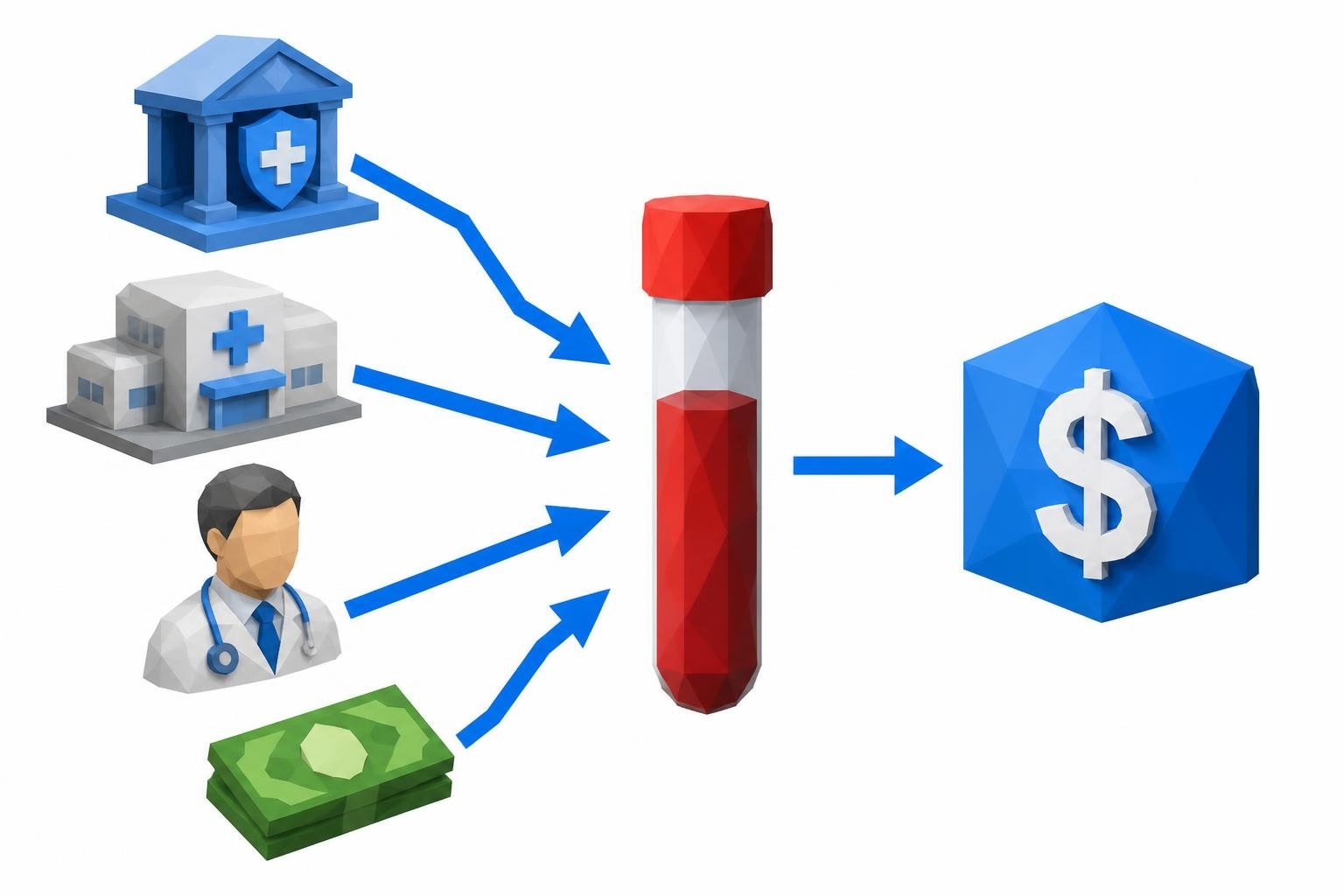
If you've ever received a medical bill for routine bloodwork, you've likely experienced sticker shock. The same basic metabolic panel that costs $15 at one facility might be billed at $250 at another. This dramatic pricing disparity isn't unique to complex procedures-it affects even the simplest diagnostic tests. Understanding why blood test prices vary so much requires examining the intricate web of healthcare billing, insurance negotiations, facility overhead, and administrative costs that transform a straightforward medical service into a pricing puzzle.
The Insurance Billing Maze Creates Price Distortions
Insurance billing fundamentally changes how laboratory tests are priced and charged. When a facility bills through insurance, the listed "charge" on your bill rarely represents what anyone actually pays. These chargemaster prices-the official rate card hospitals maintain-can be inflated by 300% to 1,000% above actual costs.
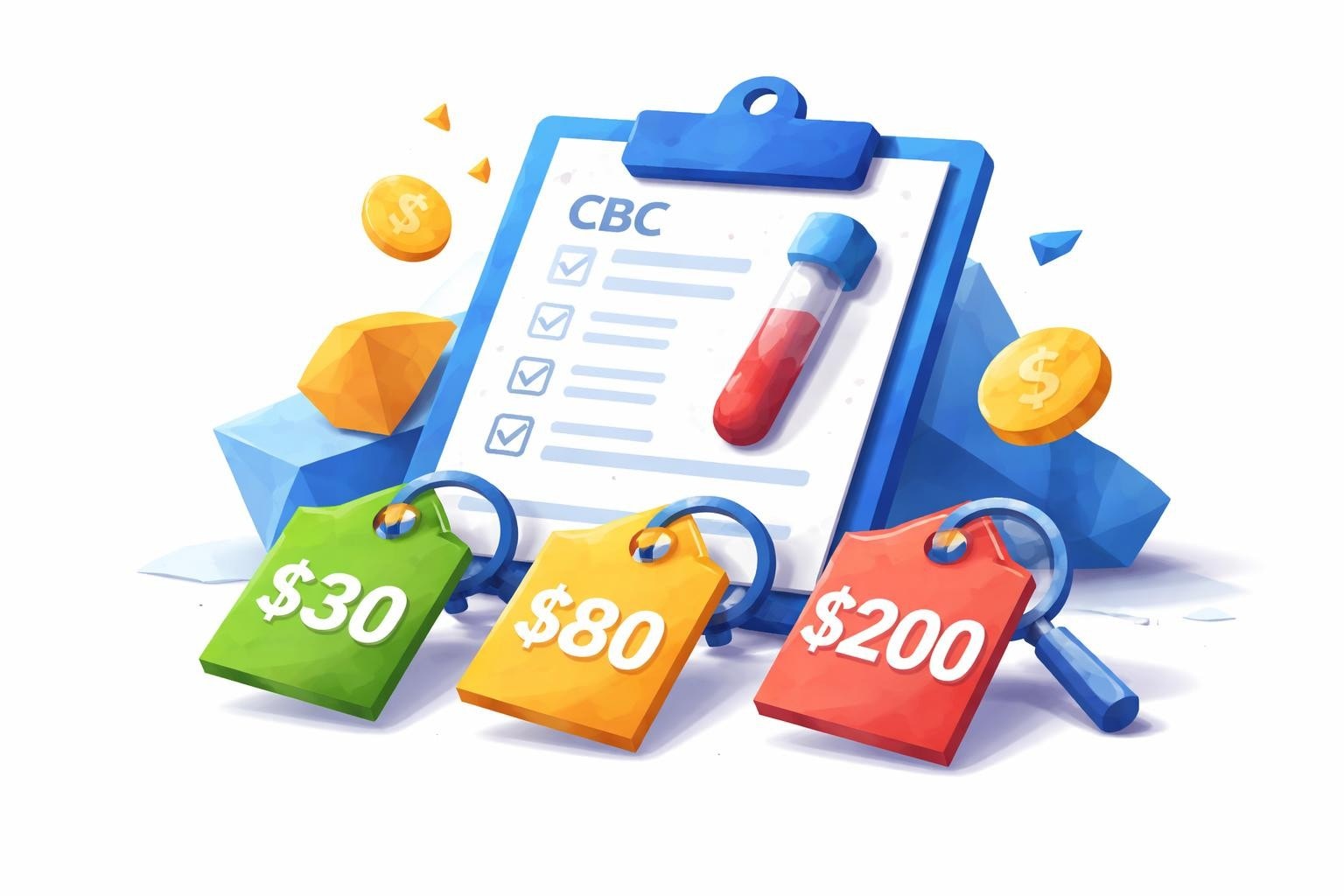
The real transaction happens behind the scenes through negotiated rates between insurers and providers. A CBC (complete blood count) might have a chargemaster price of $200, but your insurance company has negotiated a rate of $25. If you're uninsured and paying cash at that same facility, you might be charged the full $200.
How Negotiated Rates Create Multiple Price Points
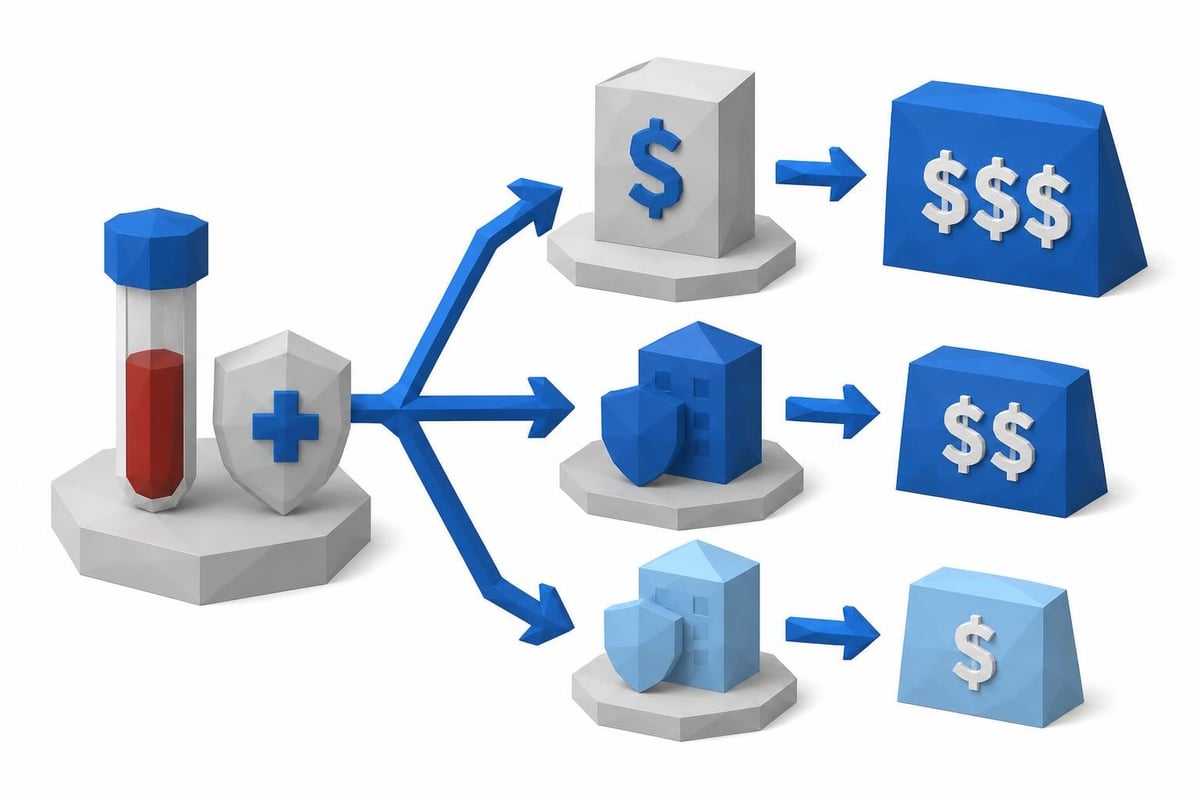
Every insurance company negotiates different rates with each laboratory or hospital system. Blue Cross might have secured a $30 rate for a lipid panel, while Aetna negotiated $45, and UnitedHealthcare settled on $38. This means the exact same test performed by the same technician on the same equipment has three different prices depending solely on which insurance card you present.
Research on laboratory pricing variations demonstrates that charges for common blood tests can vary by more than 1,000% across California hospitals alone. These disparities stem primarily from different negotiation outcomes rather than quality differences or cost variations.
Key factors in insurance-based pricing:
- Network status (in-network versus out-of-network rates)
- Insurance plan tier and deductible status
- Geographic region and market competition
- Hospital system size and negotiating power
- Historical contract terms and renewal cycles
Facility Fees Add Hidden Layers of Cost
Beyond the actual laboratory analysis, many healthcare facilities add facility fees that can double or triple your final bill. These fees theoretically cover the overhead costs of maintaining the testing facility-staffing, equipment maintenance, regulatory compliance, and building expenses. However, they're applied inconsistently across different types of providers.
Hospital-based outpatient labs typically charge the highest facility fees. When you visit a hospital outpatient laboratory, you might receive two separate bills: one for the laboratory service itself and another facility fee that can exceed the test cost. A vitamin D test with a $50 laboratory charge might come with an additional $150 facility fee.
Independent reference laboratories like Quest Diagnostics and LabCorp generally don't charge separate facility fees, making their pricing structures more predictable. Physician office laboratories fall somewhere in between, sometimes adding collection fees or office visit charges.
| Provider Type | Average Basic Metabolic Panel | Typical Facility Fee | Total Patient Cost |
|---|---|---|---|
| Hospital Outpatient Lab | $75 | $150-$300 | $225-$375 |
| Independent Reference Lab | $35 | $0 | $35 |
| Physician Office | $65 | $50-$100 | $115-$165 |
| Direct-to-Consumer Lab | $25 | $0 | $25 |
Physician Order Fees and Service Charges
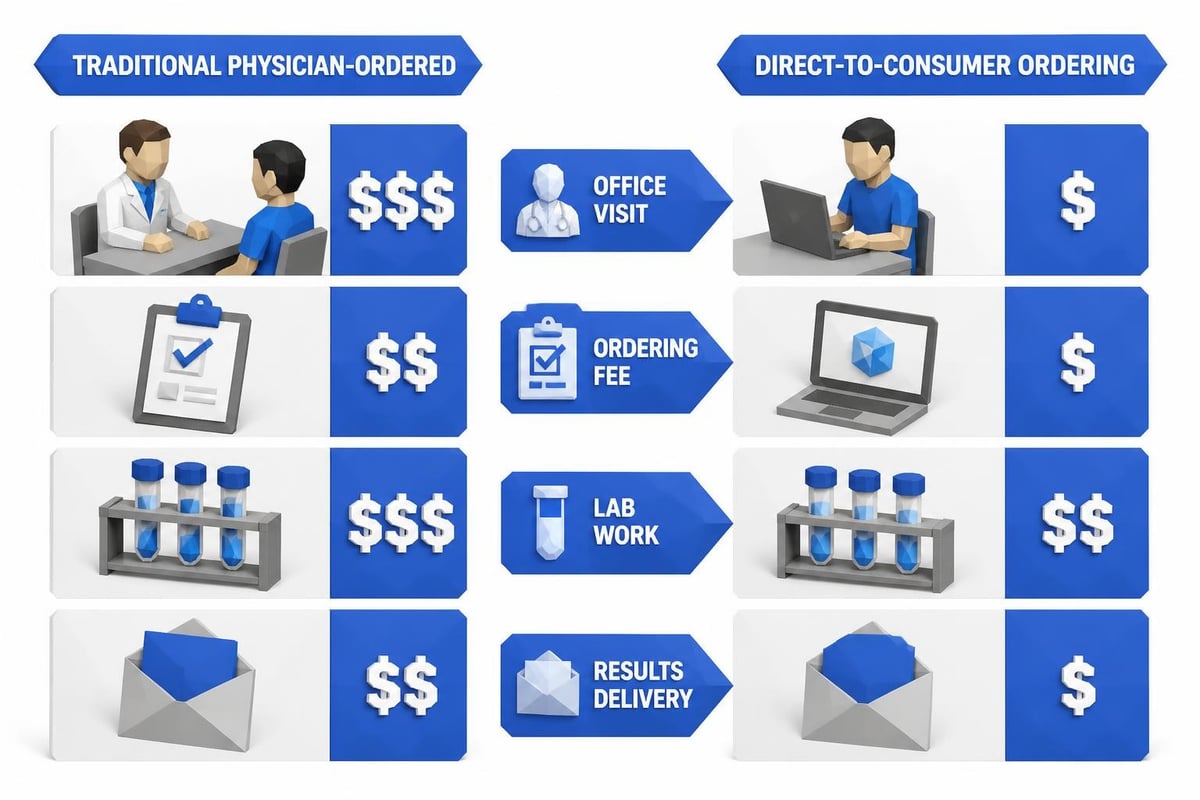
The requirement for a physician order adds another cost layer to blood testing. Traditional testing routes require you to visit your doctor, who orders the test and often adds a consultation fee or office visit charge. Even if the visit is brief and focused solely on test ordering, you might incur a $100-$250 office visit charge before the laboratory work even begins.
Some facilities bundle these charges, while others itemize them separately. When examining why blood test prices vary so much, physician involvement represents a significant variable. The same hemoglobin A1C test might cost $35 for the laboratory work, but the total patient expense could reach $250 when including the doctor's visit, order processing, and results consultation.
Modern Alternatives to Traditional Ordering
Direct-to-consumer laboratory services have transformed this landscape by allowing patients to order labs without a doctor. These platforms employ licensed physicians who review test requests and issue orders electronically, eliminating the need for in-person consultations while maintaining medical oversight.
This streamlined approach affects pricing by:
- Removing office visit fees from the equation
- Reducing administrative processing time and costs
- Enabling transparent upfront pricing without surprise bills
- Eliminating consultation charges for routine monitoring tests
- Providing same-day ordering without appointment delays
Cash Pricing Versus Insurance Billing
The difference between cash pricing and insurance billing reveals one of healthcare's most perplexing paradoxes. Paying cash often costs less than using insurance, particularly before meeting your deductible. This counterintuitive situation results from the complex relationship between chargemaster pricing, negotiated rates, and deductibles.
When you use insurance for a blood test while still in your deductible period, you're typically charged the negotiated rate-which might be $85 for a comprehensive metabolic panel. However, a self-pay option at an independent lab might offer the identical test for $29. You save $56 by bypassing insurance entirely.
Cash pricing advantages include:
- Transparent costs known before service delivery
- No surprise bills arriving weeks later
- Lower administrative overhead passed to consumers
- Simplified billing without claim processing
- Immediate service without insurance verification delays
Factors influencing blood test prices extend beyond just the testing methodology to encompass the entire payment and administrative ecosystem. Cash-pay models eliminate insurance verification, claim submission, denial management, and collection processes-each of which adds cost to traditional billing.
Geographic Location and Market Competition
Where you get tested dramatically impacts what you pay. Urban areas with multiple competing laboratories tend to have lower prices than rural regions with limited options. A basic lipid panel in New York City might cost $28 at a competitive independent lab, while the same test in a rural Montana hospital could reach $180.
Regional variations reflect differences in:
- Cost of living and staff salaries
- Real estate and facility overhead
- Local market competition intensity
- State regulatory requirements
- Regional insurance contract terms
Market competition particularly influences cash-pay pricing. In metropolitan areas with numerous direct-to-consumer testing options, providers compete on price transparency and convenience. Rural areas with monopolistic hospital systems see less pressure to offer competitive cash pricing.
The Role of Operational Scale
Large reference laboratories achieve economies of scale that smaller facilities cannot match. Processing thousands of tests daily allows for automation, specialized equipment optimization, and bulk purchasing of reagents and supplies. These efficiencies translate to lower per-test costs.
A small hospital laboratory might process 100 tests daily across 30 different test types, requiring generalized equipment and higher per-test reagent costs. Meanwhile, a major reference laboratory processing 50,000 daily tests achieves dramatically lower unit costs through specialization and volume.
Test Complexity and Technology Requirements
Not all blood tests are created equal, and complexity significantly impacts pricing variability. A basic glucose test requires minimal processing and standard equipment available in virtually any laboratory. An advanced genetic screening panel might require specialized equipment, highly trained technicians, and sophisticated reagents.
However, even simple tests show pricing variation that far exceeds cost differences. Understanding blood test costs reveals that administrative and billing factors often outweigh actual technical complexity in determining final prices.
| Test Complexity Level | Example Tests | Actual Processing Cost | Typical Hospital Charge | Typical Cash-Pay Price |
|---|---|---|---|---|
| Basic | Glucose, CBC | $3-$8 | $75-$200 | $10-$25 |
| Moderate | Lipid Panel, TSH | $8-$15 | $150-$350 | $25-$50 |
| Complex | Vitamin D, Hormone Panels | $15-$35 | $250-$600 | $50-$120 |
| Advanced | Genetic Testing, Specialty Markers | $50-$200 | $800-$3,000 | $200-$700 |
Administrative Overhead and Billing Complexity
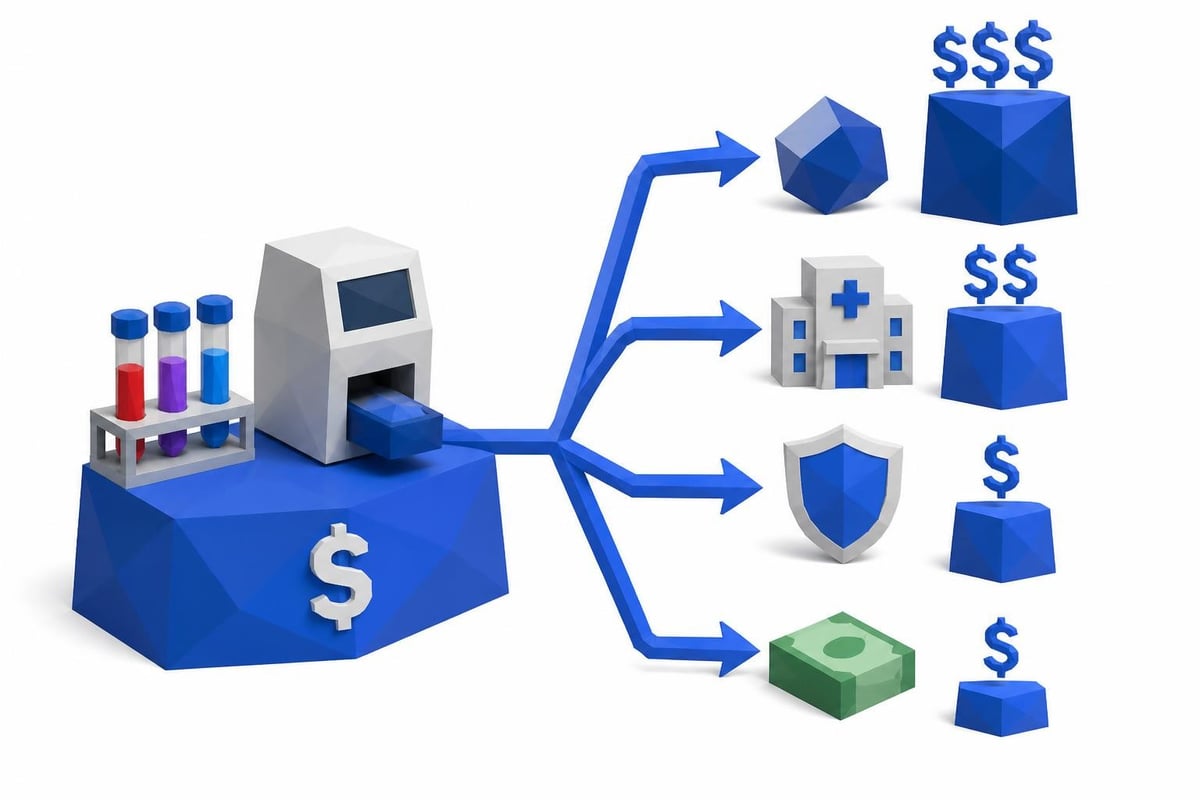
The infrastructure required to bill insurance adds substantial cost to every test. Insurance billing departments must verify coverage, submit claims, respond to denials, resubmit corrected claims, manage accounts receivable, and pursue collections. Reimbursement policies significantly affect laboratory pricing by creating administrative burdens that must be factored into charges.
A laboratory that accepts 20 different insurance plans must maintain staff familiar with each plan's requirements, billing codes, and submission procedures. This administrative apparatus can represent 20-30% of total operational costs, all of which gets built into test pricing.
Administrative cost drivers include:
- Insurance verification and pre-authorization
- Claims submission and tracking systems
- Denial management and appeals processes
- Collections and bad debt management
- Regulatory compliance and documentation
- Coding specialists and billing staff
Cash-pay models eliminate most of these expenses. Without insurance claims to process, laboratories can operate with minimal billing staff and simpler accounting systems. These savings enable lower pricing while maintaining profitability.
Quality Standards and Accreditation Costs
Laboratory quality standards affect pricing, though less dramatically than billing and administrative factors. CLIA certification, CAP accreditation, and state licensing all require investments in quality control, proficiency testing, and documentation. However, these represent baseline requirements that all legitimate laboratories must meet.
Factors affecting blood test prices include quality infrastructure, but the variation this creates is measured in dollars rather than hundreds of dollars. A laboratory with premium accreditations might charge $2-$5 more per test to cover enhanced quality programs-a minor factor compared to facility fees or insurance billing overhead.
Premium laboratories differentiate through:
- Faster turnaround times (24 hours versus 3-5 days)
- Enhanced customer service and support
- More convenient locations and hours
- Superior specimen collection experiences
- Advanced reporting and result interpretation
Transparent Pricing Models and Consumer Empowerment
The emergence of transparent pricing in laboratory testing represents a significant shift toward consumer-friendly healthcare. Rather than opaque billing that produces surprise costs weeks after service, modern platforms display exact prices before you order.
This transparency extends beyond just the test cost to include all associated fees. When you order through a transparent provider, you see the laboratory analysis fee, any physician review charges, collection fees (if applicable), and the total cost before committing. There are no hidden facility fees, no surprise bills, and no insurance claim uncertainty.
Transparent pricing requires:
- Published price lists accessible before ordering
- Clear itemization of all fees and charges
- No hidden facility or administrative fees
- Upfront total cost calculation
- No balance billing or unexpected charges after service
Understanding how transparent pricing works helps consumers make informed decisions about when to use insurance versus cash-pay options. For many routine tests, especially when in deductible periods, cash pricing provides both cost savings and billing simplicity.
Recommended Panel
Basic Wellness Panel
Save $2.5Our most affordable comprehensive screening includes the 4 tests doctors order most: CBC, Comprehensive Metabolic Panel, Lipid Panel, and TSH. Covers 30+ biomarkers in one blood draw.
Includes 37 biomarkers
$30
Fasting required
The Impact of Hospital Versus Independent Laboratory Settings
Hospital-based laboratories consistently charge higher prices than independent reference laboratories for identical tests. This premium reflects hospital overhead structures, different payer mixes, and facility fee practices. Research on why blood tests cost so much consistently identifies hospital markups as a primary driver of excessive charges.
A hospital must maintain 24/7 emergency capabilities, extensive regulatory compliance, and broad service offerings. These fixed costs get distributed across all services, including routine outpatient laboratory work. An independent laboratory focused solely on diagnostic testing operates with lower overhead and more specialized efficiency.
Equipment and Technology Differences
Despite assumptions that hospitals have superior equipment, most routine blood tests are actually sent to the same major reference laboratories regardless of where you have blood drawn. Whether collected at a hospital, physician office, or dedicated patient service center, your sample likely travels to Quest, LabCorp, or another major reference lab for analysis.
Price variations for identical tests often reflect collection location markups rather than actual analytical differences. The hospital charges a premium for collection and handling, even though the same technicians at the same reference laboratory perform the actual analysis.
Insurance Deductibles and Out-of-Pocket Maximums
Understanding your insurance deductible status is crucial when evaluating why blood test prices vary so much for you personally. Before meeting your deductible, you pay the full negotiated rate-which often exceeds competitive cash prices. After meeting your deductible but before your out-of-pocket maximum, you typically pay a percentage coinsurance.
Consider this scenario: Your insurance has negotiated a $120 rate for a comprehensive metabolic panel. With a $3,000 deductible you haven't met, you pay the full $120. However, the cash price at a direct-to-consumer lab is $35. Using insurance costs you an extra $85.
Deductible considerations when choosing payment method:
- Compare negotiated insurance rates to cash-pay prices
- Calculate whether the test helps you reach your deductible
- Consider whether you'll likely meet your deductible this year
- Evaluate total out-of-pocket costs including copays and coinsurance
- Factor in convenience and billing simplicity
This analysis becomes particularly important for routine monitoring tests performed regularly. If you need quarterly lipid panels for cholesterol management, paying $140 through insurance each time totals $560 annually. Paying $45 cash per test totals just $180-a $380 annual savings.
Bundling and Panel Pricing Strategies
Individual test pricing versus panel pricing creates another variation point. Some providers charge separately for each component test, while others bundle related tests into panels with package pricing. A lipid panel typically includes total cholesterol, HDL, LDL, and triglycerides. Ordered separately, these might total $120-$160. As a bundled panel, the price might be $35-$45.
Recommended Test
Lipid Panel (Standard)
The standard lipid panel measures your cholesterol and triglyceride levels - essential markers for assessing your risk of heart disease and stroke.
Includes 6 biomarkers
$8
Fasting required
However, bundling practices vary between providers. Some laboratories offer aggressive panel pricing to compete for volume, while others maintain itemized pricing that adds up to higher totals. Insurance billing further complicates this, as each component might be billed separately regardless of how the provider prices the service.
Making Informed Decisions About Laboratory Testing
Armed with understanding of why blood test prices vary so much, you can make strategic decisions about where and how to obtain testing. Before ordering any blood test, consider these questions:
- What is the cash-pay price at different providers?
- What is my insurance's negotiated rate?
- Have I met my deductible for this year?
- Are there facility fees or physician charges beyond the lab work?
- What is the total all-inclusive cost before I commit?
Comparing options requires actual price quotes, not estimates. Many traditional providers resist providing upfront pricing, requiring you to receive service before learning costs. This opacity perpetuates billing surprises and prevents informed consumer decision-making.
Modern platforms that display comprehensive test menus with pricing empower consumers to comparison shop and budget accurately for healthcare needs. This transparency represents the healthcare pricing model of the future, though adoption remains incomplete across the industry.
Understanding the factors behind laboratory pricing disparities empowers you to make cost-effective healthcare decisions and avoid unnecessary expenses. Whether driven by insurance billing complexity, facility fees, or administrative overhead, these variations create opportunities for significant savings when you choose transparent, streamlined testing options. Justlabs eliminates pricing uncertainty by providing upfront, all-inclusive costs for comprehensive laboratory testing, with results delivered in 1-3 days and no surprise bills or hidden fees-making quality healthcare both accessible and affordable.
Related Reading

References
Hsia RY, Akosa Antwi Y, Nath JB. Variation in charges for 10 common blood tests in California hospitals: a cross-sectional analysis. BMJ Open. 2014 Aug 14;4(8):e005482. doi: 10.1136/bmjopen-2014-005482. PMID: 25127708. https://pubmed.ncbi.nlm.nih.gov/25127708/
Bai G, Anderson GF. US Hospitals Are Still Using Chargemaster Markups To Maximize Revenues. Health Aff (Millwood). 2016 Sep 1;35(9):1658-64. doi: 10.1377/hlthaff.2016.0093. PMID: 27605648. https://pubmed.ncbi.nlm.nih.gov/27605648/
Jiang JX, Makary MA, Bai G. Comparison of US Hospital Cash Prices and Commercial Negotiated Prices for 70 Services. JAMA Netw Open. 2021 Dec 1;4(12):e2140526. doi: 10.1001/jamanetworkopen.2021.40526. PMID: 34932108. https://pubmed.ncbi.nlm.nih.gov/34932108/
Arvisais-Anhalt S, McDonald S, Park JY, Kapinos K, Lehmann CU, Basit M. Survey of Hospital Chargemaster Transparency. Appl Clin Inform. 2021 Mar;12(2):391-398. doi: 10.1055/s-0041-1729168. PMID: 33951742. https://pubmed.ncbi.nlm.nih.gov/33951742/
Johnson ST, Cook K, Dallmeier J, Heuett N, Barker K. Hospital price transparency: A primer. Am J Health Syst Pharm. 2026 Jul 8;83(14):745-756. doi: 10.1093/ajhp/zxag022. PMID: 41572721. https://pubmed.ncbi.nlm.nih.gov/41572721/