Many people take vitamin D supplements for bone health, immune function, or to address deficiency, but they often wonder about the downstream effects on other lab values. The question "does vitamin d supplementation change your calcium results" is more common than you might think, especially among those who monitor their health through regular blood work. Understanding this connection helps you interpret your test results accurately and make informed decisions about supplementation.
Big picture
- Vitamin D directly influences calcium metabolism by increasing intestinal absorption of calcium from food and regulating how your kidneys handle calcium, which can raise blood calcium levels when you supplement.
- The effect on calcium results varies by dose and individual factors including baseline vitamin D status, kidney function, existing calcium intake, and how long you've been supplementing.
- Most people taking standard vitamin D doses (1,000-2,000 IU daily) see minimal changes in calcium levels, but high-dose supplementation (above 4,000 IU daily) or prolonged use can produce measurable increases.
- Different calcium tests measure different things, and vitamin D supplementation may affect total calcium, ionized calcium, and albumin-corrected calcium results differently.
- Monitoring is essential for high-dose supplementation to catch hypercalcemia early, especially in people with certain medical conditions or those taking multiple supplements.
- Next step: If you're taking vitamin D supplements, consider baseline and follow-up testing through comprehensive metabolic panels to track both vitamin D and calcium levels safely.
How Vitamin D Regulates Calcium Levels
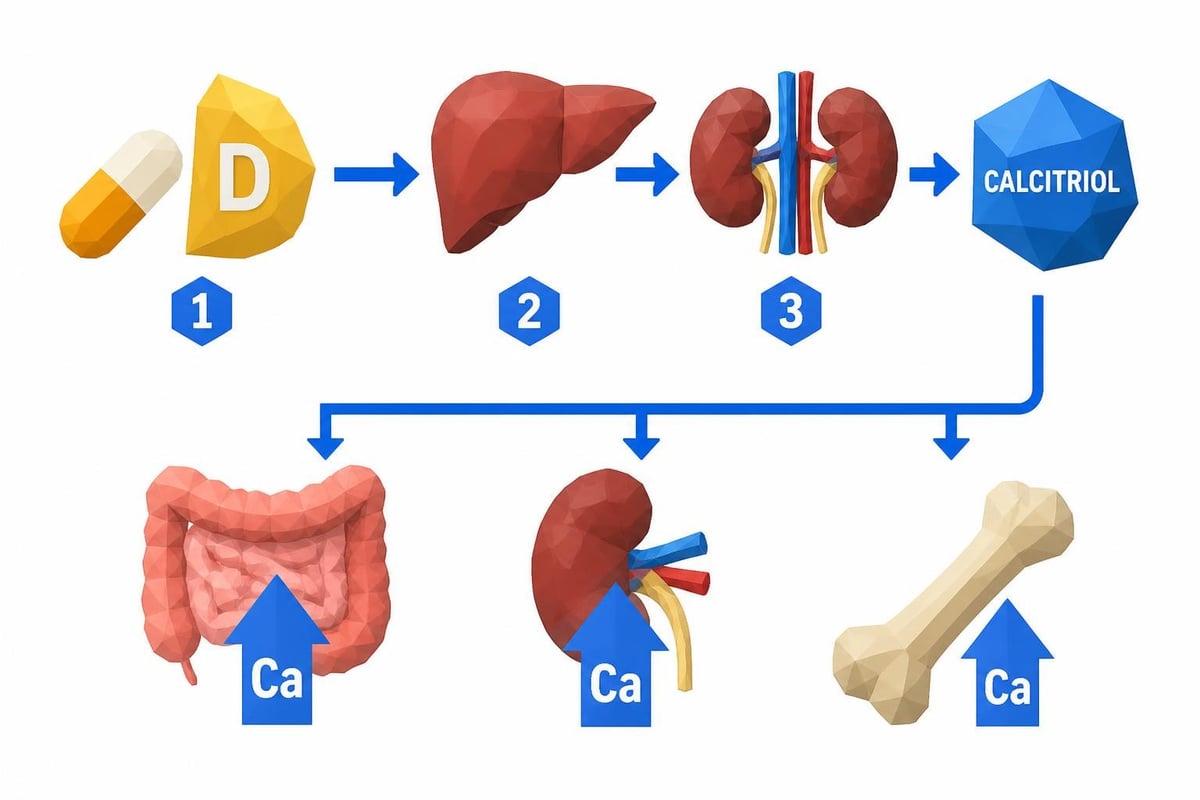
Vitamin D functions as a hormone in your body, and its primary role involves calcium homeostasis. When you take vitamin D supplements, the vitamin D3 (cholecalciferol) undergoes two conversion steps: first in the liver to 25-hydroxyvitamin D, then in the kidneys to the active form, 1,25-dihydroxyvitamin D (calcitriol).
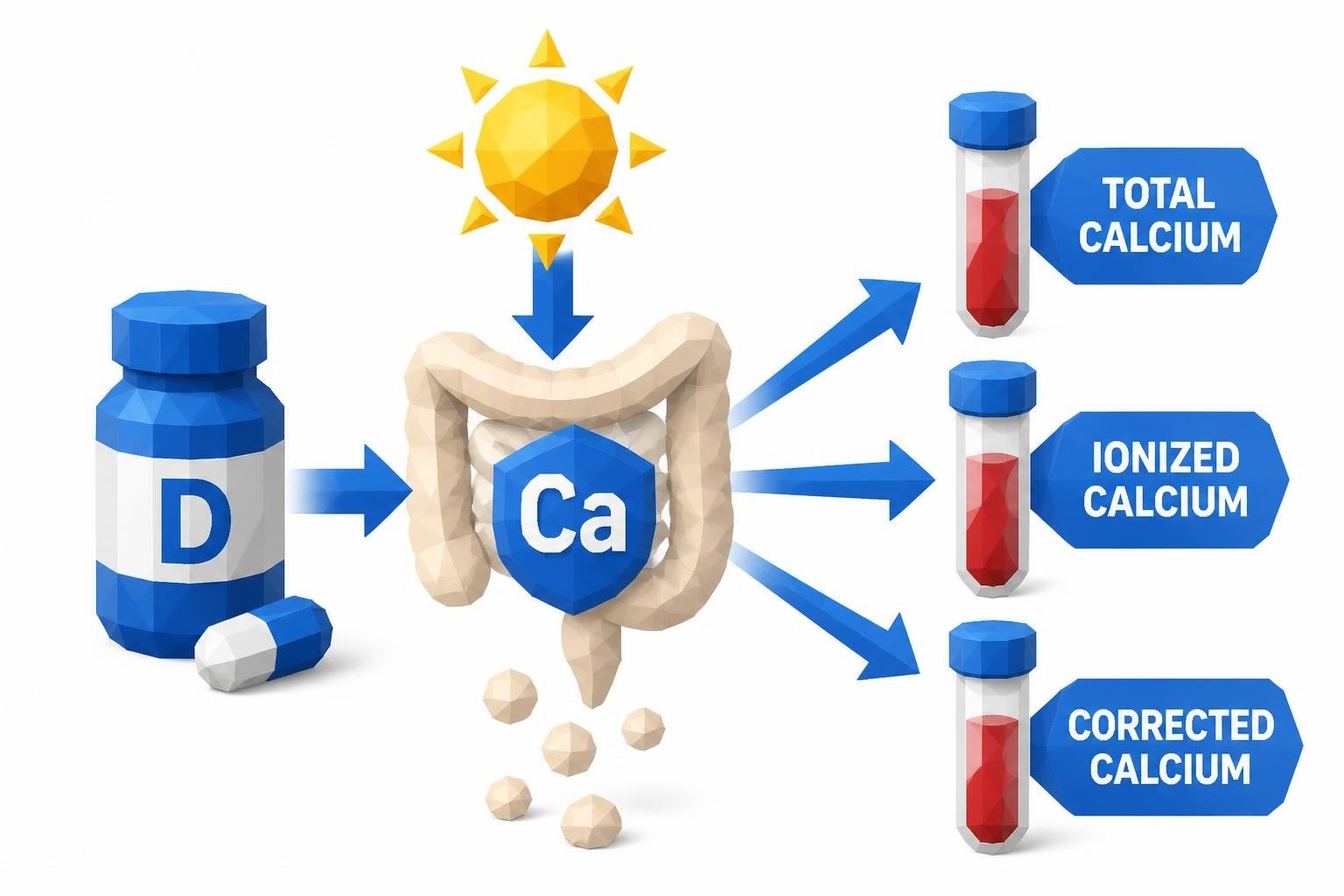
This active form directly increases calcium absorption in your intestines by up to 30-40% compared to unsupplemented states. The enhanced absorption means more dietary calcium enters your bloodstream, which is why does vitamin d supplementation change your calcium results becomes a relevant clinical question.
The Three Mechanisms of Action
Vitamin D affects calcium through multiple pathways:
- Intestinal absorption: Calcitriol stimulates the production of calcium-binding proteins in intestinal cells, dramatically improving calcium uptake from food
- Kidney reabsorption: Active vitamin D reduces urinary calcium loss by increasing reabsorption in the kidney tubules
- Bone metabolism: Vitamin D works with parathyroid hormone to mobilize calcium from bone when blood levels drop too low
The net effect depends on your body's calcium needs and current vitamin D status. Someone with severe vitamin D deficiency may actually have low calcium levels that normalize with supplementation, while someone with adequate status taking high doses may develop elevated calcium.
What Changes to Expect in Your Calcium Lab Results
The answer to does vitamin d supplementation change your calcium results depends heavily on dosage, duration, and individual factors. Research shows that standard supplementation produces modest effects, while high-dose protocols require monitoring.
Dose-Dependent Responses
| Daily Vitamin D Dose | Expected Calcium Change | Monitoring Recommendation |
|---|---|---|
| 400-1,000 IU | Minimal to none (0-0.2 mg/dL) | Annual check sufficient |
| 1,000-2,000 IU | Slight increase (0.1-0.3 mg/dL) | Check every 6-12 months |
| 2,000-4,000 IU | Modest increase (0.2-0.5 mg/dL) | Check every 3-6 months |
| Above 4,000 IU | Significant risk (0.5+ mg/dL) | Monthly for first 3 months, then quarterly |
| Above 10,000 IU | High risk of hypercalcemia | Weekly initially, requires medical supervision |
Most individuals taking physiologic replacement doses (1,000-2,000 IU daily) will see their calcium levels remain within the normal reference range of 8.5-10.5 mg/dL. However, even small increases can be clinically meaningful if you start at the higher end of normal.
The Society for Endocrinology guidelines note that vitamin D supplementation at recommended doses rarely causes hypercalcemia in people with normal kidney function, but monitoring remains prudent for doses exceeding 4,000 IU daily.
Timeline of Changes
Changes don't happen overnight. Calcium levels typically respond to vitamin D supplementation over weeks to months:
- First 2-4 weeks: Minimal detectable change as vitamin D stores build
- 4-8 weeks: Calcium absorption increases as active vitamin D levels rise
- 8-12 weeks: Peak effect on calcium levels in most individuals
- Beyond 3 months: Steady state reached, though continuous high-dose supplementation may cause progressive elevation
Understanding this timeline helps you interpret lab results correctly. Testing calcium within the first month of starting vitamin D may not capture the full effect.
Different Calcium Tests Show Different Results
When considering does vitamin d supplementation change your calcium results, you need to understand which calcium measurement you're looking at. Standard lab panels typically report total calcium, but this doesn't tell the complete story.
Total Calcium vs. Ionized Calcium
Total calcium measures all calcium in your blood, including:
- Ionized (free) calcium: 45-50% of total, biologically active
- Protein-bound calcium: 40-45%, mostly bound to albumin
- Complexed calcium: 5-10%, bound to anions like phosphate
Ionized calcium measures only the free, active form that your cells actually use.
Vitamin D supplementation primarily affects ionized calcium because it increases absorption of free calcium. However, the relationship between total and ionized calcium can shift based on albumin levels, pH, and other factors discussed in research on albumin-adjusted calcium.
Many labs report corrected calcium (adjusted for albumin) to account for protein binding. The various adjustment formulas attempt to estimate ionized calcium from total calcium, but they have limitations.
Recommended Panel
Complete Metabolic Health Panel
Save $3.5This comprehensive panel evaluates all aspects of metabolic health: organ function, cholesterol, blood sugar, insulin resistance, and inflammation - the key drivers of chronic disease.
Includes 26 biomarkers
$50
Fasting required
Which Test Should You Use?
For monitoring vitamin D supplementation effects:
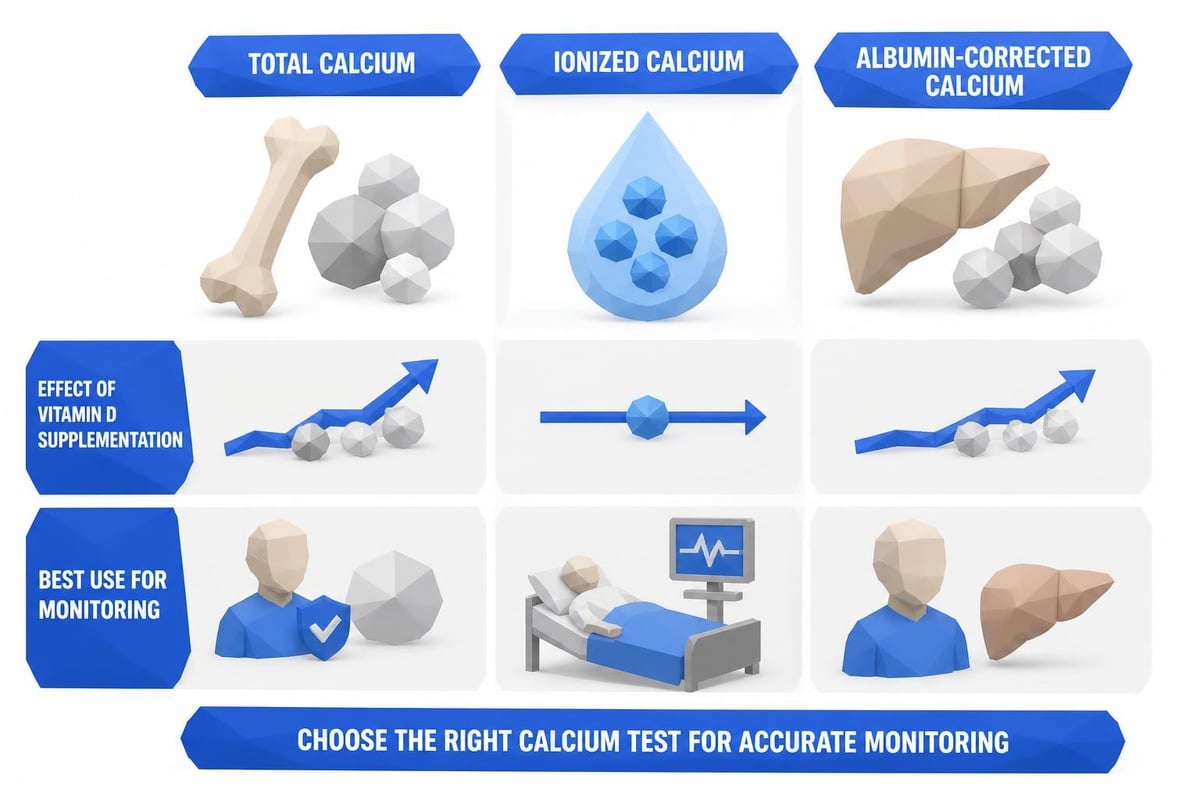
- Total calcium: Good for initial screening, included in comprehensive metabolic panels
- Ionized calcium: Most accurate for detecting true hypercalcemia, especially if albumin is abnormal
- Corrected calcium: Useful middle ground when ionized testing isn't available
If you're taking vitamin D and your total calcium is elevated but you have low albumin levels (from liver disease, malnutrition, or other conditions), an ionized calcium test provides the most accurate assessment of whether your supplementation is causing problems.
Services like Justlabs make it easy to order these tests without requiring a doctor's visit, allowing you to monitor your levels proactively. Their comprehensive metabolic panel includes calcium alongside other electrolytes and kidney function markers.
Individual Factors That Modify the Calcium Response
Not everyone responds identically to vitamin D supplementation. Several factors determine whether does vitamin d supplementation change your calcium results significantly in your case.
Baseline Vitamin D Status
People with severe deficiency (25-hydroxyvitamin D below 20 ng/mL) often have secondary hyperparathyroidism and may actually show low-normal calcium levels. When they start supplementation, their calcium may rise toward the middle of the reference range as their parathyroid hormone normalizes.
People with adequate vitamin D levels (30-50 ng/mL) who add supplementation are more likely to see calcium creep upward, since they don't have a deficiency to correct.
This is why understanding your vitamin D level before supplementing helps predict calcium changes.
Calcium Intake and Absorption
Your dietary calcium intake interacts with vitamin D supplementation. High calcium diets (above 1,200 mg daily) combined with vitamin D supplementation increase the risk of elevated calcium results.
The WHO guidance on calcium supplementation addresses this interaction, particularly in populations taking both calcium and vitamin D supplements.
Key dietary sources of calcium:
- Dairy products: 300 mg per cup of milk
- Fortified plant milks: 200-450 mg per cup
- Leafy greens: 100-250 mg per serving
- Fortified cereals: 100-1,000 mg per serving
- Calcium-fortified orange juice: 350 mg per cup
Adding up these sources plus supplements can easily exceed 1,500 mg daily, which combined with vitamin D may push calcium levels higher.
Kidney Function and Age
Kidney function critically affects both vitamin D activation and calcium excretion. People with chronic kidney disease metabolize vitamin D differently and may develop high calcium levels more easily.
Age-related changes also matter:
- Older adults absorb less calcium naturally, so vitamin D has a more pronounced effect
- Postmenopausal women may see greater calcium increases from vitamin D supplementation
- Younger individuals with robust kidney function typically maintain tighter calcium control
When Vitamin D Causes Problematic Calcium Elevation
While most people tolerate standard vitamin D supplementation well, does vitamin d supplementation change your calcium results to dangerous levels in certain situations? Yes, particularly with high doses or specific risk factors.
Vitamin D Toxicity and Hypercalcemia
Vitamin D toxicity (also called hypervitaminosis D) occurs when 25-hydroxyvitamin D levels exceed 150 ng/mL, though symptoms may begin at lower levels. The resulting hypercalcemia can cause:
- Gastrointestinal symptoms: Nausea, vomiting, poor appetite, constipation
- Neurological effects: Confusion, depression, difficulty concentrating
- Kidney problems: Increased urination, kidney stones, eventual kidney damage
- Cardiovascular issues: Irregular heartbeat, calcification of blood vessels
The Endocrine Society's clinical guidelines on hypercalcemia detail the diagnostic approach when vitamin D supplementation contributes to elevated calcium.
High-Risk Scenarios
Certain situations dramatically increase hypercalcemia risk:
| Risk Factor | Why It Matters | Recommended Action |
|---|---|---|
| Sarcoidosis or granulomatous disease | Extra-renal vitamin D activation | Avoid supplementation unless monitored |
| Primary hyperparathyroidism | Already elevated calcium | Check calcium before starting vitamin D |
| Thiazide diuretic use | Reduces calcium excretion | Use lower vitamin D doses |
| Very high-dose supplementation (>10,000 IU daily) | Overwhelms normal regulation | Requires medical supervision |
| Immobility | Increased bone calcium release | Monitor calcium closely |
People with these conditions should have calcium levels checked before starting vitamin D and monitored regularly during supplementation. Self-pay testing services allow this monitoring without the need for repeated doctor visits.
Optimal Testing Strategy When Taking Vitamin D
To properly answer does vitamin d supplementation change your calcium results for your individual situation, strategic testing is essential.
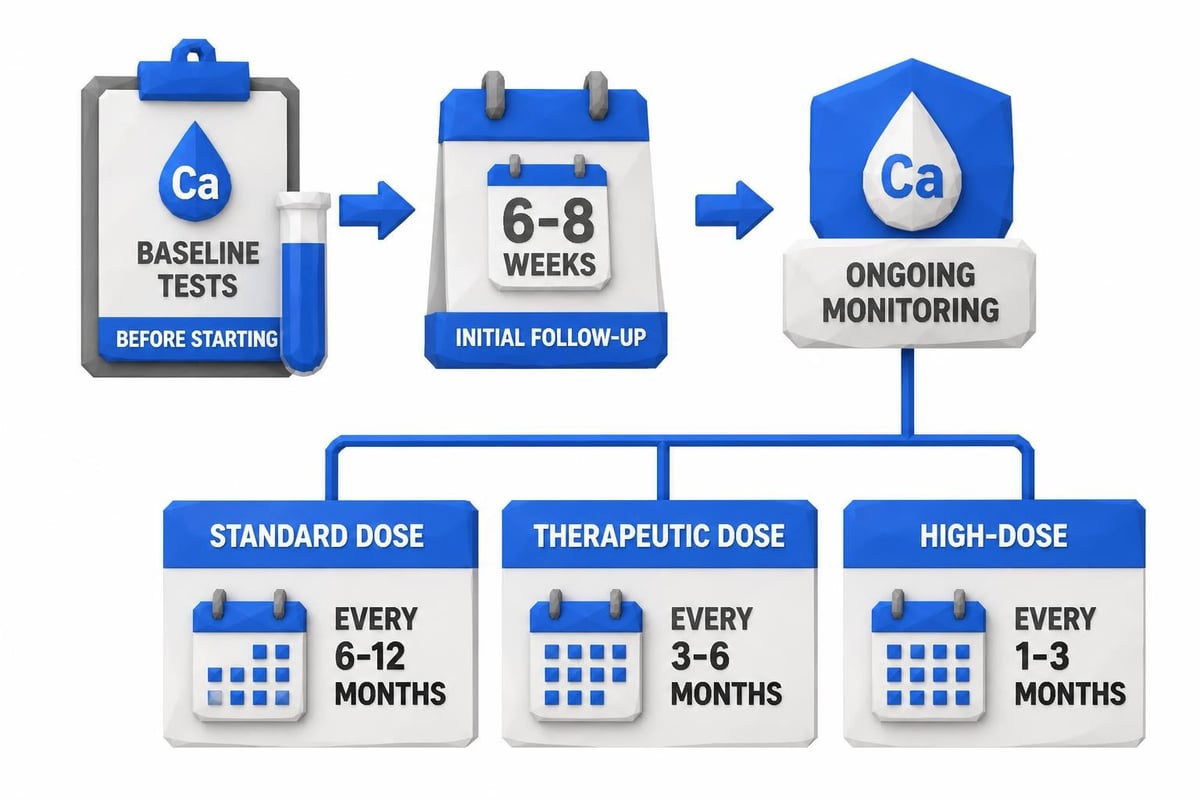
Baseline Testing
Before starting vitamin D supplementation, obtain:
- 25-hydroxyvitamin D: Establishes your starting level and determines appropriate dosing
- Total calcium: Provides baseline for comparison (part of comprehensive metabolic panel)
- Parathyroid hormone (PTH): Optional but helpful to assess calcium regulation
- Albumin: Needed to interpret total calcium correctly
This baseline allows you to track changes and catch problems early.
Follow-Up Monitoring Schedule
For standard doses (400-2,000 IU daily):
- Recheck vitamin D and calcium at 3 months
- If stable, annual monitoring is sufficient
- Watch for symptoms of hypercalcemia between tests
For therapeutic doses (2,000-4,000 IU daily):
- Recheck at 6-8 weeks initially
- Once stable, every 3-6 months
- Consider ionized calcium if total calcium is borderline elevated
For high doses (above 4,000 IU daily):
- Monthly monitoring for first 3 months
- Quarterly thereafter
- Requires medical oversight
- Both vitamin D and calcium should be measured
Recommended Panel
Vitamin & Mineral Panel
Save $5This panel tests the most commonly deficient nutrients: Vitamin D, B12, Folate, Iron (with complete iron studies), Ferritin, and Magnesium - the building blocks your body needs to function optimally.
Includes 9 biomarkers
$64
Fasting required
Interpreting Your Results
Understanding your numbers helps you make informed decisions:
Normal calcium: 8.5-10.5 mg/dL (varies slightly by lab)
- Below 8.5: Hypocalcemia, vitamin D may help
- 8.5-10.5: Normal, safe to continue current dose
- 10.5-11.5: Mild hypercalcemia, reduce or stop vitamin D
- Above 11.5: Significant hypercalcemia, stop vitamin D and seek medical attention
Optimal vitamin D: 30-50 ng/mL for most people
- Below 20: Deficiency, higher doses may be needed
- 20-30: Insufficiency, maintenance doses appropriate
- 30-50: Optimal range for most individuals
- 50-80: Higher than needed for most, not harmful
- Above 100: Excessive, risk of toxicity increases
When you order lab tests online through services like Justlabs, you receive detailed reference ranges and can track trends over time. Their platform provides results in 1-3 days, making it convenient to monitor supplementation effects.
Adjusting Your Vitamin D Dose Based on Calcium Results
If you discover that does vitamin d supplementation change your calcium results beyond the normal range, dose adjustment is the first step.
When Calcium Rises Above Normal
Mild elevation (10.6-11.0 mg/dL):
- Reduce vitamin D dose by 50%
- Recheck calcium in 4-6 weeks
- Review total calcium intake from diet and supplements
- Ensure adequate hydration
Moderate elevation (11.1-11.9 mg/dL):
- Stop vitamin D supplementation temporarily
- Recheck calcium in 2-3 weeks
- Consider checking ionized calcium and PTH
- Review medications that affect calcium
Severe elevation (12.0 mg/dL or higher):
- Stop vitamin D immediately
- Seek medical evaluation
- May require treatment beyond stopping supplementation
Safe Supplementation Practices
To minimize the risk of calcium elevation while getting vitamin D benefits:
- Start with conservative doses: 1,000-2,000 IU daily is sufficient for most people
- Test before supplementing: Know your baseline vitamin D and calcium levels
- Avoid megadoses: Daily doses above 4,000 IU rarely offer additional benefits and increase risks
- Don't assume more is better: Vitamin D has a therapeutic range, not a "more is better" curve
- Account for fortified foods: Many foods now contain added vitamin D
- Consider intermittent dosing: Weekly high doses (e.g., 10,000 IU once weekly) may be safer than daily high doses for some people
The goal is maintaining vitamin D in the 30-50 ng/mL range without pushing calcium above normal limits.
Key Takeaways
So, does vitamin d supplementation change your calcium results? The answer is yes, but the magnitude and clinical significance depend on multiple factors. Standard doses of vitamin D (1,000-2,000 IU daily) typically cause minimal calcium elevation in healthy individuals, while high-dose supplementation can produce measurable and potentially problematic increases.
The relationship between vitamin D and calcium is complex because vitamin D increases intestinal calcium absorption, reduces urinary calcium loss, and affects bone metabolism. These effects accumulate over weeks to months of supplementation.
Individual responses vary based on baseline vitamin D status, kidney function, age, calcium intake, and medical conditions. Someone with severe vitamin D deficiency may see low calcium normalize, while someone with adequate levels taking high doses risks hypercalcemia.
Different calcium tests provide different information. Total calcium (measured in standard metabolic panels) is useful for screening, but ionized calcium provides the most accurate assessment of biologically active calcium, especially when protein levels are abnormal.
Strategic monitoring prevents problems. Baseline testing before starting supplementation, followed by appropriate follow-up based on dose, allows early detection of rising calcium levels before they cause symptoms.
Dose adjustment based on lab results optimizes safety. If calcium rises above normal, reducing or stopping vitamin D supplementation typically resolves the issue within weeks to months.
For anyone taking vitamin D supplements or considering them, understanding how supplementation affects calcium results empowers informed decision-making and safer use of this important nutrient.
FAQ
How long after starting vitamin D will my calcium levels change?
Calcium levels typically begin rising 4-8 weeks after starting vitamin D supplementation, with peak effects around 8-12 weeks. This timeline reflects the time needed for vitamin D to be converted to its active form and for increased intestinal calcium absorption to impact blood levels. Testing calcium before 4 weeks of supplementation may not capture the full effect.
Can I take vitamin D if my calcium is already at the high end of normal?
If your calcium is at the high end of normal (10.3-10.5 mg/dL), you can still take vitamin D, but start with conservative doses (1,000 IU daily) and monitor closely. Recheck your calcium after 6-8 weeks of supplementation. Consider having ionized calcium measured for a more accurate assessment, and ensure you're not getting excessive calcium from dietary sources or supplements.
Will stopping vitamin D lower my calcium quickly?
Calcium levels typically decrease gradually after stopping vitamin D supplementation, not immediately. Because vitamin D is fat-soluble and stored in tissues, it takes several weeks to months for levels to drop and for calcium to normalize. If you have significantly elevated calcium (above 11.5 mg/dL), you should seek medical attention rather than just stopping vitamin D, as additional treatment may be needed.
Should I take calcium supplements with vitamin D?
Whether to take calcium supplements with vitamin D depends on your dietary intake and bone health needs. Many people get adequate calcium from food (dairy, fortified plant milks, leafy greens) and don't need supplements. Taking both vitamin D and calcium supplements increases the risk of elevated calcium levels, particularly if you're taking high-dose vitamin D. Check your total calcium intake from all sources before adding supplements.
What symptoms indicate my calcium is too high from vitamin D?
Symptoms of high calcium (hypercalcemia) from vitamin D supplementation include excessive thirst and urination, constipation, nausea, vomiting, weakness, confusion, bone pain, and kidney stones. However, mild to moderate calcium elevation often causes no symptoms, which is why lab monitoring is essential. If you experience these symptoms while taking vitamin D, check your calcium levels promptly and consult a healthcare provider.
Do I need to check both vitamin D and calcium levels?
Yes, checking both vitamin D (25-hydroxyvitamin D) and calcium levels provides the complete picture when monitoring supplementation. Vitamin D testing shows whether you're achieving adequate levels (30-50 ng/mL), while calcium testing reveals whether the supplementation is affecting calcium homeostasis. Both values inform dose adjustments and safety monitoring.
Can vitamin D deficiency cause low calcium?
Severe vitamin D deficiency can contribute to low calcium levels, though this is less common than might be expected. In prolonged deficiency, the body compensates by increasing parathyroid hormone, which maintains normal calcium levels by pulling it from bones. However, in severe cases or with inadequate calcium intake, vitamin D deficiency can result in low calcium, weak bones, and osteomalacia (bone softening in adults).
How much does calcium typically increase with vitamin D supplementation?
With standard vitamin D supplementation (1,000-2,000 IU daily), most people experience minimal calcium increases of 0.1-0.3 mg/dL, often remaining within the normal reference range. Higher doses (above 4,000 IU daily) may increase calcium by 0.5 mg/dL or more. Individual responses vary significantly based on baseline vitamin D status, kidney function, calcium intake, and other factors.
Understanding whether does vitamin d supplementation change your calcium results requires personalized testing and monitoring based on your individual supplementation regimen and risk factors. Whether you're taking standard maintenance doses or higher therapeutic amounts, tracking both vitamin D and calcium levels helps ensure you're getting the benefits of supplementation without unwanted effects. Justlabs makes this monitoring convenient and affordable through self-pay testing that delivers results in 1-3 days, allowing you to optimize your supplementation strategy with confidence and without the need for insurance or doctor visits for routine monitoring.