When you receive urinalysis results showing abnormal levels of protein, leukocytes, nitrites, or ketones, understanding what these findings mean can feel overwhelming. Each of these markers provides valuable clues about your kidney function, urinary tract health, and metabolic status, and knowing how to interpret them empowers you to take appropriate next steps for your health.
Big picture
- Urinalysis is a screening test that uses chemical reactions on a dipstick to detect substances in your urine, including protein, leukocytes (white blood cells), nitrites (from bacteria), and ketones (from fat breakdown).
- These four markers signal different conditions: protein often indicates kidney problems, leukocytes and nitrites suggest urinary tract infections, and ketones appear during fasting, low-carb diets, or uncontrolled diabetes.
- Positive results typically require follow-up because dipstick tests can produce false positives and false negatives, meaning confirmatory testing or clinical evaluation is usually necessary before starting treatment.
- Understanding the limitations matters: factors like hydration status, medications, diet, and specimen handling can all affect your urinalysis results explained protein leukocytes nitrites ketones findings.
- You can access urinalysis testing directly through services that allow you to order lab tests without a doctor visit, making it easier to monitor these markers when you have symptoms or health concerns.
- Next steps depend on the combination of findings: isolated trace protein differs significantly from protein plus leukocytes and nitrites together, which is why context and clinical correlation matter tremendously.
Understanding Protein in Your Urinalysis
Protein in urine, medically termed proteinuria, represents one of the most significant findings on a urinalysis because healthy kidneys typically filter out protein and prevent it from appearing in urine. When protein shows up on a dipstick test, it suggests your kidneys may not be filtering properly.
What Protein Levels Mean
Dipstick urinalysis reports protein semi-quantitatively using categories like negative, trace, 1+, 2+, 3+, or 4+. These correspond roughly to protein concentrations ranging from less than 10 mg/dL (negative) to over 1000 mg/dL (4+). However, dipstick protein testing has important limitations because it primarily detects albumin and may miss other types of protein.
The KDIGO 2024 clinical guidance on chronic kidney disease recommends confirming any positive dipstick protein result with quantitative testing. This is because dipstick results can be affected by urine concentration: dilute urine may show false negatives while concentrated urine may show false positives.
Common Causes of Proteinuria
| Cause Category | Examples | Clinical Significance |
|---|---|---|
| Transient | Exercise, fever, dehydration | Usually resolves, not concerning |
| Orthostatic | Standing position increases protein | Common in adolescents, benign |
| Persistent | Diabetes, hypertension, glomerular disease | Requires evaluation for kidney damage |
| Overflow | Multiple myeloma (excess light chains) | May not show on dipstick |
Persistent proteinuria warrants further evaluation because it can indicate chronic kidney disease, diabetic nephropathy, or other serious conditions. The NIDDK provides practical guidance on assessing urine albumin, explaining that albumin-to-creatinine ratio (ACR) is the preferred test for diagnosing and monitoring kidney disease.

Follow-Up for Protein Findings
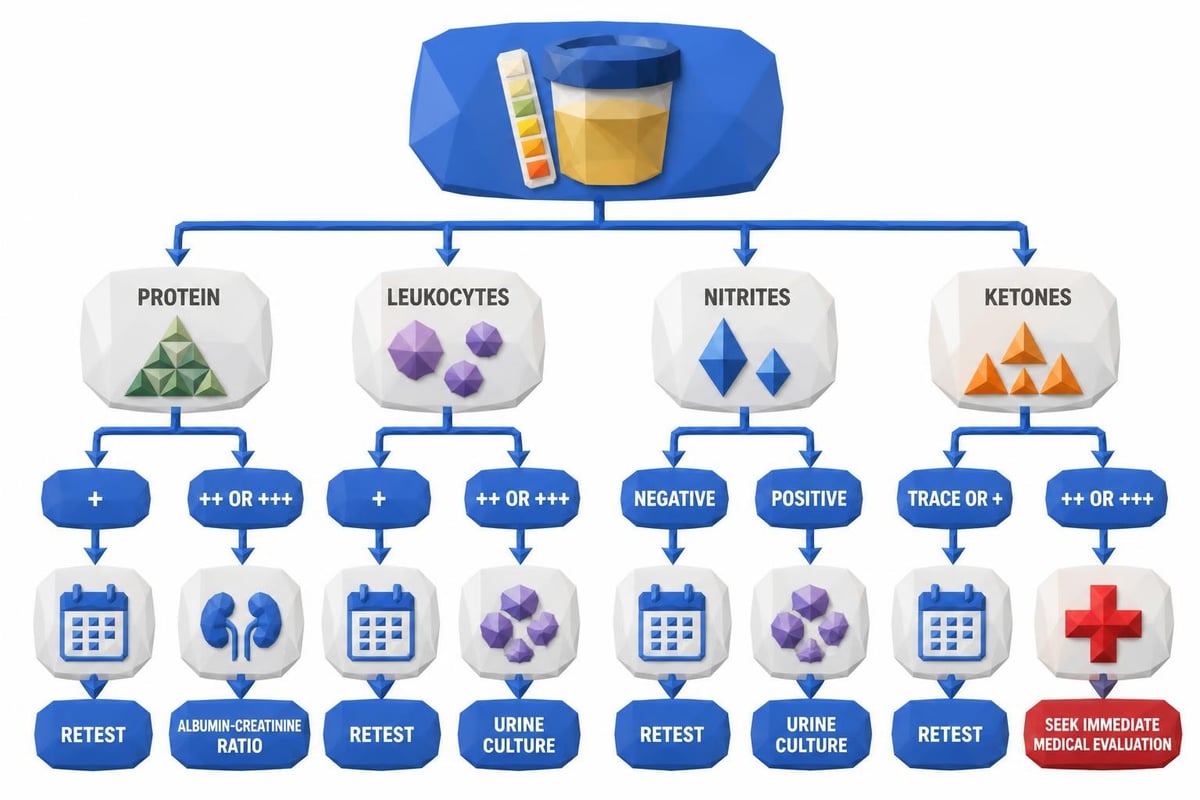
When urinalysis results explained protein leukocytes nitrites ketones show protein present, your healthcare provider will typically:
- Repeat the test to confirm the finding isn't transient
- Order a spot urine albumin-to-creatinine ratio or protein-to-creatinine ratio
- Check kidney function with serum creatinine and estimated glomerular filtration rate (eGFR)
- Evaluate for underlying causes like diabetes or hypertension
- Consider referral to a nephrologist if protein levels are significantly elevated
Even trace protein deserves attention if it persists, especially in people with diabetes, hypertension, or family history of kidney disease.
Decoding Leukocytes and Nitrites for Infection
Leukocytes (white blood cells) and nitrites work together as urinalysis markers for urinary tract infections (UTIs). Understanding how these tests work helps you interpret their results and limitations.
How Leukocyte Esterase Testing Works
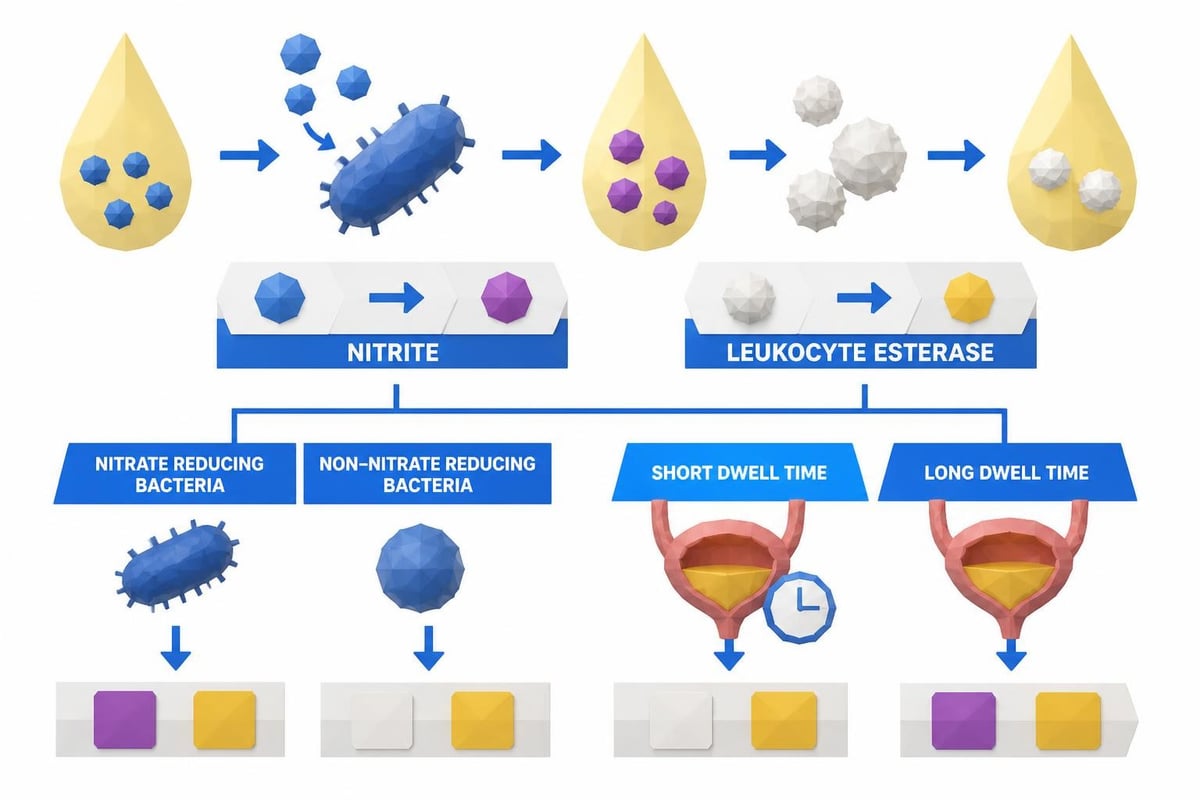
The dipstick test for leukocytes actually detects leukocyte esterase, an enzyme released by white blood cells. When present, it suggests inflammation or infection somewhere in the urinary tract. The test reports results as negative, trace, small, moderate, or large.
Positive leukocyte esterase indicates:
- Urinary tract infection (cystitis, pyelonephritis)
- Contamination from vaginal secretions
- Non-infectious inflammation (interstitial cystitis)
- Kidney stones causing irritation
- Certain sexually transmitted infections
The European urinalysis guideline details the analytical principles of dipstick testing, noting that leukocyte esterase has good sensitivity but moderate specificity, meaning it can produce false positives.
Understanding Nitrite Results
Nitrites appear in urine when bacteria convert naturally occurring nitrates into nitrites. A positive nitrite test is highly specific for bacterial infection, though not all bacteria produce this conversion. Gram-negative bacteria like E. coli (the most common UTI pathogen) reliably produce nitrites.
Key points about nitrites:
- Highly specific for bacterial UTI when positive
- Requires bacteria to be in bladder for several hours
- False negatives occur with short bladder dwell time
- Some bacteria don't convert nitrate to nitrite
- Vitamin C can interfere with the test
Interpreting Leukocytes and Nitrites Together
The combination of findings provides important diagnostic information for urinalysis results explained protein leukocytes nitrites ketones interpretation:
| Leukocytes | Nitrites | Interpretation | Recommended Action |
|---|---|---|---|
| Positive | Positive | Strong evidence for bacterial UTI | Usually treated empirically |
| Positive | Negative | Possible infection, inflammation, or contamination | Consider culture if symptomatic |
| Negative | Positive | Likely bacterial infection with low WBC | Consider culture, may treat |
| Negative | Negative | UTI unlikely but not ruled out | Culture if strong clinical suspicion |
A systematic review on diagnostic accuracy found that in older adults, the sensitivity of dipstick tests varies significantly, and negative results don't completely rule out bacteriuria, especially when clinical symptoms are present.
Clinical Context Matters
The NICE guidelines on UTI diagnosis emphasize that dipstick results must be interpreted alongside clinical symptoms. In women with typical UTI symptoms (dysuria, frequency, urgency) and positive leukocytes or nitrites, treatment can often begin without culture. However, certain situations require urine culture:
- Pregnancy
- Recurrent UTIs
- Failed initial treatment
- Upper urinary tract symptoms
- Catheterized patients
- Men with suspected UTI
The StatPearls clinical overview discusses how microscopic examination adds value by confirming white blood cells and identifying bacteria, crystals, or casts that provide additional diagnostic information.
Ketones: Understanding Metabolic Markers
Ketones in urine indicate your body is burning fat for energy instead of glucose. While this finding has different implications depending on your health status and diet, it's an important metabolic marker worth understanding.
What Produces Ketones
Your body produces three types of ketone bodies-acetoacetate, beta-hydroxybutyrate, and acetone-when fat metabolism increases. The urine dipstick primarily detects acetoacetate. Common causes include:
Physiologic (normal) causes:
- Fasting or prolonged dieting
- Low-carbohydrate or ketogenic diets
- Vigorous exercise
- Pregnancy (especially morning sickness)
Pathologic (concerning) causes:
- Diabetic ketoacidosis (DKA)
- Alcoholic ketoacidosis
- Starvation ketoacidosis
- Severe illness with poor intake
Interpreting Ketone Levels
Dipstick ketone results range from negative to small, moderate, or large (sometimes reported as 1+, 2+, or 3+). The clinical significance depends entirely on context. Small ketones after overnight fasting differ dramatically from large ketones with elevated blood glucose in someone with diabetes.
For people following ketogenic diets intentionally, moderate ketones without symptoms represent the expected metabolic state. However, for individuals with diabetes, ketones combined with high blood glucose require immediate medical attention as they may signal diabetic ketoacidosis, a life-threatening condition.
When to Worry About Ketones
Seek immediate medical care if ketones appear with:
- Blood glucose over 250 mg/dL
- Nausea, vomiting, or abdominal pain
- Fruity breath odor
- Rapid breathing or confusion
- Symptoms of severe dehydration
If you're monitoring your health proactively, understanding lab results helps you recognize when findings require professional interpretation versus when they reflect expected physiological changes.
Putting Multiple Findings Together
When urinalysis results explained protein leukocytes nitrites ketones show combinations of abnormal findings, the pattern provides diagnostic clues that single abnormalities alone cannot offer.
Common Patterns and Their Meaning
Protein + Leukocytes + Nitrites: This combination strongly suggests urinary tract infection affecting the kidneys (pyelonephritis). The protein indicates kidney involvement beyond simple bladder infection. This pattern warrants prompt medical evaluation and typically requires antibiotic treatment with follow-up to ensure protein resolves.
Protein + Ketones (no leukocytes/nitrites): This pattern may indicate diabetic complications, especially if blood glucose is also elevated. The combination could represent early diabetic nephropathy with poor glucose control leading to ketone production. Comprehensive metabolic evaluation is essential.
Recommended Panel
Complete Metabolic Health Panel
Save $3.50This comprehensive panel evaluates all aspects of metabolic health: organ function, cholesterol, blood sugar, insulin resistance, and inflammation - the key drivers of chronic disease.
Includes 26 biomarkers
$50
Fasting required
Leukocytes + Protein (nitrites negative): This finding could represent non-bacterial urinary inflammation, contamination, or early kidney disease. The absence of nitrites doesn't rule out infection but suggests either non-bacterial causes or bacteria that don't produce nitrites. Clinical correlation with symptoms determines next steps.
All markers positive: Multiple positive findings suggest complex pathology requiring comprehensive evaluation. This might occur in severe infections, diabetic ketoacidosis with concurrent UTI, or other serious conditions.
Factors That Affect Results
Several variables influence urinalysis results explained protein leukocytes nitrites ketones accuracy:
| Factor | Effect on Results | Mitigation Strategy |
|---|---|---|
| Hydration status | Concentrated urine increases protein, dilute decreases it | Collect first morning urine when possible |
| Specimen handling | Delays allow bacterial overgrowth | Refrigerate or test within 2 hours |
| Menstrual contamination | False positive leukocytes, protein | Avoid collection during menstruation |
| Medications | Various interferences possible | Inform provider of all medications |
| Vitamin C | May cause false negative nitrites | Avoid supplements before testing |
When to Retest and Seek Further Evaluation
A single abnormal urinalysis doesn't always require immediate intervention, but certain situations demand prompt follow-up or additional testing.
Situations Requiring Immediate Attention
Contact healthcare providers urgently if your urinalysis shows:
- Large protein with reduced kidney function
- Positive nitrites with fever, back pain, or vomiting
- Large ketones with diabetes and symptoms
- Blood plus protein plus leukocytes
- Any abnormality with severe symptoms
When Retesting Makes Sense
Many abnormal findings warrant confirmation before pursuing extensive workup:
- Trace protein without symptoms can be rechecked after avoiding exercise and ensuring good hydration
- Isolated leukocytes without nitrites or symptoms might represent contamination
- Small ketones during fasting resolve with normal eating
- Any unexpected finding without clinical correlation
Services offering transparent lab test pricing make it practical to retest when needed without worrying about insurance authorization or unexpected bills.
Confirmatory Tests to Consider
Beyond repeat urinalysis, specific confirmatory tests clarify abnormal findings:
For proteinuria:
- Urine albumin-to-creatinine ratio (ACR)
- Urine protein-to-creatinine ratio (UPCR)
- 24-hour urine protein collection
- Serum creatinine and eGFR
For suspected infection:
- Urine culture and sensitivity
- Complete blood count (if systemic symptoms)
- Imaging if pyelonephritis suspected
For ketones:
- Blood glucose and hemoglobin A1c
- Serum ketones (beta-hydroxybutyrate)
- Comprehensive metabolic panel
- Venous blood gas if DKA suspected
Key takeaways
Understanding urinalysis results explained protein leukocytes nitrites ketones requires recognizing that each marker tells part of your health story. Protein signals potential kidney problems, leukocytes and nitrites together strongly suggest urinary tract infection, and ketones indicate fat metabolism from various causes ranging from normal fasting to serious diabetic complications. The combination of findings matters more than isolated abnormalities, and clinical context-including your symptoms, medical history, and other test results-determines the significance of any abnormal finding. Dipstick urinalysis serves as an excellent screening tool but has limitations including false positives and false negatives, meaning confirmatory testing often provides necessary clarity. Taking action on abnormal results means different things depending on the pattern: some findings warrant immediate medical attention while others simply need repeat testing after addressing temporary factors like hydration or dietary changes.
FAQ
Can a urinalysis detect kidney disease early?
Yes, protein on urinalysis often represents the earliest detectable sign of kidney disease. Even trace amounts of persistent protein warrant evaluation with more sensitive tests like albumin-to-creatinine ratio, which can detect kidney damage before other symptoms appear. Regular urinalysis screening helps identify kidney problems when intervention can slow or prevent progression to chronic kidney disease.
Why might I have positive leukocytes but negative nitrites?
This common pattern occurs for several reasons: the bacteria causing infection might not convert nitrate to nitrite (Gram-positive bacteria and some Gram-negative species don't), the urine hasn't been in your bladder long enough for conversion to occur (requires 4+ hours), you might have non-bacterial inflammation, or the specimen may contain contamination from vaginal secretions. Clinical symptoms help determine whether treatment is needed despite negative nitrites.
Are ketones in urine always dangerous?
No, ketones frequently appear as a normal response to fasting, low-carbohydrate diets, exercise, or temporary illness with reduced food intake. Small to moderate ketones without symptoms typically don't require treatment. However, large ketones combined with high blood glucose, nausea, vomiting, or confusion in someone with diabetes represent a medical emergency requiring immediate care for possible diabetic ketoacidosis.
How accurate are urine dipstick tests compared to laboratory analysis?
Dipstick tests provide good screening accuracy but have recognized limitations. Sensitivity ranges from 75-96% for leukocyte esterase and 35-85% for nitrites depending on the population tested, while specificity varies considerably. Protein dipsticks detect albumin well but may miss other protein types. All positive dipstick findings benefit from confirmatory laboratory testing with microscopic examination, culture, or quantitative protein measurements when clinical decisions depend on the results.
Should I retest if I only have one abnormal result?
Generally yes, especially if you feel well and have no symptoms. Single abnormalities without supporting clinical evidence often represent temporary conditions, specimen handling issues, or false positives. Repeat testing under optimal conditions-first morning urine, proper collection technique, prompt processing-clarifies whether the finding persists and requires further evaluation or simply represented a transient variation.
Can I get urinalysis testing without seeing a doctor first?
Yes, direct-access lab testing services allow you to order urinalysis and many other tests without a physician visit. This approach works well for monitoring known conditions, investigating new symptoms, or proactive health screening. You receive the same laboratory-quality testing with results typically available within 1-3 days, and comparing lab test prices across providers ensures you get affordable access to the testing you need.
Understanding what protein, leukocytes, nitrites, and ketones mean on your urinalysis empowers you to recognize when abnormal findings require action versus when they reflect temporary, harmless variations. Whether you're monitoring a chronic condition, investigating symptoms, or pursuing proactive health screening, accessible testing makes staying informed about these important health markers straightforward. When you need clear, affordable urinalysis testing without the delays and complexity of traditional healthcare channels, JustLabs provides transparent pricing and rapid results, putting you in control of your health monitoring with professional-quality lab testing available in 1-3 days.