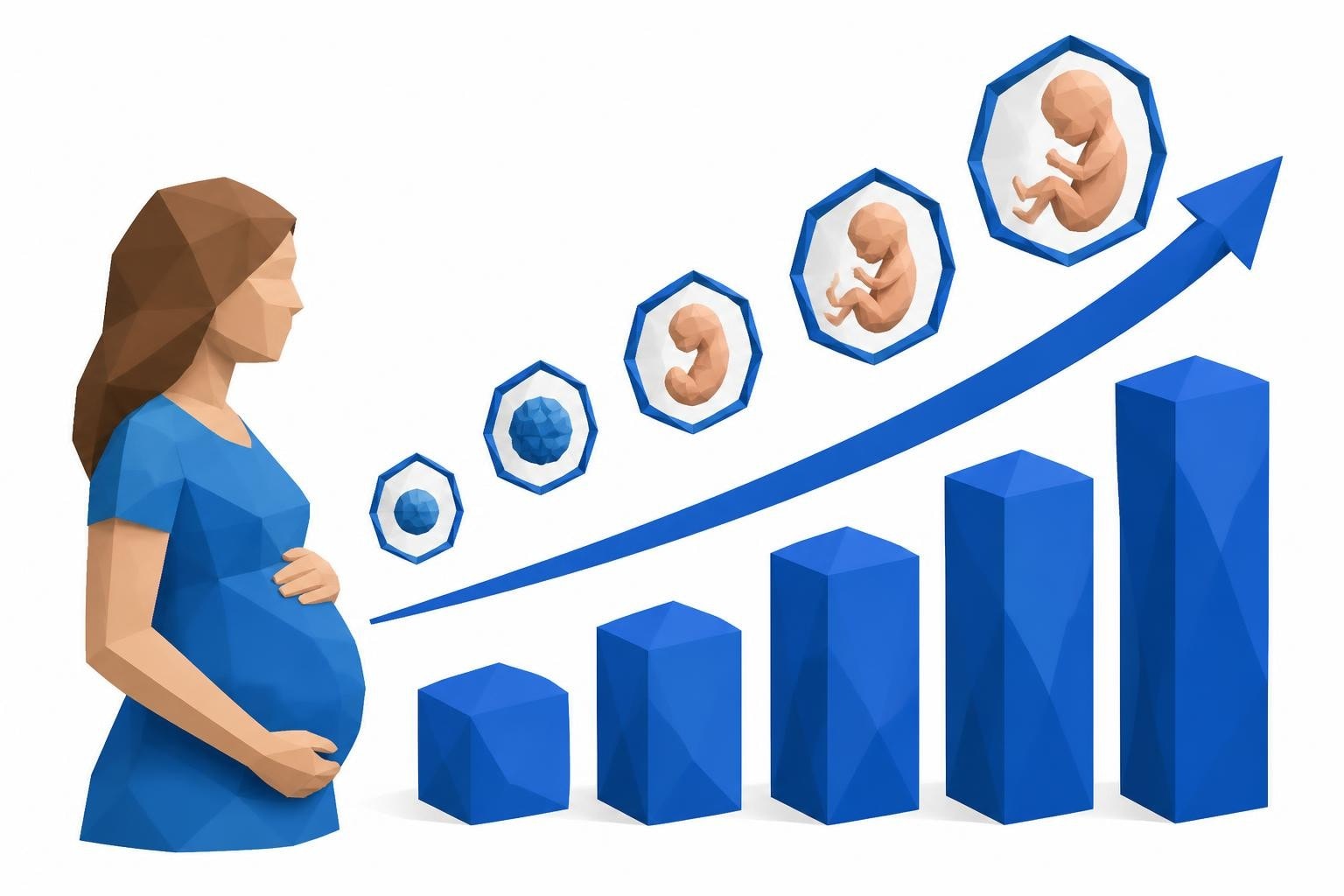
Understanding quantitative hcg beta levels early pregnancy testing provides critical information during the earliest weeks after conception. Unlike standard home pregnancy tests that simply indicate "pregnant" or "not pregnant," quantitative measurements reveal the exact concentration of human chorionic gonadotropin (hCG) in your bloodstream. This precise numerical data helps healthcare providers monitor pregnancy progression, identify potential complications, and establish more accurate timelines. For those seeking convenient access to pregnancy confirmation and monitoring, knowing the difference between qualitative and quantitative testing can inform better healthcare decisions.
What Quantitative Beta hCG Measures
Quantitative beta hCG testing measures the specific concentration of the beta subunit of human chorionic gonadotropin hormone in blood serum. This hormone is produced by cells that form the placenta shortly after a fertilized egg implants in the uterine lining. The test reports results in milli-international units per milliliter (mIU/mL), providing an exact numerical value rather than a simple positive or negative result.
The beta subunit is the unique portion of hCG that distinguishes it from similar hormones in the body. While luteinizing hormone (LH) shares a common alpha subunit with hCG, only hCG contains the beta subunit. This specificity makes beta hCG testing highly accurate for pregnancy detection and monitoring.

Differences Between Quantitative and Qualitative Testing
Several key distinctions separate quantitative blood tests from standard urine-based pregnancy tests:
- Measurement type: Quantitative tests provide exact numerical values; qualitative tests give yes/no results
- Sensitivity: Blood tests detect hCG at concentrations as low as 1-2 mIU/mL; most urine tests require 20-25 mIU/mL
- Timing: Quantitative tests can detect pregnancy 7-10 days after conception; urine tests typically need 12-14 days
- Clinical utility: Numerical values enable trend analysis and doubling time calculations; qualitative results cannot track progression
When you order pregnancy testing through accessible lab testing services, you typically have options for both types. Quantitative testing provides significantly more information, particularly when monitoring early pregnancy development or investigating concerns.
Normal hCG Ranges During Early Pregnancy
Quantitative hcg beta levels early pregnancy values vary widely among healthy pregnancies. This variation makes single measurements less informative than serial testing that tracks changes over time.
| Weeks from Last Menstrual Period | Typical hCG Range (mIU/mL) |
|---|---|
| 3 weeks | 5 - 50 |
| 4 weeks | 5 - 426 |
| 5 weeks | 18 - 7,340 |
| 6 weeks | 1,080 - 56,500 |
| 7-8 weeks | 7,650 - 229,000 |
| 9-12 weeks | 25,700 - 288,000 |
These ranges demonstrate the enormous variability between individuals. A woman at 5 weeks might have an hCG level of 200 mIU/mL or 5,000 mIU/mL, and both could represent perfectly healthy pregnancies. This overlap makes it impossible to determine gestational age accurately from a single hCG measurement.
Why Single Values Provide Limited Information
A solitary quantitative hcg beta levels early pregnancy measurement offers minimal clinical value without context. The wide normal ranges mean that one number cannot confirm viability, rule out complications, or accurately date a pregnancy.
Consider two scenarios: A woman with an hCG level of 100 mIU/mL could be at 4 weeks with a normally developing pregnancy, or she could be at 6 weeks with a pregnancy that is not progressing appropriately. Without knowing the trend, healthcare providers cannot interpret the significance of that single value.
Understanding Doubling Time
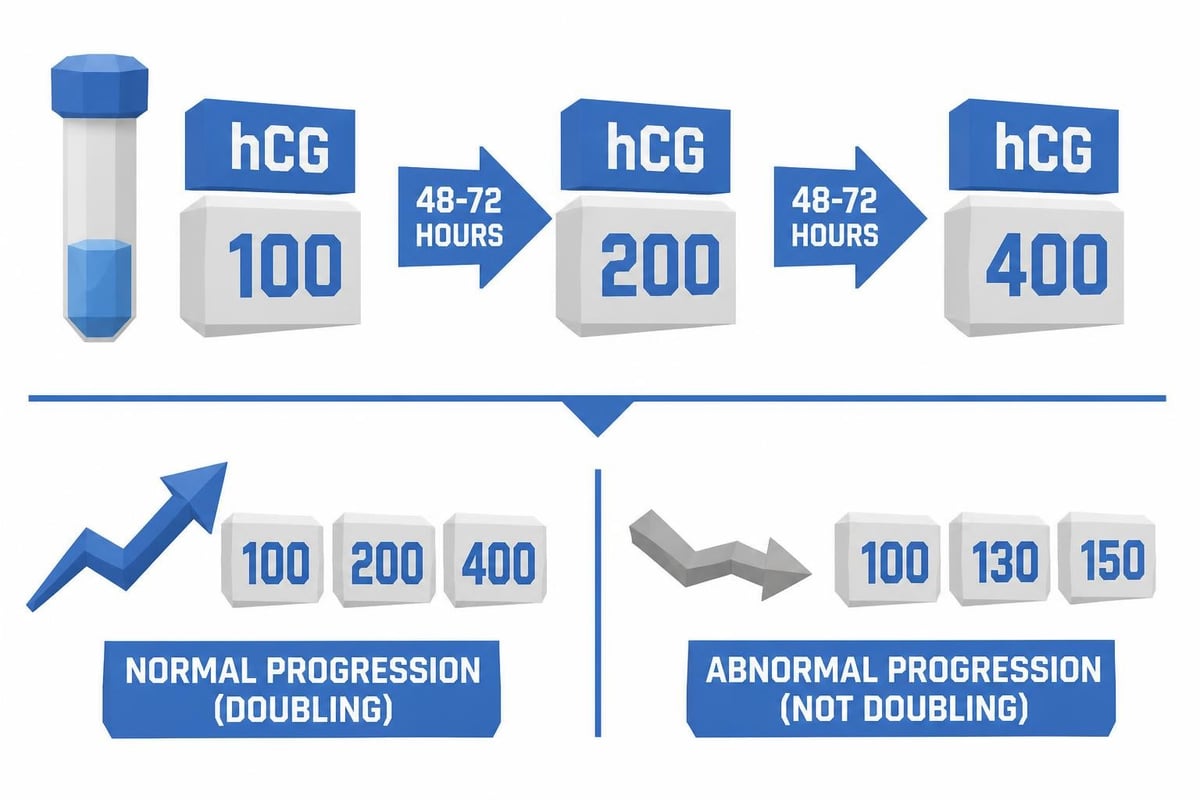
The rate at which hCG levels rise provides much more valuable information than absolute numbers. During early pregnancy, hCG typically doubles approximately every 48-72 hours during the first several weeks.
Recommended Test
hCG, Quantitative (Pregnancy)
Measures the exact level of hCG (pregnancy hormone) in your blood. More accurate than urine tests and can detect pregnancy earlier - as soon as 6-8 days after conception.
Includes 1 biomarkers
$15
Tracking this doubling pattern requires at least two measurements taken 2-3 days apart. Healthcare providers calculate the doubling time by comparing the initial value to the follow-up measurement and determining how long it takes for the concentration to double.
Calculating and Interpreting Doubling Time
The mathematical formula for hCG doubling time uses the time between tests and the ratio of the two measurements:
Doubling time = (Time between tests × log 2) / log (second hCG / first hCG)
Most healthcare providers use online calculators or reference charts rather than manual calculation. The interpretation focuses on whether doubling occurs within the expected timeframe:
- Normal progression: Doubling every 48-72 hours when hCG is below 1,200 mIU/mL
- Slower doubling: Acceptable at 72-96 hours when hCG exceeds 6,000 mIU/mL
- Plateauing: hCG levels peak around 8-11 weeks, then decline through the second trimester
When quantitative hcg beta levels early pregnancy measurements show appropriate doubling patterns, this generally indicates normal early pregnancy development. However, slower-than-expected rises or declining values may warrant further investigation.
When Serial Testing Is Recommended
Serial quantitative hcg beta levels early pregnancy measurements become particularly important in specific clinical situations. Not every pregnancy requires multiple hCG tests, but certain circumstances make trend analysis valuable.
Healthcare providers typically recommend serial testing when:
- Confirming pregnancy viability after previous pregnancy loss
- Evaluating suspected ectopic pregnancy when location cannot be confirmed by ultrasound
- Monitoring after miscarriage to ensure hCG returns to non-pregnant levels
- Assessing molar pregnancy risk when abnormally high values are detected
- Dating uncertain pregnancies when last menstrual period is unknown
The timing between tests matters significantly. Testing too frequently provides little additional information and may cause unnecessary anxiety. Most protocols call for measurements spaced 48-72 hours apart during the critical early weeks.
Accessing Serial hCG Testing
Traditional healthcare pathways often require multiple office visits for serial testing, creating scheduling challenges and potential delays. Modern self-pay lab testing options allow you to obtain the tests you need on your timeline, though you should always work with a healthcare provider to interpret results and guide clinical decisions.
Understanding how lab testing works helps you navigate the process efficiently. Most quantitative beta hCG tests require a simple blood draw, with results typically available within 24-48 hours.
Abnormal hCG Patterns and What They May Indicate
Deviations from expected quantitative hcg beta levels early pregnancy patterns can signal various conditions. However, abnormal results do not provide definitive diagnoses without additional evaluation.
| Pattern | Possible Indications |
|---|---|
| Slower than normal rise | Ectopic pregnancy, impending miscarriage, miscalculated dates |
| Declining levels | Miscarriage in progress, resolved ectopic pregnancy |
| Extremely high levels | Multiple pregnancy, molar pregnancy, miscalculated dates |
| Very low levels that don't rise | Very early pregnancy, biochemical pregnancy, test error |
Critical caution: These patterns require immediate discussion with a qualified healthcare provider. Do not attempt to interpret abnormal hCG results independently or make assumptions about pregnancy outcomes based solely on numerical values.
The Role of Ultrasound in Conjunction with hCG
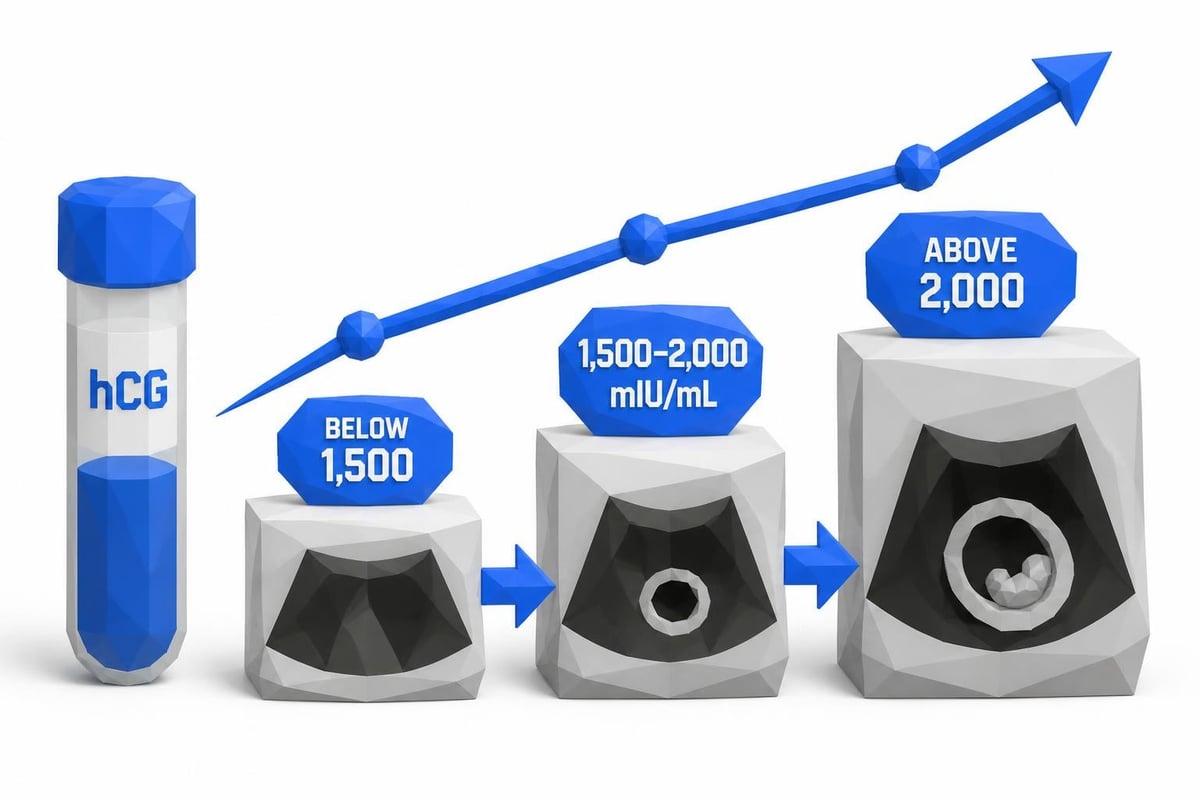
Quantitative hcg beta levels early pregnancy testing works best when combined with ultrasound imaging. Once hCG reaches approximately 1,500-2,000 mIU/mL (called the discriminatory zone), transvaginal ultrasound can typically visualize an intrauterine pregnancy.
The combination of hCG trends and ultrasound findings provides much more diagnostic information than either test alone. An appropriately rising hCG with a visible intrauterine gestational sac confirms normal early pregnancy. Conversely, high or rising hCG without intrauterine pregnancy raises concern for ectopic pregnancy.
Factors That Can Affect hCG Measurements
Several variables influence quantitative hcg beta levels early pregnancy values beyond pregnancy status and gestational age. Understanding these factors helps explain unexpected results.
Biological Variables
Individual variation in hCG production is significant and completely normal. Factors include:
- Multiple pregnancy: Twins or higher-order multiples produce higher hCG levels, though ranges overlap with singleton pregnancies
- Maternal weight: Body mass does not significantly affect hCG concentration in blood serum
- Fetal sex: Some studies suggest female fetuses correlate with slightly higher hCG, but differences are minor
- Previous pregnancies: Parity does not substantially influence hCG production patterns
Technical and Timing Considerations
Laboratory methods and testing timing also impact results:
- Assay variation: Different laboratories may use different reference ranges and measurement techniques
- Sample timing: hCG levels fluctuate slightly throughout the day but not enough to affect clinical interpretation
- Laboratory error: Rare but possible; repeat testing at the same laboratory reduces variability
- Medication interference: Fertility treatments containing hCG can cause false elevations if tested too soon after injection
When understanding lab results, always note which laboratory performed the test and use their specific reference ranges for comparison.
The Limitations of hCG Testing
While quantitative hcg beta levels early pregnancy measurement provides valuable information, it cannot answer every question about early pregnancy. Recognizing these limitations prevents over-reliance on a single diagnostic tool.
hCG testing cannot:
- Determine exact gestational age due to wide normal ranges
- Diagnose pregnancy location without supporting imaging studies
- Confirm fetal viability as a standalone test
- Predict pregnancy outcomes with certainty
- Detect all pregnancy complications in their earliest stages
Healthcare providers use hCG measurements as one component of comprehensive pregnancy assessment. Clinical history, physical examination, ultrasound imaging, and symptom evaluation all contribute to complete pregnancy management.
When to Seek Additional Evaluation
Certain symptoms warrant immediate medical attention regardless of hCG values:
- Severe abdominal pain, particularly one-sided pain
- Heavy vaginal bleeding with clots or tissue passage
- Dizziness or fainting suggesting significant blood loss
- Shoulder pain which may indicate internal bleeding
- Fever or chills suggesting possible infection
These symptoms require emergency evaluation and cannot be assessed through hCG testing alone. Always prioritize clinical symptoms over laboratory values when making decisions about seeking care.
Practical Considerations for hCG Testing
Accessing quantitative hcg beta levels early pregnancy testing involves practical decisions about timing, frequency, and logistics. Planning ahead streamlines the process during an already uncertain time.
Optimal Timing for Initial Testing
Most quantitative beta hCG tests can detect pregnancy 7-10 days after ovulation or conception. Testing earlier may produce negative results that later become positive, creating confusion and requiring repeat testing.
For those using transparent lab testing pricing, understanding optimal timing helps avoid unnecessary tests while ensuring you get results when they provide maximum information.
Recommended timing for initial quantitative testing:
- 10-12 days after known ovulation
- 12-14 days after suspected conception
- First day of missed period or later
- After positive home pregnancy test when quantitative confirmation is desired
Cost and Accessibility Factors
Traditional prenatal care often bundles hCG testing with office visits, creating opacity around actual test costs. Understanding that pregnancy testing, like other blood work, can be accessed directly helps you make informed decisions.
Testing accessibility has improved significantly with services that bypass traditional insurance-dependent pathways. This approach particularly benefits those without insurance coverage, high deductible plans, or those who prefer managing early testing independently before establishing prenatal care.
Important Clinical Cautions
This information is educational only and should never replace consultation with a qualified healthcare provider. Quantitative hcg beta levels early pregnancy results require professional interpretation in the context of your complete clinical picture.
Critical warnings about hCG interpretation:
- Never use hCG values alone to determine pregnancy viability or location
- Do not delay seeking emergency care because hCG levels seem "normal"
- Avoid comparing your values to others; individual variation is enormous
- Do not use online calculators or forums to diagnose pregnancy complications
- Always discuss concerning symptoms with a healthcare provider immediately
Abnormal hCG patterns, unexpected values, or results that don't align with your clinical history all require prompt medical evaluation. Self-interpretation of quantitative results can lead to delayed diagnosis of serious conditions including ectopic pregnancy.
Integrating hCG Testing into Early Pregnancy Care
Quantitative hcg beta levels early pregnancy testing represents one tool in comprehensive pregnancy management. The most effective approach combines laboratory data with clinical assessment and imaging studies.
Modern healthcare allows you to access testing efficiently while maintaining appropriate medical oversight. Whether you need initial pregnancy confirmation, serial monitoring due to risk factors, or follow-up after pregnancy loss, understanding how quantitative hCG measurement works helps you participate actively in your care.
The key to useful hCG testing lies in appropriate timing, serial measurements when indicated, and professional interpretation. A single value provides limited information. Trend analysis over several days reveals much more about early pregnancy progression. Always work with a healthcare provider who can integrate hCG results with your symptoms, history, and other diagnostic findings.
Related reading


Understanding quantitative hCG beta levels in early pregnancy helps you navigate the critical first weeks with better information about what the numbers mean and, importantly, what they cannot tell you. Serial testing with appropriate timing provides valuable trend data when interpreted by qualified healthcare providers. If you need pregnancy testing or monitoring, Justlabs offers convenient access to quantitative beta hCG testing with transparent pricing and quick results, giving you the information you need while you work with your healthcare provider to ensure the best possible care throughout your pregnancy journey.
References
Barnhart KT, Sammel MD, Rinaudo PF, Zhou L, Hummel AC, Guo W. Symptomatic patients with an early viable intrauterine pregnancy: HCG curves redefined. Obstet Gynecol. 2004 Jul;104(1):50-5. doi: 10.1097/01.AOG.0000128174.48843.12. PMID: 15229000. https://pubmed.ncbi.nlm.nih.gov/15229000/
Connolly A, Ryan DH, Stuebe AM, Wolfe HM. Reevaluation of discriminatory and threshold levels for serum β-hCG in early pregnancy. Obstet Gynecol. 2013 Jan;121(1):65-70. doi: 10.1097/aog.0b013e318278f421. PMID: 23262929. https://pubmed.ncbi.nlm.nih.gov/23262929/
Hendriks E, Rosenberg R, Prine L. Ectopic Pregnancy: Diagnosis and Management. Am Fam Physician. 2020 May 15;101(10):599-606. PMID: 32412215. https://pubmed.ncbi.nlm.nih.gov/32412215/
Hendriks E, MacNaughton H, MacKenzie MC. First Trimester Bleeding: Evaluation and Management. Am Fam Physician. 2019 Feb 1;99(3):166-174. PMID: 30702252. https://pubmed.ncbi.nlm.nih.gov/30702252/