When you order lab work, one question dominates your mind: how long until I get my results? Understanding lab test turnaround times helps you plan medical decisions, manage health concerns, and reduce anxiety while waiting. Whether you're monitoring a chronic condition, checking vitamin levels, or screening for potential health issues, knowing what to expect can transform your testing experience. The reality is that turnaround times vary significantly based on test complexity, laboratory processes, and service models-and in 2026, modern testing services are delivering results faster than ever before.
What Are Lab Test Turnaround Times?
Lab test turnaround times represent the complete duration from when a sample is collected to when results become available. This metric matters tremendously for patient care, clinical decision-making, and personal health management.
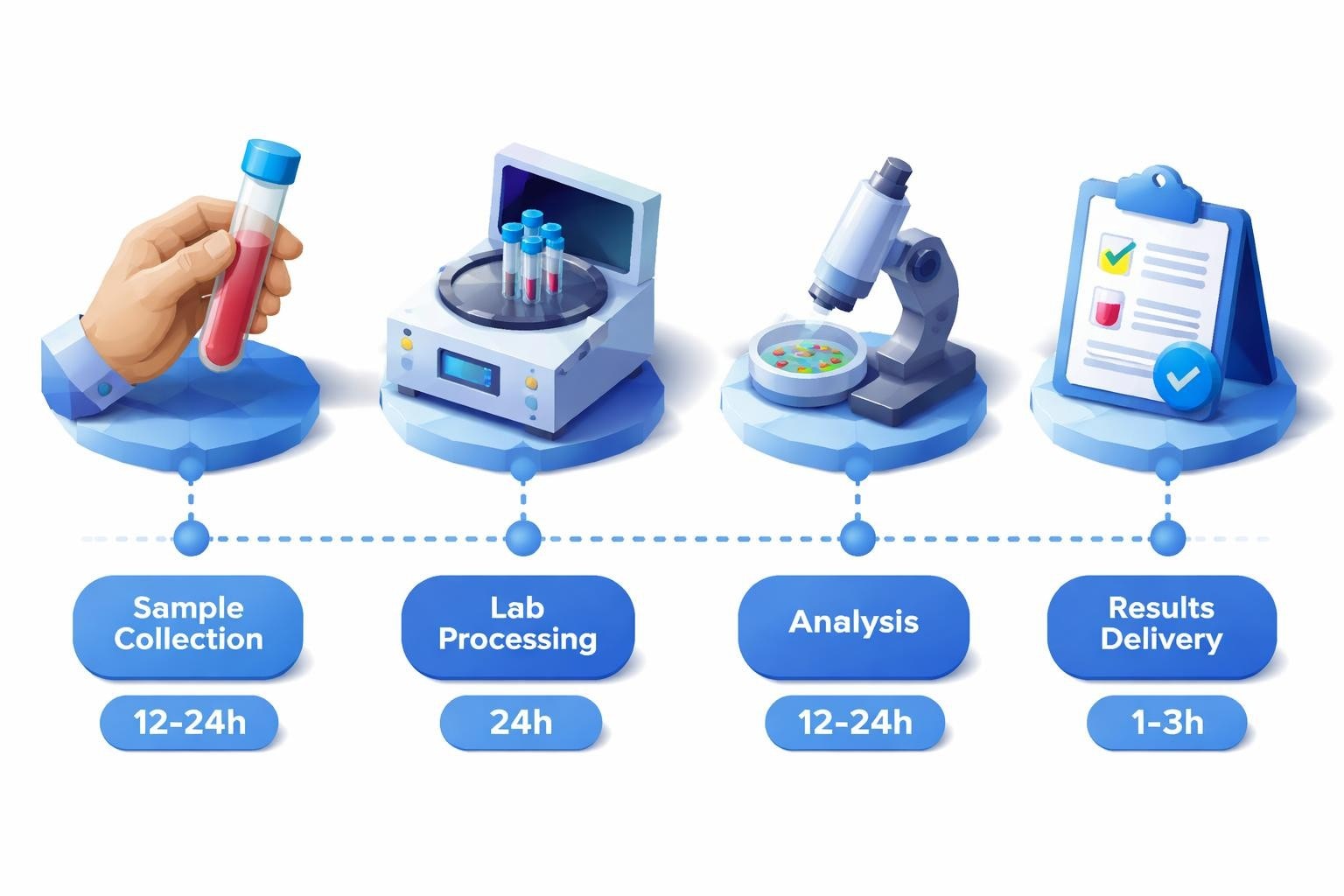
Laboratory turnaround time (TAT) encompasses several distinct phases. The clock starts at specimen collection, continues through transportation to the testing facility, includes all analytical processes, and ends when results are reported. Each phase introduces variables that affect overall timing.
Standard vs. STAT Testing Priorities
Laboratories categorize tests into different priority levels. Routine testing follows standard processing schedules, while STAT tests receive expedited handling for urgent medical situations. Clinical laboratories distinguish between these priorities to ensure critical cases receive immediate attention.
Most routine lab work falls into predictable timeframes:
- Basic metabolic panels: 1-2 days
- Complete blood counts: 1-2 days
- Lipid panels: 1-3 days
- Thyroid function tests: 2-3 days
- Hormone testing: 2-4 days
- Specialized antibody tests: 5-10 days
- Genetic testing: 1-4 weeks
Factors That Impact Lab Test Turnaround Times
Multiple variables influence how quickly you receive results. Understanding these factors helps set realistic expectations and choose the fastest testing options.
Test Complexity and Methodology
Simple tests using automated analyzers complete within hours. Complex assays requiring manual techniques, multiple reagents, or specialized equipment take considerably longer. Several key factors affect lab test turnaround, including the analytical method required and the number of processing steps involved.
Automated vs. Manual Testing:
| Test Type | Processing Method | Typical Turnaround |
|---|---|---|
| CBC, CMP | Automated analyzer | 1-2 hours in lab |
| Hormone panels | Automated immunoassay | 4-6 hours in lab |
| Specialized antibodies | Manual ELISA | 1-2 days in lab |
| Genetic sequencing | Multiple manual steps | 1-3 weeks |
Laboratory Capacity and Volume
High-volume laboratories process more samples simultaneously, often achieving faster turnaround times through economies of scale. However, peak periods can create backlogs that extend waiting times.
Smaller specialty labs may batch certain tests, running them only when enough samples accumulate to justify the analytical run. This batching approach can add several days to turnaround times for less common tests.
Sample Transportation and Logistics
The journey from collection site to laboratory significantly impacts overall timing. Local specimens arrive within hours, while samples requiring shipment to distant reference laboratories add 1-2 days before analysis even begins.
Temperature-sensitive specimens require special handling. Blood samples for certain hormone tests must remain refrigerated or frozen during transport, limiting shipping options and potentially extending delivery times.
Processing Time Components
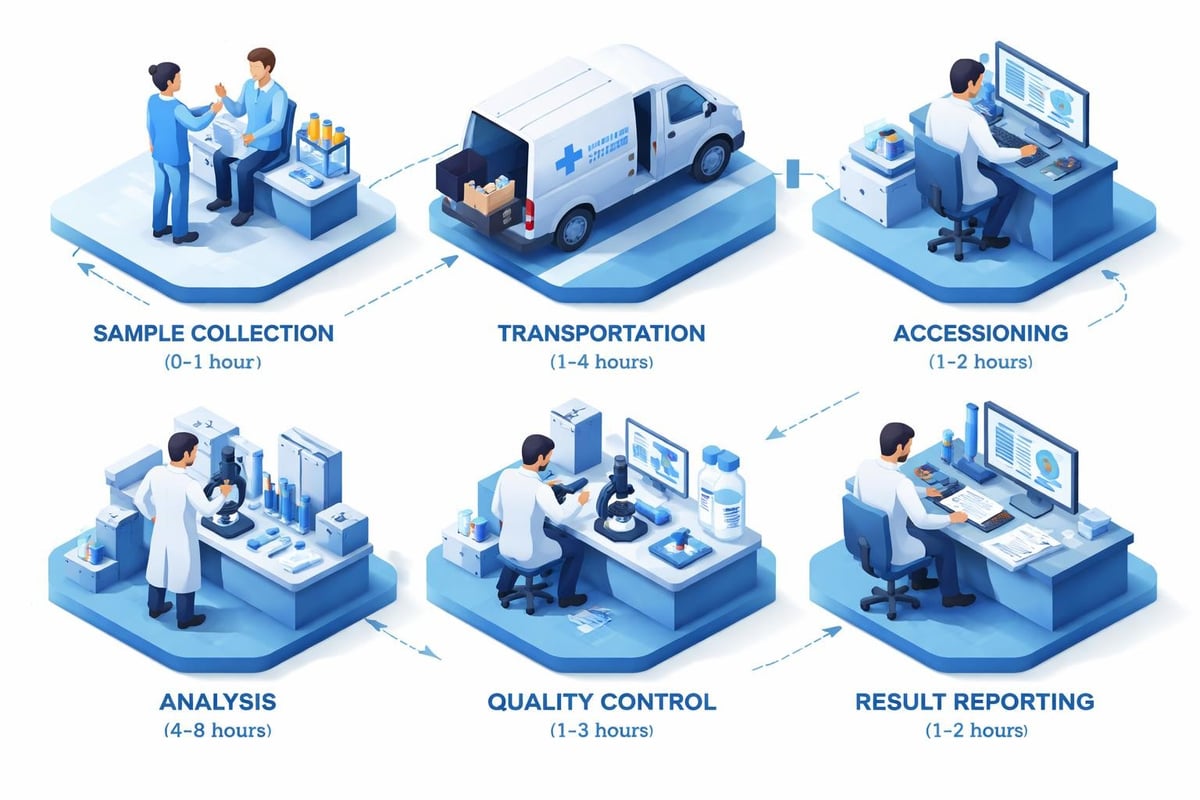
Breaking down the complete timeline reveals where delays typically occur:
- Pre-analytical phase: Sample collection, labeling, and initial processing (30 minutes to 24 hours)
- Transportation: Movement to testing facility (1 hour to 48 hours)
- Accessioning: Sample logging and preparation (15 minutes to 2 hours)
- Analytical phase: Actual testing procedures (30 minutes to several days)
- Quality control: Result verification and validation (15 minutes to 2 hours)
- Reporting: Result transmission to ordering provider (immediate to 24 hours)
Each of these stages is walked through in detail in our guide to what happens after your blood draw.
How Different Testing Models Affect Speed
The healthcare delivery model dramatically influences how quickly you access results. Traditional and modern approaches offer vastly different timelines.
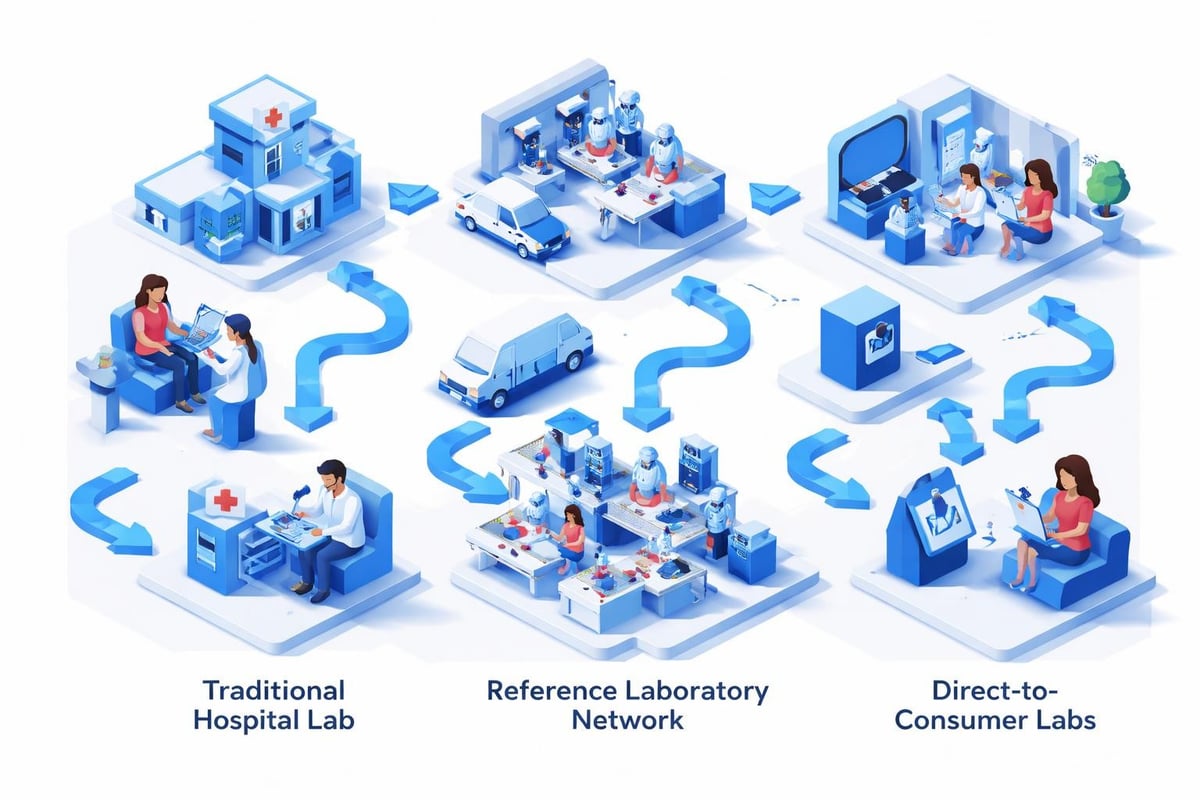
Traditional Hospital-Based Testing
Hospital laboratories prioritize inpatient and emergency department needs. Outpatient tests typically receive lower priority unless marked STAT. After testing completes, results route to your physician's office, where staff review and contact you-adding another 1-3 business days.
This conventional pathway means your lab test results might sit complete for days before anyone notifies you. The multi-step communication chain introduces unavoidable delays between test completion and patient notification.
Reference Laboratory Networks
Major reference labs like Quest Diagnostics and LabCorp operate vast networks of patient service centers. They transport samples to regional or national processing facilities, which affects timing based on distance and shipping schedules.
Reference Lab Timeline:
- Sample collection at patient service center
- Evening pickup and overnight transport to processing facility
- Next-day arrival and accessioning
- Analysis and quality control
- Result transmission to ordering physician
- Physician office review and patient notification
Total elapsed time: 3-7 days for routine tests
Direct-to-Consumer Lab Services
Modern self-pay testing services streamline the entire process. By eliminating insurance billing complexities and physician intermediaries, these platforms deliver results directly to patients significantly faster.
When you order lab tests online, you receive results digitally as soon as they're validated-no waiting for doctor's office callbacks. This direct reporting model can reduce total turnaround time by 2-4 days compared to traditional pathways.
Typical Turnaround Times for Common Tests
Different test categories have characteristic processing timeframes. Knowing what to expect for specific tests helps you plan accordingly.
Routine Blood Work
The most frequently ordered tests typically complete quickly because laboratories run them continuously on automated platforms:
- Complete Metabolic Panel (CMP): CMP tests measure kidney function, liver function, and electrolyte balance, with results typically available in 1-2 days
- Lipid Panel: Cholesterol and triglyceride measurements usually return within 1-3 days
- Complete Blood Count (CBC): Blood cell counts process in 1-2 days for routine orders
- Hemoglobin A1c: This diabetes monitoring test generally completes within 1-2 days
Recommended Panel
Comprehensive Wellness Panel
Save $4.5Our most thorough health screening covers blood cells, organ function, cholesterol, thyroid, blood sugar, vitamin D, inflammation, and iron - everything you need for a complete health picture.
Includes 44 biomarkers
$94
Fasting required
Hormone Testing
Hormone assays require more sophisticated equipment and often take slightly longer:
- TSH (Thyroid Stimulating Hormone): TSH testing typically returns results in 2-3 days
- Comprehensive Thyroid Panel: Full thyroid workups may require 2-4 days
- Testosterone: Testosterone measurements usually complete within 2-3 days
- Estradiol: Estradiol testing generally processes in 2-4 days
Vitamin and Nutrient Testing
These tests often use specialized assays with varying complexity levels:
| Test Name | Typical Turnaround | Processing Method |
|---|---|---|
| Vitamin D | 2-4 days | Automated immunoassay |
| Vitamin B12 | 2-3 days | Automated immunoassay |
| Iron studies | 1-3 days | Automated chemistry |
| Folate | 2-3 days | Automated immunoassay |
| Magnesium | 1-2 days | Automated chemistry |
Specialized and Send-Out Testing
Less common tests often require reference laboratory processing or specialized techniques:
- Food sensitivity panels: 7-14 days
- Heavy metal screening: 5-10 days
- Autoimmune antibodies: 5-10 days
- Advanced cardiac markers: 3-7 days
- Genetic testing: 10-28 days depending on complexity
Strategies to Get Faster Lab Results
Several approaches can minimize your waiting time when you need lab work completed.
Choose the Right Testing Service
Your selection of testing provider significantly impacts speed. Consider these factors when deciding where to get lab tests:
Volume and efficiency: High-volume laboratories with modern automation process samples faster Geographic proximity: Local processing facilities eliminate transportation delays Direct reporting: Services that report directly to patients bypass physician office bottlenecks Operational hours: Extended hours and weekend processing prevent Monday backlogs
Understand Test-Specific Requirements
Some tests require special preparation that affects timing. Fasting requirements, time-of-day collection windows, and sample stability all influence how quickly processing can occur.
Timing optimization tips:
- Schedule morning appointments for fasting tests to enable same-day processing
- Avoid Friday afternoon collections if the lab doesn't process weekends
- Ask whether your test requires send-out to a reference laboratory
- Confirm the laboratory's batch testing schedule for uncommon tests
Leverage Self-Pay Options
Lab testing without insurance often processes faster than insurance-based testing. Insurance claims require additional administrative steps including eligibility verification, prior authorization, and billing coordination-all of which can delay sample processing.
Self-pay services prioritize speed because they've eliminated these administrative layers. Payment occurs upfront, samples process immediately upon arrival, and results transmit directly to you without routing through insurance portals or physician offices.

The Impact of Digital Health on Lab Test Turnaround Times
Technology transformation in 2026 has revolutionized how quickly patients access test results. Digital platforms eliminate manual processes that previously added days to turnaround times.
Automated Result Delivery
Traditional result reporting required laboratory information systems to interface with physician electronic health records, followed by provider review and manual patient contact. Modern direct-to-consumer platforms automatically transmit validated results to patient portals within minutes of completion.
This automation means you receive notification immediately-often while the sample tube still sits in the analyzer. The difference between "test complete" and "patient notified" has compressed from days to seconds.
Mobile Access and Notifications
Smartphone notifications alert you the moment results are available. You can review detailed findings, compare them to reference ranges, and access educational resources about your values-all without waiting for a phone call or office visit.
Process Improvement Through Data Analytics
Laboratory process improvements using data analytics have significantly reduced turnaround times. Modern laboratories analyze every process step to identify and eliminate bottlenecks.
Common bottlenecks addressed:
- Sample accessioning delays through barcode automation
- Batch testing inefficiencies through predictive scheduling
- Quality control failures through improved reagent management
- Result reporting delays through automated transmission
What to Do While Waiting for Results
Managing anxiety during the waiting period requires practical strategies and realistic expectations.
Set Appropriate Expectations
When ordering tests, ask specifically about expected turnaround time for your particular test. Don't assume all blood work returns in the same timeframe. Understanding whether to expect results in 2 days or 2 weeks prevents unnecessary stress.
Many services, including those offering transparent lab test pricing, clearly communicate expected turnaround times at the time of ordering. This transparency helps you plan accordingly.
Check Digital Portals Regularly
If you've used a service with online result delivery, check your portal or app daily. Results often post earlier than the maximum estimated time, especially for common tests running on automated platforms.
Understand Normal Reporting Sequences
Laboratories often release simple tests first, with more complex panels following later. Don't panic if one component of a comprehensive panel appears before others-this sequential release is normal operating procedure.
Know When to Follow Up
If results haven't appeared within the stated timeframe, appropriate follow-up is warranted. Contact the testing facility or provider to check on sample status. Occasionally specimens require recollection due to quality issues, and early notification allows faster resolution.
Comparing Lab Test Turnaround Times Across Providers
Not all testing services deliver results at the same speed. Comparing providers helps you make informed decisions based on your priorities.
Key Comparison Factors
| Factor | Traditional Labs | Hospital Labs | Direct-to-Consumer Services |
|---|---|---|---|
| Typical routine TAT | 3-7 days | 2-5 days | 1-3 days |
| Weekend processing | Limited | Emergency only | Often available |
| Result access | Through physician | Through physician | Direct to patient |
| Communication delay | 1-3 additional days | 1-2 additional days | Immediate |
| Pricing transparency | Variable | Limited | Clearly posted |
Real-World Turnaround Examples
For common preventive health tests in 2026:
Scenario 1 - Annual Wellness Testing: A comprehensive metabolic panel, lipid panel, and thyroid function test ordered through a traditional physician's office typically requires:
- Day 1: Office visit and test order
- Day 2: Lab collection appointment
- Days 3-4: Sample processing
- Days 5-7: Result review and patient notification
- Total time: 5-7 days from order to notification
Scenario 2 - Direct-to-Consumer Testing: The same test panel through a modern self-pay service:
- Day 1: Online ordering and same-day collection at nearby facility
- Day 2: Sample processing
- Day 3: Results posted to patient portal
- Total time: 2-3 days from order to access
When Speed Matters Most
Certain situations justify prioritizing the fastest possible turnaround:
- Time-sensitive medication adjustments: Thyroid medication titration, anticoagulation monitoring
- Fertility window testing: Hormone levels for assisted reproduction timing
- Acute symptom evaluation: Investigating concerning symptoms requiring rapid assessment
- Pre-travel health clearance: Tests required before international travel with firm deadlines
- Employment or licensing requirements: Screening tests with submission deadlines
In these scenarios, selecting a provider with documented fast turnaround times and direct result reporting can make the difference between meeting deadlines and missing critical windows.
Questions to Ask About Lab Test Turnaround Times
Before ordering lab work, clarify expectations by asking specific questions.
Essential Questions for Any Provider
About timing:
- What is the expected turnaround time for this specific test?
- Does that timeframe include weekends and holidays?
- Is the laboratory on-site or will my sample be sent elsewhere?
- What time must samples arrive at the lab for same-day processing?
About results delivery:
- How will I receive my results?
- Will results go to me directly or through a physician?
- Do you offer digital access to results?
- What happens if results fall outside normal ranges?
About potential delays:
- What factors might extend the turnaround time?
- Do you batch this test or run it continuously?
- What is your policy if a sample needs to be redrawn?
- How will you notify me if there are delays?
Understanding Your Options
Many people don't realize they have alternatives to traditional testing pathways. Ordering labs without a doctor has become increasingly accessible, offering faster turnaround times and greater convenience for routine health monitoring.
When evaluating options, consider whether rapid results justify potential cost differences. For urgent health concerns or time-sensitive decisions, paying slightly more for 1-3 day turnaround versus 5-7 days often proves worthwhile.
Understanding lab test turnaround times empowers you to choose testing services that align with your needs and timeline. Speed depends on test complexity, laboratory processes, and service delivery models, with modern direct-to-consumer platforms consistently delivering the fastest results. Justlabs combines rapid 1-3 day turnaround times with transparent pricing and convenient online ordering, eliminating the delays inherent in traditional testing pathways. When you need answers quickly without the hassle of insurance or doctor's appointments, our streamlined approach gets you the information you need to make informed health decisions.