Understanding estradiol levels by cycle phase pregnancy and menopause is essential for assessing reproductive health, managing symptoms, and making informed medical decisions. Estradiol, the primary form of estrogen in the body, fluctuates dramatically throughout a woman's life, influencing everything from fertility to bone density. Whether you're tracking ovulation, monitoring pregnancy, or navigating perimenopause, knowing what constitutes normal estradiol levels empowers you to take control of your health through accessible lab testing.
Big picture
- Estradiol is the main estrogen hormone that regulates reproductive function, bone health, cardiovascular health, and brain function in women throughout their reproductive years
- Levels change dramatically based on where you are in your menstrual cycle, whether you're pregnant, or if you've entered menopause, with variations of over 1000% between different phases
- Normal ranges vary widely from as low as 10-30 pg/mL in menopause to over 10,000 pg/mL in late pregnancy, making context-specific reference ranges critical for accurate interpretation
- Testing at the wrong time can lead to misleading results, which is why understanding when to test relative to your cycle phase or reproductive status matters
- Self-directed lab testing allows you to monitor your hormonal health without insurance delays or unnecessary doctor visits, putting personalized health data directly in your hands
- Action step: If you're experiencing irregular cycles, fertility challenges, or menopausal symptoms, baseline estradiol testing can provide valuable insights into your hormonal status
Understanding Estradiol Function and Measurement
Estradiol (E2) represents the most potent and prevalent form of estrogen circulating in the female body during reproductive years. This steroid hormone originates primarily from the ovaries but also emerges from adipose tissue and, during pregnancy, the placenta.
The hormone's influence extends far beyond reproduction. Estradiol maintains bone density, supports cardiovascular function, regulates mood and cognition, and influences skin health and metabolism. Given its wide-ranging effects, tracking estradiol levels by cycle phase pregnancy and menopause provides critical information for diagnosing and managing numerous health conditions.
Measurement Challenges and Accuracy
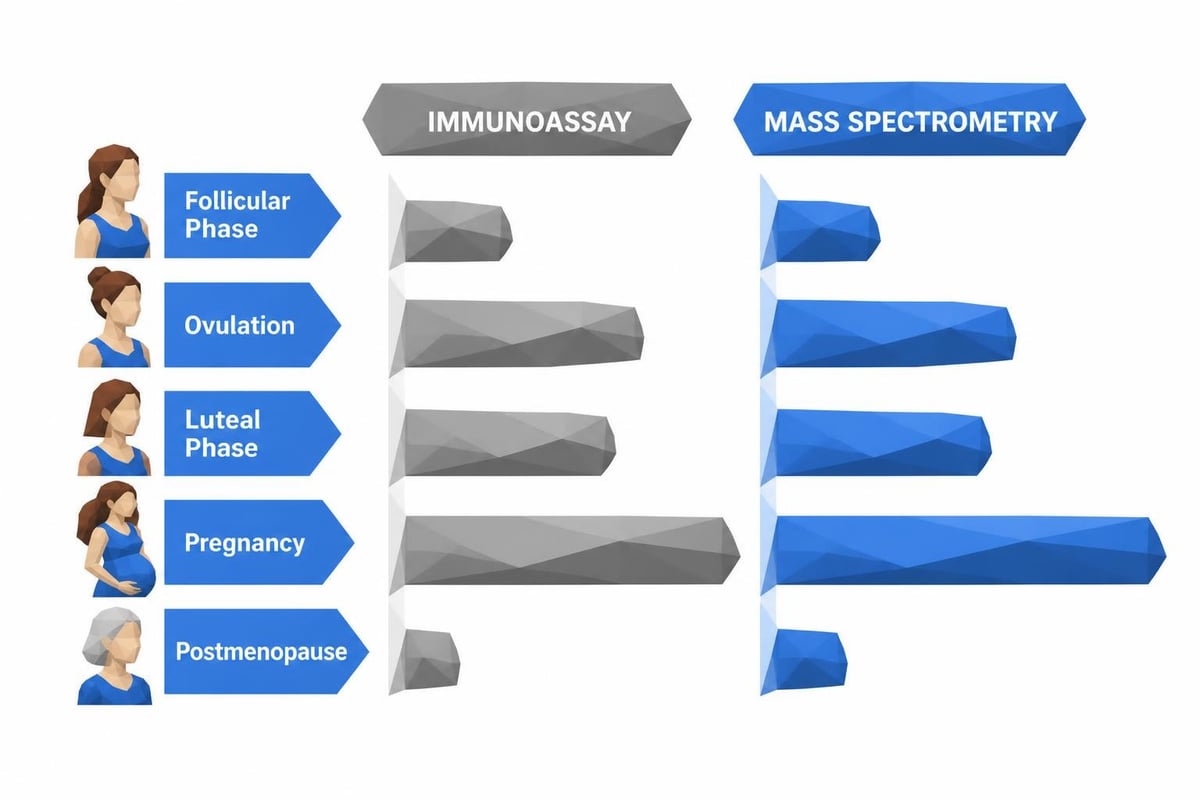
Accurate measurement of estradiol presents significant challenges, particularly at lower concentrations typical of menopause or the early follicular phase. Immunoassays, the most common testing method, can lack sensitivity and specificity at these ranges.
Key measurement considerations include:
- Mass spectrometry (LC-MS/MS) offers superior accuracy, especially for low estradiol levels
- Immunoassays may overestimate values below 30 pg/mL
- Sample timing relative to cycle phase dramatically affects interpretation
- Lab-to-lab variation can reach 20-30% for identical samples
Understanding these limitations helps you interpret results appropriately and select the right testing approach. When ordering tests through platforms like JustLabs, knowing which assay method the lab uses can inform how you interpret borderline or unexpected results.
Estradiol Levels During the Menstrual Cycle
The menstrual cycle demonstrates estradiol's dynamic nature, with levels rising and falling in carefully orchestrated patterns that prepare the body for potential pregnancy.
Follicular Phase (Days 1-14)
The follicular phase begins with menstruation and extends until ovulation. Estradiol starts low, typically 20-75 pg/mL during the early follicular phase (days 1-7), as the ovaries begin recruiting follicles for maturation.
As dominant follicles develop, estradiol production accelerates. By the late follicular phase (days 8-13), levels climb to approximately 100-200 pg/mL. This rising estradiol triggers the endometrial lining to thicken and signals the pituitary to prepare for the luteinizing hormone (LH) surge.
| Follicular Phase Stage | Days | Typical Estradiol Range (pg/mL) |
|---|---|---|
| Early follicular | 1-7 | 20-75 |
| Mid follicular | 8-11 | 50-150 |
| Late follicular | 12-13 | 100-200 |
Ovulation and the Mid-Cycle Surge
Estradiol peaks just before ovulation, reaching 150-350 pg/mL or higher in many women. This surge triggers the LH spike that causes follicle rupture and egg release. The precise timing and magnitude of this peak varies between individuals and cycles.
Understanding estradiol levels by cycle phase pregnancy and menopause becomes particularly important for fertility tracking. Testing estradiol alongside LH can provide more comprehensive ovulation prediction than LH testing alone.
Luteal Phase (Days 15-28)
Following ovulation, the ruptured follicle transforms into the corpus luteum, which produces both estradiol and progesterone. Estradiol levels during the luteal phase typically range from 75-250 pg/mL, with concentrations lower than the pre-ovulatory peak but higher than the early follicular phase.
Luteal phase characteristics:
- Estradiol shows a secondary, smaller peak around mid-luteal phase
- Progesterone dominates, creating the 2:1 or higher progesterone-to-estradiol ratio
- If pregnancy doesn't occur, both hormones decline, triggering menstruation
- Inadequate luteal phase estradiol may contribute to fertility challenges
The physiological dynamics of cyclic hormonal changes reveal how precisely timed estradiol fluctuations coordinate with other reproductive hormones to maintain menstrual regularity and support fertility.
Estradiol Levels During Pregnancy
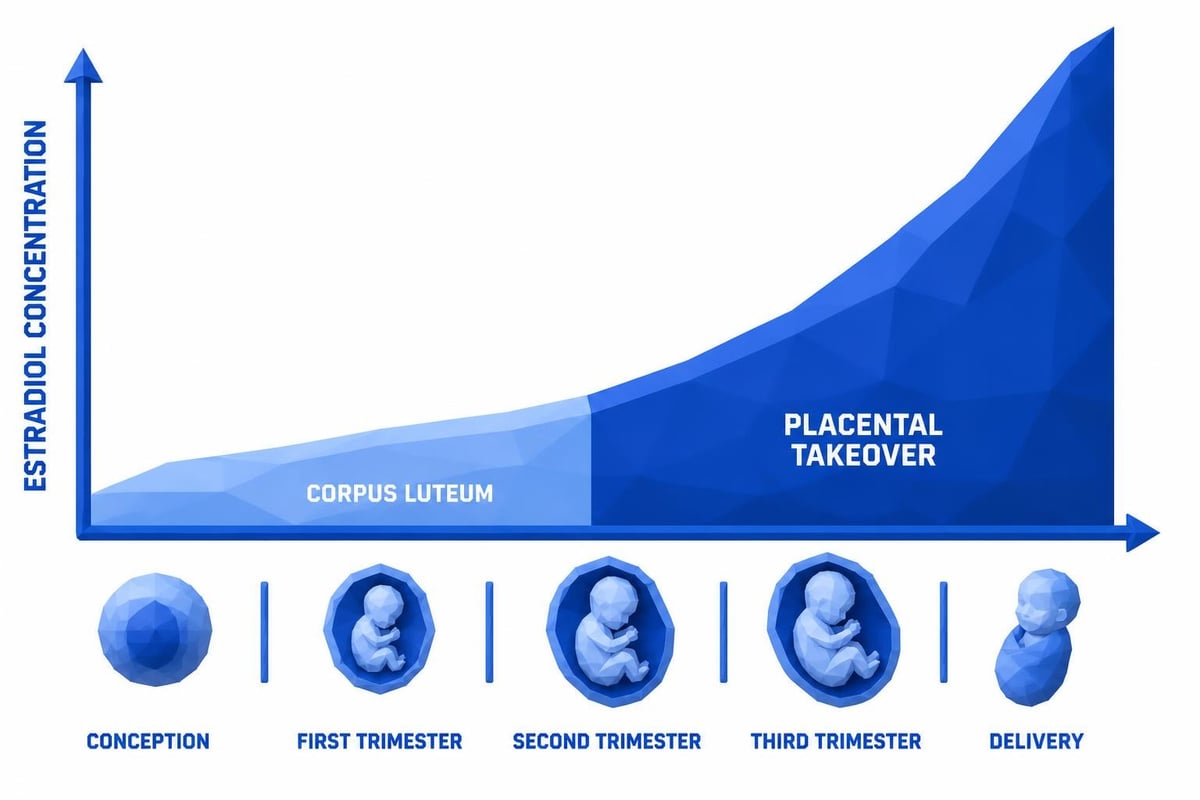
Pregnancy transforms estradiol production dramatically, with the placenta becoming the primary source after the first trimester. These elevated levels support fetal development, prepare the breasts for lactation, and maintain the pregnancy.
First Trimester Estradiol
During early pregnancy, estradiol rises gradually from luteal phase levels. By the end of the first trimester (12-13 weeks), estradiol typically reaches 1,000-5,000 pg/mL. The corpus luteum initially maintains these levels before placental production takes over around week 10.
Early pregnancy estradiol testing isn't routine for most pregnancies, but it may be monitored in cases of threatened miscarriage, assisted reproduction, or high-risk pregnancies.
Second and Third Trimester Progression
Estradiol levels during pregnancy continue climbing throughout gestation, reaching extraordinary concentrations that would be pathological outside of pregnancy.
| Pregnancy Stage | Weeks | Typical Estradiol Range (pg/mL) |
|---|---|---|
| First trimester | 1-12 | 200-5,000 |
| Second trimester | 13-28 | 1,000-15,000 |
| Third trimester | 29-40 | 5,000-30,000 |
| Late third trimester | 37-40 | 10,000-40,000 |
These values represent general ranges, with significant individual variation considered normal. The placenta's massive estradiol production supports rapid fetal growth, prepares maternal tissues for delivery, and influences metabolic adaptations to pregnancy.
Postpartum Estradiol Decline
Immediately after delivery, estradiol plummets as the placenta is expelled. Within 24-72 hours, levels drop to menopausal ranges (10-30 pg/mL), where they remain during exclusive breastfeeding. This sharp decline contributes to postpartum mood changes and supports lactation by allowing prolactin to function without estrogen interference.
Estradiol Levels in Perimenopause and Menopause
The transition to menopause represents the most dramatic long-term shift in estradiol levels by cycle phase pregnancy and menopause, as ovarian function gradually ceases.
Perimenopause: The Transition Years
Perimenopause typically begins in the 40s, though timing varies considerably. During this phase, estradiol becomes unpredictable, with wider fluctuations than reproductive years. Some cycles may show normal or even elevated estradiol, while others demonstrate premature decline.
Perimenopausal estradiol patterns include:
- Irregular cycling with variable follicular phase estradiol
- Occasional "super-ovulation" cycles with estradiol exceeding 400 pg/mL
- Progressively shorter cycles as follicles deplete
- Increasing frequency of anovulatory cycles with lower estradiol
Testing during perimenopause proves challenging because levels fluctuate dramatically week to week. A single measurement provides limited information without context about cycle timing and symptom patterns.
Early and Late Menopause
Menopause is confirmed retrospectively after 12 consecutive months without menstruation. Postmenopausal estradiol typically remains below 30 pg/mL, with most women measuring 10-20 pg/mL. The ovaries continue producing small amounts, and peripheral conversion of androgens to estrogens provides additional low-level estradiol.
Recent harmonized reference ranges for postmenopausal women help clinicians distinguish normal postmenopausal levels from those suggesting residual ovarian activity or exogenous estrogen exposure.
| Menopausal Stage | Typical Estradiol Range (pg/mL) | FSH Levels |
|---|---|---|
| Perimenopause | Highly variable (20-300+) | Variable, trending upward |
| Early menopause | 10-40 | >25-30 IU/L |
| Late menopause | 5-25 | >40 IU/L |
The sustained low estradiol of menopause contributes to hot flashes, vaginal dryness, bone density loss, and cardiovascular changes. Understanding your baseline estradiol helps guide decisions about hormone replacement therapy and other interventions.
Clinical Implications and Testing Strategies
Knowing when and why to test estradiol levels by cycle phase pregnancy and menopause enables more effective health monitoring and medical decision-making.
When to Test Estradiol
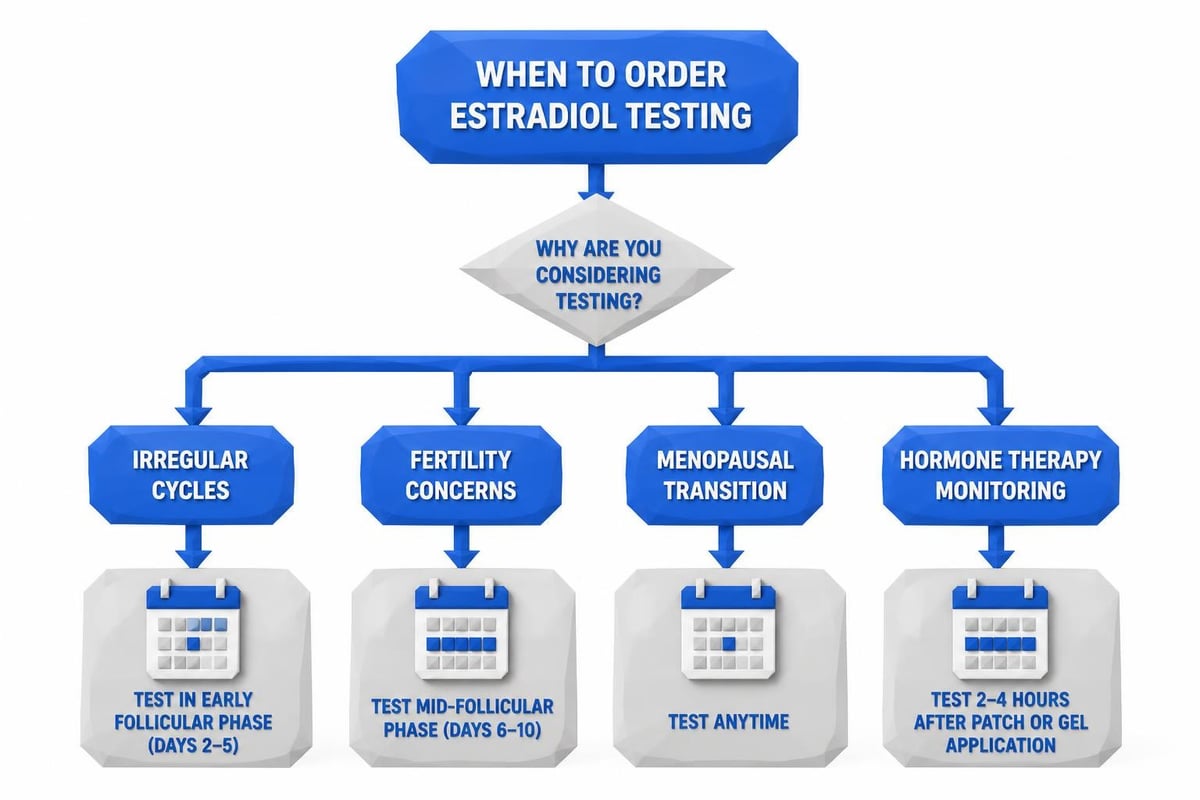
Optimal testing timing depends on your specific situation:
- Fertility assessment: Day 3 of cycle for baseline; day 10-14 for ovulation timing
- Menstrual irregularities: Early follicular phase (days 2-4) alongside FSH and LH
- Perimenopause confirmation: Any time, but interpret with caution due to fluctuations
- Menopause confirmation: Any time if amenorrhea persists 12+ months
- Pregnancy monitoring: Only when specifically indicated by clinical circumstances
- Hormone therapy monitoring: Timing depends on delivery method and clinical goals
For those seeking convenient testing options, direct-access lab services allow you to order estradiol panels without waiting for a doctor's appointment, with results typically available within 1-3 days.
Interpreting Results in Context
Estradiol values must be interpreted within the framework of your reproductive stage, cycle timing, symptoms, and other hormone levels. An estradiol of 150 pg/mL represents vastly different clinical scenarios depending on whether you're on cycle day 3, day 13, pregnant, or postmenopausal.
Recommended Panel
Female Hormone Panel
Save $7This comprehensive panel measures all major female hormones: estrogen, progesterone, reproductive hormones (FSH/LH), and androgens (testosterone/DHEA-S) - essential for understanding hormonal balance.
Includes 7 biomarkers
$105
Conditions Affecting Estradiol Levels
Various medical conditions can alter normal estradiol patterns across all reproductive stages.
Low Estradiol Conditions
- Primary ovarian insufficiency: Premature menopause before age 40
- Hypothalamic amenorrhea: Often due to excessive exercise, low body weight, or stress
- Hypopituitarism: Pituitary dysfunction reducing FSH and LH stimulation
- Turner syndrome: Genetic condition affecting ovarian development
- Certain medications: GnRH agonists, aromatase inhibitors, some chemotherapy agents
Elevated Estradiol Conditions
- Ovarian tumors: Estrogen-secreting neoplasms
- Liver disease: Reduced estrogen metabolism
- Obesity: Increased peripheral conversion of androgens to estrogens
- Polycystic ovary syndrome (PCOS): May show elevated estradiol relative to progesterone
- Exogenous estrogen: Hormone therapy, contraceptives, or undisclosed supplements
Understanding these conditions helps contextualize unexpected results. If your estradiol levels fall outside expected ranges for your reproductive stage, further evaluation may be warranted.
Comparing Testing Options and Costs
Access to estradiol testing has expanded significantly, with multiple pathways now available beyond traditional physician-ordered tests.
Traditional lab testing through doctor referrals often involves:
- Insurance pre-authorization delays
- Multiple appointments for ordering and follow-up
- Higher out-of-pocket costs if not covered
- Limited patient access to raw data
Self-directed lab testing addresses these limitations. Platforms focusing on transparent pricing and direct consumer access eliminate insurance complications and provide faster turnaround. Understanding where to get lab tests and comparing pricing across providers ensures you receive quality testing at fair prices.
| Testing Approach | Typical Turnaround | Cost Range | Patient Advantages |
|---|---|---|---|
| Traditional physician-ordered | 3-7 days + appointment delays | $50-300+ | Insurance may cover |
| Direct-access lab services | 1-3 days | $30-150 | No appointment needed, transparent pricing |
| At-home collection kits | 5-10 days | $75-200 | Convenience, privacy |
For individuals tracking estradiol levels by cycle phase pregnancy and menopause patterns over time, the ability to order repeat testing without repeated doctor visits provides significant convenience and cost savings.
Key Takeaways
Understanding estradiol levels by cycle phase pregnancy and menopause empowers you to monitor your reproductive health effectively and make informed decisions about testing, treatment, and wellness strategies. Estradiol fluctuates from as low as 10 pg/mL in menopause to over 30,000 pg/mL in late pregnancy, making context absolutely critical for interpretation. Timing matters enormously: the same estradiol value can represent normal function on one cycle day and dysfunction on another. Modern testing options provide accessible, affordable pathways to monitor your hormonal health without insurance hassles or appointment delays. Whether you're tracking fertility, navigating perimenopause, or managing hormone therapy, baseline and serial estradiol testing offers valuable insights into your unique hormonal patterns.
FAQ
What is a normal estradiol level for a woman?
Normal estradiol levels depend entirely on reproductive stage and cycle timing. During the follicular phase, 20-75 pg/mL is typical early in the cycle, rising to 100-200 pg/mL before ovulation. Postmenopausal women typically measure below 30 pg/mL, while pregnancy values can exceed 10,000 pg/mL in the third trimester.
When should I test my estradiol levels?
Test estradiol on cycle day 3 for baseline fertility assessment, days 10-14 for ovulation tracking, or anytime if you're experiencing menstrual irregularities, menopausal symptoms, or monitoring hormone therapy. If you're postmenopausal or in perimenopause, timing is less critical since you're not cycling regularly.
Can low estradiol affect fertility?
Yes, low estradiol can significantly impact fertility. Insufficient estradiol during the follicular phase may indicate poor follicle development, which can prevent ovulation or reduce egg quality. Low estradiol also affects endometrial development, potentially interfering with embryo implantation even if ovulation occurs.
How quickly does estradiol drop after menopause?
The decline isn't sudden but gradual during perimenopause, typically spanning 4-8 years. Once true menopause occurs (12 months without periods), estradiol stabilizes at consistently low levels below 30 pg/mL. The most dramatic single drop occurs immediately postpartum rather than at menopause.
Should I test estradiol if I'm on birth control?
Most hormonal contraceptives suppress natural estradiol production, so testing may not reflect your baseline hormonal status. If you're troubleshooting symptoms while on contraceptives, discuss with your provider whether testing on or off hormones makes more sense for your specific situation.
What causes high estradiol levels when not pregnant?
Elevated non-pregnancy estradiol can result from ovarian cysts, estrogen-producing tumors, liver disease affecting hormone metabolism, obesity increasing peripheral estrogen conversion, or exogenous estrogen from supplements or medications. Timing relative to your cycle also matters, as pre-ovulatory surges naturally reach 200-350 pg/mL.
How does estradiol change during IVF treatment?
IVF stimulation medications dramatically increase estradiol levels, often reaching 1,000-4,000 pg/mL or higher depending on the number of developing follicles. Monitoring estradiol during IVF helps clinicians adjust medication dosing and assess ovarian response while watching for ovarian hyperstimulation syndrome risk.
Can I test estradiol at home?
While some at-home collection kits exist for estradiol testing, most require sending samples to certified laboratories for analysis. The most reliable approach combines convenient test ordering through direct-access services with sample collection at professional draw stations, ensuring proper handling and accurate results.
Understanding your estradiol patterns across different life phases provides invaluable insight into your reproductive health, whether you're optimizing fertility, managing symptoms, or monitoring treatment effectiveness. By leveraging accessible testing options that deliver results quickly and transparently, you can take a proactive approach to hormonal wellness. JustLabs offers convenient, affordable hormone testing that puts you in control of your health data, with straightforward online ordering, transparent pricing, and results delivered in 1-3 days-no insurance hassles or doctor visits required.