Non-classic congenital adrenal hyperplasia (NCCAH) is a common but often overlooked endocrine disorder that affects hormone production in the adrenal glands. The 17-hydroxyprogesterone (17-OHP) test serves as the primary screening tool for this condition, helping identify individuals who may have this milder form of CAH. Understanding when and how to use the 17-ohp test non classic cah can help patients and healthcare providers make informed decisions about diagnosis and treatment.
Big picture
- Non-classic CAH is a genetic condition that causes the adrenal glands to produce excess androgens (male hormones) due to a partial enzyme deficiency, most commonly affecting 21-hydroxylase.
- The 17-OHP test measures a hormone precursor that accumulates when the enzyme pathway is blocked, making it the first-line screening test for diagnosing non-classic CAH in adults and children.
- Symptoms often appear during puberty or adulthood and include irregular periods, excess hair growth, acne, and fertility problems in women, while men may experience early balding or low sperm count.
- Baseline testing may not be enough because many people need ACTH stimulation testing to confirm the diagnosis, especially when baseline 17-OHP levels fall in the gray zone.
- Early diagnosis matters since treatment with low-dose glucocorticoids can effectively manage symptoms and improve fertility outcomes.
- Direct-access lab testing makes screening accessible without requiring a doctor's visit first, allowing individuals with symptoms to pursue testing quickly and affordably.
Understanding Non-Classic Congenital Adrenal Hyperplasia
Non-classic congenital adrenal hyperplasia represents the mild end of the CAH spectrum. Unlike classic CAH, which presents in infancy with life-threatening salt wasting or ambiguous genitalia, NCCAH typically manifests during childhood, adolescence, or even adulthood with more subtle symptoms.
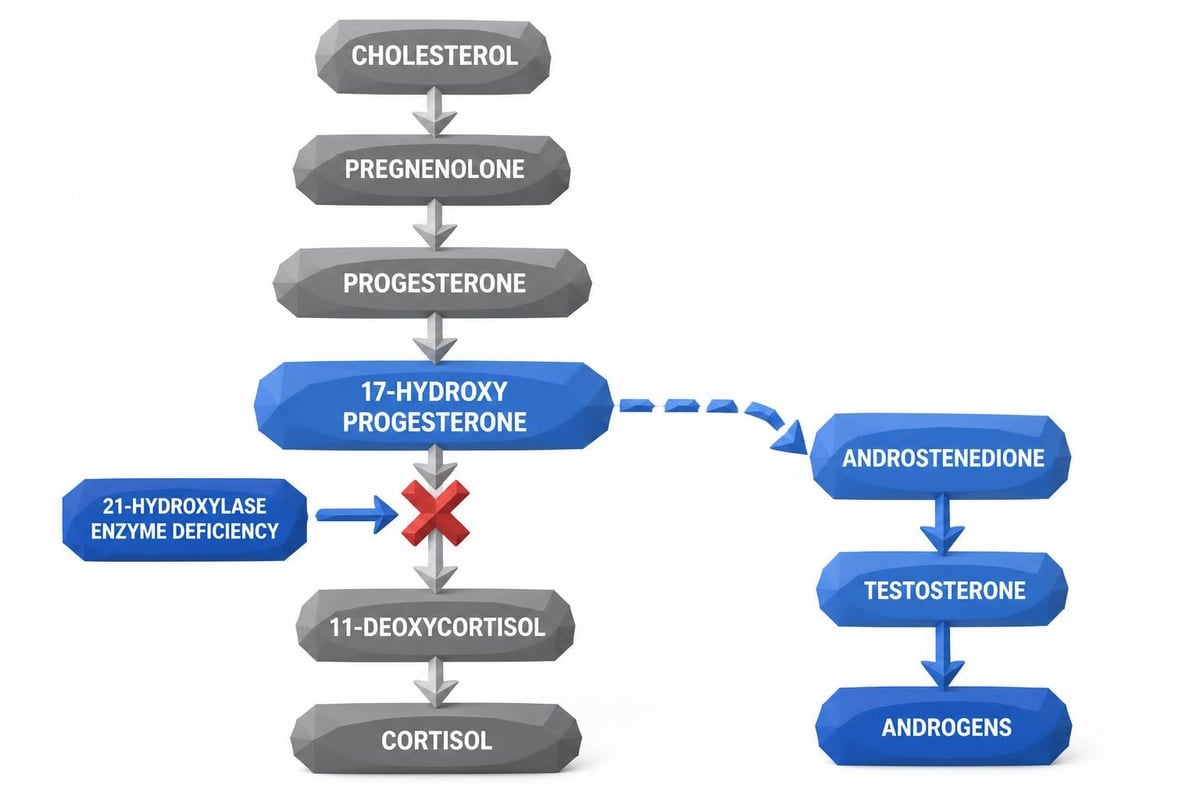
The condition results from mutations in the CYP21A2 gene that encodes 21-hydroxylase, the enzyme responsible for converting 17-hydroxyprogesterone into 11-deoxycortisol in the cortisol synthesis pathway. When this enzyme is partially deficient, 17-OHP accumulates and gets shunted toward androgen production instead.
Prevalence and Risk Factors
NCCAH is surprisingly common, affecting approximately 1 in 200 individuals in the general population. Certain ethnic groups show higher carrier rates:
| Population | Estimated Prevalence |
|---|---|
| Ashkenazi Jews | 1 in 27 |
| Hispanics | 1 in 40 |
| Yugoslavs | 1 in 50 |
| General Caucasian | 1 in 200 |
The condition follows an autosomal recessive inheritance pattern, meaning individuals need two mutated copies of the gene to develop NCCAH. Family history significantly increases risk, particularly if siblings or parents have been diagnosed.
Clinical Presentation and Symptoms
The symptoms of non-classic CAH vary widely between individuals and often overlap with more common conditions like polycystic ovary syndrome (PCOS). This overlap makes proper testing essential for accurate diagnosis.
Symptoms in Women
Women with NCCAH typically experience signs of androgen excess:
- Hirsutism: Excessive hair growth in male-pattern areas (face, chest, back)
- Irregular menstrual cycles: Oligomenorrhea or amenorrhea
- Acne: Persistent, treatment-resistant acne beyond teenage years
- Male-pattern baldness: Frontal hair thinning or receding hairline
- Infertility: Difficulty conceiving due to anovulation
Symptoms in Men
Men often have fewer obvious symptoms, which can delay diagnosis:
- Early male-pattern baldness
- Severe teenage acne
- Low sperm count or infertility
- Testicular adrenal rest tumors (rare)
- Short stature if diagnosed in childhood
Childhood Presentations
Children may show premature development of pubic hair, rapid growth followed by early growth plate closure, and advanced bone age relative to chronological age.
The 17-OHP Test: Measurement and Methodology
The 17-ohp test non classic cah measures the concentration of 17-hydroxyprogesterone in blood serum. This steroid hormone serves as both a precursor to cortisol and a marker of 21-hydroxylase deficiency.
Testing Methods
Two primary methodologies exist for measuring 17-OHP:
Immunoassay: Traditional method used by most commercial laboratories. While convenient and widely available, immunoassays can show cross-reactivity with other steroids, particularly in newborns and during the follicular phase of the menstrual cycle.
Liquid Chromatography-Tandem Mass Spectrometry (LC-MS/MS): The gold standard for steroid hormone measurement. This method provides superior specificity and accuracy, especially important for borderline cases. Recent research demonstrates that LC-MS/MS-specific thresholds improve diagnostic accuracy for non-classic CAH.
Sample Timing Considerations
For menstruating women, the 17-ohp test non classic cah should ideally be performed during the follicular phase (days 3-5 of the menstrual cycle) when progesterone levels are lowest. Testing during the luteal phase can produce false elevations due to the corpus luteum's progesterone production.
Morning collection is preferred since 17-OHP follows a circadian rhythm with highest levels in early morning hours.
Interpreting 17-OHP Results
Understanding what 17-OHP levels mean requires considering multiple factors including testing methodology, time of day, menstrual cycle phase, and clinical context.
Baseline 17-OHP Ranges
The diagnostic algorithm from ACMG provides guidance on interpreting baseline results:
| Baseline 17-OHP Level | Interpretation | Next Steps |
|---|---|---|
| <200 ng/dL | Normal | NCCAH unlikely |
| 200-1000 ng/dL | Indeterminate | ACTH stimulation test needed |
| >1000 ng/dL | Highly suggestive | Consider genetic testing |
These cutoffs vary slightly between laboratories and testing methods. Always compare results to the reference range provided by the specific laboratory.
Recommended Panel
Female Hormone Panel
Save $7This comprehensive panel measures all major female hormones: estrogen, progesterone, reproductive hormones (FSH/LH), and androgens (testosterone/DHEA-S) - essential for understanding hormonal balance.
Includes 7 biomarkers
$105
The Gray Zone Problem
Many individuals with NCCAH fall into the indeterminate range on baseline testing. Understanding lab results requires recognizing that a single baseline value often cannot definitively confirm or exclude the diagnosis.
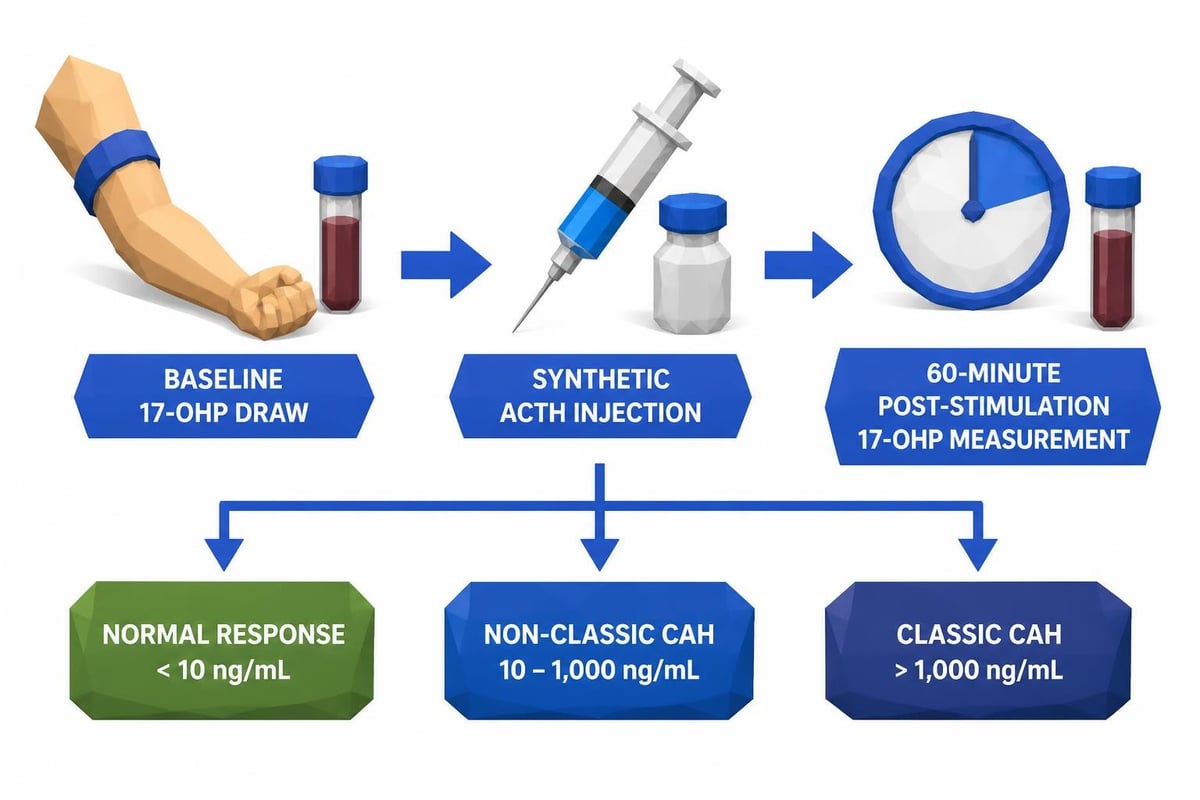
This is where ACTH stimulation testing becomes essential. The test challenges the adrenal glands with synthetic ACTH and measures how much 17-OHP increases over 60 minutes.
ACTH Stimulation Testing for Confirmation
The ACTH stimulation test (also called cosyntropin stimulation test) represents the gold standard for diagnosing non-classic CAH when baseline testing is inconclusive.
Test Protocol
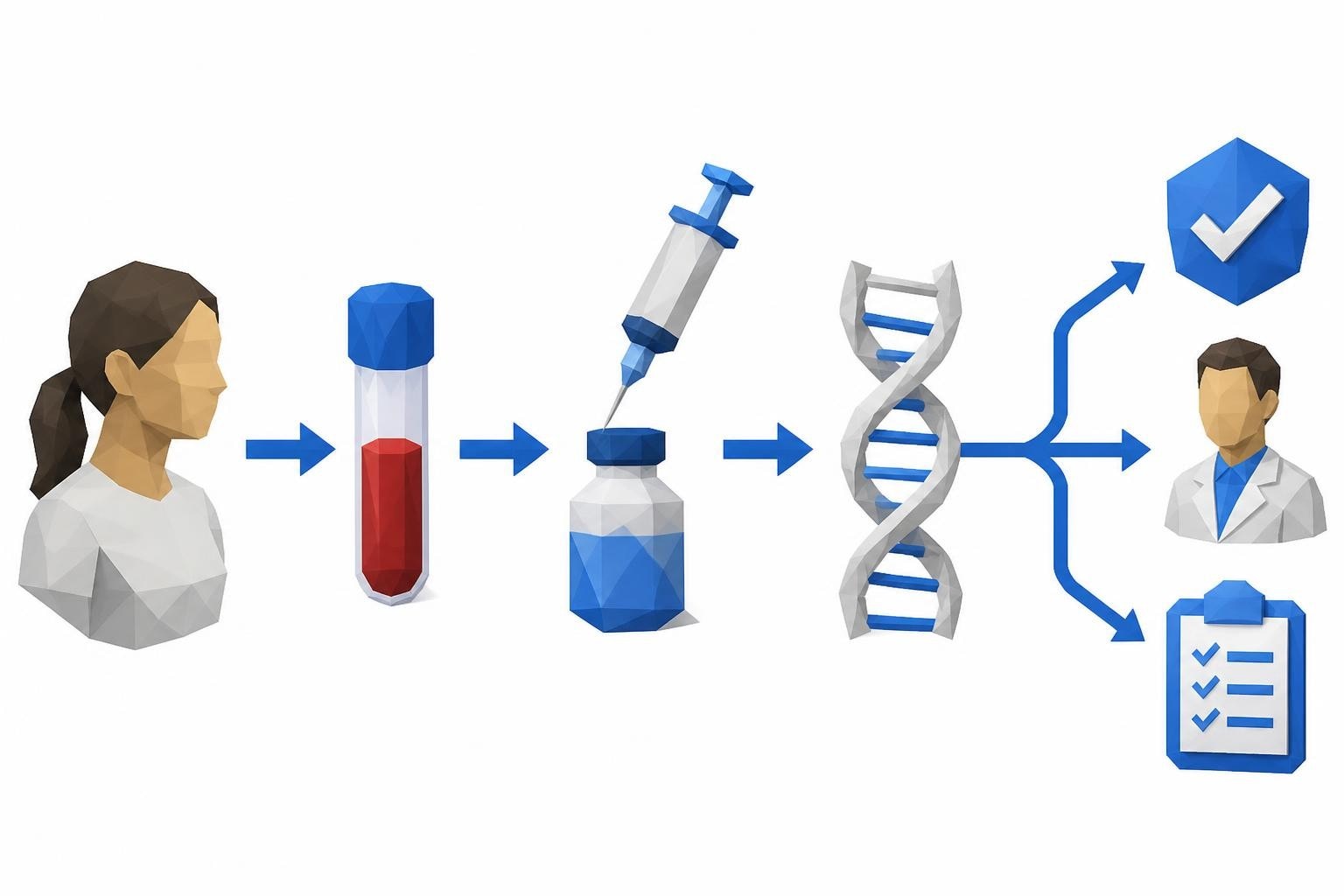
The procedure involves:
- Baseline measurement: Draw blood for 17-OHP, cortisol, and sometimes other adrenal steroids
- ACTH administration: Inject 250 mcg of synthetic ACTH (cosyntropin) intravenously or intramuscularly
- Stimulated measurement: Draw blood 60 minutes after injection for the same hormones
Diagnostic Thresholds
Post-ACTH 17-OHP levels guide diagnosis:
- <1000 ng/dL: Normal adrenal function, NCCAH excluded
- 1000-1500 ng/dL: Possible heterozygote carrier or mild NCCAH
- >1500 ng/dL: Diagnostic for non-classic CAH
Some references suggest thresholds as low as 1200 ng/dL for diagnosis. The Endocrine Society's clinical practice guidelines provide comprehensive recommendations for interpreting stimulated values.
When to Skip ACTH Testing
Not everyone needs confirmatory ACTH stimulation:
- Baseline 17-OHP clearly normal (<200 ng/dL)
- Baseline 17-OHP very elevated (>1000 ng/dL) with consistent symptoms
- Genetic testing already confirms two pathogenic CYP21A2 mutations
Genetic Testing for Non-Classic CAH
While the 17-ohp test non classic cah serves as the functional assessment of enzyme activity, genetic testing of the CYP21A2 gene provides the definitive molecular diagnosis.
Role of Genetic Testing
Genetic analysis identifies specific mutations that confirm the diagnosis and enable:
- Family planning counseling: Determines carrier status and recurrence risk
- Phenotype prediction: Certain mutations correlate with disease severity
- Elimination of false positives: Distinguishes NCCAH from other causes of elevated 17-OHP
The ARUP Consult testing algorithm outlines when genetic testing should supplement biochemical evaluation.
Common NCCAH Mutations
Several CYP21A2 mutations strongly associate with non-classic CAH:
- P30L (c.89C>T): Most common NCCAH mutation in many populations
- V281L (c.841G>T): Mild mutation associated with later onset
- P453S (c.1357C>T): Variable phenotype depending on other allele
- R339H (c.1016G>A): Can cause NCCAH or mild classic CAH
Differential Diagnosis: Other Causes of Elevated 17-OHP
Several conditions can elevate 17-OHP levels, making the 17-ohp test non classic cah interpretation more complex than simply identifying high values.
Polycystic Ovary Syndrome (PCOS)
PCOS frequently presents with symptoms identical to NCCAH: hirsutism, irregular periods, and infertility. Some women with PCOS show mildly elevated baseline 17-OHP (typically 200-400 ng/dL) but normal ACTH-stimulated levels. MedlinePlus provides patient-friendly information about distinguishing these conditions.
Other Enzyme Deficiencies
Less common forms of CAH affect different enzymes:
- 11β-hydroxylase deficiency: Also raises 17-OHP but with hypertension
- 3β-hydroxysteroid dehydrogenase deficiency: Elevates different steroid precursors
- 17α-hydroxylase deficiency: Low 17-OHP with hypertension
Heterozygote Carriers
Individuals carrying one mutated CYP21A2 gene may show borderline-elevated 17-OHP but lack clinical symptoms. They don't require treatment but benefit from genetic counseling if planning children.
Accessing the 17-OHP Test Without Insurance
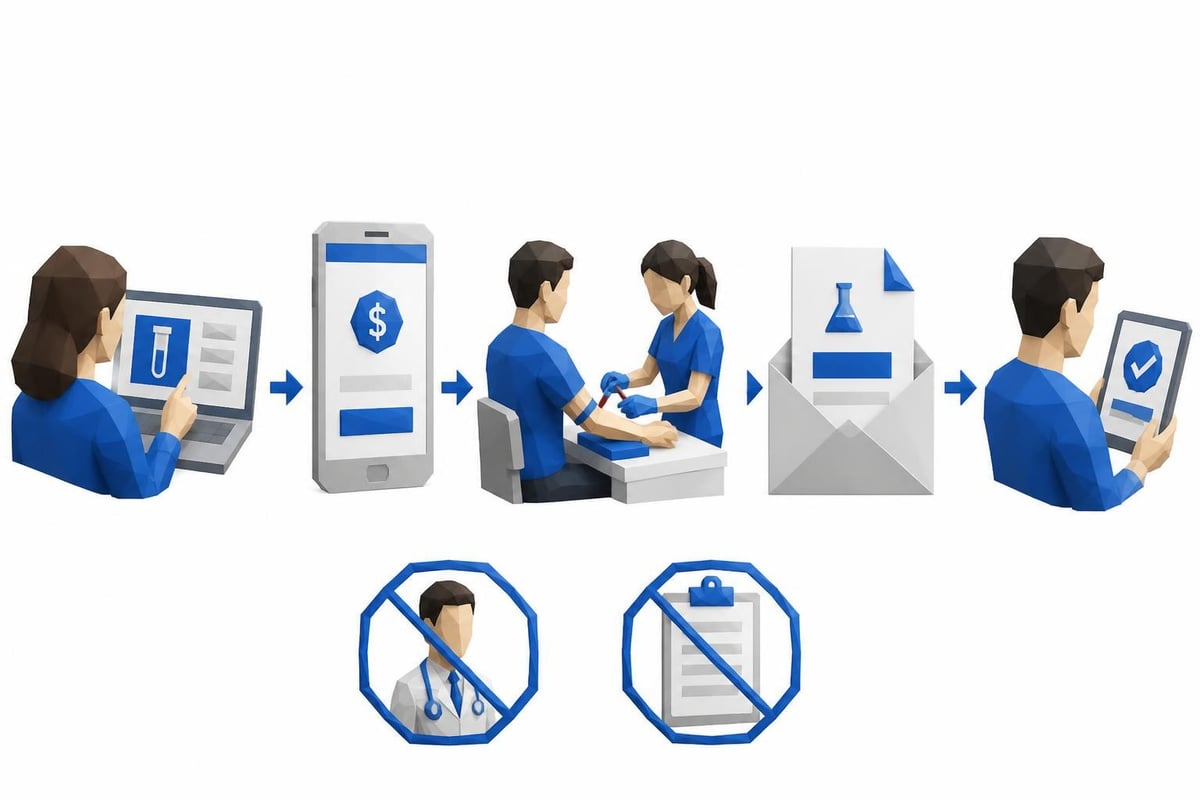
Traditional pathways to obtaining a 17-ohp test non classic cah often involve multiple doctor visits, insurance approvals, and lengthy waits. Direct-access laboratory testing provides an alternative approach.
Benefits of Self-Pay Testing
Ordering labs without a doctor offers several advantages:
- No insurance required: Avoid coverage denials or high deductibles
- Transparent pricing: Know costs upfront with clear lab test pricing
- Faster results: Get answers in 1-3 days rather than weeks
- Convenience: Order online and visit a nearby lab location
- Privacy: Direct results without going through medical records
Who Should Consider Direct Testing
Direct-access 17-OHP testing makes sense for individuals who:
- Experience symptoms suggestive of NCCAH but face delays getting a referral
- Have family history and want screening
- Previously tested borderline and want follow-up
- Lack insurance or have high-deductible plans
- Prefer privacy and control over their health information
Many self-pay tests are FSA/HSA eligible, making them more affordable through pre-tax healthcare accounts.
Treatment Considerations for Non-Classic CAH
While this article focuses on testing and diagnosis, understanding treatment helps contextualize why accurate diagnosis through the 17-ohp test non classic cah matters.
Glucocorticoid Therapy
Low-dose glucocorticoids (typically hydrocortisone or dexamethasone) suppress ACTH production, reducing adrenal androgen output. Treatment goals include:
- Normalizing menstrual cycles and improving fertility
- Reducing hirsutism and acne
- Preventing bone age advancement in children
- Managing symptoms affecting quality of life
Not all diagnosed individuals require treatment. Many women with NCCAH who aren't seeking pregnancy and can manage cosmetic symptoms with topical treatments may choose observation over medication.
Fertility Management
Women with NCCAH trying to conceive often benefit from glucocorticoid therapy to restore ovulation. Once pregnant, medication continues to prevent virilization of female fetuses, though dosing requires careful adjustment.
Monitoring During Treatment
Regular follow-up includes:
- 17-OHP levels: To assess treatment adequacy
- Androgen levels: Testosterone and androstenedione
- Bone density: Long-term glucocorticoid effects
- Growth monitoring: In children receiving treatment
Key Takeaways
The 17-ohp test non classic cah serves as the essential first step in diagnosing non-classic congenital adrenal hyperplasia, a common but underdiagnosed condition affecting hormone balance and fertility. Proper testing requires attention to timing, methodology, and interpretation within clinical context.
Understanding when baseline testing suffices versus when ACTH stimulation or genetic testing becomes necessary helps patients and providers navigate the diagnostic process efficiently. Direct-access laboratory testing removes traditional barriers of insurance authorization and doctor visit requirements, making screening more accessible.
Accurate diagnosis through appropriate testing enables targeted treatment that can dramatically improve symptoms, restore fertility, and enhance quality of life. Whether pursued through traditional healthcare channels or direct-access options, obtaining the right tests at the right time makes all the difference in managing this treatable condition.
FAQ
What is the 17-OHP test used for?
The 17-hydroxyprogesterone test measures a hormone precursor that accumulates when the adrenal glands cannot properly produce cortisol due to enzyme deficiencies. It's primarily used to screen for and diagnose congenital adrenal hyperplasia, including the non-classic form that often appears in adolescence or adulthood. The test also helps evaluate causes of excess androgen production, irregular menstrual cycles, and infertility.
What is a normal 17-OHP level for adults?
Normal baseline 17-OHP levels in adults typically fall below 200 ng/dL when measured in the morning during the follicular phase for women. However, reference ranges vary between laboratories and testing methods, with LC-MS/MS generally providing more accurate values than immunoassay. Levels between 200-1000 ng/dL are considered indeterminate and usually require ACTH stimulation testing for clarification. Post-ACTH stimulation levels below 1000 ng/dL generally exclude non-classic CAH.
Do I need a doctor's order to get a 17-OHP test?
Many states allow direct-access laboratory testing without requiring a physician's order. Services like JustLabs enable individuals to order hormone tests online and visit a nearby lab location for blood collection. This approach provides faster access, transparent pricing, and results delivered within 1-3 days. For complex cases requiring ACTH stimulation testing or genetic analysis, working with an endocrinologist becomes important for proper interpretation and treatment planning.
When should I get tested for non-classic CAH?
Consider testing if you experience symptoms such as irregular periods, excessive facial or body hair growth, persistent acne beyond teenage years, difficulty conceiving, or early balding. Family history of CAH, especially in siblings or children, also warrants screening. Women with presumed PCOS who don't respond well to typical treatments should consider 17-OHP testing to rule out non-classic CAH. Testing during days 3-5 of the menstrual cycle provides the most accurate baseline results.
How much does a 17-OHP test cost?
The cost varies significantly depending on whether you use insurance, where you get tested, and which laboratory processes the sample. Labs without insurance through direct-access services typically charge between $50-150 for baseline 17-OHP measurement. Insurance-based testing may involve copays, deductibles, and additional fees that make total costs unpredictable. ACTH stimulation tests cost more due to medication, additional blood draws, and extended visit time, typically ranging from $300-800.
Can birth control pills affect 17-OHP test results?
Yes, oral contraceptives containing estrogen increase cortisol-binding globulin, which can affect steroid hormone measurements. Some birth control pills also suppress ACTH production, potentially lowering 17-OHP levels and masking non-classic CAH. For most accurate results, consider testing after discontinuing hormonal contraceptives for 4-6 weeks if medically appropriate. Always inform the laboratory and your healthcare provider about all medications you're taking when interpreting results.
What happens if my 17-OHP level is borderline?
Borderline results (typically 200-1000 ng/dL) indicate the need for confirmatory ACTH stimulation testing. This test challenges your adrenal glands with synthetic ACTH and measures how much 17-OHP increases after 60 minutes. Stimulated levels above 1500 ng/dL confirm non-classic CAH, while levels below 1000 ng/dL effectively rule it out. Your healthcare provider may also recommend genetic testing to definitively identify CYP21A2 mutations associated with non-classic CAH.
Is non-classic CAH serious?
Non-classic CAH is generally not life-threatening like classic CAH, which can cause severe salt-wasting crises in infancy. However, NCCAH significantly impacts quality of life through symptoms like hirsutism, acne, irregular periods, and infertility. The condition is highly treatable with low-dose glucocorticoids that restore hormone balance. Early diagnosis matters because untreated NCCAH in children can lead to early puberty, accelerated bone maturation, and reduced adult height. In adults, treatment improves fertility outcomes and manages bothersome symptoms.
Understanding the 17-ohp test non classic cah and its role in diagnosing adrenal hormone disorders empowers you to take control of your health screening. Whether experiencing concerning symptoms or simply wanting to investigate family history, accessible testing provides answers without the traditional barriers of insurance authorization and multiple doctor visits. If you're ready to pursue hormone testing with transparent pricing and quick results, JustLabs offers convenient online ordering with results delivered in 1-3 days, helping you move forward with clarity and confidence.