Understanding why your deductible resets and what it costs can save you hundreds or even thousands of dollars in healthcare expenses each year. Most Americans face this annual reset without fully grasping its financial implications, particularly when it comes to routine medical services like laboratory testing. The deductible reset represents a significant shift in how much you pay out-of-pocket for care, and knowing the mechanics behind it empowers you to make smarter healthcare decisions.
Big picture
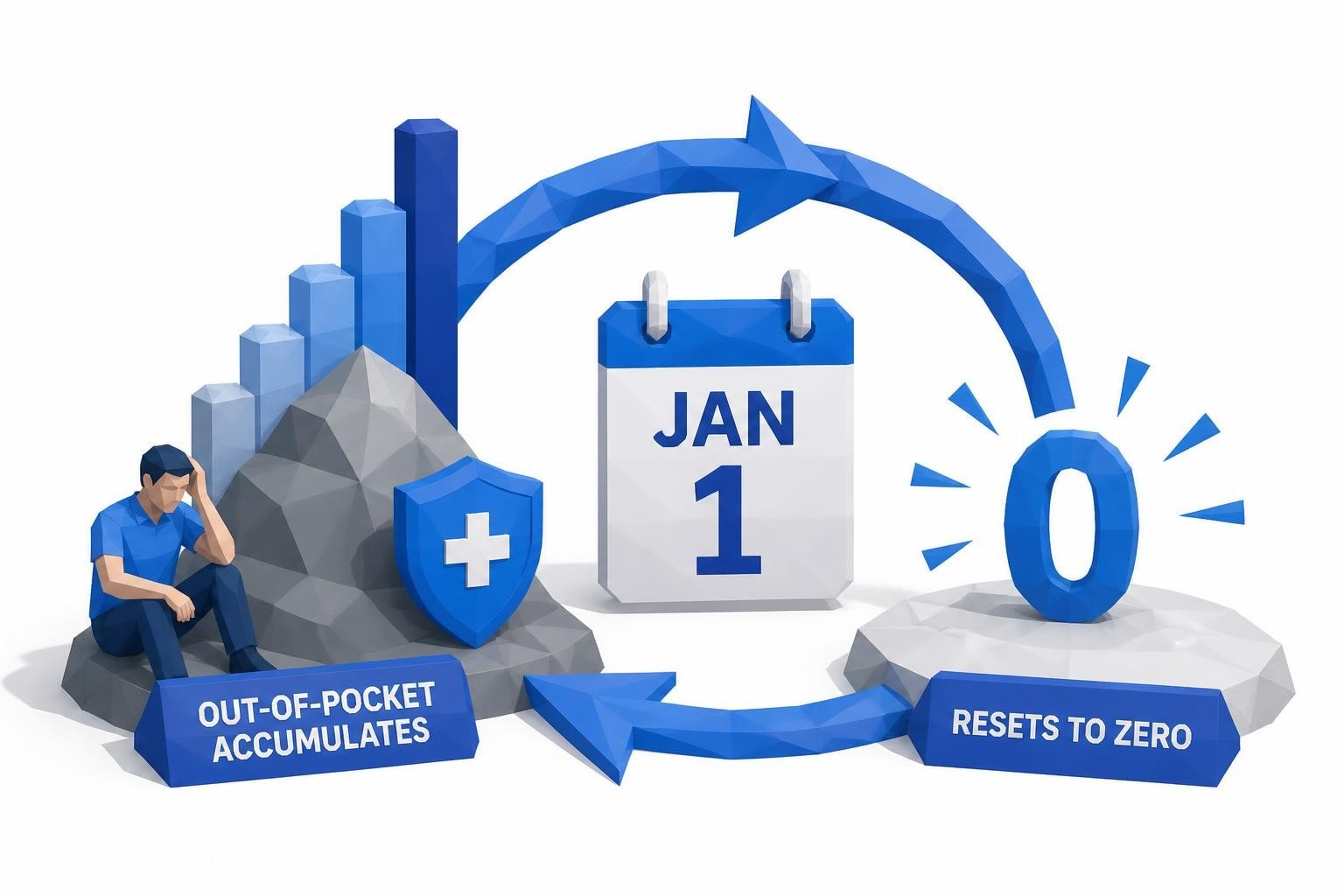
- Deductibles reset on a schedule determined by your plan year (usually January 1 for individual plans or your employer's plan anniversary), meaning any amount you paid toward your deductible in the previous year doesn't carry over.
- The reset can significantly increase your out-of-pocket costs for healthcare services at the start of each new plan year, particularly for services like lab testing that often aren't covered until you meet your deductible.
- Average deductibles have grown substantially over the past decade, with the Kaiser Family Foundation reporting that single coverage deductibles for employer plans now average over $1,600 annually.
- Timing matters for non-urgent care because scheduling elective procedures or routine tests late in your plan year (when you've met your deductible) versus early in a new year can mean the difference between minimal and maximum cost-sharing.
- Self-pay options bypass the deductible cycle entirely, allowing you to access transparent lab test pricing regardless of where you are in your plan year.
What a Deductible Actually Is
A deductible is the amount you must pay out-of-pocket for covered healthcare services before your insurance begins to share the costs. According to CMS guidance on health insurance terms, this represents your financial responsibility threshold each plan year.
Think of it as a financial threshold you cross before insurance benefits activate. Until you reach that threshold, you pay the full negotiated rate for most services.
How Deductibles Work in Practice
When you receive healthcare services, your insurance company tracks how much you've paid toward your deductible. Each payment chips away at that annual total until you satisfy the requirement.
Key points about deductible mechanics:
- Most plans apply separate deductibles for individuals versus families
- Some services (like preventive care) may be exempt from the deductible
- The amounts you pay count toward your out-of-pocket maximum
- Once met, you typically enter a coinsurance phase where you share costs with your insurer
The Healthcare.gov cost breakdown explains that even after meeting your deductible, you'll likely pay coinsurance or copays until reaching your out-of-pocket maximum. This multi-tier cost structure can be confusing, which is why understanding why your deductible resets and what it costs requires examining the entire annual cycle.

Why Deductibles Reset Every Year
Insurance companies design deductibles to reset on a predictable schedule to align with their risk assessment and pricing models. This annual reset serves several purposes from the insurer's perspective while creating financial planning challenges for consumers.
The National Association of Insurance Commissioners explains that most health plans operate on either a calendar-year basis (January 1 through December 31) or a plan-year basis tied to your employer's renewal date. This standardization allows insurers to accurately predict and price risk for defined periods.
Calendar-Year vs. Plan-Year Resets
The timing of your deductible reset depends entirely on your plan's structure. Individual marketplace plans typically follow the calendar year, resetting every January 1. Employer-sponsored plans may reset on the company's plan anniversary, which could be any month of the year.
| Plan Type | Common Reset Date | Flexibility |
|---|---|---|
| Individual Marketplace | January 1 | Fixed calendar year |
| Employer-Sponsored | Varies by employer | Plan anniversary date |
| Medicare | January 1 | Calendar year |
| High-Deductible Health Plans | Usually January 1 | Tied to HSA contribution limits |
Why this schedule matters: Your deductible resets regardless of whether you've met it in the previous year. If you paid $3,500 toward a $4,000 deductible by December, you'll start over at $0 on January 1, even though you were just $500 away from meeting it.
The Business Logic Behind Annual Resets
Insurance companies calculate premiums based on expected annual utilization across their entire member pool. The reset mechanism ensures that their financial exposure remains predictable and bounded within specific time periods.
From a risk management perspective, annual resets allow insurers to:
- Reassess risk pools and adjust pricing based on current data rather than multi-year commitments
- Align with regulatory frameworks that govern annual coverage requirements and benefit structures
- Match premium collection cycles with clearly defined benefit periods
- Encourage preventive care by resetting coverage for annual wellness services
This structure means understanding why your deductible resets and what it costs requires recognizing that you're essentially purchasing a one-year contract for cost-sharing with specific financial thresholds.
The True Cost of the Deductible Reset
The financial impact of your deductible resetting extends beyond the deductible amount itself. When you calculate the total cost, you must consider timing, healthcare utilization patterns, and opportunity costs of different payment strategies.
Research from the Consumer Financial Protection Bureau shows that high deductibles contribute significantly to medical debt, particularly when patients face unexpected expenses early in their plan year before building sufficient savings.
Direct Financial Impact
The immediate cost of a deductible reset is the amount you'll pay out-of-pocket before insurance coverage begins. For 2026, employer-sponsored plans continue trending toward higher deductibles, with many high-deductible health plans (HDHPs) requiring $1,500 or more for individual coverage.
Typical out-of-pocket scenarios:
- Routine lab work ordered in January may cost you the full price ($150-$800 depending on tests)
- Specialist visits early in the year typically require full payment of the negotiated rate
- Prescription medications for chronic conditions may not receive coverage until the deductible is met
- Imaging studies like MRIs or CT scans can cost $500-$3,000 before insurance contributes
The IRS defines high-deductible health plans as those with minimum deductibles of $1,600 for self-only coverage in 2026. These plans pair with Health Savings Accounts but require substantial upfront cash reserves to manage the reset period effectively.
Hidden Costs and Timing Effects
Beyond the deductible itself, the reset creates indirect costs that aren't immediately obvious. These include interest on payment plans, delayed care due to cost concerns, and the administrative burden of tracking your deductible progress.
Consider a patient needing quarterly lab monitoring for thyroid function. If they schedule tests in late December, they might pay minimal costs with a met deductible. Schedule those same tests in early January, and the full price applies to the new deductible.
Recommended Panel
Complete Thyroid Panel
Save $3Our most comprehensive thyroid panel includes all 5 essential markers: TSH, Free T4, Free T3, Reverse T3, and both thyroid antibodies. Get the complete picture of your thyroid health.
Includes 6 biomarkers
$84
| Timing Scenario | December Test Cost | January Test Cost | Difference |
|---|---|---|---|
| Deductible Met | $20 copay | $200+ full cost | $180+ |
| Deductible Unmet | $200+ | $200+ | $0 |
| Using Self-Pay | $150 transparent price | $150 transparent price | $0 |
This timing differential explains why many patients strategically schedule elective procedures and non-urgent testing in the fourth quarter when they've already satisfied their deductible for the year.

Strategic Approaches to Managing Deductible Resets
Smart healthcare consumers develop strategies to minimize the financial impact of annual deductible resets. These approaches range from timing care appropriately to utilizing alternative payment options that bypass the insurance system entirely.
AARP's financial guidance recommends several practical steps, including checking your deductible status before year-end and accelerating necessary care if you're close to meeting your threshold.
End-of-Year Planning
As your plan year approaches its end, evaluate whether you're close to meeting your deductible. If you're within a few hundred dollars of the threshold, scheduling postponable services before the reset can provide significant savings.
Effective end-of-year strategies include:
- Scheduling annual wellness visits and preventive screenings
- Completing dental and vision care if your plan includes these benefits
- Ordering prescription refills to maximize current-year coverage
- Addressing minor health concerns that you've delayed
- Completing any recommended follow-up lab work
For laboratory testing specifically, this is when you should order any routine monitoring or wellness panels you've been considering. Justlabs provides access to comprehensive testing that you can time strategically based on your insurance cycle.
Beginning-of-Year Options
When your deductible resets, you face a choice: pay full insurance-negotiated rates that count toward your deductible, or explore self-pay options that may offer better value for routine services.
For many laboratory tests, the self-pay price through providers like Justlabs is actually lower than the insurance-negotiated rate you'd pay while meeting your deductible. This represents a fundamental shift in how consumers can approach healthcare costs.
Self-pay advantages after a deductible reset:
- Transparent pricing lets you know exact costs upfront without surprise bills
- No insurance paperwork streamlines the process and eliminates claim denials
- Faster access because you don't need physician orders for many routine tests
- Price stability means your costs don't fluctuate based on insurance status
The availability of self-pay lab testing has created viable alternatives to traditional insurance-based care, particularly for routine wellness monitoring and preventive screening.
Health Savings Accounts and the Reset Cycle
High-deductible health plans paired with Health Savings Accounts (HSAs) offer tax advantages but require careful planning around the annual reset. HSA contributions can help cushion the financial impact when your deductible starts over each year.
Federal regulations allow HSA owners to contribute up to $4,150 for self-only coverage in 2026. These tax-deductible contributions can be used to pay qualified medical expenses, including laboratory testing.
HSA reset planning considerations:
- Front-load contributions early in the year to build reserves for high-deductible months
- Track eligible expenses including FSA/HSA-eligible lab tests throughout the year
- Consider contribution timing in relation to expected healthcare utilization
- Maintain receipts for all qualified medical expenses, even if paid outside insurance
Many people don't realize that self-pay healthcare services, including direct-access lab testing, qualify as HSA-eligible expenses. This means you can use pre-tax dollars to pay for convenient lab testing without involving insurance at all.
Common Deductible Reset Scenarios
Understanding why your deductible resets and what it costs requires examining real-world situations that patients commonly face. These scenarios illustrate how the reset impacts different healthcare utilization patterns and financial situations.
Scenario 1: Chronic Condition Management
Patients with chronic conditions requiring regular monitoring face predictable costs that spike when deductibles reset. Consider someone managing diabetes who needs quarterly lab work to monitor HbA1c and glucose levels.
In November and December, their tests might cost a $20 copay after meeting their deductible. Come January, those same tests could cost $150-$300 each until they satisfy the new deductible.
Recommended Panel
Comprehensive Diabetes Panel
This panel detects diabetes and prediabetes at every stage. Includes lipids because diabetes dramatically increases heart disease risk.
Includes 10 biomarkers
$35
Fasting required
This patient might spend $600-$1,200 in the first quarter alone on lab work that cost them $80 total in the final quarter of the previous year. The reset creates a substantial financial burden precisely when many people's budgets are tight from holiday spending.
Scenario 2: Preventive Wellness Testing
Individuals focused on preventive health may schedule annual wellness panels to establish baseline health metrics. These proactive patients often discover that timing makes an enormous difference in costs.
A comprehensive wellness panel including metabolic markers, lipids, and thyroid function might cost $40 in December with a met deductible but $350 in January when starting fresh. This creates a perverse incentive to delay preventive care or skip it entirely due to cost concerns.
Self-pay options eliminate this timing penalty entirely. Through transparent pricing models, patients pay the same amount whether it's January or December, removing financial barriers to consistent preventive care.
Scenario 3: Family Coverage Complications
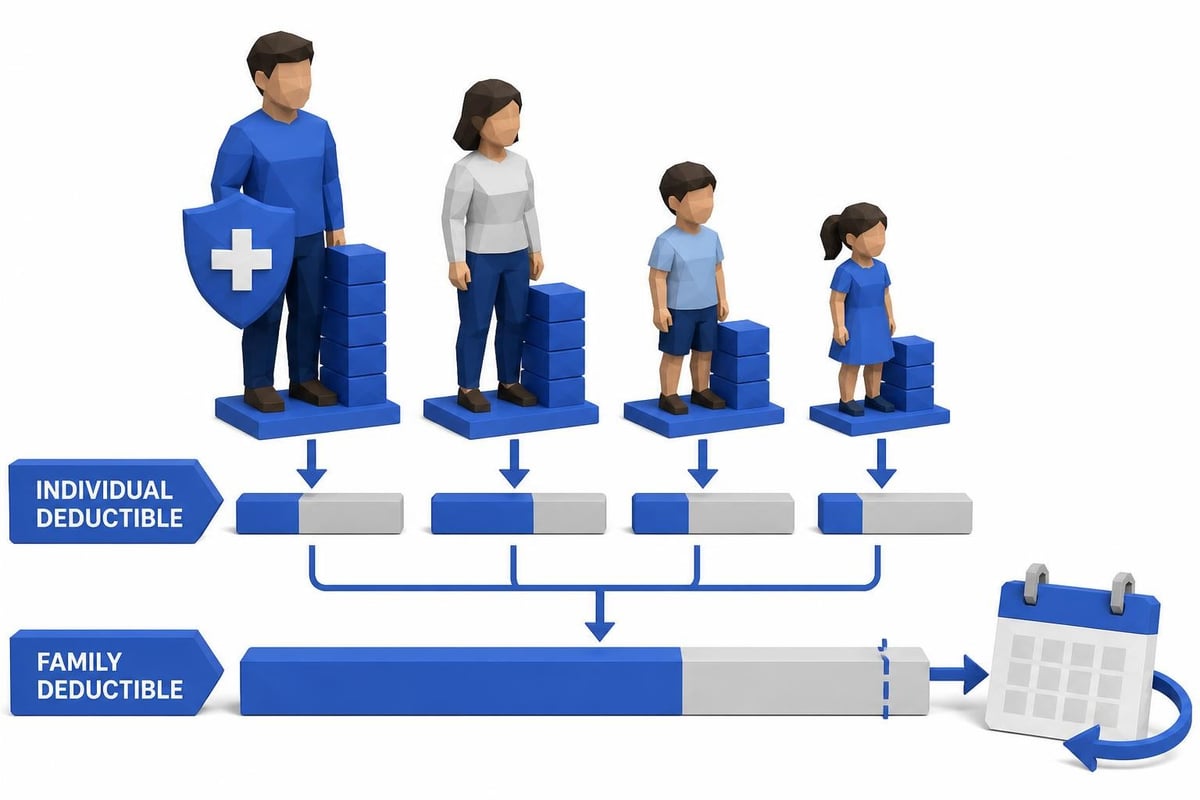
Family deductibles add another layer of complexity to the reset cycle. Most family plans require you to meet either individual deductibles for each family member or a family aggregate deductible, whichever comes first.
Family deductible structures typically work like this:
| Individual Deductible | Family Aggregate | How It Works |
|---|---|---|
| $2,000 per person | $4,000 family total | Either one person hits $2,000 or combined family spending reaches $4,000 |
| $1,500 per person | $3,000 family total | First threshold met triggers insurance cost-sharing for that person or everyone |
When the deductible resets, a family that collectively paid $3,800 toward a $4,000 family deductible starts completely over at $0. The reset doesn't care that they were just $200 away from triggering insurance coverage.
Deductible Resets and Laboratory Testing
Laboratory testing represents one of the most frequent healthcare services affected by deductible resets. Unlike emergency care or hospital admissions, lab work is routine, predictable, and often ordered preventively, making it particularly sensitive to the timing of your insurance cycle.
The financial impact of deductible resets on lab testing has created opportunities for alternative payment models. Patients increasingly recognize that self-pay options may offer better value than using insurance during high-deductible periods.
Insurance-Based Lab Testing Costs
When you order lab work through insurance, the cost varies dramatically based on your deductible status. Before meeting your deductible, you pay the insurance-negotiated rate in full. This rate is often higher than transparent self-pay pricing because it reflects negotiated contracts between laboratories and insurance networks.
Typical insurance-negotiated lab costs (before deductible is met):
- Basic metabolic panel: $75-$150
- Complete blood count: $40-$85
- Comprehensive thyroid panel: $200-$400
- Hormone testing: $150-$500
- Vitamin and mineral analysis: $100-$300
These costs apply to your deductible but don't necessarily represent the best value for your money. Many patients don't realize they're paying inflated rates for routine testing while satisfying their deductible requirement.
The Self-Pay Alternative
Direct-access laboratory testing through providers like Justlabs offers a different approach entirely. By bypassing insurance, you avoid the deductible cycle and pay transparent, often lower prices for the same tests performed at the same certified laboratories.
This model particularly benefits patients in three situations:
- Early in the plan year when deductibles have just reset and out-of-pocket costs are highest
- High-deductible health plans where meeting the deductible would require thousands in spending
- Routine wellness monitoring where insurance coverage provides minimal benefit anyway
The ability to order lab tests online without physician visits or insurance claims removes administrative barriers while providing price certainty. Results typically arrive within 1-3 days, comparable to or faster than insurance-based testing.
When Insurance Makes Sense for Lab Testing
Despite the advantages of self-pay testing, insurance-based lab work makes financial sense in specific circumstances. If you've already met your deductible, your insurance copay for lab testing will likely be lower than self-pay prices.
Additionally, complex specialized testing not available through direct-access providers, or testing required as part of diagnosis for serious conditions, should generally go through insurance. The key is making informed decisions based on your current deductible status and the specific tests you need.
Key Takeaways
Understanding why your deductible resets and what it costs empowers you to make strategic healthcare decisions throughout the year. The annual reset represents a significant financial event that can dramatically affect your out-of-pocket expenses for medical services, particularly routine care like laboratory testing.
Critical points to remember:
- Deductibles reset on a predictable schedule (usually January 1 or your employer's plan anniversary) regardless of how much you paid toward them in the previous year
- The reset timing creates financial incentives to schedule non-urgent care strategically, either before year-end if you've met your deductible or considering self-pay alternatives after the reset
- Average deductibles continue rising, with many plans now requiring $1,500-$3,000 or more in out-of-pocket spending before insurance begins cost-sharing
- Self-pay options for routine services like lab testing can provide better value than insurance during high-deductible periods, offering transparent pricing without the complexity of insurance claims
- Health Savings Accounts and Flexible Spending Accounts can help manage costs throughout the deductible cycle, with both options covering direct-access lab testing as qualified medical expenses
The laboratory testing landscape has evolved to offer consumers choices beyond traditional insurance-based care. By understanding your deductible status and exploring all payment options, you can access the preventive and diagnostic testing you need without unnecessary financial strain from the annual reset cycle.
FAQ
Q: Can I carry over unused deductible amounts to the next year?
No, deductibles do not carry over between plan years. Whether you paid $0 or $3,999 toward a $4,000 deductible, you'll start at $0 when your plan resets. This is a fundamental aspect of why your deductible resets and what it costs each year.
Q: What's the difference between a deductible and an out-of-pocket maximum?
Your deductible is the amount you pay before insurance begins sharing costs, while your out-of-pocket maximum is the most you'll pay in a year for covered services. Once you reach the out-of-pocket maximum, insurance pays 100% of covered services for the remainder of the plan year. Both reset annually.
Q: Do all healthcare services count toward my deductible?
Not necessarily. Most plans exempt preventive care services (like annual physicals and certain screenings) from the deductible. However, diagnostic testing, specialist visits, and most lab work typically count toward your deductible. Premium payments never count toward deductibles or out-of-pocket maximums.
Q: How can I find out my deductible status mid-year?
Contact your insurance company directly or check your online member portal. Most insurers provide real-time tracking of how much you've paid toward your deductible. You can also review Explanation of Benefits (EOB) statements to see which charges applied to your deductible.
Q: Is self-pay lab testing cheaper than using insurance before I meet my deductible?
Often yes. During the high-deductible period, you pay the full insurance-negotiated rate, which can be higher than transparent self-pay pricing. Comparing the insurance-negotiated rate (found on your EOB or by calling your insurer) with self-pay lab testing prices reveals that direct-access testing frequently costs less.
Q: Can I use my HSA to pay for self-pay lab tests?
Yes. Health Savings Account funds can be used for qualified medical expenses, including laboratory testing, regardless of whether you go through insurance or pay directly. This makes HSA-eligible lab testing through self-pay providers a tax-advantaged option.
Q: What happens if I switch insurance plans mid-year?
When you switch plans, you typically start with a new deductible at $0, even if you'd partially met a deductible under your previous plan. Amounts paid under one plan don't transfer to another, effectively giving you two deductibles to satisfy in a single calendar year if you switch mid-year.
Q: Are there exceptions to annual deductible resets?
Very few. Some grandfathered plan designs or specialized insurance products might have different reset schedules, but the vast majority of health insurance plans reset deductibles annually. Federal programs like Medicare also follow the calendar-year reset pattern as outlined in federal regulations.
The annual deductible reset significantly impacts your healthcare costs, particularly for routine services like laboratory testing. By understanding the timing and financial implications, you can make strategic decisions about when and how to access care. Justlabs offers a practical alternative to the deductible cycle with transparent, affordable pricing for comprehensive lab testing available online without insurance or doctor visits. Order your tests today and get results in 1-3 days without worrying about where you stand in your insurance plan year.