Receiving lab test results can raise important questions about your health status, particularly when it comes to viral infections. A positive HSV-1 IgG result is one finding that many people encounter, yet the implications of this result are often misunderstood. Understanding what this laboratory marker actually reveals about your immune history, viral exposure, and current health status requires examining the science behind antibody testing and how your body responds to herpes simplex virus type 1 infection over time.
Understanding HSV-1 IgG Antibodies
The herpes simplex virus type 1 (HSV-1) is remarkably common, with the majority of adults worldwide carrying antibodies against this virus. When you receive a positive HSV-1 IgG test result, it specifically indicates that your immune system has created IgG antibodies in response to past exposure to the virus.
IgG antibodies represent your immune system's long-term memory. These proteins develop weeks to months after initial infection and typically remain detectable for life. This differs fundamentally from IgM antibodies, which appear earlier during infection but disappear relatively quickly.
The presence of IgG antibodies means:
- Your body encountered HSV-1 at some point in the past
- Your immune system mounted a response and created lasting antibodies
- The virus remains in your body in a latent (dormant) state
- You may or may not have experienced noticeable symptoms
What a positive HSV 1 IgG means in practical terms is that you've been exposed to the virus, though it doesn't indicate when the infection occurred, where on your body the virus is located, or whether you're currently experiencing an active outbreak.

The Difference Between IgG and IgM Antibodies
Understanding the distinction between different antibody types is essential when interpreting what a positive HSV 1 IgG means compared to other test results. Your immune system produces several classes of antibodies, each serving distinct purposes.
| Antibody Type | Timing of Appearance | Duration | What It Indicates |
|---|---|---|---|
| IgM | 7-10 days post-infection | Weeks to months | Recent or active infection |
| IgG | 2-12 weeks post-infection | Lifetime | Past exposure and immune memory |
| IgA | 10-14 days post-infection | Variable | Mucosal immune response |
IgM antibodies emerge first when your body encounters HSV-1 for the first time. These antibodies appear within days of infection but decrease over several months. However, IgM testing for HSV-1 is notably unreliable because IgM antibodies can reappear during recurrent outbreaks or may cross-react with HSV-2 antibodies.
IgG antibodies develop more slowly but provide the most reliable indicator of infection history. As noted in comprehensive HSV-1 IgG testing resources, these antibodies typically reach detectable levels between two to twelve weeks after initial infection.
For accurate diagnosis, healthcare providers rely primarily on IgG testing when determining infection status outside of acute outbreak periods.
Timing and False Negative Results
One critical aspect of what a positive HSV 1 IgG means involves understanding when antibodies become detectable. The window period between infection and antibody development creates important testing considerations.
The Window Period Challenge
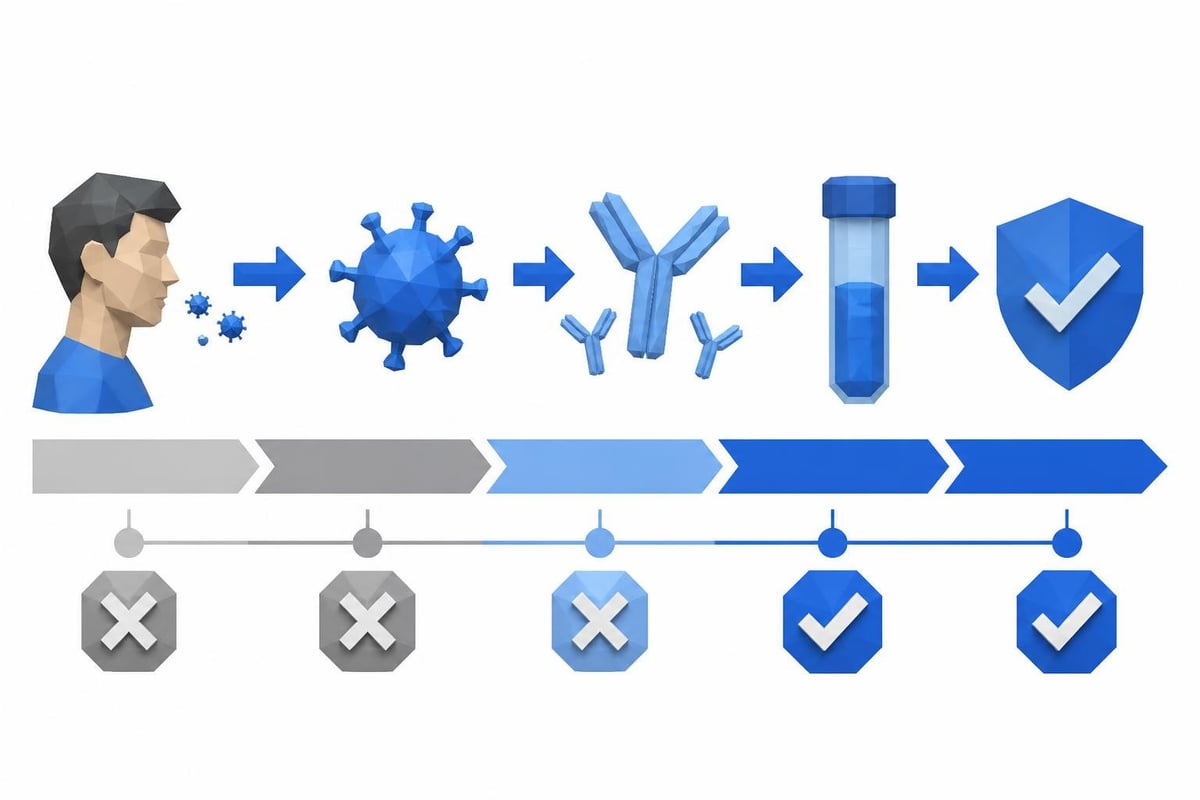
After initial HSV-1 exposure, your body requires time to produce detectable IgG antibodies. This creates a "window period" during which you may be infected but test negative.
Testing too early can produce false negative results. If you test within the first few weeks after exposure, your IgG levels may not yet be high enough to detect, even though infection has occurred. Most experts recommend waiting at least 12 weeks after suspected exposure for the most accurate IgG testing.
Key timing considerations include:
- Initial infection to IgG detection: 2-12 weeks (average 6 weeks)
- Optimal testing window: 12-16 weeks post-exposure
- Antibody persistence: Lifelong once established
- Reactivation impact: IgG levels remain stable during outbreaks
According to the CDC's STI treatment guidelines on herpes testing, the glycoprotein G-based type-specific IgG tests used today are the accurate option once the window period has passed, with sensitivity in the 80-98% range; false negatives are most common early after infection, which is why repeat testing at 12 weeks is advised after a suspected recent exposure.
When to Retest
If you receive a negative result but suspect recent exposure, retesting after the window period provides more definitive answers. Conversely, what a positive HSV 1 IgG means doesn't change over time-once positive, results typically remain positive throughout your lifetime.
Oral Versus Genital HSV-1 Infection
A common misconception about HSV-1 is that it exclusively causes oral infections, while HSV-2 causes genital infections. This oversimplification doesn't reflect current epidemiological reality.
HSV-1 can infect either location. While historically HSV-1 predominantly caused oral herpes (cold sores) and HSV-2 caused genital herpes, HSV-1 now accounts for an increasing proportion of genital herpes cases, particularly among younger adults.
Location Limitations of IgG Testing
What a positive HSV 1 IgG means does not include information about infection location. The antibodies circulate throughout your bloodstream regardless of where the initial infection occurred. Type-specific IgG testing identifies which virus type you have (HSV-1 versus HSV-2) but cannot determine anatomical location.
To identify infection site, you would need:
- Physical examination during an active outbreak
- Direct viral culture from a lesion
- PCR testing of a swab from an active sore
- Clinical history of symptoms
Many people with HSV-1 antibodies never experience noticeable symptoms in any location, making it impossible to determine the infection site without a documented outbreak.
Transmission Considerations
Regardless of infection location, HSV-1 can potentially transmit through:
- Direct contact with active lesions
- Viral shedding during asymptomatic periods
- Oral-to-oral contact (kissing)
- Oral-to-genital contact (oral sex)
Understanding that HSV-1 IgG results indicate past exposure rather than current contagiousness helps frame conversations about transmission risk with healthcare providers and partners.
Prevalence and Public Health Context
Understanding what a positive HSV 1 IgG means also requires context about how common this finding is within the general population. HSV-1 is extraordinarily prevalent worldwide.
Global and National Statistics
Research indicates that:
- Approximately 67% of adults globally carry HSV-1 antibodies
- Prevalence increases with age, reaching 80-90% in some older populations
- Most infections occur during childhood through non-sexual contact
- Regional variation exists, with higher rates in developing nations
In the United States specifically, seroprevalence studies show that roughly 48-50% of adults aged 14-49 test positive for HSV-1 antibodies, though many remain unaware of their status.
| Age Group | Approximate HSV-1 Prevalence |
|---|---|
| 14-19 years | 30-35% |
| 20-29 years | 40-45% |
| 30-39 years | 50-55% |
| 40-49 years | 55-60% |
| 50+ years | 60-70% |
Asymptomatic Infection
A significant proportion of individuals with positive HSV-1 IgG results never experience recognizable symptoms. Studies suggest that only 20-30% of people with HSV-1 antibodies recall having cold sores or other symptoms.
This means what a positive HSV 1 IgG means for many people is discovering an infection they never knew they had. The virus can transmit even when symptoms are absent, though transmission risk is higher during active outbreaks.
When to Seek Confirmatory Testing
While type-specific HSV-1 IgG tests are highly reliable, certain situations warrant additional evaluation or confirmatory testing.
Consider follow-up testing when:
- Initial testing occurred during the window period after suspected exposure
- You have equivocal or borderline positive results
- Clinical symptoms don't align with test results
- You need to differentiate between HSV-1 and HSV-2
- Previous testing methodology wasn't type-specific
Understanding Test Limitations
Modern type-specific IgG tests distinguish accurately between HSV-1 and HSV-2 in most cases. However, positive HSV-1 IgG results from older testing methods may have been less specific, occasionally cross-reacting with HSV-2 antibodies.
If your result came from a non-type-specific test or you have questions about test methodology, requesting a type-specific IgG test provides greater clarity. Services like JustLabs offer accessible testing options that use current, accurate methodologies.

Index Values and Equivocal Results
HSV-1 IgG tests typically report results as:
- Negative: Index value below cutoff (usually <0.90)
- Equivocal: Index value near cutoff (0.90-1.10)
- Positive: Index value above cutoff (>1.10)
Equivocal results indicate antibody levels near the detection threshold. What a positive HSV 1 IgG means is clearer when index values are definitively above the cutoff. Equivocal results may warrant retesting in 4-6 weeks or correlating with clinical history.
Clinical Advice and Medical Management
Understanding what a positive HSV 1 IgG means should inform discussions with healthcare providers, but most individuals with positive results don't require ongoing medical treatment.
When to Consult Healthcare Providers
Seek clinical advice if you:
- Experience frequent or severe outbreaks (more than 6 per year)
- Have symptoms affecting your eyes (ocular herpes)
- Are pregnant or planning pregnancy
- Have a compromised immune system
- Need guidance on disclosure and transmission prevention
- Want to discuss suppressive antiviral therapy
According to expert clinical guidance, most healthy individuals with positive HSV-1 IgG don't require treatment unless they develop active lesions or fall into special populations like the immunocompromised.
Treatment Considerations
For symptomatic HSV-1 infection, treatment options include:
- Episodic therapy: Antiviral medications during outbreaks to shorten duration
- Suppressive therapy: Daily antivirals to reduce outbreak frequency
- Topical treatments: Over-the-counter or prescription creams for symptom relief
- Lifestyle modifications: Stress management, adequate sleep, sun protection
What a positive HSV 1 IgG means for treatment is simply that medications are available if you develop bothersome symptoms. The positive test itself doesn't necessitate treatment.
Accessing Affordable HSV Testing
Understanding your HSV status requires accessible, affordable testing options. Traditional healthcare pathways often involve doctor visits, insurance complexities, and unclear pricing.
Modern self-pay testing addresses these barriers. When you order labs without a doctor, you gain control over your health information while avoiding unnecessary appointments and insurance documentation.
Transparent pricing models eliminate surprise bills. Resources about lab test pricing help you make informed decisions about which tests to pursue based on your specific concerns and budget.
Testing Accessibility in 2026
The landscape of laboratory testing has evolved significantly, with self-directed testing becoming increasingly mainstream. Benefits of this approach include:
- Price transparency before ordering tests
- No insurance required or prior authorization delays
- Quick turnaround times typically 1-3 days for results
- Privacy and convenience without scheduling doctor appointments
- Broad test availability including type-specific HSV antibody panels
Understanding what a positive HSV 1 IgG means starts with getting tested. Whether for routine screening, partner notification, or symptom investigation, accessible testing removes traditional barriers to knowledge.
Living with Positive HSV-1 IgG Results
For most individuals, what a positive HSV 1 IgG means in daily life is minimal. The virus remains latent most of the time, and many people never experience symptoms.
Disclosure and Relationships
Questions about disclosure often arise when learning about positive status. Considerations include:
For established relationships: Many couples unknowingly have discordant HSV status without transmission occurring. Open communication helps partners make informed decisions about risk reduction.
For new relationships: Disclosure practices vary based on personal values, infection location, symptom history, and relationship context. Healthcare providers can offer guidance tailored to individual situations.
Legal considerations: Some jurisdictions have disclosure requirements, though these typically apply more stringently to genital infections and symptomatic individuals.
Psychological Impact
Learning about positive HSV-1 status can trigger anxiety, particularly given stigma around herpes infections. Remember that:
- The majority of adults carry HSV-1 antibodies
- Many respected health organizations don't recommend routine screening in asymptomatic individuals
- Positive status doesn't define your health or worth
- Effective management strategies exist for symptomatic individuals
Resources from comprehensive HSV information sources can provide additional context and reassurance.
Special Populations and Risk Factors
Certain groups require additional consideration when interpreting what a positive HSV 1 IgG means for their specific health circumstances.
Immunocompromised Individuals
People with weakened immune systems face increased risks from HSV-1 infection:
- More frequent and severe outbreaks
- Greater risk of disseminated infection
- Potential for complications like encephalitis
- Need for suppressive antiviral therapy
Immunocompromising conditions include HIV/AIDS, organ transplantation, cancer treatment, and certain autoimmune diseases requiring immunosuppressive medications.
Pregnancy Considerations
HSV-1 during pregnancy raises specific concerns:
Maternal considerations:
- Primary infection during pregnancy (especially third trimester) carries higher risk
- Pre-existing infection (positive IgG before pregnancy) is generally lower risk
- Transmission to newborn is rare with oral HSV-1
- Suppressive therapy may be recommended in some cases
Neonatal herpes: While uncommon with HSV-1, neonatal infection can be serious. Most cases result from HSV-2 genital infection, but HSV-1 can occasionally transmit during delivery or through postpartum contact.
Healthcare Workers and Food Handlers
Occupational considerations include:
- Herpetic whitlow (finger infection) risk for healthcare workers
- Food handling guidelines during active oral lesions
- Proper hand hygiene and glove use
- Understanding when to avoid direct patient contact
Laboratory Testing Methodology
Understanding the science behind how laboratories detect HSV-1 antibodies helps clarify what a positive HSV 1 IgG means at a technical level.
ELISA and Other Detection Methods
Common testing methodologies include:
- ELISA (Enzyme-Linked Immunosorbent Assay): Most widely used, detects antibodies through enzyme reactions
- Chemiluminescent immunoassay: Similar to ELISA but uses light emission for detection
- Western blot: More complex, sometimes used for confirmation
- Focus Reduction Neutralization Test: Research standard with high accuracy
Modern type-specific tests use glycoprotein G antigens (gG-1 for HSV-1, gG-2 for HSV-2) to differentiate between virus types accurately.
Result Interpretation Standards
Laboratories use standardized cutoff values to determine positive results:
- Results express as index values or antibody titers
- Manufacturers establish cutoffs through validation studies
- Quality control ensures consistent accuracy
- Different platforms may use slightly different reference ranges
What a positive HSV 1 IgG means numerically is that your antibody levels exceed the validated threshold for that specific testing platform.
Understanding what a positive HSV-1 IgG result means empowers you to make informed decisions about your health. This common finding typically indicates past viral exposure with lifelong antibody presence rather than active disease requiring immediate intervention. Whether you're seeking initial screening, follow-up testing after exposure, or simply want transparent access to your health information, JustLabs provides convenient, affordable testing with results delivered quickly so you can take control of your health journey without the traditional barriers of insurance requirements or mandatory doctor visits.