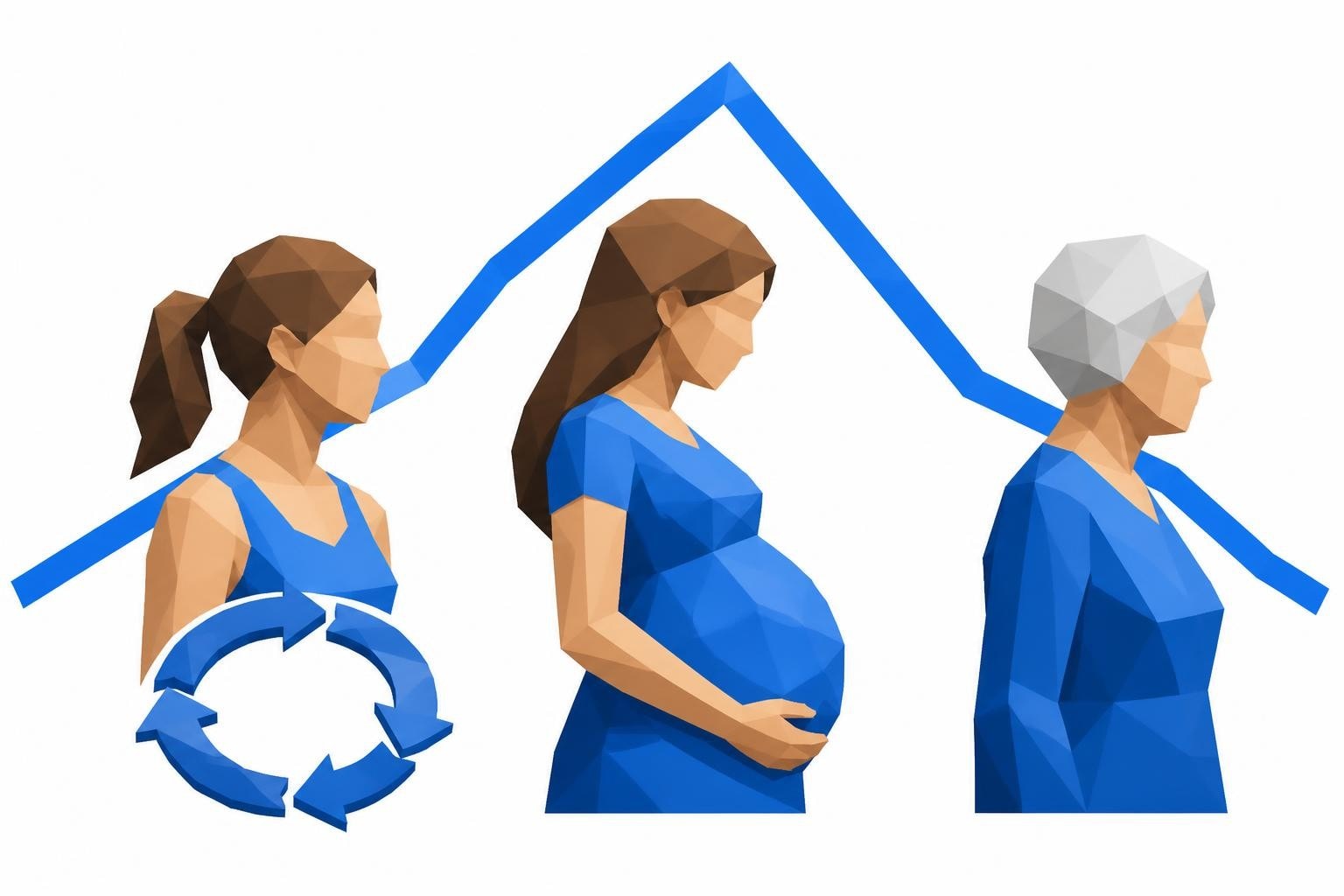
Estradiol, the most potent form of estrogen, serves as a critical biomarker for reproductive health, bone density, cardiovascular function, and overall wellbeing. Understanding estradiol levels cycle phase prgnancy and after menopause empowers women to make informed decisions about hormone testing, fertility tracking, and health management at different life stages. From the dramatic fluctuations during the menstrual cycle to the peak concentrations in pregnancy and the significant decline following menopause, estradiol levels reflect profound physiological changes that impact multiple body systems.
Big picture
- Estradiol is the primary estrogen hormone that fluctuates throughout the menstrual cycle, with lowest levels during menstruation and peaks just before ovulation, guiding fertility and reproductive health decisions.
- Pregnancy drives estradiol to unprecedented heights, sometimes 100 times higher than non-pregnant levels, supporting fetal development and preparing the body for childbirth and lactation.
- Menopause marks a permanent decline in estradiol production as ovarian function ceases, often dropping to less than 30 pg/mL, which affects bone health, cardiovascular risk, and quality of life.
- Testing estradiol without insurance barriers through services like JustLabs allows women to track hormone patterns affordably, with results typically available within 1-3 days to inform health decisions quickly.
- Reference ranges vary significantly between laboratories and measurement methods, making it essential to interpret results in context of your specific life stage, symptoms, and testing methodology.
- Understanding your estradiol patterns enables proactive health management, from optimizing fertility windows to monitoring menopausal symptoms and assessing hormone replacement therapy effectiveness.
Estradiol Fluctuations During the Menstrual Cycle
The menstrual cycle showcases estradiol's dynamic nature through predictable patterns that repeat approximately every 28 days. During the early follicular phase, immediately following menstruation, estradiol levels remain relatively low, typically ranging from 20-150 pg/mL as the ovaries begin developing new follicles.
As the cycle progresses toward ovulation, estradiol production accelerates dramatically. The mid to late follicular phase witnesses a surge, with levels climbing to 200-400 pg/mL or higher as the dominant follicle matures. This peak triggers the luteinizing hormone (LH) surge that prompts ovulation.
Tracking Estradiol for Fertility Insights
Women monitoring fertility can leverage estradiol testing to identify their fertile window more precisely. The pre-ovulatory estradiol surge typically occurs 24-36 hours before ovulation, providing advance notice for conception timing.
Key fertility indicators tied to estradiol:
- Rising estradiol in the follicular phase signals approaching ovulation
- Peak levels confirm follicle maturity and imminent egg release
- Post-ovulatory decline indicates the luteal phase transition
- Consistently low levels may suggest ovarian dysfunction or anovulation
The luteal phase following ovulation shows estradiol levels decreasing to approximately 100-250 pg/mL as progesterone becomes the dominant hormone. Understanding estradiol levels cycle phase prgnancy and after menopause begins with recognizing these cyclical patterns that define reproductive years.
Recommended Panel
Female Hormone Panel
Save $7This comprehensive panel measures all major female hormones: estrogen, progesterone, reproductive hormones (FSH/LH), and androgens (testosterone/DHEA-S) - essential for understanding hormonal balance.
Includes 7 biomarkers
$105

Estradiol Elevations Throughout Pregnancy
Pregnancy transforms estradiol production into an entirely different scale. While non-pregnant women experience estradiol levels measured in picograms per milliliter (pg/mL), pregnant women see concentrations escalate into thousands of pg/mL, particularly in the third trimester.
First-trimester estradiol levels begin climbing from typical cycle ranges, reaching approximately 200-600 pg/mL by week 12. This early elevation supports endometrial thickening, placental development, and early fetal growth. The placenta gradually assumes estradiol production from the ovaries, becoming the primary source by the second trimester.
Trimester-by-Trimester Estradiol Progression
| Pregnancy Stage | Typical Estradiol Range | Primary Functions |
|---|---|---|
| First Trimester (1-12 weeks) | 200-600 pg/mL | Endometrial support, early placentation |
| Second Trimester (13-27 weeks) | 1,000-8,000 pg/mL | Fetal organ development, breast tissue preparation |
| Third Trimester (28-40 weeks) | 6,000-27,000 pg/mL | Final fetal maturation, labor preparation |
Second-trimester estradiol continues its upward trajectory, typically ranging from 1,000 to 8,000 pg/mL. These elevated levels facilitate fetal organ system development, promote maternal cardiovascular adaptations, and prepare breast tissue for lactation.
The third trimester witnesses peak estradiol concentrations, often exceeding 20,000 pg/mL near term. These extraordinary levels help coordinate the complex physiological changes necessary for labor and delivery. However, measurement challenges arise at these concentrations, as many standard immunoassays lack the precision for accurate quantification, a limitation highlighted in endocrine society guidelines regarding estradiol measurement challenges.
Understanding estradiol levels cycle phase prgnancy and after menopause includes recognizing that pregnancy represents the highest natural estradiol exposure women experience. Post-delivery, estradiol levels plummet rapidly, reaching near-menopausal levels within days, which contributes to postpartum mood changes and triggers lactation hormones.
Postmenopausal Estradiol Decline and Health Implications
Menopause marks the permanent cessation of menstruation and ovarian estradiol production, typically occurring between ages 45-55. The transition, known as perimenopause, features erratic estradiol fluctuations as ovarian follicle reserves deplete and cycles become irregular.
Once menopause is established (defined as 12 consecutive months without menstruation), estradiol levels stabilize at significantly reduced concentrations. Postmenopausal women typically measure estradiol levels below 30 pg/mL, with many falling under 10 pg/mL. Recent research has worked to establish harmonized reference ranges for postmenopausal estradiol to improve clinical interpretation.
Physiological Consequences of Low Estradiol
The dramatic reduction in estradiol after menopause affects multiple organ systems beyond reproductive function:
- Bone metabolism changes as estradiol's protective effect on bone density diminishes, accelerating calcium loss and increasing osteoporosis risk
- Cardiovascular modifications occur as estradiol's favorable impacts on lipid profiles and vascular function decrease, potentially elevating heart disease risk
- Genitourinary changes manifest through vaginal tissue thinning, reduced lubrication, and urinary tract alterations
- Thermoregulatory disruptions produce characteristic hot flashes and night sweats as hypothalamic temperature control adjusts to low estradiol
- Cognitive and mood effects may include memory changes, concentration difficulties, and increased depression or anxiety risk
Some postmenopausal estradiol production continues through peripheral conversion of androgens in adipose tissue, muscle, and skin. This explains why estradiol levels vary among postmenopausal women, with body composition influencing circulating concentrations.

Laboratory Testing Considerations Across Life Stages
Accurate estradiol measurement faces technical challenges that affect result interpretation across all life stages. The wide concentration range, from under 10 pg/mL postmenopause to over 20,000 pg/mL in late pregnancy, demands different analytical approaches.
Immunoassay methods dominate clinical laboratories for routine estradiol testing due to convenience and cost-effectiveness. However, these assays show variable performance at concentration extremes. At low postmenopausal levels, many immunoassays lack sufficient sensitivity, potentially reporting falsely elevated results. At high pregnancy concentrations, dilution requirements and cross-reactivity issues may compromise accuracy.
Mass spectrometry methods, particularly liquid chromatography-tandem mass spectrometry (LC-MS/MS), offer superior accuracy and precision across the full physiological range. These techniques minimize interference and provide reliable quantification for both postmenopausal monitoring and pregnancy assessment.
Understanding Your Test Results
Inter-laboratory variability represents another significant consideration when tracking estradiol levels cycle phase prgnancy and after menopause. Research examining quality assessment for steroid immunoassays reveals substantial differences in results between laboratories using different platforms and methodologies.
When monitoring estradiol trends over time, consistency matters:
- Use the same laboratory for serial measurements when possible
- Note the testing methodology on your results
- Recognize that reference ranges vary between laboratories
- Consider timing relative to your cycle phase if still menstruating
- Discuss significant changes with healthcare providers in clinical context
For women seeking convenient hormone testing, ordering lab tests without a doctor through direct-access services provides flexibility to track estradiol at optimal times without scheduling delays.
Estradiol Testing for Specific Health Concerns
Different clinical scenarios require strategic estradiol testing approaches tailored to the underlying question. Understanding when and why to measure estradiol enhances the value of testing investments.
Fertility Assessment and Cycle Monitoring
Women experiencing conception difficulties benefit from estradiol testing during specific cycle phases. Day 3 estradiol measurements (early follicular phase) help assess ovarian reserve, with elevated baseline levels potentially indicating diminished ovarian function. Pre-ovulatory testing confirms adequate follicle development, while luteal phase measurements evaluate corpus luteum function.
Optimal testing strategies for fertility concerns:
- Baseline estradiol on cycle day 2-4 to evaluate ovarian reserve
- Mid-follicular testing to track follicle maturation during medicated cycles
- Pre-ovulatory measurement to confirm readiness for conception attempts
- Luteal phase testing to assess post-ovulation hormone support
Menopausal Symptom Evaluation
Women transitioning through perimenopause or experiencing postmenopausal symptoms can use estradiol testing to guide management decisions. While diagnosis of menopause is primarily clinical (based on menstrual patterns and symptoms), estradiol confirmation provides objective data.
Consistently low estradiol levels (below 30 pg/mL) combined with elevated follicle-stimulating hormone (FSH) confirm menopausal status. For women considering hormone replacement therapy, baseline estradiol helps establish starting points and subsequent testing monitors therapeutic adequacy.

Hormone Replacement Therapy and Estradiol Monitoring
Women using estradiol replacement therapy for menopausal symptom management require periodic monitoring to ensure appropriate dosing. Target estradiol levels during hormone replacement typically range from 50-100 pg/mL, sufficient to alleviate symptoms while minimizing risks associated with excessive supplementation.
Testing timing depends on the delivery method. Oral estradiol shows peak levels 4-8 hours post-dose with significant daily variation, making consistent timing essential for meaningful comparisons. Transdermal patches and creams produce more stable levels, allowing flexible testing schedules.
Optimizing Hormone Replacement Dosing
| Delivery Method | Testing Timing | Target Range | Monitoring Frequency |
|---|---|---|---|
| Oral tablets | Morning, before daily dose | 50-100 pg/mL | Every 3-6 months initially |
| Transdermal patches | Anytime (stable levels) | 50-100 pg/mL | Every 6-12 months |
| Topical creams/gels | 2-4 hours after application | 50-100 pg/mL | Every 3-6 months |
| Vaginal preparations | Variable absorption | Local effect priority | As clinically indicated |
Women experiencing persistent symptoms despite treatment may require upward dose adjustments confirmed by testing. Conversely, those experiencing breast tenderness, bloating, or other estrogen excess signs might need reduction. Testing provides objective guidance for these adjustments beyond symptom assessment alone.
For transparent pricing on hormone testing, many patients appreciate being able to compare lab test prices before committing to testing, particularly when monitoring requires repeated measurements over months or years.
Premature Ovarian Insufficiency and Early Estradiol Decline
Some women experience estradiol decline and ovarian function loss before age 40, a condition termed premature ovarian insufficiency (POI). This affects approximately 1% of women under 40 and 0.1% under 30, presenting unique challenges for fertility, bone health, and overall wellbeing.
POI diagnosis requires documentation of elevated FSH levels (typically above 25-40 mIU/mL on two occasions at least one month apart) combined with low estradiol and menstrual irregularity or amenorrhea. Understanding estradiol levels cycle phase prgnancy and after menopause includes recognizing that POI creates premature menopausal hormone patterns in younger women.
Health priorities for women with POI:
- Bone density monitoring due to premature estradiol loss affecting calcium metabolism
- Cardiovascular risk assessment given early loss of estradiol's protective vascular effects
- Hormone replacement therapy to approximate natural premenopausal levels until typical menopause age
- Fertility counseling regarding conception options and ovarian function prognosis
- Psychological support addressing premature reproductive aging impacts
The ESHRE guidelines on ovarian insufficiency provide evidence-based recommendations for managing this condition, emphasizing the importance of adequate estradiol replacement for long-term health protection.
Estradiol's Role Beyond Reproduction
While estradiol is primarily recognized for reproductive functions, its influence extends throughout the body via estrogen receptors present in diverse tissues. Understanding these broader effects helps explain why estradiol levels cycle phase prgnancy and after menopause impact overall health and quality of life.
Brain tissue contains abundant estrogen receptors, and estradiol influences neurotransmitter systems, neuroprotection, and cognitive function. Research suggests estradiol may protect against cognitive decline, with the menopausal transition sometimes associated with memory and concentration changes.
Bone cells respond directly to estradiol, which inhibits osteoclast activity (bone breakdown) while supporting osteoblast function (bone formation). This explains why osteoporosis risk accelerates after menopause and why estradiol replacement can preserve bone density.
Cardiovascular tissues benefit from estradiol's effects on endothelial function, lipid metabolism, and inflammatory pathways. Premenopausal women generally show lower cardiovascular disease rates than age-matched men, an advantage that diminishes after menopause as estradiol declines.
Skin, hair, and connective tissues all respond to estradiol, affecting collagen production, moisture retention, and structural integrity. Menopausal skin changes, including thinning and reduced elasticity, reflect diminished estradiol signaling in these tissues.
Key Takeaways
Estradiol serves as a powerful biomarker across women's reproductive lifespan, with distinct patterns characterizing the menstrual cycle, pregnancy, and postmenopausal years. During cycling years, estradiol fluctuates predictably from lows around 20-150 pg/mL during menstruation to peaks of 200-400 pg/mL before ovulation, providing valuable fertility timing information. Pregnancy drives unprecedented elevations, sometimes exceeding 20,000 pg/mL in the third trimester as the placenta supports fetal development. Menopause brings permanent decline to levels typically below 30 pg/mL, affecting bone health, cardiovascular function, and quality of life in ways that extend far beyond reproduction.
Testing methodology matters significantly for accurate estradiol measurement, with mass spectrometry offering superior precision across the wide concentration range compared to standard immunoassays. Inter-laboratory variability means consistent use of the same testing facility improves trend monitoring reliability. Women experiencing fertility concerns, menopausal symptoms, or premature ovarian insufficiency can leverage strategic estradiol testing to guide health decisions and treatment optimization.
Access to convenient, affordable hormone testing empowers women to understand their physiological status without navigating insurance complexities or unnecessary provider visits. For those monitoring estradiol levels cycle phase prgnancy and after menopause, direct-access laboratory services offer rapid results, typically within 1-3 days, supporting timely health management decisions whether tracking fertility windows, confirming menopausal status, or optimizing hormone replacement therapy dosing.
FAQ
What is a normal estradiol level for a woman during her menstrual cycle?
Normal estradiol levels vary throughout the menstrual cycle. During menstruation and early follicular phase (days 1-7), levels typically range from 20-150 pg/mL. Mid-follicular phase (days 7-13) sees gradual increases to 50-200 pg/mL. The pre-ovulatory surge peaks at 200-400 pg/mL or higher around day 13-15, followed by luteal phase levels of 100-250 pg/mL. Significant deviations from these ranges may warrant evaluation for ovarian dysfunction, particularly if accompanied by irregular cycles or fertility concerns.
How high does estradiol get during pregnancy?
Pregnancy estradiol levels escalate dramatically beyond non-pregnant ranges. First trimester levels reach 200-600 pg/mL, supporting early placental development. Second trimester ranges span 1,000-8,000 pg/mL as fetal organ systems mature. Third trimester concentrations peak between 6,000-27,000 pg/mL, with some women measuring even higher near term. These extraordinary elevations, sometimes 100 times higher than cycling levels, facilitate fetal growth, maternal adaptations, and preparation for labor and lactation.
What estradiol level indicates menopause?
Postmenopausal estradiol typically measures below 30 pg/mL, with many women showing levels under 10 pg/mL once ovarian function ceases. However, menopause diagnosis relies primarily on clinical criteria (12 consecutive months without menstruation) rather than single hormone measurements. During perimenopause, estradiol levels fluctuate erratically, making interpretation challenging. Consistently low estradiol combined with elevated FSH (above 25-40 mIU/mL on multiple occasions) confirms menopausal status, particularly when menstrual patterns and symptoms align with the transition.
Can I test my estradiol levels without seeing a doctor?
Yes, direct-access laboratory services allow estradiol testing without a doctor's order or insurance involvement. These services enable women to order lab tests online based on their specific health concerns and testing goals, with results typically available within 1-3 days. This approach provides flexibility for tracking estradiol patterns during fertility monitoring, menopausal transition, or hormone replacement therapy without scheduling provider appointments. However, interpreting results in clinical context and making treatment decisions benefits from professional consultation.
Why do estradiol test results vary between laboratories?
Laboratory variability stems from different testing methodologies and platforms. Immunoassays, the most common testing method, show significant inter-laboratory differences in accuracy, particularly at very low (postmenopausal) and very high (pregnancy) concentrations. Cross-reactivity with other steroids, calibration differences, and sensitivity limitations all contribute to result variations. Mass spectrometry methods offer superior consistency but aren't universally available. For accurate trend monitoring, using the same laboratory for serial measurements minimizes methodology-related variations and improves clinical utility.
What symptoms indicate I should test my estradiol levels?
Several symptom patterns suggest estradiol testing may provide valuable insights. Irregular menstrual cycles, particularly with heavy bleeding or extended intervals, may indicate hormonal imbalances. Difficulty conceiving after six months of regular attempts (or three months if over 35) warrants fertility hormone evaluation including estradiol. Menopausal symptoms like hot flashes, night sweats, vaginal dryness, and mood changes in women over 40 suggest declining estradiol. Younger women experiencing these symptoms may have premature ovarian insufficiency requiring evaluation. Unexplained bone density loss or cardiovascular risk changes also merit hormone assessment.
Understanding estradiol patterns across the menstrual cycle, pregnancy, and menopause provides essential insights for managing reproductive health, fertility, and overall wellbeing at every life stage. Whether you're tracking ovulation timing, confirming menopausal status, or monitoring hormone replacement therapy, access to timely and accurate testing makes informed health decisions possible. JustLabs offers convenient, affordable hormone testing with transparent pricing and results delivered within 1-3 days, empowering you to take control of your health journey without insurance barriers or unnecessary appointments.