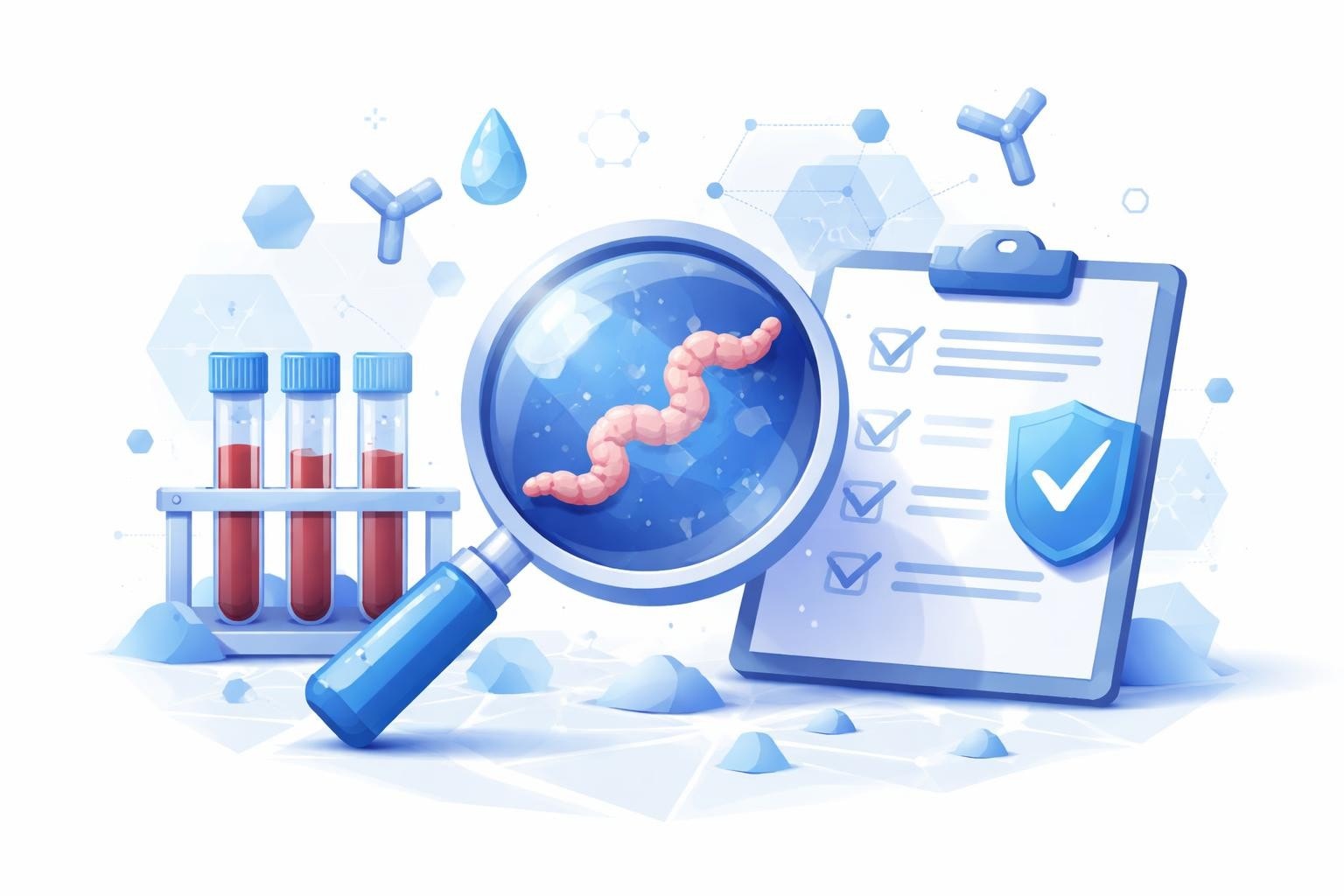
Syphilis remains one of the most important sexually transmitted infections to detect early, and laboratory testing plays a critical role in diagnosis and treatment. Understanding the different types of syphilis testing, when to get tested, and how to interpret results can help you take control of your sexual health. Whether you're experiencing symptoms, have been exposed to a partner with syphilis, or simply want routine screening, knowing your options for accessible and affordable testing makes all the difference.
Big picture
- Syphilis is a bacterial infection caused by Treponema pallidum that progresses through distinct stages if left untreated, making early detection through lab testing essential for preventing serious health complications.
- Two main categories of tests exist: nontreponemal tests (like RPR and VDRL) that screen for infection and monitor treatment, and treponemal tests (like TP-PA and FTA-ABS) that confirm diagnosis.
- Testing algorithms have evolved with the CDC's updated laboratory recommendations now supporting both traditional and reverse sequence screening approaches to improve detection accuracy.
- Timing matters significantly because antibodies may not appear immediately after infection, requiring proper window periods between exposure and testing for accurate results.
- Access to testing has improved through self-pay lab services that eliminate the need for doctor visits while providing transparent pricing and quick results.
- Get tested if you're sexually active with new or multiple partners, have been notified of partner exposure, are pregnant, or experiencing any unexplained symptoms like sores, rashes, or flu-like illness.
Understanding Syphilis Lab Test Types
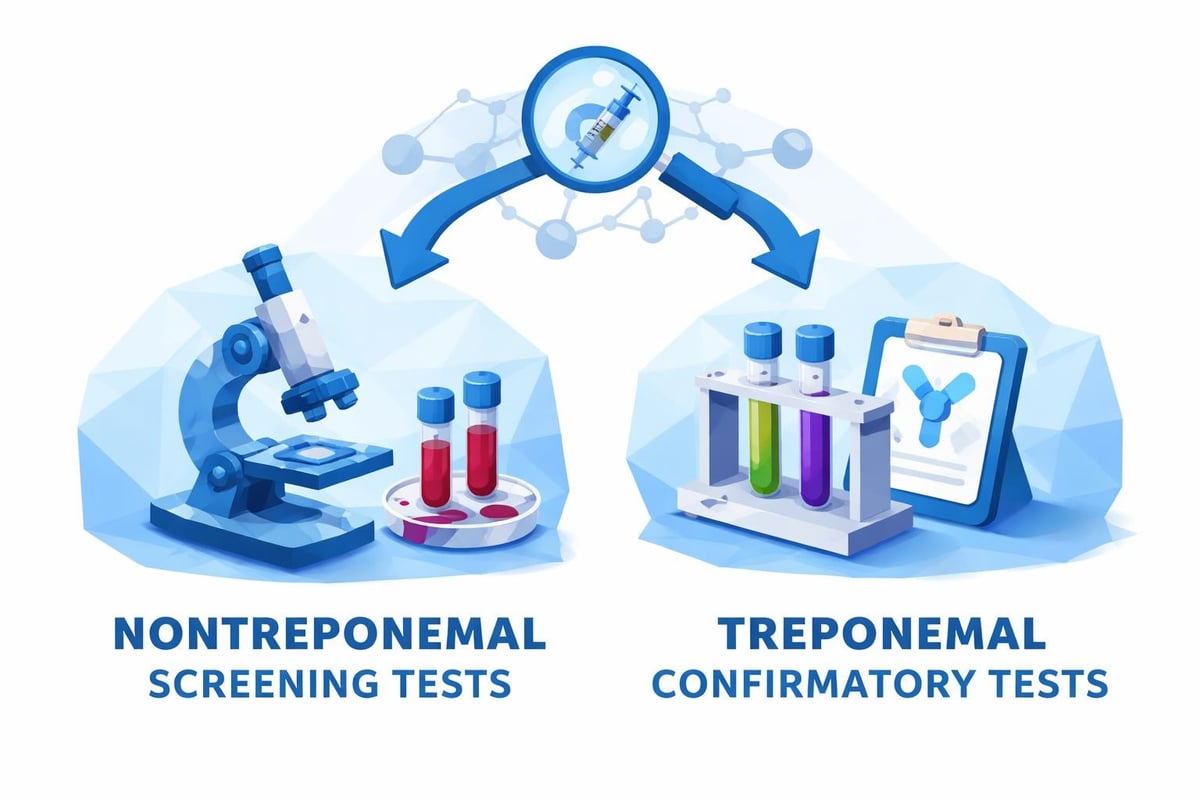
A syphilis lab test isn't a single examination but rather a strategic combination of different testing methods that work together to detect infection accurately. The testing landscape has evolved significantly over recent decades as laboratory science has advanced.
Nontreponemal Tests
Nontreponemal tests detect antibodies your body produces in response to cellular damage caused by syphilis infection. These tests don't detect the bacteria directly but instead measure your immune system's reaction to the infection.
Rapid Plasma Reagin (RPR) represents the most commonly used nontreponemal test today. This test measures antibodies called reagin that appear when your body fights syphilis. Results come back as either reactive (positive) or nonreactive (negative), along with a titer that quantifies antibody levels.
Venereal Disease Research Laboratory (VDRL) serves as an alternative nontreponemal test that works similarly to RPR. While less commonly used for routine screening, VDRL remains the preferred choice for testing cerebrospinal fluid when neurosyphilis is suspected.
Both tests share important characteristics:
- They become reactive weeks after initial infection
- Titers correlate with disease activity and treatment response
- They can produce false-positive results in certain conditions
- They typically become nonreactive after successful treatment
- They're inexpensive and relatively quick to perform
Treponemal Tests
Treponemal tests detect antibodies specific to the Treponema pallidum bacterium itself. According to comprehensive syphilis treatment guidelines, these tests confirm that a reactive nontreponemal result represents true syphilis infection rather than a false positive.
| Test Type | Method | Primary Use | Stays Positive? |
|---|---|---|---|
| TP-PA | Particle agglutination | Confirmation | Lifelong |
| FTA-ABS | Fluorescent antibody | Confirmation | Lifelong |
| EIA/CIA | Enzyme/Chemiluminescence | Screening or confirmation | Lifelong |
Treponema pallidum Particle Agglutination (TP-PA) uses gel particles coated with Treponema pallidum antigens. When antibodies are present, they cause visible clumping.
Fluorescent Treponemal Antibody Absorption (FTA-ABS) employs fluorescent-labeled antibodies to detect treponemal antibodies in blood samples. While highly specific, this test requires specialized equipment and trained technicians.
Enzyme Immunoassays (EIA) and Chemiluminescence Immunoassays (CIA) represent newer automated testing methods that many laboratories now use for initial screening due to their efficiency and cost-effectiveness.
Testing Algorithms and Approaches
Modern syphilis testing follows specific algorithmic approaches that combine different test types to maximize accuracy while minimizing false results. The CDC's laboratory recommendations for syphilis testing, developed with the Association of Public Health Laboratories, provide guidance on implementing these testing strategies effectively.
Traditional Algorithm
The traditional approach begins with a nontreponemal test (RPR or VDRL) as the initial screening tool. If this test returns reactive, laboratories then perform a treponemal test to confirm the diagnosis.
This sequence made sense historically because nontreponemal tests were inexpensive and easy to automate. The approach works well for:
- Monitoring treatment effectiveness through titer changes
- Detecting reinfection in previously treated patients
- Settings with high syphilis prevalence
Reverse Sequence Algorithm
Many laboratories have shifted to reverse sequence screening, which begins with an automated treponemal test (typically EIA or CIA). Reactive samples then undergo reflex nontreponemal testing.
Advantages of reverse sequence include:
- Increased detection of early and late-stage infections
- Better identification of previously treated cases
- Improved automation and cost efficiency
- Higher sensitivity for detecting infection
Challenges include:
- Identifying patients with past treated infection
- Potential for patient confusion about positive results
- Need for additional testing to clarify discordant results
When initial treponemal tests are reactive but nontreponemal tests are nonreactive, laboratories typically perform a second, different treponemal test to resolve the discrepancy.
When to Get a Syphilis Lab Test
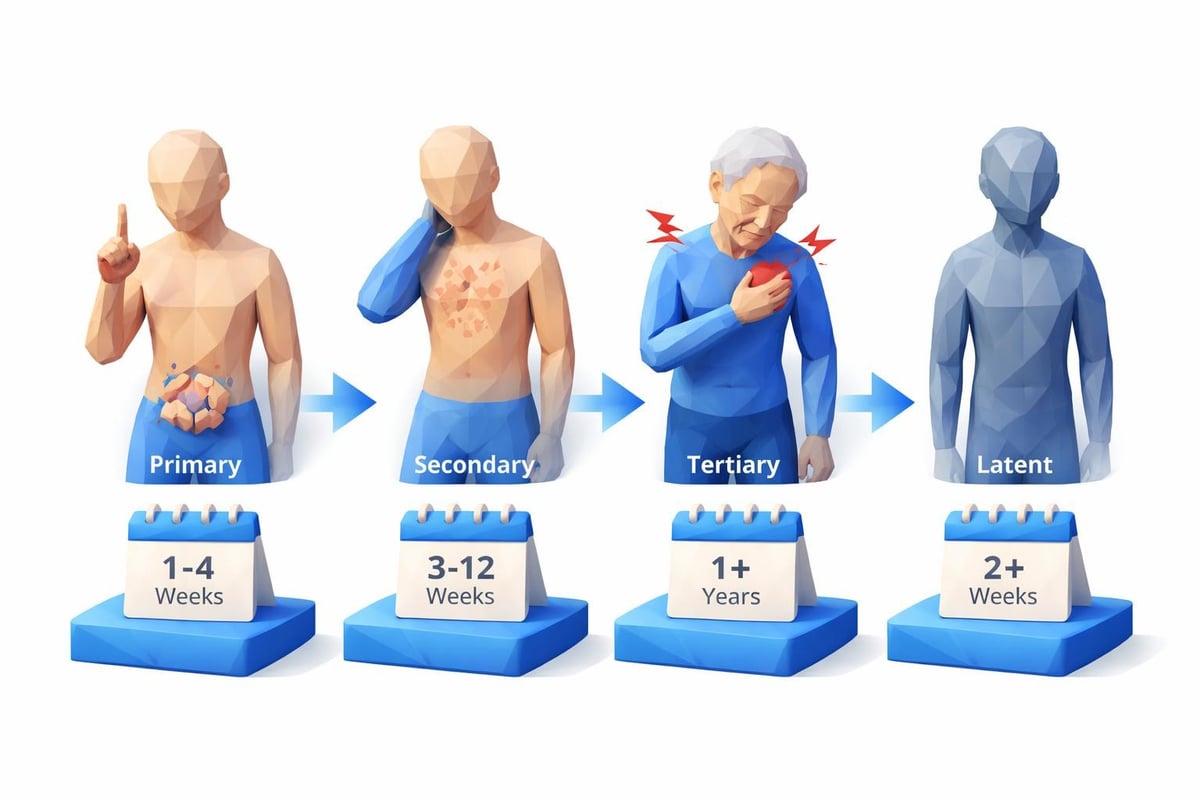
Understanding the right timing for testing ensures accurate results and appropriate medical intervention. Testing recommendations vary based on risk factors, symptoms, and exposure history.
Screening Recommendations
Sexually active individuals should consider testing if they:
- Have new sexual partners or multiple partners
- Engage in sexual activity with partners of unknown STI status
- Have other sexually transmitted infections
- Are men who have sex with men
- Exchange sex for money or drugs
- Have partners in any of these categories
Pregnant individuals require testing because:
- Syphilis can transmit to the fetus during pregnancy
- Congenital syphilis causes severe complications
- Early treatment prevents transmission to the baby
- Testing occurs at the first prenatal visit and again in the third trimester for high-risk individuals
Symptom-Based Testing
Seek immediate testing if you develop any signs of syphilis infection:
- Painless sores (chancres) on genitals, rectum, or mouth
- Skin rashes, particularly on palms and soles
- Mucous membrane lesions
- Fever, fatigue, or swollen lymph nodes
- Hair loss or muscle aches
Window Period Considerations
Antibodies take time to develop after initial infection. Testing too soon after exposure may produce false-negative results even when infection has occurred.
For nontreponemal tests, antibodies typically appear 1-4 weeks after the chancre develops, or 3-6 weeks after initial infection. Treponemal antibodies may appear slightly earlier but still require adequate time to reach detectable levels.
If you test negative shortly after a known exposure, repeat testing 6 weeks after exposure helps ensure accuracy.
Interpreting Your Syphilis Lab Test Results
Understanding what your results mean requires considering the specific tests performed, the values reported, and your clinical history. Test interpretation isn't always straightforward, which is why comprehensive reporting and follow-up matter. Antibodies that stay positive for life are common across STI serology, and the same past-exposure-versus-active-infection reasoning explains what a positive HSV-1 IgG result actually tells you.
Result Categories
| Result Pattern | Likely Meaning | Next Steps |
|---|---|---|
| Both tests negative | No infection detected | Retest if recently exposed |
| Both tests positive | Active or recent infection | Begin treatment |
| Treponemal positive, nontreponemal negative | Past treated infection or early/late disease | Additional testing may be needed |
| Nontreponemal positive, treponemal negative | Likely false positive | Perform different treponemal test |
Understanding Titers
Nontreponemal tests report results as titers (like 1:16 or 1:32), which indicate antibody concentration. Higher titers generally suggest more active infection, though the absolute value matters less than how it changes over time.
After successful treatment:
- Titers should decrease fourfold within 6-12 months
- A drop from 1:32 to 1:8 indicates treatment success
- Some people maintain low titers indefinitely (serofast reaction)
False-Positive Results
Nontreponemal tests can produce reactive results in people without syphilis. Conditions that may cause false positives include:
- Pregnancy
- Autoimmune diseases like lupus
- Recent viral infections
- Chronic liver disease
- Injection drug use
This is why confirmatory treponemal testing is essential before diagnosis and treatment.
Specimen Collection and Testing Process
The practical aspects of getting tested influence both result accuracy and your overall testing experience. Modern testing services have streamlined collection and processing significantly.
Blood Sample Requirements
Most syphilis testing requires a blood sample drawn from a vein in your arm. Proper specimen collection and handling ensure reliable results.
Collection involves:
- Cleansing the skin with antiseptic
- Drawing blood into appropriate collection tubes
- Labeling samples with patient identification
- Processing samples within required timeframes
- Transporting specimens to testing laboratories
No fasting or special preparation is needed before a syphilis blood test. You can eat, drink, and take medications normally before your appointment.
Alternative Specimen Types
While blood testing remains standard, other specimens serve specific purposes:
Cerebrospinal fluid gets tested when neurosyphilis is suspected, requiring a lumbar puncture (spinal tap) to collect the sample.
Direct lesion examination using dark-field microscopy or PCR can identify Treponema pallidum bacteria directly from chancre fluid, though this is rarely performed outside specialized settings.
Result Turnaround Time
Traditional laboratory testing typically provides results within 1-3 business days. This timeline includes specimen transport, laboratory processing, result verification, and reporting.
When ordering lab tests online through self-pay services, you generally receive digital results notification as soon as they're available, often faster than traditional healthcare settings where results must route through healthcare providers first.
Accessing Affordable Syphilis Testing
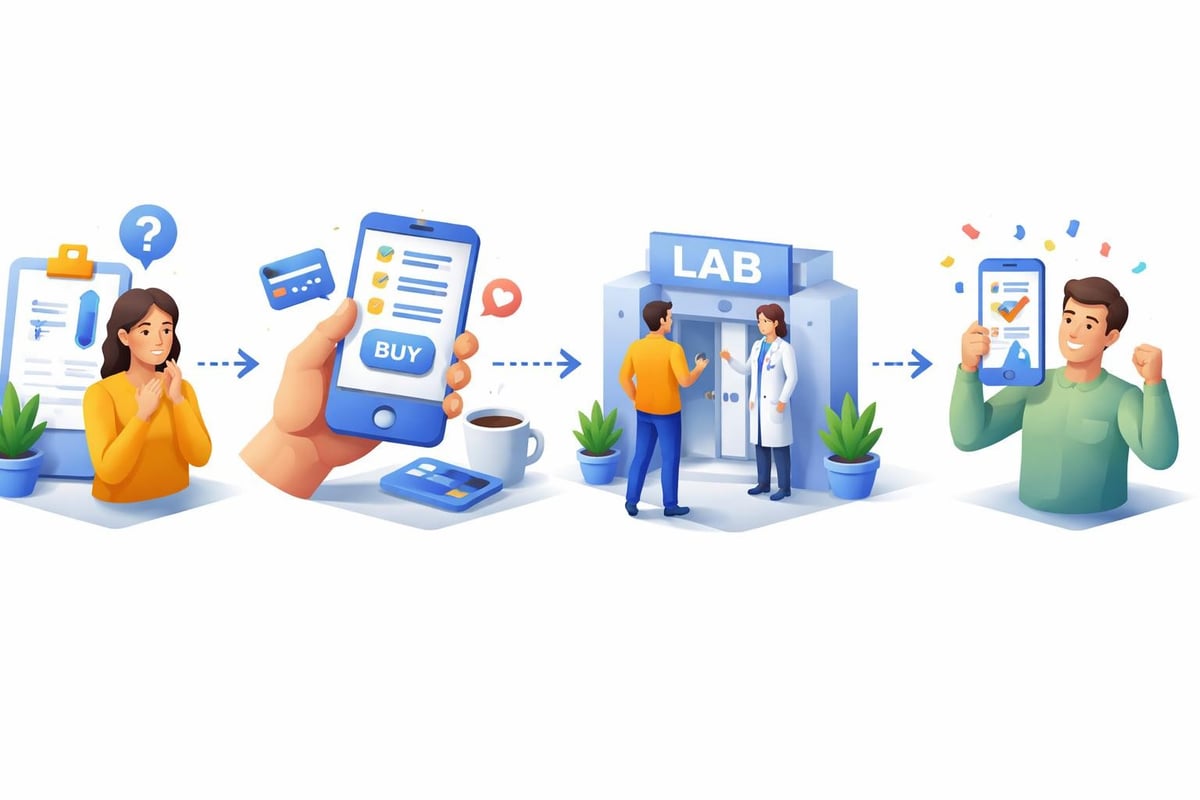
Cost and access barriers have historically prevented many people from getting necessary STI testing. Understanding your options helps you obtain testing when you need it without unnecessary delays or expenses.
Traditional Healthcare Routes
Conventional testing through a doctor's office involves:
- Scheduling an appointment, often weeks in advance
- Paying copays or office visit fees
- Getting a test requisition
- Visiting a separate lab facility
- Waiting for the doctor to receive and discuss results
- Potential insurance complications or billing surprises
Self-Pay Lab Testing Advantages
Direct-access laboratory services eliminate many traditional barriers. For individuals who want testing without involving insurance or scheduling doctor appointments, labs without insurance provide straightforward access.
Benefits of this approach include:
- Transparent, upfront pricing with no surprise bills
- No appointment needed with a healthcare provider
- Same-day or next-day lab visits at convenient locations
- Faster result delivery directly to you
- Complete privacy without insurance records
- Ability to order labs without a doctor involvement
Cost Considerations
Syphilis testing costs vary significantly depending on the testing source and whether insurance is involved. Many people find that direct-pay laboratory services offer competitive pricing compared to the total out-of-pocket costs through traditional healthcare, especially when factoring in office visit fees, copays, and deductibles.
Public health departments often provide free or low-cost STI testing, though availability varies by location and may involve longer wait times. Community health centers represent another option for affordable testing, particularly for individuals without insurance.
Key Takeaways
Testing methods: Syphilis diagnosis requires combining nontreponemal screening tests (RPR/VDRL) with treponemal confirmatory tests (TP-PA/FTA-ABS/EIA) to ensure accurate results and distinguish true infection from false positives.
Timing matters: Antibodies need 3-6 weeks after infection to reach detectable levels, so testing too soon after exposure may produce false negatives requiring repeat testing after an appropriate window period.
Interpretation requires context: Understanding whether positive results indicate active infection, past treated infection, or false positive requires considering test patterns, titers, clinical history, and sometimes additional testing.
Access has improved: Self-pay laboratory services now offer direct access to syphilis testing without requiring doctor visits or insurance involvement, providing transparent pricing and fast results.
Regular screening protects health: Sexually active individuals, especially those with risk factors, benefit from routine testing to detect infection early when treatment is most effective and prevents transmission.
Frequently Asked Questions
How accurate is a syphilis lab test?
Modern syphilis testing is highly accurate when proper testing algorithms are followed. Treponemal tests show sensitivity above 95% and specificity above 99% in most cases. Nontreponemal tests are slightly less specific, which is why confirmatory testing is essential. Accuracy depends on timing (testing after adequate window period), proper specimen collection, and using appropriate test combinations. False negatives can occur in very early infection before antibodies develop, while false positives on nontreponemal tests happen in certain medical conditions, making confirmatory testing standard practice.
Can I get tested for syphilis without my doctor knowing?
Yes, direct-access lab testing allows you to order and complete syphilis testing without involving your primary care physician. Self-pay laboratory services enable you to order tests online, visit a lab for sample collection, and receive results directly without physician authorization. This approach provides complete privacy while still delivering reliable, professional laboratory testing. However, if results are positive, you'll need to connect with a healthcare provider for treatment, as syphilis requires prescription antibiotics.
How long after exposure should I get tested?
For optimal accuracy, wait at least 3-4 weeks after potential exposure before testing, though 6 weeks provides even better reliability. Antibodies may not reach detectable levels immediately after infection occurs. Testing too soon can produce false-negative results even when infection is present. If you test negative shortly after a known high-risk exposure, healthcare providers typically recommend repeat testing at 6 weeks and again at 3 months to account for the window period. If you develop symptoms like sores or rashes, seek testing immediately regardless of timing.
What happens if my syphilis test is positive?
A positive syphilis lab test triggers several important steps. First, confirmatory testing ensures the result represents true infection rather than a false positive. Your results will be reported to public health authorities as required by law, but patient confidentiality is maintained. You'll need treatment with antibiotics (typically penicillin), with the specific regimen depending on infection stage. Sexual partners require notification and testing. Follow-up testing at 6 and 12 months monitors treatment effectiveness through declining antibody titers. Early detection and prompt treatment cure syphilis and prevent complications.
Does a positive syphilis test always mean current infection?
Not necessarily. Treponemal antibodies remain detectable for life even after successful treatment, so positive treponemal tests may indicate past infection rather than current disease. This is why testing algorithms combine both nontreponemal and treponemal tests. Nontreponemal titers help distinguish active infection from past treated cases, as they typically decline or disappear after successful treatment. The specific pattern of test results, along with clinical history and any previous treatment records, helps determine whether positive results represent current infection requiring treatment or past infection that was already addressed.
Can I get a syphilis lab test during pregnancy?
Yes, and testing during pregnancy is strongly recommended. Syphilis can transmit from mother to baby during pregnancy or delivery, causing serious complications including stillbirth, premature birth, or congenital syphilis. Standard prenatal care includes syphilis screening at the first prenatal visit, with repeat testing in the third trimester for individuals at higher risk. Testing during pregnancy follows the same laboratory methods as standard testing, requiring only a blood sample. If syphilis is detected during pregnancy, prompt treatment prevents transmission to the baby and protects both mother and child.
How much does a syphilis lab test cost without insurance?
Costs vary by testing source and location, but direct-access laboratory services typically charge between $30 and $100 for syphilis testing, depending on whether you need screening tests alone or complete diagnostic panels with confirmatory testing. Public health departments often provide free or sliding-scale STI testing. Traditional doctor's office testing involves office visit fees plus laboratory charges, which can total several hundred dollars without insurance coverage. Self-pay laboratory services offer transparent, upfront pricing without the uncertainty of insurance billing, making costs predictable and often more affordable than traditional healthcare routes.
Do I need to fast before a syphilis blood test?
No fasting is required for syphilis testing. You can eat, drink, and take your regular medications before the blood draw. Syphilis tests measure antibodies in your blood, which aren't affected by recent food or beverage consumption. This makes scheduling convenient since you can get tested at any time of day without special preparation. If you're having other blood tests done simultaneously that do require fasting (like cholesterol or glucose testing), follow the fasting instructions for those tests, which will also cover your syphilis testing.
Syphilis lab testing provides essential information for protecting your sexual health through early detection and appropriate treatment. Understanding the different test types, proper timing, and how to access affordable testing empowers you to take proactive steps for your wellbeing. Justlabs makes getting tested simple and affordable by offering transparent pricing, convenient locations, and fast results without requiring doctor visits or insurance involvement. Take control of your health today by ordering the testing you need.