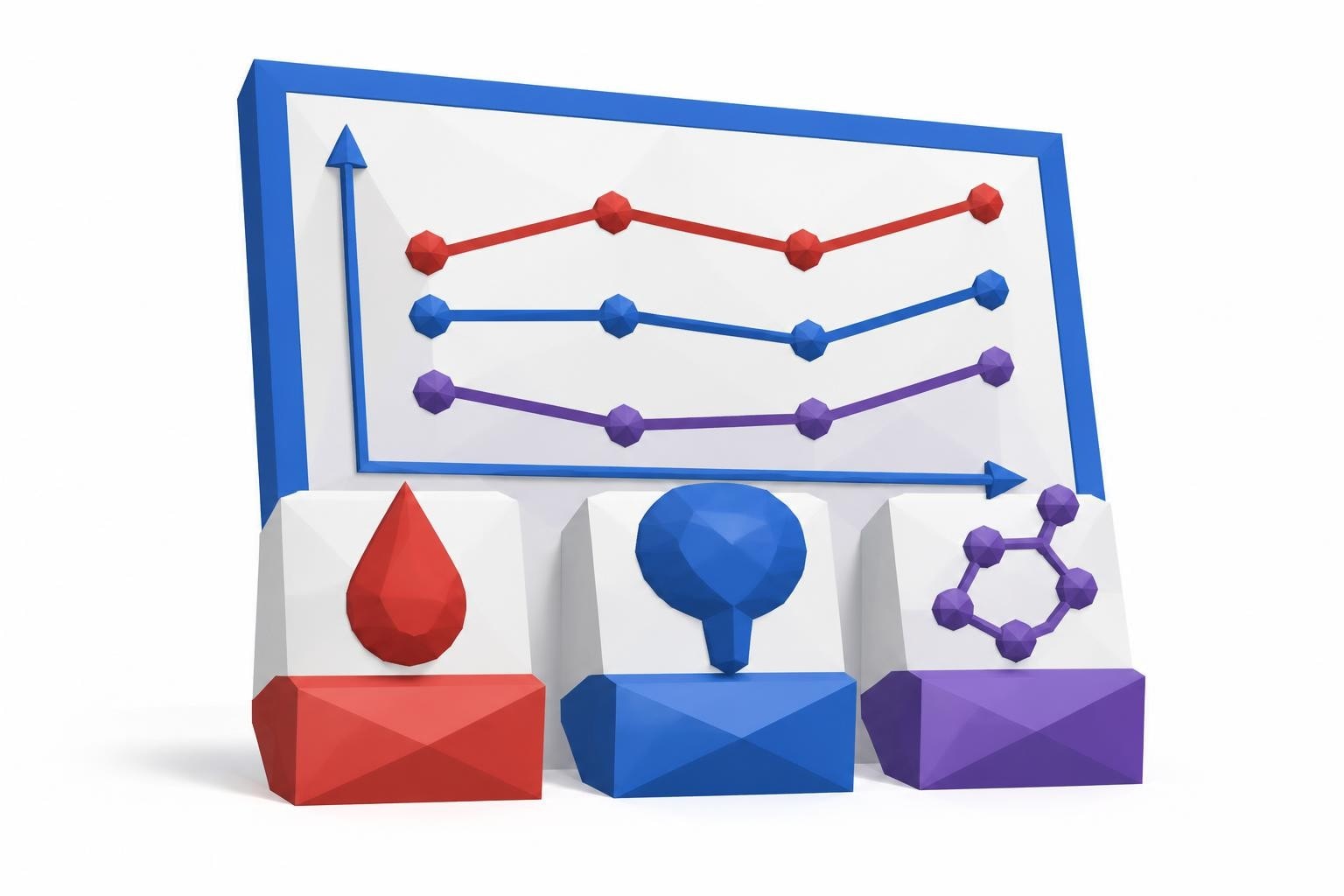
Sex hormone binding globulin (SHBG) serves as one of the most critical yet frequently misunderstood proteins in your endocrine system. This binding protein determines how much testosterone, estrogen, and other sex hormones are available for your body to use at any given moment. When physicians evaluate hormone-related symptoms such as low energy, reduced muscle mass, or changes in sexual function, understanding SHBG levels provides essential context that raw hormone measurements alone cannot deliver. By binding to sex hormones and controlling their bioavailability, SHBG directly influences your overall hormone balance and health outcomes in ways that deserve careful attention.
What SHBG Does in Your Body
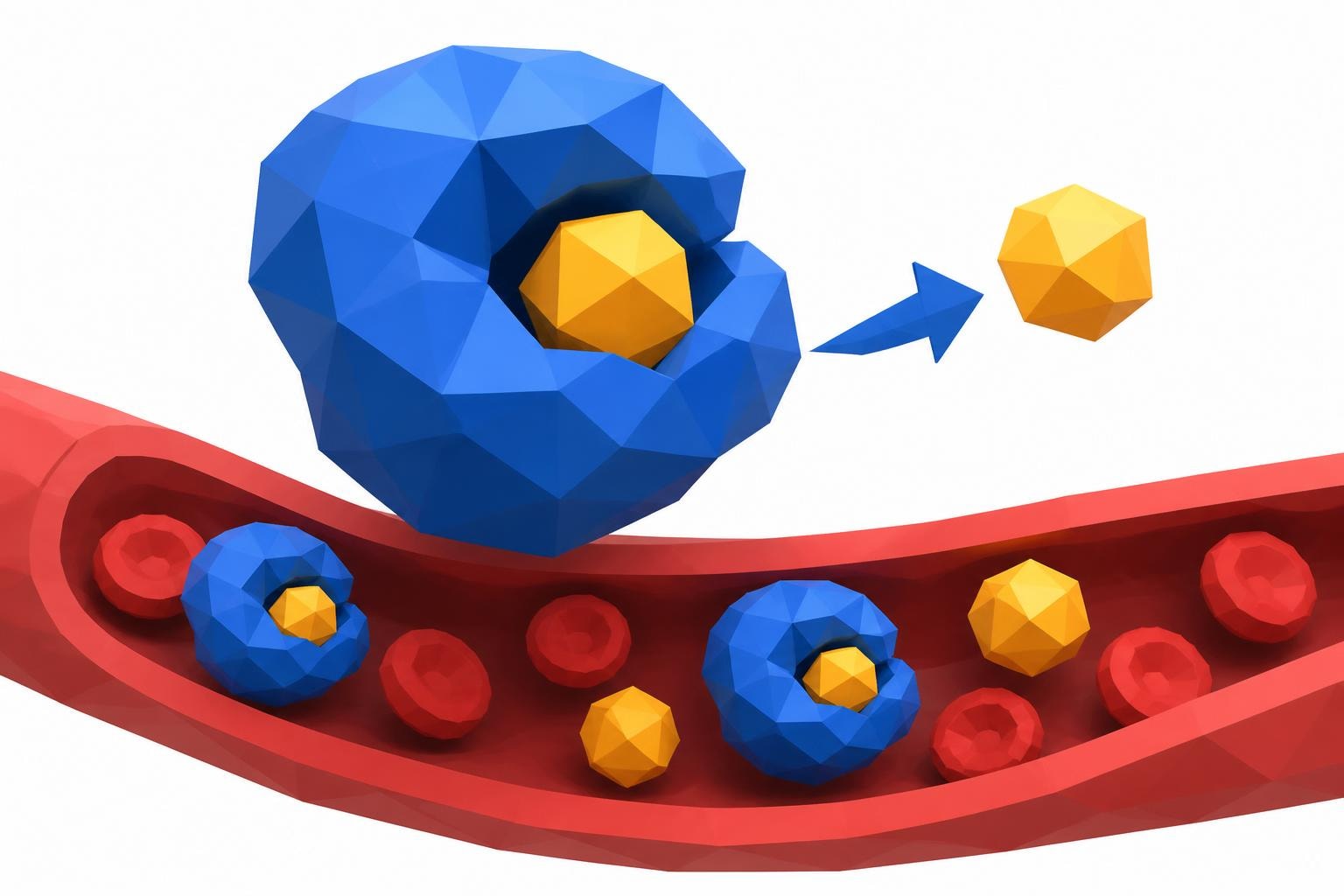
SHBG is a glycoprotein produced primarily in the liver that circulates through your bloodstream with a specific mission: binding to sex hormones and regulating their availability. This protein has a high affinity for testosterone and dihydrotestosterone (DHT), with a slightly lower affinity for estradiol and other estrogens. Once bound to SHBG, these hormones become biologically inactive, creating a critical distinction between total hormone levels and free hormone levels.
The biological importance of this binding mechanism cannot be overstated. Only unbound or "free" hormones can enter cells and activate hormone receptors to produce physiological effects. The SHBG blood test measures this protein's concentration, helping clinicians determine how much testosterone and other sex hormones are actually available for use by your tissues.
The Free Hormone Hypothesis
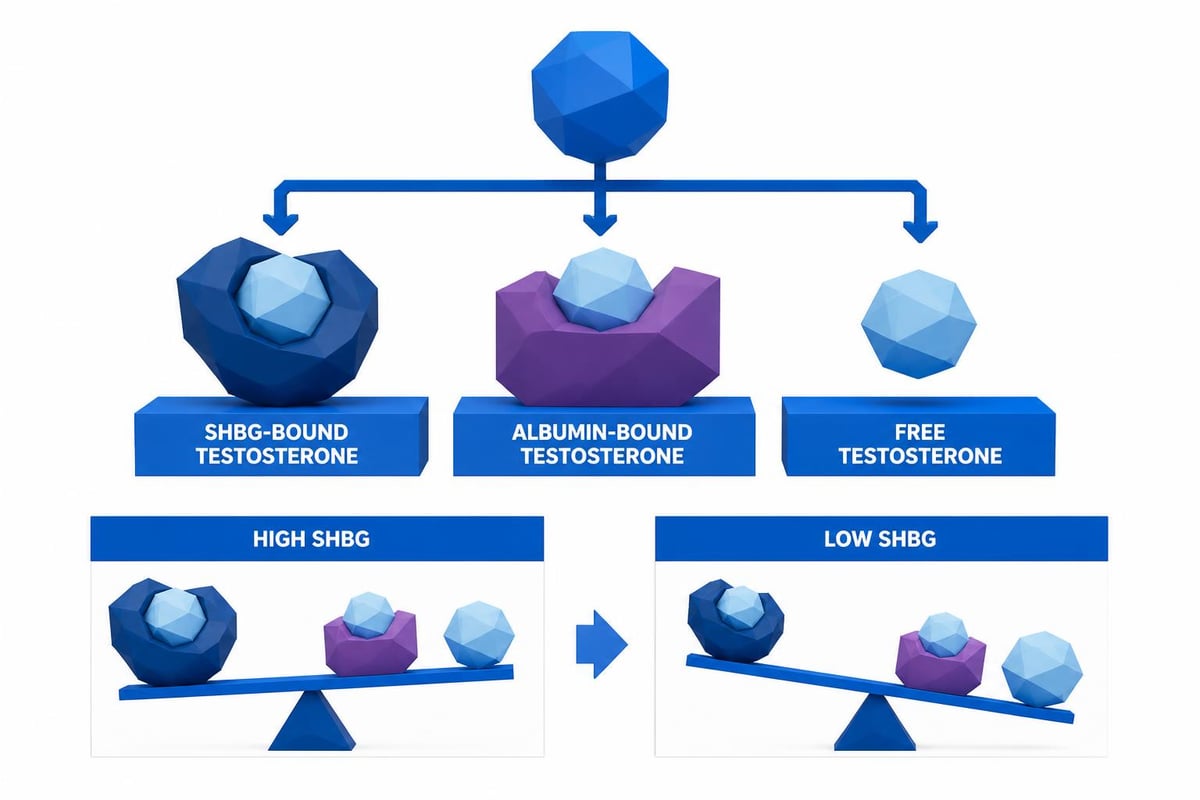
Your total testosterone measurement represents all testosterone in your blood, both bound and unbound. However, roughly 60-70% of testosterone binds tightly to SHBG, making it temporarily unavailable. Another 20-30% binds weakly to albumin, and only 1-3% circulates as free testosterone that can immediately interact with androgen receptors.
This distribution creates a scenario where two individuals with identical total testosterone levels might experience vastly different symptoms based on their SHBG concentrations. Someone with high SHBG might have normal total testosterone but low free testosterone, leading to symptoms of low testosterone despite seemingly adequate hormone production.
Factors That Influence SHBG Levels
SHBG concentrations vary significantly between individuals based on numerous physiological and lifestyle factors. Understanding these influences helps explain why your levels might be higher or lower than expected and what interventions might help optimize your hormone balance.
Hormonal Factors
Your body's hormone environment directly affects SHBG production. Testosterone and other androgens typically suppress SHBG synthesis in the liver, while estrogens stimulate its production. This creates a regulatory feedback loop where hormone levels and SHBG concentrations influence each other continuously.
Key hormonal influences on SHBG:
- Thyroid hormones: Hyperthyroidism increases SHBG, while hypothyroidism decreases it
- Growth hormone: Higher levels tend to reduce SHBG production
- Insulin: Elevated insulin levels suppress SHBG synthesis significantly
- Cortisol: Chronic elevation may impact SHBG through various metabolic pathways
Metabolic and Lifestyle Factors
Metabolic health plays a substantial role in determining SHBG concentrations. Insulin resistance and obesity are associated with low SHBG levels, creating a situation where free testosterone may be higher than expected even when total testosterone is normal or low.
| Factor | Effect on SHBG | Mechanism |
|---|---|---|
| Obesity | Decreases | Increased insulin resistance suppresses production |
| Weight loss | Increases | Improved insulin sensitivity allows higher synthesis |
| High-fiber diet | Increases | Reduced insulin spikes support SHBG production |
| Excessive alcohol | Decreases | Liver dysfunction impairs synthesis |
| Aging (men) | Increases | Natural progression with declining testosterone |
| Aging (women) | Decreases | Reduced estrogen after menopause lowers SHBG |
Exercise patterns also influence SHBG concentrations. Resistance training may temporarily reduce SHBG, while chronic endurance exercise might increase it. The balance between these activities, combined with nutrition and recovery, creates an individual SHBG profile unique to each person's lifestyle.
SHBG Testing and Interpretation
Ordering SHBG testing provides valuable information that complements standard hormone panels. Many individuals pursue lab tests without insurance to better understand their hormone status, and SHBG measurement should be a key component of any comprehensive hormone evaluation.
When to Test SHBG
SHBG testing becomes particularly valuable in specific clinical scenarios where understanding free hormone levels is essential for accurate diagnosis and treatment planning. The clinical applications of SHBG testing extend across numerous endocrine conditions.
Primary indications for SHBG testing:
- Symptoms of low testosterone despite normal total testosterone levels
- Suspected polycystic ovary syndrome (PCOS) in women
- Evaluation of hirsutism or virilization
- Monitoring hormone replacement therapy effectiveness
- Assessment of metabolic syndrome or insulin resistance
- Unexplained changes in libido or sexual function
- Evaluation of fertility concerns
The testing process itself is straightforward, requiring only a blood sample. Results typically become available within 1-3 days when using efficient testing services like those offered through Justlabs, allowing for quick interpretation and decision-making.

Interpreting Your SHBG Results
SHBG reference ranges vary by sex and age, with typical values for adult men ranging from 10-57 nmol/L and adult women from 18-114 nmol/L. However, optimal ranges may differ from laboratory reference ranges, particularly for individuals seeking to optimize athletic performance or address specific symptoms.
High SHBG levels reduce free testosterone availability, potentially causing symptoms despite normal or even elevated total testosterone. This scenario commonly occurs with:
- Hyperthyroidism or excessive thyroid hormone supplementation
- Aging in men, where SHBG rises naturally
- Liver disease or excessive alcohol consumption
- Certain medications including anticonvulsants
Low SHBG levels increase free testosterone proportionally, which might seem beneficial but can indicate underlying metabolic dysfunction. Low values frequently accompany:
- Insulin resistance and type 2 diabetes
- Metabolic syndrome and obesity
- Hypothyroidism
- Excessive androgen use or production
- Polycystic ovary syndrome in women
Calculating Free Testosterone from SHBG
Understanding the relationship between total testosterone, SHBG, and albumin allows for calculation of free testosterone using established formulas. While direct measurement of free testosterone is possible, calculated free testosterone using total testosterone and SHBG provides reliable estimates suitable for most clinical purposes.
The most widely used calculation methods include the Vermeulen equation and various online calculators that incorporate total testosterone, SHBG, and albumin values. These calculations provide a free androgen index (FAI) or absolute free testosterone concentration that better reflects hormone bioavailability than total testosterone alone.
Free Androgen Index
The free androgen index offers a simple ratio that estimates androgen activity:
FAI = (Total Testosterone / SHBG) × 100
This calculation provides a quick assessment of bioavailable androgens without requiring albumin measurements. Higher FAI values indicate greater free testosterone availability, while lower values suggest more hormone is bound and unavailable.
For women, FAI becomes particularly useful in evaluating conditions like PCOS, where elevated free androgens contribute to symptoms despite sometimes normal total testosterone. For men, FAI helps differentiate between true testosterone deficiency and low free testosterone due to elevated SHBG.
Optimizing SHBG Levels
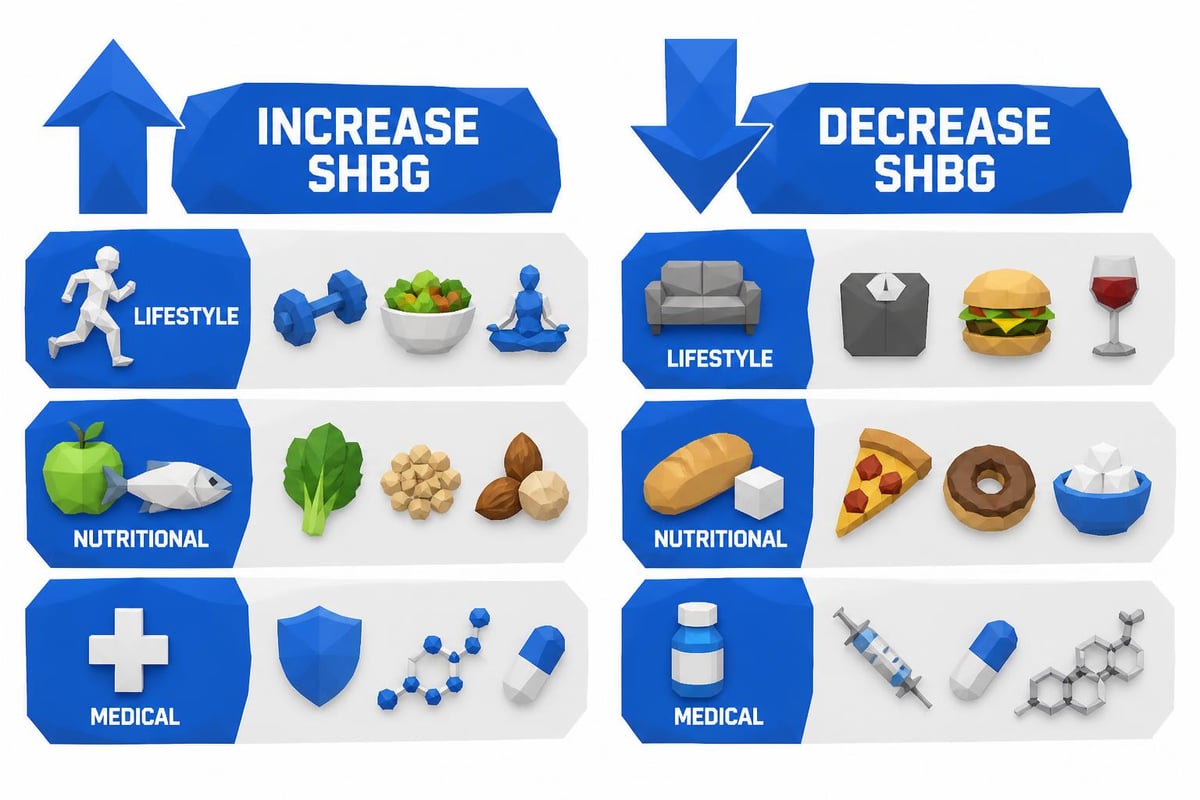
While SHBG responds to various physiological inputs, targeted interventions can help move levels toward a more optimal range. The approach depends on whether your goal is raising or lowering SHBG to improve free hormone availability.
Strategies to Lower SHBG
When SHBG is elevated and reducing free testosterone availability, several evidence-based interventions may help:
Nutritional approaches:
- Increase healthy fats, particularly saturated fats and omega-3s
- Optimize vitamin D status through supplementation or sun exposure
- Consider boron supplementation, which may reduce SHBG
- Ensure adequate protein intake to support metabolic health
- Reduce excessive fiber if intake is very high
Lifestyle modifications:
- Incorporate resistance training to boost testosterone and reduce SHBG
- Optimize sleep quality and duration
- Manage stress to control cortisol
- Maintain healthy body composition
Medical interventions:
- Address hyperthyroidism if present
- Review medications that may elevate SHBG
- Consider hormone optimization under medical supervision
Strategies to Raise SHBG
When SHBG is too low due to insulin resistance or metabolic dysfunction, different interventions become priority:
| Intervention | Expected Impact | Timeline |
|---|---|---|
| Weight loss (if overweight) | Significant increase | 3-6 months |
| Improved insulin sensitivity | Moderate to significant increase | 2-4 months |
| Increased fiber intake | Modest increase | 1-3 months |
| Reduced alcohol consumption | Moderate increase | 1-2 months |
| Thyroid optimization | Variable increase | 1-3 months |
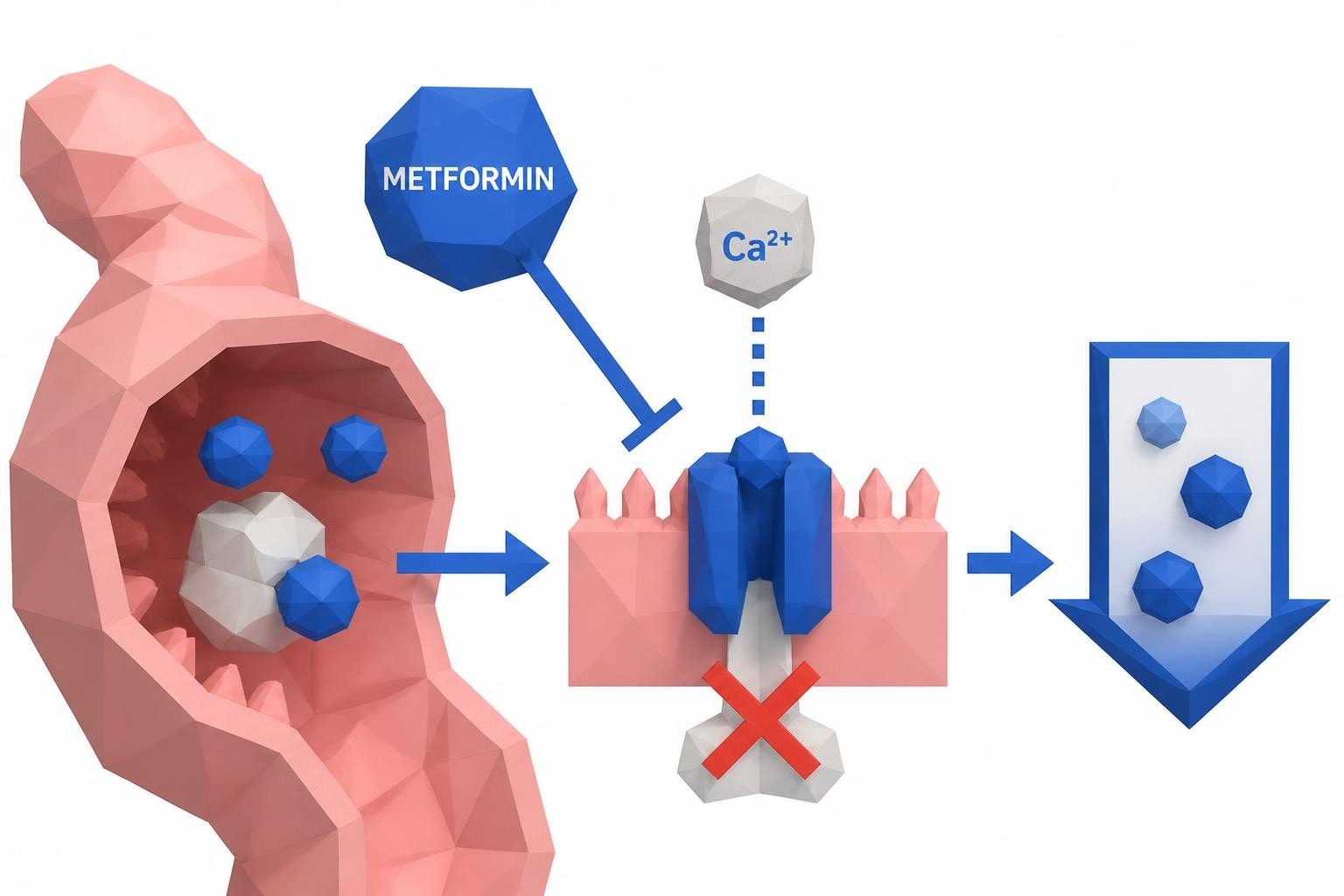
Addressing insulin resistance represents the most powerful intervention for raising SHBG when it is suppressed by metabolic dysfunction. This might involve dietary changes such as reducing refined carbohydrates, increasing physical activity, and potentially using medications like metformin under medical supervision.
SHBG in Different Populations
SHBG levels and their implications vary considerably across different demographic groups and life stages. Understanding these variations helps contextualize your personal results and set appropriate expectations for optimization.
SHBG in Men
Men typically experience rising SHBG levels with age, even as total testosterone declines. This combination creates a double effect that reduces free testosterone more dramatically than total testosterone measurements would suggest. A 60-year-old man might have 30% lower total testosterone than he had at age 30, but his free testosterone might be 50% lower due to simultaneously elevated SHBG.
This age-related SHBG increase represents one reason why free testosterone testing becomes increasingly important for older men evaluating symptoms that might relate to androgen deficiency. Relying solely on total testosterone can miss significant reductions in bioavailable hormone.
SHBG in Women
Women show more complex SHBG patterns across their lifespan due to dramatic hormonal shifts during puberty, pregnancy, and menopause. During reproductive years, estrogen stimulates SHBG production, keeping levels relatively high. After menopause, declining estrogen allows SHBG to fall, potentially increasing free testosterone despite stable total testosterone.
Polycystic ovary syndrome significantly affects SHBG in women, with low levels contributing to elevated free androgens that drive many PCOS symptoms. Testing SHBG alongside total and free testosterone helps characterize the hormonal environment in women with irregular cycles, hirsutism, or fertility challenges.
SHBG and Athletic Performance
Athletes and fitness enthusiasts often monitor SHBG to optimize their hormone profiles for performance and body composition. The relationship between training, nutrition, recovery, and SHBG creates a complex interplay that influences muscle growth, fat loss, and athletic capacity.
Heavy resistance training may acutely suppress SHBG, temporarily increasing free testosterone in the hours following a workout. However, chronic overtraining can disrupt hormone production and regulation, potentially leading to unfavorable SHBG changes. Balancing training stress with adequate nutrition and recovery helps maintain optimal SHBG levels that support rather than hinder performance goals.
Advanced Considerations for SHBG Management
Beyond basic lifestyle interventions, several advanced considerations can help fine-tune SHBG levels for individuals seeking optimization beyond standard reference ranges.
Medication Interactions
Various prescription medications influence SHBG concentrations, sometimes creating unexpected effects on free hormone levels. Oral contraceptives in women dramatically increase SHBG due to their estrogen content, often reducing free testosterone substantially. For men, certain blood pressure medications, anticonvulsants, and other drugs may affect SHBG production or clearance.
Common medications affecting SHBG:
- Oral estrogens (increase)
- Thyroid hormone (increase)
- Anticonvulsants like phenytoin (increase)
- Glucocorticoids (variable effects)
- Growth hormone (decrease)
- Stanozolol and certain anabolic steroids (decrease)
When starting new medications, particularly those known to affect hormone metabolism, retesting SHBG after several weeks helps assess whether adjustments to hormone replacement therapy or other interventions are needed.
SHBG Polymorphisms and Genetics
Genetic variations in the SHBG gene influence baseline protein production and how SHBG responds to various stimuli. Some individuals genetically produce higher or lower SHBG regardless of lifestyle factors, creating natural variation in free hormone availability that may require different optimization strategies.
While genetic testing for SHBG polymorphisms is not routinely necessary, understanding that genetics plays a role helps explain why some people struggle to modify SHBG despite aggressive interventions. In these cases, working with hormone levels as they are, rather than trying to dramatically shift SHBG, may be the most practical approach.
Accessing SHBG Testing
Obtaining SHBG testing has become increasingly accessible, with multiple pathways available depending on your preferences and circumstances. Traditional routes involve consulting a physician who orders the test through a hospital or commercial laboratory, typically processed through insurance with the associated coverage limitations and approval processes.
Alternative approaches through direct-to-consumer testing services provide greater autonomy and often faster results. Platforms that allow you to order lab tests online eliminate the need for doctor appointments while maintaining testing quality and accuracy. This approach particularly benefits individuals who want to monitor SHBG alongside other biomarkers without the delays and expenses associated with traditional medical visits.
When selecting a testing approach, consider factors beyond just cost:
- Turnaround time: How quickly you need results
- Test selection: Whether SHBG is offered alongside complementary tests
- Follow-up support: Access to interpretation assistance if needed
- Privacy preferences: Comfort level with sharing results through insurance
- Geographic access: Availability of testing locations in your area
Many individuals combine periodic comprehensive testing through their physician with more frequent self-directed monitoring to track interventions and optimize their hormone balance over time. This hybrid approach provides medical oversight while allowing personal agency in health management.
Integrating SHBG Data Into Health Decisions
SHBG testing delivers maximum value when integrated with other biomarkers and clinical information to create a complete picture of your endocrine and metabolic health. Isolated SHBG results provide limited actionable information, but combined with total testosterone, estradiol, insulin, and other markers, they enable sophisticated analysis and targeted interventions.
Consider SHBG testing as part of a comprehensive hormone panel that might include:
- Total testosterone
- Free testosterone (calculated or measured)
- Estradiol
- Luteinizing hormone (LH)
- Follicle-stimulating hormone (FSH)
- Thyroid panel (TSH, free T3, free T4)
- Fasting insulin and glucose
- Lipid panel
- Complete blood count
This broader context reveals relationships between SHBG and other physiological systems, helping identify root causes rather than just addressing symptoms. For example, discovering low SHBG alongside elevated fasting insulin and abnormal lipids points toward metabolic syndrome requiring comprehensive lifestyle intervention, not just isolated hormone manipulation.
You can explore available tests to determine which combination best suits your health goals and current concerns. Starting with a comprehensive panel provides baseline data, while targeted follow-up testing tracks specific markers as you implement interventions.
Understanding SHBG and its influence on hormone availability provides critical context for interpreting testosterone levels and addressing hormone-related symptoms effectively. By considering SHBG alongside total hormone measurements, you gain insight into bioavailable hormones that actually affect your physiology. Whether you are experiencing unexplained fatigue, changes in body composition, or other concerns that might relate to hormone imbalance, testing SHBG helps complete the diagnostic picture. Justlabs offers convenient access to SHBG testing and comprehensive hormone panels with transparent pricing and rapid results, empowering you to take control of your hormone health without insurance hassles or extended wait times for appointments.