Lyme disease testing remains one of the most critical yet complex diagnostic challenges in modern medicine. When patients present with potential Lyme disease symptoms, understanding lyme disease antibody why the two-tier approach is essential becomes crucial for achieving accurate results and appropriate treatment decisions.
Big picture
- Lyme disease antibody testing uses a two-step process to minimize false positives and maximize diagnostic accuracy when detecting Borrelia burgdorferi infections
- The first tier screens samples using an ELISA or EIA test to identify potential antibody presence, while the second tier confirms positive or equivocal results through Western blot or immunoblot testing
- This approach matters because single-test methods produce too many false positives leading to unnecessary antibiotic treatments and missed alternative diagnoses
- Anyone exposed to tick habitats or experiencing unexplained symptoms like fatigue, joint pain, or rashes should consider testing, especially in endemic regions
- Direct access to lab testing through services like Justlabs enables faster testing without requiring insurance pre-approval or lengthy appointment scheduling
Understanding the Two-Tier Testing Protocol
The two-tier testing approach for Lyme disease represents a carefully designed diagnostic strategy developed by the Centers for Disease Control and Prevention. This methodology addresses fundamental challenges in detecting antibodies against Borrelia burgdorferi, the bacterium responsible for Lyme disease.
Why Single-Tier Testing Falls Short
Single antibody tests lack the specificity needed for reliable Lyme disease diagnosis. Many bacterial infections trigger similar immune responses, creating cross-reactive antibodies that can falsely suggest Lyme disease. Without confirmation, patients might receive unnecessary long-term antibiotic therapy while their actual condition remains untreated.
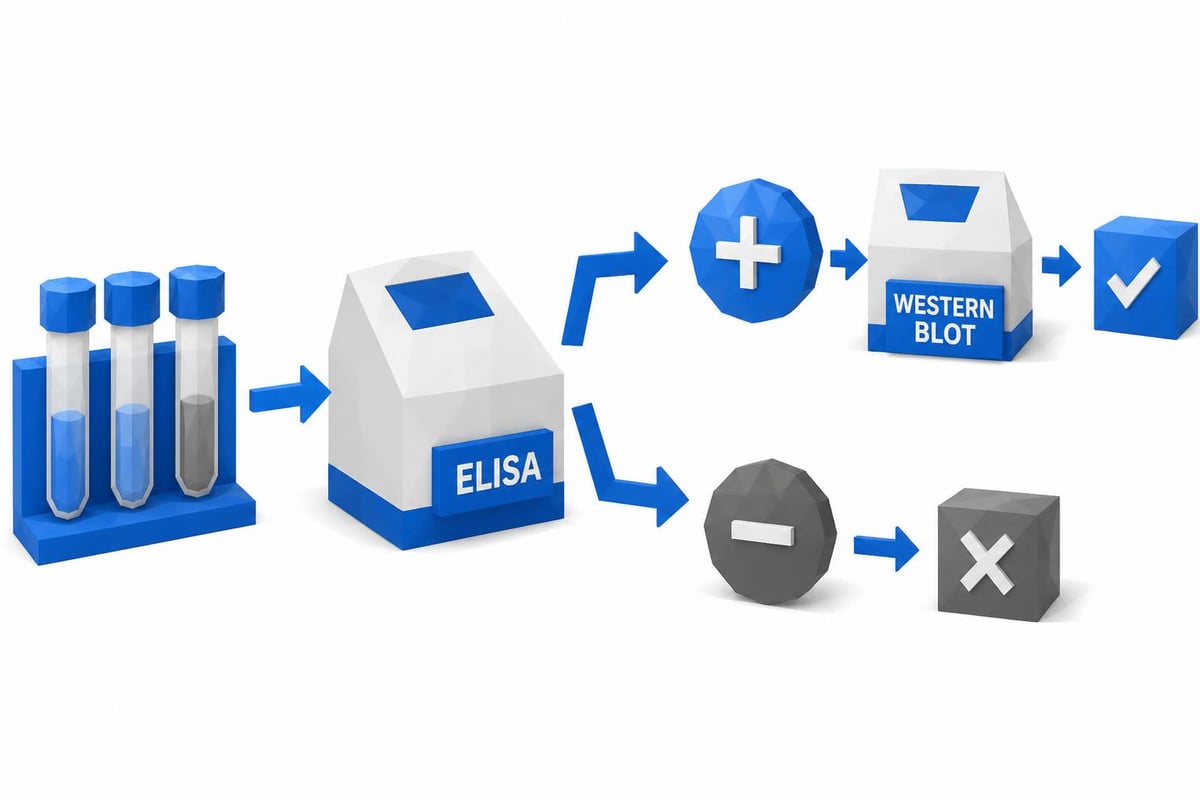
The CDC's two-tiered testing process creates a balance between sensitivity and specificity. The first tier casts a wide net to catch potential cases, while the second tier eliminates false positives through more specific antibody detection methods.
Key limitations of single-tier testing include:
- High false-positive rates in low-prevalence populations
- Cross-reactivity with other spirochetal infections
- Inability to distinguish active from past infections
- Variable antibody responses across different disease stages
The First Tier: ELISA and EIA Screening
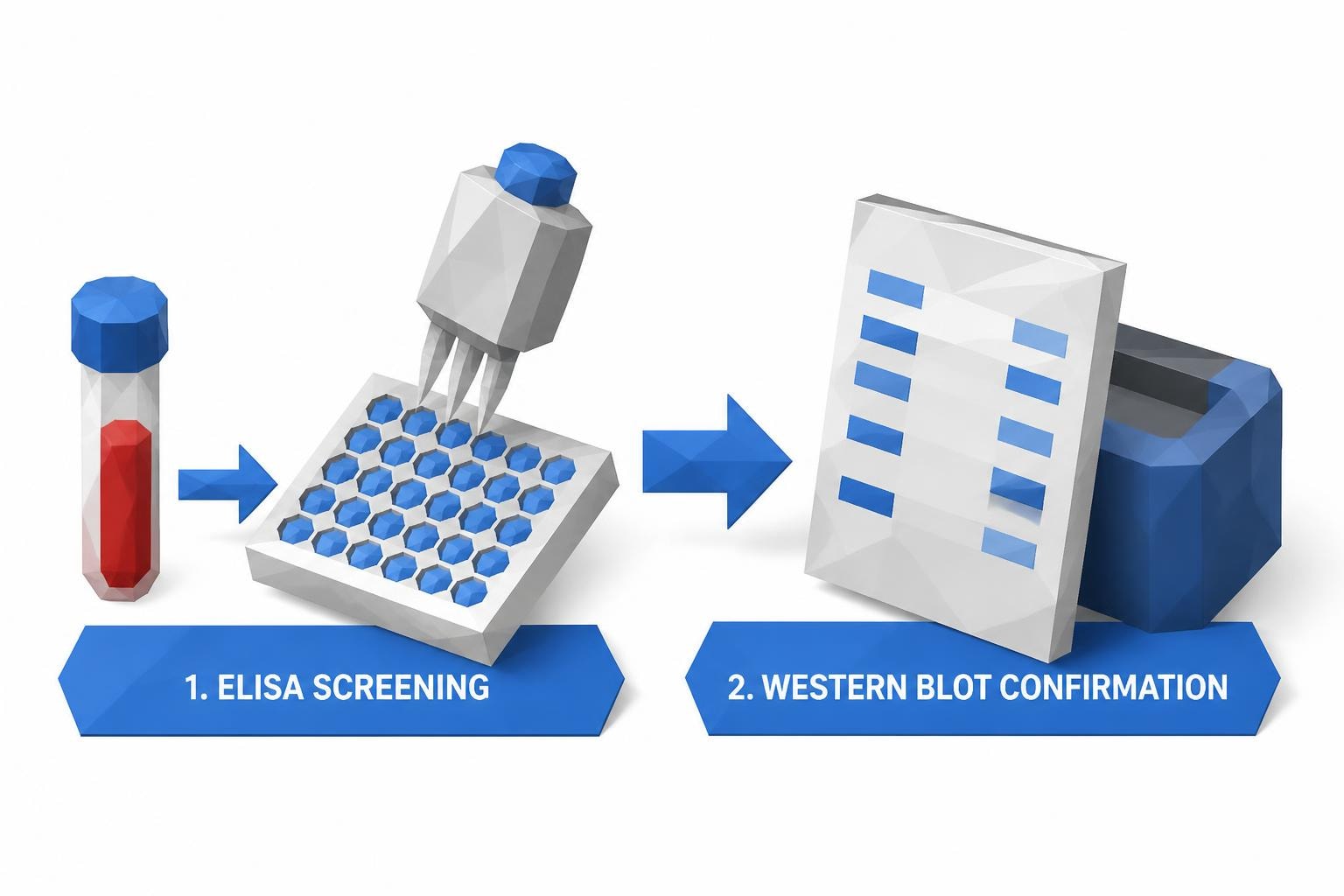
The initial screening test typically employs enzyme-linked immunosorbent assay (ELISA) or enzyme immunoassay (EIA) technology. These tests detect total antibodies against Borrelia burgdorferi antigens, including both IgM and IgG antibody classes.
How First-Tier Screening Works
Laboratory technicians expose patient serum samples to Borrelia burgdorferi antigens fixed on a test plate. If antibodies are present, they bind to these antigens. An enzyme-linked secondary antibody then creates a detectable color change proportional to antibody concentration.
The sensitivity of first-tier testing ensures minimal missed cases. However, this high sensitivity comes at the cost of specificity, which is where lyme disease antibody why the two-tier approach becomes scientifically necessary.
| Test Characteristic | First-Tier ELISA/EIA | Second-Tier Immunoblot |
|---|---|---|
| Primary Purpose | Screen for antibodies | Confirm specificity |
| Sensitivity | 95-100% | 85-95% |
| Specificity | 70-80% | 95-100% |
| Processing Time | 1-2 hours | 2-4 hours |
| Cost | Lower | Higher |
Modern variations include C6 peptide ELISAs that target a specific immunodominant region of the VlsE protein, offering improved accuracy compared to whole-cell lysate assays.
The Second Tier: Confirmatory Immunoblot Testing
When first-tier results return positive or equivocal, laboratories automatically proceed to second-tier testing. The Western blot or line immunoblot examines antibodies against specific Borrelia burgdorferi proteins, creating a detailed antibody profile.
Interpreting Band Patterns
Western blot testing separates bacterial proteins by molecular weight, allowing identification of antibodies against individual antigens. The CDC has established specific criteria for positive results based on the number and type of protein bands detected.
For IgM Western blot positivity:
- At least two of three specific bands must be present
- Recognized bands include 23 kDa (OspC), 39 kDa, and 41 kDa (flagellin)
- IgM results are only considered significant within the first four weeks of symptom onset
For IgG Western blot positivity:
- At least five of ten specified bands must appear
- Key bands include 18, 23, 28, 30, 39, 41, 45, 58, 66, and 93 kDa
- IgG antibodies typically develop 4-6 weeks after infection
This detailed analysis explains lyme disease antibody why the two-tier approach provides superior diagnostic accuracy compared to single-test methods. According to research on sequential testing algorithms, the two-tier system significantly reduces false-positive results while maintaining high sensitivity for true infections.

Modified Two-Tier Testing Approaches
Recent advances have introduced modified two-tier testing (MTTT) protocols that replace the traditional Western blot with a second EIA using different target antigens. This approach addresses several limitations of conventional methods.
Advantages of Modified Protocols
The modified approach uses two separate EIAs, testing for antibodies against different Borrelia burgdorferi proteins. When both tests return positive, the result confirms Lyme disease with accuracy comparable to traditional two-tier testing.
Benefits include faster turnaround times, reduced subjective interpretation, and improved standardization across laboratories. The modified method demonstrates particular value in early disease detection when traditional Western blots may lack sensitivity.
For individuals seeking affordable lab testing options, understanding these testing variations helps inform discussions about which approach best suits their specific situation and timing relative to potential exposure.
Timing Considerations for Accurate Testing
The relationship between infection timing and antibody detection fundamentally impacts test accuracy. Understanding lyme disease antibody why the two-tier approach requires multiple weeks for optimal sensitivity helps patients and providers make informed testing decisions.
Antibody Development Timeline
Antibodies don't appear immediately after tick exposure. The immune system requires time to recognize the infection and mount a detectable antibody response. IgM antibodies typically become detectable 2-4 weeks post-infection, while IgG antibodies require 4-6 weeks.
Testing during the first two weeks after exposure often yields negative results even in genuinely infected individuals. This creates a diagnostic window where clinical assessment combined with symptom monitoring becomes more valuable than laboratory testing.
| Timeframe After Exposure | IgM Antibodies | IgG Antibodies | Testing Recommendation |
|---|---|---|---|
| 0-2 weeks | Absent | Absent | Clinical diagnosis only |
| 2-4 weeks | Developing | Absent | Consider testing if symptomatic |
| 4-6 weeks | Present | Developing | Optimal testing window |
| >6 weeks | May decline | Present | Reliable testing period |
Common Challenges and Limitations
Despite its advantages, the two-tier approach faces several recognized limitations that both patients and healthcare providers should understand when interpreting results.
False Negatives in Early Disease
The most significant limitation involves early Lyme disease cases where antibodies haven't yet developed. Patients with classic erythema migrans rashes may test negative despite active infection, necessitating treatment based on clinical presentation rather than laboratory confirmation.
Additional testing challenges include:
- Variable antibody responses among different patients
- Persistent antibodies after successful treatment
- Regional antigenic variations in Borrelia burgdorferi strains
- Cross-reactivity with other tick-borne diseases
Some patients develop chronic symptoms despite negative testing or after treatment, raising questions about persistent infection versus post-treatment Lyme disease syndrome. These cases require careful clinical evaluation beyond antibody testing alone. Lifelong IgG is not unique to Lyme either — it is the norm across viral serology, which is why a positive HSV-1 IgG result reflects past exposure rather than an active outbreak.
Practical Applications for Test Ordering
Understanding lyme disease antibody why the two-tier approach functions helps individuals make informed decisions when ordering lab tests without a doctor. Direct access to testing provides valuable screening opportunities, particularly for those in endemic areas.
When to Pursue Testing
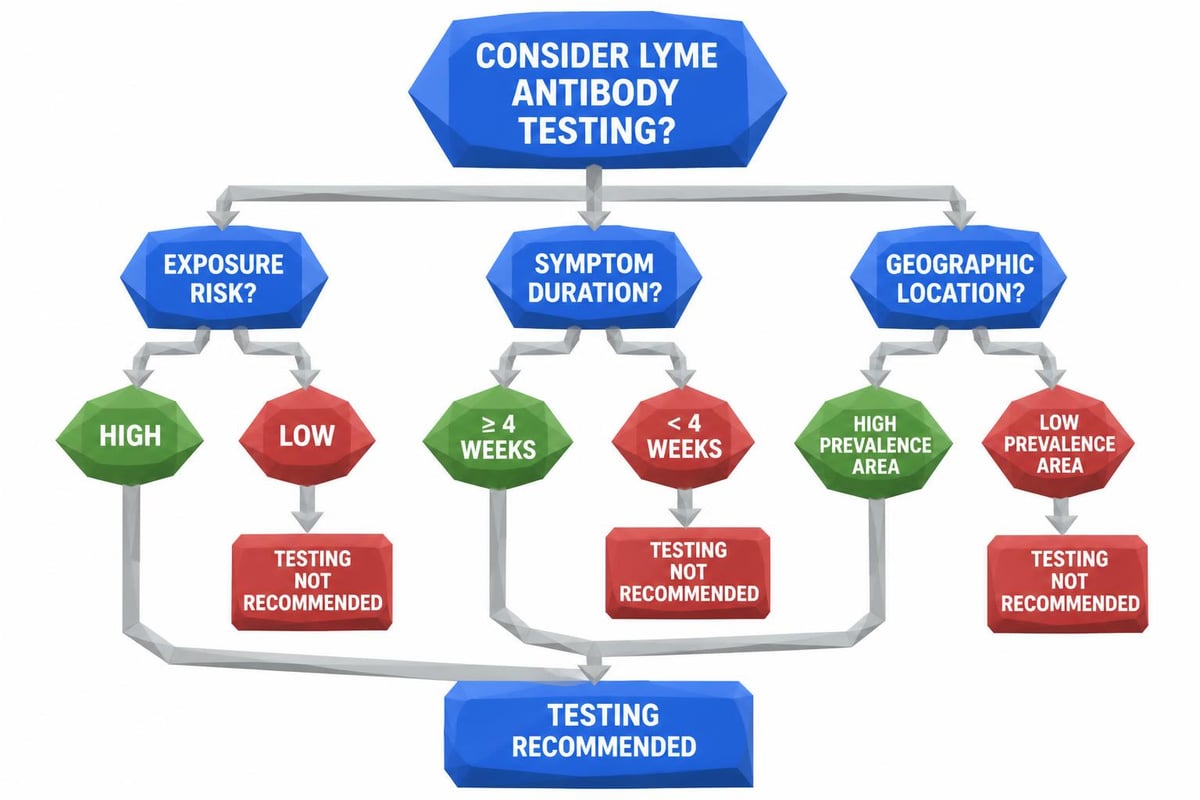
Consider Lyme disease antibody testing if you experience unexplained symptoms after potential tick exposure, particularly in high-prevalence regions. Key indicators include persistent fatigue, joint pain, neurological symptoms, or the characteristic bull's-eye rash.
The convenience of transparent lab test pricing through direct-access services enables proactive health monitoring without insurance barriers. Results typically arrive within 1-3 days, allowing rapid follow-up if positive results require confirmatory testing.
However, remember that negative results during the first month after exposure don't rule out Lyme disease. Repeat testing after 4-6 weeks provides more reliable results when initial symptoms persist.
Regional Variations and Endemic Areas
Lyme disease prevalence varies dramatically across geographic regions, influencing both pre-test probability and the predictive value of positive results. The two-tier approach performs differently in high-prevalence versus low-prevalence populations.
Testing Implications by Region
In northeastern and upper Midwestern states where Lyme disease is endemic, positive predictive values remain higher because genuine infections occur more frequently. Conversely, in low-prevalence regions, false positives may outnumber true positives even with the two-tier approach.
This geographic variation underscores why lyme disease antibody why the two-tier approach incorporates both testing and clinical assessment. A positive test in a patient from Arizona without travel history carries different implications than the same result from someone in Connecticut.
Alternative and Emerging Testing Methods
Research continues exploring novel diagnostic approaches that might complement or improve upon current two-tier testing protocols. Several promising technologies are under investigation.
Direct Detection Methods
Unlike antibody tests that measure immune response, direct detection methods attempt to identify the bacterium itself. Polymerase chain reaction (PCR) testing can detect Borrelia burgdorferi DNA in certain sample types, particularly synovial fluid in Lyme arthritis cases.
However, PCR has limited sensitivity in blood samples and doesn't replace antibody testing for most clinical situations. The bacteria's low concentration in blood and intermittent presence make direct detection challenging.
Newer approaches under study include:
- Multiplexed immunoassays targeting additional antigens
- Machine learning algorithms for pattern recognition
- Metabolomic profiling of infected versus uninfected individuals
- Enhanced culture techniques with improved sensitivity
Cost Considerations and Access to Testing
The financial aspect of Lyme disease testing influences both individual testing decisions and public health screening strategies. Understanding costs helps patients make informed choices about when and where to test.
Transparent Pricing Benefits
Traditional healthcare often obscures actual testing costs until after services are rendered. Insurance pre-authorization requirements and varying coverage policies create additional barriers to timely testing. Direct-access laboratory services address these challenges through upfront pricing and rapid turnaround.
When comparing where to get lab tests, consider both the monetary cost and time investment required. Two-tier testing through traditional channels may require multiple appointments and weeks of waiting, while self-pay options often provide results within days.
The two-tier approach itself adds cost compared to single testing, but this incremental expense prevents far costlier consequences of misdiagnosis, including unnecessary treatments and delayed identification of alternative conditions.
Key Takeaways
Understanding lyme disease antibody why the two-tier approach represents the standard of care empowers patients to make informed testing decisions and interpret results appropriately.
Essential points to remember:
- The two-tier testing protocol combines sensitive screening with specific confirmation to minimize diagnostic errors
- Timing matters critically-testing too early after exposure produces unreliable negative results
- Positive first-tier results always require second-tier confirmation before clinical decision-making
- Clinical symptoms and exposure history remain equally important as laboratory results
- Geographic location and endemic status influence the interpretation of positive results
- Direct-access testing provides faster results and transparent pricing for proactive health monitoring
FAQ
How long after a tick bite should I wait before getting tested for Lyme disease?
For antibody testing to be reliable, wait at least 4-6 weeks after potential exposure. Earlier testing often produces false negatives because your immune system needs time to develop detectable antibody levels. If you develop a rash or other symptoms sooner, seek medical evaluation immediately-treatment may begin based on clinical presentation rather than waiting for laboratory confirmation.
Can I have Lyme disease even if my two-tier test is negative?
Yes, negative results don't completely rule out Lyme disease, especially in early infection stages before antibody development. Additionally, some patients have atypical immune responses that don't meet standard positive criteria. If symptoms persist despite negative testing, discuss alternative diagnoses and potential repeat testing with a healthcare provider.
What does it mean if my first-tier test is positive but my second-tier test is negative?
This result indicates a false-positive first-tier test. The specific antibodies detected in second-tier testing were absent, suggesting the initial reaction resulted from cross-reactive antibodies to other organisms or conditions. Based on current CDC guidelines, this combination is considered a negative result for Lyme disease.
How much does two-tier Lyme disease testing typically cost?
Costs vary depending on the testing facility and whether insurance is involved. First-tier ELISA tests typically range from $50-$150, while confirmatory Western blots add another $100-$250. Direct-access services often provide bundled two-tier testing at transparent prices, eliminating surprise bills and insurance complications.
Will antibodies remain positive after successful Lyme disease treatment?
Yes, antibodies often persist for months or even years after successful treatment, particularly IgG antibodies. Positive antibody tests after treatment don't necessarily indicate ongoing infection-they simply show your immune system previously encountered Borrelia burgdorferi. Repeat antibody testing isn't useful for confirming cure or diagnosing reinfection.
Can I order Lyme disease testing without seeing a doctor first?
Through direct-access laboratory services, you can order Lyme disease testing without a doctor's visit or insurance involvement. This approach provides convenient access to screening tests with results delivered quickly. However, interpreting results and making treatment decisions should involve qualified healthcare providers, especially if tests return positive.
The two-tier testing approach for Lyme disease provides the diagnostic accuracy necessary to distinguish true infections from false-positive results, protecting patients from both undertreatment and overtreatment. Understanding how this methodology works enables informed decisions about when to pursue testing and how to interpret results. If you're concerned about potential Lyme disease exposure or want to take a proactive approach to your health monitoring, Justlabs offers accessible testing options with transparent pricing and rapid results, helping you take control of your healthcare journey without insurance barriers or extended wait times.