Understanding hormone ratios can provide powerful insights into reproductive health that single measurements might miss. The relationship between luteinizing hormone (LH) and follicle-stimulating hormone (FSH) offers clinicians and patients valuable diagnostic clues about fertility, ovarian function, and hormonal balance. While each hormone has distinct roles, their ratio can signal specific conditions that affect both women and men.
Big picture
- LH and FSH are pituitary hormones that regulate reproductive function in both sexes, controlling ovulation and sperm production
- The normal LH to FSH ratio typically falls around 1:1, though this varies by cycle phase in women and differs between the sexes
- An elevated ratio (often 2:1 or higher) in women frequently signals polycystic ovary syndrome (PCOS), one of the most common hormonal disorders
- Very low LH with high FSH indicates ovarian or testicular failure, where the body increases FSH trying to stimulate failing gonads
- Testing both hormones together provides more diagnostic value than measuring either alone, especially when evaluating fertility issues
- Anyone experiencing irregular periods, difficulty conceiving, or symptoms of hormone imbalance should consider checking these levels through accessible testing options
Understanding LH and FSH in Reproductive Health
Luteinizing hormone and follicle-stimulating hormone work in tandem to regulate the reproductive system. The pituitary gland releases both hormones in response to signals from the hypothalamus, creating a carefully orchestrated feedback loop.
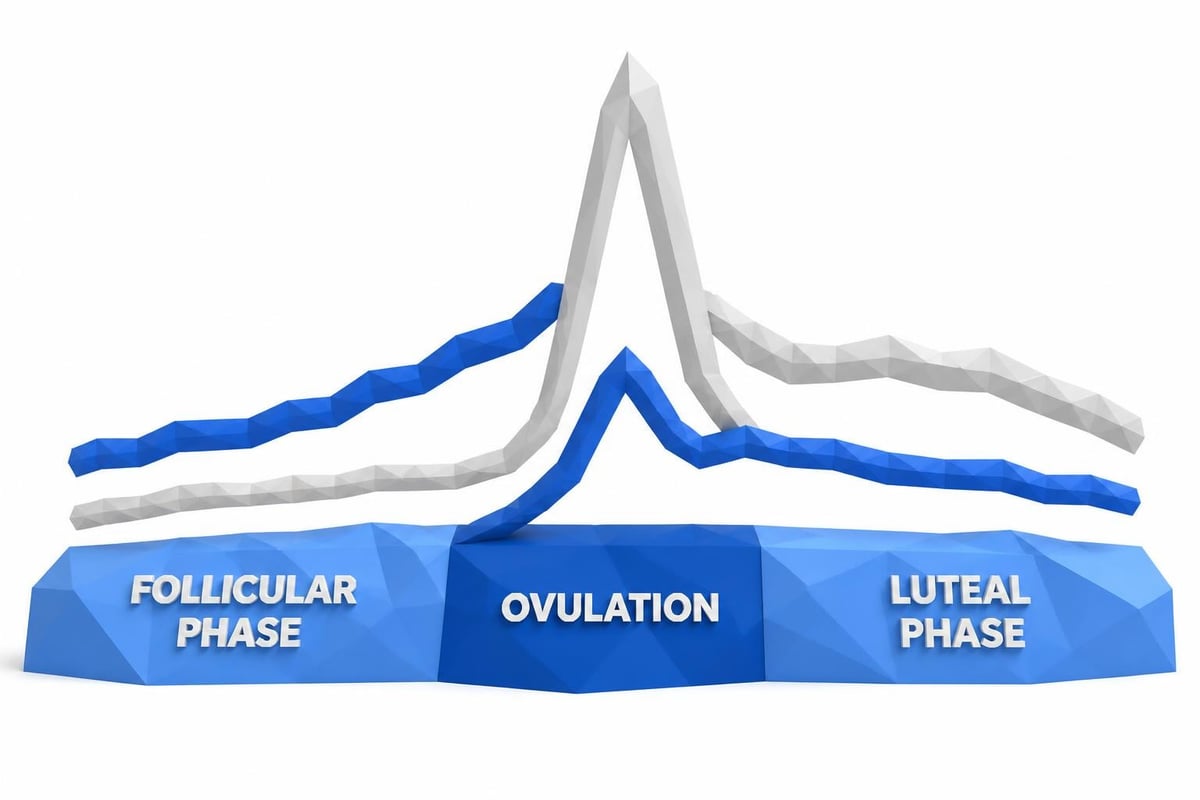
In women, FSH stimulates the growth of ovarian follicles during the first half of the menstrual cycle. As follicles mature, they produce estrogen, which triggers the pituitary to release a surge of LH mid-cycle. This LH surge causes ovulation, releasing a mature egg from the dominant follicle.
Normal Reference Ranges
The expected lh to fsh ratio and what it signals depends heavily on sex and, in women, menstrual cycle phase. During the follicular phase (days 1-14), both hormones remain relatively low with FSH slightly elevated to stimulate follicle growth. At ovulation, LH spikes dramatically while FSH rises modestly.
Typical female ranges:
- Follicular phase: LH 1.9-12.5 mIU/mL, FSH 3.0-10.0 mIU/mL
- Mid-cycle peak: LH 8.7-76.3 mIU/mL, FSH 4.5-22.5 mIU/mL
- Luteal phase: LH 0.5-16.9 mIU/mL, FSH 1.5-9.0 mIU/mL
- Postmenopause: Both hormones elevated (25-134 mIU/mL)
Typical male ranges:
- LH: 1.5-9.3 mIU/mL
- FSH: 1.4-18.1 mIU/mL
In men, FSH stimulates spermatogenesis in the testes while LH triggers testosterone production. Both remain relatively stable compared to the cyclic variation seen in women. When ordering tests without needing insurance approval, patients can access these measurements through labs without insurance to better understand their hormonal baseline.
What an Elevated LH to FSH Ratio Signals
An elevated lh to fsh ratio and what it signals most commonly points toward polycystic ovary syndrome in women of reproductive age. PCOS affects approximately 8-13% of women and represents one of the leading causes of female infertility.
PCOS and the 2:1 Ratio
Historically, clinicians considered an LH:FSH ratio of 2:1 or higher as a diagnostic criterion for PCOS. While this threshold appears in older literature, recent research on LH:FSH ratio significance shows the ratio varies across PCOS phenotypes and shouldn't be used as a standalone diagnostic marker.
Women with PCOS often exhibit:
- Chronically elevated LH relative to FSH
- Increased LH pulse frequency and amplitude
- Excessive androgen production stimulated by elevated LH
- Irregular or absent ovulation despite adequate follicle development
The elevated ratio occurs because the hormonal feedback mechanisms become dysregulated in PCOS. High insulin levels and androgen excess interfere with normal pituitary signaling, causing persistent LH elevation while FSH remains normal or slightly suppressed.
Clinical Implications Beyond Diagnosis
Even when the ratio doesn't reach the classic 2:1 threshold, a relatively elevated LH compared to FSH can signal metabolic and reproductive issues. This pattern correlates with:
- Insulin resistance - Higher fasting insulin often accompanies elevated LH:FSH
- Anovulation - Chronically high LH prevents normal follicle maturation and ovulation
- Hyperandrogenism - Excess LH overstimulates testosterone production by ovarian theca cells
- Reduced fertility - Hormonal imbalance disrupts egg quality and endometrial receptivity
Understanding these connections helps patients and providers develop targeted treatment strategies. Women discovering an elevated ratio through accessible testing can work with healthcare providers to address underlying metabolic factors.
Recommended Panel
Female Hormone Panel
Save $7This comprehensive panel measures all major female hormones: estrogen, progesterone, reproductive hormones (FSH/LH), and androgens (testosterone/DHEA-S) - essential for understanding hormonal balance.
Includes 7 biomarkers
$105
What a Low LH to FSH Ratio Signals
When FSH significantly exceeds LH, the lh to fsh ratio and what it signals shifts dramatically. This pattern typically indicates primary gonadal failure, where the ovaries or testes cannot respond adequately to hormonal stimulation.
Primary Ovarian Insufficiency
Primary ovarian insufficiency (POI), previously called premature ovarian failure, occurs when the ovaries stop functioning normally before age 40. The ESHRE guidelines on POI diagnosis emphasize FSH elevation as a key diagnostic criterion.
In POI, FSH rises above 25 mIU/mL on two occasions at least four weeks apart, while LH may remain normal or only moderately elevated. This creates a low LH:FSH ratio because the pituitary increases FSH output attempting to stimulate unresponsive ovarian follicles.
| Condition | LH Level | FSH Level | LH:FSH Ratio | Clinical Significance |
|---|---|---|---|---|
| Normal reproductive age | Normal | Normal | ~1:1 | Regular ovulation expected |
| PCOS | Elevated | Normal-Low | >1.5:1 | Anovulation, hyperandrogenism |
| POI | Normal-Elevated | Very High | <1:1 | Ovarian failure, infertility |
| Hypothalamic amenorrhea | Low | Low | Variable | Functional suppression |
Male Gonadal Failure
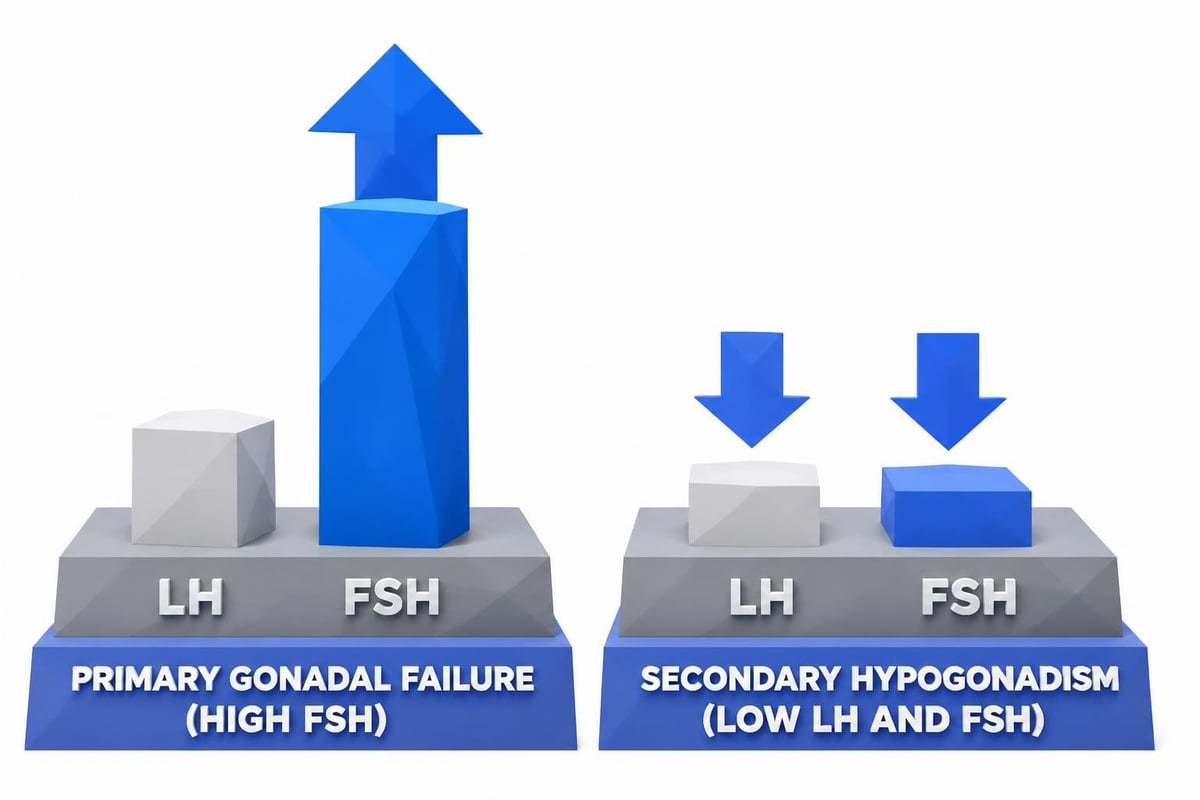
In men, the AUA/ASRM male infertility guidelines outline how elevated FSH with normal or low testosterone indicates primary testicular failure. The testicular tissue cannot produce adequate sperm or testosterone despite appropriate pituitary signaling.
Common causes of primary testicular failure include:
- Genetic conditions (Klinefelter syndrome, Y chromosome microdeletions)
- Chemotherapy or radiation exposure
- Trauma or torsion
- Autoimmune orchitis
- Infectious damage (mumps orchitis)
The EAU guidance on male hypogonadism explains how hormone patterns help classify hypogonadism as primary (testicular) versus secondary (hypothalamic-pituitary). When ordering comprehensive hormone testing, patients can order labs without a doctor visit, streamlining the diagnostic process.
Secondary Causes of Altered Ratios
Not all abnormal LH to FSH ratios stem from primary reproductive disorders. Several secondary factors can shift the balance between these hormones.
Hypothalamic Dysfunction
Functional hypothalamic amenorrhea occurs when stress, excessive exercise, or inadequate nutrition suppresses the hypothalamic-pituitary-gonadal axis. Both LH and FSH drop to low levels, though the ratio may remain relatively normal.
This differs from the lh to fsh ratio and what it signals in primary gonadal failure because the problem originates in the brain rather than the ovaries or testes. Treatment focuses on addressing underlying stressors rather than directly manipulating reproductive hormones.
Medication Effects
Certain medications alter LH and FSH secretion:
- Hormonal contraceptives suppress both hormones but affect LH more dramatically
- GnRH agonists initially spike then suppress both hormones
- Dopamine agonists can normalize elevated LH in hyperprolactinemia
- Metformin may reduce elevated LH in PCOS by improving insulin sensitivity
Patients taking these medications should inform their healthcare provider before hormone testing, as results may not reflect their baseline status.
Age-Related Changes
The transition to menopause brings progressive changes in the LH:FSH relationship. During perimenopause, FSH begins rising earlier and more prominently than LH as ovarian reserve declines. By postmenopause, both hormones remain persistently elevated, but FSH typically exceeds LH significantly.
Testing Considerations and Timing
Accurate interpretation of the lh to fsh ratio and what it signals requires attention to testing protocols and timing.
Optimal Testing Windows
For women with regular cycles:
- Test on days 2-4 of menstruation for baseline follicular phase values
- This timing provides the most consistent and interpretable results
- Avoid testing during the mid-cycle LH surge
For women with irregular cycles:
- Random testing is acceptable when cycles are unpredictable
- Multiple measurements over time provide better assessment than single values
- Document the timing relative to last menstrual period
For men:
- Testing can occur at any time given stable hormone levels
- Morning collection (7-10 AM) is preferred when also measuring testosterone
- Repeat abnormal results to confirm findings
Comprehensive Hormone Panels
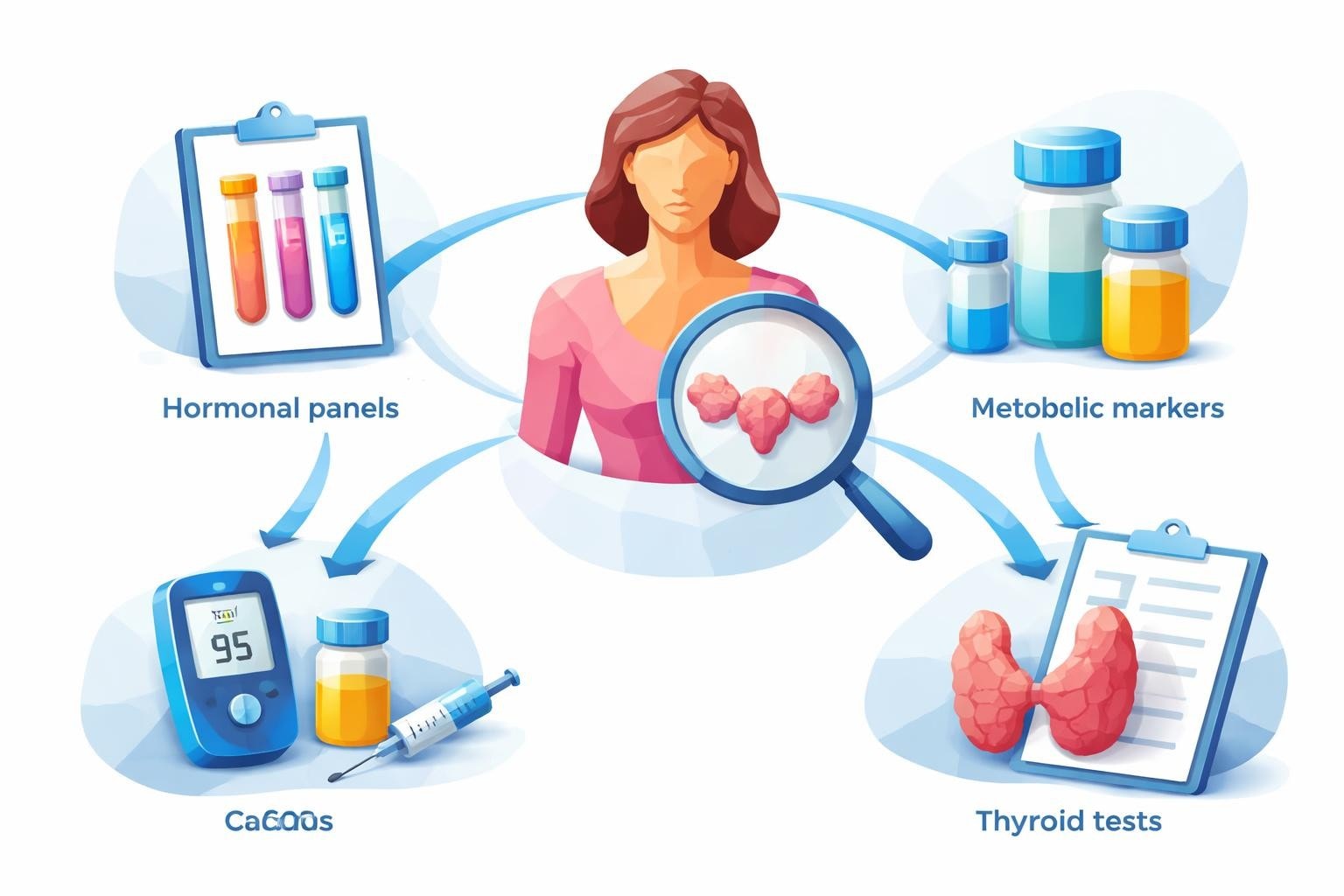
The lh to fsh ratio and what it signals becomes more meaningful when evaluated alongside other reproductive hormones. A complete assessment typically includes:
- Testosterone (total and free in men, total in women)
- Estradiol (particularly in women)
- Prolactin (elevated levels suppress LH and FSH)
- Sex hormone binding globulin (affects free hormone availability)
- AMH (anti-Müllerian hormone) for ovarian reserve assessment
Recommended Panel
Male Hormone Panel
Save $4This comprehensive panel measures testosterone (free and total), plus the supporting hormones that affect how testosterone works in your body: SHBG, estradiol sensitive, DHEA-S, and cortisol.
Includes 6 biomarkers
$105.50
The StatPearls overview of male infertility evaluation emphasizes the importance of comprehensive hormonal assessment rather than relying on isolated measurements. When seeking hormone testing, patients can explore transparent pricing options to understand costs upfront at lab test pricing pages.
Clinical Applications and Treatment Implications
Understanding the lh to fsh ratio and what it signals guides treatment decisions across various reproductive health scenarios.
PCOS Management
For women with PCOS and elevated LH:FSH ratios, treatment typically addresses multiple aspects:
Lifestyle interventions:
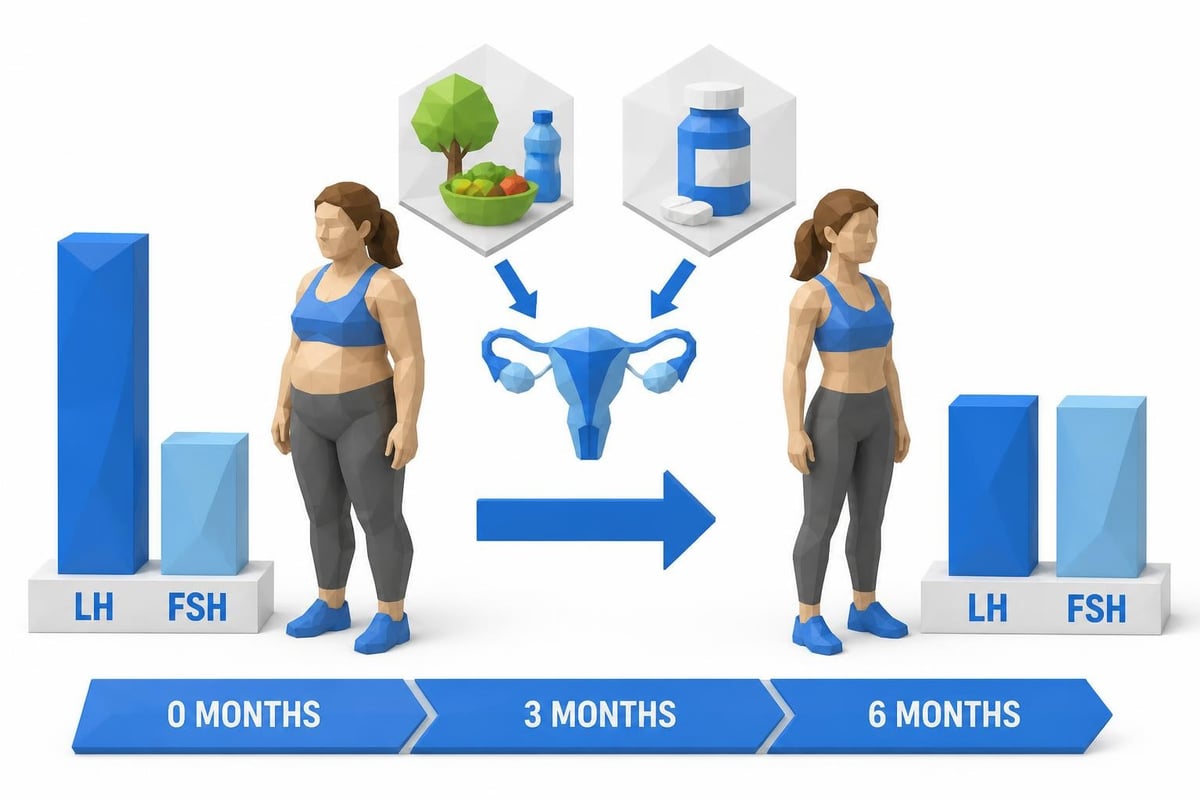
- Weight loss (even 5-10%) can normalize hormone ratios
- Regular exercise improves insulin sensitivity
- Balanced nutrition stabilizes blood sugar
Medications:
- Metformin reduces insulin resistance and may lower LH
- Letrozole or clomiphene citrate for ovulation induction
- Hormonal contraceptives regulate cycles and reduce androgens
Fertility treatments:
- Ovulation induction when pregnancy is desired
- IVF may be necessary for medication-resistant cases
Recommended Panel
PCOS & Irregular Cycles Panel
Save $5Irregular cycles with acne or unwanted hair growth have several possible causes, and they are treated differently. This panel works through the main ones — androgen excess, thyroid disease, high prolactin, insulin resistance, and nonclassic congenital adrenal hyperplasia.
Includes 10 biomarkers
$121
Fasting required
Primary Gonadal Failure
When high FSH relative to LH indicates primary ovarian or testicular failure, treatment focuses on hormone replacement and fertility preservation.
In women with POI:
- Estrogen-progestin therapy prevents bone loss and manages symptoms
- Fertility options include egg donation or embryo adoption
- Rare spontaneous pregnancies can occur
In men with primary testicular failure:
- Testosterone replacement addresses hypogonadism symptoms
- Sperm retrieval techniques may recover viable sperm for IVF
- Donor sperm represents an alternative path to parenthood
Monitoring Treatment Response
Serial hormone measurements track treatment effectiveness. As interventions address underlying issues, the LH:FSH ratio often normalizes, correlating with improved fertility outcomes and symptom resolution.
Interpreting Results in Context
The lh to fsh ratio and what it signals should never be interpreted in isolation. Clinical context, symptoms, and other findings create the complete picture.
False Reassurance from Normal Ratios
A normal LH:FSH ratio doesn't automatically indicate healthy reproductive function. Women can have regular ratios yet suffer from:
- Low ovarian reserve (assessed by AMH and antral follicle count)
- Endometriosis affecting fertility
- Tubal factor infertility
- Male factor infertility in their partner
Individual Variation
Reference ranges represent population averages, but individual baselines vary. A woman with a personal baseline ratio of 0.8:1 who shifts to 1.5:1 may be experiencing significant change, even though both values fall within "normal" limits.
Tracking trends over time often proves more valuable than single measurements. When understanding lab results, patients benefit from comparing current values to their personal history rather than focusing solely on reference ranges.
Key Takeaways
The relationship between LH and FSH provides crucial diagnostic information about reproductive health in both women and men. An elevated ratio above 1.5:1 or 2:1 commonly signals PCOS in women, reflecting the hormonal dysregulation that drives anovulation and hyperandrogenism. Conversely, when FSH substantially exceeds LH, primary gonadal failure is likely, whether ovarian insufficiency in women or testicular failure in men.
Optimal testing requires attention to cycle timing in women, with days 2-4 of menstruation providing the most consistent baseline values. Comprehensive hormone panels that include testosterone, estradiol, and prolactin alongside LH and FSH offer greater diagnostic value than isolated measurements.
Treatment implications depend entirely on the underlying cause revealed by hormone patterns. PCOS management emphasizes lifestyle modification, insulin sensitizers, and ovulation induction when pregnancy is desired. Primary gonadal failure requires hormone replacement therapy and assisted reproductive technologies for fertility.
The lh to fsh ratio and what it signals becomes most meaningful when interpreted within complete clinical context, including symptoms, examination findings, and additional laboratory data. Serial measurements tracking changes over time often provide more actionable insights than single snapshots.
Related reading

FAQ
What is a normal LH to FSH ratio?
In women during the follicular phase, a ratio around 1:1 is typical, though this varies throughout the menstrual cycle. Men generally maintain a ratio between 0.8:1 and 1.5:1. Values above 2:1 in women often indicate PCOS, while significantly lower ratios suggest primary ovarian or testicular dysfunction.
Can the LH to FSH ratio diagnose PCOS alone?
No, the ratio is just one factor in PCOS diagnosis. Current Rotterdam criteria require two of three findings: irregular ovulation, clinical or biochemical hyperandrogenism, and polycystic ovarian morphology on ultrasound. Many women with PCOS have elevated LH:FSH ratios, but the ratio alone lacks sufficient specificity for diagnosis.
When should I test my LH and FSH levels?
Women experiencing irregular periods, difficulty conceiving, or PCOS symptoms should test on days 2-4 of their cycle if possible. Men with infertility, low libido, or suspected hypogonadism can test at any time, preferably in the morning. Anyone over 35 trying to conceive may benefit from baseline hormone assessment.
What does high FSH with normal LH mean?
This pattern typically indicates diminished ovarian reserve in women or primary testicular failure in men. The pituitary increases FSH production attempting to stimulate unresponsive gonads. Women over 35 or those with fertility concerns should pay particular attention to rising FSH levels.
Can lifestyle changes improve an abnormal LH to FSH ratio?
In PCOS, weight loss, exercise, and dietary improvements can normalize elevated LH:FSH ratios by reducing insulin resistance. Even modest weight loss of 5-10% often restores regular ovulation and improves hormone balance. However, lifestyle modifications cannot reverse primary gonadal failure.
How quickly can the LH to FSH ratio change?
In functional conditions like PCOS, ratios can shift within 3-6 months with effective treatment. Rapid changes may also occur with medication adjustments or hormonal contraceptive use. Primary gonadal failure typically shows stable, persistently abnormal ratios that don't respond to lifestyle interventions.
Should men check their LH to FSH ratio?
Yes, when evaluating fertility or suspected hypogonadism. The pattern helps distinguish primary testicular failure (elevated FSH) from secondary hypogonadism originating in the hypothalamus or pituitary (low LH and FSH). This classification directly impacts treatment selection between testosterone replacement and fertility-preserving therapies.
Understanding the lh to fsh ratio and what it signals empowers individuals to take charge of their reproductive health with actionable hormone insights. Whether investigating fertility concerns, irregular cycles, or symptoms of hormonal imbalance, testing these key markers provides diagnostic clarity. JustLabs makes comprehensive hormone testing accessible and affordable, delivering results in 1-3 days without insurance hassles or doctor visits required upfront, so you can move forward with informed next steps.
References
Teede HJ, Tay CT, Laven JJE, Dokras A, Moran LJ, Piltonen TT, Costello MF, Boivin J, Redman LM, Boyle JA, Norman RJ, Mousa A, Joham AE, International PCOS Network. Recommendations from the 2023 international evidence-based guideline for the assessment and management of polycystic ovary syndrome. Eur J Endocrinol. 2023 Aug 2;189(2):G43-G64. doi: 10.1093/ejendo/lvad096. PMID: 37580861. https://pubmed.ncbi.nlm.nih.gov/37580861/
Yang J, Chen C. Hormonal changes in PCOS. J Endocrinol. 2024 Apr 1;261(1). doi: 10.1530/JOE-23-0342. PMID: 38285626. https://pubmed.ncbi.nlm.nih.gov/38285626/
Panay N, Anderson RA, Bennie A, Cedars M, Davies M, Ee C, Gravholt CH, Kalantaridou S, Kallen A, Kim KQ, Misrahi M, Mousa A, Nappi RE, Rocca WA, Ruan X, Teede H, Vermeulen N, Vogt E, Vincent AJ, ESHRE, ASRM, CREWHIRL, and IMS Guideline Group on POI. Evidence-based guideline: premature ovarian insufficiency(). Hum Reprod Open. 2024;2024(4):hoae065. doi: 10.1093/hropen/hoae065. PMID: 39660328. https://pubmed.ncbi.nlm.nih.gov/39660328/
Anawalt BD, O'Connor KM, Grossmann M. Adult Male Hypogonadism: A Review. JAMA. 2026 Jun 23;335(24):2146-2159. doi: 10.1001/jama.2026.8526. PMID: 42207626. https://pubmed.ncbi.nlm.nih.gov/42207626/
Saadedine M, Kapoor E, Shufelt C. Functional Hypothalamic Amenorrhea: Recognition and Management of a Challenging Diagnosis. Mayo Clin Proc. 2023 Sep;98(9):1376-1385. doi: 10.1016/j.mayocp.2023.05.027. PMID: 37661145. https://pubmed.ncbi.nlm.nih.gov/37661145/