
When ordering lab tests, understanding the difference between a comprehensive metabolic panel and a basic metabolic panel can save you time, money, and unnecessary testing. Both metabolic panels provide critical insights into your body's chemical balance and metabolism, but they serve different purposes and measure different numbers of substances in your blood. The cmp vs bmp decision depends on your specific health concerns, symptoms, and whether your healthcare provider needs a broader picture of your metabolic function or a focused look at kidney function and electrolyte balance.
Understanding the Basic Metabolic Panel
The basic metabolic panel serves as a fundamental screening tool that measures eight specific substances in your blood. This test focuses primarily on kidney function, blood sugar levels, and electrolyte balance.
What the BMP Measures
A basic metabolic panel includes the following eight tests:
- Glucose: Measures blood sugar levels to screen for diabetes or hypoglycemia
- Calcium: Evaluates bone health and parathyroid function
- Sodium: Assesses fluid balance and nerve function
- Potassium: Monitors heart rhythm and muscle function
- Carbon dioxide (CO2): Checks acid-base balance in the blood
- Chloride: Helps maintain proper fluid balance
- Blood urea nitrogen (BUN): Evaluates kidney function
- Creatinine: Another marker of kidney health and filtration
These eight measurements provide healthcare providers with essential information about your body's metabolic state. The BMP is particularly useful for monitoring chronic conditions like diabetes or kidney disease, assessing dehydration, or checking electrolyte imbalances.

When Healthcare Providers Order a BMP
Medical professionals typically order a BMP during routine physical examinations, when monitoring known conditions, or when patients present with specific symptoms. The test is often requested for individuals taking medications that affect kidney function or electrolyte levels.
Common scenarios for BMP testing include:
- Routine health screenings for generally healthy individuals
- Emergency room evaluations when quick metabolic assessment is needed
- Monitoring diabetes management and blood sugar control
- Tracking kidney disease progression in patients with known renal issues
- Assessing dehydration or electrolyte imbalances
The BMP typically costs less than its comprehensive counterpart, making it an economical choice when liver function assessment isn't necessary. For those interested in lab testing without insurance, the BMP offers valuable metabolic insights at a lower price point.
Recommended Test
Basic Metabolic Panel
The BMP is an essential screening test that measures blood sugar, electrolyte balance, and kidney function—key indicators of your body's metabolic health.
Includes 9 biomarkers
$6
Fasting required
Exploring the Comprehensive Metabolic Panel
The comprehensive metabolic panel expands upon the basic panel by adding four additional tests that assess liver function and protein levels. When comparing cmp vs bmp, the CMP provides a more complete picture of your overall metabolic health.
Complete CMP Test Components
A comprehensive metabolic panel includes all eight tests from the BMP plus four additional measurements:
| Test Category | BMP | CMP |
|---|---|---|
| Glucose | ✓ | ✓ |
| Calcium | ✓ | ✓ |
| Electrolytes (Na, K, Cl, CO2) | ✓ | ✓ |
| Kidney Tests (BUN, Creatinine) | ✓ | ✓ |
| Total Protein | ✗ | ✓ |
| Albumin | ✗ | ✓ |
| ALP (Alkaline Phosphatase) | ✗ | ✓ |
| ALT & AST (Liver Enzymes) | ✗ | ✓ |
| Bilirubin | ✗ | ✓ |
The four additional components measure liver function and protein levels:
- Albumin: A protein made by the liver that indicates nutritional status and liver function
- Total protein: Measures all proteins in the blood, including albumin and globulins
- Alkaline phosphatase (ALP): An enzyme found in liver and bone that can indicate liver disease or bone disorders
- Alanine aminotransferase (ALT) and Aspartate aminotransferase (AST): Liver enzymes that become elevated when liver cells are damaged
- Bilirubin: A waste product from red blood cell breakdown that the liver processes
These additional markers make the CMP valuable for detecting liver disease, hepatitis, cirrhosis, and other conditions affecting liver function.
Recommended Test
Comprehensive Metabolic Panel
The CMP is a widely used screening test that provides important information about your metabolism, including blood sugar, electrolyte balance, kidney function, and liver health.
Includes 16 biomarkers
$9.5
Fasting required
Key Differences in the CMP vs BMP Comparison
Understanding the practical differences between these two panels helps you make informed decisions about which test to order. The distinction goes beyond the simple count of tests included.
Scope and Purpose
The fundamental difference in the cmp vs bmp debate centers on comprehensive coverage. While the BMP focuses on kidney function, electrolytes, and blood sugar, the CMP adds liver function assessment to provide a broader metabolic overview.
BMP advantages:
- Lower cost for budget-conscious patients
- Faster results when only kidney and electrolyte assessment is needed
- Sufficient for routine monitoring of known conditions
- Ideal for emergency situations requiring quick metabolic assessment
CMP advantages:
- Complete metabolic assessment in one test
- Detects liver problems early
- Better value when comprehensive health screening is desired
- Provides baseline for multiple organ systems
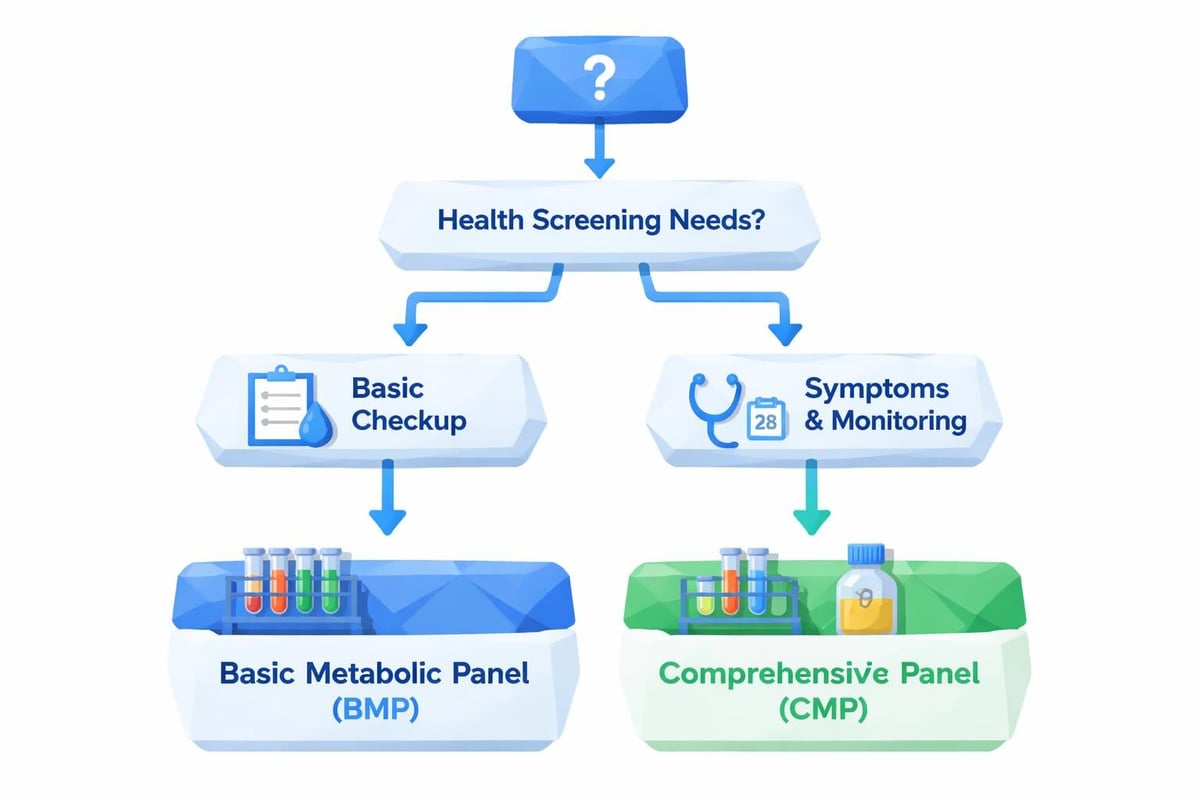
Cost Considerations
Price differences between these panels vary by testing facility and geographic location. Generally, the CMP costs approximately twenty to forty percent more than the BMP. However, when considering transparent lab test pricing, the CMP often represents better value if you need liver function information, since ordering liver tests separately would cost significantly more.
For individuals paying out-of-pocket, understanding these cost differences matters. The question of cmp vs bmp becomes partly financial when both tests could provide useful information.
Clinical Applications and When to Choose Each Test
Healthcare providers select between these panels based on patient symptoms, medical history, and the specific information needed for diagnosis or monitoring.
Scenarios Favoring the BMP
The basic metabolic panel works well for focused assessments. According to Medical News Today, the BMP is particularly useful when:
- Monitoring patients with diagnosed kidney disease
- Assessing diabetic patients during routine checkups
- Evaluating electrolyte imbalances in athletes or those with dehydration
- Following up on previously identified metabolic abnormalities
- Conducting pre-surgical clearance for low-risk procedures
Emergency departments frequently use the BMP because it provides critical information quickly without the additional data that may not be immediately relevant.
Situations Requiring the CMP
The comprehensive panel becomes necessary when a broader metabolic assessment is warranted. Healthcare providers typically order a CMP when:
- Initial health screening for patients without recent laboratory work
- Unexplained symptoms such as fatigue, jaundice, or abdominal pain
- Medication monitoring for drugs that affect liver function
- Chronic disease management involving multiple organ systems
- Abnormal BMP results that warrant further investigation
Patients with risk factors for liver disease, including alcohol use, obesity, or family history of liver conditions, benefit from the additional liver function tests included in the CMP.
Interpreting Your Results
Both panels measure various substances with established normal ranges, though these ranges can vary slightly between laboratories. Understanding your results helps you engage in informed discussions with healthcare providers.
Normal Value Ranges
| Test | Normal Range | What Abnormal Values May Indicate |
|---|---|---|
| Glucose | 70-100 mg/dL (fasting) | Diabetes, hypoglycemia, metabolic disorders |
| Calcium | 8.5-10.5 mg/dL | Bone disease, parathyroid issues, kidney problems |
| Sodium | 135-145 mEq/L | Dehydration, heart failure, kidney disease |
| Potassium | 3.5-5.0 mEq/L | Heart rhythm problems, kidney dysfunction |
| BUN | 7-20 mg/dL | Kidney disease, dehydration, high-protein diet |
| Creatinine | 0.7-1.3 mg/dL | Kidney damage, muscle disorders |
| ALT | 7-56 U/L | Liver disease, hepatitis, medication effects |
| Albumin | 3.4-5.4 g/dL | Liver disease, malnutrition, inflammation |
Results outside these ranges don't automatically indicate disease. Factors like age, sex, medications, diet, and hydration status influence these values. Always review results with a qualified healthcare provider who can interpret them in the context of your complete medical picture.
When Results Require Follow-Up
Abnormal findings on either panel typically prompt additional testing or clinical evaluation. An elevated creatinine might lead to more specific kidney function tests, while abnormal liver enzymes could trigger imaging studies or viral hepatitis screening.
For those who order labs without a doctor, understanding these values becomes even more important. While direct-access testing provides convenience and cost savings, interpreting results still requires professional medical guidance.
Making Your Decision Between CMP and BMP
The cmp vs bmp choice ultimately depends on your individual health needs, symptoms, budget, and what information you or your healthcare provider seeks.
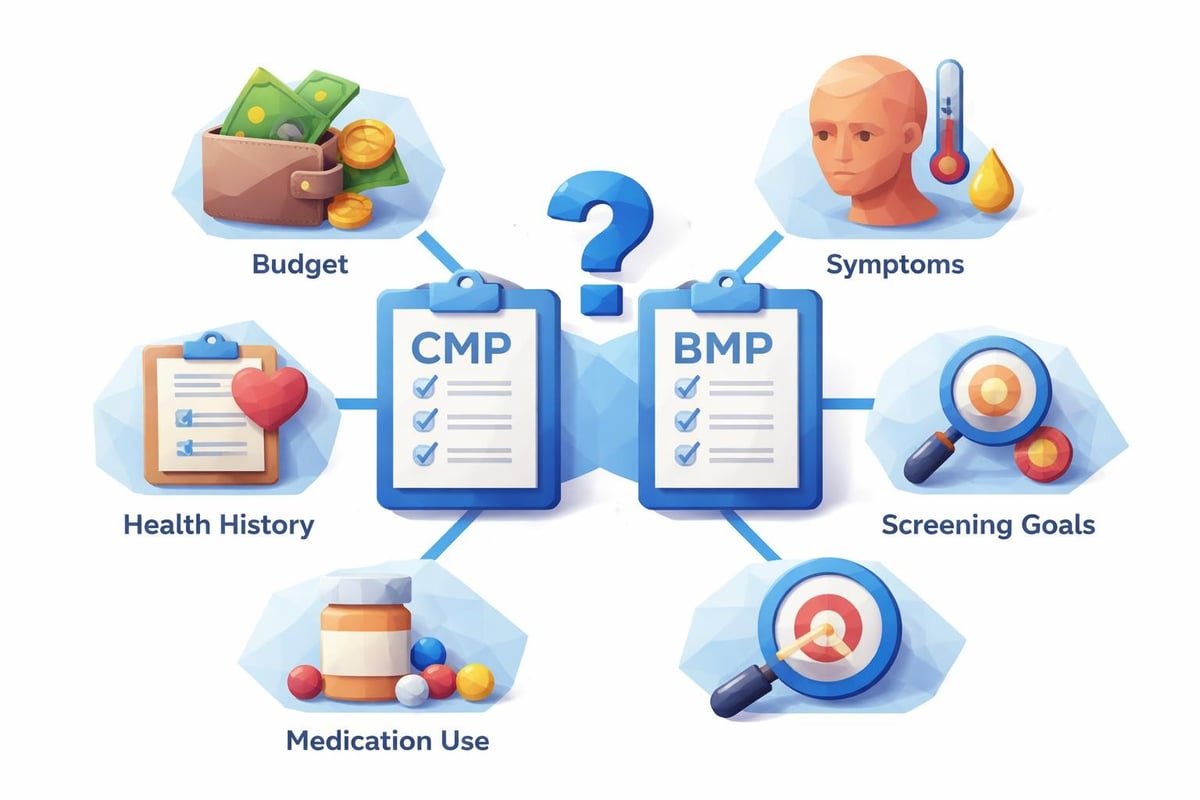
Questions to Consider
Before selecting a metabolic panel, ask yourself:
- Do I have symptoms that could indicate liver problems (jaundice, persistent fatigue, abdominal pain)?
- Am I taking medications that affect liver function?
- Do I have risk factors for liver disease such as alcohol use or obesity?
- Is this a routine screening or am I investigating specific symptoms?
- Has my healthcare provider recommended one panel over the other?
- What is my budget for lab testing?
If you answered yes to the first three questions, the CMP likely provides better value despite the higher cost. For routine monitoring of known conditions or basic health screening, the BMP may suffice.
The Value Proposition
When evaluating cmp vs bmp from a value perspective, consider that the CMP typically costs only marginally more while providing twelve tests instead of eight. This represents a thirty-three percent cost increase for fifty percent more tests, making it cost-effective when comprehensive screening is desired.
However, if you recently had liver function tests or have no risk factors for liver disease, the BMP eliminates unnecessary testing and reduces costs. Those interested in understanding how lab testing works can explore their options before committing to either panel.
Special Considerations for Self-Pay Patients
Individuals paying for lab tests out-of-pocket face different considerations than those using insurance. The cmp vs bmp decision becomes more financially significant when you're directly responsible for costs.
Maximizing Your Healthcare Investment
Self-pay patients benefit from understanding exactly what they're purchasing. The BMP provides essential metabolic information at a lower price point, while the CMP offers comprehensive screening that might prevent the need for additional separate tests later.
Consider these strategies:
- Start with a CMP for initial health screening to establish baseline values across multiple organ systems
- Use BMP for routine monitoring of known conditions once baseline liver function is established
- Choose based on symptoms rather than defaulting to the less expensive option
- Factor in potential follow-up costs when abnormal results necessitate additional testing
Many people discover that accessing lab tests without traditional insurance provides significant savings compared to insurance copays and deductibles, particularly when choosing appropriate tests from the start.
Timing and Frequency
Neither panel requires extensive preparation beyond fasting for eight to twelve hours before blood draw, ensuring accurate glucose and lipid measurements. Both tests use a single blood sample, making the testing process identical regardless of which panel you choose.
For ongoing health monitoring, the frequency depends on your specific health conditions and risk factors. Healthy adults might need metabolic panels annually, while those managing chronic conditions may require testing quarterly or even monthly.
Regional Availability and Access
Both the BMP and CMP are widely available at hospitals, diagnostic laboratories, and patient service centers throughout the United States. The testing technology and procedures are standardized, ensuring consistent quality regardless of location.
For those wondering where to get lab tests, thousands of convenient locations offer both metabolic panels. Results typically become available within twenty-four to seventy-two hours, depending on the laboratory and testing volume.
The accessibility of these common tests means the cmp vs bmp decision focuses on clinical appropriateness and cost rather than availability constraints. Both panels use the same blood draw, processed by automated analyzers that deliver reliable, accurate results.
Understanding the differences between comprehensive and basic metabolic panels empowers you to make informed healthcare decisions that align with your specific needs and budget. Whether you need focused kidney and electrolyte assessment or comprehensive metabolic screening including liver function, choosing the appropriate panel ensures you get relevant health information without unnecessary costs. Justlabs makes accessing both CMP and BMP simple and affordable, offering transparent pricing and convenient online ordering that puts you in control of your health monitoring with results delivered in just one to three days.