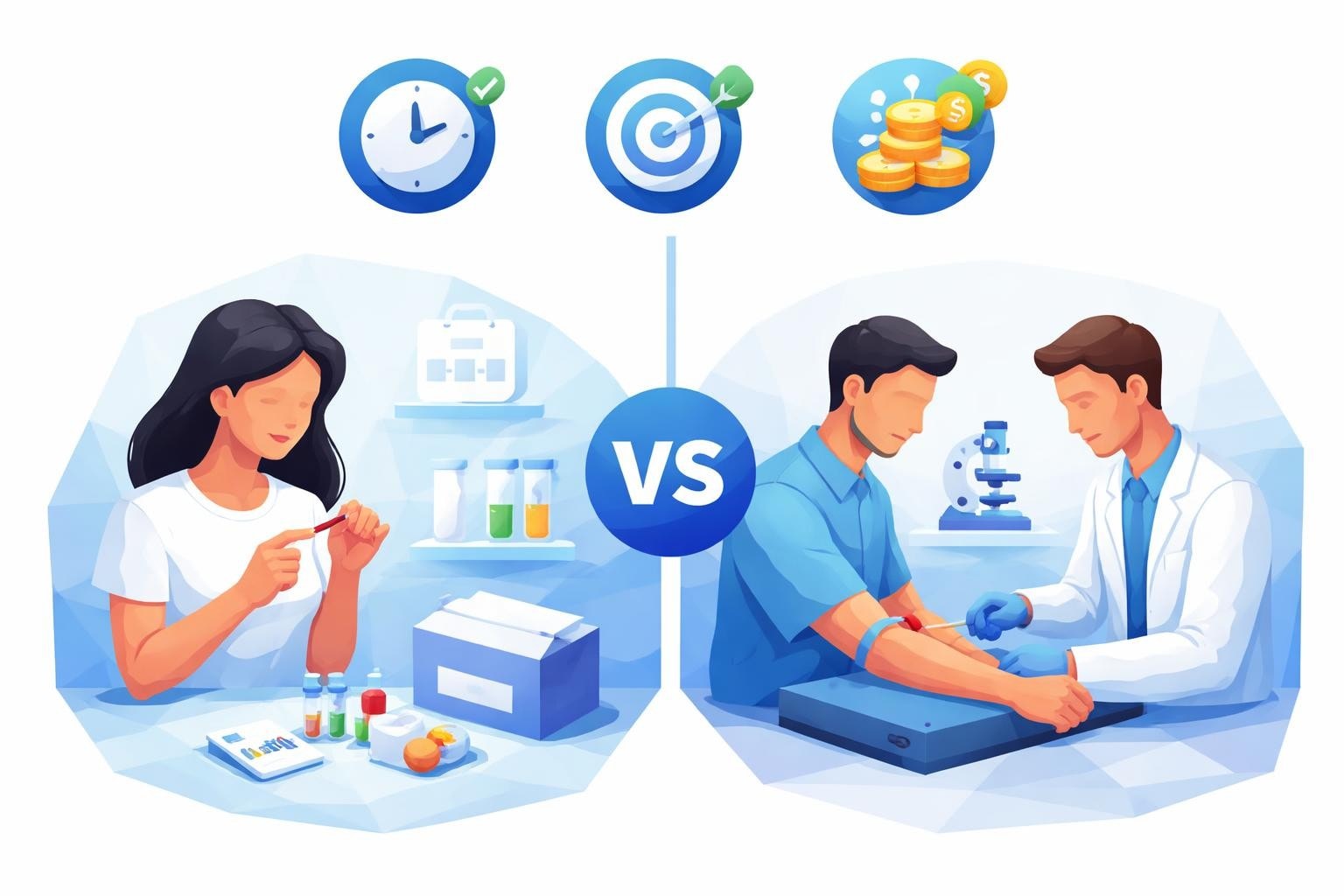
The healthcare landscape has evolved dramatically, offering patients more control over their health monitoring than ever before. Today's consumers face an important choice: should they opt for traditional in-person blood draws at medical facilities, or embrace the convenience of at-home testing kits? This decision impacts not only your schedule and budget but also the quality and timeliness of your health information. Understanding the fundamental differences between these two approaches helps you make informed decisions about your healthcare journey and ensures you select the testing method that aligns with your specific needs, lifestyle, and health goals.
Understanding At-Home Lab Testing
At-home lab tests have transformed how Americans access healthcare diagnostics in 2026. These services allow you to collect samples in the comfort of your own space, typically through finger-prick blood collection or other non-invasive methods.
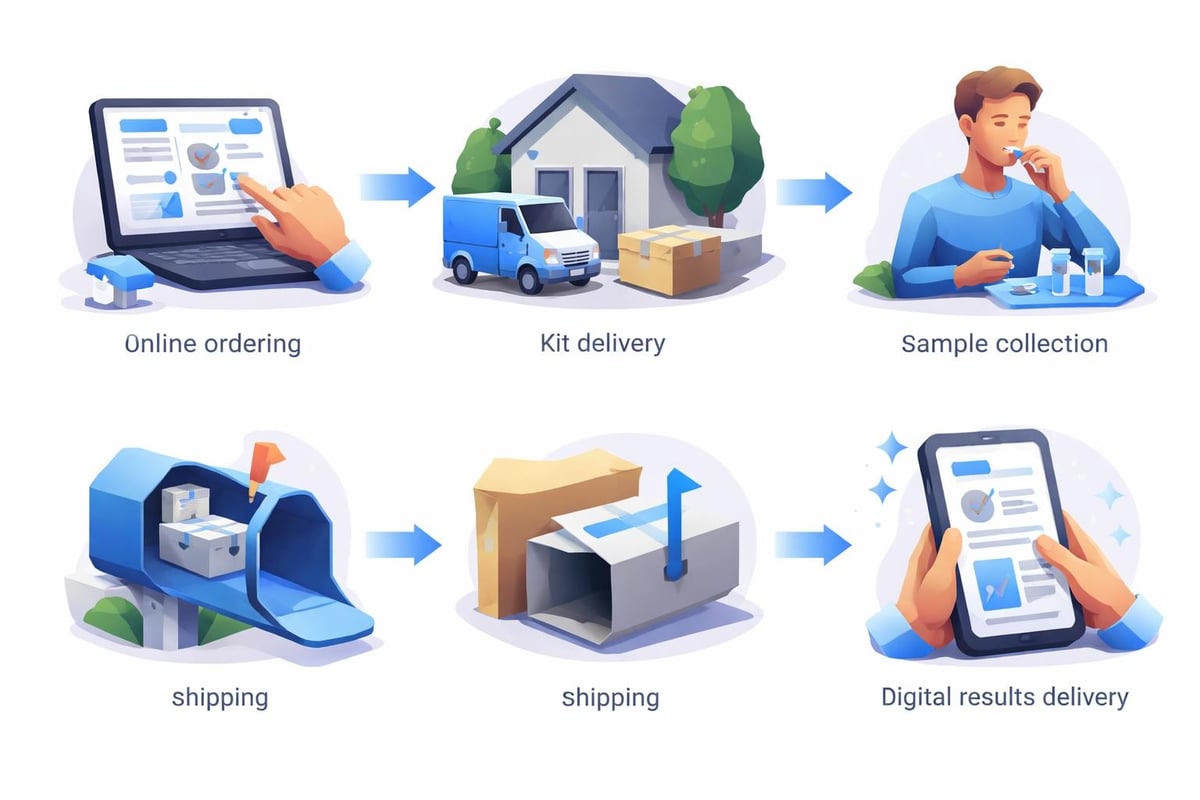
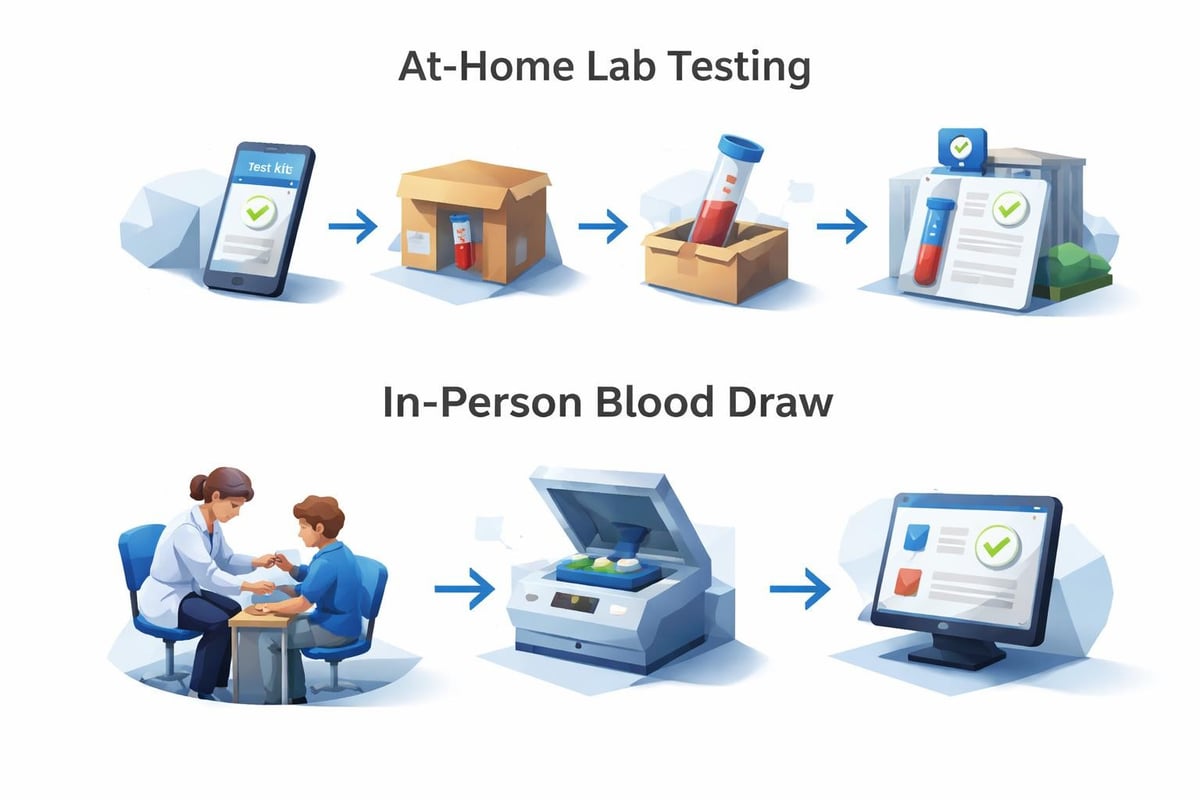
The process follows a straightforward framework:
- Order your desired test online through a certified provider
- Receive a collection kit with detailed instructions at your doorstep
- Collect your sample following the step-by-step guidelines
- Ship the sample back using prepaid packaging
- Access your results through a secure online portal
Key advantages include scheduling flexibility, privacy during collection, and elimination of travel time. Many people appreciate avoiding crowded waiting rooms and the ability to test at optimal times for accurate results.
Sample Collection Methods
At-home tests primarily use capillary blood samples obtained through finger-prick lancets. This method collects smaller blood volumes compared to venous draws, which suffices for most common health markers.
| Collection Aspect | At-Home Method | Requirements |
|---|---|---|
| Blood Volume | 2-10 drops | Finger-prick lancet |
| Collection Time | 5-10 minutes | Follow kit instructions |
| Preparation | Varies by test | Fasting may be required |
| Sample Stability | 24-48 hours | Proper storage crucial |
According to research on at-home blood test accuracy, proper collection technique significantly influences result reliability. Users must follow instructions precisely, ensuring adequate blood flow and correct sample handling.
Who Benefits Most from At-Home Testing
Certain populations find exceptional value in at-home lab tests vs in-person blood draw options. People with busy schedules, limited mobility, or anxiety about medical settings often prefer this approach.
Ideal candidates include:
- Professionals monitoring chronic conditions who need regular testing
- Individuals tracking wellness markers for preventive health
- People living in rural areas with limited lab access
- Those managing healthcare costs without insurance coverage
- Anyone seeking privacy for sensitive health screenings
The convenience factor cannot be overstated. When you order labs without a doctor, you eliminate multiple appointment scheduling steps and gain immediate access to testing.
Traditional In-Person Blood Draws Explained
In-person blood draws remain the gold standard for many healthcare providers and complex diagnostic needs. These procedures occur at hospitals, independent laboratories, physician offices, or dedicated phlebotomy centers.
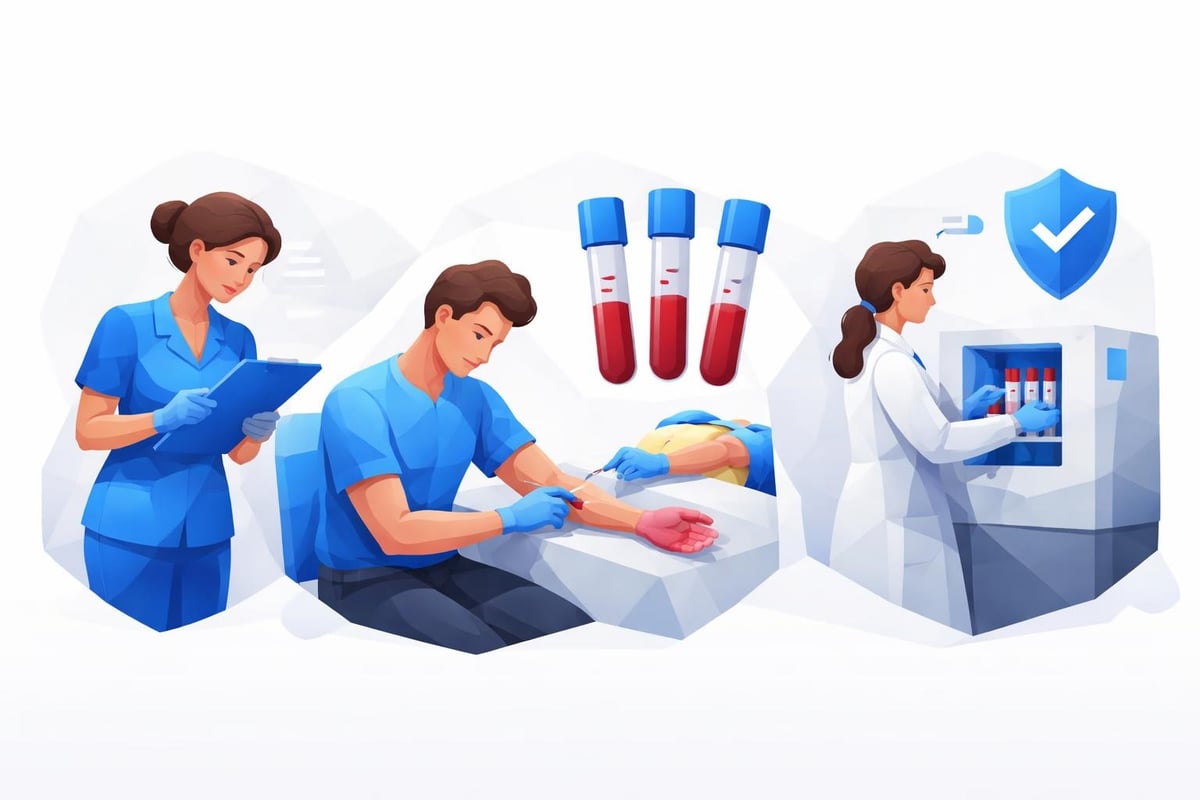
A certified phlebotomist performs venipuncture, inserting a needle directly into a vein to collect blood samples. This method typically extracts larger volumes and provides more consistent sample quality.
The In-Person Testing Experience
Arriving at a testing facility involves several standardized steps. You check in at reception, verify your identification and test orders, then wait for a phlebotomist to call your name.
The actual draw takes approximately five to ten minutes. The phlebotomist identifies an appropriate vein, cleans the area, inserts the needle, and collects samples into labeled tubes. Multiple tubes may be filled for comprehensive panels.
Professional advantages include:
- Trained staff handle collection and labeling
- Immediate sample processing reduces degradation risks
- Complex tests requiring larger volumes are feasible
- On-site equipment ensures proper handling
- Questions answered in real-time by healthcare staff
Many patients appreciate the reassurance of professional collection, particularly when testing for critical health concerns or when previous at-home attempts proved challenging.
Accuracy and Reliability Standards
In-person blood draws offer exceptional consistency because phlebotomists complete thousands of collections annually. Their expertise minimizes hemolysis, contamination, and insufficient sample issues.
Venous blood provides more stable analytes for certain tests. Hormone panels, comprehensive metabolic panels, and specialized diagnostic tests often yield more reliable results from venipuncture samples.
| Accuracy Factor | In-Person Advantage | Impact Level |
|---|---|---|
| Sample Volume | Larger quantities available | High for complex tests |
| Collection Consistency | Professional technique | Medium to High |
| Sample Handling | Immediate processing | High for time-sensitive markers |
| Error Rate | Lower collection errors | Medium |
However, accuracy also depends on laboratory certification and quality control protocols. Both at-home blood testing trends and traditional methods rely on CLIA-certified laboratories for analysis.
Cost Comparison and Insurance Considerations
Financial considerations heavily influence the at-home lab tests vs in-person blood draw decision. Traditional testing through insurance networks involves copays, deductibles, and potential surprise billing.
In-person tests billed through insurance can range from twenty-five dollars to several hundred dollars depending on coverage. Out-of-network facilities may charge significantly more, and patients often don't discover actual costs until weeks after testing.
Transparent Self-Pay Pricing
At-home testing services typically offer upfront pricing without insurance complexity. This transparency helps budget-conscious consumers plan expenses accurately.
Self-pay lab testing eliminates insurance middlemen, often resulting in lower overall costs. Providers can offer competitive rates because they avoid insurance processing overhead and administrative burdens.
Cost factors to evaluate:
- Test list price vs insurance-negotiated rates
- Copay amounts and deductible status
- Collection fees for in-person visits
- Shipping costs for at-home kits
- Consultation fees if required
Many consumers discover that paying directly for routine wellness tests costs less than meeting high deductibles. For people without insurance, at-home options provide accessible pricing structures.
Value Beyond Price Tags
Cost analysis should extend beyond immediate payment. Consider time investment, travel expenses, and opportunity costs associated with each method.
In-person testing requires:
- Travel time to and from facilities (average thirty to sixty minutes)
- Parking fees at medical centers
- Potential childcare arrangements
- Time off work during business hours
- Multiple trips if orders are incomplete
At-home testing eliminates these hidden costs. You invest ten minutes collecting samples versus hours navigating healthcare facilities. For frequent monitoring, these savings compound substantially over time.
Turnaround Time and Result Delivery
Speed matters when you're anxious about health concerns or need results for medical decisions. Both testing methods have evolved to provide faster turnaround, though timelines vary significantly.
Understanding the at-home testing process reveals that shipping adds one to three days before laboratory analysis begins. Once samples arrive, processing matches in-person timelines.
Processing Timeline Breakdown
In-person tests benefit from immediate laboratory receipt. Your sample enters processing queues within hours of collection, potentially shaving one to two days off total turnaround.
| Timeline Stage | At-Home Testing | In-Person Testing |
|---|---|---|
| Sample Collection | 1 day (kit arrival + collection) | Same day |
| Transit to Lab | 1-2 days shipping | 0 days (on-site) |
| Laboratory Analysis | 1-3 days | 1-3 days |
| Result Delivery | Digital portal (same day as complete) | Portal or phone (same day) |
| Total Time | 3-6 days typical | 1-3 days typical |
Stat orders for urgent medical needs almost always require in-person collection. Emergency departments and hospitals cannot accommodate at-home testing when immediate clinical decisions depend on results.
For routine wellness monitoring, preventive screening, or chronic condition management, the difference between receiving results Tuesday versus Thursday rarely impacts care decisions. Planning ahead with at-home testing accommodates these slight delays.
Accuracy: Separating Myth from Reality
Concerns about at-home lab tests vs in-person blood draw accuracy persist despite technological advances. The truth lies in understanding what determines test reliability across both methods.
Laboratory analysis quality depends primarily on certification, equipment calibration, and technician training rather than collection method. CLIA-certified laboratories must meet identical standards regardless of sample origin.
Factors Affecting Test Accuracy
Collection technique impacts both methods differently. At-home tests face challenges with user error, while in-person draws occasionally encounter hemolysis or difficult venous access.
At-home accuracy considerations:
- User adherence to fasting requirements
- Adequate blood flow during collection
- Proper sample card saturation
- Timely shipping in appropriate conditions
- Following storage instructions precisely
In-person accuracy considerations:
- Phlebotomist skill and experience level
- Patient hydration affecting vein accessibility
- Sample processing delays during high-volume periods
- Proper tube selection for specific tests
Research indicates that at-home blood tests show comparable accuracy to traditional draws for most common markers when users follow instructions carefully. Cholesterol, glucose, vitamin levels, and thyroid hormones demonstrate excellent correlation between methods.
When In-Person Testing Proves Superior
Certain diagnostic situations benefit from professional collection expertise. Complex panels requiring precise sample handling, tests needing immediate centrifugation, or situations requiring multiple tube types often necessitate in-person draws.
Conditions requiring in-person collection include:
- Specialized coagulation studies
- Certain cancer markers needing specific preservation
- Comprehensive autoimmune panels with multiple components
- Tests requiring serum separation within strict timeframes
- Diagnostic workups for acute symptoms
Your healthcare provider's recommendations should guide decisions when diagnostic accuracy carries critical implications. Routine wellness screening and chronic disease monitoring typically work excellently with either method.
Convenience and Accessibility Factors
Modern healthcare consumers increasingly prioritize convenience alongside clinical quality. The at-home lab tests vs in-person blood draw decision often hinges on lifestyle fit and accessibility.
Geographic location dramatically influences testing access. Rural communities may have limited laboratory hours or require extensive travel. Urban centers offer abundant options but present parking challenges and scheduling difficulties.
Scheduling Flexibility Comparison
Traditional laboratories operate during business hours, typically Monday through Friday with limited Saturday availability. This structure forces many working professionals to use vacation time or arrive late to work.
At-home testing operates on your schedule. Collect samples during optimal windows for accurate results, whether that's early morning fasting or evening convenience. No appointment coordination, no waiting room delays.
Schedule-related benefits:
- Test during the recommended timeframe for your specific markers
- Avoid missing work or rearranging commitments
- Eliminate commute time and parking hassles
- Reduce exposure to illness in waiting rooms
- Control your testing environment completely
Parents managing children's schedules particularly value this flexibility. Coordinating multiple family members' testing becomes significantly simpler when everyone can collect samples at home.
Privacy and Comfort Considerations
Some health screenings carry personal sensitivity that makes private collection appealing. Sexual health panels, fertility testing, or genetic screenings may feel less invasive when conducted privately.
At-home collection eliminates anxiety associated with needles and medical settings. While finger-prick lancets still involve minor discomfort, many people find this preferable to venipuncture.
Conversely, individuals uncomfortable with self-collection or concerned about technique errors may feel more confident with professional assistance. Understanding how lab testing works helps determine which environment suits your comfort level.
Making Your Decision: Which Option Fits Your Needs
Selecting between at-home lab tests vs in-person blood draw requires evaluating your unique circumstances, health objectives, and practical constraints. No universal answer exists because individual priorities vary significantly.
Start by assessing the test complexity required. Routine wellness panels, chronic disease monitoring, and preventive screenings generally work excellently through at-home collection. Complex diagnostic workups often benefit from in-person professional collection.
Decision Framework
Consider these questions when making your choice:
Health-related factors:
- Does my condition require frequent monitoring?
- Am I tracking wellness or diagnosing acute symptoms?
- Will my healthcare provider accept results from either source?
- Do I need results urgently for medical decisions?
Practical considerations:
- What's my budget for testing?
- How much time can I invest in the process?
- Am I comfortable with self-collection techniques?
- Do I have reliable mail service for sample shipping?
Personal preferences:
- Do I value privacy over professional guidance?
- Am I confident following detailed instructions independently?
- Would I prefer paying directly or navigating insurance?
- Is convenience or speed my primary concern?
Create a weighted priorities list ranking these factors by importance. Your highest-priority needs should drive your decision, recognizing that both methods deliver quality results when executed properly.
Hybrid Approaches for Optimal Health Management
Many health-conscious individuals use both methods strategically. Routine quarterly wellness panels might utilize at-home convenience, while annual comprehensive physicals incorporate in-person blood draws.
This hybrid approach optimizes convenience, cost, and clinical appropriateness. Understanding available test options helps you map which tests align best with each collection method throughout the year.
Track your health data consistently regardless of collection method. Trends matter more than individual data points, and maintaining regular testing schedules provides the most valuable health insights over time.
Quality Assurance Across Testing Methods
Both at-home and in-person blood testing rely on rigorous quality standards enforced through federal regulations. The Clinical Laboratory Improvement Amendments (CLIA) establish minimum quality standards for all laboratory testing performed on humans.
Laboratories processing samples from either collection method must maintain identical CLIA certification levels based on test complexity. High-complexity tests require comprehensive quality control protocols, regular proficiency testing, and qualified personnel oversight.
Verifying Laboratory Credentials
Before selecting any testing service, verify laboratory certifications. Reputable providers clearly display their CLIA certification numbers and accreditation status from organizations like the College of American Pathologists (CAP).
Quality indicators to investigate:
- CLIA certification and complexity level authorization
- CAP or other third-party accreditation
- Laboratory location and ownership transparency
- Physician oversight and medical director credentials
- Customer service accessibility for questions
These credentials matter equally whether you're evaluating at-home testing companies or traditional laboratory networks. The analysis quality depends on laboratory standards, not collection location.
Understanding Result Interpretation
Receiving results represents just one step in your healthcare journey. Proper interpretation requires understanding reference ranges, individual variability, and trending over time.
Many at-home testing services provide educational resources explaining what results mean, though they cannot replace personalized medical advice. In-person testing through healthcare systems typically includes provider follow-up for result interpretation.
Consider whether you need physician consultation when selecting your testing approach. Some platforms offer optional telemedicine consultations, bridging the gap between self-directed testing and professional medical guidance.
Choosing between at-home lab tests vs in-person blood draw ultimately depends on balancing convenience, cost, and clinical requirements specific to your health journey. Both methods deliver reliable results when using certified laboratories and proper collection techniques.
Justlabs simplifies this decision by offering transparent, affordable testing that combines the convenience of direct ordering with the quality of professional laboratory analysis. Whether you prefer visiting a nearby patient service center or exploring future at-home options, Justlabs provides quick access to comprehensive testing with results in one to three days. Take control of your health today by exploring available tests and discovering how simple self-pay laboratory services can be.