
Your genetic blueprint plays a surprisingly powerful role in determining how your body processes cholesterol and manages lipid metabolism. Among the thousands of genes that influence cardiovascular health, the APOE gene stands out as one of the most significant factors affecting cholesterol levels, heart disease risk, and even cognitive function. Understanding the connection between apoe genotype cholesterol is becoming increasingly important for personalized healthcare approaches in 2026.
Understanding the APOE Gene and Its Variants
The APOE gene provides instructions for making apolipoprotein E, a protein that combines with fats to form lipoproteins responsible for packaging and transporting cholesterol throughout your bloodstream. This gene comes in three common variants, known as alleles: E2, E3, and E4. Since you inherit one copy from each parent, you can have one of six possible genotype combinations.
The Three Major APOE Variants
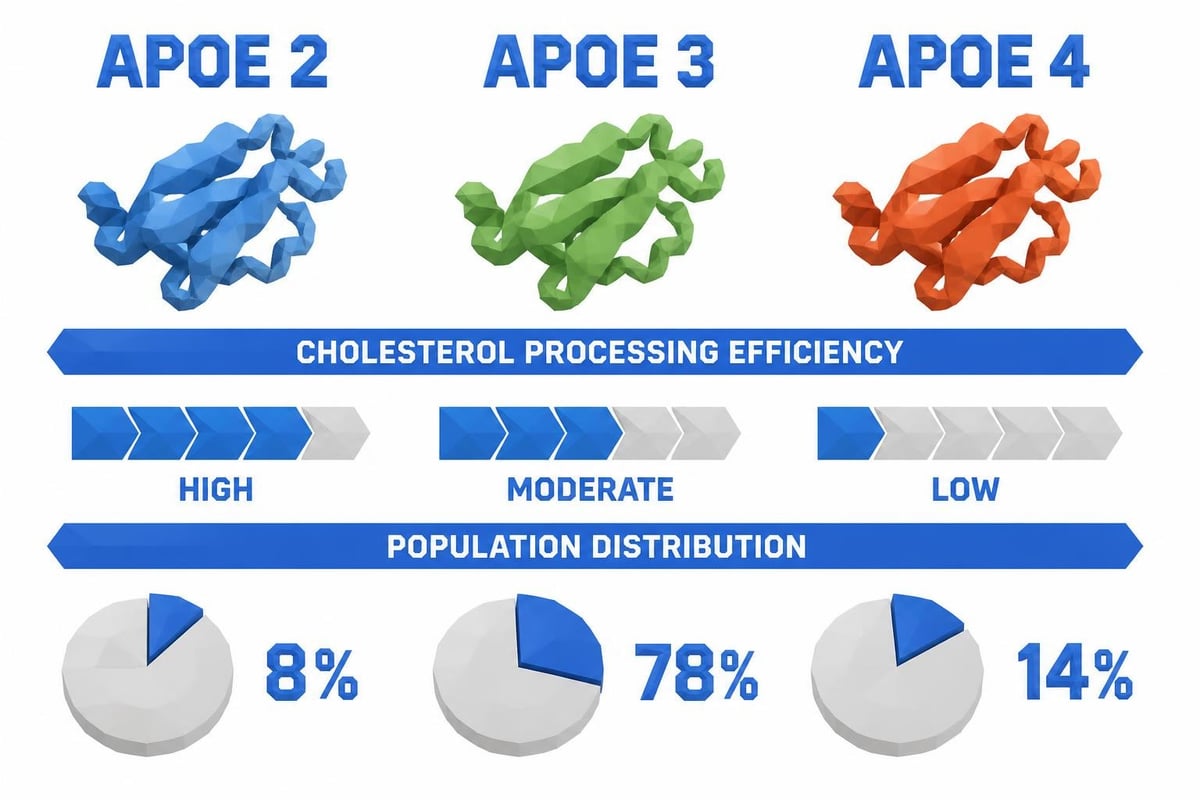
Each APOE variant affects how efficiently your body processes cholesterol and responds to dietary fats. The E3 variant is the most common, present in approximately 78% of the population worldwide. This variant is considered the "neutral" form with average cholesterol processing capabilities.
The E2 variant appears in roughly 8% of individuals and typically associates with lower LDL cholesterol levels. However, in rare cases, people with two copies of E2 can develop type III hyperlipoproteinemia, a condition characterized by elevated triglycerides and cholesterol.
The E4 variant presents the most significant cardiovascular concerns. Found in about 14% of the population, E4 generally correlates with higher LDL cholesterol levels and increased heart disease risk. This variant also carries the strongest genetic association with late-onset Alzheimer's disease.
How ApoE Genotype Cholesterol Connection Works
The relationship between apoe genotype cholesterol metabolism operates through several interconnected mechanisms. Apolipoprotein E serves as a ligand for LDL receptors on liver cells, essentially acting as a key that allows cholesterol-containing particles to enter cells for processing and clearance from the bloodstream.
Different ApoE variants bind to these receptors with varying efficiency. The E4 variant binds preferentially to very low-density lipoproteins (VLDL) rather than high-density lipoproteins (HDL), leading to altered cholesterol distribution. This preferential binding pattern results in higher circulating levels of LDL cholesterol and lower HDL cholesterol in E4 carriers.
Genotype-Specific Cholesterol Patterns
Research documented in detailed genetic databases shows distinct lipid profiles associated with each genotype combination:
| Genotype | LDL Cholesterol | HDL Cholesterol | Triglycerides | Heart Disease Risk |
|---|---|---|---|---|
| E2/E2 | Lowest | Higher | Variable | Lower (unless type III) |
| E2/E3 | Low-Normal | Normal-High | Normal | Lower |
| E3/E3 | Normal | Normal | Normal | Average |
| E3/E4 | Elevated | Lower | Elevated | Higher |
| E4/E4 | Highest | Lowest | Highest | Highest |
These patterns demonstrate why understanding your apoe genotype cholesterol profile matters for cardiovascular risk assessment. The differences between genotypes can account for 5-10% variation in total cholesterol levels, which translates to meaningful differences in long-term health outcomes.
Dietary Response and ApoE Genotype
One of the most practical implications of knowing your ApoE genotype involves how your body responds to dietary interventions. The connection between apoe genotype cholesterol levels becomes particularly evident when examining responses to dietary fat intake.
Fat Sensitivity Across Genotypes
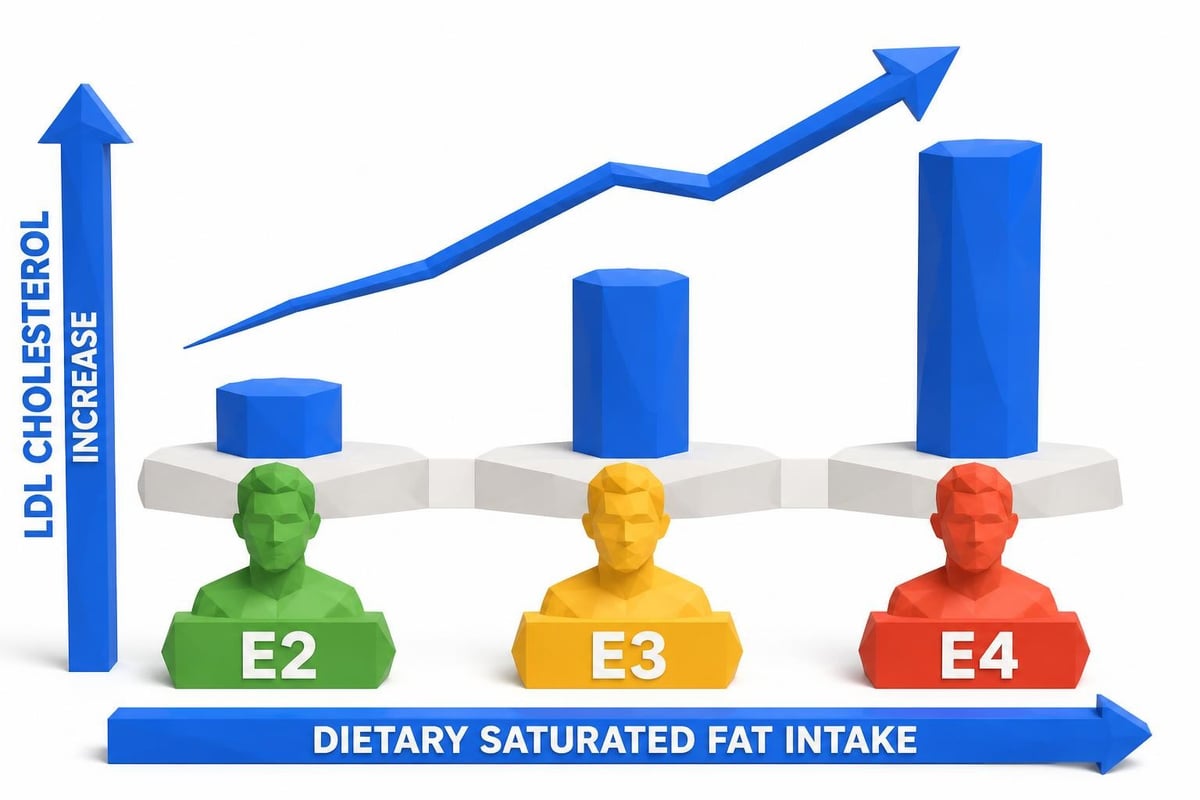
E4 carriers demonstrate heightened sensitivity to dietary saturated fat and cholesterol. When E4 individuals consume diets high in saturated fats, they typically experience more pronounced increases in LDL cholesterol compared to E2 or E3 carriers. This genotype-dependent dietary response suggests that personalized nutritional guidance based on genetics could optimize cardiovascular health.
For E4 carriers, the Mediterranean diet pattern appears particularly beneficial. This eating approach emphasizes:
- Monounsaturated fats from olive oil and nuts
- Omega-3 fatty acids from fish
- Limited saturated fat from red meat and dairy
- Abundant vegetables, fruits, and whole grains
- Moderate alcohol consumption (if any)
E2 carriers, conversely, may handle higher fat diets better but should monitor triglyceride levels carefully. The E3 genotype typically responds well to standard heart-healthy dietary recommendations without the extreme sensitivity seen in E4 carriers.
Medication Response and Treatment Implications
The apoe genotype cholesterol relationship extends into pharmaceutical interventions, particularly statin therapy. Statins remain the most commonly prescribed medications for lowering cholesterol, but genetic factors influence their effectiveness.
Statin Efficacy Across Genotypes
Research on APOE polymorphisms and statin response reveals that E4 carriers often show different response patterns compared to other genotypes. Some studies suggest E4 carriers may experience more robust LDL reductions with statin therapy, while others indicate variable responses depending on the specific statin used.
A comprehensive meta-analysis of genetic effects on statin outcomes found that while statins effectively reduce cholesterol across all genotypes, the baseline differences between genotypes persist even with treatment. This means E4 carriers may need more aggressive therapy to reach target cholesterol levels.
Practical considerations for medication management include:
- Baseline lipid testing before initiating therapy
- Genotype-informed dosing strategies
- Regular monitoring of treatment response
- Consideration of combination therapies for high-risk genotypes
- Lifestyle modifications tailored to genetic profile
For those seeking convenient access to cholesterol monitoring, understanding how to order labs without a doctor enables regular tracking of lipid responses to interventions.
Beyond LDL: Other Lipid Markers and ApoE
While LDL cholesterol receives the most attention, the apoe genotype cholesterol connection influences other important lipid markers that contribute to cardiovascular risk assessment.
Lipoprotein(a) and Triglycerides
Studies examining ApoE genotypes and lipoprotein(a) levels demonstrate that genetic variants affect this particularly atherogenic particle. Lipoprotein(a), or Lp(a), is an LDL-like particle that carries additional cardiovascular risk independent of standard cholesterol measurements.
E2 carriers typically have lower Lp(a) levels, while E4 carriers may show elevated concentrations. Since Lp(a) responds poorly to most cholesterol-lowering medications and diet, knowing your genetic predisposition helps identify who needs specialized monitoring.
Triglyceride metabolism also varies by genotype. E2/E2 individuals face the highest risk of triglyceride accumulation under certain conditions, while E4 carriers often show moderate triglyceride elevations alongside their LDL increases.
Cognitive Health and the Cholesterol Connection
The relationship between apoe genotype cholesterol extends beyond cardiovascular health into neurological function. Apolipoprotein E plays crucial roles in brain lipid metabolism, and disruptions in these processes contribute to neurodegenerative disease risk.
Alzheimer's Disease Risk and Cholesterol
E4 carriers face substantially elevated Alzheimer's disease risk, with one E4 copy increasing risk three-fold and two copies increasing risk twelve-fold compared to E3/E3 individuals. Interestingly, research in Chinese populations has explored whether cholesterol levels mediate this relationship, with mixed findings suggesting complex interactions between peripheral and brain cholesterol metabolism.
The brain maintains its own cholesterol synthesis system, largely isolated from blood cholesterol. However, apolipoprotein E facilitates cholesterol transport within the brain, supporting neuronal repair and synaptic function. The E4 variant appears less efficient at these tasks, potentially contributing to neurodegeneration.
This dual impact on heart and brain health makes ApoE genotyping valuable for:
- Comprehensive risk assessment
- Motivating preventive lifestyle changes
- Informing screening schedules
- Guiding family planning discussions
- Supporting proactive health management
Testing and Interpretation
Accessing apoe genotype cholesterol information has become increasingly straightforward in 2026. Genetic testing for APOE variants typically requires a simple blood draw or cheek swab, with results available within days to weeks depending on the testing platform.
What Testing Involves
Most APOE genotyping analyzes two specific genetic positions that determine your E2, E3, or E4 status. The test itself is straightforward, but interpretation requires context. Your genotype represents probability, not destiny-it indicates predisposition rather than guaranteeing specific outcomes.
When reviewing results, consider these factors:
- Baseline cholesterol levels: Lipid testing provides concrete data on current status
- Family history: Genetic risk combined with family patterns strengthens assessment
- Lifestyle factors: Diet, exercise, and smoking powerfully influence outcomes
- Other genetic variants: APOE is one of many genes affecting cardiovascular health
- Age and sex: Risk manifestation varies across demographic groups
For comprehensive cardiovascular assessment, combining genetic testing with standard lipid panel testing provides the most complete picture. Understanding labs without insurance options makes this testing accessible regardless of coverage status.

Omega-3 Fatty Acids and Genetic Interactions
The impact of omega-3 supplementation on cardiovascular health may also depend on your apoe genotype cholesterol profile. Research investigating whether APOE genotype modifies relationships between lipids and omega-3 levels suggests genotype-specific responses to these essential fatty acids.
Personalized Supplementation Strategies
E4 carriers may derive particular benefit from omega-3 fatty acids, both for cardiovascular protection and potential cognitive benefits. EPA and DHA, the primary omega-3s found in fish oil, help reduce triglycerides and may modestly improve the lipid profile in genetically susceptible individuals.
Recommended approaches include:
- Regular consumption of fatty fish (salmon, mackerel, sardines)
- Consider supplementation with 1-2 grams EPA/DHA daily for E4 carriers
- Monitor lipid panels to assess individual response
- Balance omega-6 to omega-3 ratios in overall diet
- Combine with other heart-healthy lifestyle factors
Practical Applications for Health Management
Understanding your apoe genotype cholesterol relationship enables proactive, personalized health strategies. This genetic information works best when integrated into comprehensive cardiovascular risk management rather than viewed in isolation.
Creating Your Personalized Plan
For E2 carriers:
- Monitor triglycerides carefully, especially if both alleles are E2
- Maintain healthy weight to prevent type III hyperlipoproteinemia
- Follow standard heart-healthy guidelines
- Enjoy lower baseline cardiovascular risk while maintaining vigilance
For E3/E3 individuals:
- Implement standard preventive cardiology recommendations
- Focus on modifiable risk factors like blood pressure and smoking
- Regular lipid screening according to age-appropriate guidelines
- Balanced diet without extreme restrictions
For E4 carriers:
- Prioritize Mediterranean-style eating patterns
- Limit saturated fat intake to less than 7% of calories
- Increase physical activity to 150+ minutes weekly
- Consider earlier and more frequent cholesterol screening
- Discuss statin therapy with healthcare providers if indicated
- Address cognitive health through lifestyle optimization
Population Variations and Ethnic Considerations
The distribution of APOE variants varies across populations, affecting average cholesterol levels and disease patterns in different ethnic groups. These variations have important implications for understanding apoe genotype cholesterol relationships at the population level.
Global distribution patterns show E3 dominance across all populations, but E4 frequency ranges from less than 10% in some Asian populations to over 25% in certain African groups. European populations typically show E4 frequencies around 15%, while E2 remains relatively consistent at 5-10% worldwide.
These differences may partially explain population-level variations in cardiovascular disease rates and cholesterol distributions. However, environmental factors, dietary patterns, and other genetic variants also contribute substantially to these differences.
Future Directions in Personalized Medicine
The field of pharmacogenomics continues advancing our understanding of how apoe genotype cholesterol relationships inform treatment decisions. In 2026, we're seeing increased integration of genetic information into clinical decision-making, moving toward truly personalized cardiovascular care.
Emerging research explores:
- Combination genetic scores incorporating APOE and other lipid genes
- Precision nutrition recommendations based on genetic profiles
- Targeted therapies for specific genotype-disease combinations
- Early intervention strategies for high-risk genotypes
- Gene-environment interaction studies refining dietary guidance
As testing becomes more accessible and affordable, expect broader adoption of genotype-guided approaches to cholesterol management. The key lies in translating genetic information into actionable strategies that improve health outcomes.
Making Informed Decisions About Testing
Deciding whether to pursue APOE genotyping involves weighing potential benefits against considerations like cost, psychological impact of results, and actionability of findings. For many individuals, knowing their apoe genotype cholesterol relationship provides motivation for healthy lifestyle changes and informs medical decision-making.
Testing makes particular sense for:
- Individuals with family history of early heart disease
- Those with borderline cholesterol levels seeking guidance on intervention intensity
- People interested in optimizing diet based on genetic predisposition
- Individuals with family history of Alzheimer's disease (with genetic counseling)
- Anyone pursuing comprehensive personalized health strategies
Conversely, testing may not be necessary for everyone, particularly those already implementing optimal lifestyle strategies or those whose cholesterol levels clearly require medical intervention regardless of genotype.
Your genetic profile significantly influences how your body processes cholesterol and responds to dietary and pharmaceutical interventions, but genetics represent just one piece of the cardiovascular health puzzle. Understanding your ApoE genotype empowers informed decision-making about diet, lifestyle, and medical management while providing valuable context for long-term health planning. Whether you're curious about your genetic cholesterol profile or need regular lipid monitoring to track your cardiovascular health, Justlabs provides convenient access to comprehensive testing without insurance hassles or doctor's appointments, delivering results in 1-3 days so you can take control of your health journey.