Order IGF-1 Blood Test Panel with Metabolic Monitoring from JustLabs for $55. ($73 all-in for a single-panel order: $55 + one $18 lab & physician order fee per order). Includes 6 tests. Price includes lab processing at Quest Diagnostics. No insurance required.
IGF-1 Blood Test Panel with Metabolic Monitoring
Growth hormone itself is hard to measure because its level swings through the day, so clinicians use an IGF-1 test as the steadier stand-in. This panel pairs an IGF-1 blood test with fasting glucose, A1c, a metabolic panel, cholesterol and a blood count, the markers usually reviewed with it.
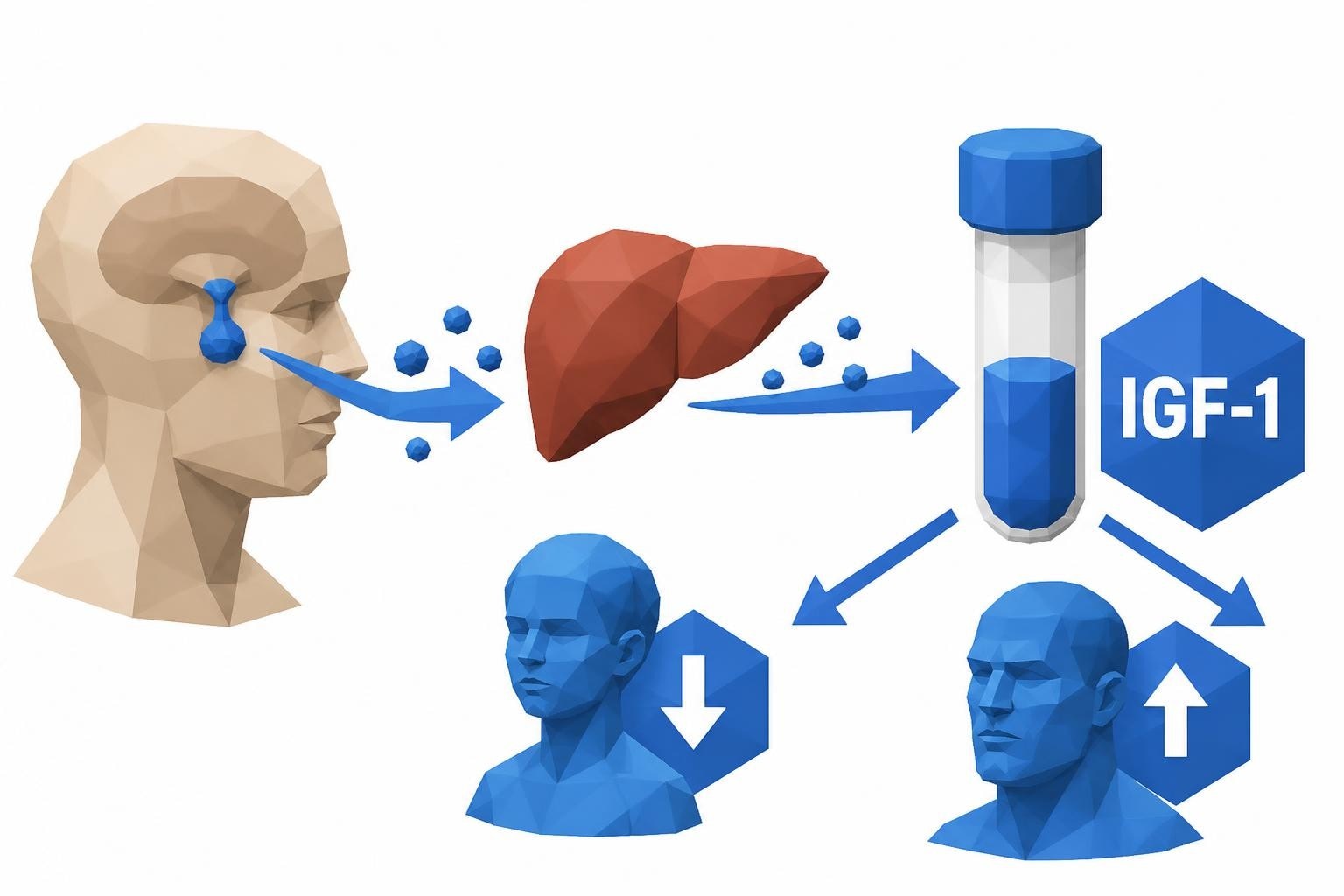
Growth hormone (GH) is released in pulses, so a single random GH level is rarely useful. Insulin-like growth factor 1 (IGF-1) is the hormone GH tells the liver to make, and its level stays much steadier, which is why an IGF-1 blood test is the standard first look at growth hormone activity. Clinicians use it when they are evaluating possible GH excess (acromegaly in adults) or GH deficiency, and to follow treatment for a GH disorder.
IGF-1 depends on age. Levels are low in childhood, peak during puberty and then fall steadily through adulthood, so the result must be read against an age-specific reference range. A value that is normal at 60 can be low at 25. IGF-1 is measured here by mass spectrometry (LC/MS).
Why the metabolic markers? Growth hormone and blood sugar are closely linked. Acromegaly is associated with type 2 diabetes and heart disease, and the Endocrine Society's adult GH deficiency guideline recommends that the lipid profile and a fasting glucose be checked every year in adults on GH treatment. Fasting glucose and A1c give today's and the past few months' view of blood sugar; the lipid panel covers cholesterol and triglycerides.
The comprehensive metabolic panel adds liver and kidney function, which matter because IGF-1 is made in the liver: the same guideline notes liver disease and poorly controlled diabetes can lower IGF-1, as can oral estrogen. The blood count gives a general health baseline.
IGF-1 alone cannot confirm or rule out a GH disorder; the diagnosis usually needs a GH stimulation or suppression test. Review your results with a clinician.
Panel Price
$55
All-in
$73
incl. $18 lab & physician fee
You Save
$5.50
Biomarkers
40
6 tests
Included Tests
IGF-1 (Insulin-like Growth Factor)
Measures IGF-1, which reflects growth hormone status. Important for metabolism and aging.
Comprehensive Metabolic Panel
Measures 14 substances including glucose, electrolytes, kidney and liver function markers.
Fasting
Complete Blood Count with Differential
Comprehensive blood cell analysis including red cells, white cells, platelets, and white cell differential.
Hemoglobin A1c (HbA1c)
Measures average blood sugar over the past 2-3 months. Key marker for diabetes management and prediabetes screening.
Glucose, Fasting
Measures blood sugar levels after fasting. Used to screen for diabetes and monitor blood sugar control.
Fasting
Lipid Panel (Standard)
Standard cholesterol panel including total cholesterol, HDL, LDL, and triglycerides. Essential for cardiovascular risk assessment.
Fasting Required
One or more tests in this panel require fasting for accurate results:
- Do not eat or drink anything except water for 8-12 hours before your blood draw.
- Water is allowed and encouraged - stay hydrated!
- Schedule your lab visit in the morning for convenience.
What This Panel Measures
Insulin-like growth factor 1 (IGF-1), measured by LC/MS and reported against an age-specific reference range; fasting glucose; hemoglobin A1c (average blood sugar over the past few months); a comprehensive metabolic panel (glucose, kidney function with eGFR, electrolytes, calcium, protein, albumin, bilirubin and the liver enzymes ALT, AST and alkaline phosphatase); a standard lipid panel (total, LDL, HDL and non-HDL cholesterol and triglycerides); and a complete blood count with differential.
Who Should Get This Panel
People whose clinician wants an IGF-1 level to look at growth hormone status, for example when features of GH excess such as enlarging hands or feet, a change in ring or shoe size, coarsening facial features, more sweating or joint aches are being evaluated; adults with a pituitary condition or a history of pituitary surgery or treatment; adults on treatment for a growth hormone disorder whose clinician wants IGF-1 together with the yearly glucose and lipid checks; and anyone who wants IGF-1 checked alongside a broad metabolic baseline. Results must be interpreted for age, and children's growth concerns belong with a pediatrician or pediatric endocrinologist.
Health Insights
Conditions Screened
Related Symptoms
When to Get Tested
When a clinician is evaluating possible growth hormone excess or deficiency, when following treatment for a GH disorder at the interval your clinician sets, or as part of a yearly check that includes glucose and cholesterol. IGF-1 can be drawn at any time of day, but because this panel includes fasting glucose, book a morning appointment after an 8- to 12-hour fast. Avoid testing during an acute illness, and tell your clinician if you take oral estrogen, which can lower IGF-1.
Understanding Your Results
IGF-1 is compared with the reference range for your age (and sometimes sex). A high IGF-1 can point to growth hormone excess, most often from a benign pituitary tumor, and is usually followed by a GH suppression test (an oral glucose tolerance test) and pituitary imaging. A low IGF-1 in an adult may reflect normal aging or other conditions, including liver disease, poorly controlled diabetes or oral estrogen; a normal IGF-1 does not rule out GH deficiency, which usually needs a stimulation test. On treatment, clinicians generally aim to keep IGF-1 within the age-adjusted range. High fasting glucose or A1c, abnormal liver or kidney results, unfavorable cholesterol or an abnormal blood count are general findings your clinician weighs alongside IGF-1. JustLabs results are informational: review them with a clinician, ideally an endocrinologist for an abnormal IGF-1.
How much does the IGF-1 & Metabolic Monitoring Panel cost?
The IGF-1 & Metabolic Monitoring Panel costs $55 at JustLabs — $73 all-in, since the $18 lab & physician order fee is charged once per order, however many tests you add. The price is fixed before your blood draw; no insurance or doctor visit needed.
| Option | Price | Order all-in | Notes |
|---|---|---|---|
| IGF-1 & Metabolic Monitoring Panel at JustLabsDrawn at Quest Diagnostics | $55 | $73 | Includes the one $18 fee, charged once per order |
| The same 6 tests ordered individually | $60.50 | $78.50 | The panel saves $5.50 |
Paying with an HSA or FSA? See which lab tests qualify
Frequently Asked Questions
Hospital cash price: $250–$600
$55
+ $18 order fee · $73 all-inOne $18 fee per order covers your Quest blood draw and the independent physician order, however many tests you add.
Save $5.50 vs. ordering these tests separately
- IGF-1
- CMP
- CBC w/ Diff
- HbA1c
- Fasting Glucose
- Lipid Panel
No insurance needed · HSA/FSA eligible
- Physician-ordered
- CLIA-certified Quest lab
- Drawn at Quest Diagnostics
Need Individual Tests?
You can also order any of these tests individually if you don't need the full panel.
Browse Individual TestsRelated Panels
Complete Metabolic Health Panel
Comprehensive metabolic assessment including CMP, lipids, HbA1c, and inflammation markers.
Includes 5 tests:
$50
$53.50
Insulin Resistance Panel
Comprehensive insulin resistance assessment including fasting glucose, fasting insulin, HbA1c, C-Peptide, and CMP.
Includes 5 tests:
$45
$52.50
Comprehensive Diabetes Panel
Complete diabetes and prediabetes assessment including HbA1c, fasting glucose, and lipids.
Includes 4 tests:
$35
$55
+ $18 order fee · $73 all-in